
DEPARTMENT OF UROLOGY EDUCATION

Yeast Infections

Production Team
Dr Abraham Benjamin - Manager Medical Informatics
Mr. Naresh Kumar - Coordinator Medical Informatics
What is
Yeast infection and what causes it?

 The term "yeast" is often used to describe
infections caused by fungi which are
microorganisms that appear most
frequently in nature as molds, mildews,
mushrooms and yeast. They are more
complex than viruses or bacteria.
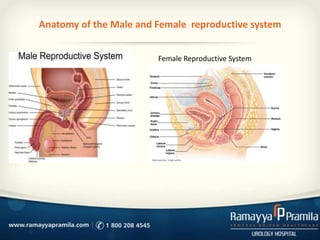
Anatomy of the Male and Female reproductive system
Female Reproductive System
What are the symptoms of Yeast Infection?
 For most individuals, the symptoms of yeast infections are skin redness and itching.
The most common infections are jock itch, vaginal infections and penile
inflammation.
 With "jock itch," a reddened rash spreads from the penis outward over the inner
thighs, anal area and buttocks. In addition to itching, the patient may notice a
burning sensation in the groin.
 Vaginal yeast infections are among the most bothersome nuisance in women,
particularly ages 20 to 40.

 The infection produces intense itching or burning that can lead to discomfort when
urinating, and can cause discomfort with sexual intercourse. Vaginal yeast may also
produce a thick, white discharge that looks like cottage cheese. While some women
may have no symptoms, others suffer from redness and swelling of the vagina or
labia, as well as the tissues surrounding the vaginal opening.
How do you diagnose Yeast Infections?
 Urine that repeatedly demonstrates red or white
blood cells (sign of inflammation) will alert the
urologist to an underlying problem.
 Other physical findings such as persistent fever,
rash.
 Imaging studies, such as ultrasonography or a CT
scan, to evaluate possible effects on kidney and
bladder.
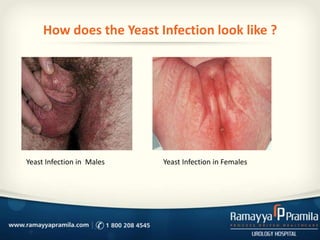
How does the Yeast Infection look like ?

Yeast Infection in Males

Yeast Infection in Females
How are Yeast infections treated?
 Skin and groin infections can be eliminated or
controlled by good hygiene. Frequent bathing and the
routine changing of undergarments especially during
hot weather or after intense physical activity are
advised.

 In most individuals, control of superficial infection like
jock itch, can be achieved by the use of topical
antifungal creams that are readily available as overthe-counter medications. They can be found under
different names such as butoconazole, clotrimazole,
miconazole and terconazole.
How are Yeast infections treated?

 Persistent fungal infections require stronger
medication such as nystatin or oral medications
such as fluconazole or Lamisil.
 Most vaginal infections can be treated with
vaginal suppositories or creams. In cases of
persistent infection, the use of oral medications
such as fluconazole or ketoconazole will be
helpful. Chronic and recurring vaginal infections
may require a change in birth control methods.
What to expect after the treatment of Yeast Infections ?

While most superficial skin or vaginal
infections respond to topical creams and
ointments, they often return. Vaginal
infections, in particular, can be difficult to
eliminate in some patients, especially if they
are caused by a resistant strain of yeast.
Important Information
 If you need more information on this
test or meet our team of Urologists for
Consultation click on the link below.

 http://www.ramayyapramila.com/
Superior and Compassionate Care
More topics
 Circumcision
 Blood In Urine
 Benign Prostatic Hypertrophy

 Vasectomy
 Kidney and Urinary stone Medical Treatment
 Andrology-Male Infertility
 Urodynamics / Uroflowmetry.

 CT/MRI

Please click the icon to navigate

Yeast infections

  • 1.
    DEPARTMENT OF UROLOGYEDUCATION Yeast Infections Production Team Dr Abraham Benjamin - Manager Medical Informatics Mr. Naresh Kumar - Coordinator Medical Informatics
  • 2.
    What is Yeast infectionand what causes it?  The term "yeast" is often used to describe infections caused by fungi which are microorganisms that appear most frequently in nature as molds, mildews, mushrooms and yeast. They are more complex than viruses or bacteria.
  • 3.
    Anatomy of theMale and Female reproductive system Female Reproductive System
  • 4.
    What are thesymptoms of Yeast Infection?  For most individuals, the symptoms of yeast infections are skin redness and itching. The most common infections are jock itch, vaginal infections and penile inflammation.  With "jock itch," a reddened rash spreads from the penis outward over the inner thighs, anal area and buttocks. In addition to itching, the patient may notice a burning sensation in the groin.  Vaginal yeast infections are among the most bothersome nuisance in women, particularly ages 20 to 40.  The infection produces intense itching or burning that can lead to discomfort when urinating, and can cause discomfort with sexual intercourse. Vaginal yeast may also produce a thick, white discharge that looks like cottage cheese. While some women may have no symptoms, others suffer from redness and swelling of the vagina or labia, as well as the tissues surrounding the vaginal opening.
  • 5.
    How do youdiagnose Yeast Infections?  Urine that repeatedly demonstrates red or white blood cells (sign of inflammation) will alert the urologist to an underlying problem.  Other physical findings such as persistent fever, rash.  Imaging studies, such as ultrasonography or a CT scan, to evaluate possible effects on kidney and bladder.
  • 6.
    How does theYeast Infection look like ? Yeast Infection in Males Yeast Infection in Females
  • 7.
    How are Yeastinfections treated?  Skin and groin infections can be eliminated or controlled by good hygiene. Frequent bathing and the routine changing of undergarments especially during hot weather or after intense physical activity are advised.  In most individuals, control of superficial infection like jock itch, can be achieved by the use of topical antifungal creams that are readily available as overthe-counter medications. They can be found under different names such as butoconazole, clotrimazole, miconazole and terconazole.
  • 8.
    How are Yeastinfections treated?  Persistent fungal infections require stronger medication such as nystatin or oral medications such as fluconazole or Lamisil.  Most vaginal infections can be treated with vaginal suppositories or creams. In cases of persistent infection, the use of oral medications such as fluconazole or ketoconazole will be helpful. Chronic and recurring vaginal infections may require a change in birth control methods.
  • 9.
    What to expectafter the treatment of Yeast Infections ? While most superficial skin or vaginal infections respond to topical creams and ointments, they often return. Vaginal infections, in particular, can be difficult to eliminate in some patients, especially if they are caused by a resistant strain of yeast.
  • 10.
    Important Information  Ifyou need more information on this test or meet our team of Urologists for Consultation click on the link below.  http://www.ramayyapramila.com/
  • 11.
  • 12.
    More topics  Circumcision Blood In Urine  Benign Prostatic Hypertrophy  Vasectomy  Kidney and Urinary stone Medical Treatment  Andrology-Male Infertility  Urodynamics / Uroflowmetry.  CT/MRI Please click the icon to navigate