 Presentation on “SPINNING”
(yarn manufacturing)
 Textile Fiber Selection
 Yarn (Spinning)
 Weaving or knitting
 Processing(Dyeing &
Printing)
 Finishing
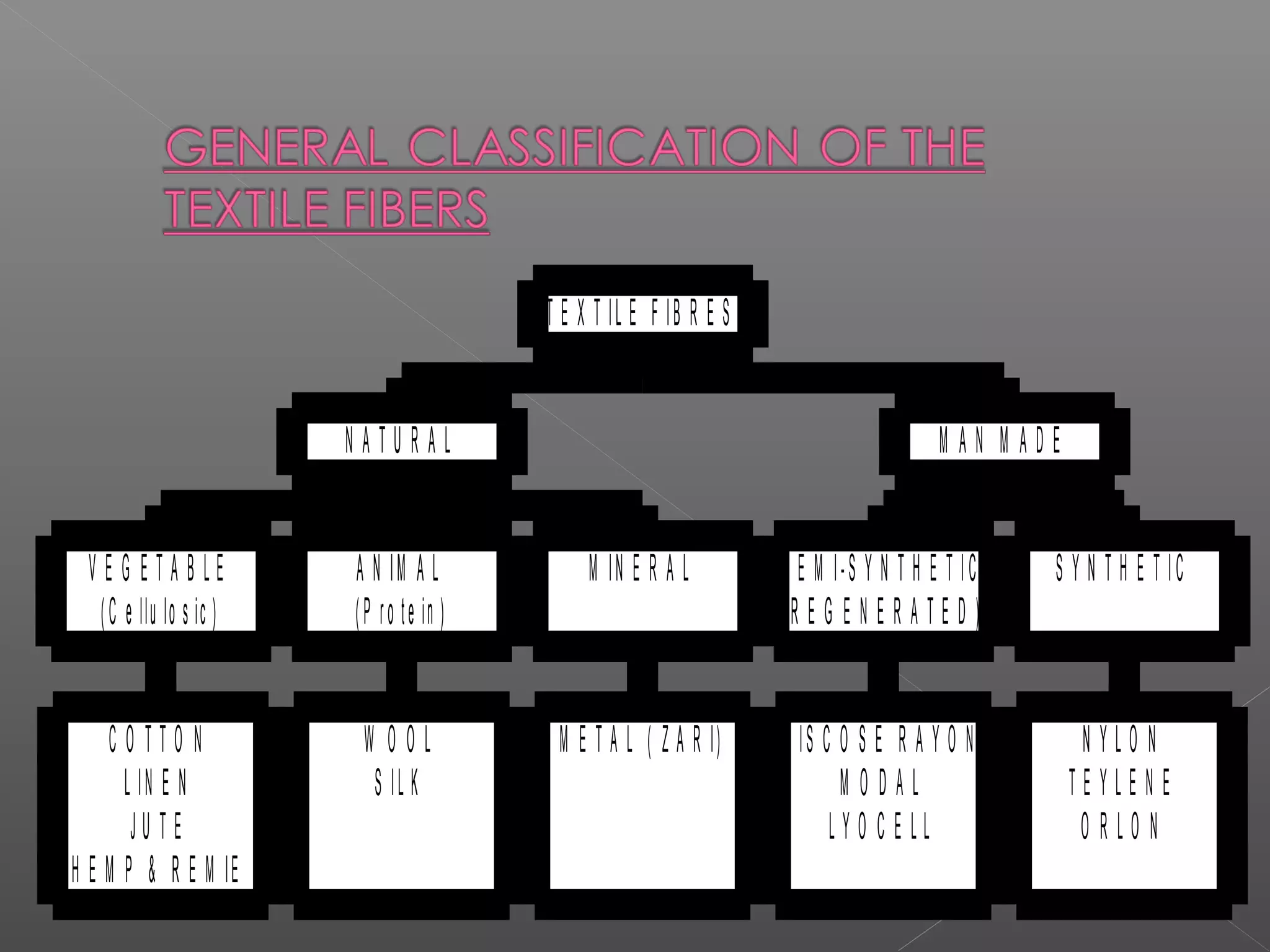
C O T T O N
L IN E N
J U T E
H E M P & R E M IE
V E G E T A B L E
(C e llu lo s ic )
W O O L
S IL K
A N IM A L
(P ro te in )
M E T A L ( Z A R I)
M IN E R A L
N A T U R A L
V IS C O S E R A Y O N
M O D A L
L Y O C E L L
S E M I-S Y N T H E T IC
(R E G E N E R A T E D )
N Y L O N
T E Y L E N E
O R L O N
S Y N T H E T IC
M A N M A D E
T E X T IL E F IB R E S
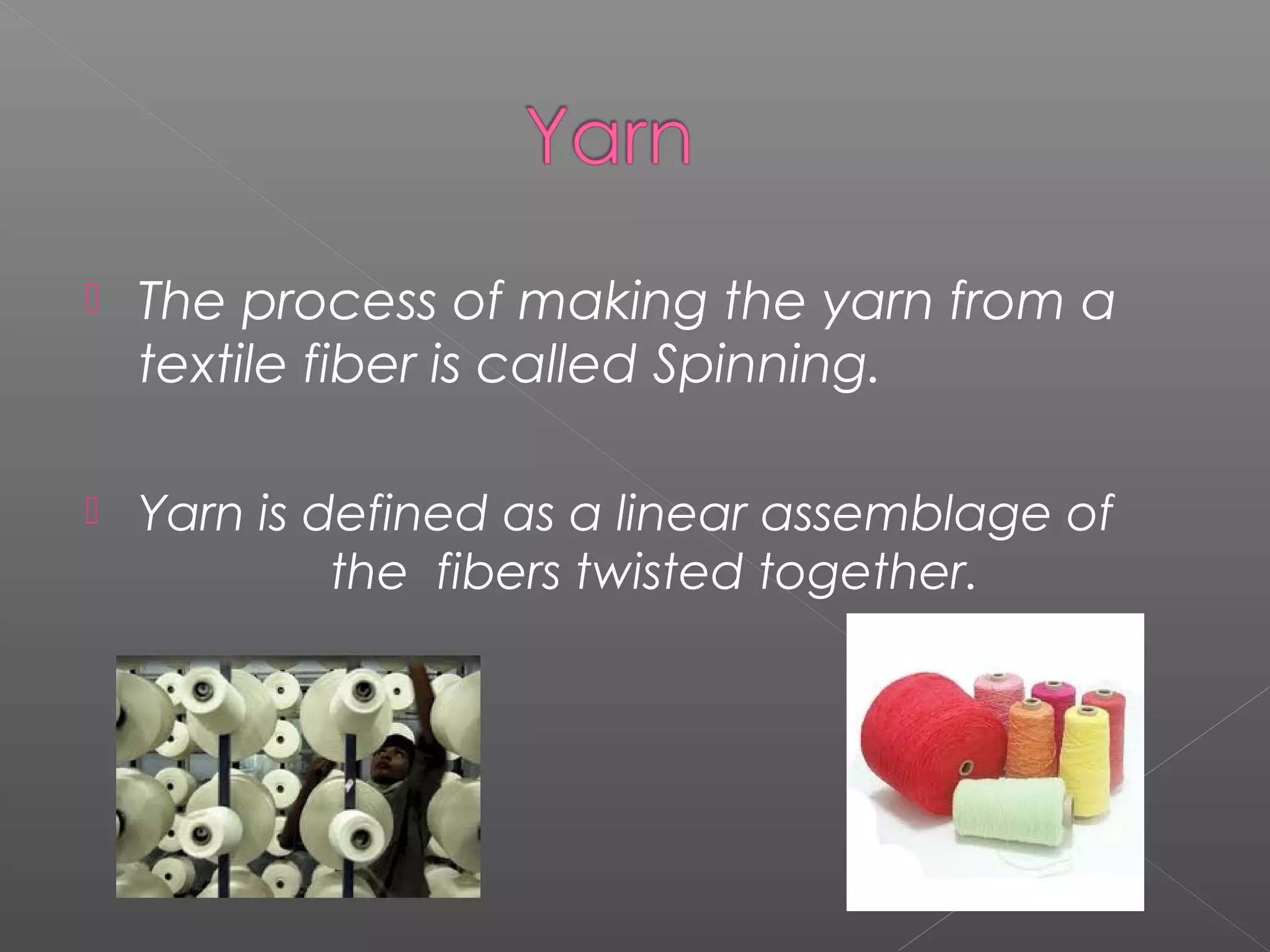
 The process of making the yarn from a
textile fiber is called Spinning.
 Yarn is defined as a linear assemblage of
the fibers twisted together.
B. Yarns are classed based on fiber
length and method of processing
1) Blow room
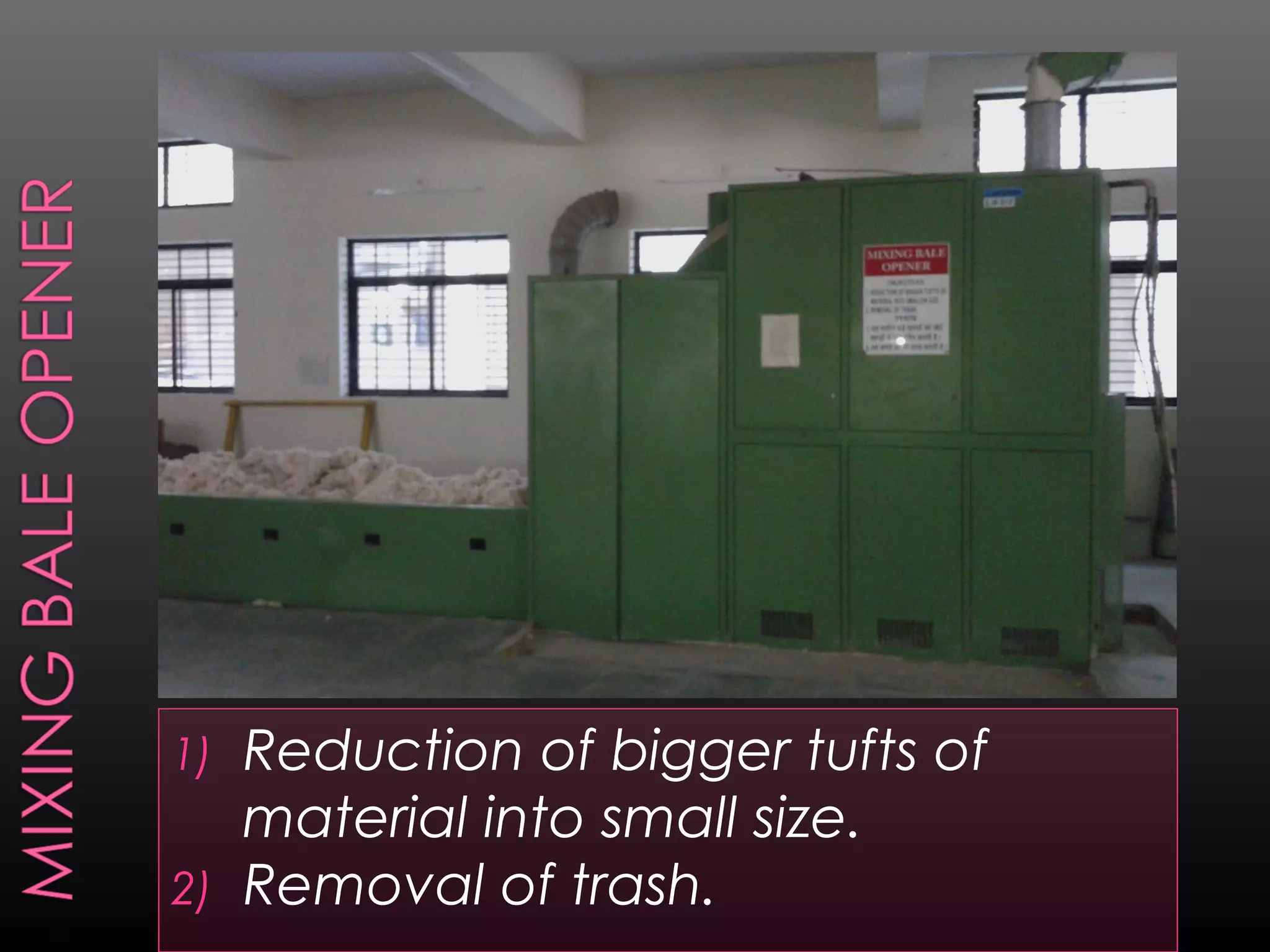
a) Mixing bale opener
b) Condenser & cages
c) Hopper feeder
d) Breaker scutcher
e) finisher scutcher
f) Lap forming unit
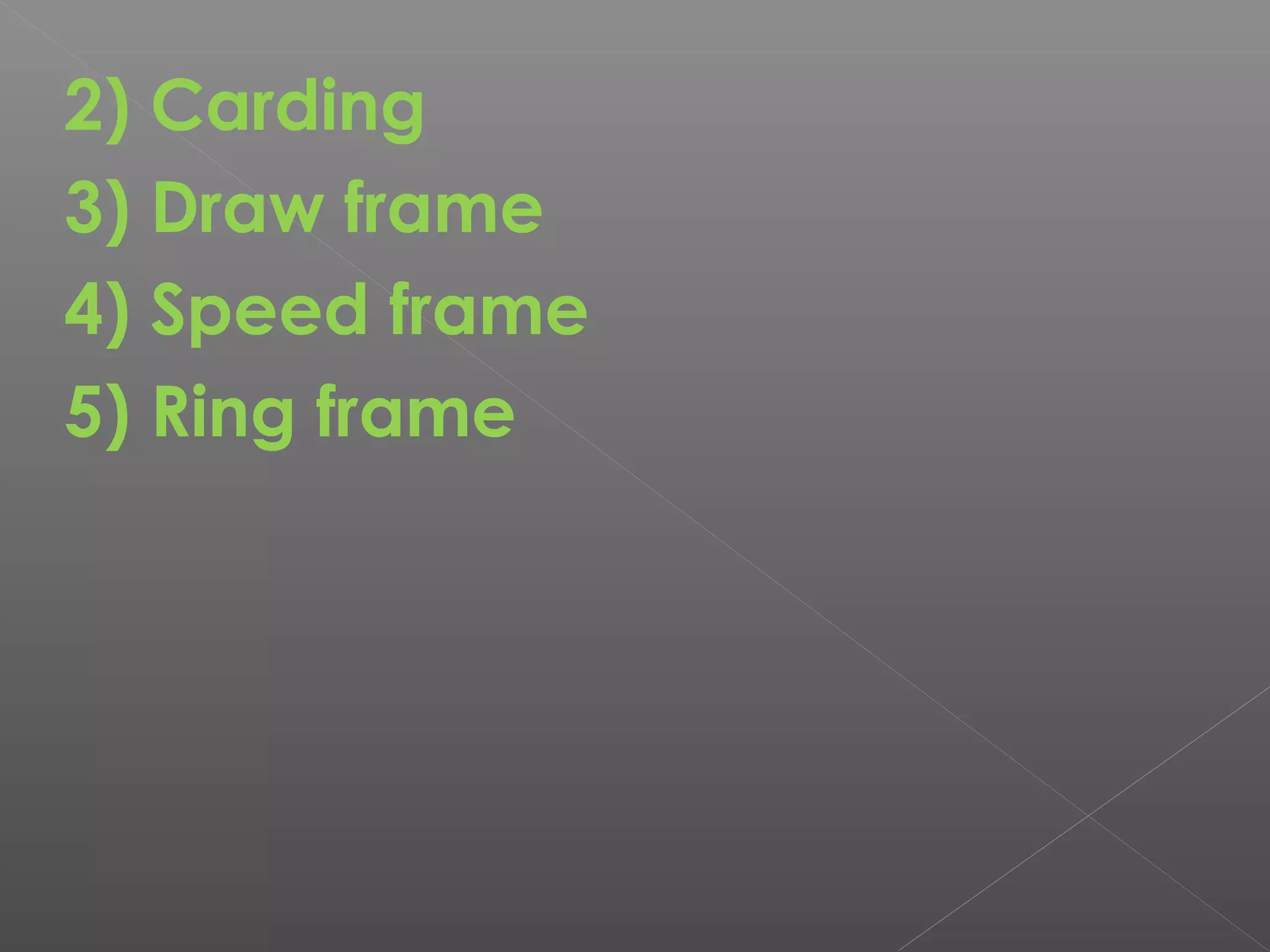
2) Carding
3) Draw frame
4) Speed frame
5) Ring frame
Make – lakshmi reater
Model- lb 3/2
1) Reduction of bigger tufts of
material into small size.
2) Removal of trash.
 BALE OPENING or BREAKING:
 The cotton tufts are opened in this
process.
 As the cotton arrives in an extremely
compressed condition the first
operation is to loosen the matted
fibers
 The cotton fiber is loosen by means of
rotating spiked rollers of the bale
opener.
 This is a process of mixing the
same/different category of fibers
to get desired properties and cost
effectiveness.
 Mixing is done after the study of
the essential properties of fiber like
staple length,Tensile strength,
fineness, uniformity etc.
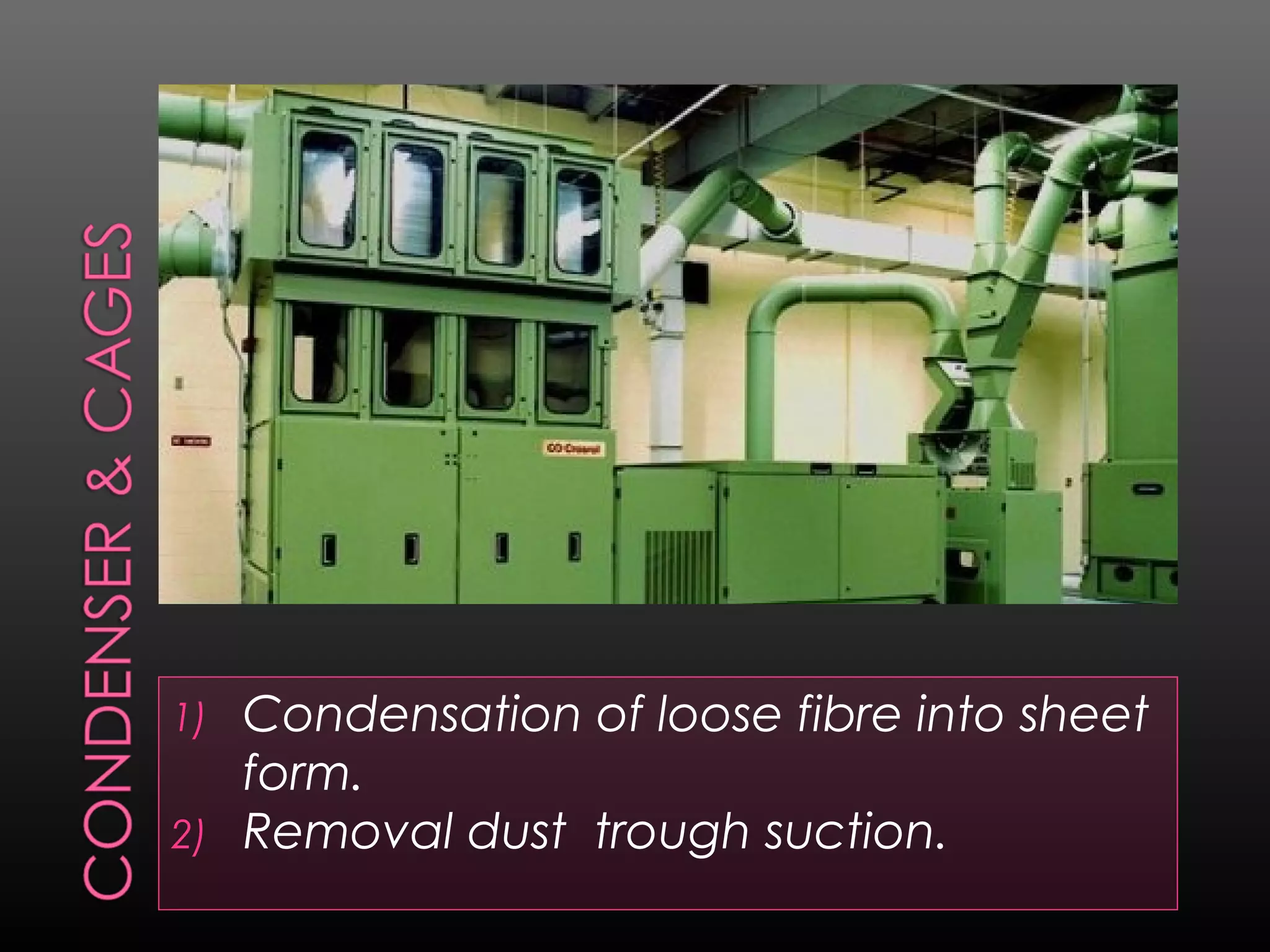
1) Condensation of loose fibre into sheet
form.
2) Removal dust trough suction.
1) Reduction of tuft size.
2) Opening cleaning & removal of trash.
3) Condensation of fibre.
1) Maintaining uniform eveness .
2) Feeding to finisher scutcher.
1) Extraction of trash by opening with two
bladed beater.
2) Cleaning of the open material with dust
removal.
1) Further cleaning by opening with
krishner beater.
2) Maintain uniform evenness.
3) Removal of dust.
1)Convert shed of fibre into lap.
1) Indiviualization of fibre.
2) Removal of trash & dust.
3) Removal of short fibre & nep.
4) Conversion of lap into sliver.
 Carding is the heart of spinning in
this process the minute impurities
like small seed particles,immature
fibers etc. are removed.
 The straightening and aligning of
fibers are done in this process.
 In carding the Blow room lap is
attenuated to the card sliver.
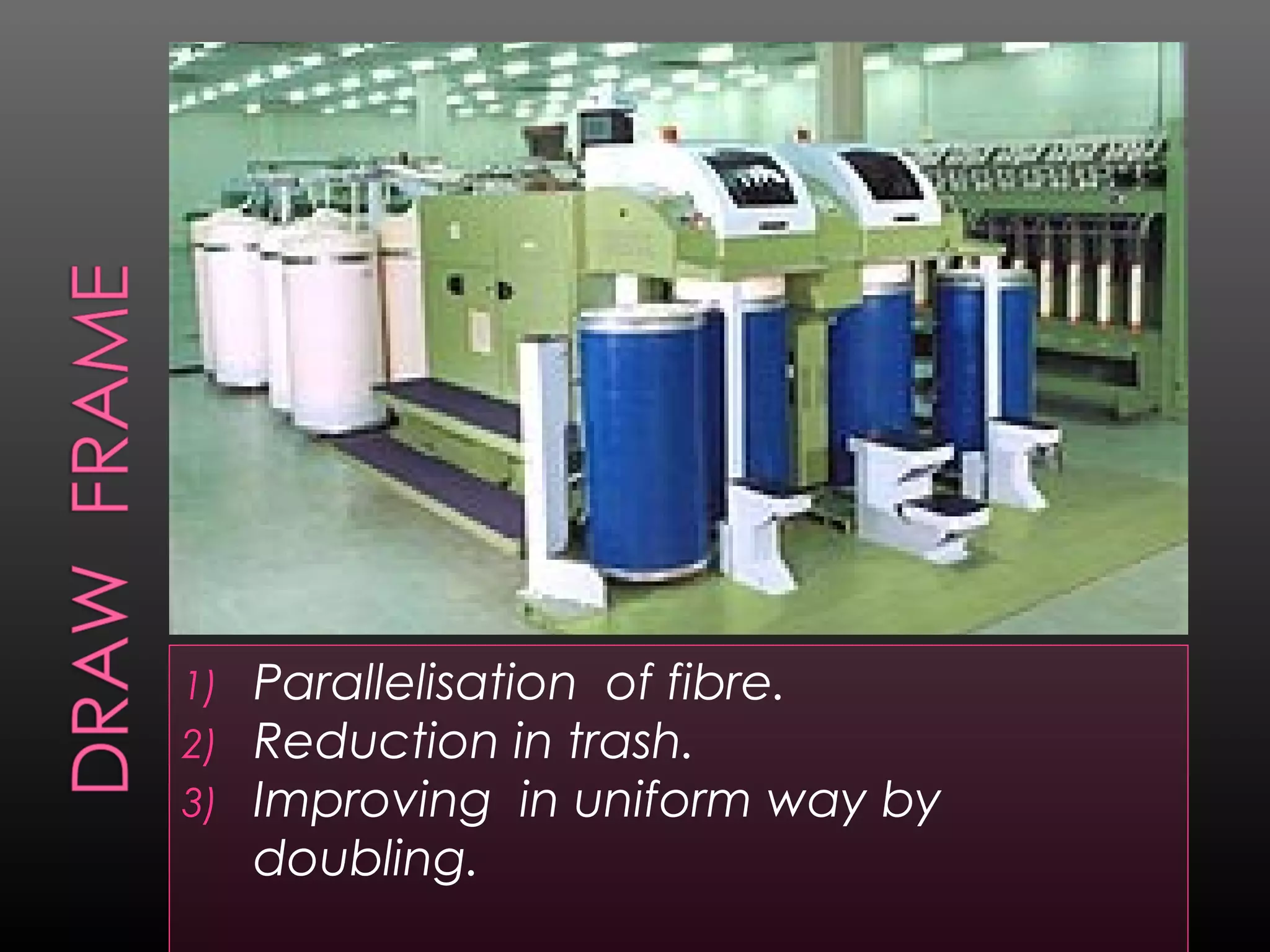
1) Parallelisation of fibre.
2) Reduction in trash.
3) Improving in uniform way by
doubling.
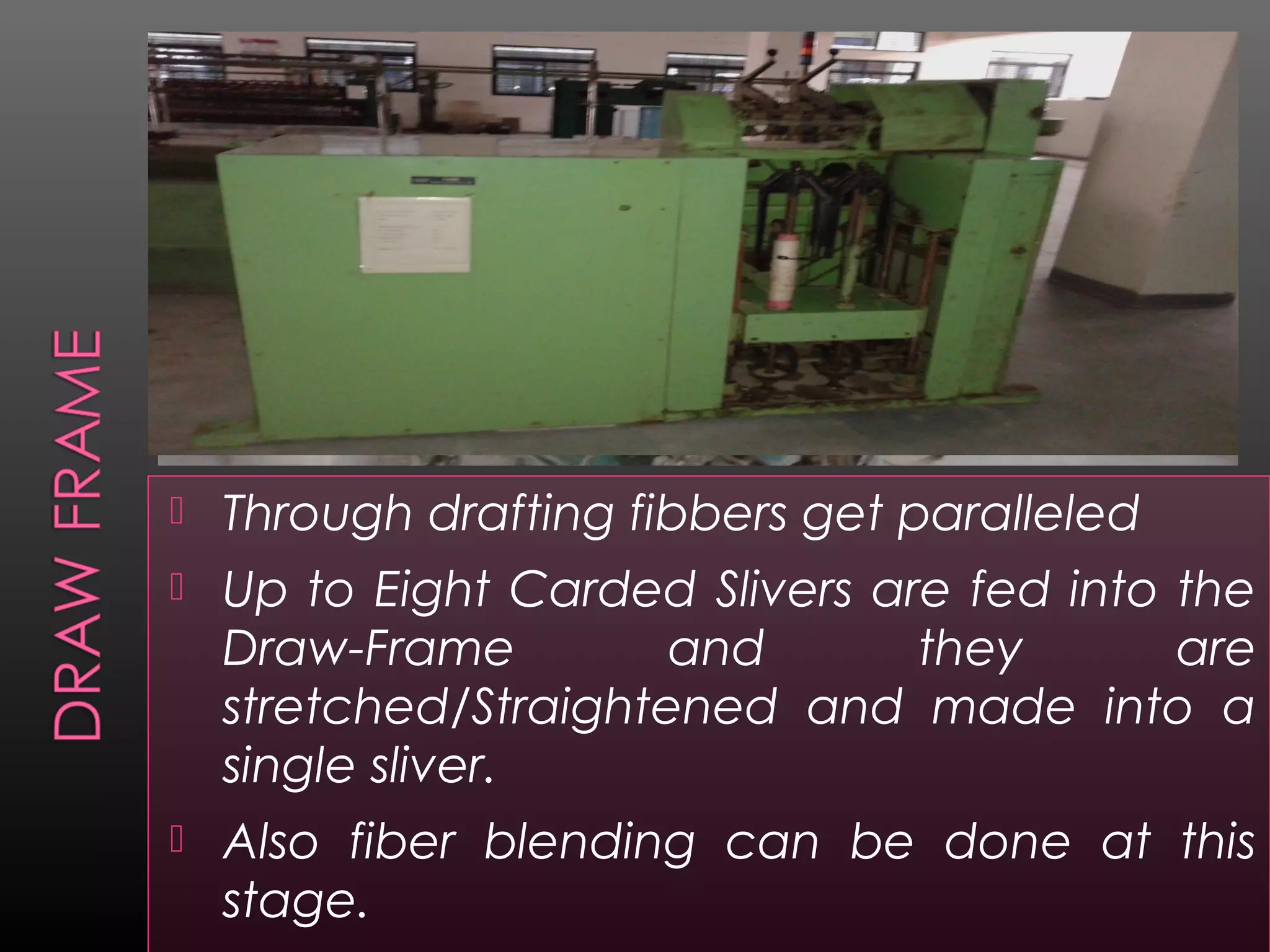
 Through drafting fibbers get paralleled
 Up to Eight Carded Slivers are fed into the
Draw-Frame and they are
stretched/Straightened and made into a
single sliver.
 Also fiber blending can be done at this
stage.
1) Reduction of no. of fibre into sliver.
2) Parallelisation of fibre & convert in
roving.
 Further drafting is done here to get
the fibers more aligned/paralleled.
 The Sliver from Draw-Frame is thicker
and will be difficult to be fed into the
Ring-frame as is, hence here the
Slivers are stretched and were made
thinner by Drafting and mild twisting
(so as to strengthen the Roving).
 The End-Product from the Simplex is
called as Roving.
1) Conversion roving into yarn.
2) Improving the strength by twisting.
3) Winding into suitable package.
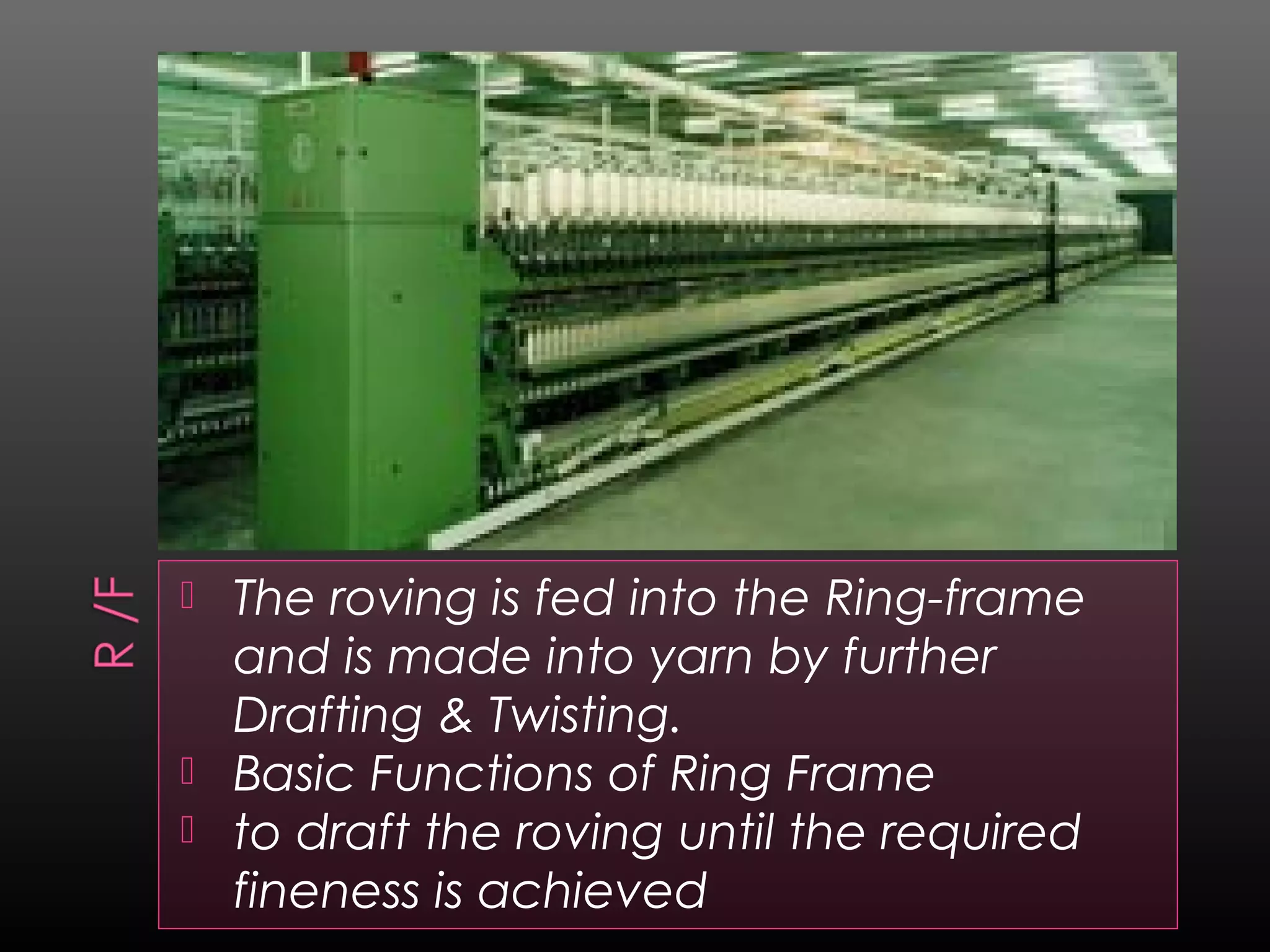
 The roving is fed into the Ring-frame
and is made into yarn by further
Drafting & Twisting.
 Basic Functions of Ring Frame
 to draft the roving until the required
fineness is achieved
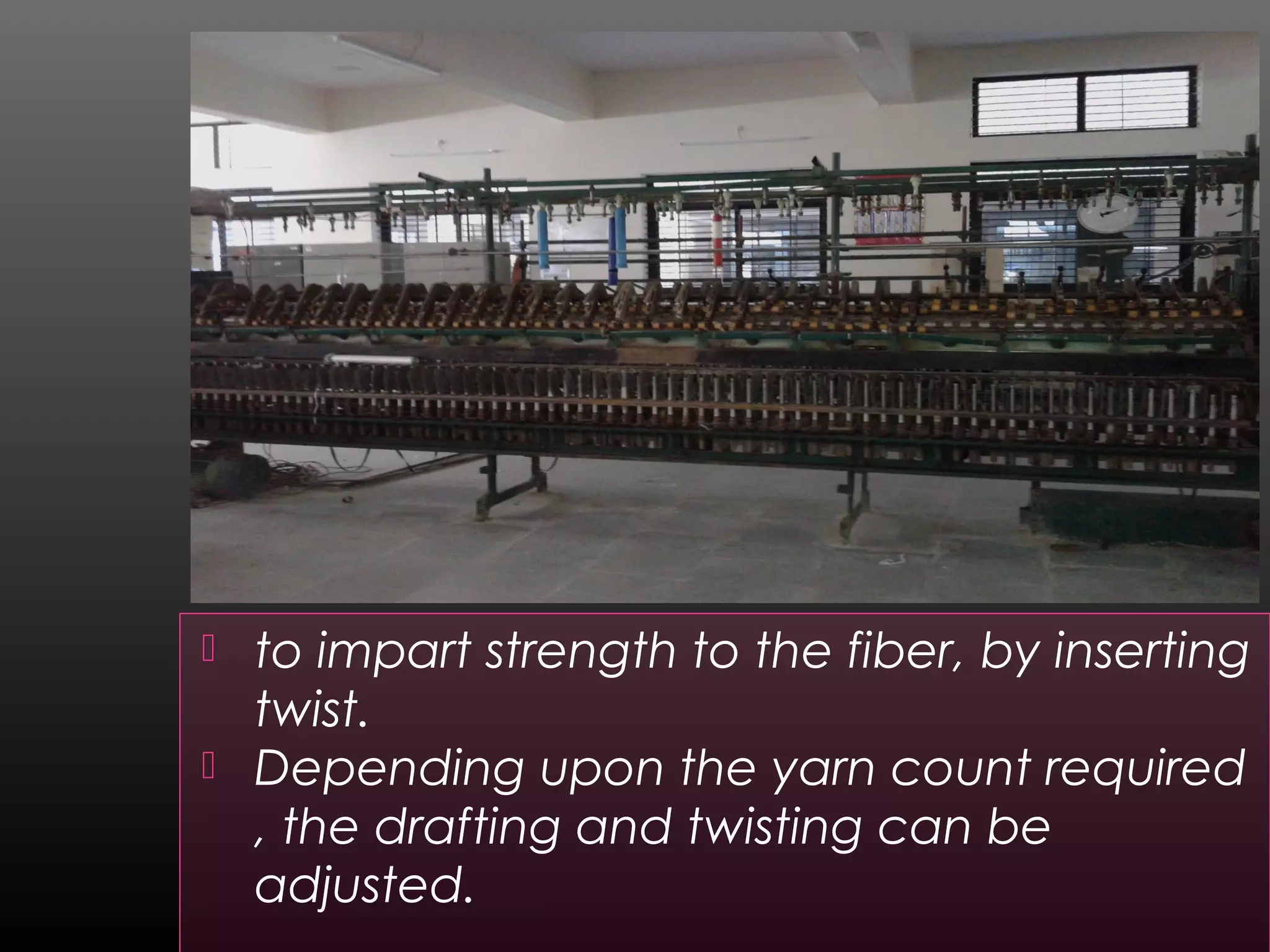
 to impart strength to the fiber, by inserting
twist.
 Depending upon the yarn count required
, the drafting and twisting can be
adjusted.
SUBMITTED BY:

yarn manu. carding,blowroom

  • 1.
     Presentation on“SPINNING” (yarn manufacturing)
  • 2.
     Textile FiberSelection  Yarn (Spinning)  Weaving or knitting  Processing(Dyeing & Printing)  Finishing
  • 3.
    C O TT O N L IN E N J U T E H E M P & R E M IE V E G E T A B L E (C e llu lo s ic ) W O O L S IL K A N IM A L (P ro te in ) M E T A L ( Z A R I) M IN E R A L N A T U R A L V IS C O S E R A Y O N M O D A L L Y O C E L L S E M I-S Y N T H E T IC (R E G E N E R A T E D ) N Y L O N T E Y L E N E O R L O N S Y N T H E T IC M A N M A D E T E X T IL E F IB R E S
  • 4.
     The processof making the yarn from a textile fiber is called Spinning.  Yarn is defined as a linear assemblage of the fibers twisted together.
  • 5.
    B. Yarns areclassed based on fiber length and method of processing
  • 6.
    1) Blow room a)Mixing bale opener b) Condenser & cages c) Hopper feeder d) Breaker scutcher e) finisher scutcher f) Lap forming unit
  • 7.
    2) Carding 3) Drawframe 4) Speed frame 5) Ring frame
  • 8.
    Make – lakshmireater Model- lb 3/2
  • 10.
    1) Reduction ofbigger tufts of material into small size. 2) Removal of trash.
  • 11.
     BALE OPENINGor BREAKING:  The cotton tufts are opened in this process.  As the cotton arrives in an extremely compressed condition the first operation is to loosen the matted fibers  The cotton fiber is loosen by means of rotating spiked rollers of the bale opener.
  • 12.
     This isa process of mixing the same/different category of fibers to get desired properties and cost effectiveness.  Mixing is done after the study of the essential properties of fiber like staple length,Tensile strength, fineness, uniformity etc.
  • 15.
    1) Condensation ofloose fibre into sheet form. 2) Removal dust trough suction.
  • 16.
    1) Reduction oftuft size. 2) Opening cleaning & removal of trash. 3) Condensation of fibre.
  • 19.
    1) Maintaining uniformeveness . 2) Feeding to finisher scutcher.
  • 20.
    1) Extraction oftrash by opening with two bladed beater. 2) Cleaning of the open material with dust removal.
  • 21.
    1) Further cleaningby opening with krishner beater. 2) Maintain uniform evenness. 3) Removal of dust.
  • 22.
    1)Convert shed offibre into lap.
  • 23.
    1) Indiviualization offibre. 2) Removal of trash & dust. 3) Removal of short fibre & nep. 4) Conversion of lap into sliver.
  • 24.
     Carding isthe heart of spinning in this process the minute impurities like small seed particles,immature fibers etc. are removed.  The straightening and aligning of fibers are done in this process.  In carding the Blow room lap is attenuated to the card sliver.
  • 25.
    1) Parallelisation offibre. 2) Reduction in trash. 3) Improving in uniform way by doubling.
  • 26.
     Through draftingfibbers get paralleled  Up to Eight Carded Slivers are fed into the Draw-Frame and they are stretched/Straightened and made into a single sliver.  Also fiber blending can be done at this stage.
  • 27.
    1) Reduction ofno. of fibre into sliver. 2) Parallelisation of fibre & convert in roving.
  • 28.
     Further draftingis done here to get the fibers more aligned/paralleled.  The Sliver from Draw-Frame is thicker and will be difficult to be fed into the Ring-frame as is, hence here the Slivers are stretched and were made thinner by Drafting and mild twisting (so as to strengthen the Roving).  The End-Product from the Simplex is called as Roving.
  • 29.
    1) Conversion rovinginto yarn. 2) Improving the strength by twisting. 3) Winding into suitable package.
  • 30.
     The rovingis fed into the Ring-frame and is made into yarn by further Drafting & Twisting.  Basic Functions of Ring Frame  to draft the roving until the required fineness is achieved
  • 31.
     to impartstrength to the fiber, by inserting twist.  Depending upon the yarn count required , the drafting and twisting can be adjusted.
  • 32.