‘‘XML DATABASE
MIGRATION”
• Introduction
• Existing system
• Proposed system
• Block Diagram
• Scope
• Modules
• Requirements
• Software Requirements
• Hardware Requirements
• About the Technology
• Conclusion
 XML Database migration is a project of migrating the existing
database into XML file format. We provide authentication for the
user and protect the database sources from unauthorized access.
 The User with valid username and password can only proceed with
further conversion process.
 The user is allowed to select the database type from the available
database types. Here the appropriate database server is connected
using the specified database name.
 The User is prompted for the database name and the appropriate
tables are listed. The User is made to select the table for which the
conversion is to be carried out. The table is retrieved from the
database.
 The tables selected by the User can also be previewed for the case
of reducing mal-selections. The table is subjected for conversion
after manual verification.
Existing system
 The Existing system provides access for single
database conversions.
 At present databases are widely used in all sort of
applications, hence the maintenance charge of these
databases will increases as the size increases.
 The retrieval of data from the database is very slow
when we are browsing the site.
Limitations on Existing system
 Data corruption will occur .
 Unnecessary expenses for database security and
monitoring.
 Requires huge memory space.
 Maintenance of database is expensive.
Proposed system
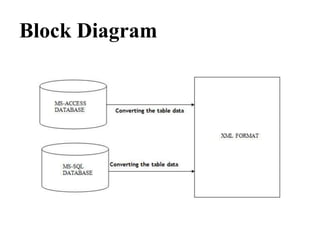
• Here we provide multiple databases conversions
such as Ms-Access and SQL.
• The database tables are converted into XML file
format.
• We use flat file format, so that this project has an
ability to store any kind of data from the application
system.
• XML database is a file and it consumes less memory.
Features on Proposed system
No data loss.
Occupies less memory space.
Accessing will be fast while processing data.
Enhanced security is assured since we provide
authentication while retrieving tables from the
databases.
Human resource is reduced and system efficiency
is retained.
Platform independent.
Block Diagram
Modules
1. Designing Databases
2. Designing Master pages
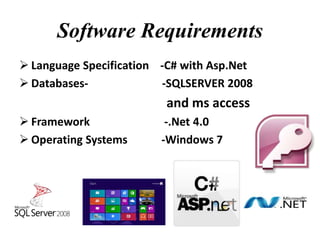
Software Requirements
 Language Specification -C# with Asp.Net
 Databases- -SQLSERVER 2008
and ms access
 Framework -.Net 4.0
 Operating Systems -Windows 7
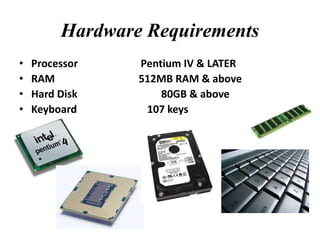
Hardware Requirements
• Processor Pentium IV & LATER
• RAM 512MB RAM & above
• Hard Disk 80GB & above
• Keyboard 107 keys
Conclusion
Using this project we can easily migrate the existing
database. The XML is a text format flat file, so our
system has an ability to store any kind of data under
different platform.
Even though our source database crashes, we can
backup the database from XML file.
Xml
Xml

Xml

  • 1.
  • 2.
    • Introduction • Existingsystem • Proposed system • Block Diagram • Scope • Modules • Requirements • Software Requirements • Hardware Requirements • About the Technology • Conclusion
  • 3.
     XML Databasemigration is a project of migrating the existing database into XML file format. We provide authentication for the user and protect the database sources from unauthorized access.  The User with valid username and password can only proceed with further conversion process.  The user is allowed to select the database type from the available database types. Here the appropriate database server is connected using the specified database name.  The User is prompted for the database name and the appropriate tables are listed. The User is made to select the table for which the conversion is to be carried out. The table is retrieved from the database.  The tables selected by the User can also be previewed for the case of reducing mal-selections. The table is subjected for conversion after manual verification.
  • 4.
    Existing system  TheExisting system provides access for single database conversions.  At present databases are widely used in all sort of applications, hence the maintenance charge of these databases will increases as the size increases.  The retrieval of data from the database is very slow when we are browsing the site.
  • 5.
    Limitations on Existingsystem  Data corruption will occur .  Unnecessary expenses for database security and monitoring.  Requires huge memory space.  Maintenance of database is expensive.
  • 6.
    Proposed system • Herewe provide multiple databases conversions such as Ms-Access and SQL. • The database tables are converted into XML file format. • We use flat file format, so that this project has an ability to store any kind of data from the application system. • XML database is a file and it consumes less memory.
  • 7.
    Features on Proposedsystem No data loss. Occupies less memory space. Accessing will be fast while processing data. Enhanced security is assured since we provide authentication while retrieving tables from the databases. Human resource is reduced and system efficiency is retained. Platform independent.
  • 8.
  • 9.
    Modules 1. Designing Databases 2.Designing Master pages
  • 10.
    Software Requirements  LanguageSpecification -C# with Asp.Net  Databases- -SQLSERVER 2008 and ms access  Framework -.Net 4.0  Operating Systems -Windows 7
  • 11.
    Hardware Requirements • ProcessorPentium IV & LATER • RAM 512MB RAM & above • Hard Disk 80GB & above • Keyboard 107 keys
  • 12.
    Conclusion Using this projectwe can easily migrate the existing database. The XML is a text format flat file, so our system has an ability to store any kind of data under different platform. Even though our source database crashes, we can backup the database from XML file.