Database migration is the transferring of data between storage
types, formats, or computer systems. Database migration is
usually performed programmatically to achieve an automated
migration, freeing up human resources from tedious tasks. It is
required when organizations or individuals change computer
systems or upgrade to new systems.
        For example:- Organisation want to move from one
database to other because of some business requirement, then
they can go for database migration. Capital One is one of the US
largest credit card industry, initially they used oracle as their
database, but when their volume grow Oracle not able to
support this huge volume of data, then they move to another
database called as Teradata which can store terabyte of
information and improve the data processing speed.
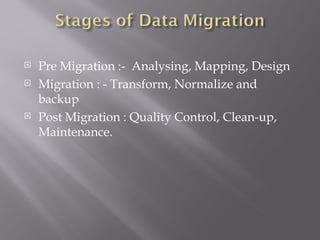
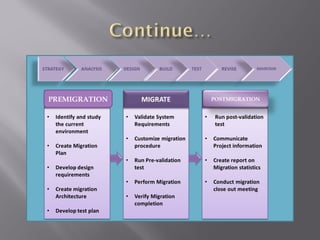
   Pre Migration :- Analysing, Mapping, Design
   Migration : - Transform, Normalize and
    backup
   Post Migration : Quality Control, Clean-up,
    Maintenance.
PREMIGRATION   POSTMIGRATION
   Analysis:- The analysis phase of data migration should be scheduled to
    occur concurrently with the analysis phase of the core project. The aim of
    the analysis phase in data migration projects is to identify the data
    sources that must be transported into the new system. For example what
    is my source database and what is my target database.
   Mapping:- Mapped each source field to target field. Eg. In my source
    table I have emp_id, salary as column in target database what should be
    my column name and its datatype.
   Design :- After you have decided upon the legacy data sources and have
    conducted thorough data analysis, you must begin the roster selection.
    This involves going through the list of data elements from each and every
    source data structure, and deciding whether to migrate each one.
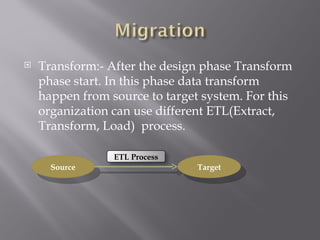
   Transform:- After the design phase Transform
    phase start. In this phase data transform
    happen from source to target system. For this
    organization can use different ETL(Extract,
    Transform, Load) process.

                 ETL Process
      Source                    Target
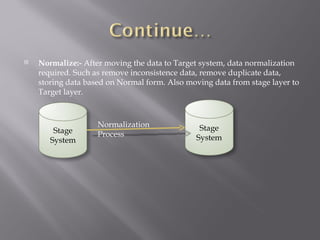
   Normalize:- After moving the data to Target system, data normalization
    required. Such as remove inconsistence data, remove duplicate data,
    storing data based on Normal form. Also moving data from stage layer to
    Target layer.


                    Normalization               Stage
        Stage       Process
       System                                  System
   Back Up:- This is one of the important phase of
    the migration. After transforming data from
    source to target state organization need to
    create backup process. This will help during
    database maintenance and recovery process.
   Quality Control:-This is the import phase in Post migration process.
    Here testing team need to check target database table structure, column
    type and its value. Also need to map this value with source system value.
    If any error occur then raise an defect and assign to the concern team.
    Also ask Business to verify their system whether the output is as expected
    or not. Also need to create reports, wellness check document and
    published these document in the organization portal.
   Clean-Up:- During migration process data transformation happened
    through different channels, such as file system, Temporary tables etc.
    After the migration process complete need to clean these temporary
    system.
   Maintenance:- The maintain phase is where all of the mappings are
    validated and successfully implemented in a series of scripts that have
    been thoroughly tested. In all organization they have separate team
    which take care of this process, they maintain the Database, do
    housekeeping. Organization spend huge amount in the maintenance
    phase.
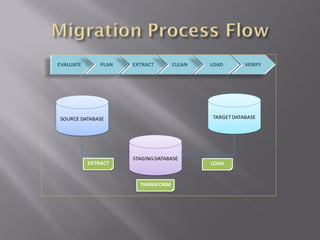
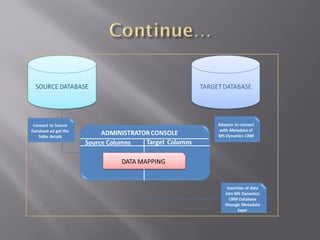
   The solution which is proposed here works on the
    concept of ETL methodology where in the data is
    extracted from the source database transformed
    within staging database and then commenced into
    target database.
   Whether to use staging database or not depends on
    the fact that what is the amount of cleansing and
    data transformation is required.
   Minimal amount of data cleansing or
    transformation can be managed within the data
    migration tool using a query builder tool but as a
    best practice major cleansing has to be done using
    a staging database.
Database migration
Database migration

Database migration

  • 2.
    Database migration isthe transferring of data between storage types, formats, or computer systems. Database migration is usually performed programmatically to achieve an automated migration, freeing up human resources from tedious tasks. It is required when organizations or individuals change computer systems or upgrade to new systems. For example:- Organisation want to move from one database to other because of some business requirement, then they can go for database migration. Capital One is one of the US largest credit card industry, initially they used oracle as their database, but when their volume grow Oracle not able to support this huge volume of data, then they move to another database called as Teradata which can store terabyte of information and improve the data processing speed.
  • 4.
    Pre Migration :- Analysing, Mapping, Design  Migration : - Transform, Normalize and backup  Post Migration : Quality Control, Clean-up, Maintenance.
  • 5.
    PREMIGRATION POSTMIGRATION
  • 6.
    Analysis:- The analysis phase of data migration should be scheduled to occur concurrently with the analysis phase of the core project. The aim of the analysis phase in data migration projects is to identify the data sources that must be transported into the new system. For example what is my source database and what is my target database.  Mapping:- Mapped each source field to target field. Eg. In my source table I have emp_id, salary as column in target database what should be my column name and its datatype.  Design :- After you have decided upon the legacy data sources and have conducted thorough data analysis, you must begin the roster selection. This involves going through the list of data elements from each and every source data structure, and deciding whether to migrate each one.
  • 7.
    Transform:- After the design phase Transform phase start. In this phase data transform happen from source to target system. For this organization can use different ETL(Extract, Transform, Load) process. ETL Process Source Target
  • 8.
    Normalize:- After moving the data to Target system, data normalization required. Such as remove inconsistence data, remove duplicate data, storing data based on Normal form. Also moving data from stage layer to Target layer. Normalization Stage Stage Process System System
  • 9.
    Back Up:- This is one of the important phase of the migration. After transforming data from source to target state organization need to create backup process. This will help during database maintenance and recovery process.
  • 10.
    Quality Control:-This is the import phase in Post migration process. Here testing team need to check target database table structure, column type and its value. Also need to map this value with source system value. If any error occur then raise an defect and assign to the concern team. Also ask Business to verify their system whether the output is as expected or not. Also need to create reports, wellness check document and published these document in the organization portal.  Clean-Up:- During migration process data transformation happened through different channels, such as file system, Temporary tables etc. After the migration process complete need to clean these temporary system.  Maintenance:- The maintain phase is where all of the mappings are validated and successfully implemented in a series of scripts that have been thoroughly tested. In all organization they have separate team which take care of this process, they maintain the Database, do housekeeping. Organization spend huge amount in the maintenance phase.
  • 11.
    The solution which is proposed here works on the concept of ETL methodology where in the data is extracted from the source database transformed within staging database and then commenced into target database.  Whether to use staging database or not depends on the fact that what is the amount of cleansing and data transformation is required.  Minimal amount of data cleansing or transformation can be managed within the data migration tool using a query builder tool but as a best practice major cleansing has to be done using a staging database.