Downloaded 35 times




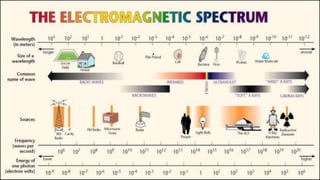


















X-rays were discovered in 1895 by Wilhelm Röntgen while experimenting with cathode ray tubes. X-rays are electromagnetic waves with short wavelengths between 10-12 to 10-8 meters that can penetrate materials. They are produced when high velocity electrons collide with a metal target in an x-ray tube, emitting x-rays. Common medical uses of x-rays include computed tomography (CT) scans, which produce detailed cross-sectional images of the body by combining multiple x-ray images taken around its rotation. Other applications include astronomy, construction, and measuring bone density.


