X-ray physics
By
Dr. Tarek Mansour
Content






Introduction, history and basic physics.
How radiograph produce.
Interaction of x-ray with patient.
Formation of the image.
Processing the film.
Introduction, history
and basic physics.
Discovery of x-rays




Discovered in 1895 by German physicist named
Wilhelm Roentgen.
He found shadow of his bone on fluorescent
screen.


X-rays are a form of electromagnetic radiation
similar to visible light but with short wave
length.
Radiation physics
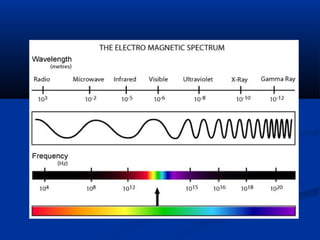
Electromagnetic spectrum




Electromagnetic radiation consists of energy in
small packets called photons.
They are grouped according to there wave
length and frequency.
Properties of x-rays


Are electromagnetic
radiations composed of
small packets of energy
called photons.








Travel at speed of light.
Travel in straight lines.
Highly penetrating.
Invisible.
Blacken radiographic
films.
Produce scatter.
Atoms structures




Positively charged
protons in nucleus.
Neutrons of no charge
also in the nucleus.



Negatively charged
electrons in various
orbits around the
nucleus.
Atomic number





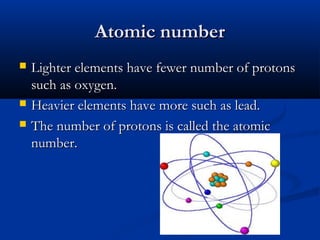
Lighter elements have fewer number of protons
such as oxygen.
Heavier elements have more such as lead.
The number of protons is called the atomic
number.
Density of matter.




Low density matter is loosely packed with large
spaces between each atom like air.
High density matter is tightly packed with atoms
sitting close to each other like lead.
How radiographs are
produced
Production of radiograph




X-ray are produced in the machine.
X-ray interact with the patient.
Image is recorded in the x-ray plate.
Production of the x-ray
radiations on the
machine.
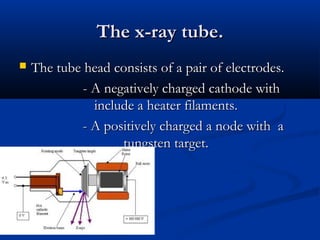
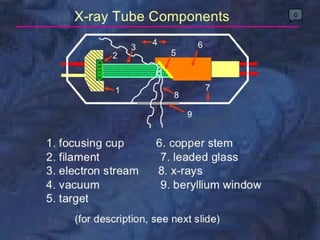
The x-ray tube.


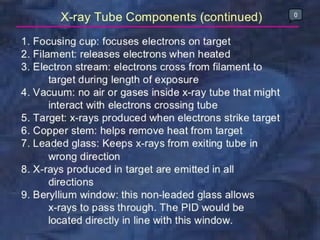
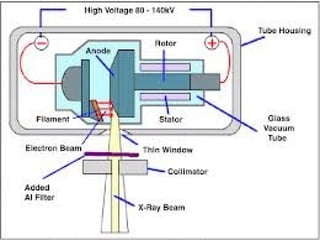
The tube head consists of a pair of electrodes.
- A negatively charged cathode with
include a heater filaments.
- A positively charged a node with a
tungsten target.
Steps in x-ray production.






Filament is heated and gives off cloud of
electrons.
A large electrical charge is placed in the
cathode/anode space causing the electrons to
race toward the anode.
When they crush into the anode it causes x-ray
to be given off.
X-ray machine components.





The tube head where the x-rays are generated.
The control panel which regulate the strength
and amount of the x-rays produced and trigger
the exposure.
The power supply which provide the energy to
creates the x-rays.
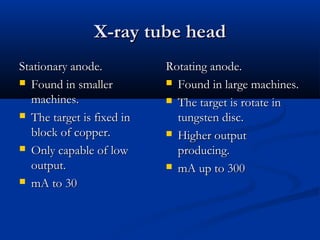
X-ray tube head
Stationary anode.
 Found in smaller
machines.
 The target is fixed in
block of copper.
 Only capable of low
output.
 mA to 30

Rotating anode.
 Found in large machines.
 The target is rotate in
tungsten disc.
 Higher output
producing.
 mA up to 300
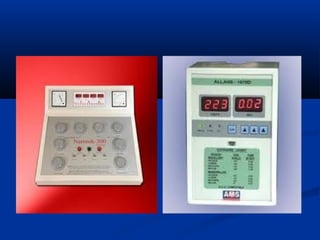
The control panel.

-

The three factors that can be varied during
producing radiograph are
The kilovoltage (KV) difference applied between
the anode and cathode during exposure.
The milliamperage (mA) applied to the filament.
The duration of exposure.
Control panel






Higher kv attract the electrons toward the anode by
greater force.
They smash the anode harder and produce x-ray with
higher energy and greater tissue penetrating power.
Increasing mA increase the number of electrons cloud
around the filament. Result in higher number of x-ray
produced per second.
How x-ray interact
with patients.
Three things occured




Some x-rays absorbed.
Some pass straight through the patient.
Some scattered.
Depend on three things





X-ray energy. In high kv most of x-rays pass to
the film through the patient.
Atomic number of the absorber.
Thickness and density of the object.
How image is formed




As an x-ray beam leave the tube head, it fans out
and become weaker.
As the distance double, the strength is reduced.
Formation of the image






The distance from the anode target to the film is
called the film focal distance.
Changing the distance affect the quantity of the
x-ray reaching the film.
Increasing the distance means that less x-rays
reaches the film.
Formation of image


Low density or low
atomic number tissues
allow more x-rays
through causing more
blackening of film.



High density or high
atomic number tissues
allow less x-ray through
causing less blackening
of the film.
Effect of kilovoltage.





Increasing kV, increases the penetrating ability
of the x-rays photons.
More x-ray photons get through to darken film.
High kv produces darker images but poor
contrast.
Effect of milliamperage and time.






Increasing the mA and mAs, increases the
number of x-rays production.
It does not affect the penetrating power of the
photons.
Increase mA will increase overall blackness of
the film.
X-ray film composition.



Polyester base that provide support has bluish
tint.
Film emulsion is a thin layer of chemicals
coating the base composed of.
- Light sensitive silver halide (mainly Bromide
AgBr) crystals.
- gelatins that keep the silver bromide grains
evenly dispersed.
Recording image


When x-ray hits the atoms in the film emulsion
it causes it to change leaving a latent (hidden),
image.
The cassette film






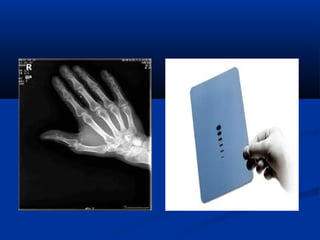
Light proof container for film.
Lead backed to absorb transmitted radiations
and prevent scatter.
Intensifiers to use lower exposure.
Calcium tungstate.
Grids





Composed of hundreds of alternating thin lead
strips with aluminum or fiber interspaces.
X-ray can pass through the interspaces without
interaction.
Lead strips absorb weak energy scatter x-ray that
hit them.
Strips is encased in protective cover.
Processing films
Processing the film
There are five steps
 Developing.
 Rinsing,
 Fixing.
 Washing.
 Drying.
Development





Chemical convert the exposed AgBr in to
metallic silver.
The bromine goes into solution.
Unexposed AgBr is less affected.
Rinsing




Essential to rinse of the developer solution so
that the fixer solution is not contaminated.
Contamination leads to faster exhaustion of the
fixer.
Fixing





Stops development.
Washes away unexposed and undeveloped silver
halide crystals.
Hardens the emulsion.
Washing


To wash all traces of fixer from emulsion.
Draying



Hang up in dust free area to dry.
Automatic processors by it by using hot air.

X ray physics

  • 1.
  • 2.
    Content      Introduction, history andbasic physics. How radiograph produce. Interaction of x-ray with patient. Formation of the image. Processing the film.
  • 3.
  • 4.
    Discovery of x-rays   Discoveredin 1895 by German physicist named Wilhelm Roentgen. He found shadow of his bone on fluorescent screen.
  • 6.
     X-rays are aform of electromagnetic radiation similar to visible light but with short wave length.
  • 7.
  • 8.
    Electromagnetic spectrum   Electromagnetic radiationconsists of energy in small packets called photons. They are grouped according to there wave length and frequency.
  • 10.
    Properties of x-rays  Areelectromagnetic radiations composed of small packets of energy called photons.       Travel at speed of light. Travel in straight lines. Highly penetrating. Invisible. Blacken radiographic films. Produce scatter.
  • 11.
    Atoms structures   Positively charged protonsin nucleus. Neutrons of no charge also in the nucleus.  Negatively charged electrons in various orbits around the nucleus.
  • 12.
    Atomic number    Lighter elementshave fewer number of protons such as oxygen. Heavier elements have more such as lead. The number of protons is called the atomic number.
  • 13.
    Density of matter.   Lowdensity matter is loosely packed with large spaces between each atom like air. High density matter is tightly packed with atoms sitting close to each other like lead.
  • 14.
  • 15.
    Production of radiograph    X-rayare produced in the machine. X-ray interact with the patient. Image is recorded in the x-ray plate.
  • 16.
    Production of thex-ray radiations on the machine.
  • 17.
    The x-ray tube.  Thetube head consists of a pair of electrodes. - A negatively charged cathode with include a heater filaments. - A positively charged a node with a tungsten target.
  • 18.
    Steps in x-rayproduction.    Filament is heated and gives off cloud of electrons. A large electrical charge is placed in the cathode/anode space causing the electrons to race toward the anode. When they crush into the anode it causes x-ray to be given off.
  • 19.
    X-ray machine components.    Thetube head where the x-rays are generated. The control panel which regulate the strength and amount of the x-rays produced and trigger the exposure. The power supply which provide the energy to creates the x-rays.
  • 26.
    X-ray tube head Stationaryanode.  Found in smaller machines.  The target is fixed in block of copper.  Only capable of low output.  mA to 30 Rotating anode.  Found in large machines.  The target is rotate in tungsten disc.  Higher output producing.  mA up to 300
  • 27.
    The control panel.  - Thethree factors that can be varied during producing radiograph are The kilovoltage (KV) difference applied between the anode and cathode during exposure. The milliamperage (mA) applied to the filament. The duration of exposure.
  • 28.
    Control panel    Higher kvattract the electrons toward the anode by greater force. They smash the anode harder and produce x-ray with higher energy and greater tissue penetrating power. Increasing mA increase the number of electrons cloud around the filament. Result in higher number of x-ray produced per second.
  • 31.
  • 32.
    Three things occured    Somex-rays absorbed. Some pass straight through the patient. Some scattered.
  • 33.
    Depend on threethings    X-ray energy. In high kv most of x-rays pass to the film through the patient. Atomic number of the absorber. Thickness and density of the object.
  • 34.
  • 35.
      As an x-raybeam leave the tube head, it fans out and become weaker. As the distance double, the strength is reduced.
  • 36.
    Formation of theimage    The distance from the anode target to the film is called the film focal distance. Changing the distance affect the quantity of the x-ray reaching the film. Increasing the distance means that less x-rays reaches the film.
  • 37.
    Formation of image  Lowdensity or low atomic number tissues allow more x-rays through causing more blackening of film.  High density or high atomic number tissues allow less x-ray through causing less blackening of the film.
  • 38.
    Effect of kilovoltage.    IncreasingkV, increases the penetrating ability of the x-rays photons. More x-ray photons get through to darken film. High kv produces darker images but poor contrast.
  • 39.
    Effect of milliamperageand time.    Increasing the mA and mAs, increases the number of x-rays production. It does not affect the penetrating power of the photons. Increase mA will increase overall blackness of the film.
  • 40.
    X-ray film composition.   Polyesterbase that provide support has bluish tint. Film emulsion is a thin layer of chemicals coating the base composed of. - Light sensitive silver halide (mainly Bromide AgBr) crystals. - gelatins that keep the silver bromide grains evenly dispersed.
  • 55.
    Recording image  When x-rayhits the atoms in the film emulsion it causes it to change leaving a latent (hidden), image.
  • 56.
    The cassette film     Lightproof container for film. Lead backed to absorb transmitted radiations and prevent scatter. Intensifiers to use lower exposure. Calcium tungstate.
  • 58.
    Grids     Composed of hundredsof alternating thin lead strips with aluminum or fiber interspaces. X-ray can pass through the interspaces without interaction. Lead strips absorb weak energy scatter x-ray that hit them. Strips is encased in protective cover.
  • 61.
  • 62.
    Processing the film Thereare five steps  Developing.  Rinsing,  Fixing.  Washing.  Drying.
  • 63.
    Development    Chemical convert theexposed AgBr in to metallic silver. The bromine goes into solution. Unexposed AgBr is less affected.
  • 64.
    Rinsing   Essential to rinseof the developer solution so that the fixer solution is not contaminated. Contamination leads to faster exhaustion of the fixer.
  • 65.
    Fixing    Stops development. Washes awayunexposed and undeveloped silver halide crystals. Hardens the emulsion.
  • 66.
    Washing  To wash alltraces of fixer from emulsion.
  • 67.
    Draying   Hang up indust free area to dry. Automatic processors by it by using hot air.