Presented By :-
Amit Kumar
Junior Consultant Optometrist
Rama Medical College Hospital & Research Center
Mandhana, Kanpur 209217 (U.P)
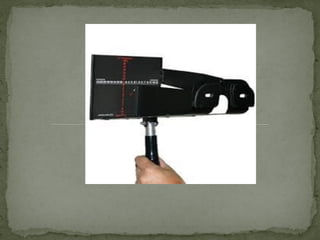
 Maddox wing
 Definition
 Principal
 Procedure
It measure’s the amount of “HETEROPHORIA” for near at 33 cm
can be measured.
The Maddox Wing measures the size of heterophorias (latent
deviations) and small heterotropias (manifest deviations) at near
when normal retinal correspondence (NRC) is present. It is
especially helpful when patients present with symptoms of
diplopia (double vision) with no apparent cause.
It is based on principal of dissociation of fusion by
dissimilar objects of near Phoria.
It is designed in such way that when patient look
through the eye piece.
Right eye sees a vertical white arrow and horizontal
red arrow.
Left eye sees a vertical and horizontal line of numbers.
 The Handle:
 The handle is retractable and is located at the base of the instrument. This is where the
patient holds the apparatus.
 The Eye Piece:
 Located anteriorly, the eye piece is where the patient looks into.
 The Eye-piece lens holder:
 Mainly used to hold lens for patients who have difficulties seeing the board with their
glasses
 The Septa:
 There are 2 septa that separates the eye piece so that the patient has two separate fields
of view.
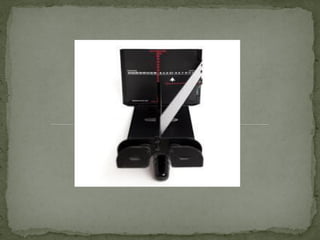
 The Scale Card:
 Used to measure the deviation of heterophorias, small heterotropias (with NRC) and
also torsion. The scale card has the horizontal, vertical and torsional scales. The board
also contains the red and white arrows. This will be further discuss throughout the
video.
 The Torsion Lever:
 On the measuring board there is an adjustable lever which the patient subjectively aligns
to measure torsion.
Ask patient :-
While arrow is pointing at which number of
horizontal line.
Red arrow is pointing at which number of vertical
line.
For Cyclophoria ask patient to align the red arrow
with the horizontal line of number.
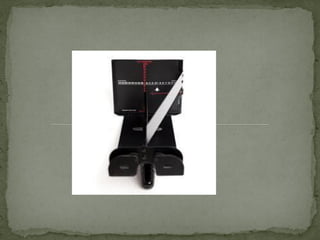
For Cyclophoria, slide the arrow which overlaps the
edge of the chart, untilit appears parallel with
The white line above.
Should the arrow record above zero the scale
indicates the amount of cyclophoria, ex-
cyclophoria.
The test is much more reliable because patient have
to accommodation to see number clearly.
Horizontal, vertical and cyclophorias can be
measured simultaneously.
Hand held instrument.
Not a difficult skill to learn.
Can be used on children.
The interpupillary distance is not adjustable.
It is purely Subjective test.
Can nit be done is patient with accommodation deficiency
(Pseudophakia).
Cannot be performed in the distance.
Contraindicated where abnormal retinal correspondence
(ARC) or suppression are present.
Maddox wing

Maddox wing

  • 1.
    Presented By :- AmitKumar Junior Consultant Optometrist Rama Medical College Hospital & Research Center Mandhana, Kanpur 209217 (U.P)
  • 2.
     Maddox wing Definition  Principal  Procedure
  • 3.
    It measure’s theamount of “HETEROPHORIA” for near at 33 cm can be measured. The Maddox Wing measures the size of heterophorias (latent deviations) and small heterotropias (manifest deviations) at near when normal retinal correspondence (NRC) is present. It is especially helpful when patients present with symptoms of diplopia (double vision) with no apparent cause.
  • 4.
    It is basedon principal of dissociation of fusion by dissimilar objects of near Phoria.
  • 5.
    It is designedin such way that when patient look through the eye piece. Right eye sees a vertical white arrow and horizontal red arrow. Left eye sees a vertical and horizontal line of numbers.
  • 8.
     The Handle: The handle is retractable and is located at the base of the instrument. This is where the patient holds the apparatus.  The Eye Piece:  Located anteriorly, the eye piece is where the patient looks into.  The Eye-piece lens holder:  Mainly used to hold lens for patients who have difficulties seeing the board with their glasses  The Septa:  There are 2 septa that separates the eye piece so that the patient has two separate fields of view.  The Scale Card:  Used to measure the deviation of heterophorias, small heterotropias (with NRC) and also torsion. The scale card has the horizontal, vertical and torsional scales. The board also contains the red and white arrows. This will be further discuss throughout the video.  The Torsion Lever:  On the measuring board there is an adjustable lever which the patient subjectively aligns to measure torsion.
  • 9.
    Ask patient :- Whilearrow is pointing at which number of horizontal line. Red arrow is pointing at which number of vertical line. For Cyclophoria ask patient to align the red arrow with the horizontal line of number.
  • 10.
    For Cyclophoria, slidethe arrow which overlaps the edge of the chart, untilit appears parallel with The white line above. Should the arrow record above zero the scale indicates the amount of cyclophoria, ex- cyclophoria.
  • 12.
    The test ismuch more reliable because patient have to accommodation to see number clearly. Horizontal, vertical and cyclophorias can be measured simultaneously. Hand held instrument. Not a difficult skill to learn. Can be used on children.
  • 13.
    The interpupillary distanceis not adjustable. It is purely Subjective test. Can nit be done is patient with accommodation deficiency (Pseudophakia). Cannot be performed in the distance. Contraindicated where abnormal retinal correspondence (ARC) or suppression are present.