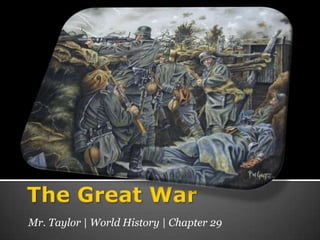
The Great WarMr. Taylor | World History | Chapter 29
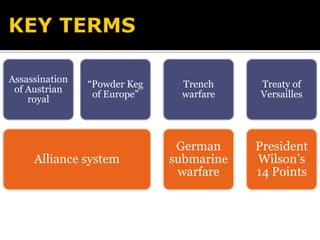
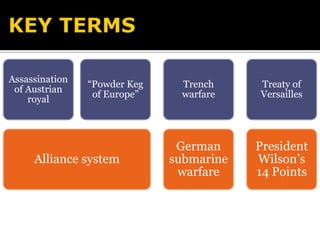
KEY TERMS
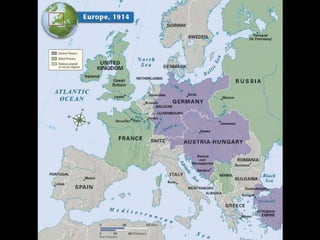
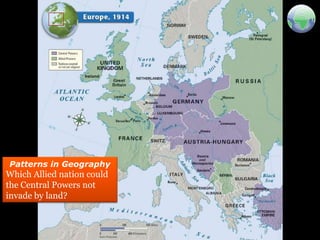
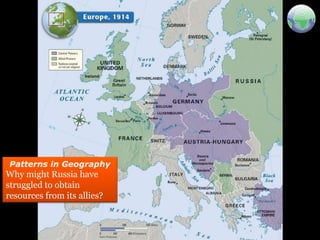
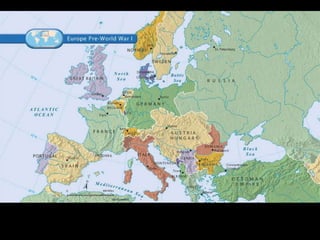
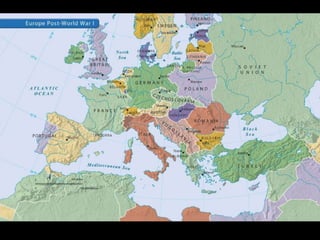
Patterns in Geography Which Allied nation could the Central Powers not invade by land?
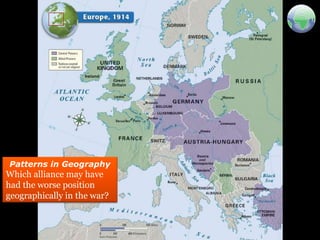
Patterns in Geography Why might Russia have struggled to obtain resources from its allies?
Patterns in Geography Which alliance may have had the worse position geographically in the war?
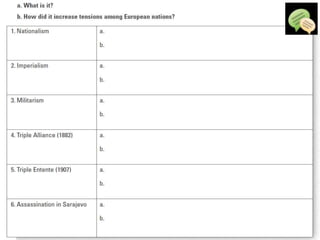
Preview Main IdeasSCIENCE AND TECHNOLOGYMilitarism: New weapons: Machine guns, airplanes, tanksECONOMICSConverted industry (industrial revolution)POWER & AUTHORITYNationalism
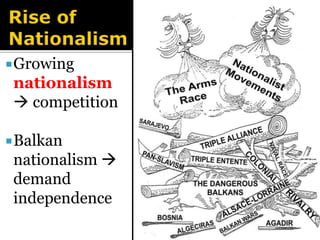
Rise of NationalismGrowing nationalism  competitionBalkan nationalism  demand independence
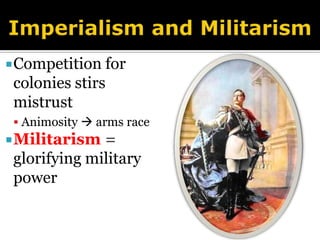
Imperialism and MilitarismCompetition for colonies stirs mistrustAnimosity  arms raceMilitarism =glorifying military power
Armenian 844
Bismarck Forges Early PactsBelieves France wants revengeTreaty with Russia in 1881Forms Triple Alliance(Germany, Austria-Hungary, Italy) in 1882
Shifting Alliances Threaten PeaceKaiser Wilhelmalliance with Russia dropped;Russia allies with Franceeffort to strengthen German navy alarms BritainBritain, France, Russia form Triple Entente alliance in 1907
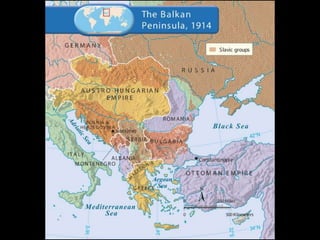
Crisis in the Balkans “Powder Keg of Europe”New nation of Serbia made up largely of SlavsAustria-Hungary annexes Slavic region Bosnia and Herzegovina (1908)Serbia outraged, sees itself as rightful ruler of Slavic lands
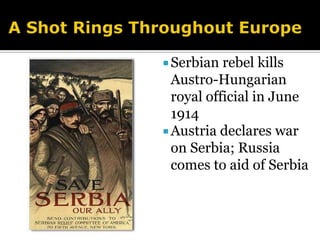
A Shot Rings Throughout EuropeSerbian rebel kills Austro-Hungarian royal official in June 1914Austria declares war on Serbia; Russia comes to aid of Serbia
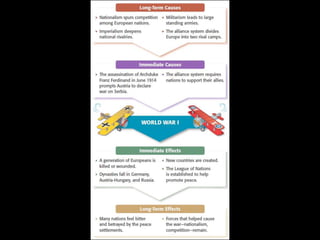
Roots of War
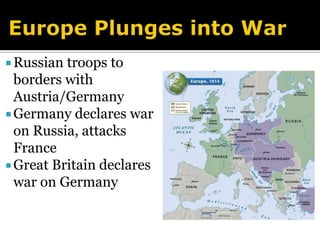
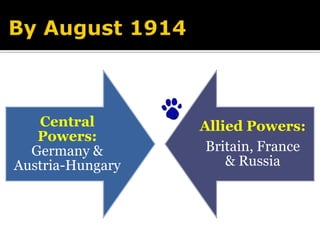
Europe Plunges into War Russian troops to borders with Austria/GermanyGermany declares war on Russia, attacks FranceGreat Britain declares war on Germany
By August 1914
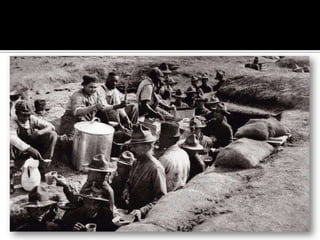
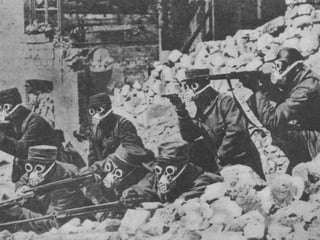
War in the TrenchesTrench warfareBattles = many deaths, small land gainsLife in trenches is miserable, difficult, unsanitary New weapons only lead to more deathsRussia StrugglesRussia’s war effort suffering by 1916; many casualties, few suppliesHuge size of Russian army keeps it formidable
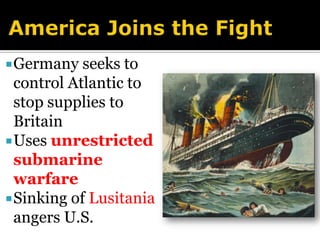
America Joins the FightGermany seeks to control Atlantic to stop supplies to BritainUses unrestricted submarine warfareSinking of Lusitania angers U.S.
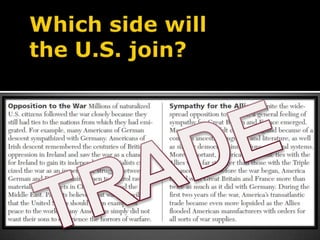
TRADEWhich side will the U.S. join?
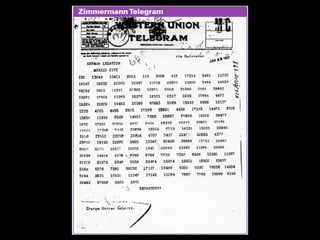
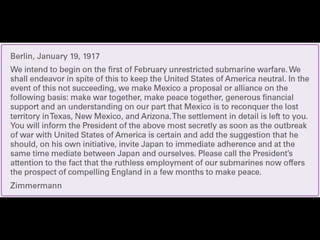
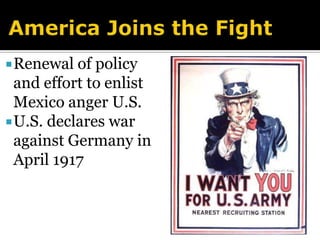
America Joins the FightRenewal of policy and effort to enlist Mexico anger U.S.U.S. declares war against Germany in April 1917
Practice QuizWhat did Germany want Mexico to do?Begin unrestricted submarine warfare?Distract the United States with a border WarConvince Japan to attack RussiaAll of the aboveWhy would governments send messages in code?To increase close cooperation among the staffTo prevent unauthorized people from knowing what they sayTo ensure greater attention to detail by the senior staffAll of the aboveWhy did Germany send a telegram rather than a letter or courier?Telegrams are faster.Letters can be intercepted.Couriers could be spies.All of the above.Why is body of the message is the only part written in code?Western Union needs to know the identify of the customer.The destination cannot be secret since the telegram company has to deliver the message.Only the message contains secret information.All of the above.
America Joins the Ranks
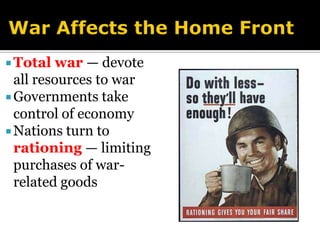
War Affects the Home Front Total war— devote all resources to warGovernments take control of economyNations turn torationing — limiting purchases of war-related goods
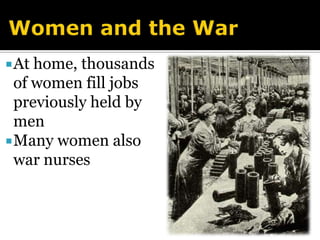
Women and the WarAt home, thousands of women fill jobs previously held by menMany women also war nurses
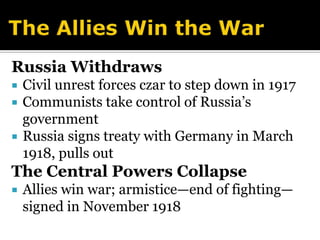
The Allies Win the War Russia WithdrawsCivil unrest forces czar to step down in 1917Communists take control of Russia’s governmentRussia signs treaty with Germany in March 1918, pulls outThe Central Powers CollapseAllies win war; armistice—end of fighting—signed in November 1918
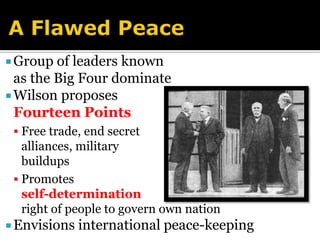
A Flawed Peace Group of leaders known as the Big Four dominateWilson proposes Fourteen PointsFree trade, end secret alliances, military buildupsPromotes self-determinationright of people to govern own nationEnvisions international peace-keeping
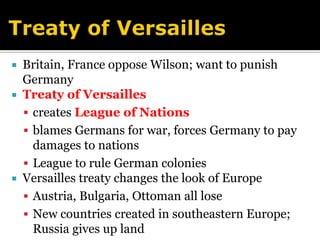
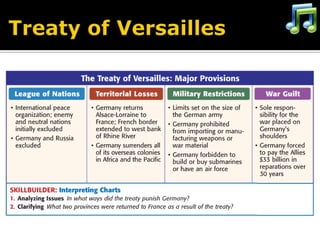
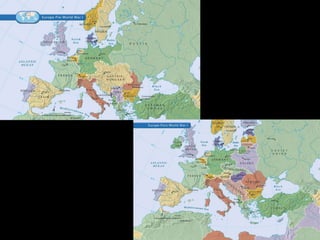
Treaty of VersaillesBritain, France oppose Wilson; want to punish GermanyTreaty of Versaillescreates League of Nationsblames Germans for war, forces Germany to pay damages to nationsLeague to rule German coloniesVersailles treaty changes the look of EuropeAustria, Bulgaria, Ottoman all loseNew countries created in southeastern Europe; Russia gives up land
Treaty of Versailles
A Peace Built on QuicksandTreaty of Versailles creates feelings of bitterness on both sidesGerman people feel bitter and betrayed after taking blame for warAmerica never signs Treaty of VersaillesMany oppose League of NationsSome former colonies express anger over not winning independenceJapan, Italy criticize agreement; gain less land  than they want
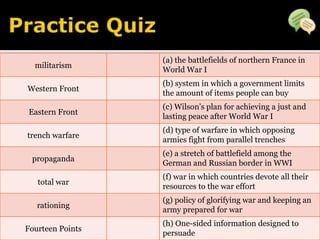
Practice Quiz
KEY TERMS
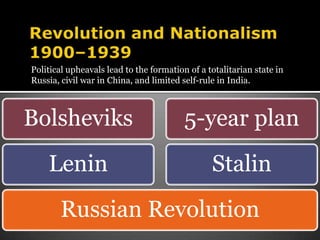
Revolution and Nationalism1900–1939 Political upheavals lead to the formation of a totalitarian state in Russia, civil war in China, and limited self-rule in India.
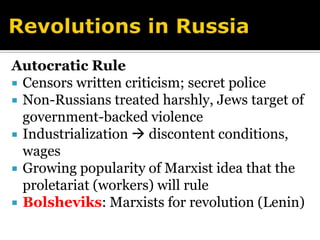
Revolutions in Russia Autocratic RuleCensors written criticism; secret policeNon-Russians treated harshly, Jews target of government-backed violenceIndustrialization  discontent conditions, wagesGrowing popularity of Marxist idea that the proletariat (workers) will ruleBolsheviks: Marxists for revolution (Lenin)
Revolutions in Russia The Russo-Japanese WarBloody Sunday: Revolution of 1905200,000 workers march on czar’s palace to  demand reformsArmy fires into the crowd, killing manyCzar forced to make reformsThe Duma, Russia’s first parliament, meetsCzar unwilling to share power; dissolves Duma after only 10 weeks
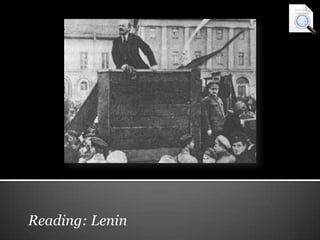
Reading: Lenin
Revolutions in Russia World War I: The Final BlowHeavy losses reveal government’s weaknessStrikes expand; soldiers refuse to fireCzar Steps DownBolsheviks in PowerLenin gives land to peasants, puts workers in control of factoriesBolsheviks sign treaty with Germany; Russia out of World War I
The Bolshevik RevolutionCivil War Rages in RussiaBolsheviks’ Red Army and loosely allied White ArmyRed Army wins three-year war that leaves 14 million deadComparing World RevolutionsRussian, French Revolutions similar—both attempt to remake society
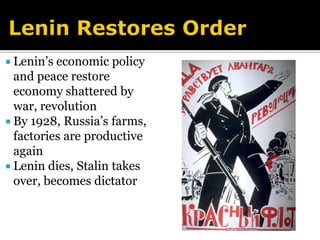
Lenin Restores Order Lenin’s economic policy and peace restore economy shattered by war, revolutionBy 1928, Russia’s farms, factories are productive againLenin dies, Stalin takes over, becomes dictator
Rise of Communism
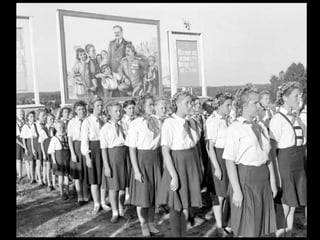
Totalitarianism Totalitarianism: government that dominates every aspect of lifePolice Terror: to spy on, intimidate peopleIndoctrination: slanted educationPropaganda and CensorshipReligious or Ethnic Persecution: religious, ethnic minorities “enemies of the state”
Imperial China Collapses Nationalists Overthrows Qing DynastyCalls for modernizationBacks three principles: nationalism, democracy, economic securityWorld War I Spells More ProblemsChina enters war against Germany hoping to gain land held by Germans Treaty of Versailles gives German colonies in  China to Japan; People revolt v. nationalists
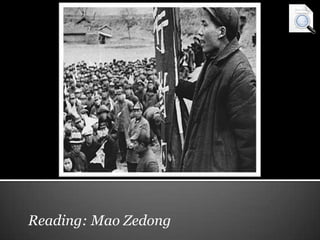
Reading: Mao Zedong
Communist Party in China Lenin Befriends ChinaPeasants see no gain for them in Nationalist’s plans, back Communists, Mao ZedongThe Long MarchNationalist army surrounds outnumbered Communists, 6,000-mile journey to safety in north6,000/100,000 surviveSeeing chaos in China, Japan launches all-out  invasion in 1937, Nationalists and Communists join together to fight Japan
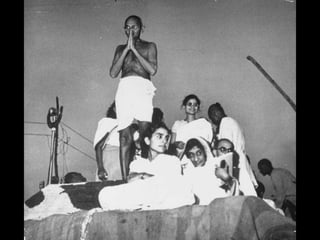
Indian Nationalism Grows World War I Increases NationalismBritish promise steps to self-government in return for war service. After war, no changes; resentmentAmritsar MassacreMohandas K. Gandhicivil disobedience
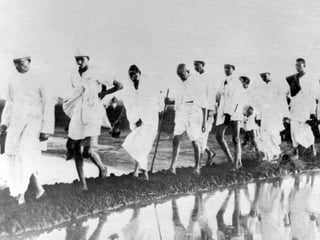
Tactics of Nonviolence Strikes and DemonstrationsCivil disobedience takes an economic toll on the BritishThe Salt MarchIn 1930, Gandhi protests Salt ActsSalt March—240-mile walk led by Gandhi to collect seawater for saltBritish police brutalize protestors; Indians gain worldwide support

World War 1 & Nationalism

  • 1.
    The Great WarMr.Taylor | World History | Chapter 29
  • 2.
  • 4.
    Patterns in GeographyWhich Allied nation could the Central Powers not invade by land?
  • 5.
    Patterns in GeographyWhy might Russia have struggled to obtain resources from its allies?
  • 6.
    Patterns in GeographyWhich alliance may have had the worse position geographically in the war?
  • 7.
    Preview Main IdeasSCIENCEAND TECHNOLOGYMilitarism: New weapons: Machine guns, airplanes, tanksECONOMICSConverted industry (industrial revolution)POWER & AUTHORITYNationalism
  • 8.
    Rise of NationalismGrowingnationalism  competitionBalkan nationalism  demand independence
  • 9.
    Imperialism and MilitarismCompetitionfor colonies stirs mistrustAnimosity  arms raceMilitarism =glorifying military power
  • 10.
  • 11.
    Bismarck Forges EarlyPactsBelieves France wants revengeTreaty with Russia in 1881Forms Triple Alliance(Germany, Austria-Hungary, Italy) in 1882
  • 12.
    Shifting Alliances ThreatenPeaceKaiser Wilhelmalliance with Russia dropped;Russia allies with Franceeffort to strengthen German navy alarms BritainBritain, France, Russia form Triple Entente alliance in 1907
  • 13.
    Crisis in theBalkans “Powder Keg of Europe”New nation of Serbia made up largely of SlavsAustria-Hungary annexes Slavic region Bosnia and Herzegovina (1908)Serbia outraged, sees itself as rightful ruler of Slavic lands
  • 15.
    A Shot RingsThroughout EuropeSerbian rebel kills Austro-Hungarian royal official in June 1914Austria declares war on Serbia; Russia comes to aid of Serbia
  • 16.
  • 18.
    Europe Plunges intoWar Russian troops to borders with Austria/GermanyGermany declares war on Russia, attacks FranceGreat Britain declares war on Germany
  • 19.
  • 20.
    War in theTrenchesTrench warfareBattles = many deaths, small land gainsLife in trenches is miserable, difficult, unsanitary New weapons only lead to more deathsRussia StrugglesRussia’s war effort suffering by 1916; many casualties, few suppliesHuge size of Russian army keeps it formidable
  • 23.
    America Joins theFightGermany seeks to control Atlantic to stop supplies to BritainUses unrestricted submarine warfareSinking of Lusitania angers U.S.
  • 24.
    TRADEWhich side willthe U.S. join?
  • 27.
    America Joins theFightRenewal of policy and effort to enlist Mexico anger U.S.U.S. declares war against Germany in April 1917
  • 28.
    Practice QuizWhat didGermany want Mexico to do?Begin unrestricted submarine warfare?Distract the United States with a border WarConvince Japan to attack RussiaAll of the aboveWhy would governments send messages in code?To increase close cooperation among the staffTo prevent unauthorized people from knowing what they sayTo ensure greater attention to detail by the senior staffAll of the aboveWhy did Germany send a telegram rather than a letter or courier?Telegrams are faster.Letters can be intercepted.Couriers could be spies.All of the above.Why is body of the message is the only part written in code?Western Union needs to know the identify of the customer.The destination cannot be secret since the telegram company has to deliver the message.Only the message contains secret information.All of the above.
  • 29.
  • 30.
    War Affects theHome Front Total war— devote all resources to warGovernments take control of economyNations turn torationing — limiting purchases of war-related goods
  • 31.
    Women and theWarAt home, thousands of women fill jobs previously held by menMany women also war nurses
  • 32.
    The Allies Winthe War Russia WithdrawsCivil unrest forces czar to step down in 1917Communists take control of Russia’s governmentRussia signs treaty with Germany in March 1918, pulls outThe Central Powers CollapseAllies win war; armistice—end of fighting—signed in November 1918
  • 34.
    A Flawed PeaceGroup of leaders known as the Big Four dominateWilson proposes Fourteen PointsFree trade, end secret alliances, military buildupsPromotes self-determinationright of people to govern own nationEnvisions international peace-keeping
  • 35.
    Treaty of VersaillesBritain,France oppose Wilson; want to punish GermanyTreaty of Versaillescreates League of Nationsblames Germans for war, forces Germany to pay damages to nationsLeague to rule German coloniesVersailles treaty changes the look of EuropeAustria, Bulgaria, Ottoman all loseNew countries created in southeastern Europe; Russia gives up land
  • 36.
  • 40.
    A Peace Builton QuicksandTreaty of Versailles creates feelings of bitterness on both sidesGerman people feel bitter and betrayed after taking blame for warAmerica never signs Treaty of VersaillesMany oppose League of NationsSome former colonies express anger over not winning independenceJapan, Italy criticize agreement; gain less land than they want
  • 43.
  • 44.
  • 45.
    Revolution and Nationalism1900–1939Political upheavals lead to the formation of a totalitarian state in Russia, civil war in China, and limited self-rule in India.
  • 46.
    Revolutions in RussiaAutocratic RuleCensors written criticism; secret policeNon-Russians treated harshly, Jews target of government-backed violenceIndustrialization  discontent conditions, wagesGrowing popularity of Marxist idea that the proletariat (workers) will ruleBolsheviks: Marxists for revolution (Lenin)
  • 47.
    Revolutions in RussiaThe Russo-Japanese WarBloody Sunday: Revolution of 1905200,000 workers march on czar’s palace to demand reformsArmy fires into the crowd, killing manyCzar forced to make reformsThe Duma, Russia’s first parliament, meetsCzar unwilling to share power; dissolves Duma after only 10 weeks
  • 48.
  • 49.
    Revolutions in RussiaWorld War I: The Final BlowHeavy losses reveal government’s weaknessStrikes expand; soldiers refuse to fireCzar Steps DownBolsheviks in PowerLenin gives land to peasants, puts workers in control of factoriesBolsheviks sign treaty with Germany; Russia out of World War I
  • 50.
    The Bolshevik RevolutionCivilWar Rages in RussiaBolsheviks’ Red Army and loosely allied White ArmyRed Army wins three-year war that leaves 14 million deadComparing World RevolutionsRussian, French Revolutions similar—both attempt to remake society
  • 51.
    Lenin Restores OrderLenin’s economic policy and peace restore economy shattered by war, revolutionBy 1928, Russia’s farms, factories are productive againLenin dies, Stalin takes over, becomes dictator
  • 52.
  • 53.
    Totalitarianism Totalitarianism: governmentthat dominates every aspect of lifePolice Terror: to spy on, intimidate peopleIndoctrination: slanted educationPropaganda and CensorshipReligious or Ethnic Persecution: religious, ethnic minorities “enemies of the state”
  • 55.
    Imperial China CollapsesNationalists Overthrows Qing DynastyCalls for modernizationBacks three principles: nationalism, democracy, economic securityWorld War I Spells More ProblemsChina enters war against Germany hoping to gain land held by Germans Treaty of Versailles gives German colonies in China to Japan; People revolt v. nationalists
  • 56.
  • 57.
    Communist Party inChina Lenin Befriends ChinaPeasants see no gain for them in Nationalist’s plans, back Communists, Mao ZedongThe Long MarchNationalist army surrounds outnumbered Communists, 6,000-mile journey to safety in north6,000/100,000 surviveSeeing chaos in China, Japan launches all-out invasion in 1937, Nationalists and Communists join together to fight Japan
  • 58.
    Indian Nationalism GrowsWorld War I Increases NationalismBritish promise steps to self-government in return for war service. After war, no changes; resentmentAmritsar MassacreMohandas K. Gandhicivil disobedience
  • 60.
    Tactics of NonviolenceStrikes and DemonstrationsCivil disobedience takes an economic toll on the BritishThe Salt MarchIn 1930, Gandhi protests Salt ActsSalt March—240-mile walk led by Gandhi to collect seawater for saltBritish police brutalize protestors; Indians gain worldwide support

Editor's Notes

  • #2 http://upload.wikimedia.org/wikipedia/commons/9/98/WWI-Causes.jpg