THE GREAT WAR: THE
WORLD IN UPHEAVAL
La Belle Époque - 1871 - 1914

     Absence of armed conflict


     Increasing power of popularly elected legislatures.


     Increasing involvement of government in social
      legislation.


     Improved health and leisure   .
CAUSES AND ORIGINS OF THE WAR
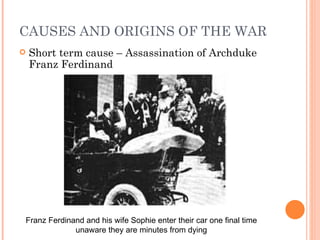
   Short term cause – Assassination of Archduke
    Franz Ferdinand


Franz Ferdinand and his wife Sophie enter their car one final time
             unaware they are minutes from dying
LONG TERM CAUSES OF WORLD
WAR I
   Long term causes are much more complex

       National rivalries

       Imperialism

       Military Arms Race

       Economic Rivalries

       Domestic Problems
LONG TERM CAUSES OF WORLD
WAR I

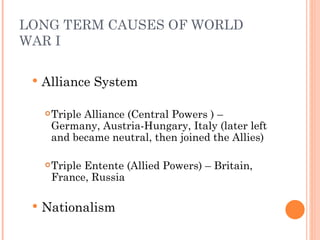
    Alliance System

        Triple Alliance (Central Powers ) –
         Germany, Austria-Hungary, Italy (later left
         and became neutral, then joined the Allies)

        Triple Entente (Allied Powers) – Britain,
         France, Russia

    Nationalism
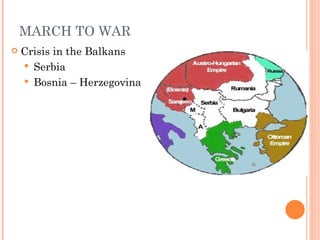
MARCH TO WAR
   Crisis in the Balkans
     Serbia
     Bosnia – Herzegovina
MARCH TO WAR
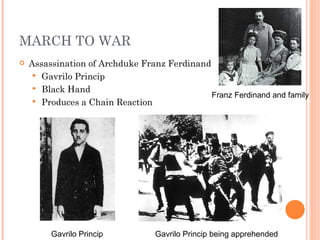
   Assassination of Archduke Franz Ferdinand
      Gavrilo Princip
      Black Hand
                                              Franz Ferdinand and family
      Produces a Chain Reaction


         Gavrilo Princip          Gavrilo Princip being apprehended
AUSTRIA – HUNGARY ISSUES
  ULTIMATUM TO SERBIA


- Demands were impossible for Serbia to meet

- Austria-Hungary declared war on Serbia

- This sets off a chain reaction
CHAIN REACTION


Austria-Hungary and Germany

            Vs.

      Serbia and Russia
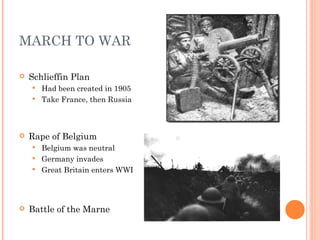
MARCH TO WAR

   Schlieffin Plan
       Had been created in 1905
       Take France, then Russia


   Rape of Belgium
       Belgium was neutral
       Germany invades
       Great Britain enters WWI


   Battle of the Marne
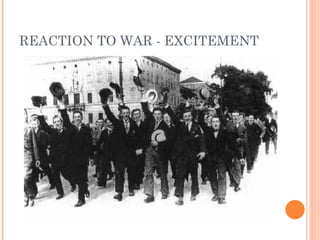
REACTION TO WAR - EXCITEMENT
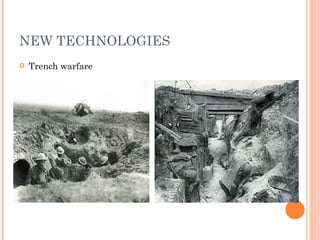
NEW TECHNOLOGIES
   Trench warfare
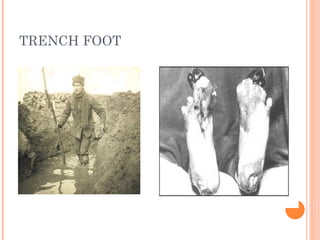
TRENCH FOOT
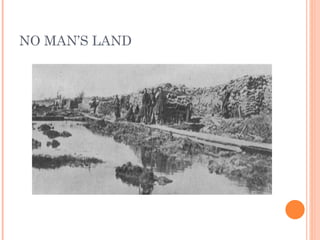
NO MAN’S LAND
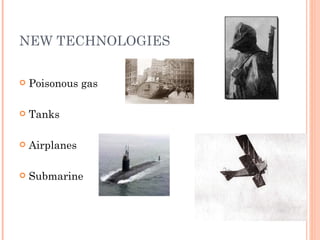
NEW TECHNOLOGIES

   Poisonous gas

   Tanks

   Airplanes

   Submarine
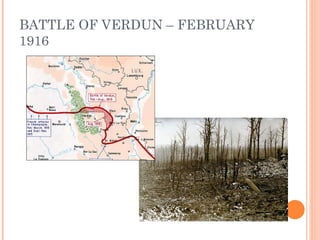
BATTLE OF VERDUN – FEBRUARY
1916
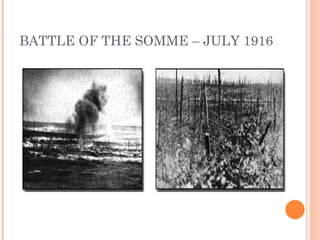
BATTLE OF THE SOMME – JULY 1916
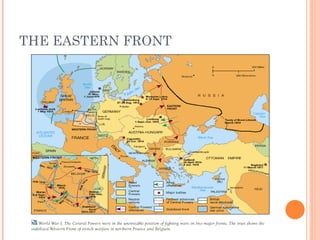
THE EASTERN FRONT
ON THE HOMEFRONT…
   Total War

       Mass conscription

       Government controlled economies

       Wage & price controls, work hours, full employment

       Limited & restricted freedoms.
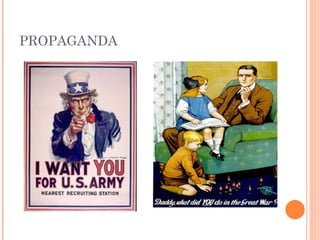
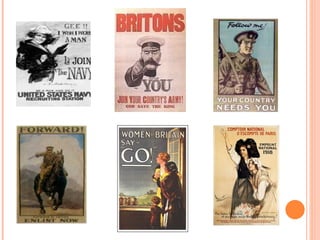
PROPAGANDA
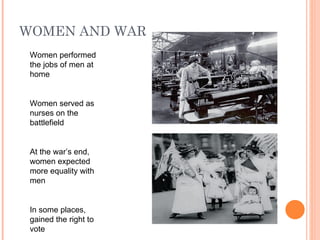
WOMEN AND WAR
 Women performed
 the jobs of men at
 home


 Women served as
 nurses on the
 battlefield


 At the war’s end,
 women expected
 more equality with
 men


 In some places,
 gained the right to
 vote
WIDENING THE WAR
   The Ottoman Empire

   Italy

   Middle East

   Japan

   United States
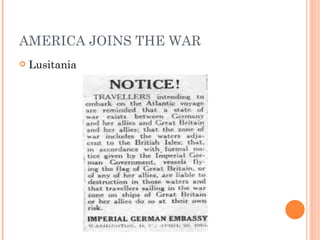
AMERICA JOINS THE WAR
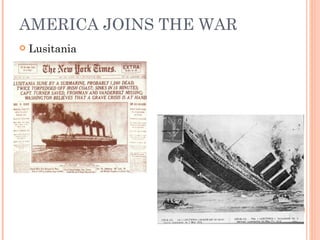
   Lusitania
AMERICA JOINS THE WAR
   Lusitania
AMERICA JOINS THE WAR
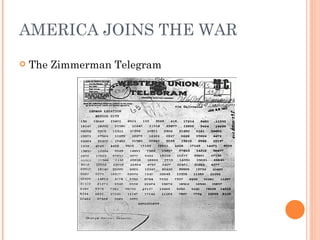
   The Zimmerman Telegram
1918 OFFENSIVES
   German Offensive
     Treaty of Brest – Litovsk with Russia
     Moved troops to Western Front


   Second Battle of the Marne

   The Hundred Days

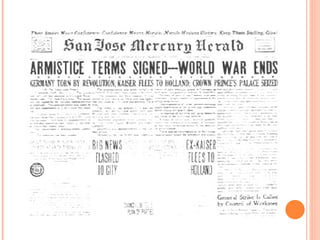
   German defeat – November 1918
     Government collapse
     Weimar Republic
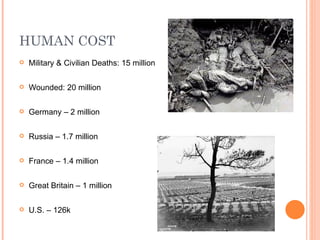
HUMAN COST
   Military & Civilian Deaths: 15 million

   Wounded: 20 million

   Germany – 2 million

   Russia – 1.7 million

   France – 1.4 million

   Great Britain – 1 million

   U.S. – 126k
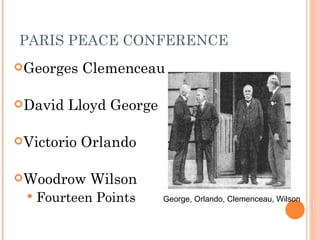
PARIS PEACE CONFERENCE
 Georges    Clemenceau

 David   Lloyd George

 Victorio   Orlando

 Woodrow     Wilson
     Fourteen Points    George, Orlando, Clemenceau, Wilson
THE REORDERING OF EUROPE
 Treaty      of Versailles
   Germany blamed for the war
   Territorial loss
   Military reduction
   Saddled with reparations payments


 League        of Nations
     America didn’t join


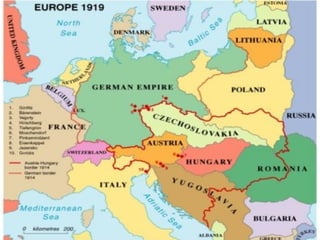
 Redrawing           the Map of Europe
IMPACT OF WAR AND PEACE
   Weak peace settlement – led to WWII

   Bolshevik Revolution

   Destroyed Empires

   New Map of Europe

   Age of Anxiety
The Great War

The Great War

  • 1.
    THE GREAT WAR:THE WORLD IN UPHEAVAL
  • 2.
    La Belle Époque- 1871 - 1914  Absence of armed conflict  Increasing power of popularly elected legislatures.  Increasing involvement of government in social legislation.  Improved health and leisure .
  • 3.
    CAUSES AND ORIGINSOF THE WAR  Short term cause – Assassination of Archduke Franz Ferdinand Franz Ferdinand and his wife Sophie enter their car one final time unaware they are minutes from dying
  • 4.
    LONG TERM CAUSESOF WORLD WAR I  Long term causes are much more complex  National rivalries  Imperialism  Military Arms Race  Economic Rivalries  Domestic Problems
  • 5.
    LONG TERM CAUSESOF WORLD WAR I  Alliance System  Triple Alliance (Central Powers ) – Germany, Austria-Hungary, Italy (later left and became neutral, then joined the Allies)  Triple Entente (Allied Powers) – Britain, France, Russia  Nationalism
  • 6.
    MARCH TO WAR  Crisis in the Balkans  Serbia  Bosnia – Herzegovina
  • 7.
    MARCH TO WAR  Assassination of Archduke Franz Ferdinand  Gavrilo Princip  Black Hand Franz Ferdinand and family  Produces a Chain Reaction Gavrilo Princip Gavrilo Princip being apprehended
  • 8.
    AUSTRIA – HUNGARYISSUES ULTIMATUM TO SERBIA - Demands were impossible for Serbia to meet - Austria-Hungary declared war on Serbia - This sets off a chain reaction
  • 9.
    CHAIN REACTION Austria-Hungary andGermany Vs. Serbia and Russia
  • 10.
    MARCH TO WAR  Schlieffin Plan  Had been created in 1905  Take France, then Russia  Rape of Belgium  Belgium was neutral  Germany invades  Great Britain enters WWI  Battle of the Marne
  • 11.
    REACTION TO WAR- EXCITEMENT
  • 12.
    NEW TECHNOLOGIES  Trench warfare
  • 13.
  • 14.
  • 15.
    NEW TECHNOLOGIES  Poisonous gas  Tanks  Airplanes  Submarine
  • 16.
    BATTLE OF VERDUN– FEBRUARY 1916
  • 17.
    BATTLE OF THESOMME – JULY 1916
  • 18.
  • 19.
    ON THE HOMEFRONT…  Total War  Mass conscription  Government controlled economies  Wage & price controls, work hours, full employment  Limited & restricted freedoms.
  • 20.
  • 22.
    WOMEN AND WAR Women performed the jobs of men at home Women served as nurses on the battlefield At the war’s end, women expected more equality with men In some places, gained the right to vote
  • 23.
    WIDENING THE WAR  The Ottoman Empire  Italy  Middle East  Japan  United States
  • 24.
    AMERICA JOINS THEWAR  Lusitania
  • 25.
    AMERICA JOINS THEWAR  Lusitania
  • 26.
    AMERICA JOINS THEWAR  The Zimmerman Telegram
  • 27.
    1918 OFFENSIVES  German Offensive  Treaty of Brest – Litovsk with Russia  Moved troops to Western Front  Second Battle of the Marne  The Hundred Days  German defeat – November 1918  Government collapse  Weimar Republic
  • 29.
    HUMAN COST  Military & Civilian Deaths: 15 million  Wounded: 20 million  Germany – 2 million  Russia – 1.7 million  France – 1.4 million  Great Britain – 1 million  U.S. – 126k
  • 30.
    PARIS PEACE CONFERENCE Georges Clemenceau  David Lloyd George  Victorio Orlando  Woodrow Wilson  Fourteen Points George, Orlando, Clemenceau, Wilson
  • 31.
    THE REORDERING OFEUROPE  Treaty of Versailles  Germany blamed for the war  Territorial loss  Military reduction  Saddled with reparations payments  League of Nations  America didn’t join  Redrawing the Map of Europe
  • 32.
    IMPACT OF WARAND PEACE  Weak peace settlement – led to WWII  Bolshevik Revolution  Destroyed Empires  New Map of Europe  Age of Anxiety