Mr. Taylor | @teamHISTORY | Unit 1
Europe & Christianity, part 1
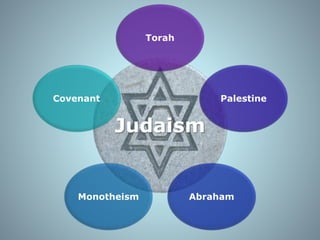
Torah 
Judaism 
Palestine 
Covenant 
Monotheism Abraham
Why was 
Jesus put to 
death? 
What did 
the 
Romans do 
to the 
Jews? 
How was 
the church 
organized?
Europe & Christianity, part 2
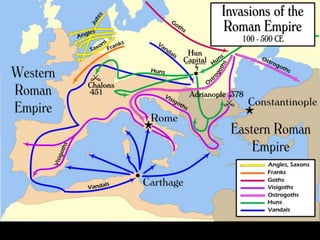
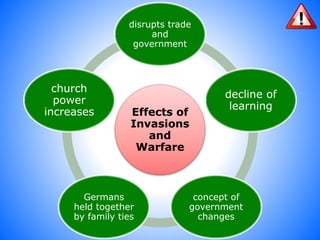
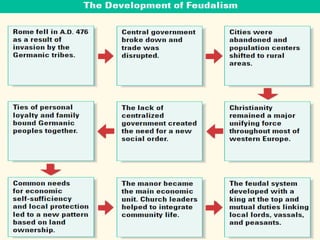
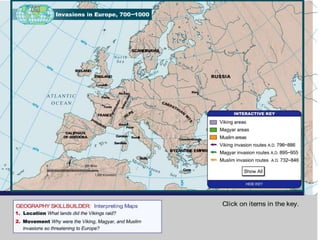
disrupts trade 
and 
government 
Effects of 
Invasions 
and 
Warfare 
decline of 
learning 
concept of 
government 
changes 
church 
power 
increases 
Germans 
held together 
by family ties
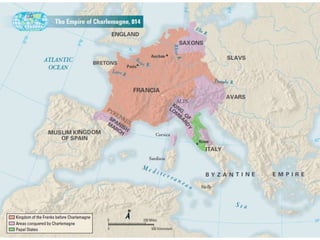
Charlemagne 
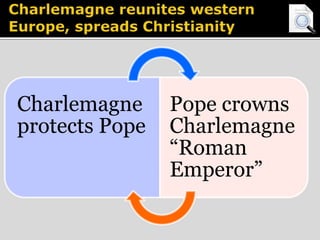
protects Pope 
Pope crowns 
Charlemagne 
“Roman 
Emperor”
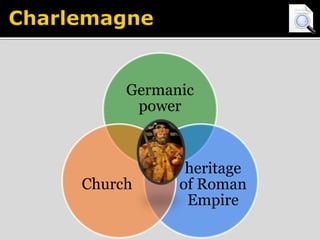
Germanic 
power 
heritage 
of Roman 
Empire 
Church
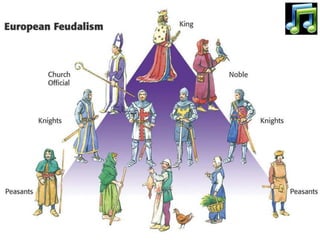
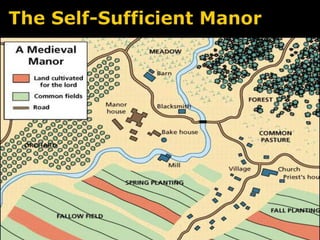
Mutual obligation between lord and serf under the manor 
system 
• 
• 
Why did serfs rarely leave their manor? 
• 
• 
Why did serfs accept their economic hardship? 
• 
•
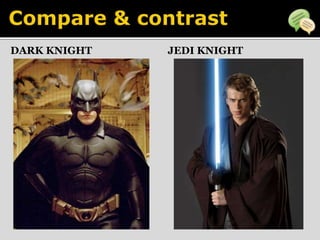
DARK KNIGHT JEDI KNIGHT
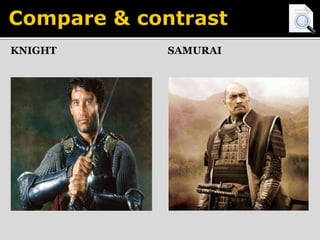
KNIGHT SAMURAI
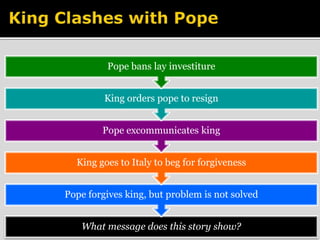
Pope bans lay investiture 
King orders pope to resign 
Pope excommunicates king 
King goes to Italy to beg for forgiveness 
Pope forgives king, but problem is not solved 
What message does this story show?
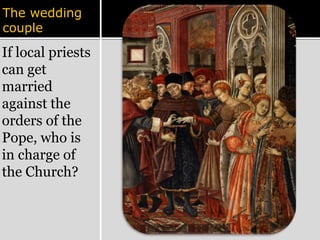
The wedding 
couple 
If local priests 
can get 
married 
against the 
orders of the 
Pope, who is 
in charge of 
the Church?
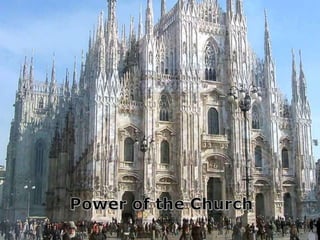
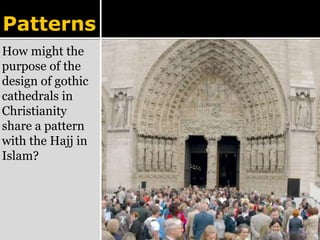
Patterns 
How might the 
purpose of the 
design of gothic 
cathedrals in 
Christianity 
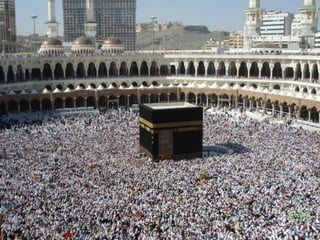
share a pattern 
with the Hajj in 
Islam?
Europe & Christianity, part 3
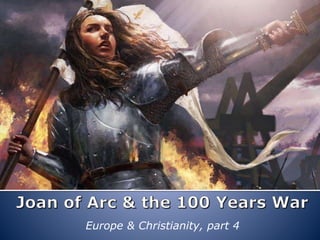
Europe & Christianity, part 4
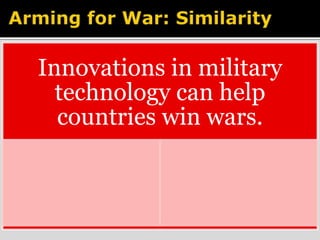
Innovations in military 
technology can help 
countries win wars.
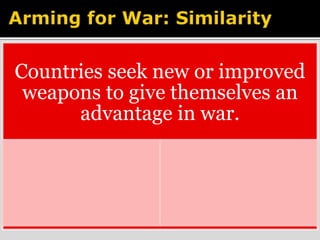
Countries seek new or improved 
weapons to give themselves an 
advantage in war.
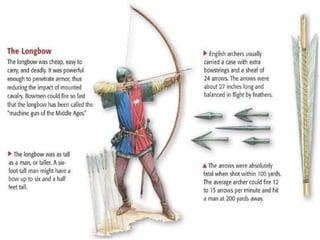
Effects of modern weapons have 
been far different from the 
effects of medieval weapons.
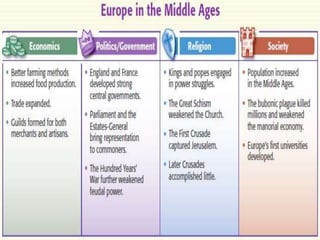
Not in use
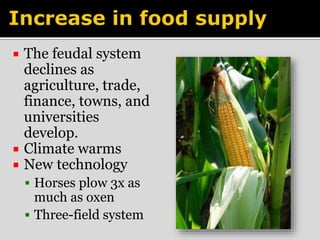
 The feudal system 
declines as 
agriculture, trade, 
finance, towns, and 
universities 
develop. 
 Climate warms 
 New technology 
 Horses plow 3x as 
much as oxen 
 Three-field system
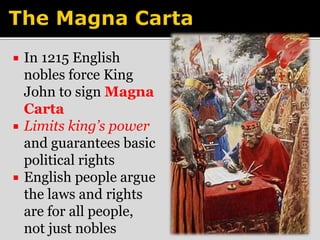
 In 1215 English 
nobles force King 
John to sign Magna 
Carta 
 Limits king’s power 
and guarantees basic 
political rights 
 English people argue 
the laws and rights 
are for all people, 
not just nobles
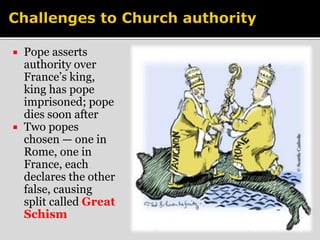
 Pope asserts 
authority over 
France’s king, 
king has pope 
imprisoned; pope 
dies soon after 
 Two popes 
chosen — one in 
Rome, one in 
France, each 
declares the other 
false, causing 
split called Great 
Schism
 The Muslim Connection 
 Christian scholars read translations of Greek 
works made by Muslims 
 Crusaders return with Muslim knowledge of 
navigation, ships, weapons 
 Written works not in Latin but in 
vernacular — everyday language
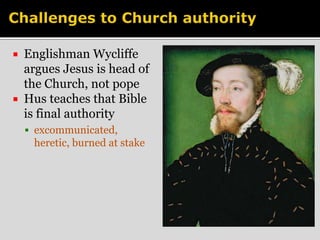
 Englishman Wycliffe 
argues Jesus is head of 
the Church, not pope 
 Hus teaches that Bible 
is final authority 
 excommunicated, 
heretic, burned at stake
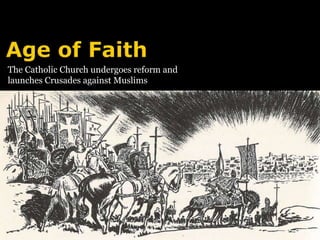
The Catholic Church undergoes reform and 
launches Crusades against Muslims
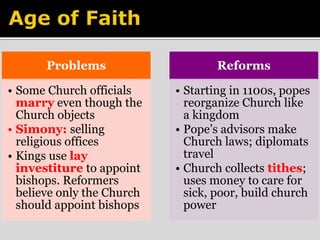
Problems 
• Some Church officials 
marry even though the 
Church objects 
• Simony: selling 
religious offices 
• Kings use lay 
investiture to appoint 
bishops. Reformers 
believe only the Church 
should appoint bishops 
Reforms 
• Starting in 1100s, popes 
reorganize Church like 
a kingdom 
• Pope’s advisors make 
Church laws; diplomats 
travel 
• Church collects tithes; 
uses money to care for 
sick, poor, build church 
power
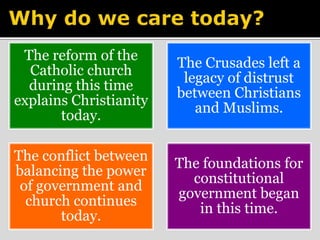
The reform of the 
Catholic church 
during this time 
explains Christianity 
today. 
The Crusades left a 
legacy of distrust 
between Christians 
and Muslims. 
The conflict between 
balancing the power 
of government and 
church continues 
today. 
The foundations for 
constitutional 
government began 
in this time.
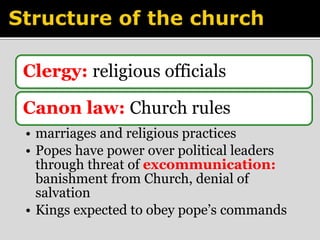
Clergy: religious officials 
Canon law: Church rules 
• marriages and religious practices 
• Popes have power over political leaders 
through threat of excommunication: 
banishment from Church, denial of 
salvation 
• Kings expected to obey pope’s commands
Europe & Christianity

Europe & Christianity

  • 1.
    Mr. Taylor |@teamHISTORY | Unit 1
  • 2.
  • 5.
    Torah Judaism Palestine Covenant Monotheism Abraham
  • 7.
    Why was Jesusput to death? What did the Romans do to the Jews? How was the church organized?
  • 27.
  • 28.
    disrupts trade and government Effects of Invasions and Warfare decline of learning concept of government changes church power increases Germans held together by family ties
  • 30.
    Charlemagne protects Pope Pope crowns Charlemagne “Roman Emperor”
  • 31.
    Germanic power heritage of Roman Empire Church
  • 38.
    Mutual obligation betweenlord and serf under the manor system • • Why did serfs rarely leave their manor? • • Why did serfs accept their economic hardship? • •
  • 40.
  • 41.
  • 47.
    Pope bans layinvestiture King orders pope to resign Pope excommunicates king King goes to Italy to beg for forgiveness Pope forgives king, but problem is not solved What message does this story show?
  • 48.
    The wedding couple If local priests can get married against the orders of the Pope, who is in charge of the Church?
  • 49.
    Patterns How mightthe purpose of the design of gothic cathedrals in Christianity share a pattern with the Hajj in Islam?
  • 51.
  • 56.
  • 57.
    Innovations in military technology can help countries win wars.
  • 58.
    Countries seek newor improved weapons to give themselves an advantage in war.
  • 59.
    Effects of modernweapons have been far different from the effects of medieval weapons.
  • 64.
  • 66.
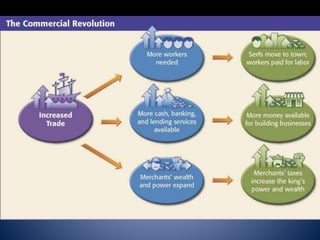
     The feudalsystem declines as agriculture, trade, finance, towns, and universities develop.  Climate warms  New technology  Horses plow 3x as much as oxen  Three-field system
  • 71.
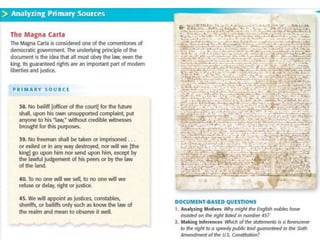
     In 1215English nobles force King John to sign Magna Carta  Limits king’s power and guarantees basic political rights  English people argue the laws and rights are for all people, not just nobles
  • 72.
     Pope asserts authority over France’s king, king has pope imprisoned; pope dies soon after  Two popes chosen — one in Rome, one in France, each declares the other false, causing split called Great Schism
  • 73.
     The MuslimConnection  Christian scholars read translations of Greek works made by Muslims  Crusaders return with Muslim knowledge of navigation, ships, weapons  Written works not in Latin but in vernacular — everyday language
  • 74.
     Englishman Wycliffe argues Jesus is head of the Church, not pope  Hus teaches that Bible is final authority  excommunicated, heretic, burned at stake
  • 75.
    The Catholic Churchundergoes reform and launches Crusades against Muslims
  • 76.
    Problems • SomeChurch officials marry even though the Church objects • Simony: selling religious offices • Kings use lay investiture to appoint bishops. Reformers believe only the Church should appoint bishops Reforms • Starting in 1100s, popes reorganize Church like a kingdom • Pope’s advisors make Church laws; diplomats travel • Church collects tithes; uses money to care for sick, poor, build church power
  • 77.
    The reform ofthe Catholic church during this time explains Christianity today. The Crusades left a legacy of distrust between Christians and Muslims. The conflict between balancing the power of government and church continues today. The foundations for constitutional government began in this time.
  • 79.
    Clergy: religious officials Canon law: Church rules • marriages and religious practices • Popes have power over political leaders through threat of excommunication: banishment from Church, denial of salvation • Kings expected to obey pope’s commands

Editor's Notes

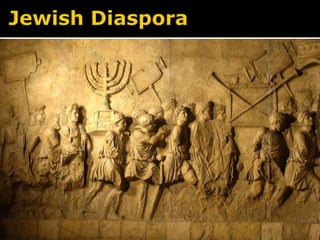
  • #9 In A.D. 66, a band of Jews rebelled against Rome. In A.D. 70, the Romans stormed Jerusalem and destroyed the Temple complex. All that remained was a western portion of the wall, which today is the holiest Jewish shrine. About a half million Jews were killed in the course of this rebellion. The Jews made another attempt to break free of the Romans in A.D. 132. Another half-million Jews died in three years of fighting. Although the Jewish religion survived, the Jewish political state ceased to exist for more than 1,800 years. Most Jews were driven from their homeland into exile. This dispersal of the Jews is called the Diaspora.
  • #29 Fighting disrupts trade and government; people abandon cities The Decline of Learning As cities are abandoned, level of learning declines Knowledge of Greek language and culture is almost completely lost Loss of a Common Language Introduction of German language changes Latin; dialects develop The Germans held together by family ties and loyalty, not government Small communities are governed by unwritten rules and traditions Germanic warriors pledge loyalty to their chief Monasteries & Convents Church builds monasteries — where monks live to study and serve God Monks establish schools, preserve learning through libraries
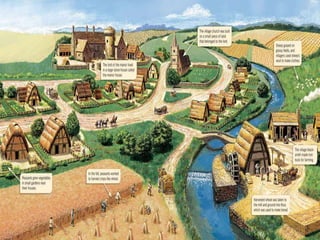
  • #37 The lord’s estate, a manor, has an economic system Serfs/peasants maintain the lord’s estate, give grain The lord provides housing, farmland, protection from bandits Manors include lord’s house, church, workshops, village Manors cover a few square miles of land, are largely self-sufficient (they don’t need trade).
  • #44 http://youtu.be/I2u2UFsXrNg
  • #62 http://youtu.be/UXaQKj5hr-0
  • #68 http://www.youtube.com/watch?v=2XzFNLJIpUQ&safe=active