Downloaded 144 times


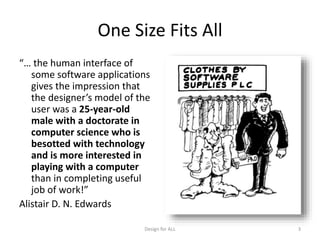
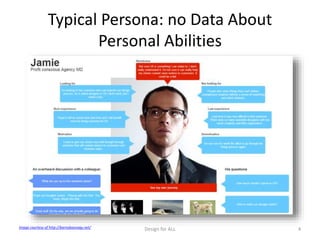
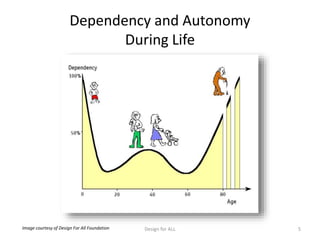
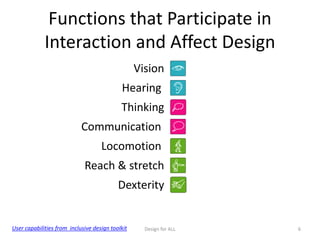

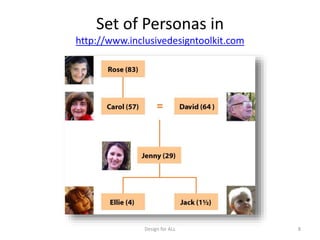

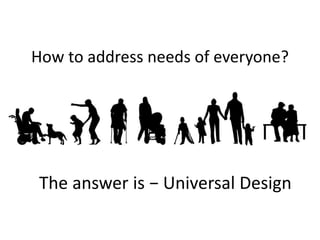
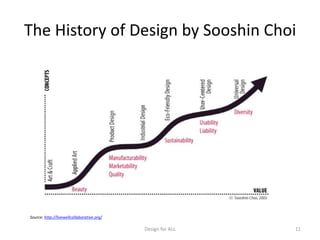
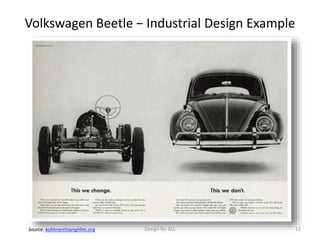
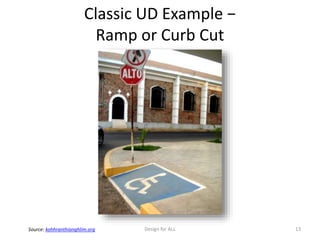
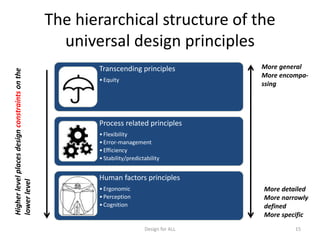


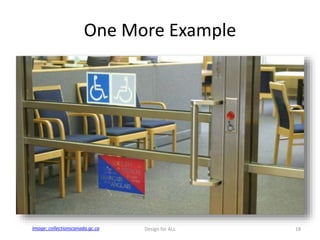






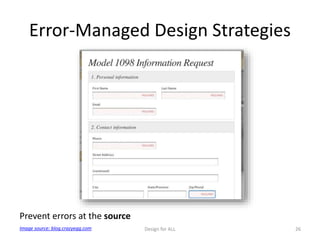


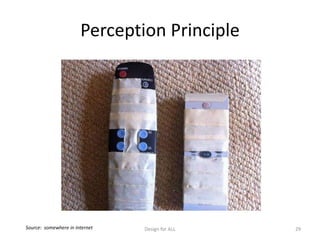

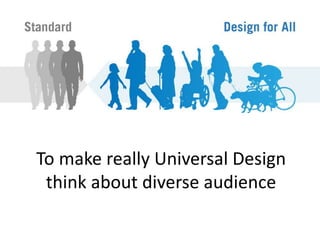


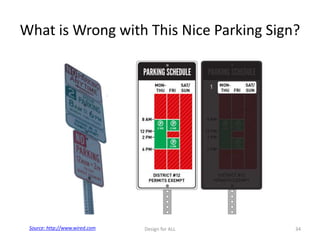

This document discusses universal design principles for inclusive design. It begins with introducing the speaker and discussing how most designs are made for a narrow target user, usually young males. It emphasizes that good design should address the wide variety of human abilities. It then outlines several key principles of universal design like equitable use, flexibility, perceptible information, tolerance for error, and low physical effort. Examples are given to illustrate each principle, such as curb cuts that benefit people of all abilities. The document stresses that universal design requires understanding diverse audiences and their varied needs.


