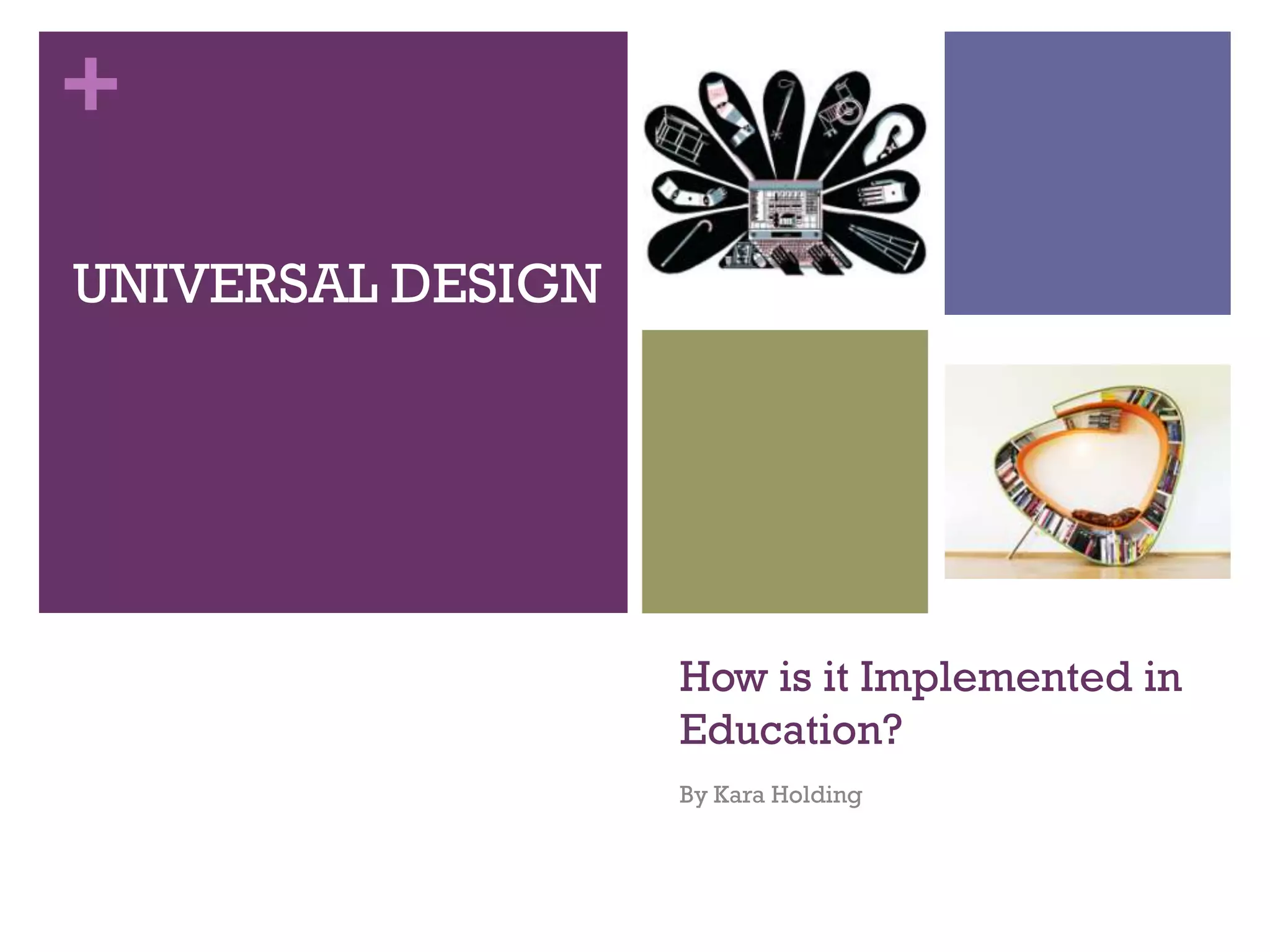
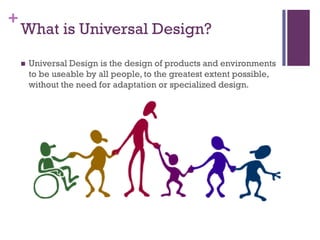
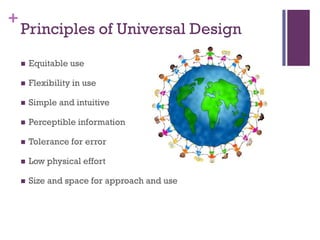
Universal Design is an approach to designing products and environments to be usable by all people without needing adaptation or specialized design. It can be applied to any environment or product, such as learning centers, museums, web pages, or instructional materials. There are eight steps to the Universal Design process: identify the application, define the universe, involve consumers, adopt guidelines, apply guidelines, plan for accommodations, train and support, and evaluate. The principles of Universal Design include equitable use, flexibility in use, simple and intuitive use, perceptible information, tolerance for error, low physical effort, and size and space for approach and use. An example is provided of how Universal Design can help people with disabilities.