Bangladesh Health Professions Institute
Department of Occupational Therapy
Masters of Science in Occupational Therapy
Occupational Therapy in Adult Neurology
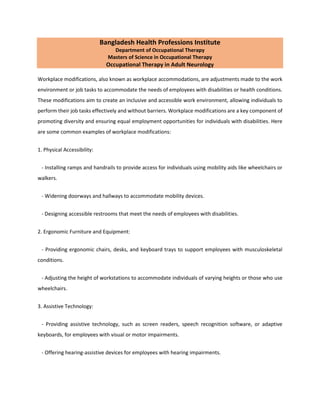
Workplace modifications, also known as workplace accommodations, are adjustments made to the work
environment or job tasks to accommodate the needs of employees with disabilities or health conditions.
These modifications aim to create an inclusive and accessible work environment, allowing individuals to
perform their job tasks effectively and without barriers. Workplace modifications are a key component of
promoting diversity and ensuring equal employment opportunities for individuals with disabilities. Here
are some common examples of workplace modifications:
1. Physical Accessibility:
- Installing ramps and handrails to provide access for individuals using mobility aids like wheelchairs or
walkers.
- Widening doorways and hallways to accommodate mobility devices.
- Designing accessible restrooms that meet the needs of employees with disabilities.
2. Ergonomic Furniture and Equipment:
- Providing ergonomic chairs, desks, and keyboard trays to support employees with musculoskeletal
conditions.
- Adjusting the height of workstations to accommodate individuals of varying heights or those who use
wheelchairs.
3. Assistive Technology:
- Providing assistive technology, such as screen readers, speech recognition software, or adaptive
keyboards, for employees with visual or motor impairments.
- Offering hearing-assistive devices for employees with hearing impairments.
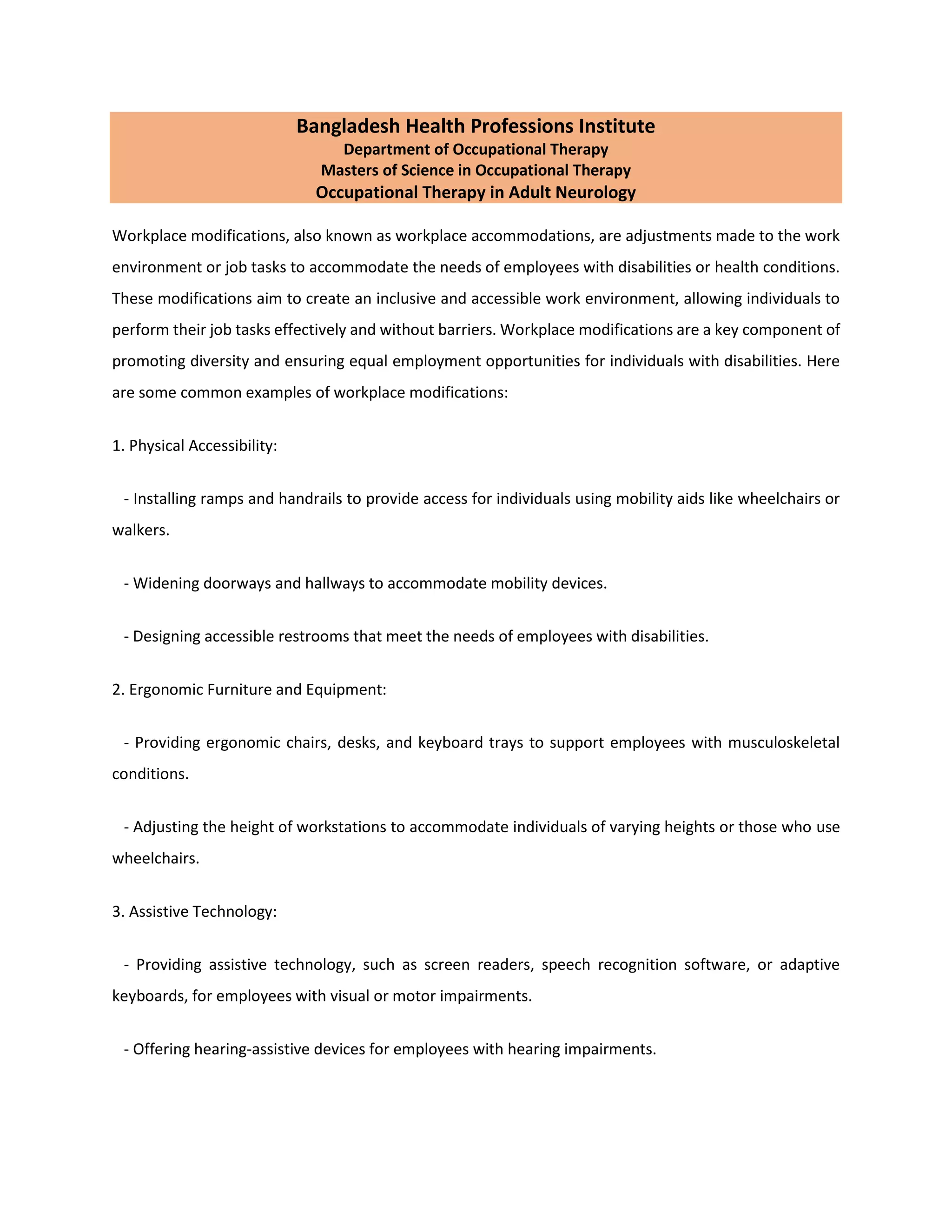
4. Flexible Work Arrangements:
- Allowing flexible work hours or telecommuting options for employees who may benefit from a
modified work schedule due to medical conditions or disabilities.
5. Job Task Redesign:
- Modifying job tasks or responsibilities to accommodate an individual's specific abilities or limitations.
- Assigning tasks that match an employee's skill set and strengths.
6. Environmental Considerations:
- Controlling noise levels or providing quiet spaces for employees with sensory sensitivities or
concentration difficulties.
- Reducing fluorescent lighting or using task-specific lighting to address visual impairments or light
sensitivity.
7. Training and Awareness:
- Providing disability awareness training for all employees to foster a more inclusive and supportive
workplace culture.
- Educating supervisors and coworkers about the importance of workplace accommodations and
respecting individual needs.
8. Job Coaching and Support:
- Offering job coaching or mentoring to help employees adapt to their modified job tasks and work
environment.
- Providing ongoing support and feedback to ensure successful integration and performance.
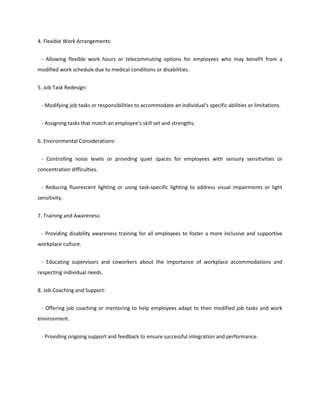
It's important to note that workplace modifications should be tailored to the specific needs of each
employee. Employers should engage in an interactive process with the employee to determine
appropriate accommodations and implement them in a timely manner. The goal of workplace
modifications is to create an inclusive and supportive work environment that enables all employees to
thrive and contribute to the organization's success.

WORKPLACE MODIFICATION.docx

  • 1.
    Bangladesh Health ProfessionsInstitute Department of Occupational Therapy Masters of Science in Occupational Therapy Occupational Therapy in Adult Neurology Workplace modifications, also known as workplace accommodations, are adjustments made to the work environment or job tasks to accommodate the needs of employees with disabilities or health conditions. These modifications aim to create an inclusive and accessible work environment, allowing individuals to perform their job tasks effectively and without barriers. Workplace modifications are a key component of promoting diversity and ensuring equal employment opportunities for individuals with disabilities. Here are some common examples of workplace modifications: 1. Physical Accessibility: - Installing ramps and handrails to provide access for individuals using mobility aids like wheelchairs or walkers. - Widening doorways and hallways to accommodate mobility devices. - Designing accessible restrooms that meet the needs of employees with disabilities. 2. Ergonomic Furniture and Equipment: - Providing ergonomic chairs, desks, and keyboard trays to support employees with musculoskeletal conditions. - Adjusting the height of workstations to accommodate individuals of varying heights or those who use wheelchairs. 3. Assistive Technology: - Providing assistive technology, such as screen readers, speech recognition software, or adaptive keyboards, for employees with visual or motor impairments. - Offering hearing-assistive devices for employees with hearing impairments.
  • 2.
    4. Flexible WorkArrangements: - Allowing flexible work hours or telecommuting options for employees who may benefit from a modified work schedule due to medical conditions or disabilities. 5. Job Task Redesign: - Modifying job tasks or responsibilities to accommodate an individual's specific abilities or limitations. - Assigning tasks that match an employee's skill set and strengths. 6. Environmental Considerations: - Controlling noise levels or providing quiet spaces for employees with sensory sensitivities or concentration difficulties. - Reducing fluorescent lighting or using task-specific lighting to address visual impairments or light sensitivity. 7. Training and Awareness: - Providing disability awareness training for all employees to foster a more inclusive and supportive workplace culture. - Educating supervisors and coworkers about the importance of workplace accommodations and respecting individual needs. 8. Job Coaching and Support: - Offering job coaching or mentoring to help employees adapt to their modified job tasks and work environment. - Providing ongoing support and feedback to ensure successful integration and performance.
  • 3.
    It's important tonote that workplace modifications should be tailored to the specific needs of each employee. Employers should engage in an interactive process with the employee to determine appropriate accommodations and implement them in a timely manner. The goal of workplace modifications is to create an inclusive and supportive work environment that enables all employees to thrive and contribute to the organization's success.