Download to read offline
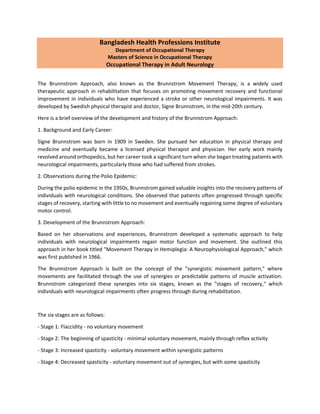
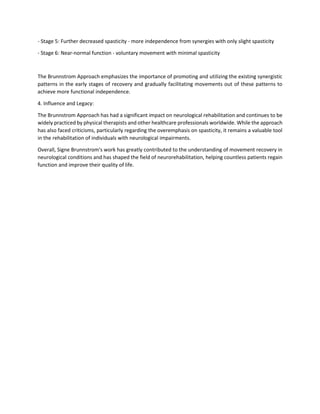

The Brunnstrom Approach was developed by Swedish physical therapist Signe Brunnstrom in the mid-20th century based on her observations of patients recovering from neurological conditions like stroke. She observed that patients progressed through six stages of recovery, starting with no movement and gaining more voluntary control. Brunnstrom's approach uses synergistic movement patterns and categorizes stages of recovery to help patients regain function. It remains widely used in neurorehabilitation today and helped advance understanding of movement recovery following neurological impairments.


