Downloaded 302 times

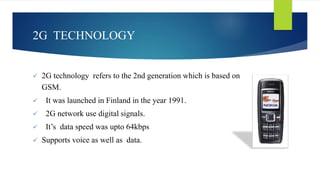
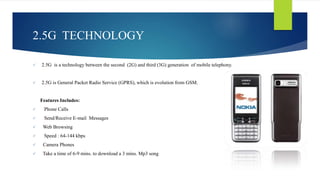
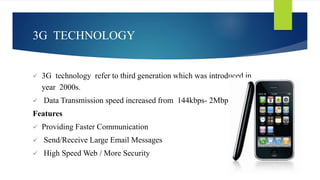
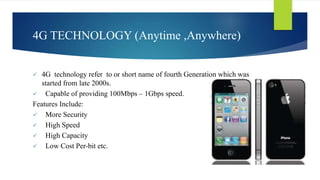



This document summarizes the evolution of cellular communication technologies from 1G to 4G. It describes the key features and limitations of each generation of technology: 1G introduced analog cellular but had poor voice quality and battery life; 2G digitalized cellular using GSM but had limited data speeds and required strong signals; 2.5G introduced GPRS and enabled basic data services; 3G increased speeds to 2Mbps, allowing video calls and mobile TV; 4G provides speeds from 100Mbps to 1Gbps for services like streaming media and supports at least 200 active users per cell. Long term evolution (LTE) is the 4G standard used by most networks globally.


