T S PRADEEP KUMAR
VIT University- Chennai Campus
http://www.pradeepkumar.org
pradeepkumarts@gmail.com
Wireless
Technologies
Outline
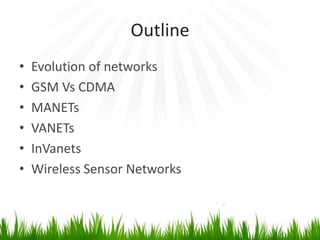
• Evolution of networks
• GSM Vs CDMA
• MANETs
• VANETs
• InVanets
• Wireless Sensor Networks
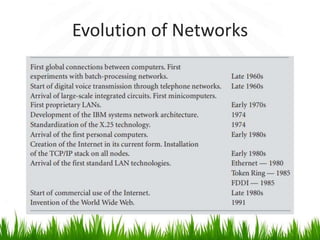
Evolution of Networks
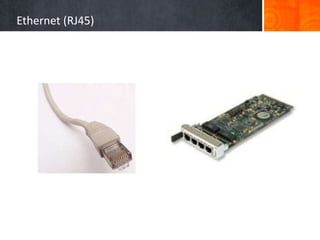
Ethernet (RJ45)
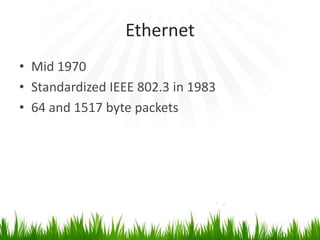
Ethernet
• Mid 1970
• Standardized IEEE 802.3 in 1983
• 64 and 1517 byte packets
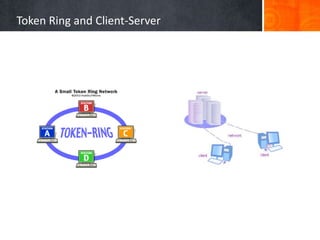
Token Ring and Client-Server
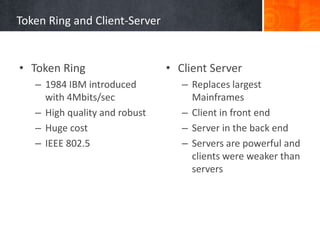
• Token Ring
– 1984 IBM introduced
with 4Mbits/sec
– High quality and robust
– Huge cost
– IEEE 802.5
• Client Server
– Replaces largest
Mainframes
– Client in front end
– Server in the back end
– Servers are powerful and
clients were weaker than
servers
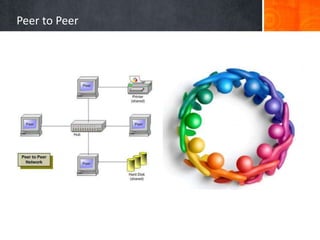
Peer to Peer
Peer to Peer
• All machines have equivalent capabilities and
responsibilities
• Through a hub or bus, all the computers are
connected
• Considerable success in short time
• Napster mp3 music file sharing application live in
1999 and more than 20 million subscribers by mid
2000
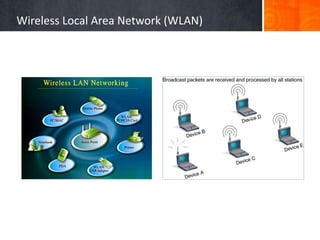
Wireless Local Area Network (WLAN)
• IEEE 802.11 in 1997
• Wi-Fi is also one such use.
• Successful since all the personal computing
laptops comes with this.
• There are so many standards like
802.11a,b,c,d,e,…n
Bluetooth
Bluetooth
• initiated in 1998 and standardized by the IEEE as Wireless
Personal Area Network (WPAN) specification IEEE 802.15.
• Bluetooth is a short range RF technology.
• Bluetooth uses the unlicensed 2.4 GHz band and can
transmit data up to 1Mbit/s, can penetrate solid non-metal
barriers, and has a nominal range of 10m that can be
extended to 100m.
• Currently, Bluetooth development kits can be purchased
from a variety of suppliers, but the systems generally
require a great deal of time, effort, and knowledge for
programming and debugging.
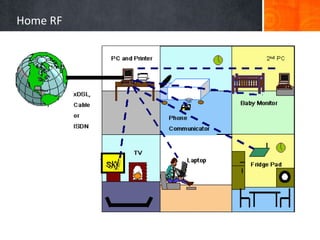
Home RF
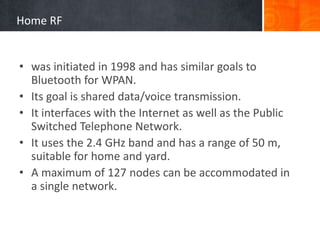
Home RF
• was initiated in 1998 and has similar goals to
Bluetooth for WPAN.
• Its goal is shared data/voice transmission.
• It interfaces with the Internet as well as the Public
Switched Telephone Network.
• It uses the 2.4 GHz band and has a range of 50 m,
suitable for home and yard.
• A maximum of 127 nodes can be accommodated in
a single network.
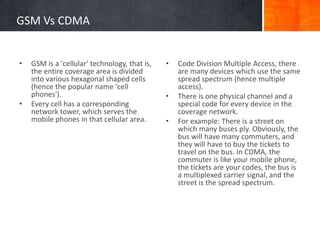
GSM Vs CDMA
• Code Division Multiple Access, there
are many devices which use the same
spread spectrum (hence multiple
access).
• There is one physical channel and a
special code for every device in the
coverage network.
• For example: There is a street on
which many buses ply. Obviously, the
bus will have many commuters, and
they will have to buy the tickets to
travel on the bus. In CDMA, the
commuter is like your mobile phone,
the tickets are your codes, the bus is
a multiplexed carrier signal, and the
street is the spread spectrum.
• GSM is a 'cellular' technology, that is,
the entire coverage area is divided
into various hexagonal shaped cells
(hence the popular name 'cell
phones').
• Every cell has a corresponding
network tower, which serves the
mobile phones in that cellular area.
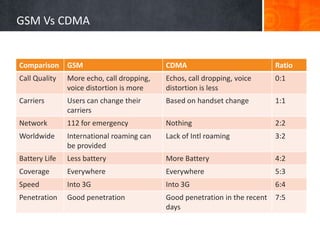
GSM Vs CDMA
Comparison GSM CDMA Ratio
Call Quality More echo, call dropping,
voice distortion is more
Echos, call dropping, voice
distortion is less
0:1
Carriers Users can change their
carriers
Based on handset change 1:1
Network 112 for emergency Nothing 2:2
Worldwide International roaming can
be provided
Lack of Intl roaming 3:2
Battery Life Less battery More Battery 4:2
Coverage Everywhere Everywhere 5:3
Speed Into 3G Into 3G 6:4
Penetration Good penetration Good penetration in the recent
days
7:5
Mobile Adhoc Networks (MANETs)
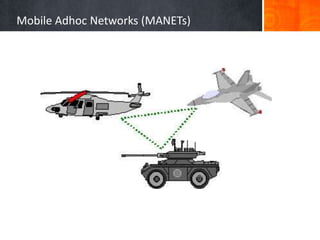
• A mobile ad-hoc network (MANET) is a self-configuring
infrastructure less network of mobile devices connected
by wireless links.
• Each device in a MANET is free to move independently in any
direction, and will therefore change its links to other devices
frequently.
• The growth of laptops and 802.11/Wi-Fi wireless networking have
made MANETs a popular research topic since the mid 1990s.
• Different protocols are then evaluated based on measure such as
the packet drop rate, the overhead introduced by the routing
protocol, end-to-end packet delays, network throughput etc.
Vehicular Adhoc Networks (VANETs)
• A Vehicular Ad-Hoc Network, or VANET is a
technology that uses moving cars as nodes in
a network to create a mobile network.
• VANET turns every participating car into a
wireless router or node, allowing cars
approximately 100 to 300 metres of each
other to connect and, in turn, create a
network with a wide range
Vehicular Adhoc Networks (VANETs)
• As cars fall out of the signal range and drop
out of the network, other cars can join in,
connecting vehicles to one another so that a
mobile Internet is created.
• It is estimated that the first systems that will
integrate this technology are police and fire
vehicles to communicate with each other for
safety purposes.
Intelligent Vehicular Adhoc Networks
(VANETs)
• Intelligent vehicular ad-hoc networks
(InVANETs) use WiFi IEEE 802.11p(WAVE
standard)and WiMAX IEEE 802.16 for easy and
effective communication between vehicles
with dynamic mobility.
• Effective measures such as media
communication between vehicles can be
enabled as well methods to track automotive
vehicles
Intelligent Vehicular Adhoc Networks
(VANETs)
• Vehicles are enabled to communicate among
themselves (vehicle-to-vehicle, V2V) and via
roadside access points (vehicle-to-roadside,
V2R).
• Currently there is ongoing research in the field
of InVANETs for several scenarios. The main
interest is in applications for traffic scenarios,
mobile phone systems, sensor networks and
future combat systems
Wireless Sensor Networks (WSN)
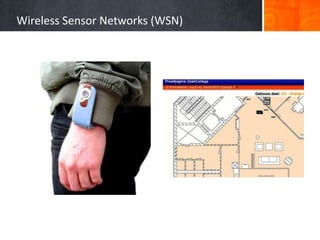
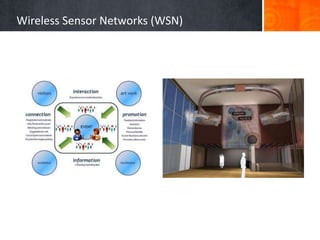
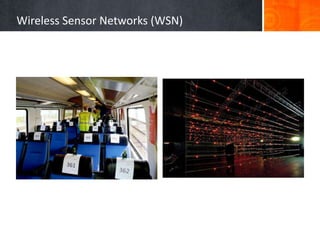
• Sensor networks contain large collection of
nodes which are autonomous in nature and
has short range communication. Sensor nodes
are good for monitoring the animal habitat
(movement) in forest, identifying the ripened
fruit among given set of fruits, objects in a
building, etc.
Wireless Sensor Networks (WSN)
• Energy is scarce resource, means once the
battery is drained, there may be situation
where the battery may not be replaced (Eg.
dense forests, sea, ocean, etc
• Also sometimes the nodes will be thrown in to
the sea or ocean for identifying fish
availability.
• Sometimes they are short lived. They give data
for sometime and after that they die.
Wireless Sensor Networks (WSN)
Adhoc Vs Sensor Networks
• Sensor nodes are densely deployed and prone to failures
frequently.
• Number of sensor nodes are huge when compared with
the adhoc nodes.
• Sensor network topology changes frequently.
• Sensor nodes uses broadcasting whereas the adhoc nodes
uses point to point communication
• Sensor nodes are limited in memory and power
• it has limited computation (simple operations)
• Above all, All sensor nodes have a common goal (for a
particular achievement)
Continued after a break….

Wireless technologies

  • 1.
    T S PRADEEPKUMAR VIT University- Chennai Campus http://www.pradeepkumar.org pradeepkumarts@gmail.com Wireless Technologies
  • 2.
    Outline • Evolution ofnetworks • GSM Vs CDMA • MANETs • VANETs • InVanets • Wireless Sensor Networks
  • 3.
  • 4.
  • 5.
    Ethernet • Mid 1970 •Standardized IEEE 802.3 in 1983 • 64 and 1517 byte packets
  • 6.
    Token Ring andClient-Server
  • 7.
    Token Ring andClient-Server • Token Ring – 1984 IBM introduced with 4Mbits/sec – High quality and robust – Huge cost – IEEE 802.5 • Client Server – Replaces largest Mainframes – Client in front end – Server in the back end – Servers are powerful and clients were weaker than servers
  • 8.
  • 9.
    Peer to Peer •All machines have equivalent capabilities and responsibilities • Through a hub or bus, all the computers are connected • Considerable success in short time • Napster mp3 music file sharing application live in 1999 and more than 20 million subscribers by mid 2000
  • 10.
    Wireless Local AreaNetwork (WLAN)
  • 11.
    Wireless Local AreaNetwork (WLAN) • IEEE 802.11 in 1997 • Wi-Fi is also one such use. • Successful since all the personal computing laptops comes with this. • There are so many standards like 802.11a,b,c,d,e,…n
  • 12.
  • 13.
    Bluetooth • initiated in1998 and standardized by the IEEE as Wireless Personal Area Network (WPAN) specification IEEE 802.15. • Bluetooth is a short range RF technology. • Bluetooth uses the unlicensed 2.4 GHz band and can transmit data up to 1Mbit/s, can penetrate solid non-metal barriers, and has a nominal range of 10m that can be extended to 100m. • Currently, Bluetooth development kits can be purchased from a variety of suppliers, but the systems generally require a great deal of time, effort, and knowledge for programming and debugging.
  • 14.
  • 15.
    Home RF • wasinitiated in 1998 and has similar goals to Bluetooth for WPAN. • Its goal is shared data/voice transmission. • It interfaces with the Internet as well as the Public Switched Telephone Network. • It uses the 2.4 GHz band and has a range of 50 m, suitable for home and yard. • A maximum of 127 nodes can be accommodated in a single network.
  • 16.
    GSM Vs CDMA •Code Division Multiple Access, there are many devices which use the same spread spectrum (hence multiple access). • There is one physical channel and a special code for every device in the coverage network. • For example: There is a street on which many buses ply. Obviously, the bus will have many commuters, and they will have to buy the tickets to travel on the bus. In CDMA, the commuter is like your mobile phone, the tickets are your codes, the bus is a multiplexed carrier signal, and the street is the spread spectrum. • GSM is a 'cellular' technology, that is, the entire coverage area is divided into various hexagonal shaped cells (hence the popular name 'cell phones'). • Every cell has a corresponding network tower, which serves the mobile phones in that cellular area.
  • 17.
    GSM Vs CDMA ComparisonGSM CDMA Ratio Call Quality More echo, call dropping, voice distortion is more Echos, call dropping, voice distortion is less 0:1 Carriers Users can change their carriers Based on handset change 1:1 Network 112 for emergency Nothing 2:2 Worldwide International roaming can be provided Lack of Intl roaming 3:2 Battery Life Less battery More Battery 4:2 Coverage Everywhere Everywhere 5:3 Speed Into 3G Into 3G 6:4 Penetration Good penetration Good penetration in the recent days 7:5
  • 18.
  • 19.
    Mobile Adhoc Networks(MANETs) • A mobile ad-hoc network (MANET) is a self-configuring infrastructure less network of mobile devices connected by wireless links. • Each device in a MANET is free to move independently in any direction, and will therefore change its links to other devices frequently. • The growth of laptops and 802.11/Wi-Fi wireless networking have made MANETs a popular research topic since the mid 1990s. • Different protocols are then evaluated based on measure such as the packet drop rate, the overhead introduced by the routing protocol, end-to-end packet delays, network throughput etc.
  • 20.
    Vehicular Adhoc Networks(VANETs) • A Vehicular Ad-Hoc Network, or VANET is a technology that uses moving cars as nodes in a network to create a mobile network. • VANET turns every participating car into a wireless router or node, allowing cars approximately 100 to 300 metres of each other to connect and, in turn, create a network with a wide range
  • 21.
    Vehicular Adhoc Networks(VANETs) • As cars fall out of the signal range and drop out of the network, other cars can join in, connecting vehicles to one another so that a mobile Internet is created. • It is estimated that the first systems that will integrate this technology are police and fire vehicles to communicate with each other for safety purposes.
  • 22.
    Intelligent Vehicular AdhocNetworks (VANETs) • Intelligent vehicular ad-hoc networks (InVANETs) use WiFi IEEE 802.11p(WAVE standard)and WiMAX IEEE 802.16 for easy and effective communication between vehicles with dynamic mobility. • Effective measures such as media communication between vehicles can be enabled as well methods to track automotive vehicles
  • 23.
    Intelligent Vehicular AdhocNetworks (VANETs) • Vehicles are enabled to communicate among themselves (vehicle-to-vehicle, V2V) and via roadside access points (vehicle-to-roadside, V2R). • Currently there is ongoing research in the field of InVANETs for several scenarios. The main interest is in applications for traffic scenarios, mobile phone systems, sensor networks and future combat systems
  • 24.
    Wireless Sensor Networks(WSN) • Sensor networks contain large collection of nodes which are autonomous in nature and has short range communication. Sensor nodes are good for monitoring the animal habitat (movement) in forest, identifying the ripened fruit among given set of fruits, objects in a building, etc.
  • 25.
    Wireless Sensor Networks(WSN) • Energy is scarce resource, means once the battery is drained, there may be situation where the battery may not be replaced (Eg. dense forests, sea, ocean, etc • Also sometimes the nodes will be thrown in to the sea or ocean for identifying fish availability. • Sometimes they are short lived. They give data for sometime and after that they die.
  • 26.
  • 27.
  • 28.
  • 29.
    Adhoc Vs SensorNetworks • Sensor nodes are densely deployed and prone to failures frequently. • Number of sensor nodes are huge when compared with the adhoc nodes. • Sensor network topology changes frequently. • Sensor nodes uses broadcasting whereas the adhoc nodes uses point to point communication • Sensor nodes are limited in memory and power • it has limited computation (simple operations) • Above all, All sensor nodes have a common goal (for a particular achievement)
  • 30.

Editor's Notes

  • #2 Wireless Technologies - Introduction