TYPES OF
NETWORK
Assignment
Submitted to;
Sir Salman Naseer
Submitted by;
Ali Ijaz
BC14029
Local Area Network (LAN)
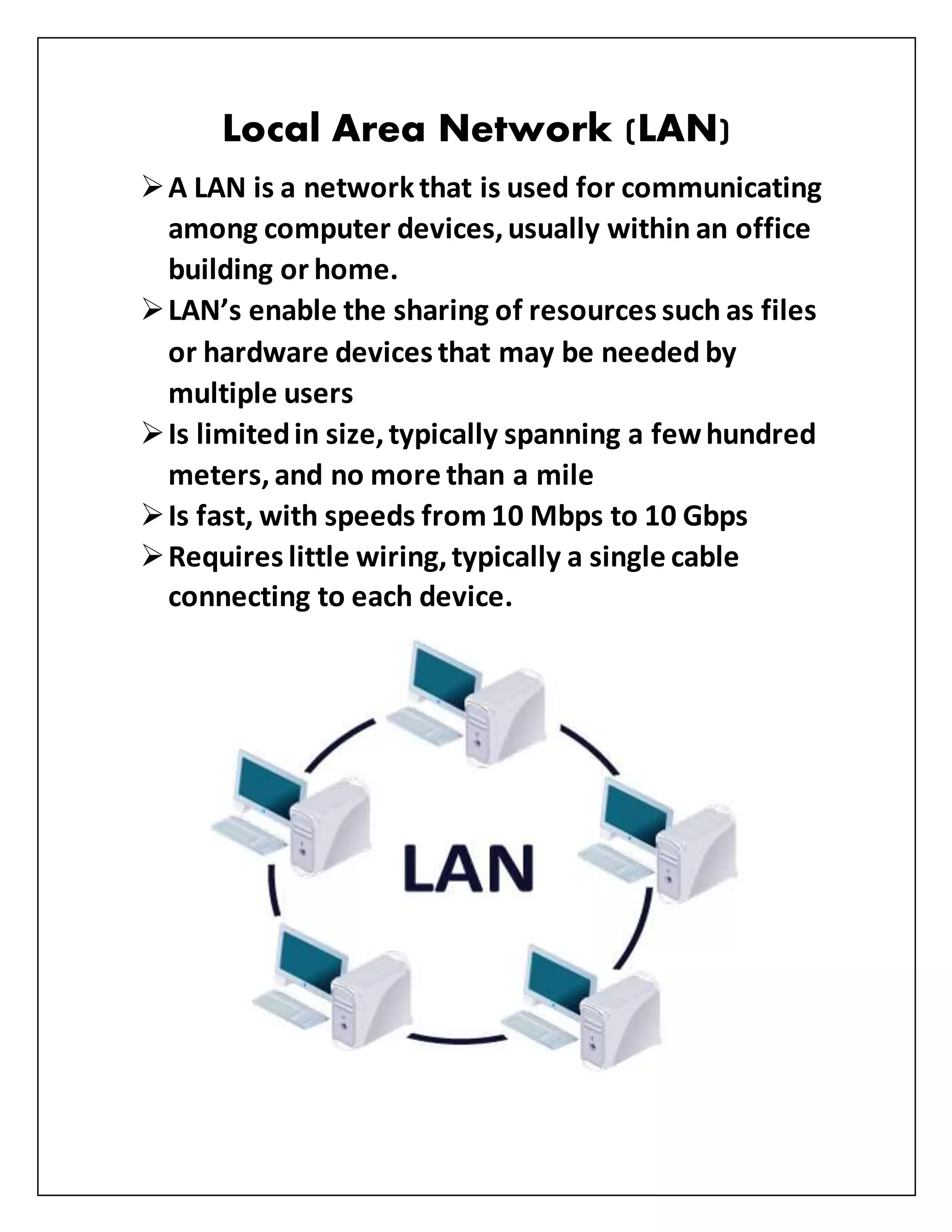
A LAN is a networkthat is used for communicating
among computer devices,usually within an office
building or home.
LAN’s enable the sharing of resources such as files
or hardware devices that may be needed by
multiple users
Is limitedin size,typically spanning a fewhundred
meters, and no more than a mile
Is fast, with speeds from10 Mbps to 10 Gbps
Requires little wiring,typically a single cable
connecting to each device.
Metropolitan Area Network (MAN)
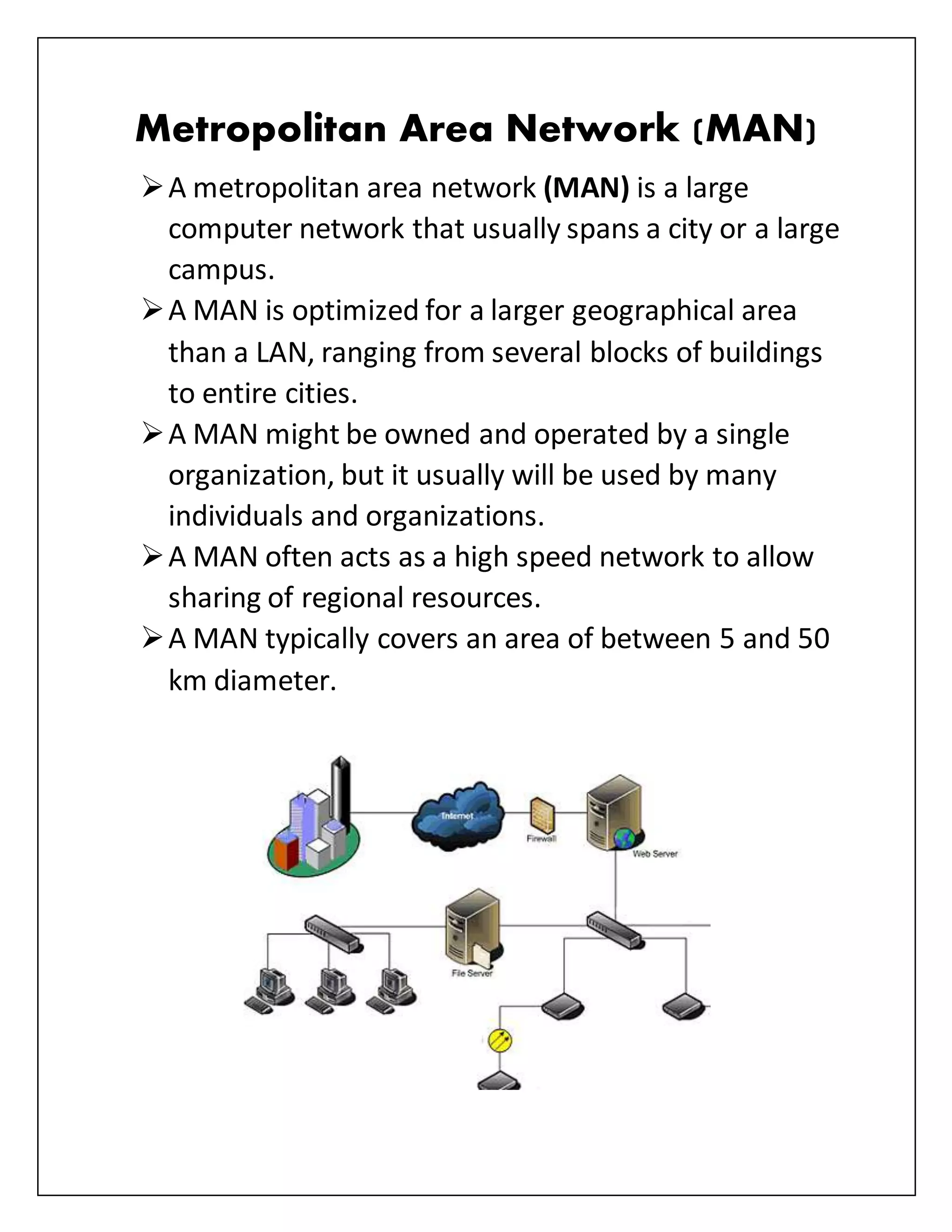
A metropolitan area network (MAN) is a large
computer network that usually spans a city or a large
campus.
A MAN is optimized for a larger geographical area
than a LAN, ranging from several blocks of buildings
to entire cities.
A MAN might be owned and operated by a single
organization, but it usually will be used by many
individuals and organizations.
A MAN often acts as a high speed network to allow
sharing of regional resources.
A MAN typically covers an area of between 5 and 50
km diameter.
Wide Area Network (WAN)
 WAN covers a large geographic area such as country,
continent or even whole of the world.
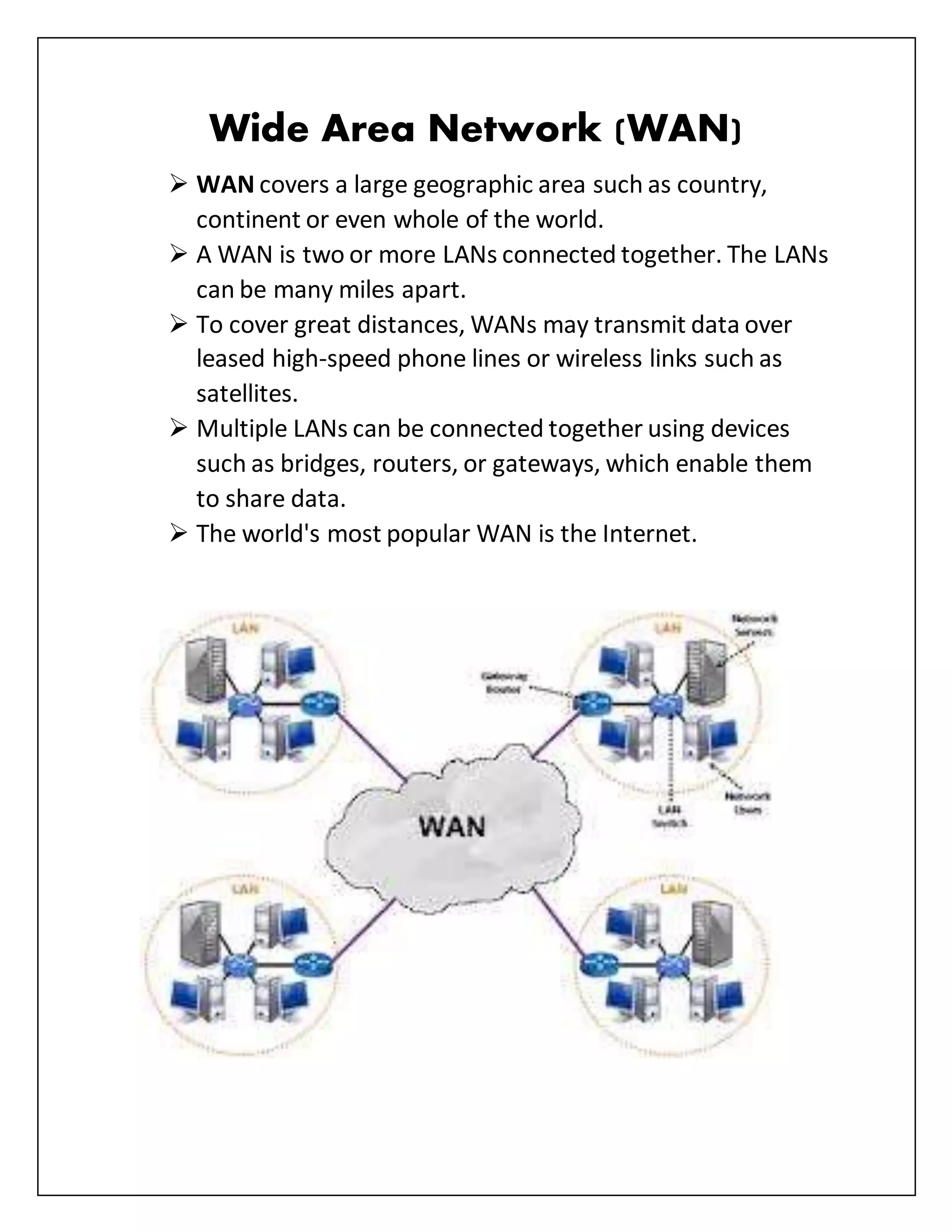
 A WAN is two or more LANs connected together. The LANs
can be many miles apart.
 To cover great distances, WANs may transmit data over
leased high-speed phone lines or wireless links such as
satellites.
 Multiple LANs can be connected together using devices
such as bridges, routers, or gateways, which enable them
to share data.
 The world's most popular WAN is the Internet.
Personal Area Network (PAN)
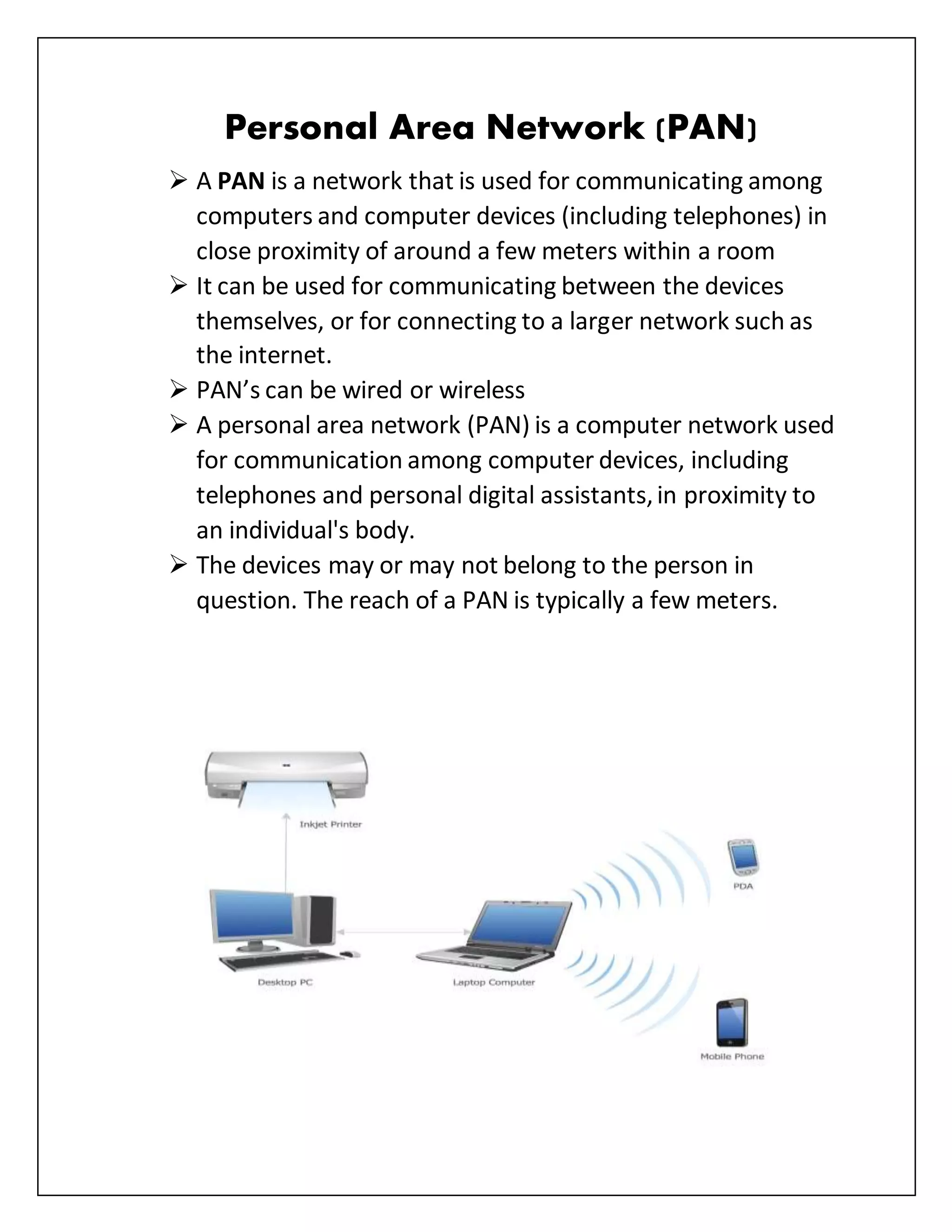
 A PAN is a network that is used for communicating among
computers and computer devices (including telephones) in
close proximity of around a few meters within a room
 It can be used for communicating between the devices
themselves, or for connecting to a larger network such as
the internet.
 PAN’s can be wired or wireless
 A personal area network (PAN) is a computer network used
for communication among computer devices, including
telephones and personal digital assistants,in proximity to
an individual's body.
 The devices may or may not belong to the person in
question. The reach of a PAN is typically a few meters.
Wireless Local Area Network (WLAN)
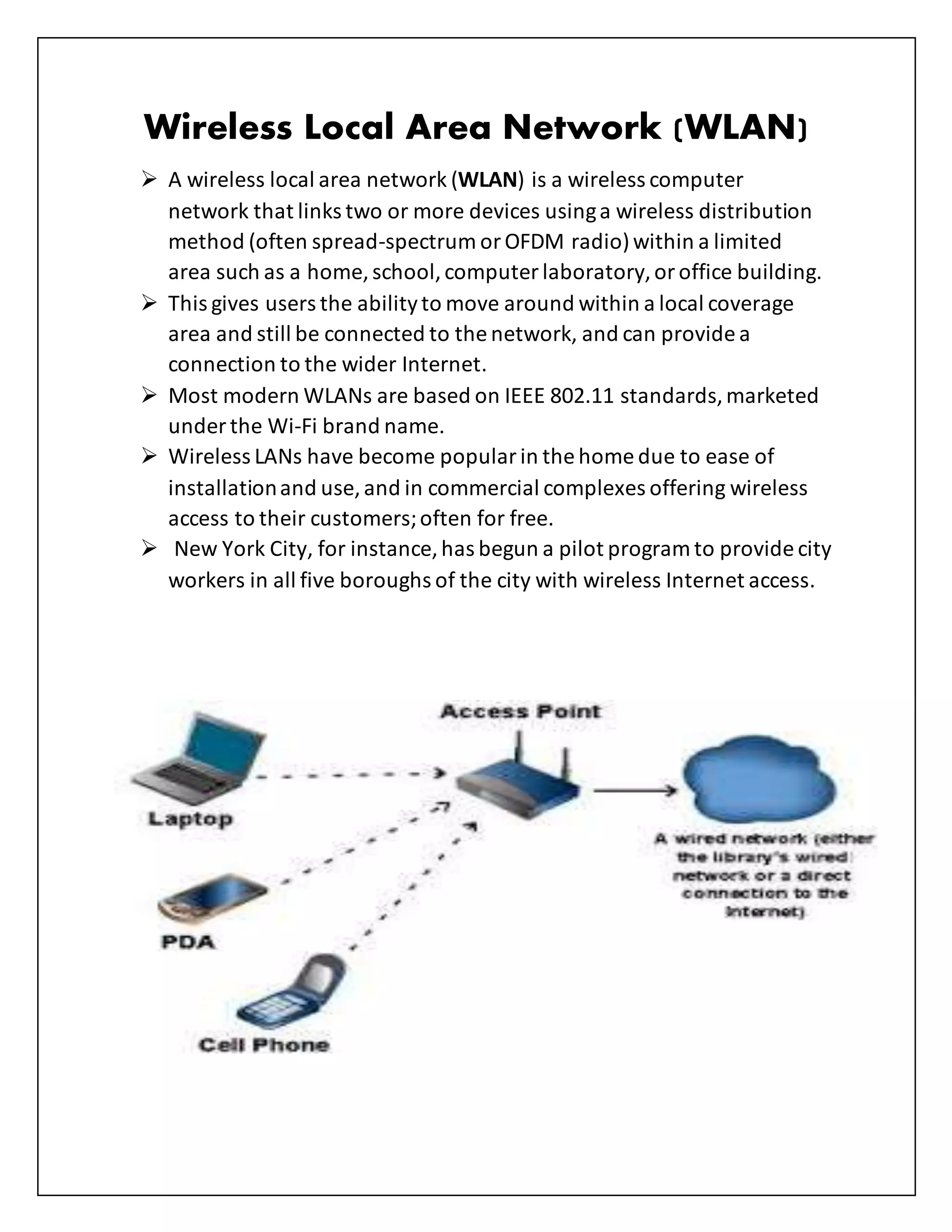
 A wireless local area network (WLAN) is a wireless computer
network that links two or more devices usinga wireless distribution
method (often spread-spectrum or OFDM radio)within a limited
area such as a home, school,computer laboratory,oroffice building.
 This gives users the abilityto move around within a local coverage
area and still be connected to the network, and can provide a
connection to the wider Internet.
 Most modern WLANs are based on IEEE 802.11 standards,marketed
under the Wi-Fi brand name.
 Wireless LANs have become popularin the home due to ease of
installationand use, and in commercial complexes offering wireless
access to their customers;often for free.
 New York City, for instance, has begun a pilot program to provide city
workers in all five boroughs of the city with wireless Internet access.
Storage Area Network (SAN)
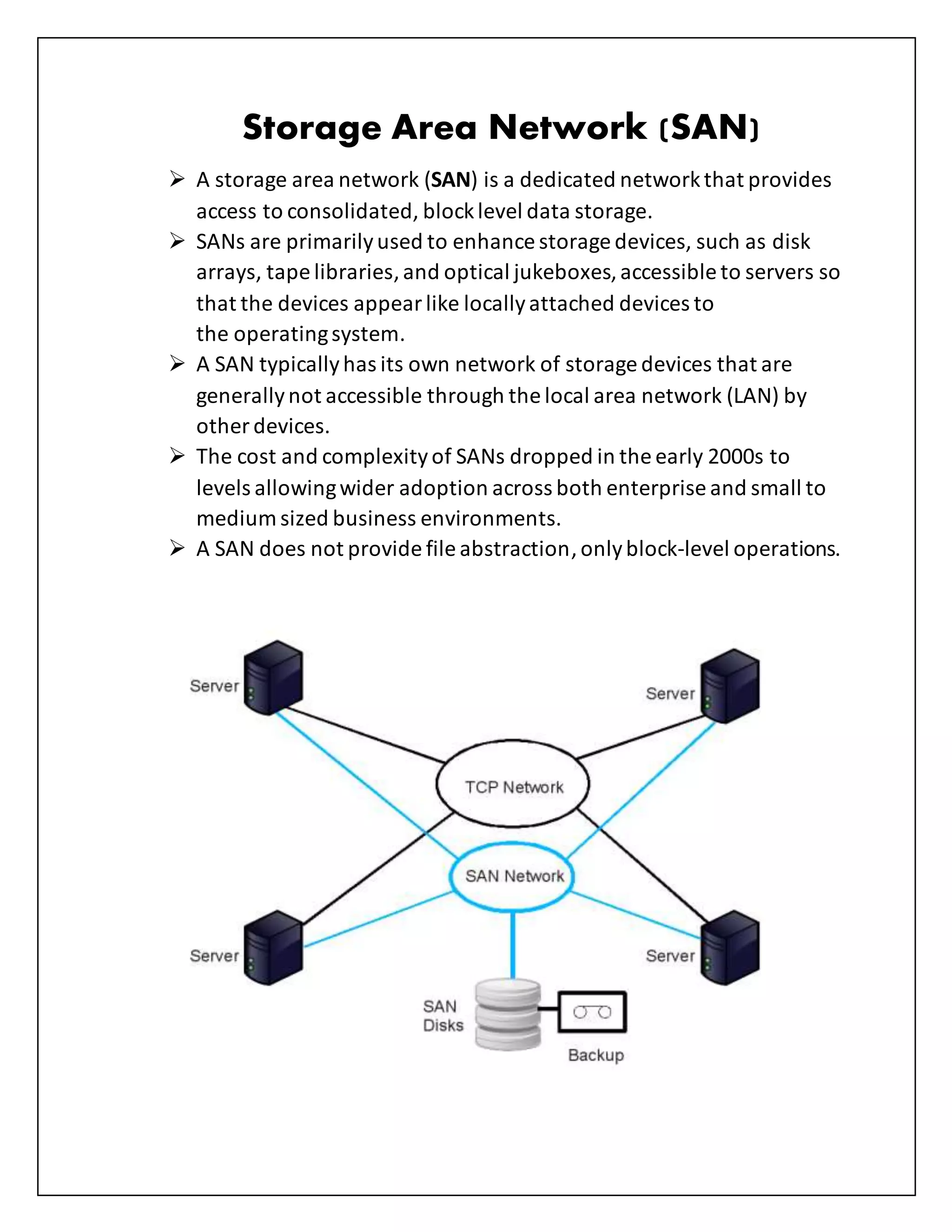
 A storage area network (SAN) is a dedicated networkthat provides
access to consolidated, blocklevel data storage.
 SANs are primarilyused to enhance storage devices, such as disk
arrays, tape libraries,and optical jukeboxes,accessible to servers so
that the devices appearlike locallyattached devices to
the operatingsystem.
 A SAN typicallyhas its own network of storage devices that are
generallynot accessible through the local area network (LAN) by
other devices.
 The cost and complexityof SANs dropped in the early 2000s to
levels allowingwider adoption across both enterprise and small to
medium sized business environments.
 A SAN does not provide file abstraction,onlyblock-level operations.
Mobile ad hoc Network (MANET)
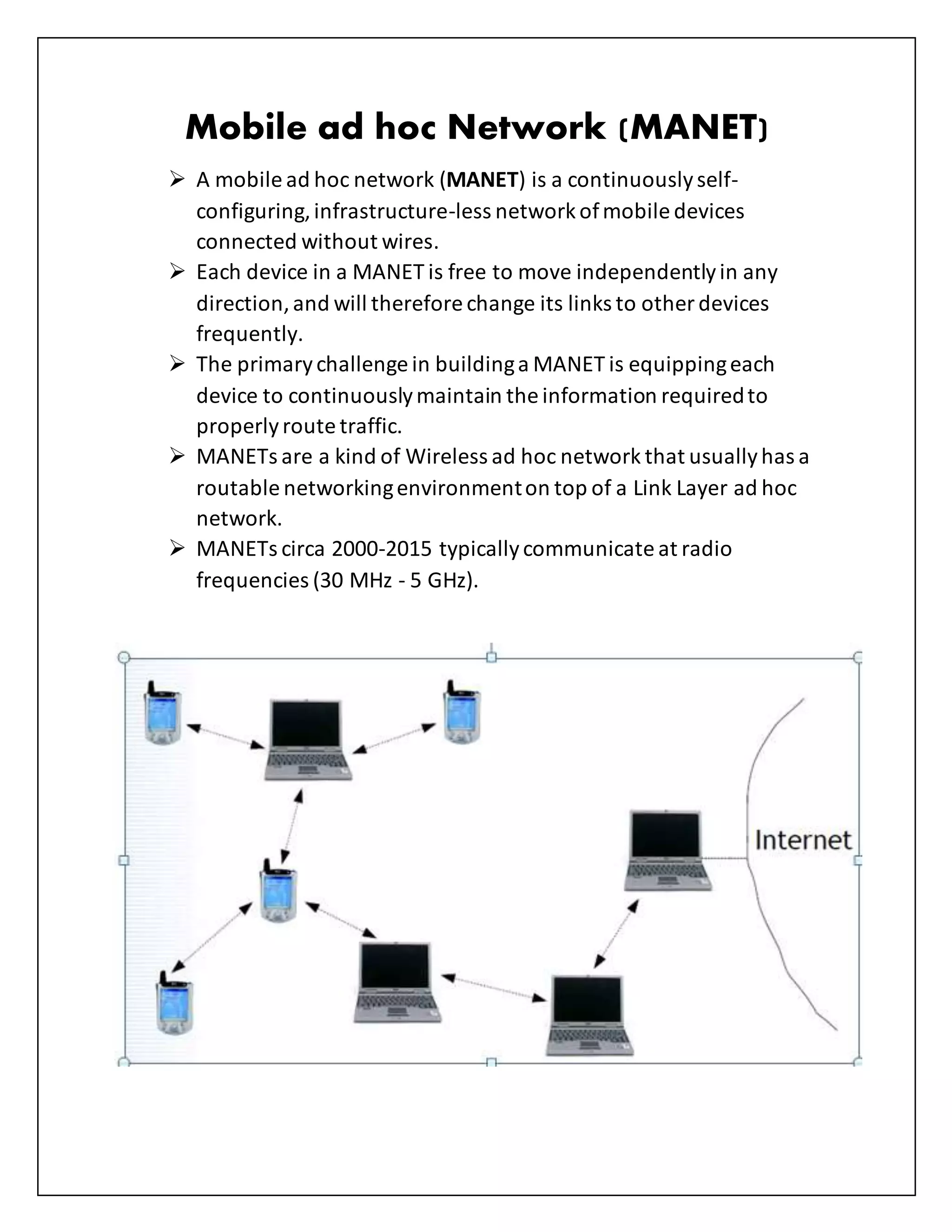
 A mobile ad hoc network (MANET) is a continuouslyself-
configuring,infrastructure-less networkofmobile devices
connected without wires.
 Each device in a MANET is free to move independentlyin any
direction,and will therefore change its links to other devices
frequently.
 The primarychallenge in buildinga MANET is equippingeach
device to continuouslymaintain the information requiredto
properlyroute traffic.
 MANETs are a kind of Wireless ad hoc network that usuallyhas a
routable networkingenvironmenton top of a Link Layer ad hoc
network.
 MANETs circa 2000-2015 typicallycommunicate at radio
frequencies (30 MHz - 5 GHz).
Vehicular ad hoc Network (VANET)
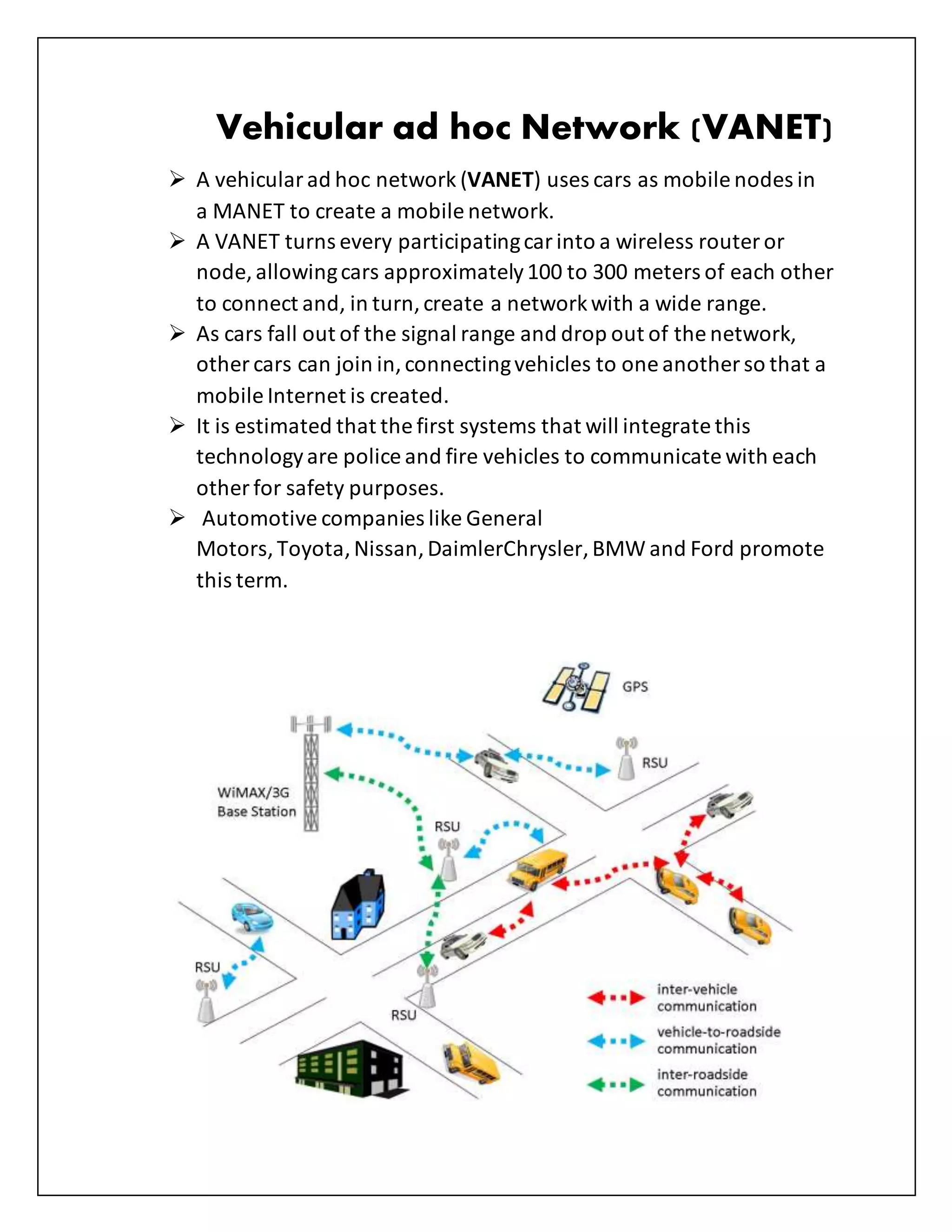
 A vehicularad hoc network (VANET) uses cars as mobile nodes in
a MANET to create a mobile network.
 A VANET turns every participatingcarinto a wireless router or
node, allowingcars approximately100 to 300 meters of each other
to connect and, in turn,create a networkwith a wide range.
 As cars fall out of the signal range and drop out of the network,
other cars can join in,connectingvehicles to one another so that a
mobile Internet is created.
 It is estimated that the first systems that will integrate this
technologyare police and fire vehicles to communicate with each
other for safety purposes.
 Automotive companies like General
Motors, Toyota,Nissan,DaimlerChrysler, BMW and Ford promote
this term.
Zig Bee
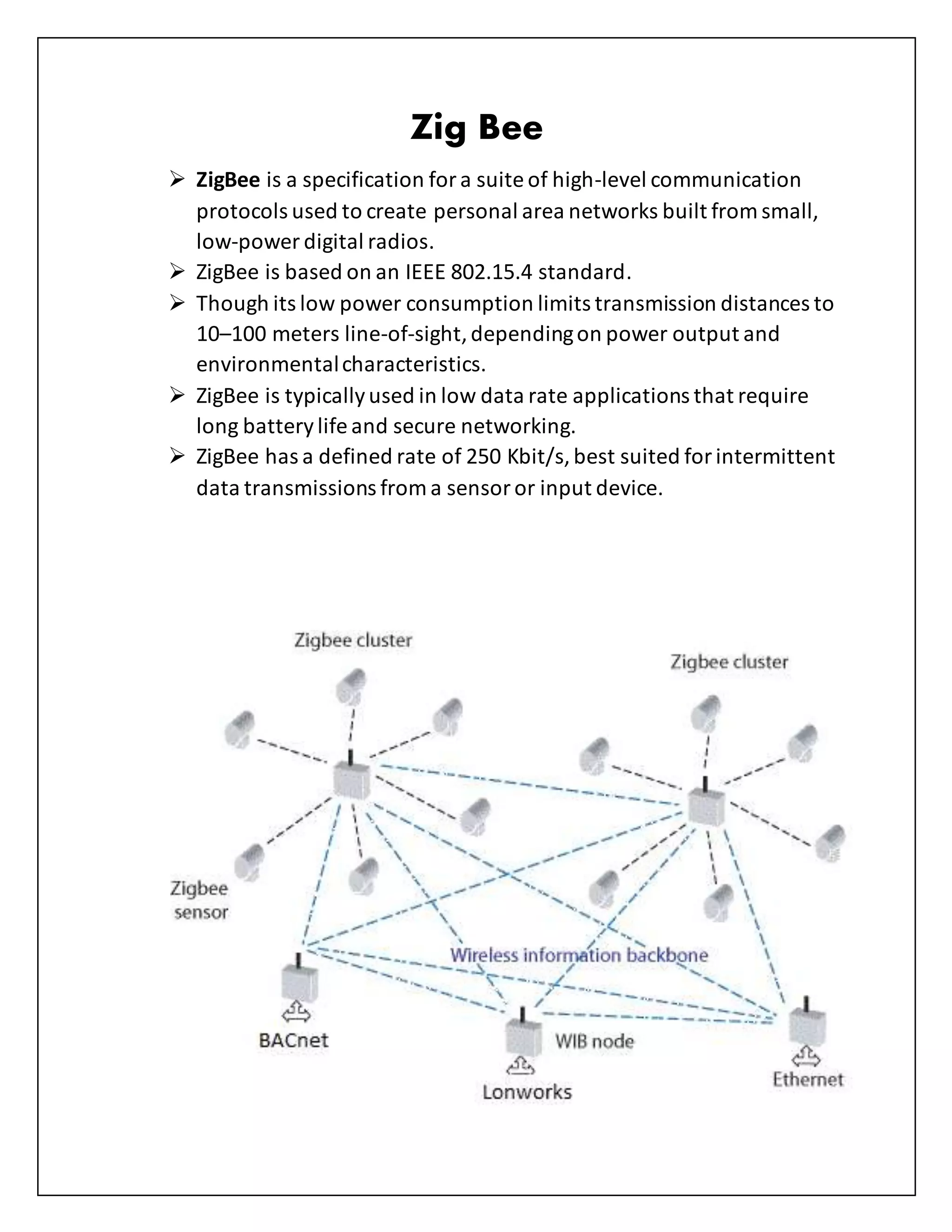
 ZigBee is a specification fora suite of high-level communication
protocols used to create personal area networks built from small,
low-power digital radios.
 ZigBee is based on an IEEE 802.15.4 standard.
 Though its low power consumption limits transmission distances to
10–100 meters line-of-sight,dependingon power output and
environmentalcharacteristics.
 ZigBee is typicallyused in low data rate applications that require
long batterylife and secure networking.
 ZigBee has a defined rate of 250 Kbit/s, best suited forintermittent
data transmissions from a sensoror input device.
Wireless Local Loop (WLL)
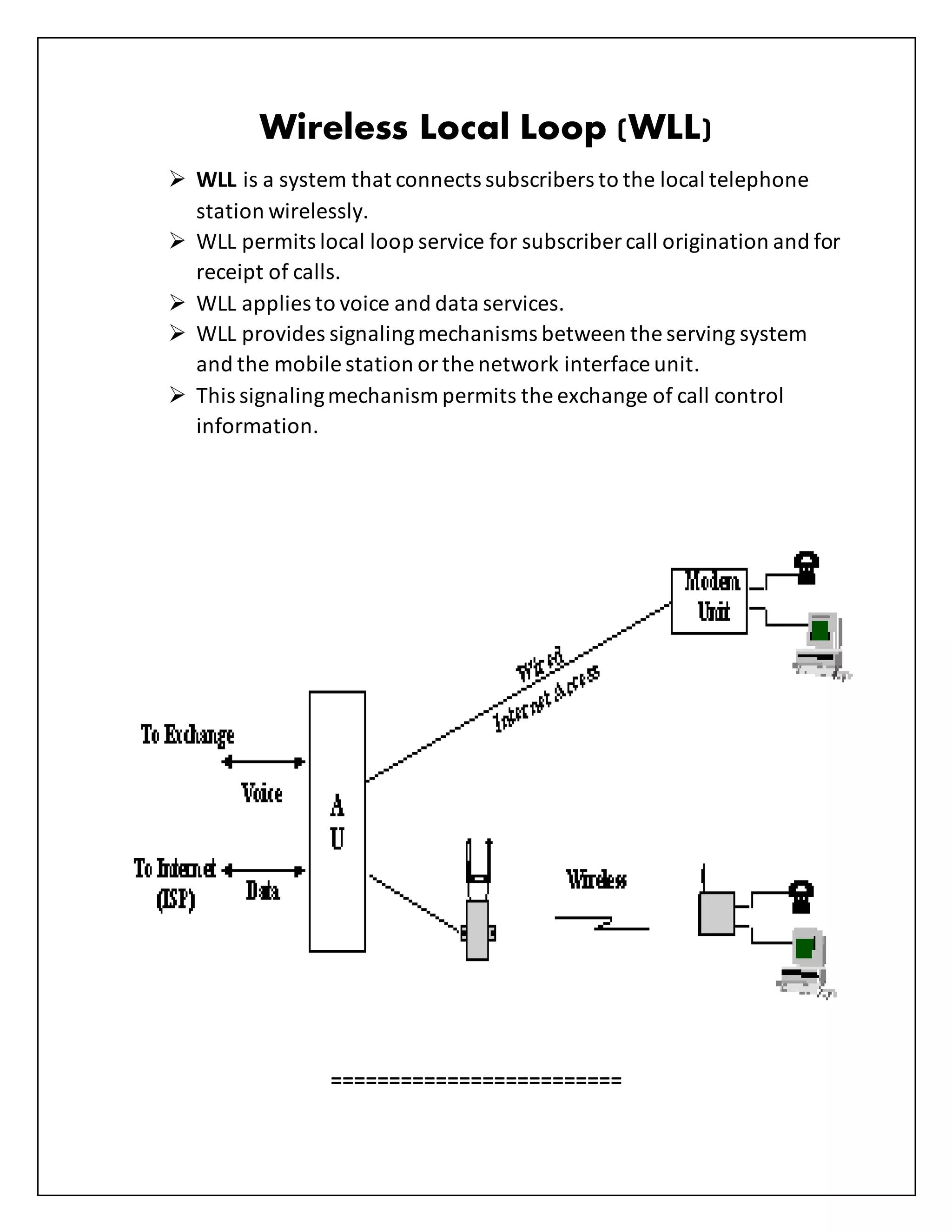
 WLL is a system that connects subscribers to the local telephone
station wirelessly.
 WLL permits local loop service for subscriber call origination and for
receipt of calls.
 WLL applies to voice and data services.
 WLL provides signalingmechanisms between the serving system
and the mobile station orthe network interface unit.
 This signalingmechanism permits the exchange of call control
information.
=========================

Types of network

  • 1.
    TYPES OF NETWORK Assignment Submitted to; SirSalman Naseer Submitted by; Ali Ijaz BC14029
  • 2.
    Local Area Network(LAN) A LAN is a networkthat is used for communicating among computer devices,usually within an office building or home. LAN’s enable the sharing of resources such as files or hardware devices that may be needed by multiple users Is limitedin size,typically spanning a fewhundred meters, and no more than a mile Is fast, with speeds from10 Mbps to 10 Gbps Requires little wiring,typically a single cable connecting to each device.
  • 3.
    Metropolitan Area Network(MAN) A metropolitan area network (MAN) is a large computer network that usually spans a city or a large campus. A MAN is optimized for a larger geographical area than a LAN, ranging from several blocks of buildings to entire cities. A MAN might be owned and operated by a single organization, but it usually will be used by many individuals and organizations. A MAN often acts as a high speed network to allow sharing of regional resources. A MAN typically covers an area of between 5 and 50 km diameter.
  • 4.
    Wide Area Network(WAN)  WAN covers a large geographic area such as country, continent or even whole of the world.  A WAN is two or more LANs connected together. The LANs can be many miles apart.  To cover great distances, WANs may transmit data over leased high-speed phone lines or wireless links such as satellites.  Multiple LANs can be connected together using devices such as bridges, routers, or gateways, which enable them to share data.  The world's most popular WAN is the Internet.
  • 5.
    Personal Area Network(PAN)  A PAN is a network that is used for communicating among computers and computer devices (including telephones) in close proximity of around a few meters within a room  It can be used for communicating between the devices themselves, or for connecting to a larger network such as the internet.  PAN’s can be wired or wireless  A personal area network (PAN) is a computer network used for communication among computer devices, including telephones and personal digital assistants,in proximity to an individual's body.  The devices may or may not belong to the person in question. The reach of a PAN is typically a few meters.
  • 6.
    Wireless Local AreaNetwork (WLAN)  A wireless local area network (WLAN) is a wireless computer network that links two or more devices usinga wireless distribution method (often spread-spectrum or OFDM radio)within a limited area such as a home, school,computer laboratory,oroffice building.  This gives users the abilityto move around within a local coverage area and still be connected to the network, and can provide a connection to the wider Internet.  Most modern WLANs are based on IEEE 802.11 standards,marketed under the Wi-Fi brand name.  Wireless LANs have become popularin the home due to ease of installationand use, and in commercial complexes offering wireless access to their customers;often for free.  New York City, for instance, has begun a pilot program to provide city workers in all five boroughs of the city with wireless Internet access.
  • 7.
    Storage Area Network(SAN)  A storage area network (SAN) is a dedicated networkthat provides access to consolidated, blocklevel data storage.  SANs are primarilyused to enhance storage devices, such as disk arrays, tape libraries,and optical jukeboxes,accessible to servers so that the devices appearlike locallyattached devices to the operatingsystem.  A SAN typicallyhas its own network of storage devices that are generallynot accessible through the local area network (LAN) by other devices.  The cost and complexityof SANs dropped in the early 2000s to levels allowingwider adoption across both enterprise and small to medium sized business environments.  A SAN does not provide file abstraction,onlyblock-level operations.
  • 8.
    Mobile ad hocNetwork (MANET)  A mobile ad hoc network (MANET) is a continuouslyself- configuring,infrastructure-less networkofmobile devices connected without wires.  Each device in a MANET is free to move independentlyin any direction,and will therefore change its links to other devices frequently.  The primarychallenge in buildinga MANET is equippingeach device to continuouslymaintain the information requiredto properlyroute traffic.  MANETs are a kind of Wireless ad hoc network that usuallyhas a routable networkingenvironmenton top of a Link Layer ad hoc network.  MANETs circa 2000-2015 typicallycommunicate at radio frequencies (30 MHz - 5 GHz).
  • 9.
    Vehicular ad hocNetwork (VANET)  A vehicularad hoc network (VANET) uses cars as mobile nodes in a MANET to create a mobile network.  A VANET turns every participatingcarinto a wireless router or node, allowingcars approximately100 to 300 meters of each other to connect and, in turn,create a networkwith a wide range.  As cars fall out of the signal range and drop out of the network, other cars can join in,connectingvehicles to one another so that a mobile Internet is created.  It is estimated that the first systems that will integrate this technologyare police and fire vehicles to communicate with each other for safety purposes.  Automotive companies like General Motors, Toyota,Nissan,DaimlerChrysler, BMW and Ford promote this term.
  • 10.
    Zig Bee  ZigBeeis a specification fora suite of high-level communication protocols used to create personal area networks built from small, low-power digital radios.  ZigBee is based on an IEEE 802.15.4 standard.  Though its low power consumption limits transmission distances to 10–100 meters line-of-sight,dependingon power output and environmentalcharacteristics.  ZigBee is typicallyused in low data rate applications that require long batterylife and secure networking.  ZigBee has a defined rate of 250 Kbit/s, best suited forintermittent data transmissions from a sensoror input device.
  • 11.
    Wireless Local Loop(WLL)  WLL is a system that connects subscribers to the local telephone station wirelessly.  WLL permits local loop service for subscriber call origination and for receipt of calls.  WLL applies to voice and data services.  WLL provides signalingmechanisms between the serving system and the mobile station orthe network interface unit.  This signalingmechanism permits the exchange of call control information. =========================