Wireless Communication?
 The term wireless communication was introduced in the
19th century and wireless communication technology has
developed over the subsequent years.
 One of the most important mediums of transmission of
information from one device to other devices.
 In this technology, the information can be transmitted
through the air without requiring any cable or wires or
other electronic conductors, by using electromagnetic
waves like IR, RF, satellite, etc.
 In the present days, the wireless communication
technology refers to a variety of wireless communication
devices and technologies ranging from smart phones to
computers, tabs, laptops, Bluetooth Technology, printers.
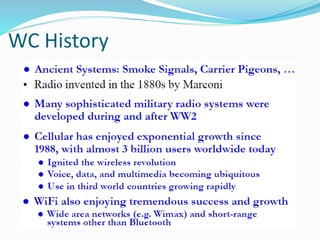
WC History
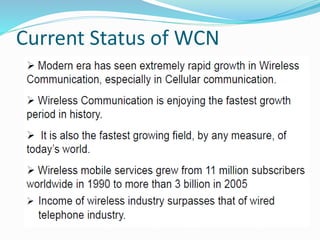
Current Status of WCN
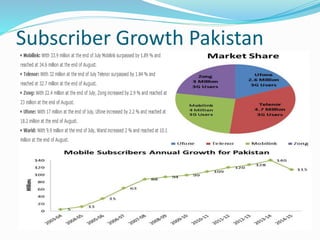
Subscriber Growth Pakistan
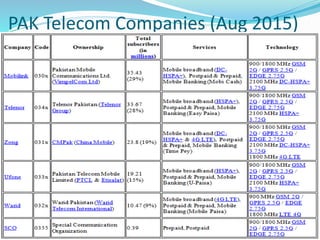
PAK Telecom Companies (Aug 2015)
Types of WC
 Satellite communication is one type of self contained
wireless communication technology,
 it is widely spread all over the world to allow users to stay
connected almost anywhere on the earth.
 When the signal (a beam of modulated microwave) is sent
near the satellite then, satellite amplifies the signal and
sent it back to the antenna receiver which is located on the
surface of the earth.
 Satellite communication contains two main components
like the space segment and the ground segment.
 The ground segment consists of fixed or mobile
transmission, reception and ancillary equipment and
 the space segment, which mainly is the satellite itself.
Infrared wireless communication
 Infrared wireless communication communicates information in a
device or systems through IR radiation .
 IR is electromagnetic energy at a wavelength that is longer than that
of red light.
 It is used for security control, TV remote control and short range
communications.
 In the electromagnetic spectrum, IR radiation lies between
microwaves and visible light.
 So, they can be used as a source of communication
 For a successful infrared communication,
 a photo LED transmitter and a photo diode receptor are required.
 The LED transmitter transmits the IR signal in the form of non visible
light, that is captured and saved by the photoreceptor.
 The source and destination can be mobile phones, TVs, security systems,
laptops etc supports wireless communication.
Microwave WC
 is an effective type of communication, mainly this
transmission uses radio waves, and the wavelengths of
radio waves are measured in centimeters.
 In this communication, the data or information can be
transfers using two methods. One is satellite method
and another one is terrestrial method.
 The main disadvantage of microwave signals is, they
can be affected by bad weather, especially rain.
Satellite VS Terrestrial methods
 In satellite method, the
data can be transmitted
though a satellite, that
orbit 22,300 miles above
the earth. Stations on the
earth send and receive data
signals from the satellite
with a frequency ranging
from 11GHz-14GHz and
with a transmission speed
of 1Mbps to 10Mbps.
 In terrestrial method, in
which two microwave
towers with a clear line of
sight between them are
used, ensuring no
obstacles to disrupt the
line of sight. So it is used
often for the purpose of
privacy. The frequency
range of the terrestrial
system is typically 4GHz-
6GHz and with a
transmission speed is
usually 1Mbps to 10Mbps.
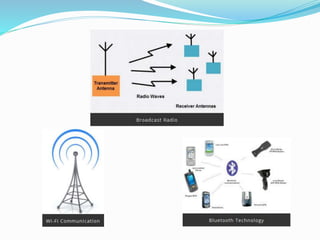
Broadcast Radio
 The first wireless communication technology is the
open radio communication to seek out widespread
use, and it still serves a purpose nowadays.
 Handy multichannel radios permit a user to speak over
short distances, whereas citizen’s band and maritime
radios offer communication services for sailors.
 share data and function emergency communication
aids throughout disasters with their powerful
broadcasting gear, and can even communicate digital
information over the radio frequency spectrum.
Cont…
 An audio broadcasting service radio, broadcasts sound through
the air as radio waves. Radio uses a transmitter which is used to
transmit the data in the form of radio waves to a receiving
antenna. To broadcast common programming, stations are
associated with the radio N/W’s. Radio broadcasting may be
done via cable FM, the net and satellites.
 A broadcast sends information over long distances at up to two
megabits/Sec (AM/FM Radio).
 Radio waves are electromagnetic signals, that are transmitted by
an antenna.
 These waves have completely different frequency segments, and
you will be ready to obtain an audio signal by changing into a
frequency segment.
Wi-Fi
 Wi-Fi is a low power wireless communication, that is
used by various electronic devices like smart phones,
laptops, etc.
 In this setup, a router named access point works as a
communication hub wirelessly. These networks allow
users to connect only within close proximity to a
router.
 WiFi is very common in networking applications
which affords portability wirelessly. These networks
need to be protected with passwords for the purpose of
security, otherwise it will access by others
Mobile Communication System
 Many users communicate across a single frequency
band through mobile phones.
 Cellular and cordless phones are two examples of
devices which make use of wireless signals.
 Typically, cell phones have a larger range of networks
to provide a coverage.
 But, Cordless phones have a limited range. Similar to
GPS devices, some phones make use of signals from
satellites to communicate.
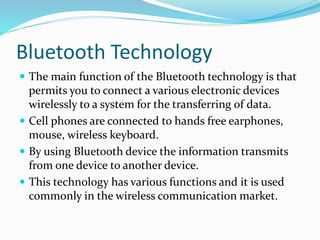
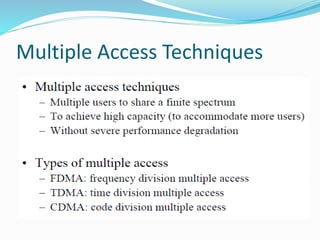
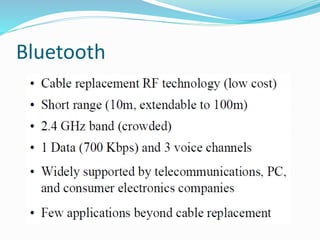
Bluetooth Technology
 The main function of the Bluetooth technology is that
permits you to connect a various electronic devices
wirelessly to a system for the transferring of data.
 Cell phones are connected to hands free earphones,
mouse, wireless keyboard.
 By using Bluetooth device the information transmits
from one device to another device.
 This technology has various functions and it is used
commonly in the wireless communication market.
Pros/Cons of WC
 Advantages of Wireless Communication
 Any data or information can be transmitted faster and with a high speed
 Maintenance and installation is less cost for these networks.
 The internet can be accessed from anywhere wirelessly
 It is very helpful for workers, doctors working in remote areas as they can be in
touch with medical centers.
 Disadvantages of Wireless Communication
 An unauthorized person can easily capture the wireless signals which spread
through the air.
 It is very important to secure the wireless network so that the information
cannot be misused by unauthorized users
 Applications of Wireless Communication
 Applications of wireless communication involve security systems, television
remote control, Wi-Fi, Cell phones, wireless power transfer, computer interface
devices and various wireless communication based projects.
Multiple Access Techniques
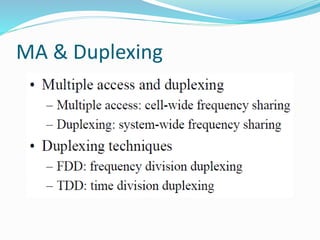
MA & Duplexing
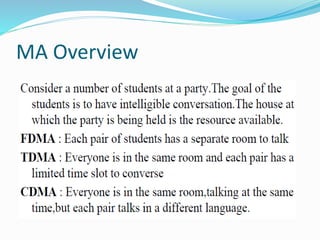
MA Overview
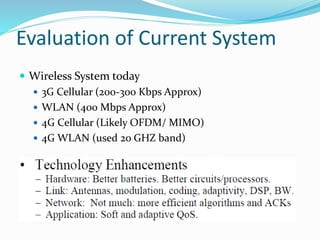
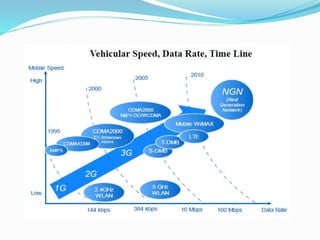
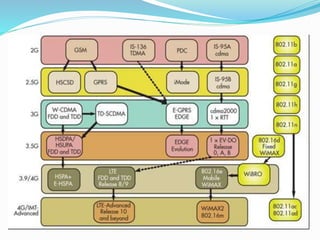
Evaluation of Current System
 Wireless System today
 3G Cellular (200-300 Kbps Approx)
 WLAN (400 Mbps Approx)
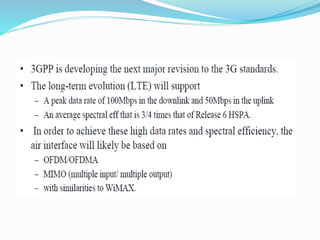
 4G Cellular (Likely OFDM/ MIMO)
 4G WLAN (used 2o GHZ band)
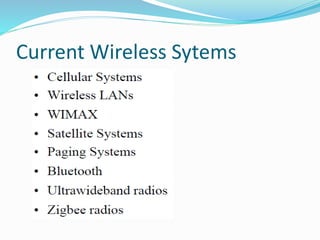
Current Wireless Sytems
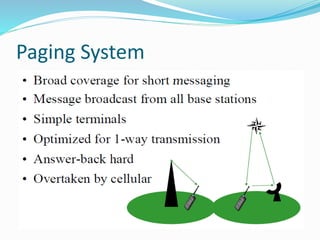
Paging System
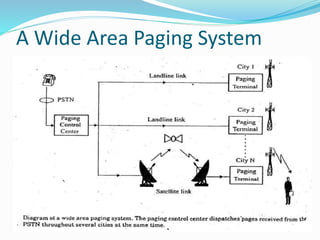
A Wide Area Paging System
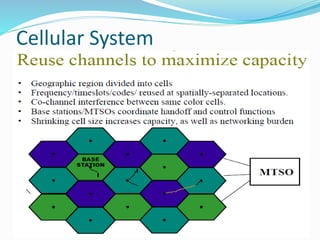
Cellular System
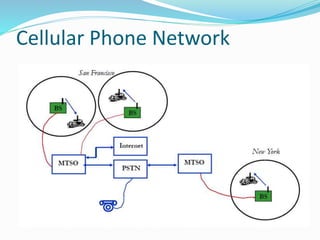
Cellular Phone Network
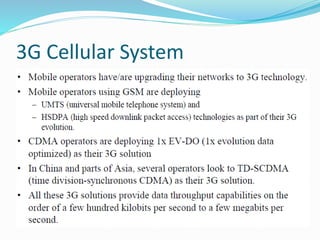
3G Cellular System
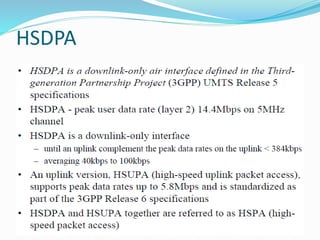
HSDPA
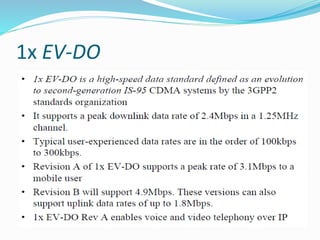
1x EV-DO
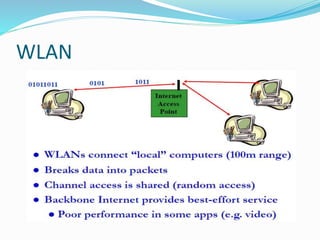
WLAN
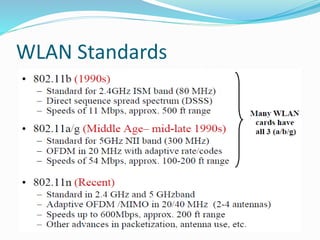
WLAN Standards
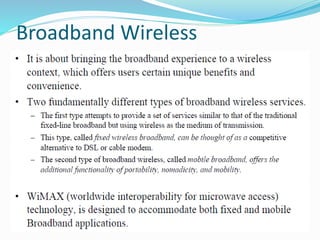
Broadband Wireless
WiMAX
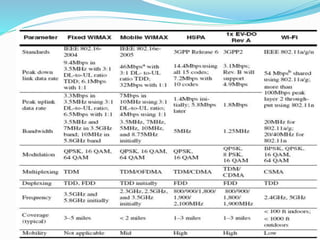
Fixed/ Mobile System
WiMAX (802.16)
Bluetooth
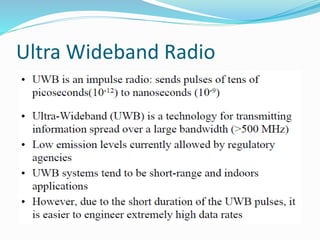
Ultra Wideband Radio
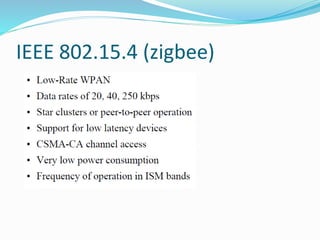
IEEE 802.15.4 (zigbee)
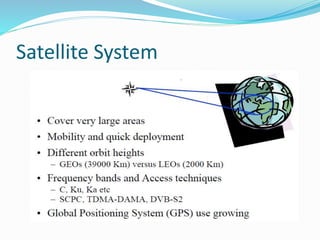
Satellite System
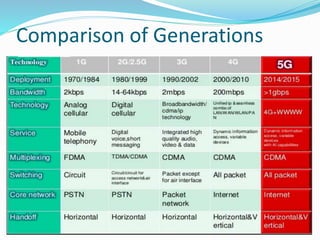
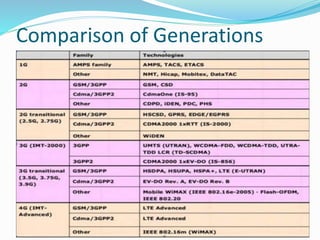
Comparison of Generations
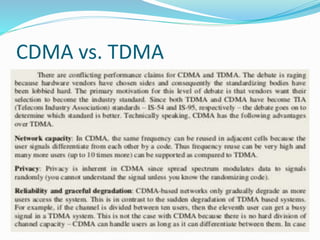
CDMA vs. TDMA

Wireless communication

  • 1.
    Wireless Communication?  Theterm wireless communication was introduced in the 19th century and wireless communication technology has developed over the subsequent years.  One of the most important mediums of transmission of information from one device to other devices.  In this technology, the information can be transmitted through the air without requiring any cable or wires or other electronic conductors, by using electromagnetic waves like IR, RF, satellite, etc.  In the present days, the wireless communication technology refers to a variety of wireless communication devices and technologies ranging from smart phones to computers, tabs, laptops, Bluetooth Technology, printers.
  • 2.
  • 5.
  • 6.
  • 7.
  • 8.
    Types of WC Satellite communication is one type of self contained wireless communication technology,  it is widely spread all over the world to allow users to stay connected almost anywhere on the earth.  When the signal (a beam of modulated microwave) is sent near the satellite then, satellite amplifies the signal and sent it back to the antenna receiver which is located on the surface of the earth.  Satellite communication contains two main components like the space segment and the ground segment.  The ground segment consists of fixed or mobile transmission, reception and ancillary equipment and  the space segment, which mainly is the satellite itself.
  • 9.
    Infrared wireless communication Infrared wireless communication communicates information in a device or systems through IR radiation .  IR is electromagnetic energy at a wavelength that is longer than that of red light.  It is used for security control, TV remote control and short range communications.  In the electromagnetic spectrum, IR radiation lies between microwaves and visible light.  So, they can be used as a source of communication  For a successful infrared communication,  a photo LED transmitter and a photo diode receptor are required.  The LED transmitter transmits the IR signal in the form of non visible light, that is captured and saved by the photoreceptor.  The source and destination can be mobile phones, TVs, security systems, laptops etc supports wireless communication.
  • 10.
    Microwave WC  isan effective type of communication, mainly this transmission uses radio waves, and the wavelengths of radio waves are measured in centimeters.  In this communication, the data or information can be transfers using two methods. One is satellite method and another one is terrestrial method.  The main disadvantage of microwave signals is, they can be affected by bad weather, especially rain.
  • 11.
    Satellite VS Terrestrialmethods  In satellite method, the data can be transmitted though a satellite, that orbit 22,300 miles above the earth. Stations on the earth send and receive data signals from the satellite with a frequency ranging from 11GHz-14GHz and with a transmission speed of 1Mbps to 10Mbps.  In terrestrial method, in which two microwave towers with a clear line of sight between them are used, ensuring no obstacles to disrupt the line of sight. So it is used often for the purpose of privacy. The frequency range of the terrestrial system is typically 4GHz- 6GHz and with a transmission speed is usually 1Mbps to 10Mbps.
  • 13.
    Broadcast Radio  Thefirst wireless communication technology is the open radio communication to seek out widespread use, and it still serves a purpose nowadays.  Handy multichannel radios permit a user to speak over short distances, whereas citizen’s band and maritime radios offer communication services for sailors.  share data and function emergency communication aids throughout disasters with their powerful broadcasting gear, and can even communicate digital information over the radio frequency spectrum.
  • 14.
    Cont…  An audiobroadcasting service radio, broadcasts sound through the air as radio waves. Radio uses a transmitter which is used to transmit the data in the form of radio waves to a receiving antenna. To broadcast common programming, stations are associated with the radio N/W’s. Radio broadcasting may be done via cable FM, the net and satellites.  A broadcast sends information over long distances at up to two megabits/Sec (AM/FM Radio).  Radio waves are electromagnetic signals, that are transmitted by an antenna.  These waves have completely different frequency segments, and you will be ready to obtain an audio signal by changing into a frequency segment.
  • 15.
    Wi-Fi  Wi-Fi isa low power wireless communication, that is used by various electronic devices like smart phones, laptops, etc.  In this setup, a router named access point works as a communication hub wirelessly. These networks allow users to connect only within close proximity to a router.  WiFi is very common in networking applications which affords portability wirelessly. These networks need to be protected with passwords for the purpose of security, otherwise it will access by others
  • 16.
    Mobile Communication System Many users communicate across a single frequency band through mobile phones.  Cellular and cordless phones are two examples of devices which make use of wireless signals.  Typically, cell phones have a larger range of networks to provide a coverage.  But, Cordless phones have a limited range. Similar to GPS devices, some phones make use of signals from satellites to communicate.
  • 17.
    Bluetooth Technology  Themain function of the Bluetooth technology is that permits you to connect a various electronic devices wirelessly to a system for the transferring of data.  Cell phones are connected to hands free earphones, mouse, wireless keyboard.  By using Bluetooth device the information transmits from one device to another device.  This technology has various functions and it is used commonly in the wireless communication market.
  • 19.
    Pros/Cons of WC Advantages of Wireless Communication  Any data or information can be transmitted faster and with a high speed  Maintenance and installation is less cost for these networks.  The internet can be accessed from anywhere wirelessly  It is very helpful for workers, doctors working in remote areas as they can be in touch with medical centers.  Disadvantages of Wireless Communication  An unauthorized person can easily capture the wireless signals which spread through the air.  It is very important to secure the wireless network so that the information cannot be misused by unauthorized users  Applications of Wireless Communication  Applications of wireless communication involve security systems, television remote control, Wi-Fi, Cell phones, wireless power transfer, computer interface devices and various wireless communication based projects.
  • 20.
  • 21.
  • 22.
  • 27.
    Evaluation of CurrentSystem  Wireless System today  3G Cellular (200-300 Kbps Approx)  WLAN (400 Mbps Approx)  4G Cellular (Likely OFDM/ MIMO)  4G WLAN (used 2o GHZ band)
  • 28.
  • 29.
  • 30.
    A Wide AreaPaging System
  • 31.
  • 32.
  • 33.
  • 34.
  • 36.
  • 38.
  • 39.
  • 40.
  • 41.
  • 42.
  • 43.
  • 44.
  • 45.
  • 46.
  • 47.
  • 51.
  • 52.
  • 53.