WIND-SOLAR-FUEL CELL
HYBRID SYSTEM
INTRODUCTION
OVERVIEW
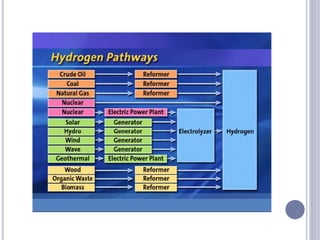
FUEL CELL TECHNOLOGY
PV MODULE SELECTION
WIND TURBINE SELECTION
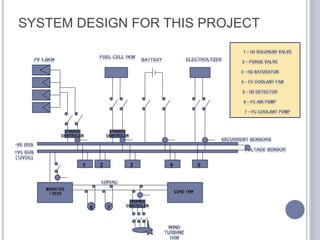
SYSTEM DESIGN
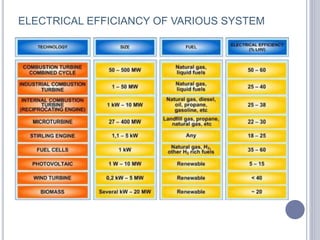
ELECTRICAL EFFICIENCY OF VARIOUS SYSTEM
 INNOVATIONS FOR FUTURE
INTRODUCTION:
WHAT IS A HYBRID SYSTEM?
 Integration of two or more renewable energy
source (In this case) to form a more reliable system
is called a hybrid system
WHY SHOULD WE USE A HYBRID SYSTEM?
 One drawback with renewable energy sources is
their variability
 To mitigate this problem we use a hybrid system
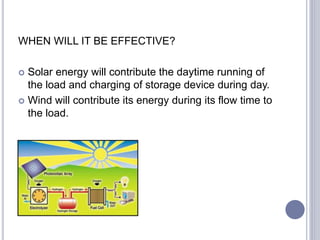
WHEN WILL IT BE EFFECTIVE?
 Solar energy will contribute the daytime running of
the load and charging of storage device during day.
 Wind will contribute its energy during its flow time to
the load.
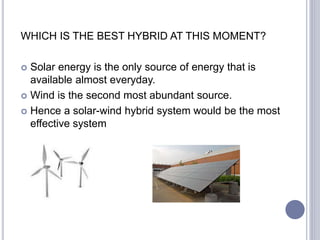
WHICH IS THE BEST HYBRID AT THIS MOMENT?
 Solar energy is the only source of energy that is
available almost everyday.
 Wind is the second most abundant source.
 Hence a solar-wind hybrid system would be the most
effective system
WHERE WILL IT BE
EFFECTIVE?
 The place of installation
must have abundant solar
insolation.
 The place must have high
wind flow rate which must
be fairly predictable.
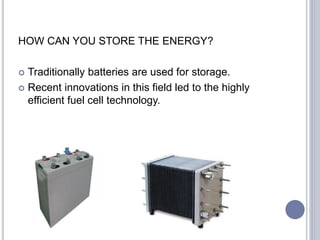
HOW CAN YOU STORE THE ENERGY?
 Traditionally batteries are used for storage.
 Recent innovations in this field led to the highly
efficient fuel cell technology.
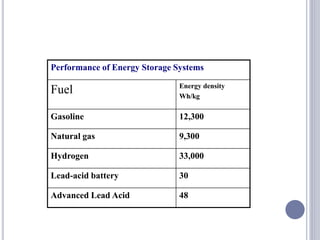
Performance of Energy Storage Systems
Fuel Energy density
Wh/kg
Gasoline 12,300
Natural gas 9,300
Hydrogen 33,000
Lead-acid battery 30
Advanced Lead Acid 48
OVERVIEW
 The objective of this project is to integrate these
efficient systems into a single hybrid system for a
better energy generation and storage for a 1kW
load.
 The power generated from wind is the primary
contributor with 1kW. In case of deficit, power from
PV module is used for compensating the additional
requirement.
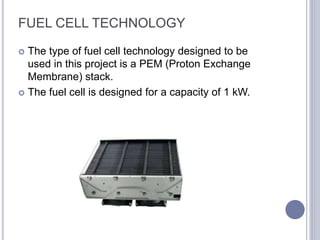
FUEL CELL TECHNOLOGY
 The type of fuel cell technology designed to be
used in this project is a PEM (Proton Exchange
Membrane) stack.
 The fuel cell is designed for a capacity of 1 kW.
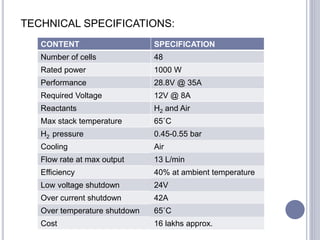
TECHNICAL SPECIFICATIONS:
CONTENT SPECIFICATION
Number of cells 48
Rated power 1000 W
Performance 28.8V @ 35A
Required Voltage 12V @ 8A
Reactants H2 and Air
Max stack temperature 65˚C
H2 pressure 0.45-0.55 bar
Cooling Air
Flow rate at max output 13 L/min
Efficiency 40% at ambient temperature
Low voltage shutdown 24V
Over current shutdown 42A
Over temperature shutdown 65˚C
Cost 16 lakhs approx.
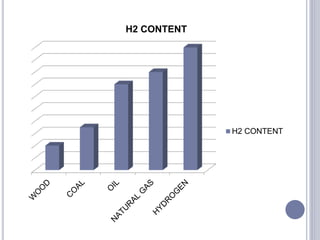
H2 CONTENT
H2 CONTENT
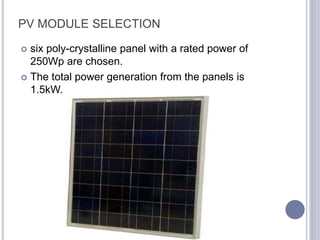
PV MODULE SELECTION
 six poly-crystalline panel with a rated power of
250Wp are chosen.
 The total power generation from the panels is
1.5kW.
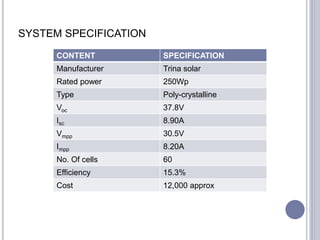
SYSTEM SPECIFICATION
CONTENT SPECIFICATION
Manufacturer Trina solar
Rated power 250Wp
Type Poly-crystalline
Voc 37.8V
Isc 8.90A
Vmpp 30.5V
Impp 8.20A
No. Of cells 60
Efficiency 15.3%
Cost 12,000 approx
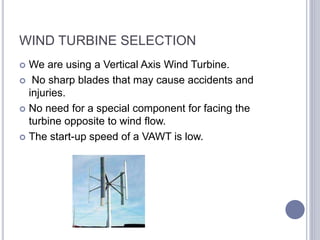
WIND TURBINE SELECTION
 We are using a Vertical Axis Wind Turbine.
 No sharp blades that may cause accidents and
injuries.
 No need for a special component for facing the
turbine opposite to wind flow.
 The start-up speed of a VAWT is low.
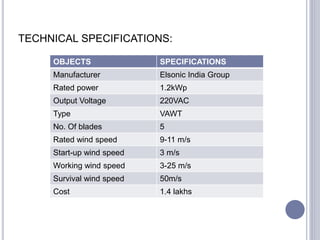
TECHNICAL SPECIFICATIONS:
OBJECTS SPECIFICATIONS
Manufacturer Elsonic India Group
Rated power 1.2kWp
Output Voltage 220VAC
Type VAWT
No. Of blades 5
Rated wind speed 9-11 m/s
Start-up wind speed 3 m/s
Working wind speed 3-25 m/s
Survival wind speed 50m/s
Cost 1.4 lakhs
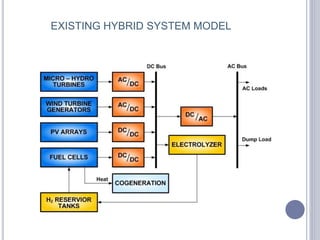
EXISTING HYBRID SYSTEM MODEL
SYSTEM DESIGN FOR THIS PROJECT
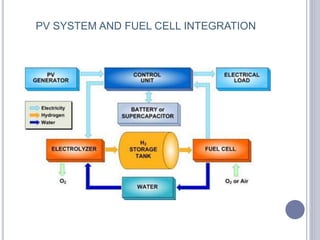
PV SYSTEM AND FUEL CELL INTEGRATION
ELECTRICAL EFFICIANCY OF VARIOUS SYSTEM
INNOVATIONS FOR FUTURE
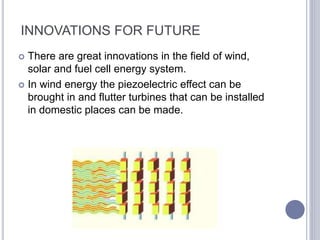
 There are great innovations in the field of wind,
solar and fuel cell energy system.
 In wind energy the piezoelectric effect can be
brought in and flutter turbines that can be installed
in domestic places can be made.
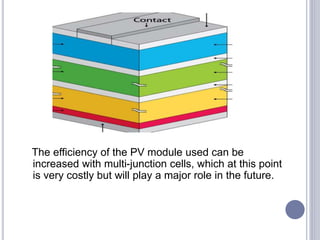
The efficiency of the PV module used can be
increased with multi-junction cells, which at this point
is very costly but will play a major role in the future.
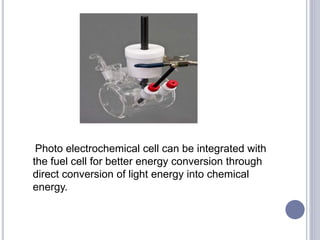
Photo electrochemical cell can be integrated with
the fuel cell for better energy conversion through
direct conversion of light energy into chemical
energy.
THE END – THANK YOU

WIND-SOLAR-FUEL CELL HYBRID SYSTEM

  • 1.
    WIND-SOLAR-FUEL CELL HYBRID SYSTEM INTRODUCTION OVERVIEW FUELCELL TECHNOLOGY PV MODULE SELECTION WIND TURBINE SELECTION SYSTEM DESIGN ELECTRICAL EFFICIENCY OF VARIOUS SYSTEM  INNOVATIONS FOR FUTURE
  • 2.
    INTRODUCTION: WHAT IS AHYBRID SYSTEM?  Integration of two or more renewable energy source (In this case) to form a more reliable system is called a hybrid system WHY SHOULD WE USE A HYBRID SYSTEM?  One drawback with renewable energy sources is their variability  To mitigate this problem we use a hybrid system
  • 3.
    WHEN WILL ITBE EFFECTIVE?  Solar energy will contribute the daytime running of the load and charging of storage device during day.  Wind will contribute its energy during its flow time to the load.
  • 4.
    WHICH IS THEBEST HYBRID AT THIS MOMENT?  Solar energy is the only source of energy that is available almost everyday.  Wind is the second most abundant source.  Hence a solar-wind hybrid system would be the most effective system
  • 5.
    WHERE WILL ITBE EFFECTIVE?  The place of installation must have abundant solar insolation.  The place must have high wind flow rate which must be fairly predictable.
  • 6.
    HOW CAN YOUSTORE THE ENERGY?  Traditionally batteries are used for storage.  Recent innovations in this field led to the highly efficient fuel cell technology.
  • 7.
    Performance of EnergyStorage Systems Fuel Energy density Wh/kg Gasoline 12,300 Natural gas 9,300 Hydrogen 33,000 Lead-acid battery 30 Advanced Lead Acid 48
  • 8.
    OVERVIEW  The objectiveof this project is to integrate these efficient systems into a single hybrid system for a better energy generation and storage for a 1kW load.  The power generated from wind is the primary contributor with 1kW. In case of deficit, power from PV module is used for compensating the additional requirement.
  • 9.
    FUEL CELL TECHNOLOGY The type of fuel cell technology designed to be used in this project is a PEM (Proton Exchange Membrane) stack.  The fuel cell is designed for a capacity of 1 kW.
  • 11.
    TECHNICAL SPECIFICATIONS: CONTENT SPECIFICATION Numberof cells 48 Rated power 1000 W Performance 28.8V @ 35A Required Voltage 12V @ 8A Reactants H2 and Air Max stack temperature 65˚C H2 pressure 0.45-0.55 bar Cooling Air Flow rate at max output 13 L/min Efficiency 40% at ambient temperature Low voltage shutdown 24V Over current shutdown 42A Over temperature shutdown 65˚C Cost 16 lakhs approx.
  • 12.
  • 13.
    PV MODULE SELECTION six poly-crystalline panel with a rated power of 250Wp are chosen.  The total power generation from the panels is 1.5kW.
  • 14.
    SYSTEM SPECIFICATION CONTENT SPECIFICATION ManufacturerTrina solar Rated power 250Wp Type Poly-crystalline Voc 37.8V Isc 8.90A Vmpp 30.5V Impp 8.20A No. Of cells 60 Efficiency 15.3% Cost 12,000 approx
  • 15.
    WIND TURBINE SELECTION We are using a Vertical Axis Wind Turbine.  No sharp blades that may cause accidents and injuries.  No need for a special component for facing the turbine opposite to wind flow.  The start-up speed of a VAWT is low.
  • 16.
    TECHNICAL SPECIFICATIONS: OBJECTS SPECIFICATIONS ManufacturerElsonic India Group Rated power 1.2kWp Output Voltage 220VAC Type VAWT No. Of blades 5 Rated wind speed 9-11 m/s Start-up wind speed 3 m/s Working wind speed 3-25 m/s Survival wind speed 50m/s Cost 1.4 lakhs
  • 17.
  • 18.
    SYSTEM DESIGN FORTHIS PROJECT
  • 19.
    PV SYSTEM ANDFUEL CELL INTEGRATION
  • 20.
  • 21.
    INNOVATIONS FOR FUTURE There are great innovations in the field of wind, solar and fuel cell energy system.  In wind energy the piezoelectric effect can be brought in and flutter turbines that can be installed in domestic places can be made.
  • 22.
    The efficiency ofthe PV module used can be increased with multi-junction cells, which at this point is very costly but will play a major role in the future.
  • 23.
    Photo electrochemical cellcan be integrated with the fuel cell for better energy conversion through direct conversion of light energy into chemical energy.
  • 24.
    THE END –THANK YOU

Editor's Notes

  • #13 As fuel use has developed through time, the percentage of hydrogen content in the fuels has increased. It seems a natural progression that the fuel of the future will be 100% hydrogen