Presented by…
MD SAQUIB MAQSOOD
REGD NO. 0901292238
ELECTRICAL & ELECTRONICS ENGINEERING
MAXIMUM POWER POINT
TRACKING………..
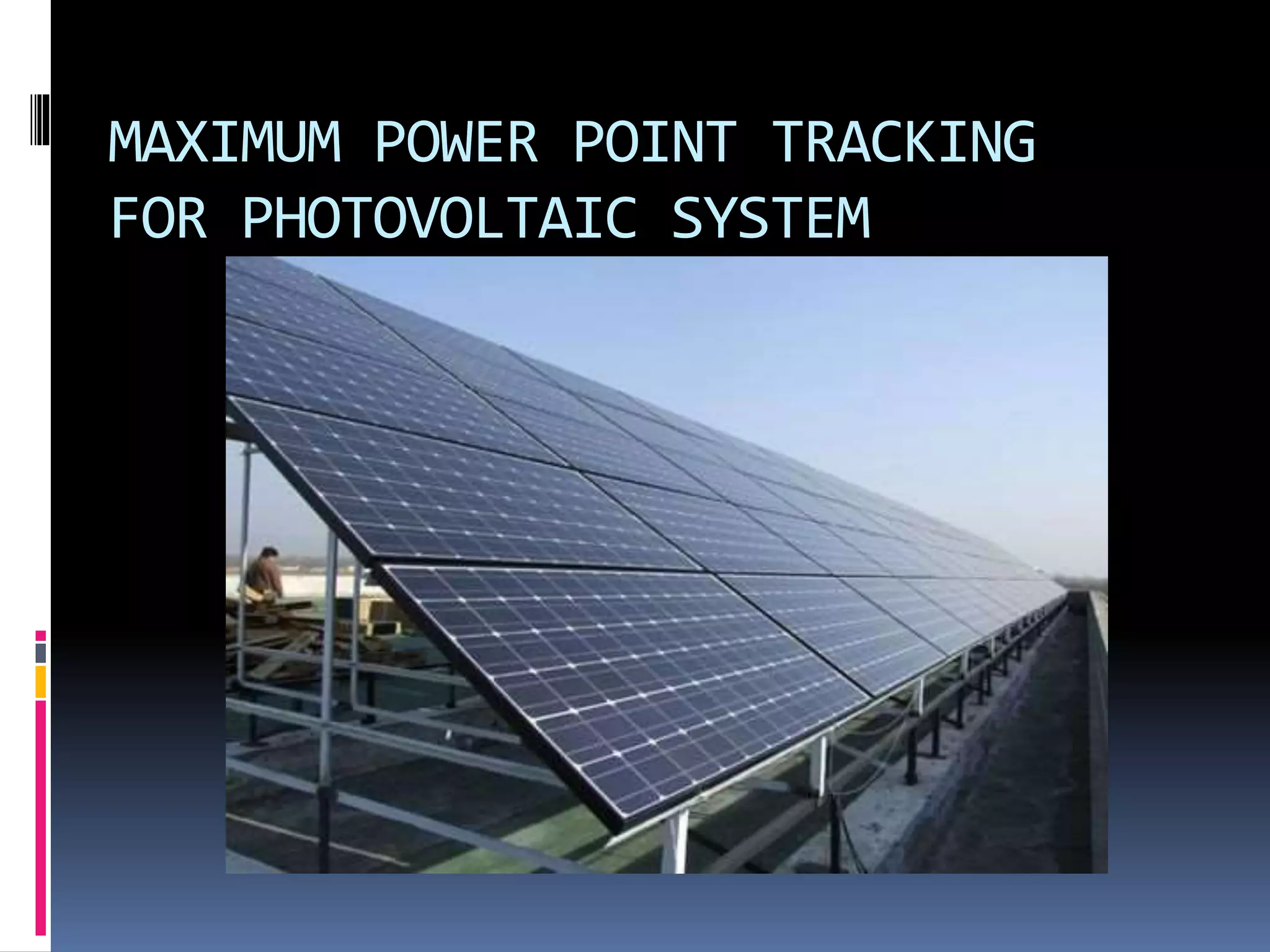
MAXIMUM POWER POINT TRACKING
FOR PHOTOVOLTAIC SYSTEM
 INTRODUCTION
 MATHEMATICAL MODEL
 WHAT IS MPPT
 HOW IT WORKS
 MPPT TECHNIQUES
 SYSTEM MODELING
 ADVANTAGES
 CONCLUSION
PV modules still have relatively low conversion
efficiency; therefore, controlling maximum
power point tracking (MPPT) for the solar array
is essential in a PV system. The amount of
power generated by a PV depends on the
operating voltage of the array. A PV’s maximum
power point (MPP) varies with solar insulation
and temperature.
 MPPT or Maximum Power Point
Tracking is algorithm that included in
charge controllers used for extracting
maximum available power from PV
module under certain conditions. The
voltage at which PV module can
produce maximum power is called
‘maximum power point’ (or peak power
voltage).
WHAT IS MPPT?
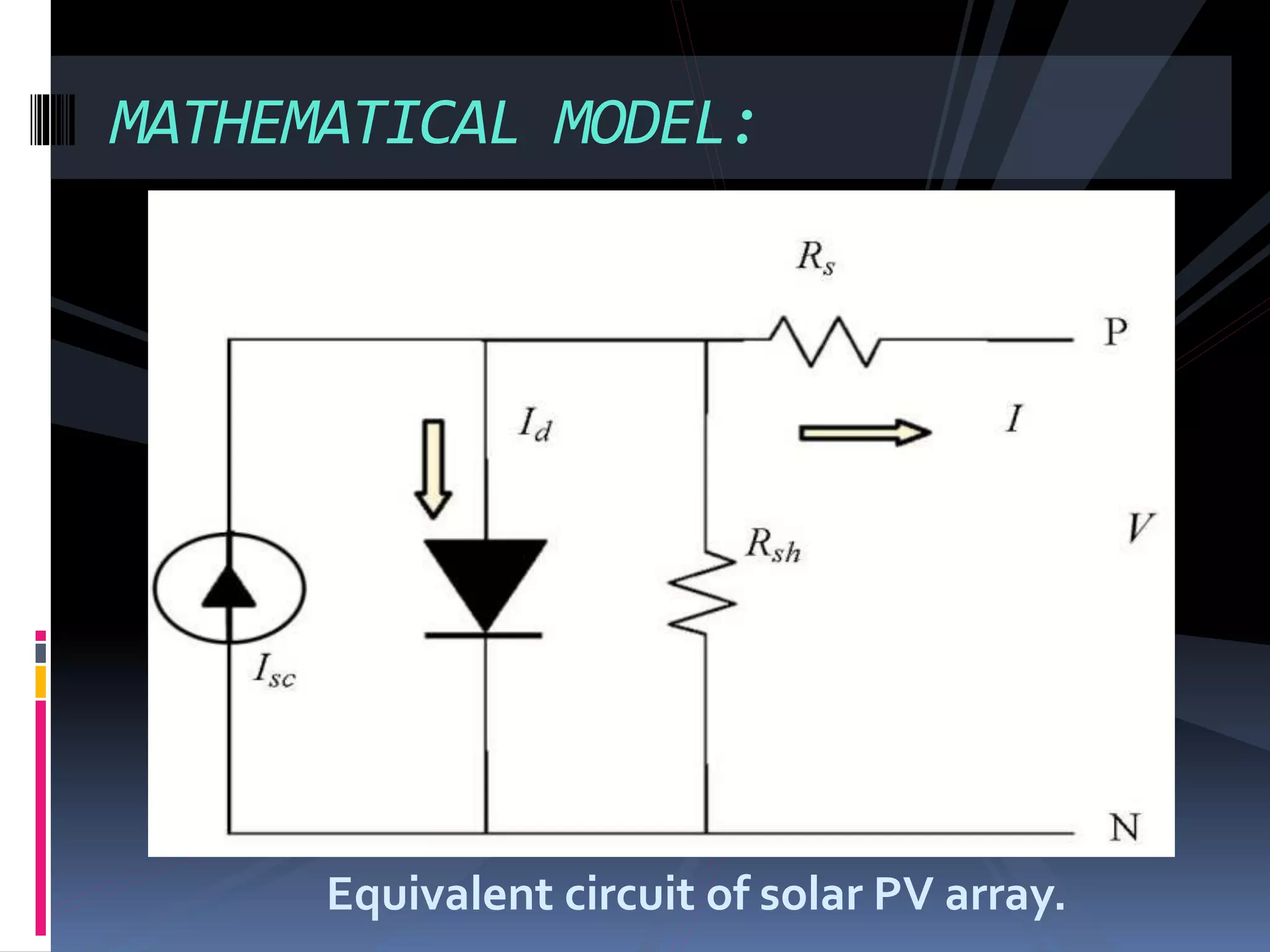
Equivalent circuit of solar PV array.
MATHEMATICAL MODEL:
I= Isc – Io{exp[ q(V + RsI)/(nkTk) ]- 1} – (V+RsI)/Rsh
………………..(1)
Where , Isc = Id + I
The above equation is used in computer
simulations to obtain the o/p characteristics of a
solar cell.
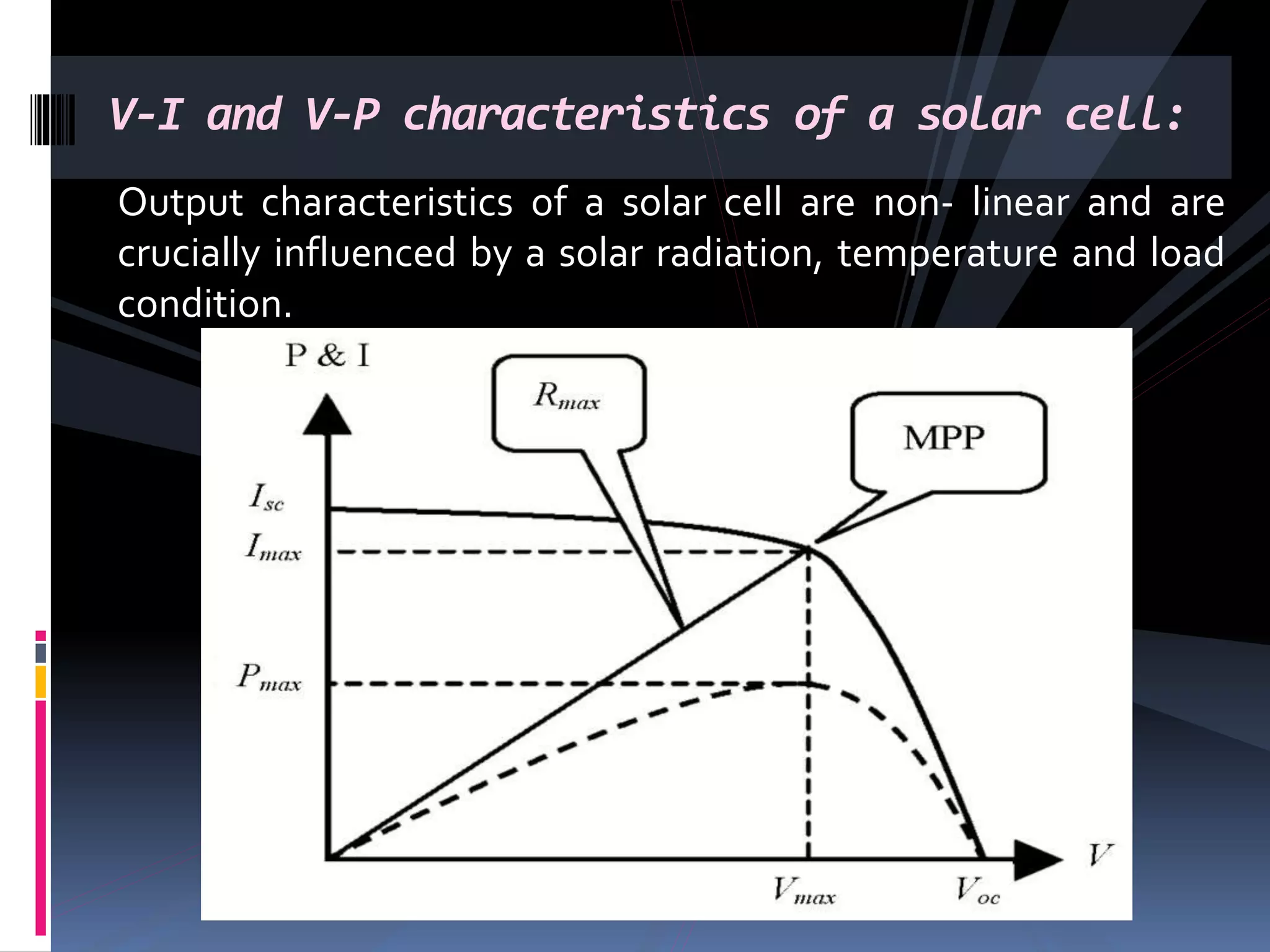
Output characteristics of a solar cell are non- linear and are
crucially influenced by a solar radiation, temperature and load
condition.
V-I and V-P characteristics of a solar cell:
 The major principle of MPPT is to extract the maximum available
power from PV module by making them operate at the most efficient
voltage (maximum power point).
 MPPT checks output of PV module, compares it to battery voltage
then fixes what is the best power that PV module can produce to
charge the battery and converts it to the best voltage to get
maximum current into battery.
How MPPT works?
MPPT is most effective under these conditions:
• Cold weather, cloudy or hazy days: Normally, PV module works better at cold
temperatures and MPPT is utilized to extract maximum power available from
them.
•
When battery is deeply discharged: MPPT can extract more current and
charge the battery if the state of charge in the battery is lowers.
 A MPPT solar charge controller is the charge controller
embedded with MPPT algorithm to maximize the amount
of current going into the battery from PV module.
 MPPT is DC to DC converter which operates by taking DC
input from PV module, changing it to AC and converting it
back to a different DC voltage and current to exactly
match the PV module to the battery.
 Examples of DC to DC converter are
• Boost converter
• Buck converter
 MPPT algorithm can be applied to both of them
depending on system design.
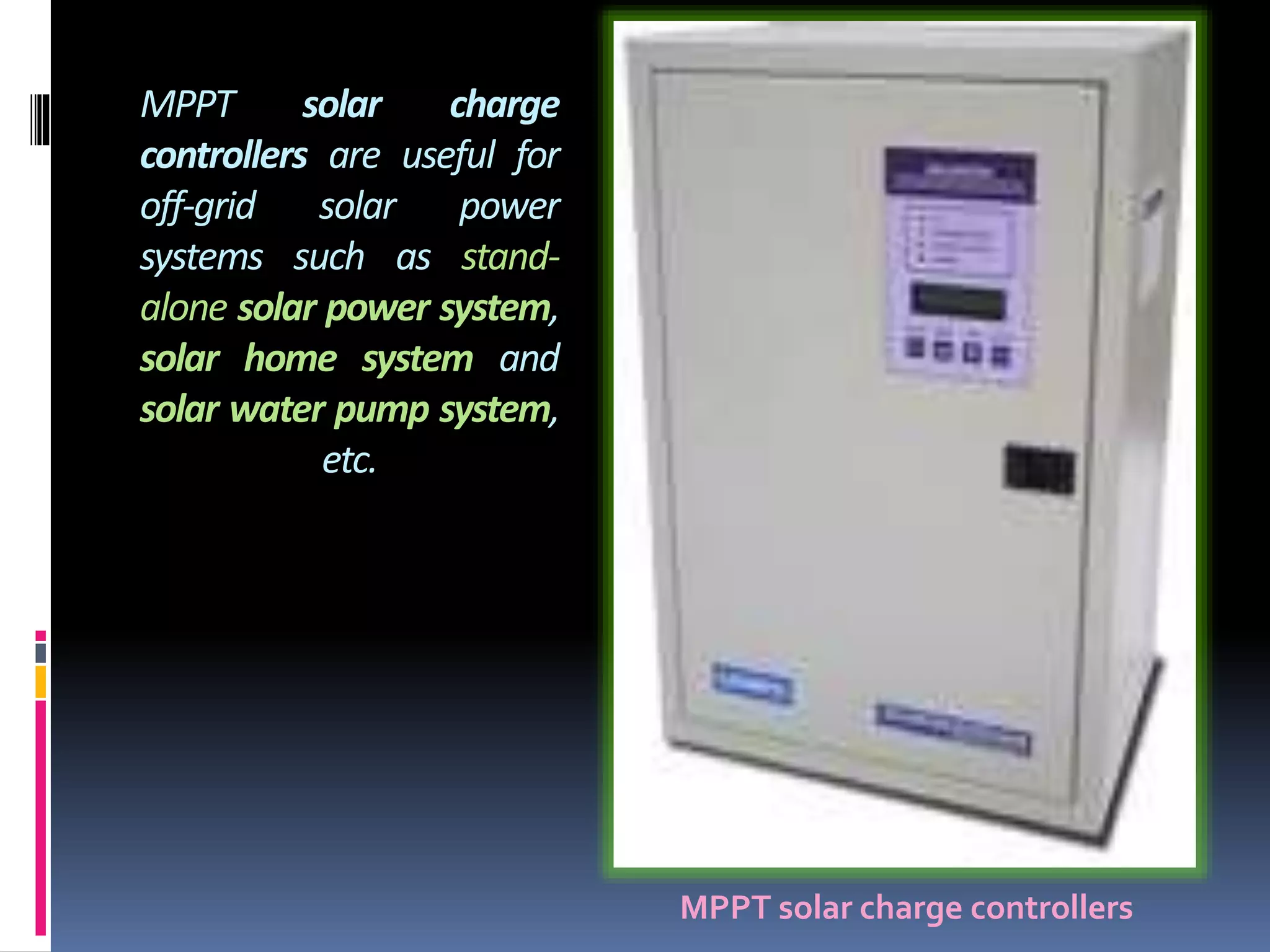
MPPT solar charge controller:
MPPT solar charge
controllers are useful for
off-grid solar power
systems such as stand-
alone solar power system,
solar home system and
solar water pump system,
etc.
MPPT solar charge controllers
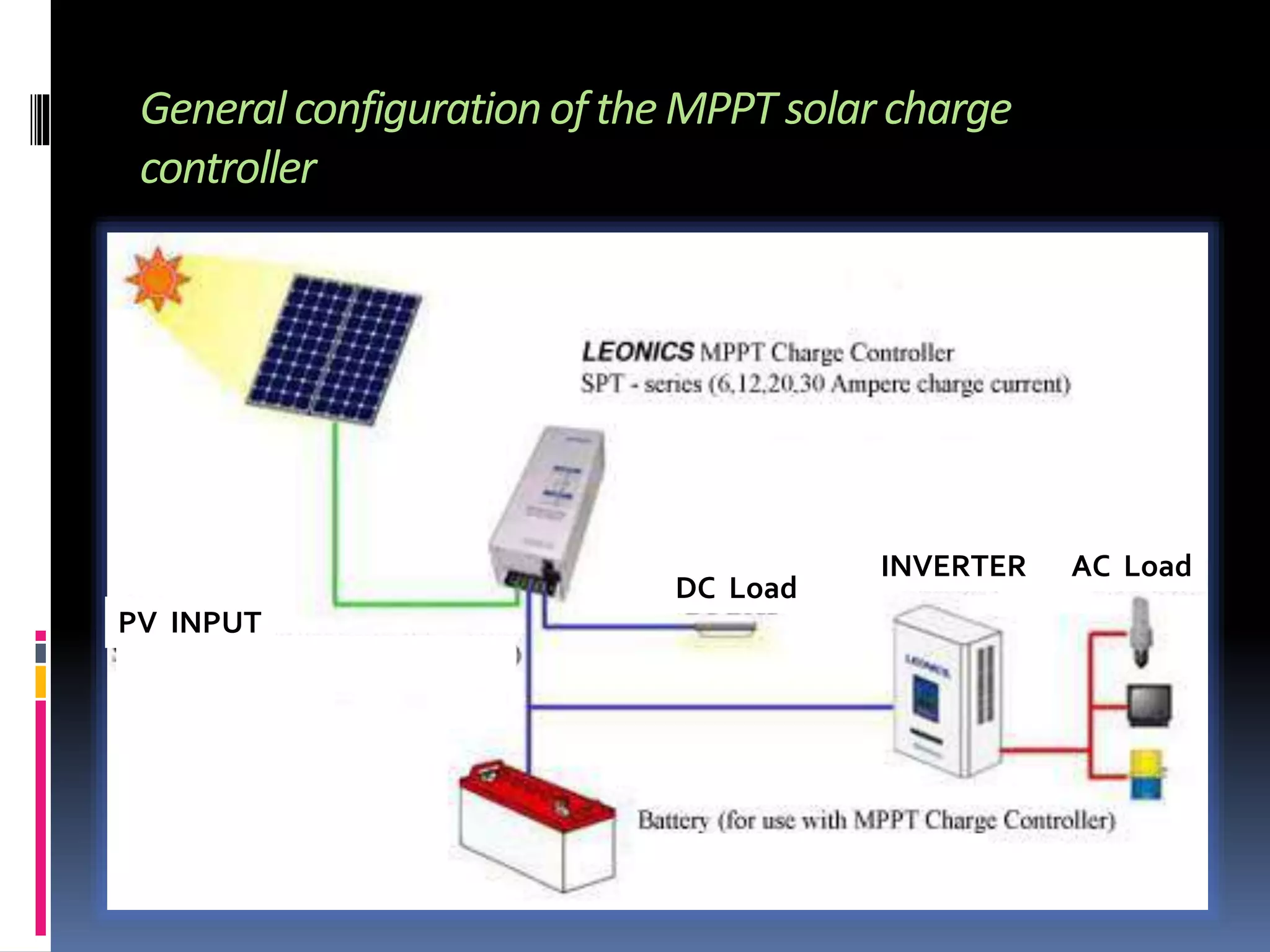
Generalconfigurationofthe MPPT solar charge
controller
OOOOOOOOOOOOOOOO
OOOOOOOOOOOOOO
PV INPUT
DC Load
INVERTER AC Load
MPPT TECHNIQUES:
 Fractional Open-CircuitVoltage
 Fractional Short-Circuit Current
 Perturb and Observe
 Incremental Conductance
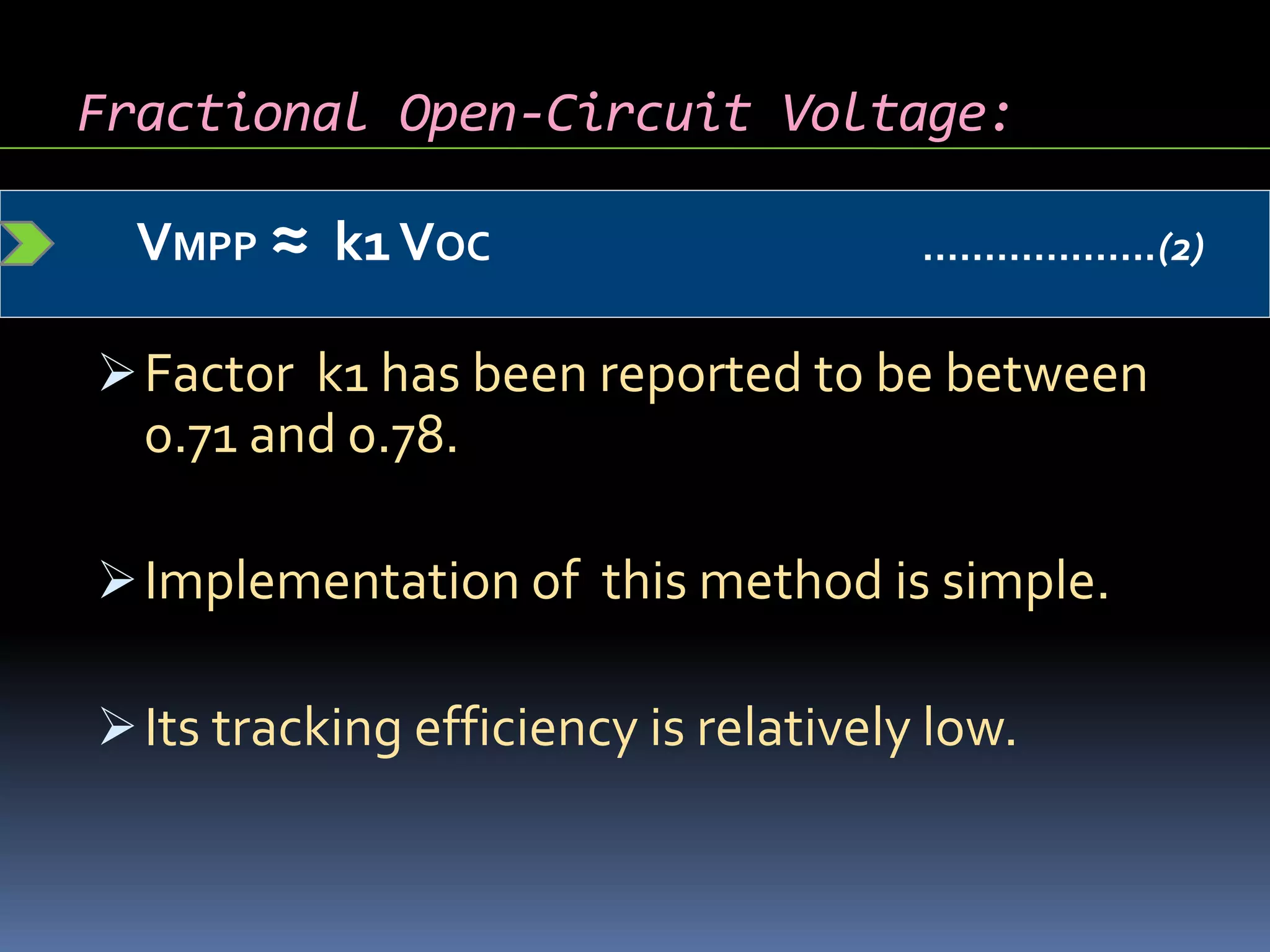
Fractional Open-Circuit Voltage:
 VMPP ≈ k1VOC ……………….(2)
Factor k1 has been reported to be between
0.71 and 0.78.
Implementation of this method is simple.
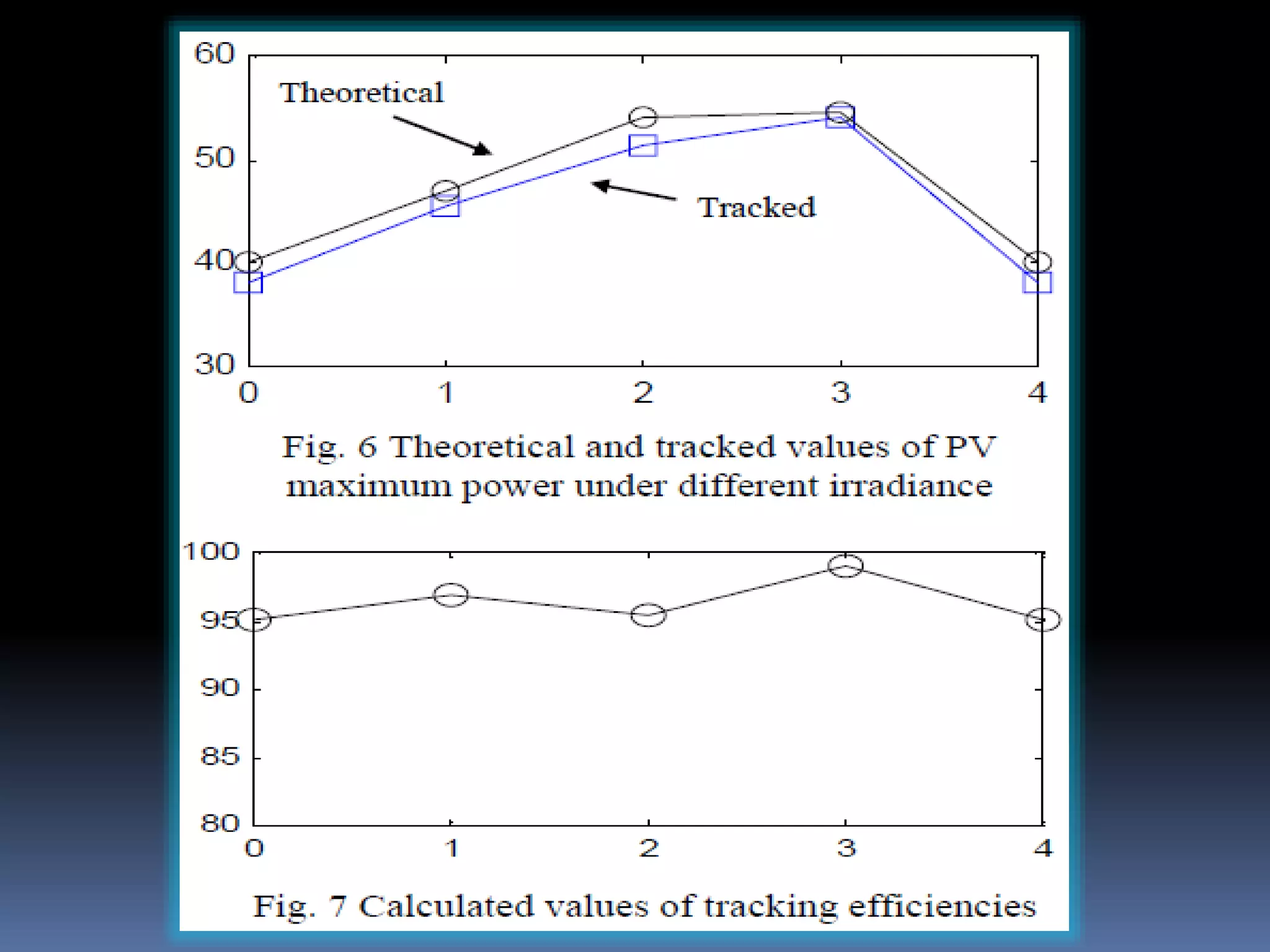
Its tracking efficiency is relatively low.
Fractional Short-Circuit Current:
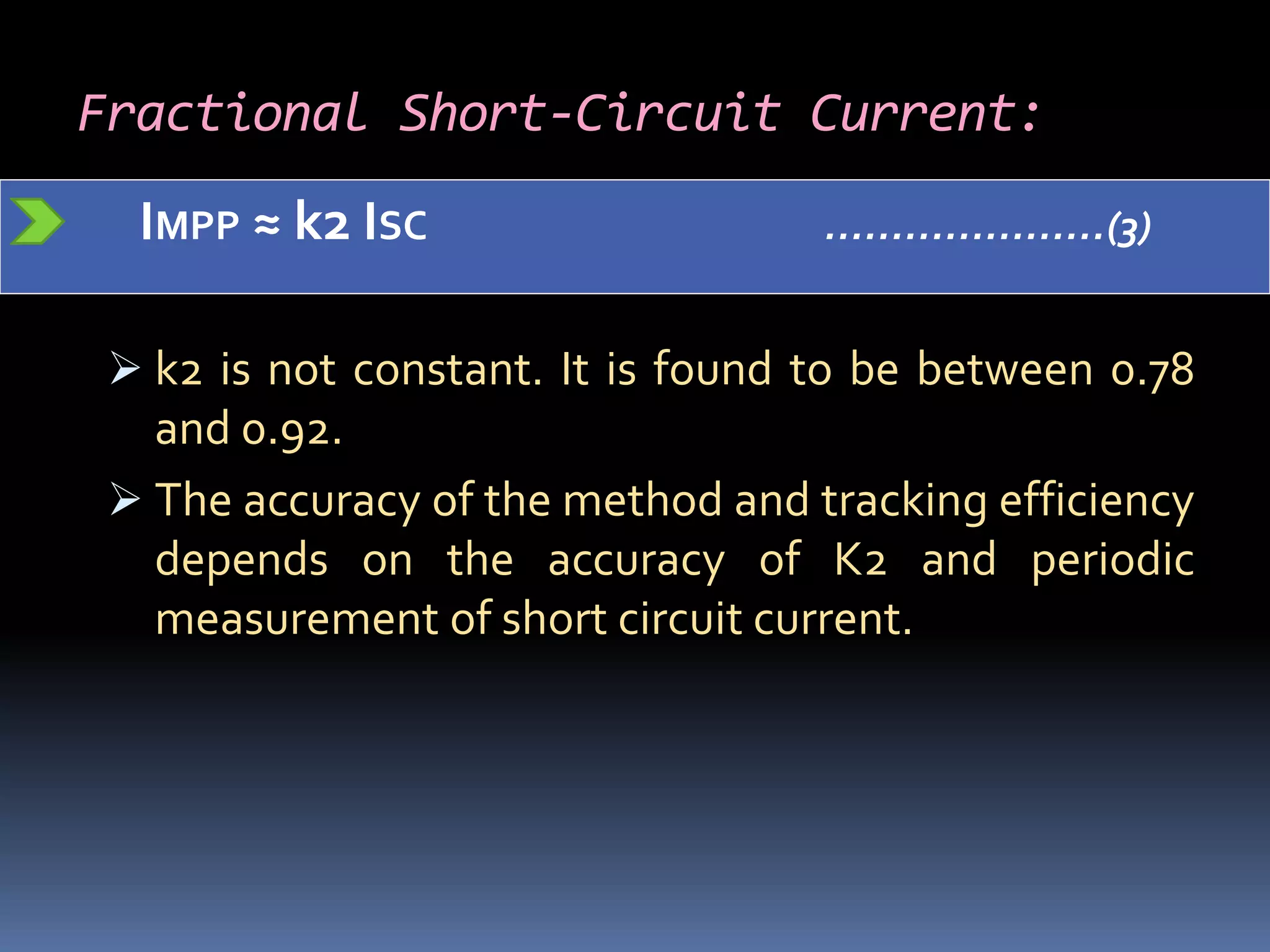
IMPP ≈ k2 ISC …………………(3)
 k2 is not constant. It is found to be between 0.78
and 0.92.
 The accuracy of the method and tracking efficiency
depends on the accuracy of K2 and periodic
measurement of short circuit current.
Perturb and Observe:
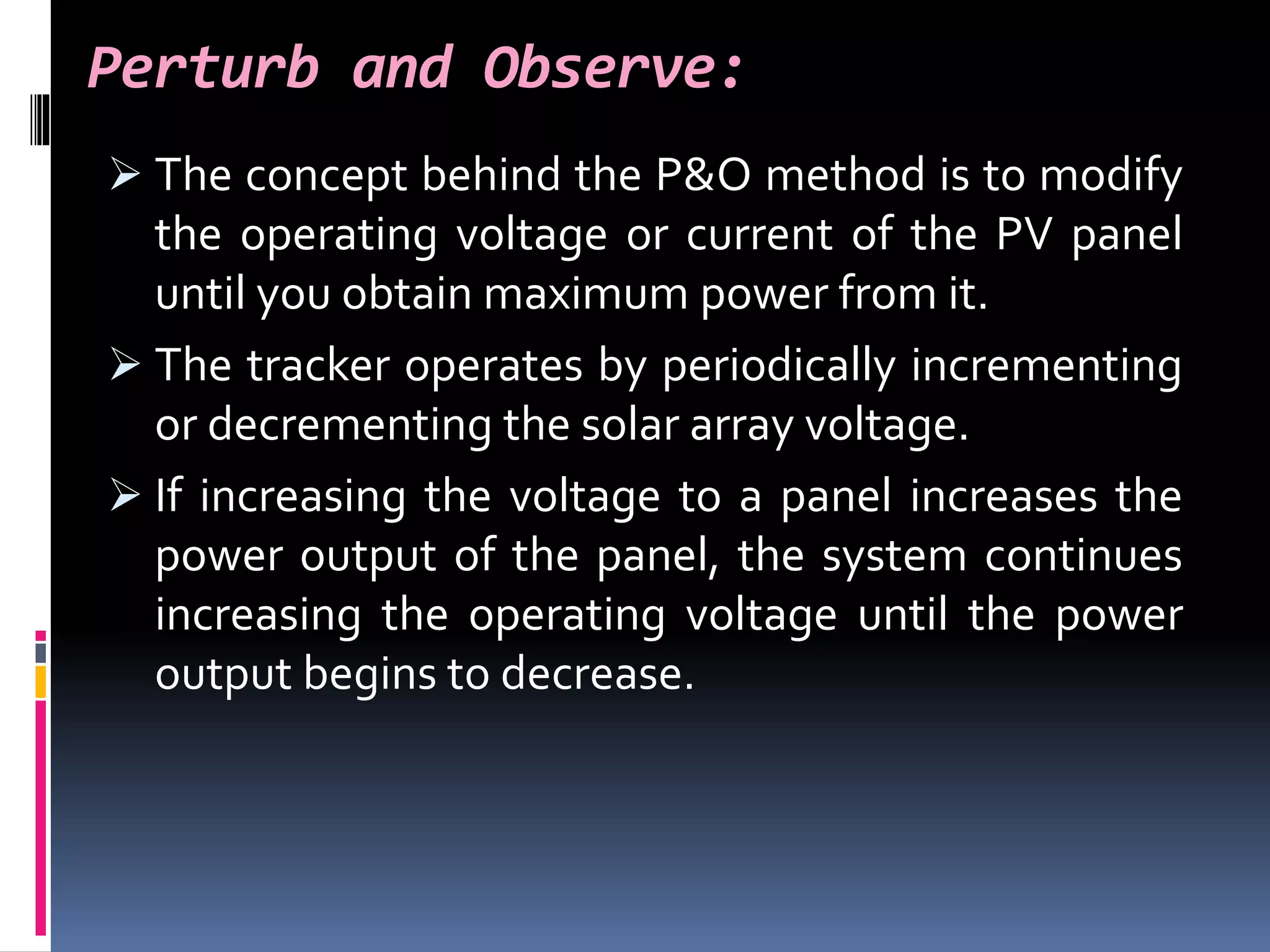
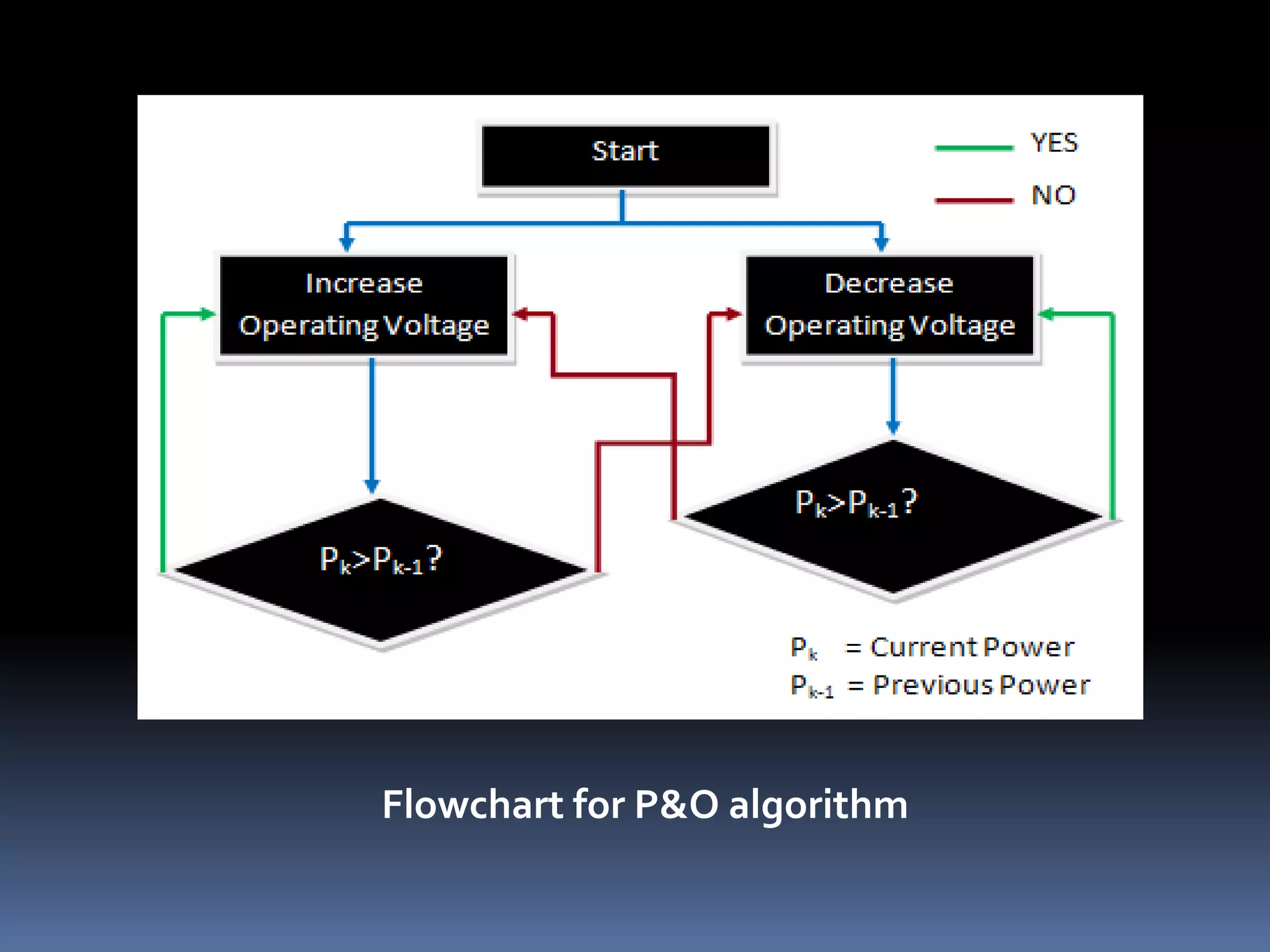
 The concept behind the P&O method is to modify
the operating voltage or current of the PV panel
until you obtain maximum power from it.
 The tracker operates by periodically incrementing
or decrementing the solar array voltage.
 If increasing the voltage to a panel increases the
power output of the panel, the system continues
increasing the operating voltage until the power
output begins to decrease.
Flowchart for P&O algorithm
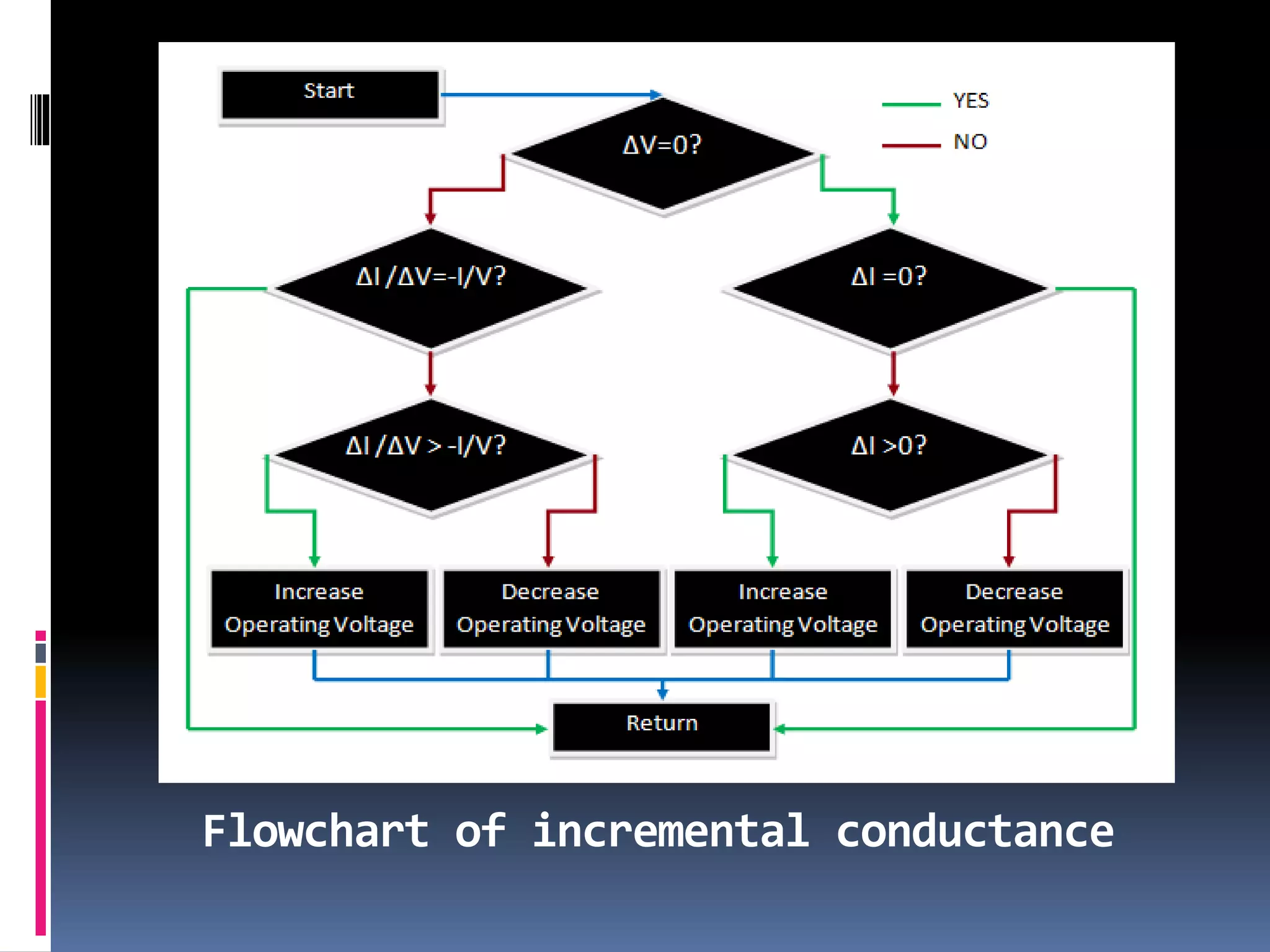
Incremental Conductance:
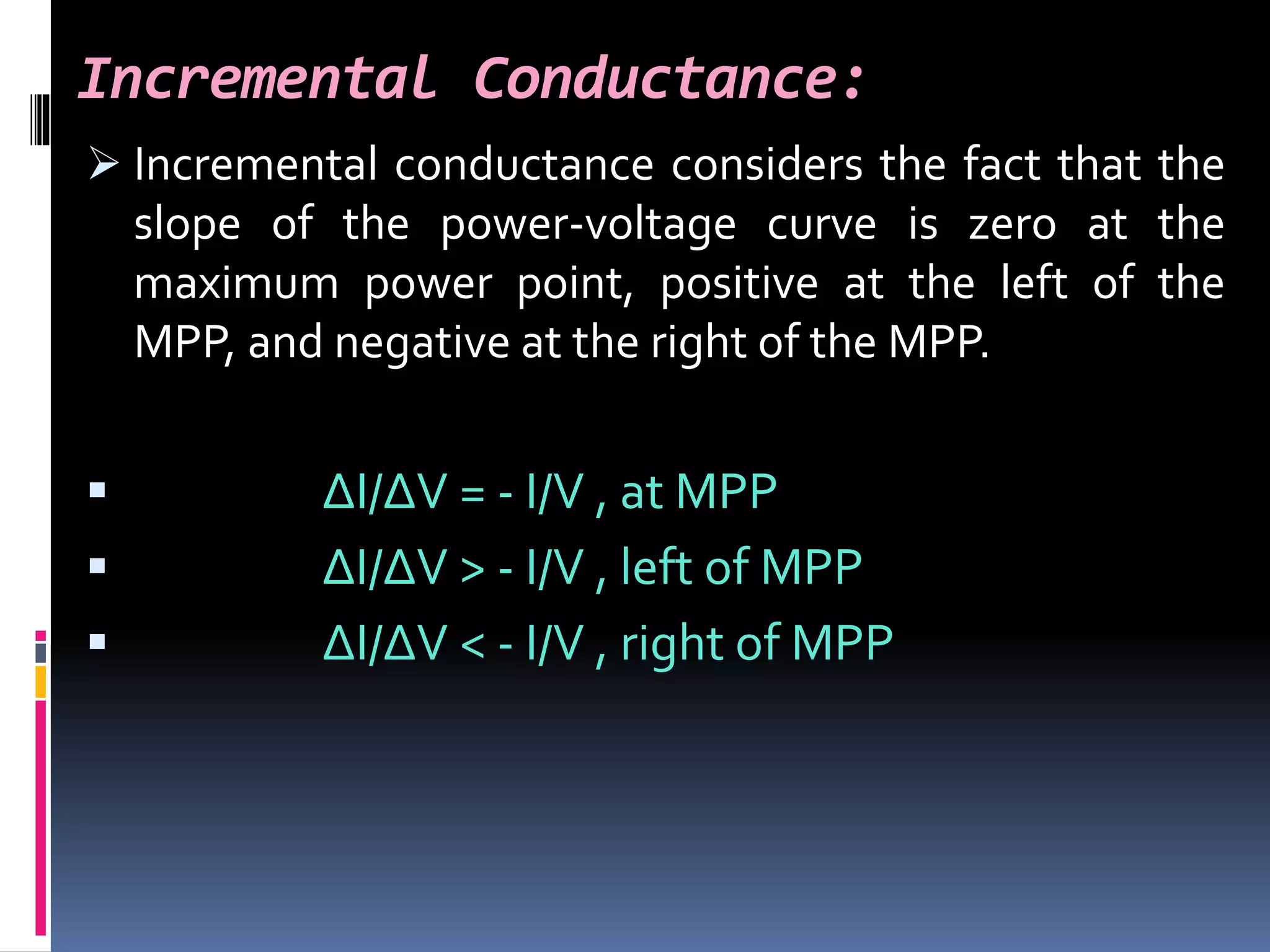
 Incremental conductance considers the fact that the
slope of the power-voltage curve is zero at the
maximum power point, positive at the left of the
MPP, and negative at the right of the MPP.
 ΔI/ΔV = - I/V , at MPP
 ΔI/ΔV > - I/V , left of MPP
 ΔI/ΔV < - I/V , right of MPP
Flowchart of incremental conductance
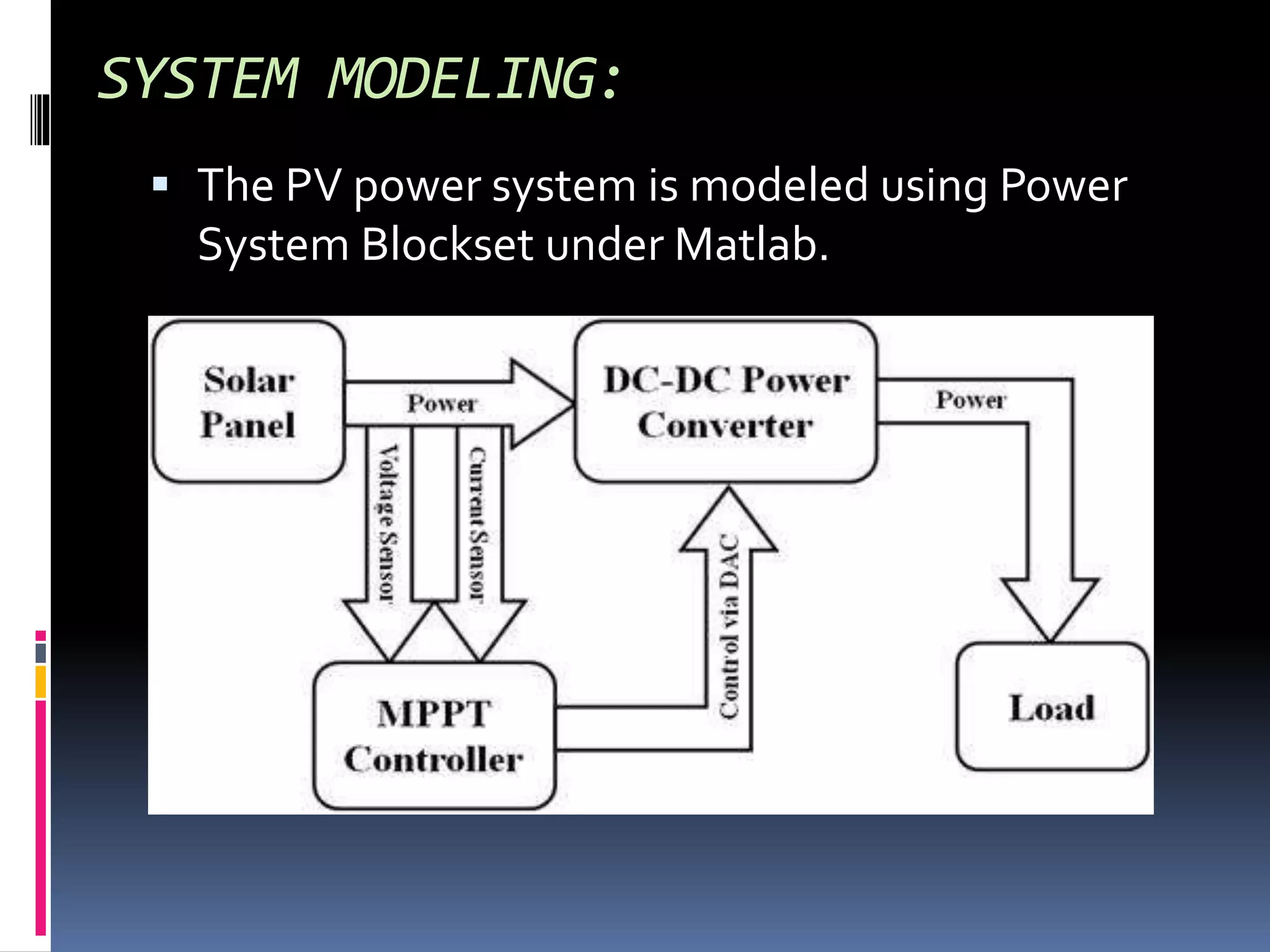
SYSTEM MODELING:
 The PV power system is modeled using Power
System Blockset under Matlab.
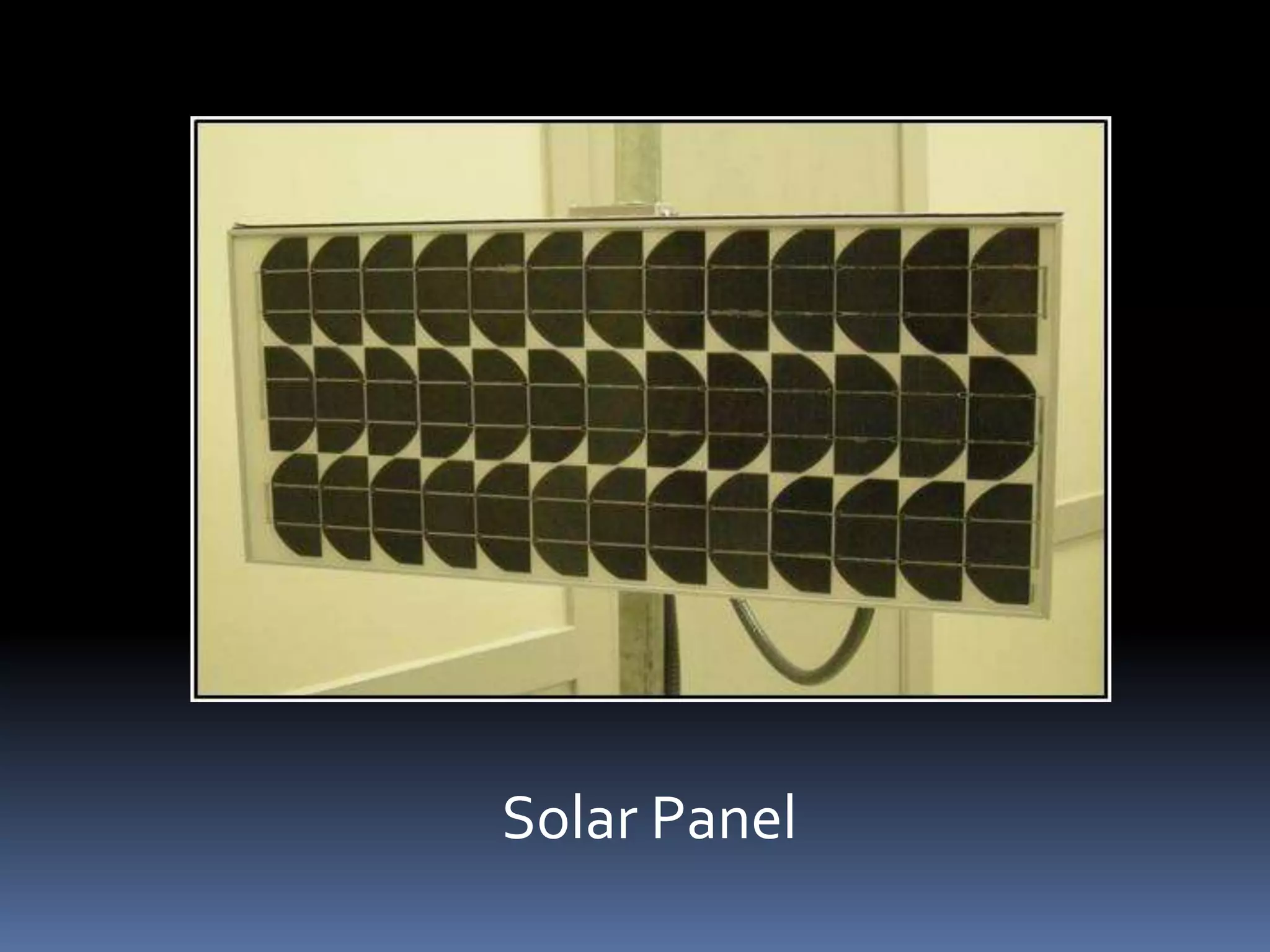
Solar Panel
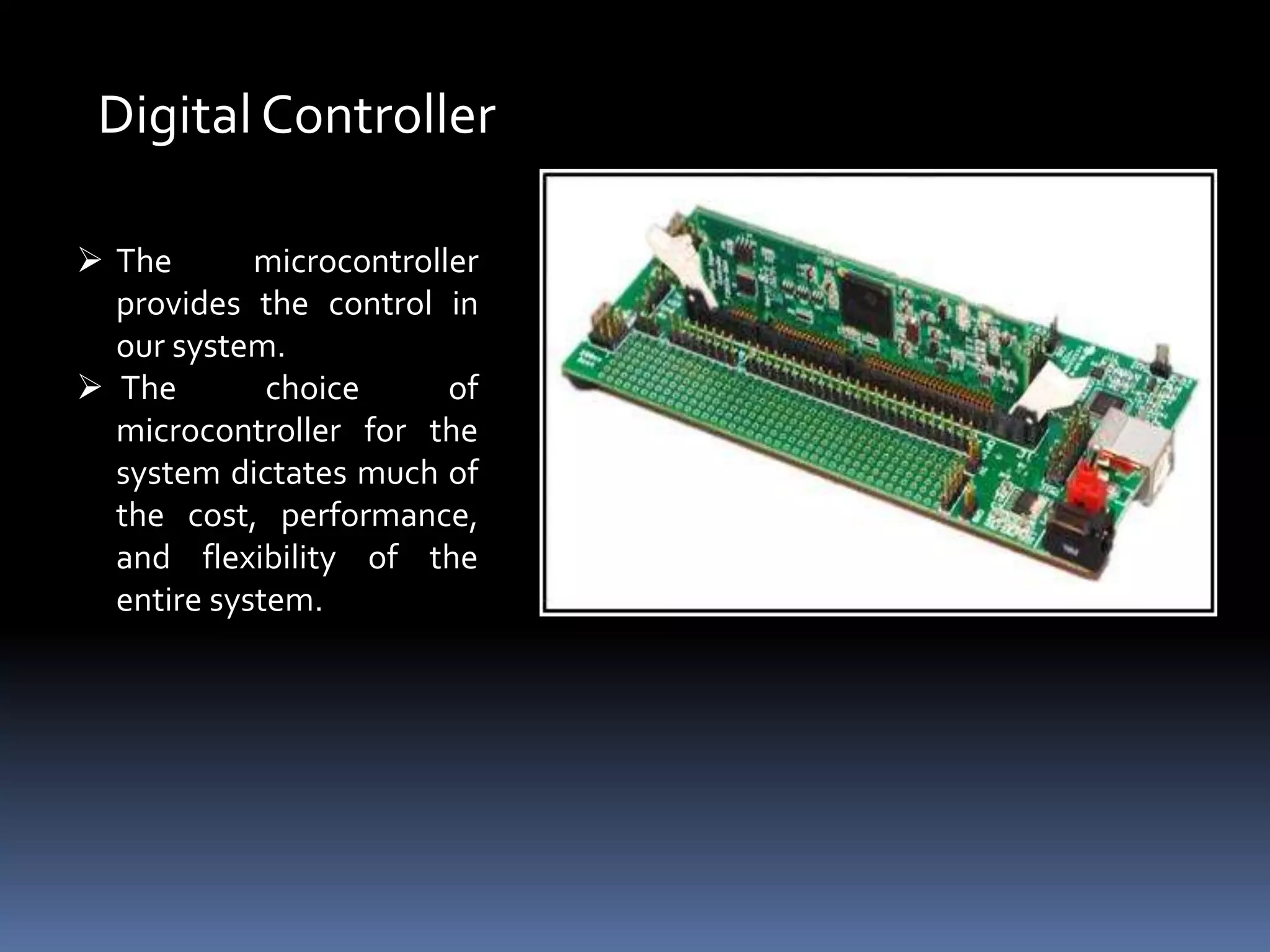
Digital Controller
 The microcontroller
provides the control in
our system.
 The choice of
microcontroller for the
system dictates much of
the cost, performance,
and flexibility of the
entire system.
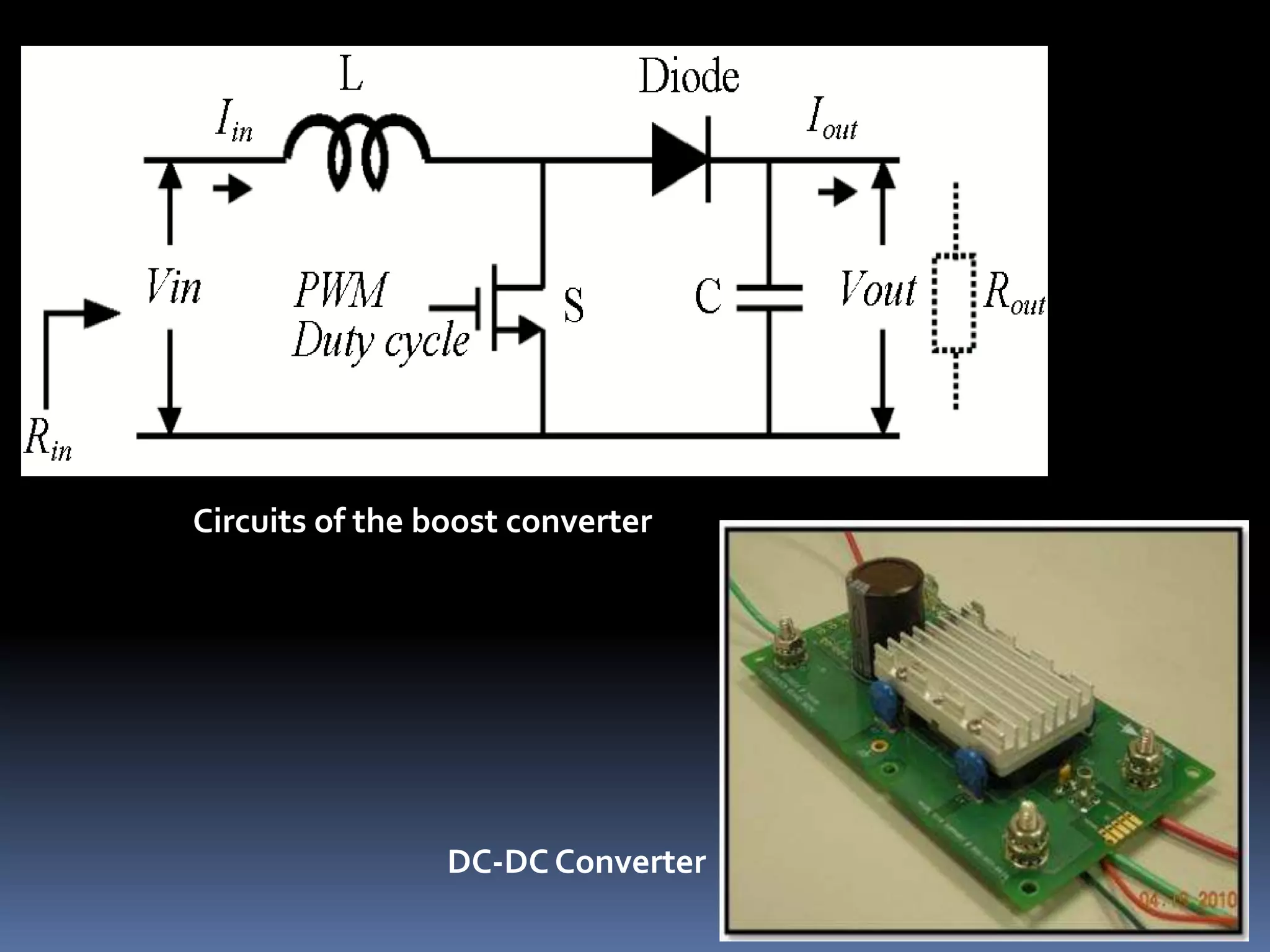
Circuits of the boost converter
DC-DC Converter
ADVANTAGES:
 MPPT method can extract maximum available
power from the PV module.
 This can increase the tracking efficiency.
 If your energy use is greatest in the winter (typical
in most homes) and you have cold winter
weather, then you can gain a substantial boost in
energy when you need it the most!
CONCLUSION:
A PV systems are suitable for residential and/or
industrial applications as it provides a regulated AC
output voltage that may also track the input mains
utility voltage in phase and amplitude at hundreds to
thousands of watts. Thus MPPT system can be
deployed to get maximum amount of power to take
advantage of solar energy.
REFERENCES:
 N. Femia, et. Al. “Optimization of Perturb and observe Maximum Power
Point tracking Method,” IEEETrans. Power Electron., Vol. 20, pp.
963-973, July 2005.
 E. Koutroulis; et. al , “ Development of a Microcontroller-based
Photovoltaic maximum power tracking control system”, IEEETrans.On
power Electron.,Vol. 16, No. 1, pp. 46-54, 2001.
 J .A.Jiang et. Al. , “Maximum PowerTracking for Photovoltaic Power
Systems,”Tamkang Journal of Science and Engineering,Vol. 8, No. 2,
pp. 147-153, 2005.
 S. Jain andV. Agarwal, “A New Algorithm for RapidTracking of
Approximate Maximum Power Point in Photovoltaic Systems,” IEEE
Power Electronic Letter., Vol. 2, pp. 16-19, Mar. 2004.
 W. Xiao and W. G. Dunford,“A modified adaptive hill climbing MPPT
method for photovoltaic power systems,” 35th. Annual IEEE Power
Electron. Specialists Conf. , pp. 1957-1963, 2004.
 Y. Kuo, et. Al., “Maximum power point tracking controller for photovoltaic
energy conversion system,” IEEETrans. Ind. Electron.,Vol. 48,
pp. 594-601, 2001.
………………….….???????????

Maximum power point tracking.......saq

  • 1.
    Presented by… MD SAQUIBMAQSOOD REGD NO. 0901292238 ELECTRICAL & ELECTRONICS ENGINEERING MAXIMUM POWER POINT TRACKING………..
  • 2.
    MAXIMUM POWER POINTTRACKING FOR PHOTOVOLTAIC SYSTEM
  • 3.
     INTRODUCTION  MATHEMATICALMODEL  WHAT IS MPPT  HOW IT WORKS  MPPT TECHNIQUES  SYSTEM MODELING  ADVANTAGES  CONCLUSION
  • 4.
    PV modules stillhave relatively low conversion efficiency; therefore, controlling maximum power point tracking (MPPT) for the solar array is essential in a PV system. The amount of power generated by a PV depends on the operating voltage of the array. A PV’s maximum power point (MPP) varies with solar insulation and temperature.
  • 5.
     MPPT orMaximum Power Point Tracking is algorithm that included in charge controllers used for extracting maximum available power from PV module under certain conditions. The voltage at which PV module can produce maximum power is called ‘maximum power point’ (or peak power voltage). WHAT IS MPPT?
  • 6.
    Equivalent circuit ofsolar PV array. MATHEMATICAL MODEL:
  • 7.
    I= Isc –Io{exp[ q(V + RsI)/(nkTk) ]- 1} – (V+RsI)/Rsh ………………..(1) Where , Isc = Id + I The above equation is used in computer simulations to obtain the o/p characteristics of a solar cell.
  • 8.
    Output characteristics ofa solar cell are non- linear and are crucially influenced by a solar radiation, temperature and load condition. V-I and V-P characteristics of a solar cell:
  • 9.
     The majorprinciple of MPPT is to extract the maximum available power from PV module by making them operate at the most efficient voltage (maximum power point).  MPPT checks output of PV module, compares it to battery voltage then fixes what is the best power that PV module can produce to charge the battery and converts it to the best voltage to get maximum current into battery. How MPPT works? MPPT is most effective under these conditions: • Cold weather, cloudy or hazy days: Normally, PV module works better at cold temperatures and MPPT is utilized to extract maximum power available from them. • When battery is deeply discharged: MPPT can extract more current and charge the battery if the state of charge in the battery is lowers.
  • 10.
     A MPPTsolar charge controller is the charge controller embedded with MPPT algorithm to maximize the amount of current going into the battery from PV module.  MPPT is DC to DC converter which operates by taking DC input from PV module, changing it to AC and converting it back to a different DC voltage and current to exactly match the PV module to the battery.  Examples of DC to DC converter are • Boost converter • Buck converter  MPPT algorithm can be applied to both of them depending on system design. MPPT solar charge controller:
  • 11.
    MPPT solar charge controllersare useful for off-grid solar power systems such as stand- alone solar power system, solar home system and solar water pump system, etc. MPPT solar charge controllers
  • 12.
    Generalconfigurationofthe MPPT solarcharge controller OOOOOOOOOOOOOOOO OOOOOOOOOOOOOO PV INPUT DC Load INVERTER AC Load
  • 13.
    MPPT TECHNIQUES:  FractionalOpen-CircuitVoltage  Fractional Short-Circuit Current  Perturb and Observe  Incremental Conductance
  • 14.
    Fractional Open-Circuit Voltage: VMPP ≈ k1VOC ……………….(2) Factor k1 has been reported to be between 0.71 and 0.78. Implementation of this method is simple. Its tracking efficiency is relatively low.
  • 15.
    Fractional Short-Circuit Current: IMPP≈ k2 ISC …………………(3)  k2 is not constant. It is found to be between 0.78 and 0.92.  The accuracy of the method and tracking efficiency depends on the accuracy of K2 and periodic measurement of short circuit current.
  • 16.
    Perturb and Observe: The concept behind the P&O method is to modify the operating voltage or current of the PV panel until you obtain maximum power from it.  The tracker operates by periodically incrementing or decrementing the solar array voltage.  If increasing the voltage to a panel increases the power output of the panel, the system continues increasing the operating voltage until the power output begins to decrease.
  • 17.
  • 18.
    Incremental Conductance:  Incrementalconductance considers the fact that the slope of the power-voltage curve is zero at the maximum power point, positive at the left of the MPP, and negative at the right of the MPP.  ΔI/ΔV = - I/V , at MPP  ΔI/ΔV > - I/V , left of MPP  ΔI/ΔV < - I/V , right of MPP
  • 19.
  • 20.
    SYSTEM MODELING:  ThePV power system is modeled using Power System Blockset under Matlab.
  • 21.
  • 22.
    Digital Controller  Themicrocontroller provides the control in our system.  The choice of microcontroller for the system dictates much of the cost, performance, and flexibility of the entire system.
  • 23.
    Circuits of theboost converter DC-DC Converter
  • 25.
    ADVANTAGES:  MPPT methodcan extract maximum available power from the PV module.  This can increase the tracking efficiency.  If your energy use is greatest in the winter (typical in most homes) and you have cold winter weather, then you can gain a substantial boost in energy when you need it the most!
  • 26.
    CONCLUSION: A PV systemsare suitable for residential and/or industrial applications as it provides a regulated AC output voltage that may also track the input mains utility voltage in phase and amplitude at hundreds to thousands of watts. Thus MPPT system can be deployed to get maximum amount of power to take advantage of solar energy.
  • 27.
    REFERENCES:  N. Femia,et. Al. “Optimization of Perturb and observe Maximum Power Point tracking Method,” IEEETrans. Power Electron., Vol. 20, pp. 963-973, July 2005.  E. Koutroulis; et. al , “ Development of a Microcontroller-based Photovoltaic maximum power tracking control system”, IEEETrans.On power Electron.,Vol. 16, No. 1, pp. 46-54, 2001.  J .A.Jiang et. Al. , “Maximum PowerTracking for Photovoltaic Power Systems,”Tamkang Journal of Science and Engineering,Vol. 8, No. 2, pp. 147-153, 2005.  S. Jain andV. Agarwal, “A New Algorithm for RapidTracking of Approximate Maximum Power Point in Photovoltaic Systems,” IEEE Power Electronic Letter., Vol. 2, pp. 16-19, Mar. 2004.  W. Xiao and W. G. Dunford,“A modified adaptive hill climbing MPPT method for photovoltaic power systems,” 35th. Annual IEEE Power Electron. Specialists Conf. , pp. 1957-1963, 2004.  Y. Kuo, et. Al., “Maximum power point tracking controller for photovoltaic energy conversion system,” IEEETrans. Ind. Electron.,Vol. 48, pp. 594-601, 2001.
  • 28.