







Wind Energy
Ramu Kandregula, Assistant Professor
Vignan’s Institute of Information Technology
Visakhapatnam
 Sources
 Potentials of Wind Energy
 Horizontal Axis Wind mill
 Vertical Axis Wind mill
 Performance Characteristics
 Betz Criteria
 Types of Winds
 Wind Data Measurement
WIND ENERGY - Syllabus
 Concept of Wind Power Existed from almost 2ooo Years
History
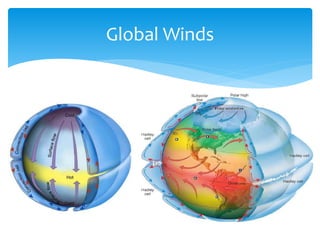
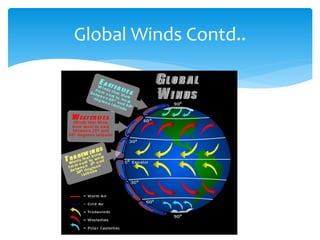
 Global Winds
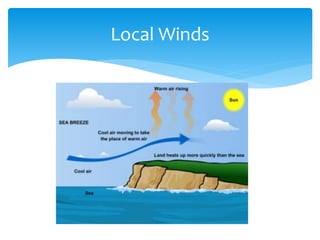
 Local Winds
Sources of Wind Energy
Global Winds
Global Winds Contd..
Global Winds causing Monsoons
Local Winds
Potentials of Wind Energy
Potential of Wind Energy in India
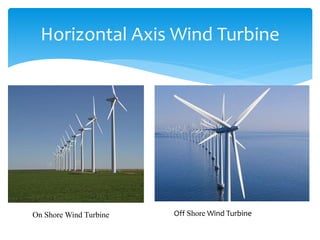
Horizontal Axis Wind Turbine
On Shore Wind Turbine Off Shore Wind Turbine
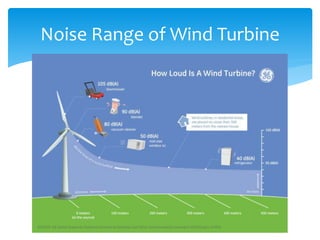
Noise Range of Wind Turbine
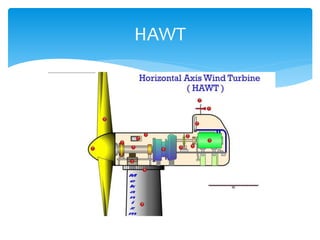
HAWT
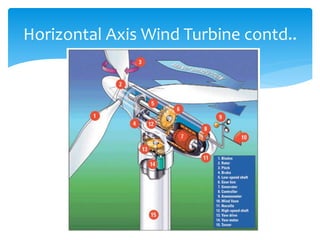
Horizontal Axis Wind Turbine contd..
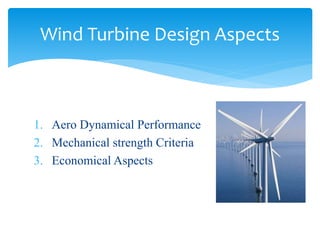
1. Aero Dynamical Performance
2. Mechanical strength Criteria
3. Economical Aspects
Wind Turbine Design Aspects
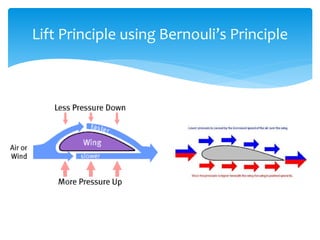
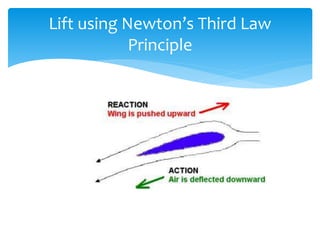
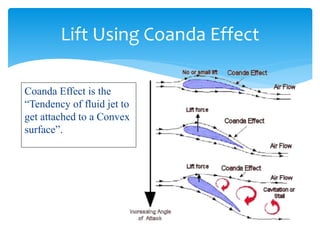
Multiple Theories explaining the “LIFT” on a aerofoil
Blade. Most common are the following
1. Bernouli’s Principle
2. Newtons third Law
3. Coanda Effect
Lift in Aerofoil Blade
Lift Principle using Bernouli’s Principle
Lift using Newton’s Third Law
Principle
Lift Using Coanda Effect
Coanda Effect is the
“Tendency of fluid jet to
get attached to a Convex
surface”.
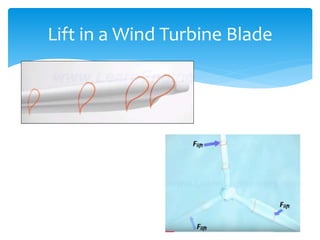
Lift in a Wind Turbine Blade
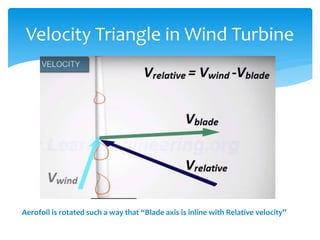
Velocity Triangle in Wind Turbine
Aerofoil is rotated such a way that “Blade axis is inline with Relative velocity”
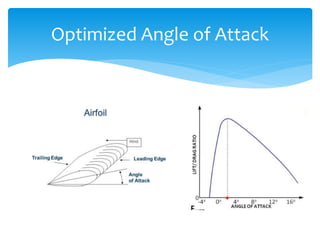
Optimized Angle of Attack
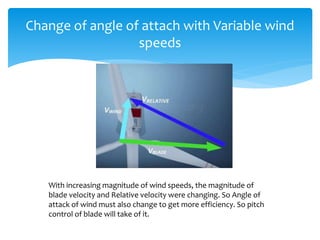
Change of angle of attach with Variable wind
speeds
With increasing magnitude of wind speeds, the magnitude of
blade velocity and Relative velocity were changing. So Angle of
attack of wind must also change to get more efficiency. So pitch
control of blade will take of it.
Importance of Mechanical power
Transmission in Wind Turbine
Wind blades rotate at low speed because of following reasons. At High
speeds they posses
1. More Noise
2. Less Blade Strength
So the Speed of wind turbines are intentionally constrained to low speeds.
Mechanical Transmission contd..
 Planetary Gear Box is used to increase the speed of Wind
Turbine to suit the Electrical generator
 Increase in Speed Ratio ~1:90
 Cut Off speed is 80Km/hr – To Limit the Damage
 Velocity Sensor – To Measure Wind speeds and apply breaks
if needed
Blade Design Considerations
 Velocity of the Wind
 Length of the Blade
 Height of the wind Turbine
 Angle of Attack of wind speed
 Twist of the Blade
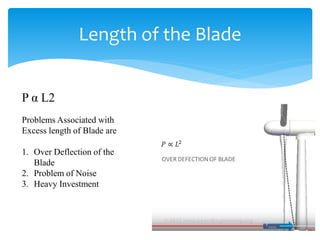
Length of the Blade
P α L2
Problems Associated with
Excess length of Blade are
1. Over Deflection of the
Blade
2. Problem of Noise
3. Heavy Investment
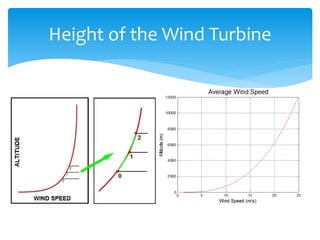
Height of the Wind Turbine
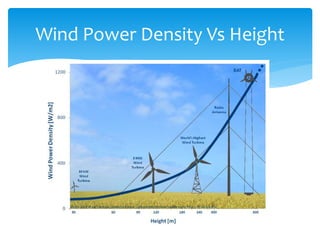
Wind Power Density Vs Height
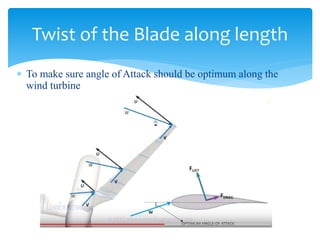
 To make sure angle of Attack should be optimum along the
wind turbine
Twist of the Blade along length
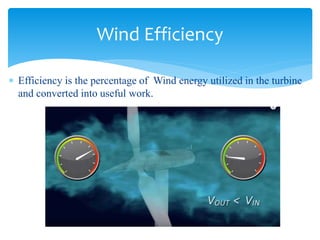
 Efficiency is the percentage of Wind energy utilized in the turbine
and converted into useful work.
Wind Efficiency
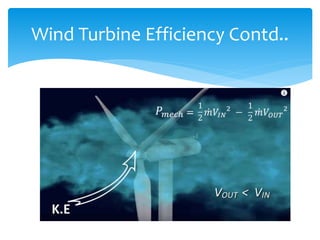
Wind Turbine Efficiency Contd..
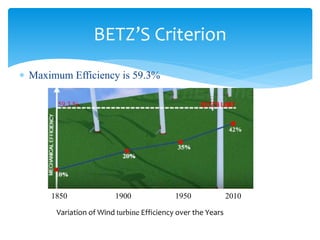
 Maximum Efficiency is 59.3%
BETZ’S Criterion
Variation of Wind turbine Efficiency over the Years
1850 1900 1950 2010
 Two Main Functionalities of Wind Turbine
1. Yawing Mechanism
2. Pitch Control
How to Operate HAWT against Wind
Variations?
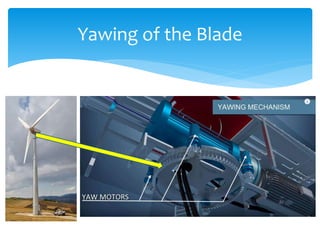
Yawing of the Blade
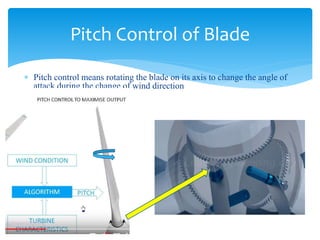
 Pitch control means rotating the blade on its axis to change the angle of
attack during the change of wind direction
Pitch Control of Blade
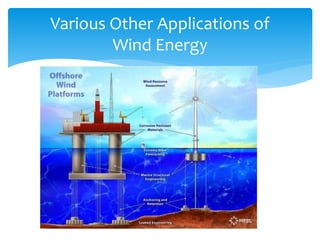
Various Other Applications of
Wind Energy
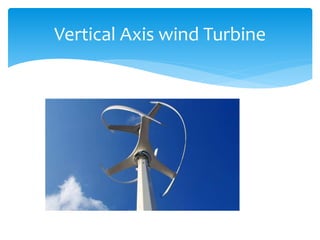
Vertical Axis wind Turbine
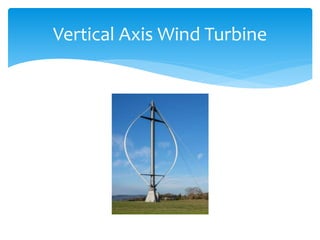
Vertical Axis Wind Turbine
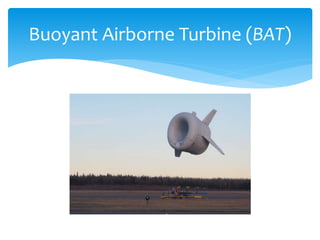
Buoyant Airborne Turbine (BAT)
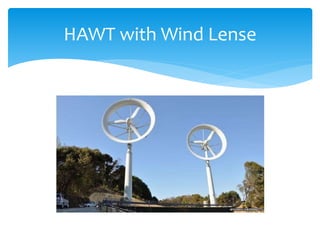
HAWT with Wind Lense
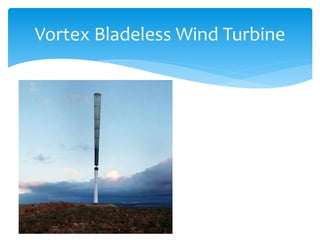
Vortex Bladeless Wind Turbine
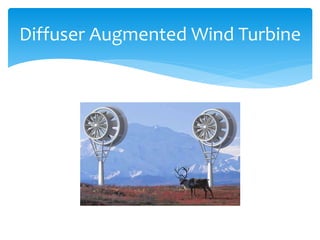
Diffuser Augmented Wind Turbine
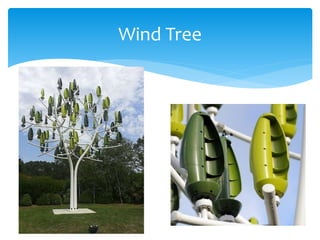
Wind Tree
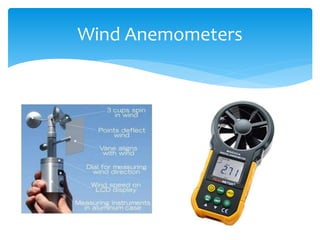
Wind Anemometers
Wind energy

Wind energy