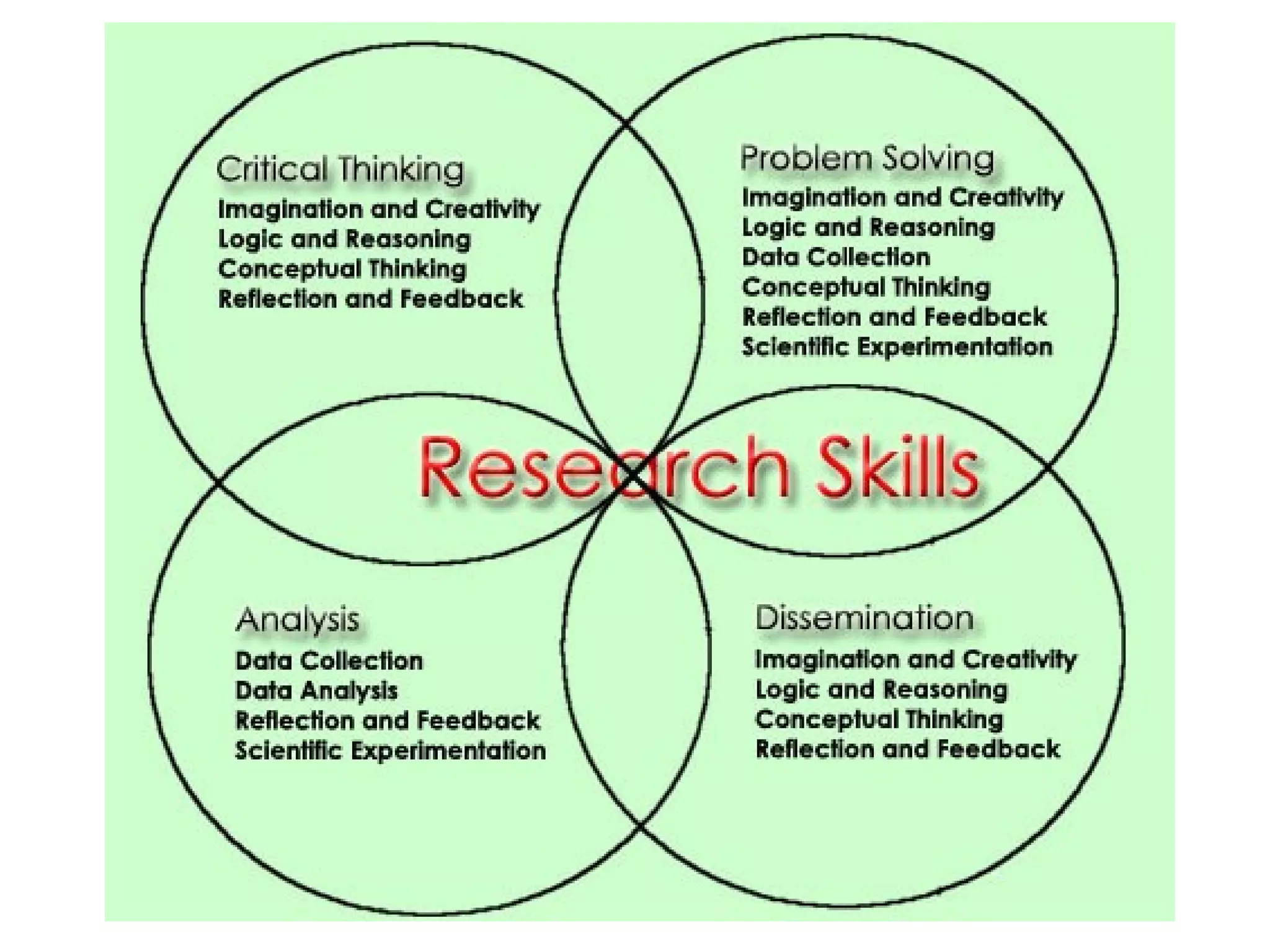
Research Skills A brief guide
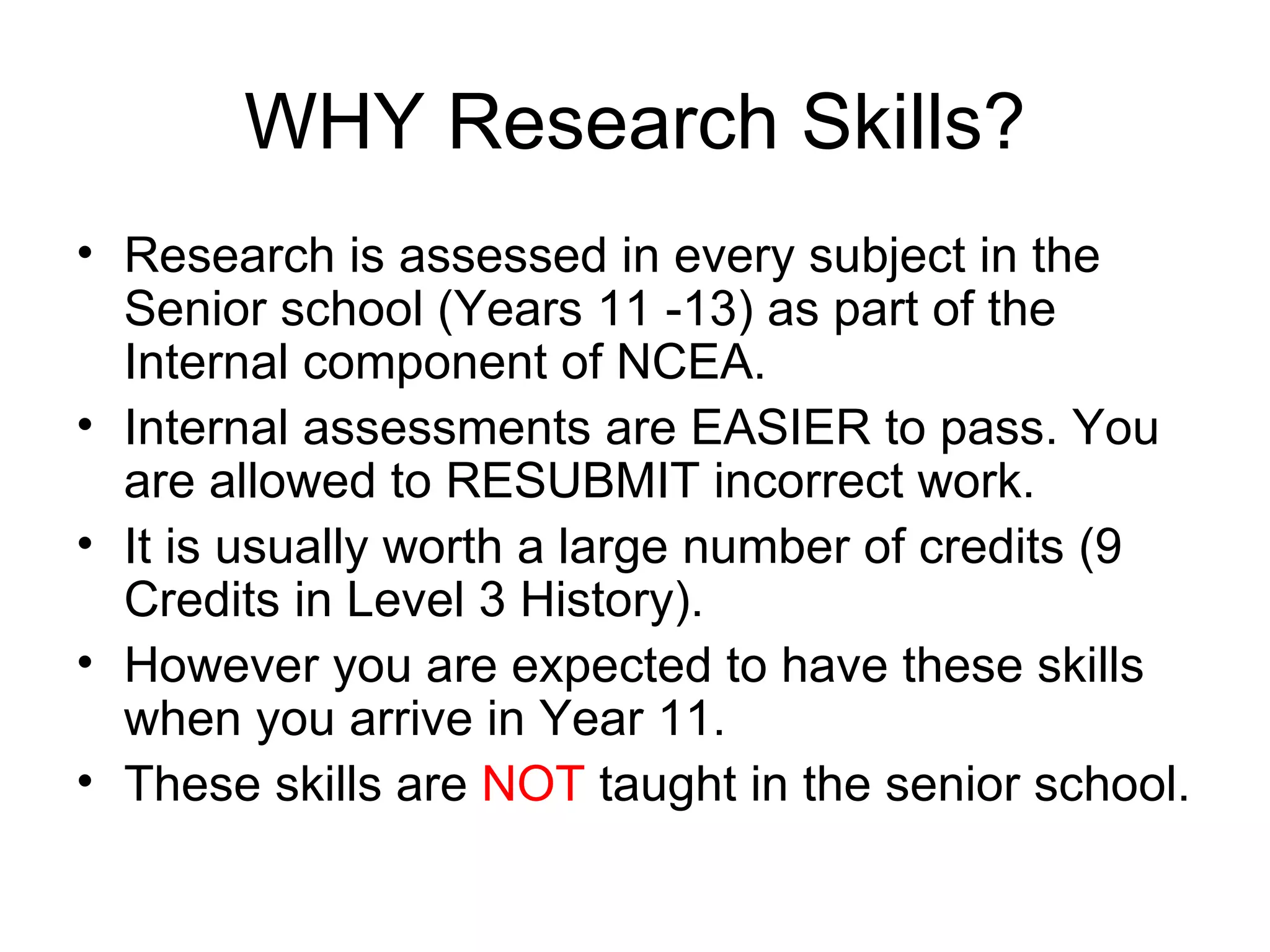
WHY Research Skills? Research is assessed in every subject in the Senior school (Years 11 -13) as part of the Internal component of NCEA. Internal assessments are EASIER to pass. You are allowed to RESUBMIT incorrect work. It is usually worth a large number of credits (9 Credits in Level 3 History). However you are expected to have these skills when you arrive in Year 11. These skills are  NOT  taught in the senior school.
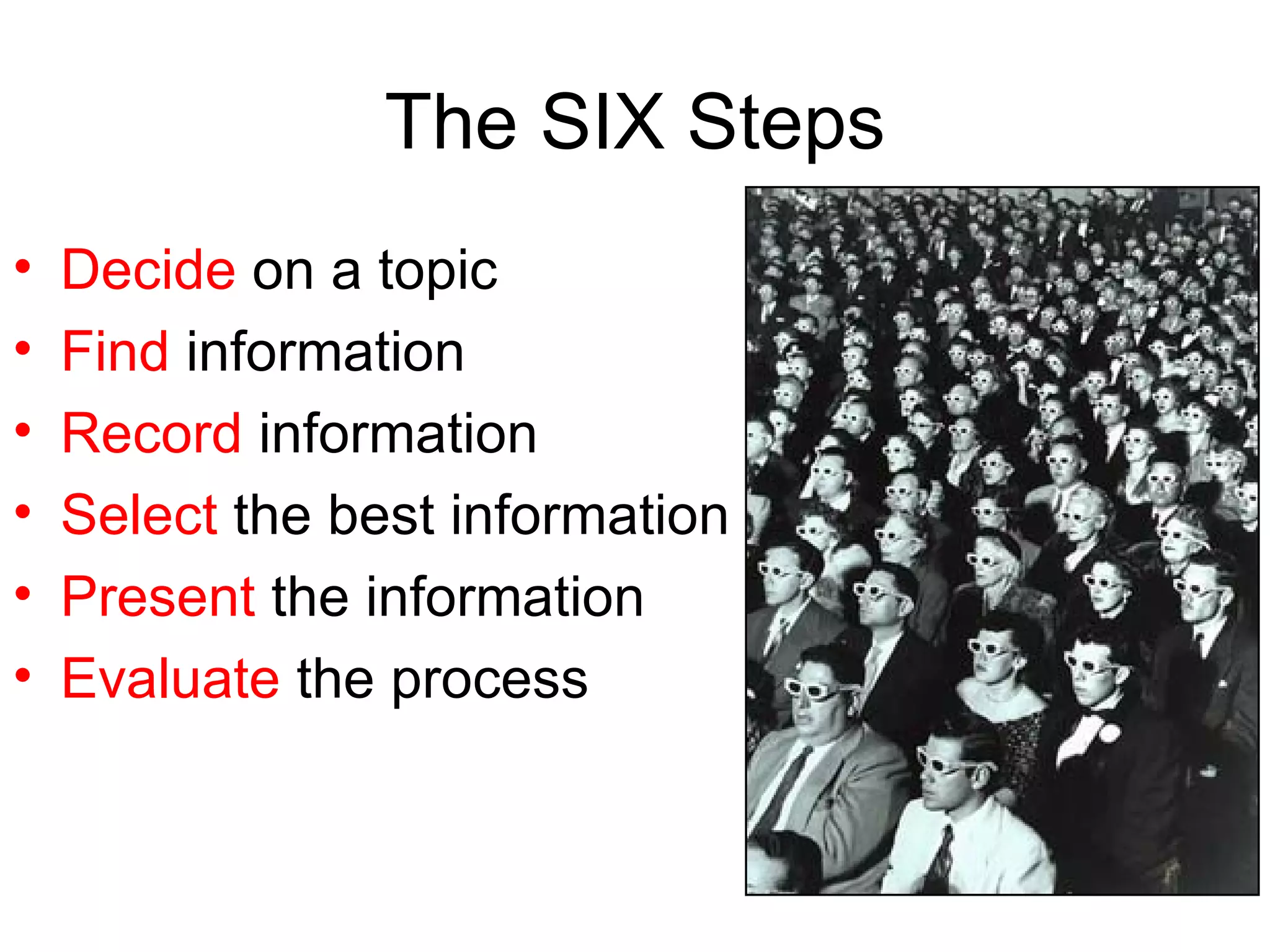
The SIX Steps Decide  on a topic Find  information Record  information Select  the best information Present  the information Evaluate  the process
DECIDE  what to research What you are going to research or investigate? What have you been instructed to investigate? What interests you most? What has a lot of information? Where can you find the information? What you would like to know? If needed make up FOCUSSING Questions that will allow you to find as much as possible.
FIND  the best information Find the information using a variety of resources. School Library and the Librarians. Wellington Public Library (and its booking system) National Library Internet/Computers INNZ EPIC Encyclopaedias – Britannica but not necessarily Wikipedia… Search Engines incl. Google, Alta Vista National Archives. Multimedia – Video etc. People – parents, teachers, officials or experts
RECORD  the information How do you keep records of the information you find? Dot and Jot Notes summarising information NOT copying! Summarising means putting the information into  your own words ….. Photocopying, Scanning/OCR for later reading and notetaking. Always ensure you record the Bibliography details (see the Library guide).
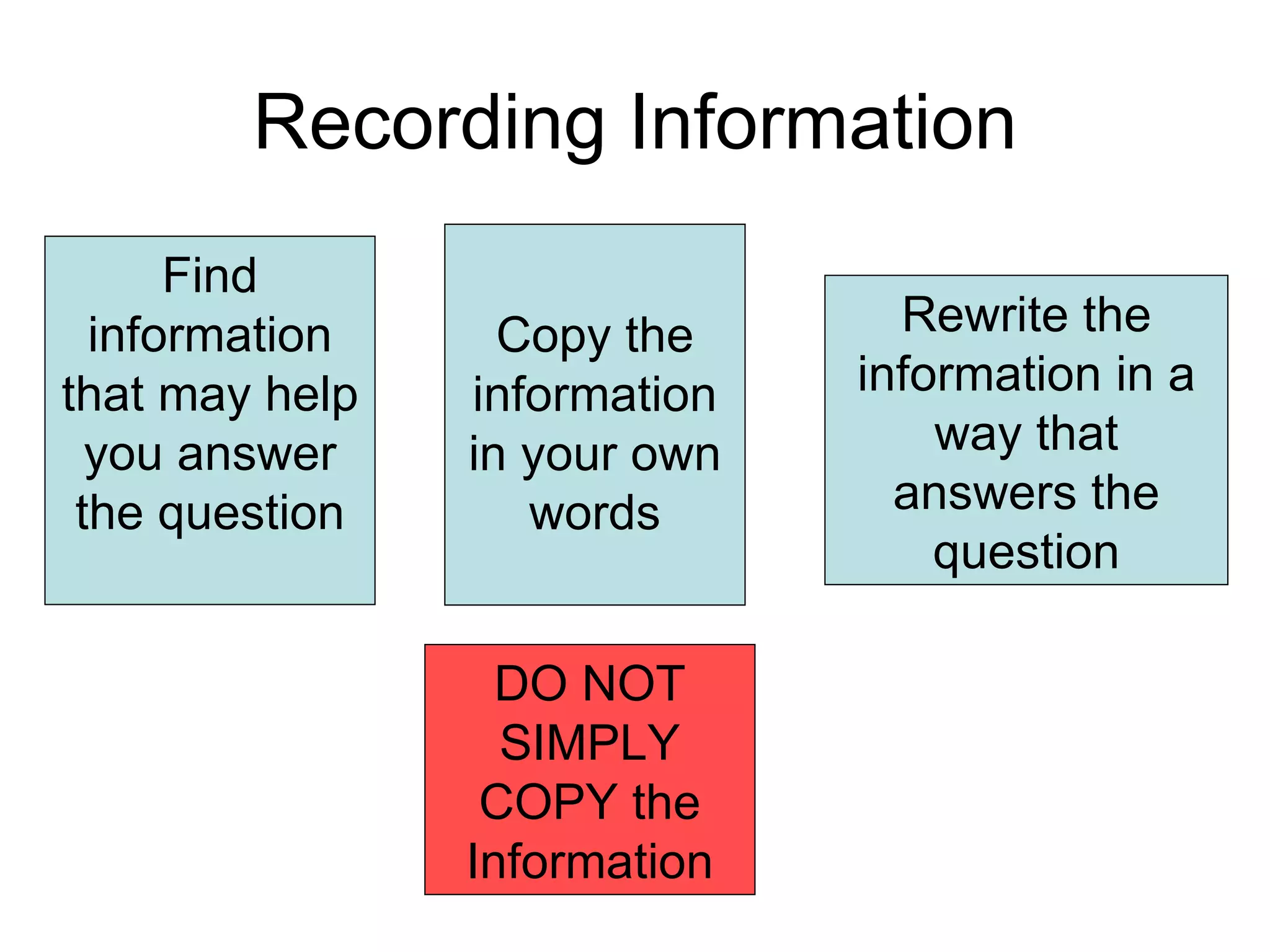
Recording Information Find information that may help you answer the question Copy the information in your own words Rewrite the information in a way that answers the question DO NOT SIMPLY COPY the Information
SELECT  the best information Assemble your information to help you answer each of your Focussing questions. Choose information that best answers the questions you asked? Problem Solving: What could I do better? Choose the BEST material to answer them. Use this as the basis for presenting your research.
PRESENT  the information What is the best way of presenting the information to ensure it answers the question well? A graph or a table? Paragraphs Images How will you present my research? Is there an established or specified format? Can You choose? Essay? Magazine Article? Booklet? Poster? Power-point presentation? Website?
EVALUATE  the research Critically  evaluate the way you researched the topic.  Did you use your time wisely?  (the most common problem) Were there other sources you could have used? Was this the best way of presenting the information? Did you check with the teacher to ensure you were on track? What helped or hindered your progress?
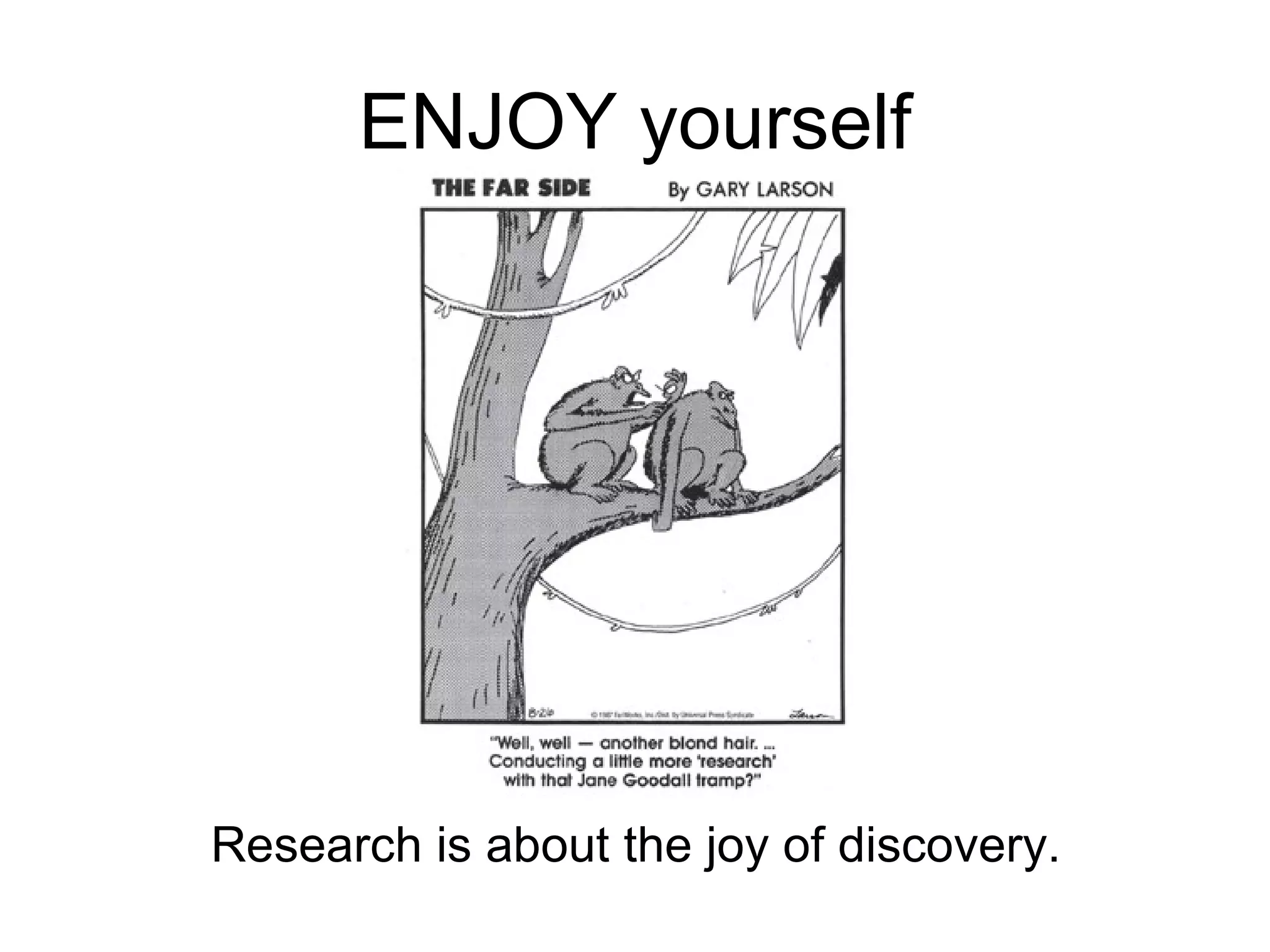
ENJOY yourself Research is about the joy of discovery.

Introducing Research Skills

  • 1.
    Research Skills Abrief guide
  • 2.
    WHY Research Skills?Research is assessed in every subject in the Senior school (Years 11 -13) as part of the Internal component of NCEA. Internal assessments are EASIER to pass. You are allowed to RESUBMIT incorrect work. It is usually worth a large number of credits (9 Credits in Level 3 History). However you are expected to have these skills when you arrive in Year 11. These skills are NOT taught in the senior school.
  • 3.
    The SIX StepsDecide on a topic Find information Record information Select the best information Present the information Evaluate the process
  • 4.
    DECIDE whatto research What you are going to research or investigate? What have you been instructed to investigate? What interests you most? What has a lot of information? Where can you find the information? What you would like to know? If needed make up FOCUSSING Questions that will allow you to find as much as possible.
  • 5.
    FIND thebest information Find the information using a variety of resources. School Library and the Librarians. Wellington Public Library (and its booking system) National Library Internet/Computers INNZ EPIC Encyclopaedias – Britannica but not necessarily Wikipedia… Search Engines incl. Google, Alta Vista National Archives. Multimedia – Video etc. People – parents, teachers, officials or experts
  • 6.
    RECORD theinformation How do you keep records of the information you find? Dot and Jot Notes summarising information NOT copying! Summarising means putting the information into your own words ….. Photocopying, Scanning/OCR for later reading and notetaking. Always ensure you record the Bibliography details (see the Library guide).
  • 7.
    Recording Information Findinformation that may help you answer the question Copy the information in your own words Rewrite the information in a way that answers the question DO NOT SIMPLY COPY the Information
  • 8.
    SELECT thebest information Assemble your information to help you answer each of your Focussing questions. Choose information that best answers the questions you asked? Problem Solving: What could I do better? Choose the BEST material to answer them. Use this as the basis for presenting your research.
  • 9.
    PRESENT theinformation What is the best way of presenting the information to ensure it answers the question well? A graph or a table? Paragraphs Images How will you present my research? Is there an established or specified format? Can You choose? Essay? Magazine Article? Booklet? Poster? Power-point presentation? Website?
  • 10.
    EVALUATE theresearch Critically evaluate the way you researched the topic. Did you use your time wisely? (the most common problem) Were there other sources you could have used? Was this the best way of presenting the information? Did you check with the teacher to ensure you were on track? What helped or hindered your progress?
  • 11.
    ENJOY yourself Researchis about the joy of discovery.