1
Writing Research PaperWriting Research Paper
Miss. Nishu Kanwar BhatiMiss. Nishu Kanwar Bhati
Ph.D ScholarPh.D Scholar
Dept. HECMDept. HECM
2
Contents
• What is a research paper
• Goals in writing a research paper
• Steps in writing a research paper
• Structure of a research paper
4
Goals…
To disseminate one’s research and findings competently to a
wider audience.
To contribute to the body of knowledge in a particular field.
To exchange information, facts and ideas, current and
important in the specialization/discipline.
To earn recognition from peers and experts in the field for
one’s scientific acumen.
To derive personal satisfaction.
It is a stimulus towards mastery in a specific areas of
specialization.
It places the research finding in a permanent record.
To fulfill mandatory requirements in one’s professional life.
5
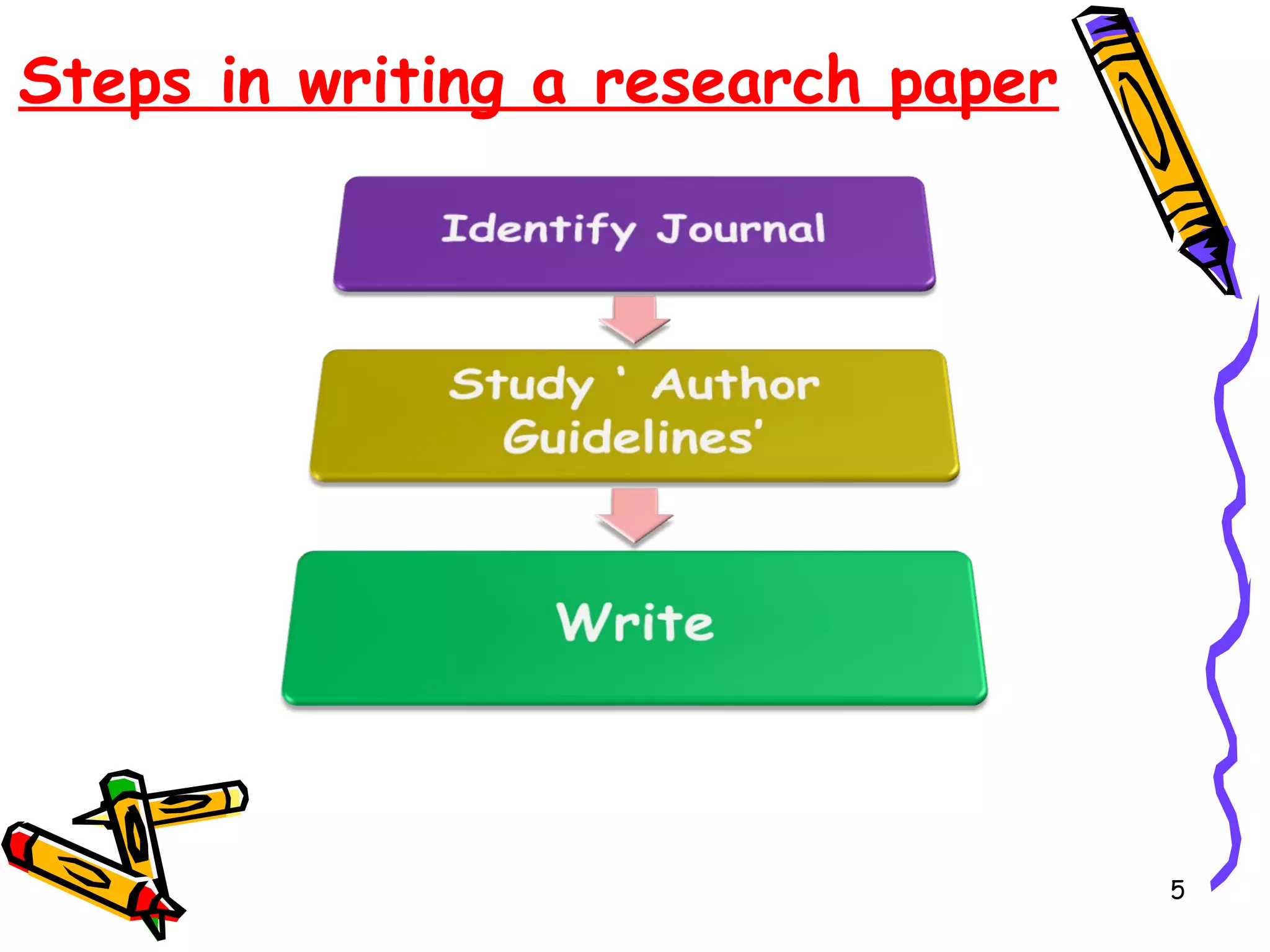
Steps in writing a research paper
6
Criteria for journal selection
• Referring system
• Citation scores
• Circulation
• Journal type
• Time lag
• Reputation of editors
• Professional vs. commercial ownership
• Quality of production
Structure of a Research Paper
While academic disciplines vary on the exact
format and style of journal articles in their field, most
articles contain similar content and are divided in parts
that typically follow the same logical flow.  Following is a
list of the parts commonly found in research articles.  
Title
Abstract
Introduction
Literature Review
Methods
Results
Discussion/Conclusion
References/Bibliography
8
Title
The title should be specific and indicate the
problem the research project addresses
using keywords that will be helpful in
literature reviews in the future.
•Clear and explanatory title
•Brief and concise
10
Abstract
• The abstract is used by readers to quickly review
the overall content of the paper.
• Purpose of the study - hypothesis, overall
question, objective
• Results, including specific data - if the results are
quantitative in nature, report quantitative data;
results of any statistical analysis shoud be
reported
• Important conclusions or questions that follow
from the experiment(s)
Style
• Single paragraph, and concise
• As a summary of work done, it is always written in past
tense
• An abstract should stand on its own, and not refer to any
other part of the paper such as a figure or table
• Focus on summarizing results - limit background information
to a sentence or two, if absolutely necessary
• What you report in an abstract must be consistent with
what you reported in the paper
• Correct spelling, clarity of sentences and phrases, and
proper reporting of quantities (proper units, significant
figures) are just as important in an abstract as they are
anywhere else
11
13
Introduction
The introduction begins by introducing
the broad overall topic and providing
basic background information.  It then
narrows down to the specific research
question relating to this topic.
• Describe the importance
(significance) of the study
• Provide a rationale. State your
specific hypothesis (es) or
objective(s), and describe the
reasoning that led you to select
them.
• Very briefly describe the
experimental design and how it
accomplished the stated objectives.
14
15
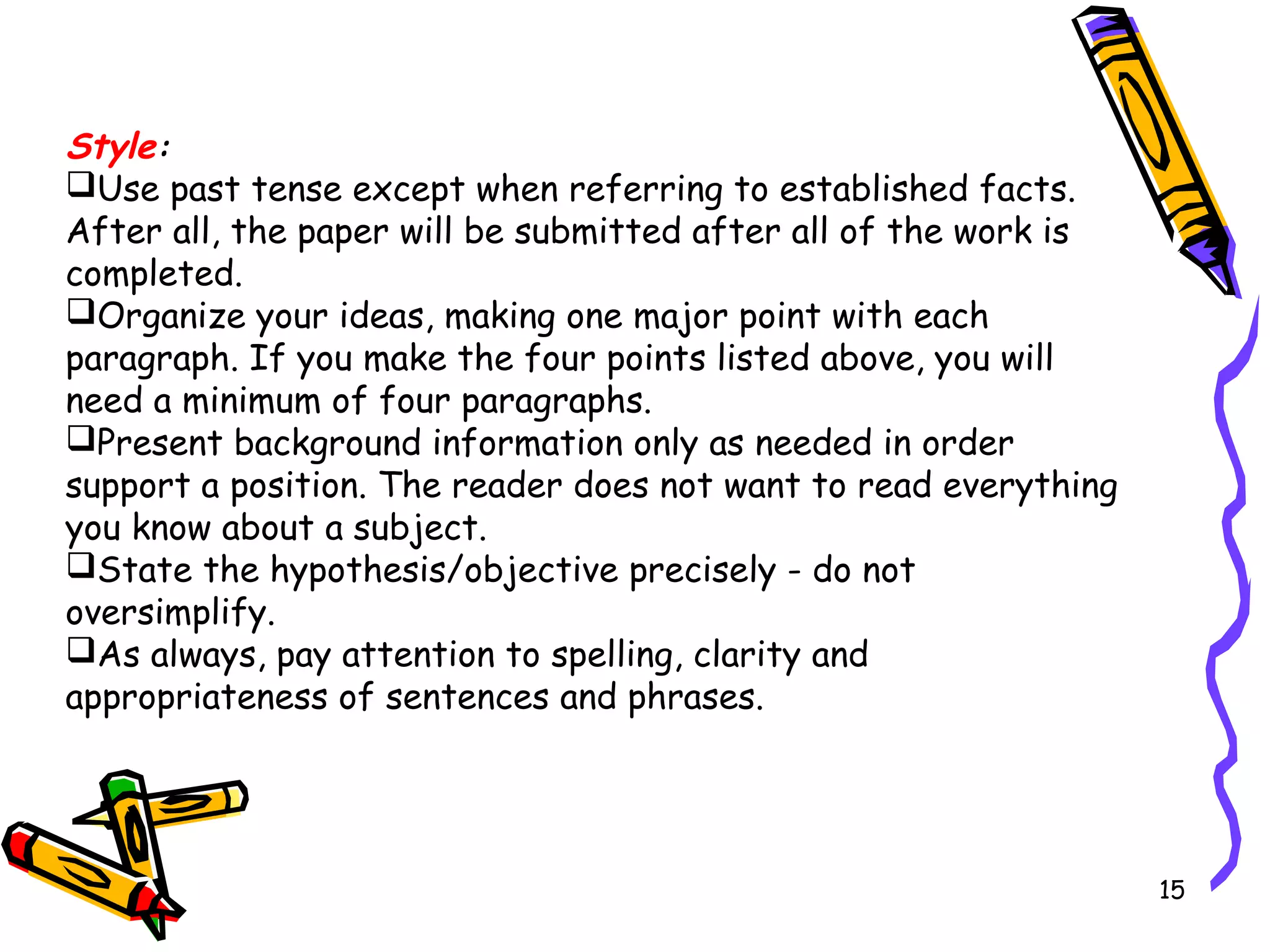
Style:
Use past tense except when referring to established facts.
After all, the paper will be submitted after all of the work is
completed.
Organize your ideas, making one major point with each
paragraph. If you make the four points listed above, you will
need a minimum of four paragraphs.
Present background information only as needed in order
support a position. The reader does not want to read everything
you know about a subject.
State the hypothesis/objective precisely - do not
oversimplify.
As always, pay attention to spelling, clarity and
appropriateness of sentences and phrases.
16
Literature review
• Establishes context of the study by
providing a brief and balanced review of
pertinent published literature available
on subject.
• General to specific
• Name-date citations
17
Method
• Study design
• Participants and their characteristics
• When and where study conducted
• Sampling method and size
• Variables measured
• Method of collecting data
• How data analyzed: Statistical procedures
used
18
Results
• Objective presentation of key findings
without interpretation
• Orderly, logical sequence using text and
illustrations (figures/tables)
19
Tips in writing results
• Do not reiterate each value or finding from the
table – only mention salient points
• Do not present the same data in table and figure:
this is redundant
• Do not report raw data values when they can be
summarized as means, percent, etc.
• Statistical test and value should be mentioned
• Always mention appropriate units with data
• Only present percentages to one decimal point
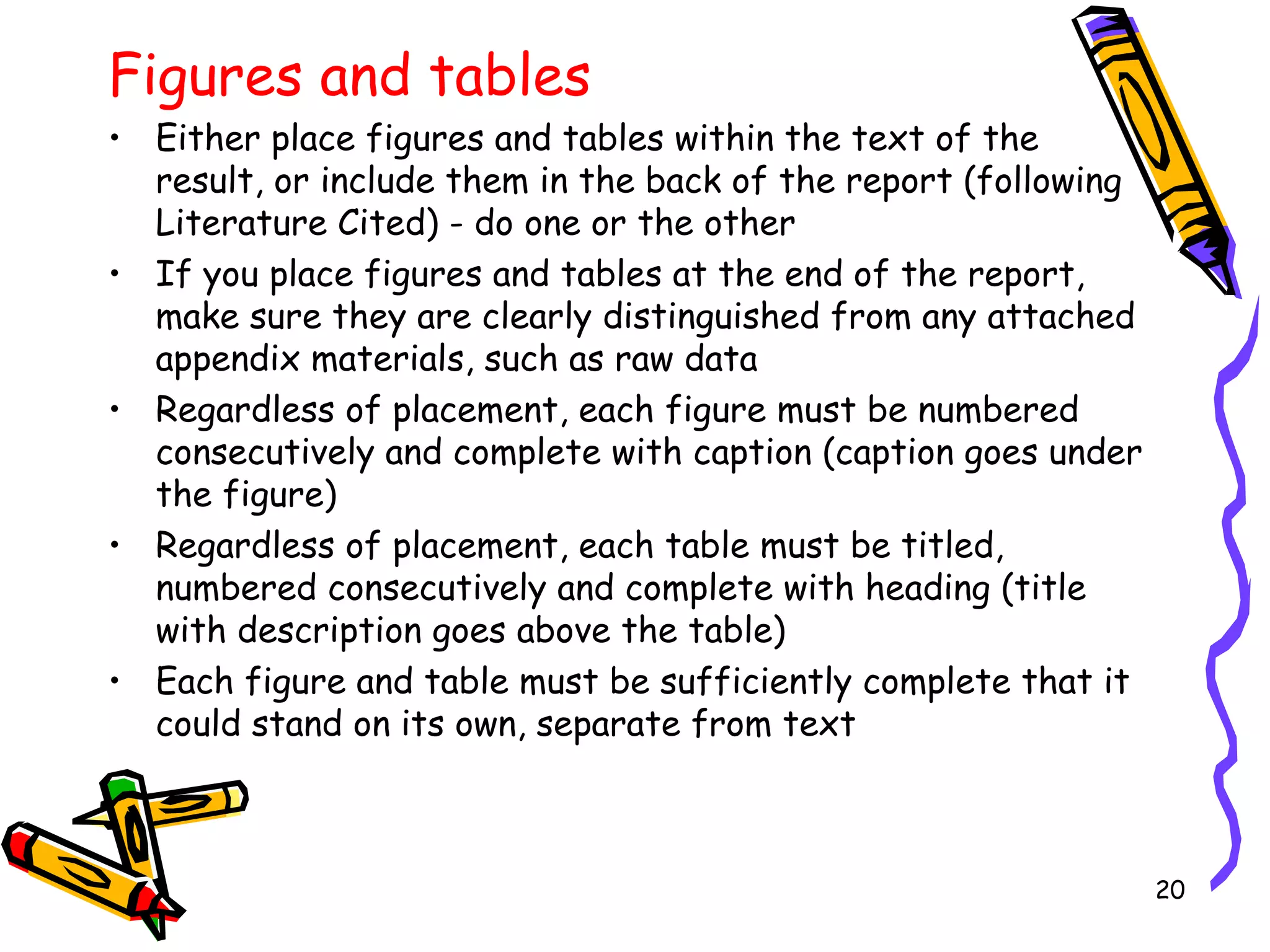
Figures and tables
• Either place figures and tables within the text of the
result, or include them in the back of the report (following
Literature Cited) - do one or the other
• If you place figures and tables at the end of the report,
make sure they are clearly distinguished from any attached
appendix materials, such as raw data
• Regardless of placement, each figure must be numbered
consecutively and complete with caption (caption goes under
the figure)
• Regardless of placement, each table must be titled,
numbered consecutively and complete with heading (title
with description goes above the table)
• Each figure and table must be sufficiently complete that it
could stand on its own, separate from text
20
21
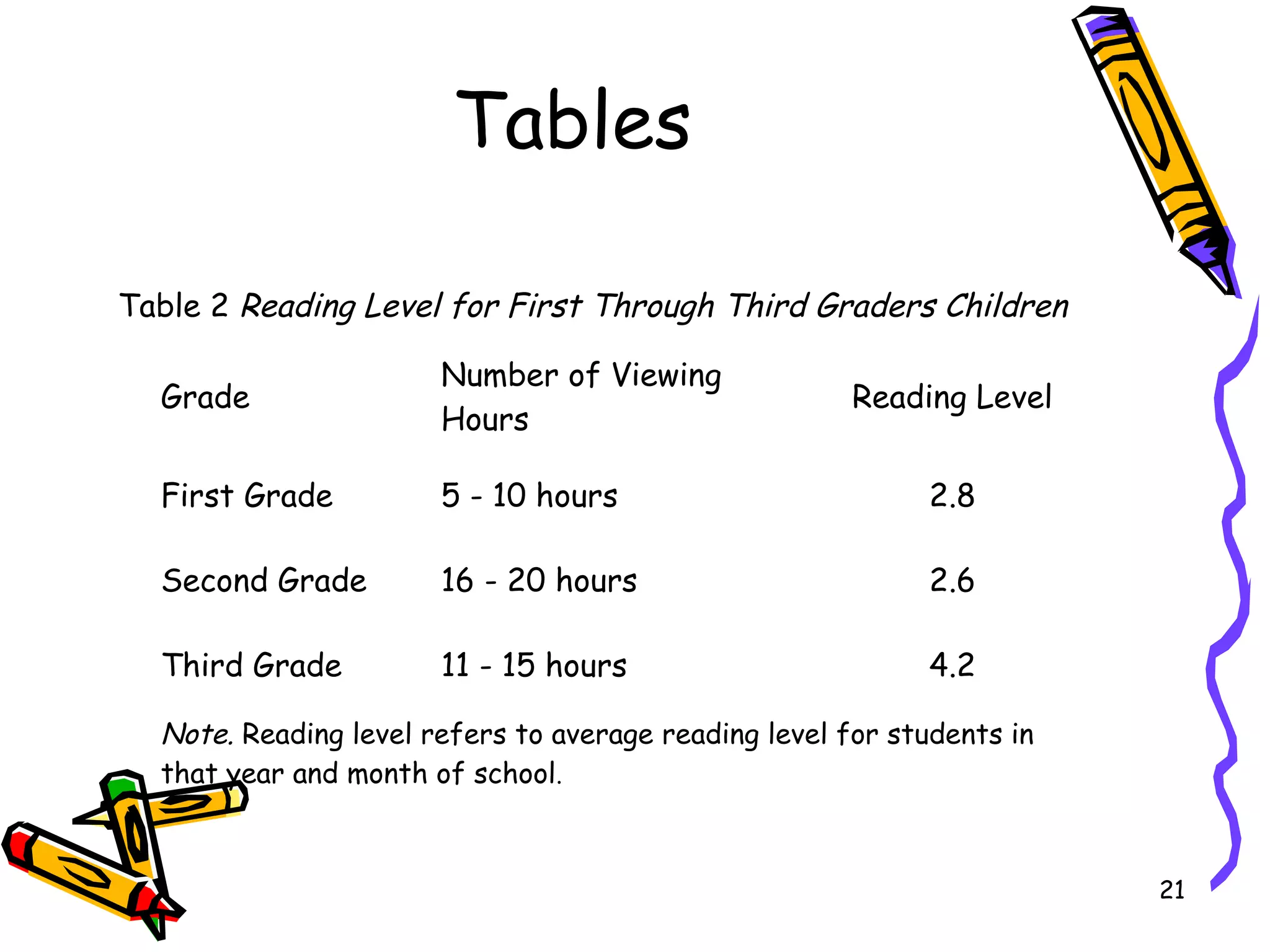
Tables
Grade
Number of Viewing
Hours
Reading Level
First Grade 5 - 10 hours 2.8
Second Grade 16 - 20 hours 2.6
Third Grade 11 - 15 hours 4.2
Note. Reading level refers to average reading level for students in
that year and month of school.
Table 2 Reading Level for First Through Third Graders Children
22
Figures
Figure 2. Pie chart of total sales
Computing
Systems 42%
Imaging and
Printing Systems
41%
IT Services 14%
Other 3%
23
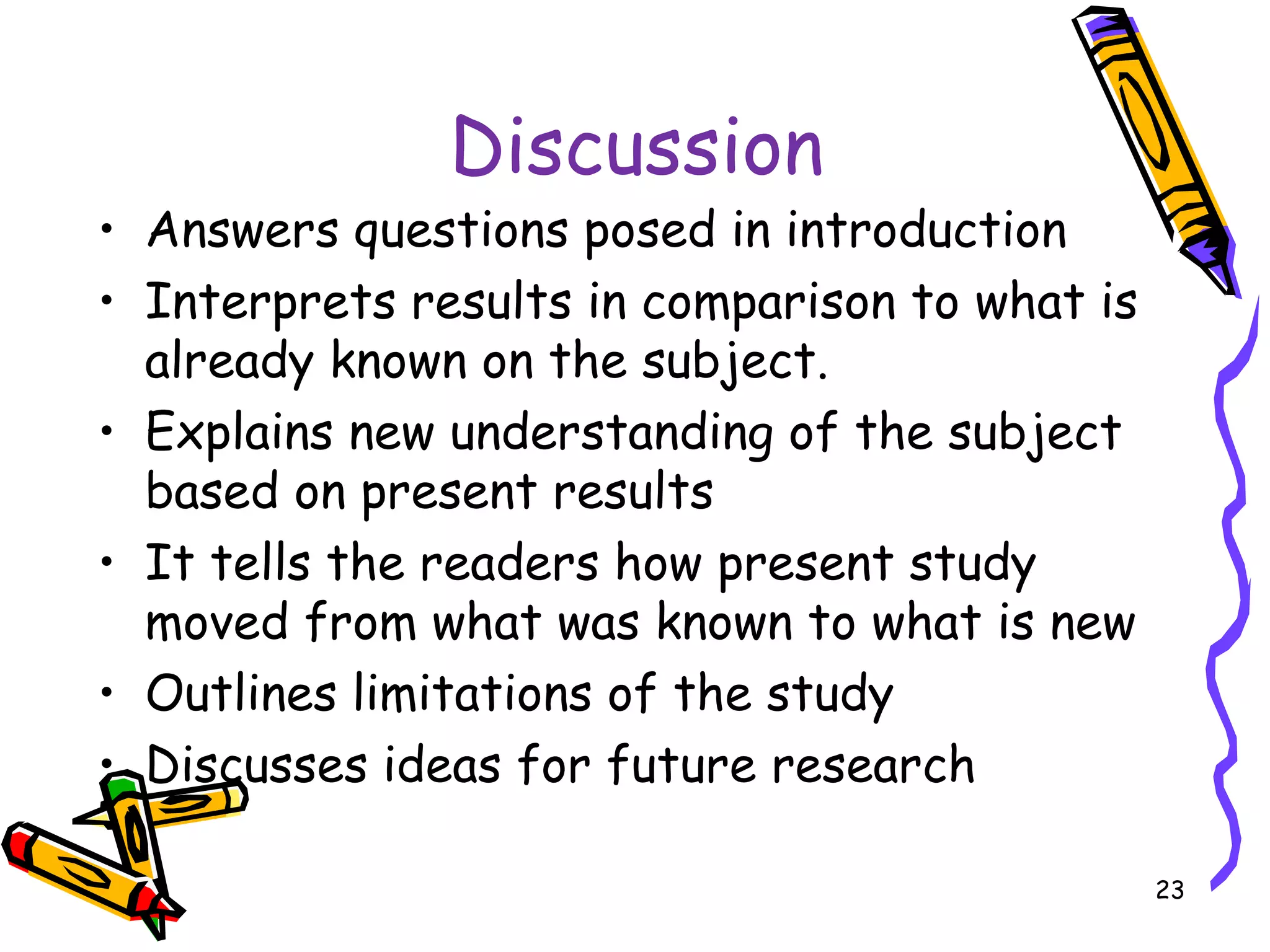
Discussion
• Answers questions posed in introduction
• Interprets results in comparison to what is
already known on the subject.
• Explains new understanding of the subject
based on present results
• It tells the readers how present study
moved from what was known to what is new
• Outlines limitations of the study
• Discusses ideas for future research
24
Conclusion
• Summary
• Recommendations
25
References
• Complete citations for research cited
• References are listed in alphabetical order
by the first author’s last name
• Citations according to style manual, e.g.,
APA, MLA, Chicago, etc.
Author!!!
26
Thanks for your patience

Writing Research Paper

  • 1.
    1 Writing Research PaperWritingResearch Paper Miss. Nishu Kanwar BhatiMiss. Nishu Kanwar Bhati Ph.D ScholarPh.D Scholar Dept. HECMDept. HECM
  • 2.
    2 Contents • What isa research paper • Goals in writing a research paper • Steps in writing a research paper • Structure of a research paper
  • 3.
    4 Goals… To disseminate one’sresearch and findings competently to a wider audience. To contribute to the body of knowledge in a particular field. To exchange information, facts and ideas, current and important in the specialization/discipline. To earn recognition from peers and experts in the field for one’s scientific acumen. To derive personal satisfaction. It is a stimulus towards mastery in a specific areas of specialization. It places the research finding in a permanent record. To fulfill mandatory requirements in one’s professional life.
  • 4.
    5 Steps in writinga research paper
  • 5.
    6 Criteria for journalselection • Referring system • Citation scores • Circulation • Journal type • Time lag • Reputation of editors • Professional vs. commercial ownership • Quality of production
  • 6.
    Structure of aResearch Paper While academic disciplines vary on the exact format and style of journal articles in their field, most articles contain similar content and are divided in parts that typically follow the same logical flow.  Following is a list of the parts commonly found in research articles.   Title Abstract Introduction Literature Review Methods Results Discussion/Conclusion References/Bibliography
  • 7.
    8 Title The title shouldbe specific and indicate the problem the research project addresses using keywords that will be helpful in literature reviews in the future. •Clear and explanatory title •Brief and concise
  • 8.
    10 Abstract • The abstractis used by readers to quickly review the overall content of the paper. • Purpose of the study - hypothesis, overall question, objective • Results, including specific data - if the results are quantitative in nature, report quantitative data; results of any statistical analysis shoud be reported • Important conclusions or questions that follow from the experiment(s)
  • 9.
    Style • Single paragraph,and concise • As a summary of work done, it is always written in past tense • An abstract should stand on its own, and not refer to any other part of the paper such as a figure or table • Focus on summarizing results - limit background information to a sentence or two, if absolutely necessary • What you report in an abstract must be consistent with what you reported in the paper • Correct spelling, clarity of sentences and phrases, and proper reporting of quantities (proper units, significant figures) are just as important in an abstract as they are anywhere else 11
  • 10.
    13 Introduction The introduction beginsby introducing the broad overall topic and providing basic background information.  It then narrows down to the specific research question relating to this topic.
  • 11.
    • Describe theimportance (significance) of the study • Provide a rationale. State your specific hypothesis (es) or objective(s), and describe the reasoning that led you to select them. • Very briefly describe the experimental design and how it accomplished the stated objectives. 14
  • 12.
    15 Style: Use past tenseexcept when referring to established facts. After all, the paper will be submitted after all of the work is completed. Organize your ideas, making one major point with each paragraph. If you make the four points listed above, you will need a minimum of four paragraphs. Present background information only as needed in order support a position. The reader does not want to read everything you know about a subject. State the hypothesis/objective precisely - do not oversimplify. As always, pay attention to spelling, clarity and appropriateness of sentences and phrases.
  • 13.
    16 Literature review • Establishescontext of the study by providing a brief and balanced review of pertinent published literature available on subject. • General to specific • Name-date citations
  • 14.
    17 Method • Study design •Participants and their characteristics • When and where study conducted • Sampling method and size • Variables measured • Method of collecting data • How data analyzed: Statistical procedures used
  • 15.
    18 Results • Objective presentationof key findings without interpretation • Orderly, logical sequence using text and illustrations (figures/tables)
  • 16.
    19 Tips in writingresults • Do not reiterate each value or finding from the table – only mention salient points • Do not present the same data in table and figure: this is redundant • Do not report raw data values when they can be summarized as means, percent, etc. • Statistical test and value should be mentioned • Always mention appropriate units with data • Only present percentages to one decimal point
  • 17.
    Figures and tables •Either place figures and tables within the text of the result, or include them in the back of the report (following Literature Cited) - do one or the other • If you place figures and tables at the end of the report, make sure they are clearly distinguished from any attached appendix materials, such as raw data • Regardless of placement, each figure must be numbered consecutively and complete with caption (caption goes under the figure) • Regardless of placement, each table must be titled, numbered consecutively and complete with heading (title with description goes above the table) • Each figure and table must be sufficiently complete that it could stand on its own, separate from text 20
  • 18.
    21 Tables Grade Number of Viewing Hours ReadingLevel First Grade 5 - 10 hours 2.8 Second Grade 16 - 20 hours 2.6 Third Grade 11 - 15 hours 4.2 Note. Reading level refers to average reading level for students in that year and month of school. Table 2 Reading Level for First Through Third Graders Children
  • 19.
    22 Figures Figure 2. Piechart of total sales Computing Systems 42% Imaging and Printing Systems 41% IT Services 14% Other 3%
  • 20.
    23 Discussion • Answers questionsposed in introduction • Interprets results in comparison to what is already known on the subject. • Explains new understanding of the subject based on present results • It tells the readers how present study moved from what was known to what is new • Outlines limitations of the study • Discusses ideas for future research
  • 21.
  • 22.
    25 References • Complete citationsfor research cited • References are listed in alphabetical order by the first author’s last name • Citations according to style manual, e.g., APA, MLA, Chicago, etc. Author!!!
  • 23.