How Antibiotic
Resistance Impacts
Society
So why does it matter?
Why it Matters
 When bacteria become resistant to our current
treatments it threatens our ability to treat common
infectious disease
 This can have many adverse effects making it a global
concern
Resistance Can Kill
 As the bacteria do not respond to normal treatment it
can lead to people being unwell for longer with higher
chances of death occurring
 An example where this is MRSA (methicillin resistant
Staphylococcus aureus)
 People infected with this resistant strain are 64%
more likely to die from the infection
Resistant Reduces Infectious
Disease Control
 Due to the reduction in treatment efficacy it means
people stay infectious for a longer period of time
 The longer someone is infectious for the greater the
risk there is of spreading resistant bacteria
 This can be seen in one of the strains of malaria
(plasmodium falciparum) which has become resistant
and is spreading in the Greater Mekong region
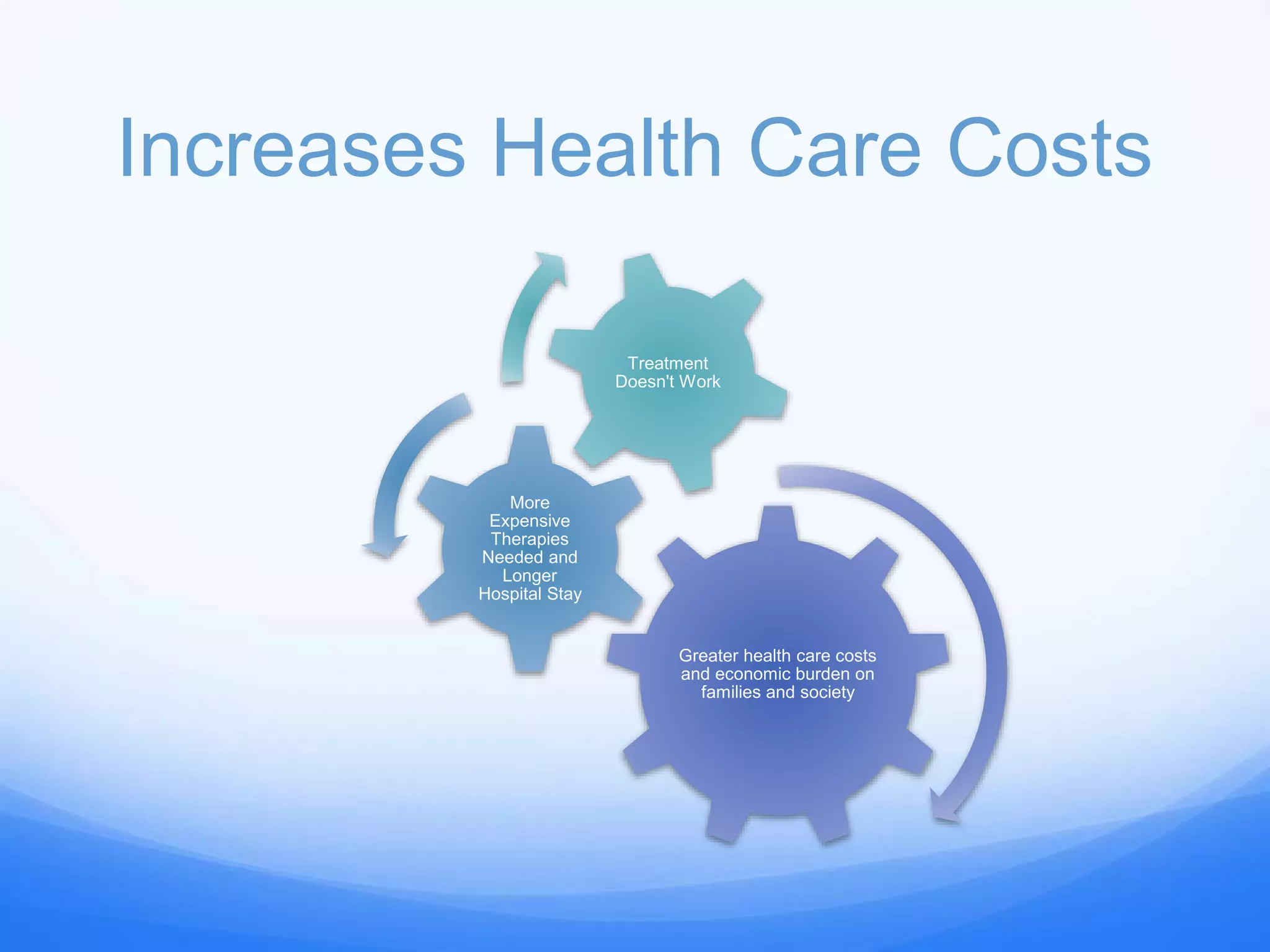
Increases Health Care Costs
Greater health care costs
and economic burden on
families and society
More
Expensive
Therapies
Needed and
Longer
Hospital Stay
Treatment
Doesn't Work
Resistance Reduces Health
Care Advances
 By having resistant strains some medical procedures
can be made more complicated
 Things like organ transplants, cancer chemotherapy
and major surgery would not be possible
 These procedures reduces someone's natural body
defenses and if risk of infection with a resistant strain is
too great they would no longer be a viable option
Some Data From WHO
(World Health Organization)
 Treatment failure to the drug of last resort for gonorrhoea (third-generation
cephalosporins) has been confirmed in several countries. Untreatable
gonococcal infections result in increased rates of illness and complications,
such as infertility, adverse pregnancy outcomes and neonatal blindness, and
has the potential to reverse the gains made in the control of this sexually
transmitted infection.
 Resistance to one of the most widely used antibacterial drugs for the oral
treatment of urinary tract infections caused by E. coli (fluoroquinolones) is very
widespread.
 Resistance to first-line drugs to treat infections caused by Staphlylococcus
aureus is also widespread.
 Resistance to the treatment of last resort for life-threatening infections caused
by common intestinal bacteria has spread to all regions of the world. Key tools
to tackle antibiotic resistance reveal considerable gaps. In many countries,
they do not even seem to exist.
That’s All Folks
 So hopefully you realize that antibiotic resistance can
be a costly killer which can severely impact they ways
we treat infection
 To see get more information please see the TED Talks
Posted

Why it is important

  • 1.
  • 2.
    Why it Matters When bacteria become resistant to our current treatments it threatens our ability to treat common infectious disease  This can have many adverse effects making it a global concern
  • 3.
    Resistance Can Kill As the bacteria do not respond to normal treatment it can lead to people being unwell for longer with higher chances of death occurring  An example where this is MRSA (methicillin resistant Staphylococcus aureus)  People infected with this resistant strain are 64% more likely to die from the infection
  • 4.
    Resistant Reduces Infectious DiseaseControl  Due to the reduction in treatment efficacy it means people stay infectious for a longer period of time  The longer someone is infectious for the greater the risk there is of spreading resistant bacteria  This can be seen in one of the strains of malaria (plasmodium falciparum) which has become resistant and is spreading in the Greater Mekong region
  • 5.
    Increases Health CareCosts Greater health care costs and economic burden on families and society More Expensive Therapies Needed and Longer Hospital Stay Treatment Doesn't Work
  • 6.
    Resistance Reduces Health CareAdvances  By having resistant strains some medical procedures can be made more complicated  Things like organ transplants, cancer chemotherapy and major surgery would not be possible  These procedures reduces someone's natural body defenses and if risk of infection with a resistant strain is too great they would no longer be a viable option
  • 7.
    Some Data FromWHO (World Health Organization)  Treatment failure to the drug of last resort for gonorrhoea (third-generation cephalosporins) has been confirmed in several countries. Untreatable gonococcal infections result in increased rates of illness and complications, such as infertility, adverse pregnancy outcomes and neonatal blindness, and has the potential to reverse the gains made in the control of this sexually transmitted infection.  Resistance to one of the most widely used antibacterial drugs for the oral treatment of urinary tract infections caused by E. coli (fluoroquinolones) is very widespread.  Resistance to first-line drugs to treat infections caused by Staphlylococcus aureus is also widespread.  Resistance to the treatment of last resort for life-threatening infections caused by common intestinal bacteria has spread to all regions of the world. Key tools to tackle antibiotic resistance reveal considerable gaps. In many countries, they do not even seem to exist.
  • 8.
    That’s All Folks So hopefully you realize that antibiotic resistance can be a costly killer which can severely impact they ways we treat infection  To see get more information please see the TED Talks Posted