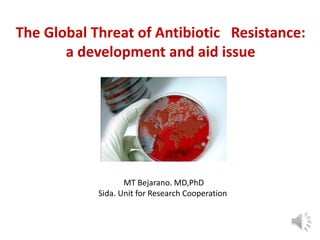
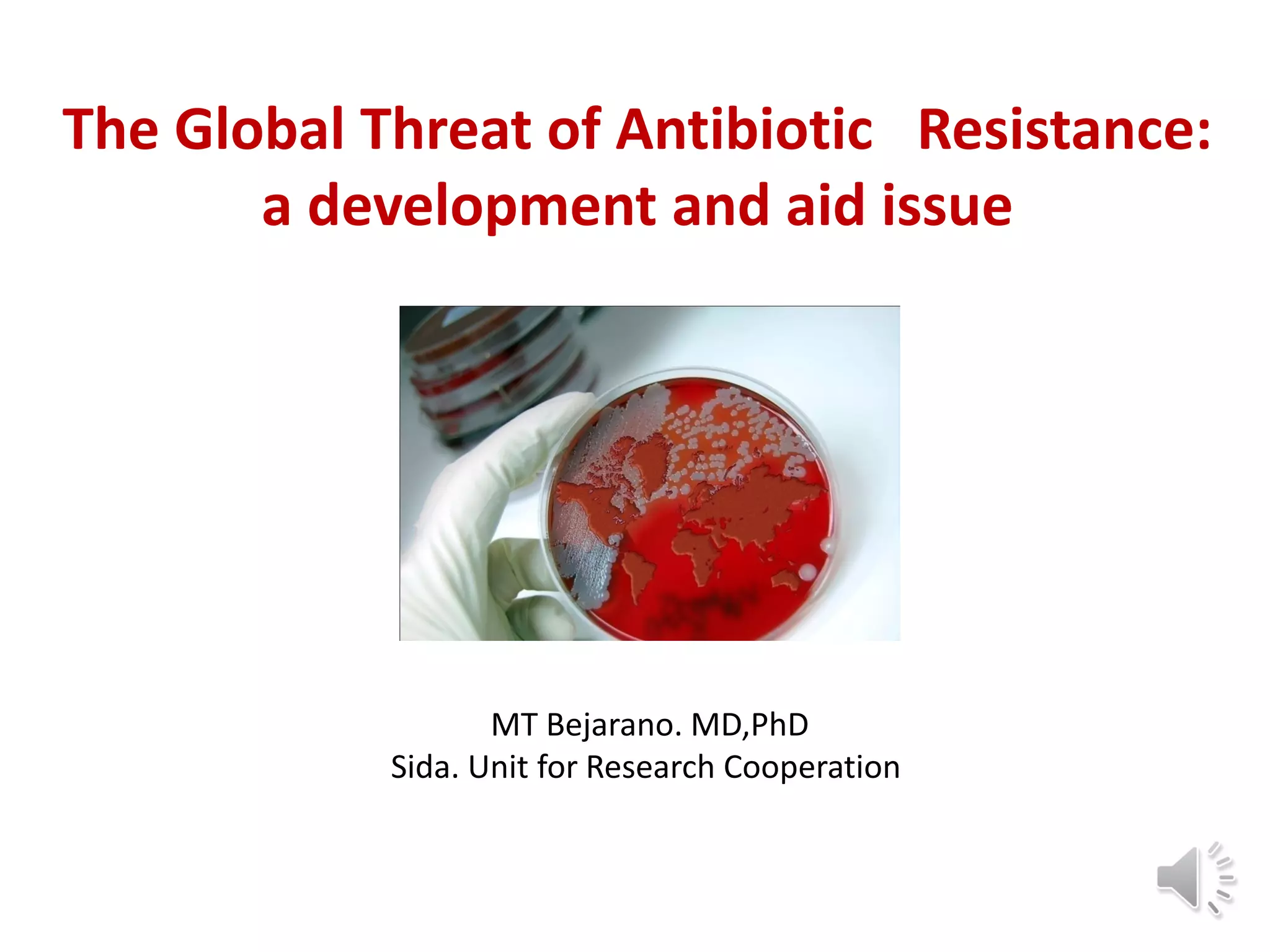
The Global Threat of Antibiotic Resistance:
a development and aid issue
MT Bejarano. MD,PhD
Sida. Unit for Research Cooperation
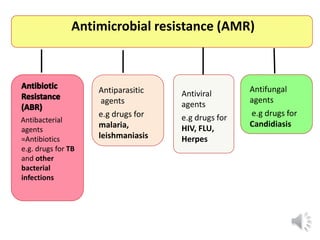
Antimicrobial resistance (AMR)
Antiviral
agents
e.g drugs for
HIV, FLU,
Herpes
Antiparasitic
agents
e.g drugs for
malaria,
leishmaniasis
Antibacterial
agents
=Antibiotics
e.g. drugs for TB
and other
bacterial
infections
Antifungal
agents
e.g drugs for
Candidiasis
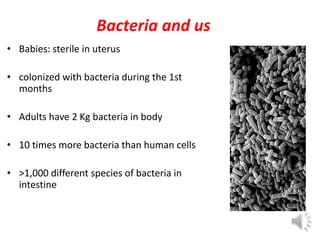
Bacteria and us
• Babies: sterile in uterus
• colonized with bacteria during the 1st
months
• Adults have 2 Kg bacteria in body
• 10 times more bacteria than human cells
• >1,000 different species of bacteria in
intestine
What is Antibiotic resistance?
The ability of bacteria to avoid the harmful
effects of an antibiotic
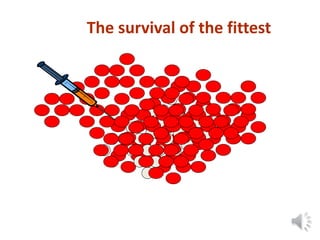
The survival of the fittest
ANTIBIOTICS
• Underpin health care
• A non-renewable resource
• Most falsified medicines (28% global falsified
medicines)
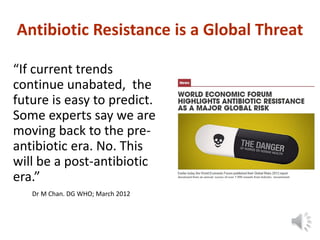
Antibiotic Resistance is a Global Threat
“If current trends
continue unabated, the
future is easy to predict.
Some experts say we are
moving back to the pre-
antibiotic era. No. This
will be a post-antibiotic
era.”
Dr M Chan. DG WHO; March 2012
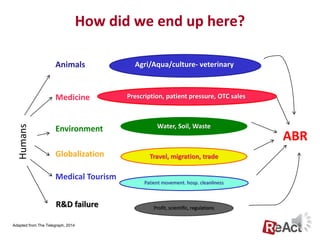
How did we end up here?
Agri/Aqua/culture- veterinary
Prescription, patient pressure, OTC sales
Water, Soil, Waste
Travel, migration, trade
Patient movement. hosp. cleanliness
Profit, scientific, regulations
Humans
Animals
Medicine
Environment
Globalization
Medical Tourism
R&D failure
ABR
Adapted from The Telegraph, 2014
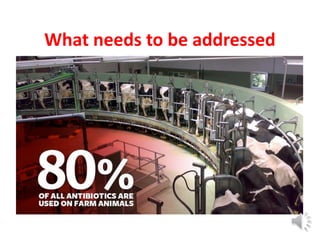
What needs to be addressed
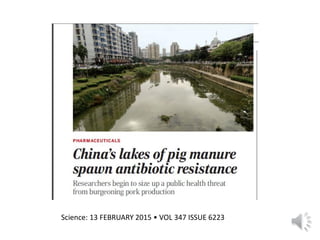
Science: 13 FEBRUARY 2015 • VOL 347 ISSUE 6223
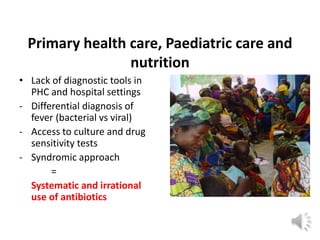
Primary health care, Paediatric care and
nutrition
• Lack of diagnostic tools in
PHC and hospital settings
- Differential diagnosis of
fever (bacterial vs viral)
- Access to culture and drug
sensitivity tests
- Syndromic approach
=
Systematic and irrational
use of antibiotics
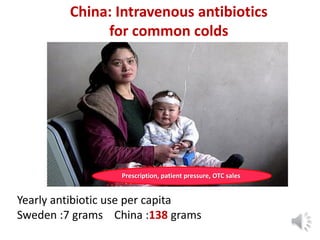
China: Intravenous antibiotics
for common colds
Yearly antibiotic use per capita
Sweden :7 grams China :138 grams
Prescription, patient pressure, OTC sales
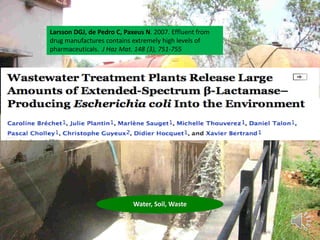
Larsson DGJ, de Pedro C, Paxeus N. 2007. Effluent from
drug manufactures contains extremely high levels of
pharmaceuticals. J Haz Mat. 148 (3), 751-755
Water, Soil, Waste
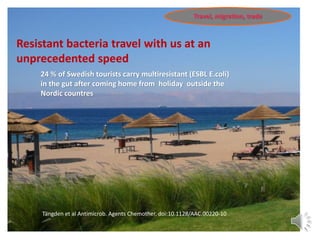
24 % of Swedish tourists carry multiresistant (ESBL E.coli)
in the gut after coming home from holiday outside the
Nordic countres
Resistant bacteria travel with us at an
unprecedented speed
Tängden et al Antimicrob. Agents Chemother. doi:10.1128/AAC.00220-10
Travel, migration, trade
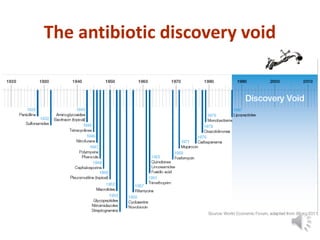
The antibiotic discovery void
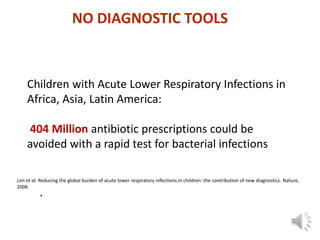
Children with Acute Lower Respiratory Infections in
Africa, Asia, Latin America:
404 Million antibiotic prescriptions could be
avoided with a rapid test for bacterial infections
.
Lim et al. Reducing the global burden of acute lower respiratory infections in children: the contribution of new diagnostics. Nature,
2006.
NO DIAGNOSTIC TOOLS
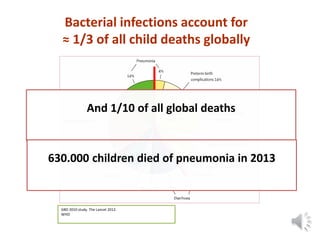
GBD 2010 study. The Lancet 2012.
WHO
And 1/10 of all global deaths
Bacterial infections account for
≈ 1/3 of all child deaths globally
630.000 children died of pneumonia in 2013
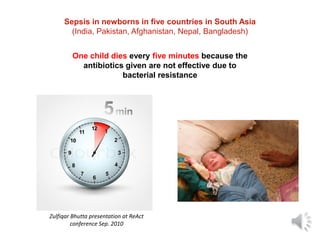
Sepsis in newborns in five countries in South Asia
(India, Pakistan, Afghanistan, Nepal, Bangladesh)
One child dies every five minutes because the
antibiotics given are not effective due to
bacterial resistance
Zulfiqar Bhutta presentation at ReAct
conference Sep. 2010
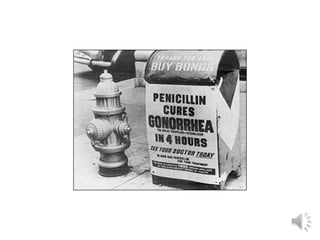
“It is anticipated to be only a
matter of time before
gonococci with full
resistance to the third-
generation extended
spectrum cephalosporins
emerge and spread
internationally.
Consequently, gonorrhoea
may become untreatable
unless new drugs become
available.”
WHO AMR surveillance report 2014
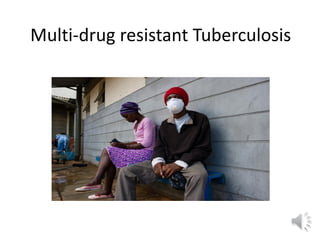
Multi-drug resistant Tuberculosis
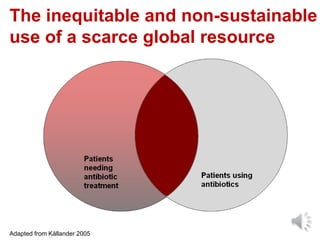
Adapted from Källander 2005
The inequitable and non-sustainable
use of a scarce global resource
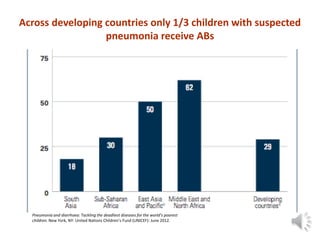
Across developing countries only 1/3 children with suspected
pneumonia receive ABs
Pneumonia and diarrhoea: Tackling the deadliest diseases for the world’s poorest
children. New York, NY: United Nations Children’s Fund (UNICEF): June 2012.
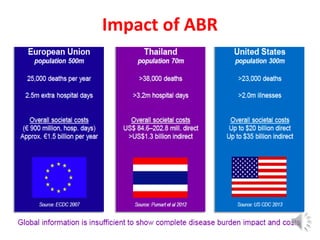
Impact of ABR
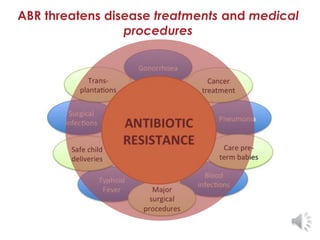
ABR threatens disease treatments and medical
procedures
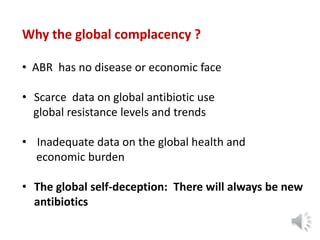
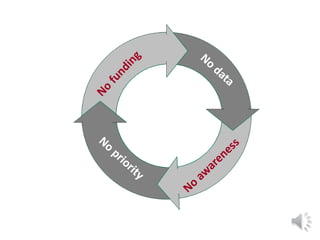
Why the global complacency ?
• ABR has no disease or economic face
• Scarce data on global antibiotic use
global resistance levels and trends
• Inadequate data on the global health and
economic burden
• The global self-deception: There will always be new
antibiotics
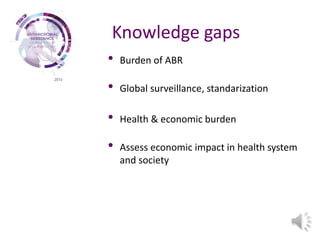
Knowledge gaps
• Burden of ABR
• Global surveillance, standarization
• Health & economic burden
• Assess economic impact in health system
and society
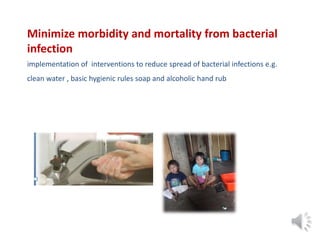
Minimize morbidity and mortality from bacterial
infection
implementation of interventions to reduce spread of bacterial infections e.g.
clean water , basic hygienic rules soap and alcoholic hand rub
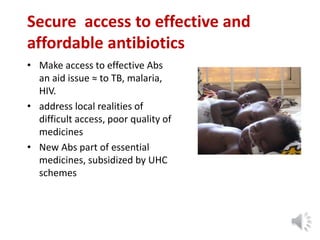
Secure access to effective and
affordable antibiotics
• Make access to effective Abs
an aid issue ≈ to TB, malaria,
HIV.
• address local realities of
difficult access, poor quality of
medicines
• New Abs part of essential
medicines, subsidized by UHC
schemes
Support countries in developing national
coordinated policies and:
• Strengthen surveillance capacity
• Support regulatory authorities
• Support & institutionalize data collection of AB prescribing,
dispensing and sales
• Educational and regulatory interventions in the health care
system for rational prescribing of antibiotics
• Major changes in knowledge, understanding and
perception of antibiotics to reduce demand.
Reframing the issue
• Health and global security
• Access to effective antibiotics
• Antibiotics are lifesaving global public good not a
commercial commodity
• Essential for any health system
• Universal health coverage
• Sustainable development
• Ecology/environment/Onehealth
Restoring
balance
Antibiotic resistance will not go away……
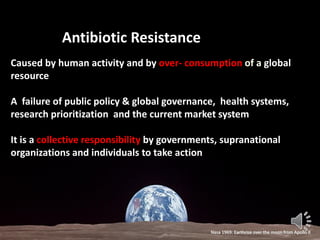
Antibiotic Resistance
Caused by human activity and by over- consumption of a global
resource
A failure of public policy & global governance, health systems,
research prioritization and the current market system
It is a collective responsibility by governments, supranational
organizations and individuals to take action
Nasa 1969: Earthrise over the moon from Apollo II

Antibiotic Resistance as a development and aid issue

  • 1.
    The Global Threatof Antibiotic Resistance: a development and aid issue MT Bejarano. MD,PhD Sida. Unit for Research Cooperation
  • 2.
    Antimicrobial resistance (AMR) Antiviral agents e.gdrugs for HIV, FLU, Herpes Antiparasitic agents e.g drugs for malaria, leishmaniasis Antibacterial agents =Antibiotics e.g. drugs for TB and other bacterial infections Antifungal agents e.g drugs for Candidiasis
  • 3.
    Bacteria and us •Babies: sterile in uterus • colonized with bacteria during the 1st months • Adults have 2 Kg bacteria in body • 10 times more bacteria than human cells • >1,000 different species of bacteria in intestine
  • 4.
    What is Antibioticresistance? The ability of bacteria to avoid the harmful effects of an antibiotic
  • 5.
    The survival ofthe fittest
  • 6.
    ANTIBIOTICS • Underpin healthcare • A non-renewable resource • Most falsified medicines (28% global falsified medicines)
  • 7.
    Antibiotic Resistance isa Global Threat “If current trends continue unabated, the future is easy to predict. Some experts say we are moving back to the pre- antibiotic era. No. This will be a post-antibiotic era.” Dr M Chan. DG WHO; March 2012
  • 8.
    How did weend up here? Agri/Aqua/culture- veterinary Prescription, patient pressure, OTC sales Water, Soil, Waste Travel, migration, trade Patient movement. hosp. cleanliness Profit, scientific, regulations Humans Animals Medicine Environment Globalization Medical Tourism R&D failure ABR Adapted from The Telegraph, 2014
  • 9.
    What needs tobe addressed
  • 10.
    Science: 13 FEBRUARY2015 • VOL 347 ISSUE 6223
  • 11.
    Primary health care,Paediatric care and nutrition • Lack of diagnostic tools in PHC and hospital settings - Differential diagnosis of fever (bacterial vs viral) - Access to culture and drug sensitivity tests - Syndromic approach = Systematic and irrational use of antibiotics
  • 12.
    China: Intravenous antibiotics forcommon colds Yearly antibiotic use per capita Sweden :7 grams China :138 grams Prescription, patient pressure, OTC sales
  • 14.
    Larsson DGJ, dePedro C, Paxeus N. 2007. Effluent from drug manufactures contains extremely high levels of pharmaceuticals. J Haz Mat. 148 (3), 751-755 Water, Soil, Waste
  • 15.
    24 % ofSwedish tourists carry multiresistant (ESBL E.coli) in the gut after coming home from holiday outside the Nordic countres Resistant bacteria travel with us at an unprecedented speed Tängden et al Antimicrob. Agents Chemother. doi:10.1128/AAC.00220-10 Travel, migration, trade
  • 16.
  • 17.
    Children with AcuteLower Respiratory Infections in Africa, Asia, Latin America: 404 Million antibiotic prescriptions could be avoided with a rapid test for bacterial infections . Lim et al. Reducing the global burden of acute lower respiratory infections in children: the contribution of new diagnostics. Nature, 2006. NO DIAGNOSTIC TOOLS
  • 18.
    GBD 2010 study.The Lancet 2012. WHO And 1/10 of all global deaths Bacterial infections account for ≈ 1/3 of all child deaths globally 630.000 children died of pneumonia in 2013
  • 19.
    Sepsis in newbornsin five countries in South Asia (India, Pakistan, Afghanistan, Nepal, Bangladesh) One child dies every five minutes because the antibiotics given are not effective due to bacterial resistance Zulfiqar Bhutta presentation at ReAct conference Sep. 2010
  • 21.
    “It is anticipatedto be only a matter of time before gonococci with full resistance to the third- generation extended spectrum cephalosporins emerge and spread internationally. Consequently, gonorrhoea may become untreatable unless new drugs become available.” WHO AMR surveillance report 2014
  • 22.
  • 23.
    Adapted from Källander2005 The inequitable and non-sustainable use of a scarce global resource
  • 24.
    Across developing countriesonly 1/3 children with suspected pneumonia receive ABs Pneumonia and diarrhoea: Tackling the deadliest diseases for the world’s poorest children. New York, NY: United Nations Children’s Fund (UNICEF): June 2012.
  • 26.
  • 27.
    ABR threatens diseasetreatments and medical procedures
  • 29.
    Why the globalcomplacency ? • ABR has no disease or economic face • Scarce data on global antibiotic use global resistance levels and trends • Inadequate data on the global health and economic burden • The global self-deception: There will always be new antibiotics
  • 32.
    Knowledge gaps • Burdenof ABR • Global surveillance, standarization • Health & economic burden • Assess economic impact in health system and society
  • 33.
    Minimize morbidity andmortality from bacterial infection implementation of interventions to reduce spread of bacterial infections e.g. clean water , basic hygienic rules soap and alcoholic hand rub
  • 34.
    Secure access toeffective and affordable antibiotics • Make access to effective Abs an aid issue ≈ to TB, malaria, HIV. • address local realities of difficult access, poor quality of medicines • New Abs part of essential medicines, subsidized by UHC schemes
  • 35.
    Support countries indeveloping national coordinated policies and: • Strengthen surveillance capacity • Support regulatory authorities • Support & institutionalize data collection of AB prescribing, dispensing and sales • Educational and regulatory interventions in the health care system for rational prescribing of antibiotics • Major changes in knowledge, understanding and perception of antibiotics to reduce demand.
  • 36.
    Reframing the issue •Health and global security • Access to effective antibiotics • Antibiotics are lifesaving global public good not a commercial commodity • Essential for any health system • Universal health coverage • Sustainable development • Ecology/environment/Onehealth
  • 38.
  • 39.
    Antibiotic Resistance Caused byhuman activity and by over- consumption of a global resource A failure of public policy & global governance, health systems, research prioritization and the current market system It is a collective responsibility by governments, supranational organizations and individuals to take action Nasa 1969: Earthrise over the moon from Apollo II