INDUSTRIAL HYGIENE
What is Industrial Hygiene?
• Industrial hygiene is the science of
anticipating, recognizing, evaluating, and
controlling workplace conditions that may
cause worker’s injury or illness.
• Industrial hygienists use environmental
monitoring and analytical methods to
detect the extent of worker exposure and
employ engineering, and work practice
controls, and other methods to control
potential health hazards.
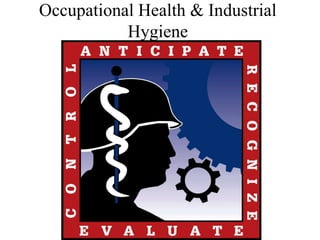
Occupational Health & Industrial
Hygiene
Recognition
• Recognition of occupational health hazards
involves knowledge and understanding of
the different types of hazards and the effect
of these hazards upon the worker’s health.
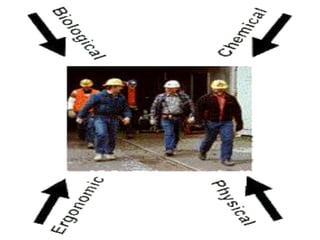
• Hazards can be grouped into four general
categories: Chemical hazards, physical
hazards, biological hazards, and ergonomic
hazards.
Chemical Hazards
• The majority of the occupational health
hazards arise from inhaling chemical agents
in the form of vapors, gases, dusts, fumes,
and mists, or by skin contact with these
materials.
• The degree of risk of handling a given
substance depends on the magnitude and
duration of exposure.
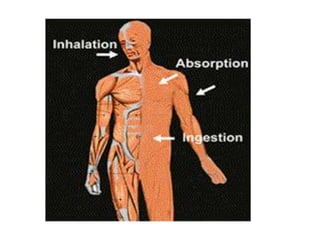
Routes of Entry
• In order for a harmful agent to exert its
toxic effect it must come into contact with a
body cell, and must enter the body through
• Inhalation (breathing)
• Absorption (skin)
• Ingestion (eating or drinking)
• Accidental Injection
Types of Air Contaminants
• Air contaminants are commonly classified
as ether:
• 1- Particulate Contaminants
• 2- Gas and Vapor Contaminants
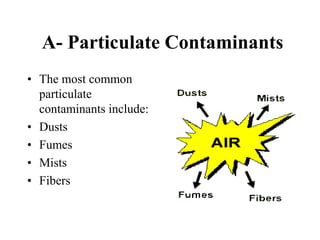
A- Particulate Contaminants
• The most common
particulate
contaminants include:
• Dusts
• Fumes
• Mists
• Fibers
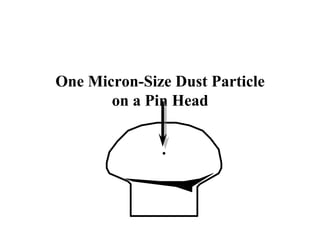
One Micron-Size Dust Particle
on a Pin Head
Dusts
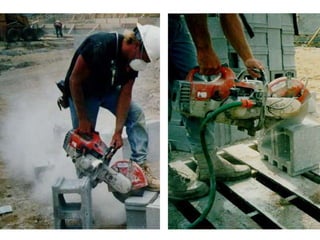
• Solid particles generated by handling,
crushing, grinding, rapid impact, detonation
and decrepitation of organic or inorganic
materials.
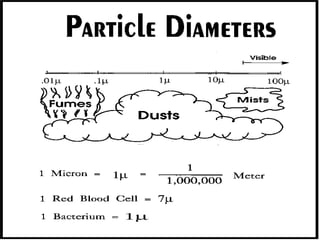
• Dust (solid particles of size from 0.1 to 25
micrometers).
• Particles 10 micron in diameter and larger are
known as non – respirable.
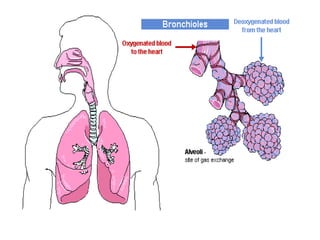
• Particles less than 10 micron in diameter are
known as respirable. (can reach the alveoli
sacs)
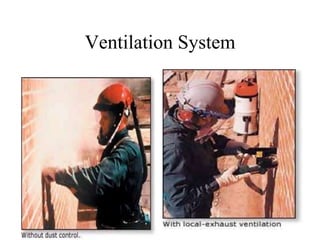
Ventilation System
Fumes
• Formed when the material from a
volatilized solid condenses in cool air.
• Fine and usually less than 1 micron in dia.
• Gases and vapors are not fumes.
• Welding, metalizing, and other operations
involving vapors from molten metals may
produce fumes.
Mists
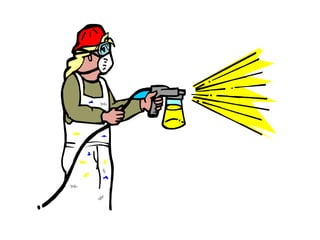
• These are suspended liquid droplets
generated by condensation of liquids from
the vapor back to liquid state or by breaking
up a liquid into a dispersed state, such as by
splashing or atomizing.
• Examples:
• Acid mists from electroplating, spray mist
from spray finishing operations.
Fibers
• These are solid particles having a slender,
elongated structure with length several
times as great as their diameter.
• Examples:
• Asbestos, fiberglass.
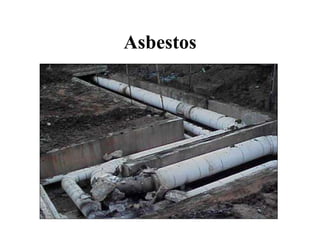
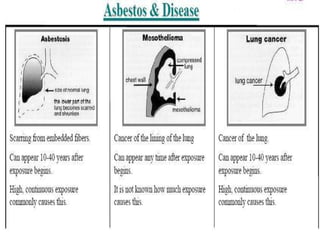
ASBESTOS
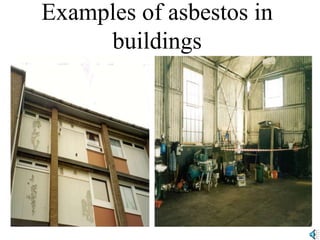
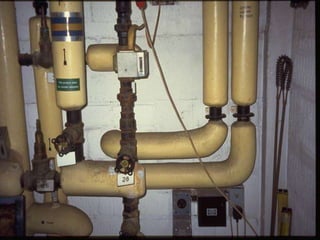
Examples of asbestos in
buildings
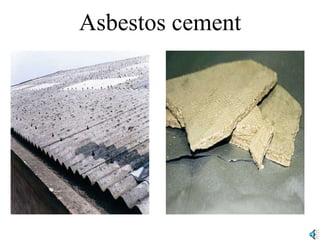
Asbestos cement
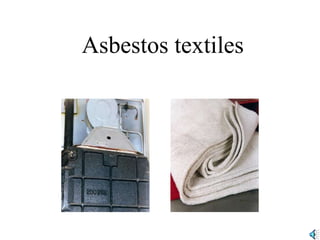
Asbestos textiles
Asbestos
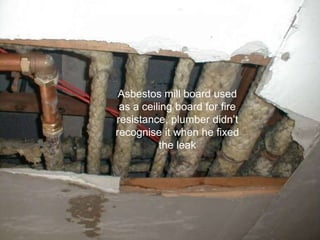
Asbestos mill board used
as a ceiling board for fire
resistance, plumber didn’t
recognise it when he fixed
the leak
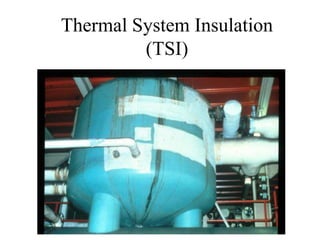
Thermal System Insulation
(TSI)
B- Gas and Vapor Contaminants
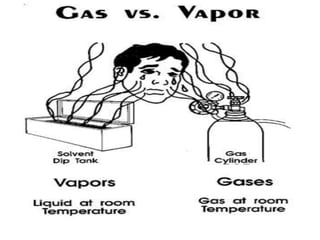
• Gases: Are formless fluids that expand to
occupy the space or enclosure in which they
are confined.
• Vapors: These are the volatile form of
substances that are normally in the solid or
liquid state at room temp. and pressure.
(organic solvents)
Units of Concentrations
• PPM: parts per million parts of
contaminated air on a volumetric basis. (gas
and vapor)
• Mg/m³: milligrams of substance per cubic
meter of air. (dust, metal fumes)
• F/cc: number of fibers per cubic centimeter
of air (asbestos)
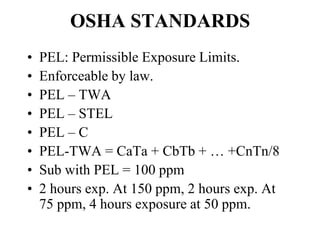
OSHA STANDARDS
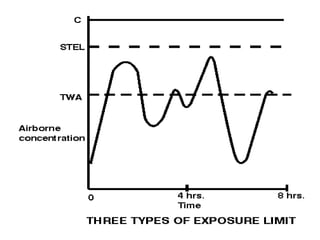
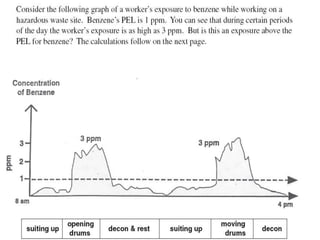
• PEL: Permissible Exposure Limits.
• Enforceable by law.
• PEL – TWA
• PEL – STEL
• PEL – C
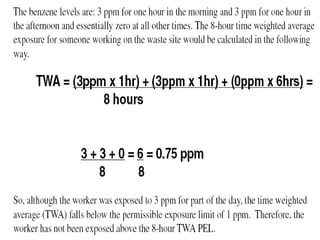
• PEL-TWA = CaTa + CbTb + … +CnTn/8
• Sub with PEL = 100 ppm
• 2 hours exp. At 150 ppm, 2 hours exp. At
75 ppm, 4 hours exposure at 50 ppm.
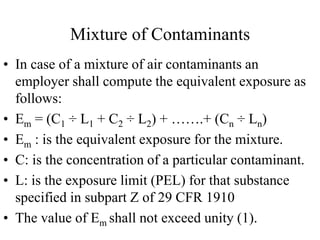
Mixture of Contaminants
• In case of a mixture of air contaminants an
employer shall compute the equivalent exposure as
follows:
• Em = (C1 ÷ L1 + C2 ÷ L2) + …….+ (Cn ÷ Ln)
• Em : is the equivalent exposure for the mixture.
• C: is the concentration of a particular contaminant.
• L: is the exposure limit (PEL) for that substance
specified in subpart Z of 29 CFR 1910
• The value of Em shall not exceed unity (1).
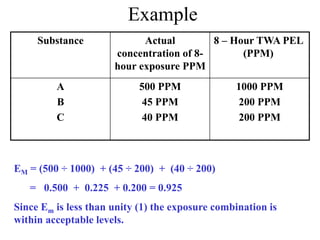
Example
8 – Hour TWA PEL
(PPM)
Actual
concentration of 8-
hour exposure PPM
Substance
1000 PPM
200 PPM
200 PPM
500 PPM
45 PPM
40 PPM
A
B
C
EM = (500 ÷ 1000) + (45 ÷ 200) + (40 ÷ 200)
= 0.500 + 0.225 + 0.200 = 0.925
Since Em is less than unity (1) the exposure combination is
within acceptable levels.
IDLH
•
Immediately
Dangerous to Life
and Health
Physical Hazards
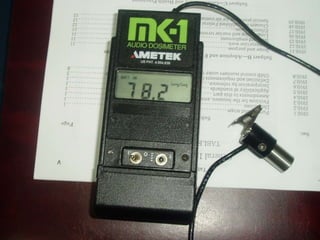
• Noise
• Radiation (Ionizing Radiation + Non-
ionizing radiation)
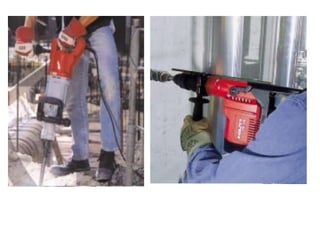
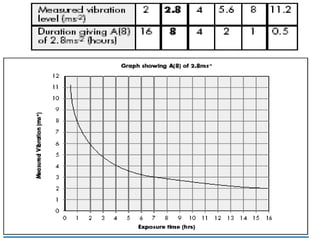
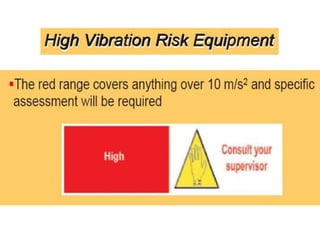
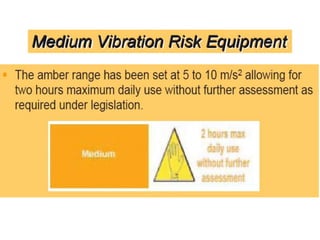
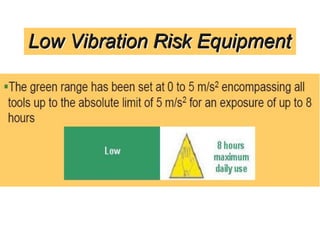
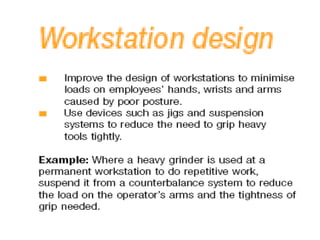
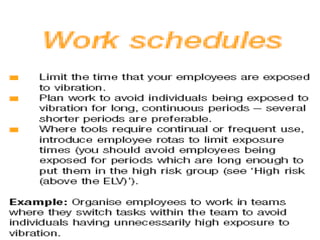
• Vibration
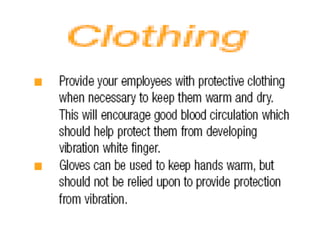
• Temperature Extremes (Hot, cold)
• Pressure
• Illumination
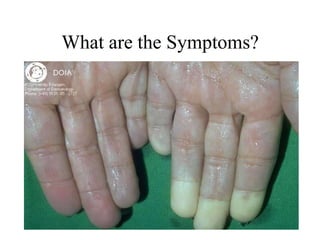
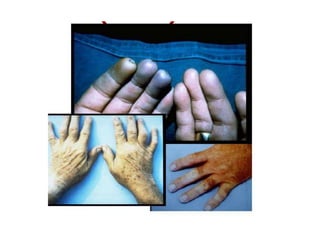
What are the Symptoms?
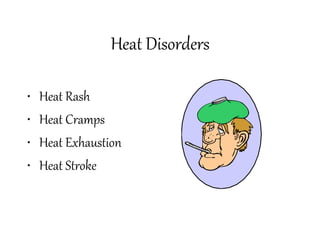
Heat Disorders
• Heat Rash
• Heat Cramps
• Heat Exhaustion
• Heat Stroke
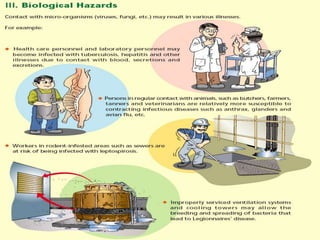
Biological Hazards
• These include bacteria, viruses, fungi, and
other living organisms that can cause acute
and chronic infections by entering the body
either directly or through breaks in the skin.
• Laboratory and medical personnel
• Food and food processing
• Plants or Animals (anthrax)
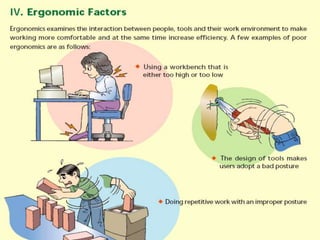
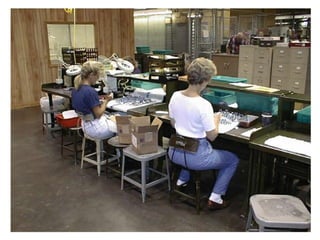
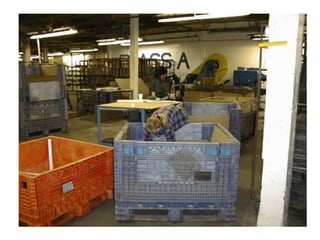
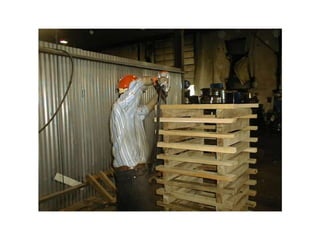
Ergonomics Hazards
• Ergonomics means designing the job to fit
the worker and fitting the worker to the job.
• Stress in muscles, nerves, bones and joints.
• Eye fatigue
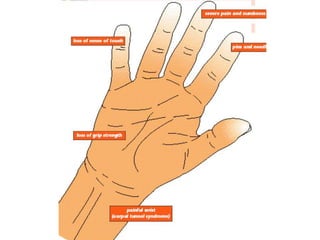
• Carpal Tunnel Syndrome
• Proper Lifting Techniques
EVALUATION
• Degree of the risk present in the workplace
from chemical, physical, biological, and
ergonomics hazards.
• To check if controls of hazards are
operating properly.
• To investigate employee complaints
• To determine compliance.
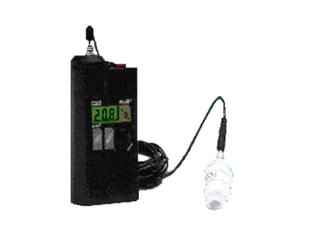
Sampling
• Which employees are exposed to chemicals
and for how long.
• Concentration of chemicals in the
workplace.
• Measuring physical agents
• Biological monitoring (medical analysis)
• Refer to Standards and MSDS
• Recordkeeping
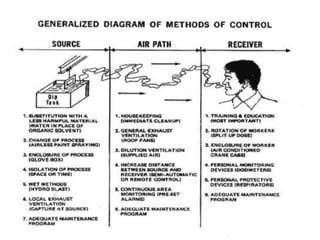
Control
• In occupational safety and health there is a
hierarchy of controls that should be applied
to any hazard.
• The hierarchy is in a descending order from
the control measure which gives the greatest
level of safety.
• They may be used in combination.
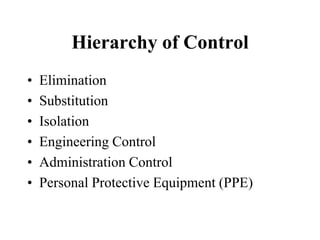
Hierarchy of Control
• Elimination
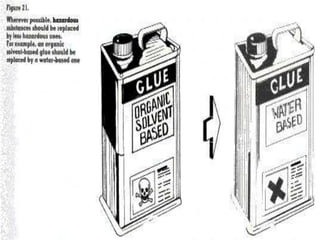
• Substitution
• Isolation
• Engineering Control
• Administration Control
• Personal Protective Equipment (PPE)
3-Industrial Hygiene.ppt

3-Industrial Hygiene.ppt

  • 2.
  • 3.
    What is IndustrialHygiene? • Industrial hygiene is the science of anticipating, recognizing, evaluating, and controlling workplace conditions that may cause worker’s injury or illness. • Industrial hygienists use environmental monitoring and analytical methods to detect the extent of worker exposure and employ engineering, and work practice controls, and other methods to control potential health hazards.
  • 4.
    Occupational Health &Industrial Hygiene
  • 5.
    Recognition • Recognition ofoccupational health hazards involves knowledge and understanding of the different types of hazards and the effect of these hazards upon the worker’s health. • Hazards can be grouped into four general categories: Chemical hazards, physical hazards, biological hazards, and ergonomic hazards.
  • 7.
    Chemical Hazards • Themajority of the occupational health hazards arise from inhaling chemical agents in the form of vapors, gases, dusts, fumes, and mists, or by skin contact with these materials. • The degree of risk of handling a given substance depends on the magnitude and duration of exposure.
  • 8.
    Routes of Entry •In order for a harmful agent to exert its toxic effect it must come into contact with a body cell, and must enter the body through • Inhalation (breathing) • Absorption (skin) • Ingestion (eating or drinking) • Accidental Injection
  • 10.
    Types of AirContaminants • Air contaminants are commonly classified as ether: • 1- Particulate Contaminants • 2- Gas and Vapor Contaminants
  • 11.
    A- Particulate Contaminants •The most common particulate contaminants include: • Dusts • Fumes • Mists • Fibers
  • 13.
    One Micron-Size DustParticle on a Pin Head
  • 14.
    Dusts • Solid particlesgenerated by handling, crushing, grinding, rapid impact, detonation and decrepitation of organic or inorganic materials. • Dust (solid particles of size from 0.1 to 25 micrometers). • Particles 10 micron in diameter and larger are known as non – respirable. • Particles less than 10 micron in diameter are known as respirable. (can reach the alveoli sacs)
  • 18.
  • 19.
    Fumes • Formed whenthe material from a volatilized solid condenses in cool air. • Fine and usually less than 1 micron in dia. • Gases and vapors are not fumes. • Welding, metalizing, and other operations involving vapors from molten metals may produce fumes.
  • 20.
    Mists • These aresuspended liquid droplets generated by condensation of liquids from the vapor back to liquid state or by breaking up a liquid into a dispersed state, such as by splashing or atomizing. • Examples: • Acid mists from electroplating, spray mist from spray finishing operations.
  • 22.
    Fibers • These aresolid particles having a slender, elongated structure with length several times as great as their diameter. • Examples: • Asbestos, fiberglass.
  • 23.
  • 24.
  • 25.
  • 26.
  • 27.
  • 28.
    Asbestos mill boardused as a ceiling board for fire resistance, plumber didn’t recognise it when he fixed the leak
  • 30.
  • 32.
    B- Gas andVapor Contaminants • Gases: Are formless fluids that expand to occupy the space or enclosure in which they are confined. • Vapors: These are the volatile form of substances that are normally in the solid or liquid state at room temp. and pressure. (organic solvents)
  • 34.
    Units of Concentrations •PPM: parts per million parts of contaminated air on a volumetric basis. (gas and vapor) • Mg/m³: milligrams of substance per cubic meter of air. (dust, metal fumes) • F/cc: number of fibers per cubic centimeter of air (asbestos)
  • 35.
    OSHA STANDARDS • PEL:Permissible Exposure Limits. • Enforceable by law. • PEL – TWA • PEL – STEL • PEL – C • PEL-TWA = CaTa + CbTb + … +CnTn/8 • Sub with PEL = 100 ppm • 2 hours exp. At 150 ppm, 2 hours exp. At 75 ppm, 4 hours exposure at 50 ppm.
  • 39.
    Mixture of Contaminants •In case of a mixture of air contaminants an employer shall compute the equivalent exposure as follows: • Em = (C1 ÷ L1 + C2 ÷ L2) + …….+ (Cn ÷ Ln) • Em : is the equivalent exposure for the mixture. • C: is the concentration of a particular contaminant. • L: is the exposure limit (PEL) for that substance specified in subpart Z of 29 CFR 1910 • The value of Em shall not exceed unity (1).
  • 40.
    Example 8 – HourTWA PEL (PPM) Actual concentration of 8- hour exposure PPM Substance 1000 PPM 200 PPM 200 PPM 500 PPM 45 PPM 40 PPM A B C EM = (500 ÷ 1000) + (45 ÷ 200) + (40 ÷ 200) = 0.500 + 0.225 + 0.200 = 0.925 Since Em is less than unity (1) the exposure combination is within acceptable levels.
  • 41.
  • 42.
    Physical Hazards • Noise •Radiation (Ionizing Radiation + Non- ionizing radiation) • Vibration • Temperature Extremes (Hot, cold) • Pressure • Illumination
  • 51.
    What are theSymptoms?
  • 64.
    Heat Disorders • HeatRash • Heat Cramps • Heat Exhaustion • Heat Stroke
  • 65.
    Biological Hazards • Theseinclude bacteria, viruses, fungi, and other living organisms that can cause acute and chronic infections by entering the body either directly or through breaks in the skin. • Laboratory and medical personnel • Food and food processing • Plants or Animals (anthrax)
  • 67.
    Ergonomics Hazards • Ergonomicsmeans designing the job to fit the worker and fitting the worker to the job. • Stress in muscles, nerves, bones and joints. • Eye fatigue • Carpal Tunnel Syndrome • Proper Lifting Techniques
  • 72.
    EVALUATION • Degree ofthe risk present in the workplace from chemical, physical, biological, and ergonomics hazards. • To check if controls of hazards are operating properly. • To investigate employee complaints • To determine compliance.
  • 73.
    Sampling • Which employeesare exposed to chemicals and for how long. • Concentration of chemicals in the workplace. • Measuring physical agents • Biological monitoring (medical analysis) • Refer to Standards and MSDS • Recordkeeping
  • 75.
    Control • In occupationalsafety and health there is a hierarchy of controls that should be applied to any hazard. • The hierarchy is in a descending order from the control measure which gives the greatest level of safety. • They may be used in combination.
  • 76.
    Hierarchy of Control •Elimination • Substitution • Isolation • Engineering Control • Administration Control • Personal Protective Equipment (PPE)

Editor's Notes