What are plants?
What can you see in this picture?
It’s a family
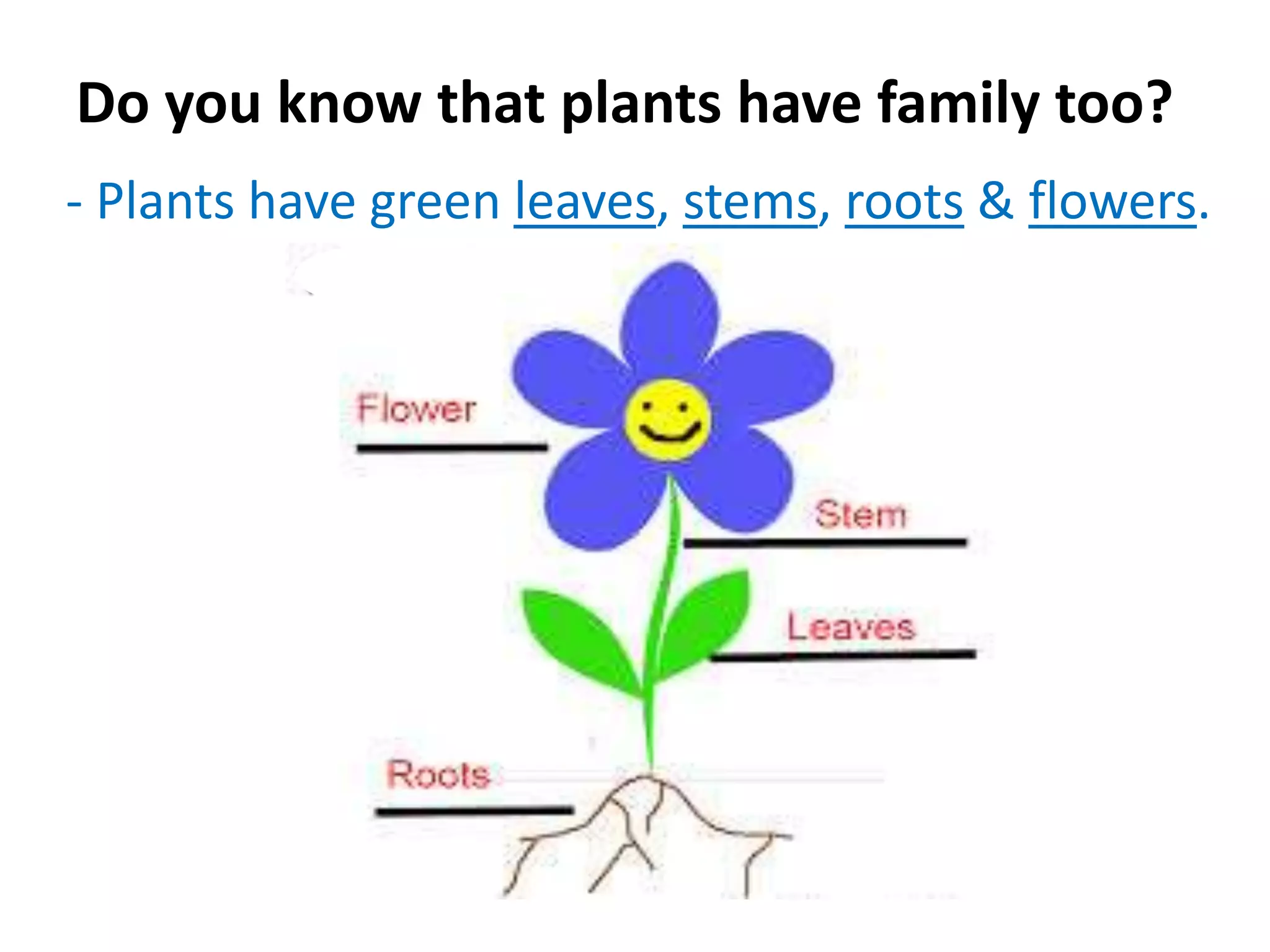
Do you know that plants have family too?
- Plants have green leaves, stems, roots & flowers.
- Each & every part “member” in the plant has
its own function “job” which is very important
for the plant’s growth & survival.
(As each family member has a job to do
everyday; father goes to work, mother cooks
food, children go to school & study)
-Flowers have bright colors
that attract insects & birds
that drink the nectar.
- They make the seeds (inside
the fruits).
{They act like magnets as their
bright colors attract birds to drink
the nectar}
(1) Flowers
(2) Stems
- Stems take water & nutrients
from the roots to all the plant
parts.
- Stems hold the plants upright.
(A tree’s stem is called: Trunk)
{They act like pipes that carry
water to our homes as they carry
water to all plant parts}
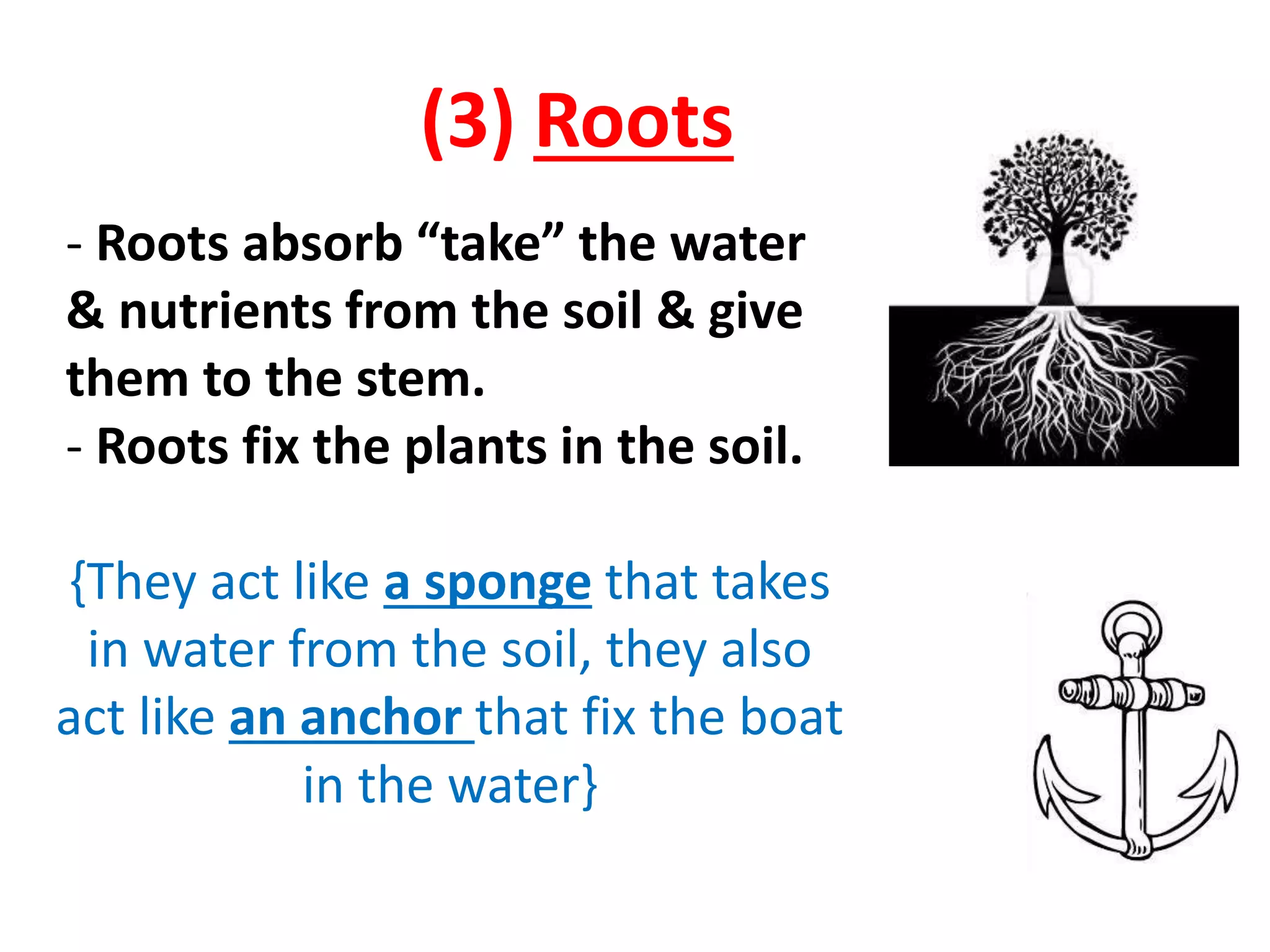
(3) Roots
- Roots absorb “take” the water
& nutrients from the soil & give
them to the stem.
- Roots fix the plants in the soil.
{They act like a sponge that takes
in water from the soil, they also
act like an anchor that fix the boat
in the water}
(4) Leaves
- Leaves make the food for the
plant through a process called:
“Photosynthesis process”
{They act like the chef who cooks
food, as they are responsible for
making plant’s food}
- Every day you eat 3 meals:
“Breakfast in the morning”
“Lunch in the afternoon”
“Dinner At night”
- Plants also make 1 meal everyday
which is called: Photosynthesis
What is photosynthesis process?
Photosynthesis process
- It is the process in which the plants “leaves”
use sunlight, carbon dioxide from the air &
water & nutrients from the soil to make their
food.
In photosynthesis process:
+ ++
{Plants use carbon dioxide, sunlight , water & nutrients
to make photosynthesis then, oxygen & food are
released
+ Nutrients
Sugar
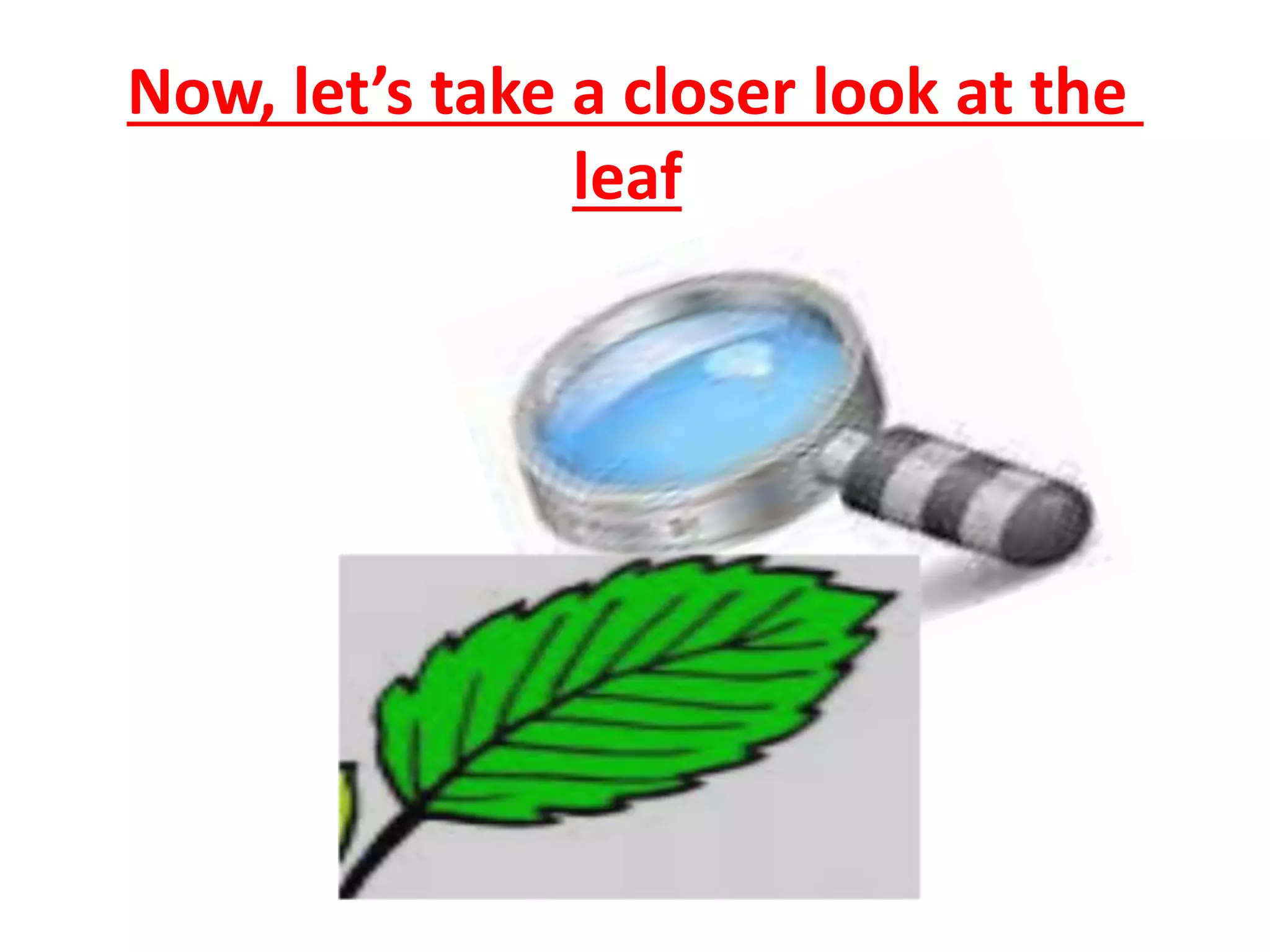
Now, let’s take a closer look at the
leaf
The structure of the leaf
Cuticle
Upper epidermis
Chloroplast
Stomata
Lower epidermis
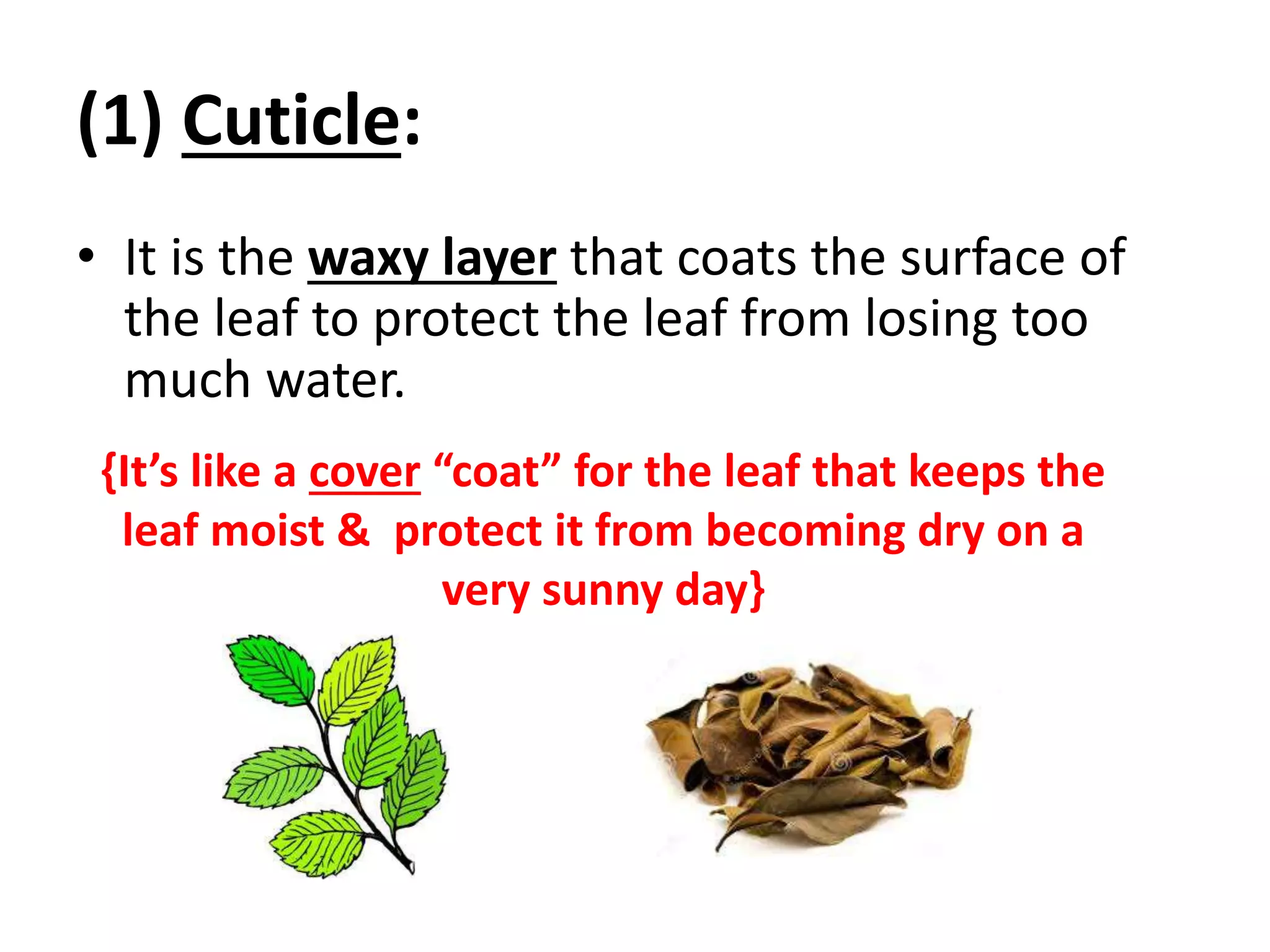
(1) Cuticle:
• It is the waxy layer that coats the surface of
the leaf to protect the leaf from losing too
much water.
{It’s like a cover “coat” for the leaf that keeps the
leaf moist & protect it from becoming dry on a
very sunny day}
(2) Upper epidermis:
• It is the outer layer of the leaf that protect it
from damage.
{It’s like our skin that protect us from any damage,
plants have an outer layer “epidermis” that protect
it from any damage}
(3) Chloroplast:
• It gives the leaf its green color & it contains
chlorophyll that absorb sunlight in photosynthesis
process “makes food for plants”.
{It’s like the food factory of the plant}
(4) Stomata:
• It opens & closes letting carbon dioxide in &
oxygen out during photosynthesis.
{It act like our mouth “open & close to help us to
breath in oxygen & breath out carbon dioxide”}
Do you think that all plants look the
same like each others?
• Of course not, plants are so different from
each others.
• So let’s classify “divide” the plants according
to:
(1) Structure
A- Plants with leaves, stems & roots:
Example:
Trees
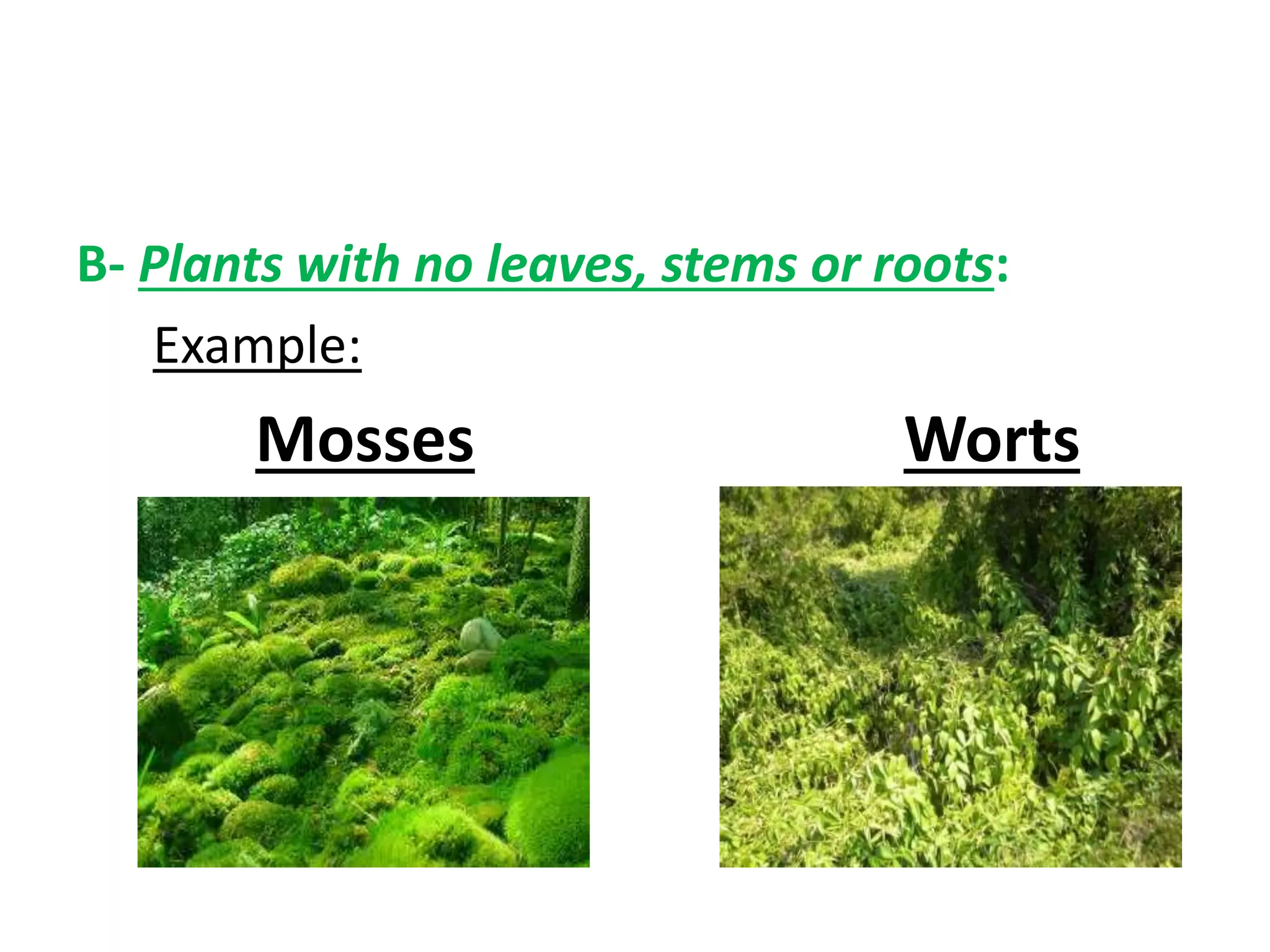
B- Plants with no leaves, stems or roots:
Example:
Mosses Worts
(2) Types of roots
A- Plants with tap roots: “Looks like a cone”
Example:
Beet root Carrot Radish
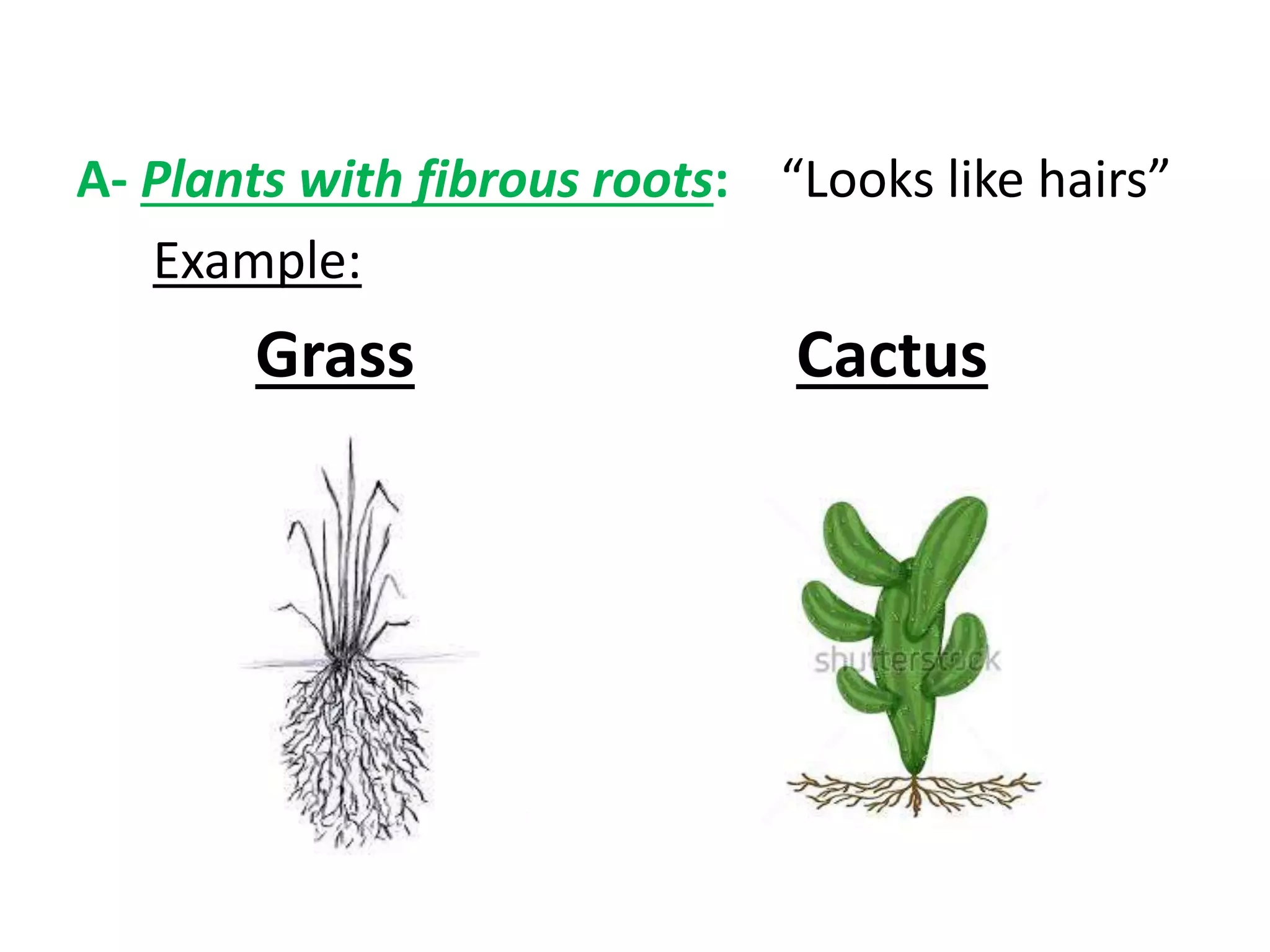
A- Plants with fibrous roots: “Looks like hairs”
Example:
Grass Cactus
(3) Types of stems
A- Plants with woody stems: “hard”
Example:
Trees Shrubs
A- Plants with soft stems:
Example:
Tulips Flowers
(4) Seeds
A- Seed plants:
- They produce new plants from seeds.
Example:
Apple trees Violet trees
B- Seedless plants:
- They produce new plants from spores.
“not from seeds”
(When spores are released & fall in the soil, then
they grow into new plants)
Example:
Horsetails Mosses Ferns

What are plants 3

  • 1.
  • 2.
    What can yousee in this picture? It’s a family
  • 3.
    Do you knowthat plants have family too? - Plants have green leaves, stems, roots & flowers.
  • 4.
    - Each &every part “member” in the plant has its own function “job” which is very important for the plant’s growth & survival. (As each family member has a job to do everyday; father goes to work, mother cooks food, children go to school & study)
  • 5.
    -Flowers have brightcolors that attract insects & birds that drink the nectar. - They make the seeds (inside the fruits). {They act like magnets as their bright colors attract birds to drink the nectar} (1) Flowers
  • 6.
    (2) Stems - Stemstake water & nutrients from the roots to all the plant parts. - Stems hold the plants upright. (A tree’s stem is called: Trunk) {They act like pipes that carry water to our homes as they carry water to all plant parts}
  • 7.
    (3) Roots - Rootsabsorb “take” the water & nutrients from the soil & give them to the stem. - Roots fix the plants in the soil. {They act like a sponge that takes in water from the soil, they also act like an anchor that fix the boat in the water}
  • 8.
    (4) Leaves - Leavesmake the food for the plant through a process called: “Photosynthesis process” {They act like the chef who cooks food, as they are responsible for making plant’s food}
  • 9.
    - Every dayyou eat 3 meals: “Breakfast in the morning” “Lunch in the afternoon” “Dinner At night” - Plants also make 1 meal everyday which is called: Photosynthesis What is photosynthesis process?
  • 10.
    Photosynthesis process - Itis the process in which the plants “leaves” use sunlight, carbon dioxide from the air & water & nutrients from the soil to make their food.
  • 11.
    In photosynthesis process: +++ {Plants use carbon dioxide, sunlight , water & nutrients to make photosynthesis then, oxygen & food are released + Nutrients Sugar
  • 12.
    Now, let’s takea closer look at the leaf
  • 13.
    The structure ofthe leaf Cuticle Upper epidermis Chloroplast Stomata Lower epidermis
  • 14.
    (1) Cuticle: • Itis the waxy layer that coats the surface of the leaf to protect the leaf from losing too much water. {It’s like a cover “coat” for the leaf that keeps the leaf moist & protect it from becoming dry on a very sunny day}
  • 15.
    (2) Upper epidermis: •It is the outer layer of the leaf that protect it from damage. {It’s like our skin that protect us from any damage, plants have an outer layer “epidermis” that protect it from any damage}
  • 16.
    (3) Chloroplast: • Itgives the leaf its green color & it contains chlorophyll that absorb sunlight in photosynthesis process “makes food for plants”. {It’s like the food factory of the plant}
  • 17.
    (4) Stomata: • Itopens & closes letting carbon dioxide in & oxygen out during photosynthesis. {It act like our mouth “open & close to help us to breath in oxygen & breath out carbon dioxide”}
  • 18.
    Do you thinkthat all plants look the same like each others? • Of course not, plants are so different from each others. • So let’s classify “divide” the plants according to:
  • 19.
    (1) Structure A- Plantswith leaves, stems & roots: Example: Trees
  • 20.
    B- Plants withno leaves, stems or roots: Example: Mosses Worts
  • 21.
    (2) Types ofroots A- Plants with tap roots: “Looks like a cone” Example: Beet root Carrot Radish
  • 22.
    A- Plants withfibrous roots: “Looks like hairs” Example: Grass Cactus
  • 23.
    (3) Types ofstems A- Plants with woody stems: “hard” Example: Trees Shrubs
  • 24.
    A- Plants withsoft stems: Example: Tulips Flowers
  • 25.
    (4) Seeds A- Seedplants: - They produce new plants from seeds. Example: Apple trees Violet trees
  • 26.
    B- Seedless plants: -They produce new plants from spores. “not from seeds” (When spores are released & fall in the soil, then they grow into new plants) Example: Horsetails Mosses Ferns