A material is a physical substance used to
make things.
Metals, plastics, ceramics, glass and fibres
are some of the main categories for
materials.
If we look around, everything we see is
made from a material, sometimes more
than one ....
 For example:
 The clothes you are wearing are made from
fibres.
 The chair you are sitting on is made from
plastic.
 The windows in the school are made from
glass.
 Can you see any other examples
around you?
 A property of a material is a description of
the characteristics which it has. They are
adjectives which tell us about the material.
 Materials have different properties and
characteristics depending on what they are
used for.
 Some materials are hard, others are soft.
Some are strong, others are weak.
 Here is a list of the properties which describe different
materials:
 Shiny – It reflects light
 Strong – It won’t break easily
 Flexible – It can be bent easily without breaking
 Light - It doesn’t weigh much
 Heavy – It weighs a lot
 Coloured – Has colour
 Magnetic – It’s attracted to magnets
 Bendy - Flexible
 Hard – Something which can’t be bent easily
 Brittle – It’s hard but will break easily
 Malleable – It can be shaped easily
 Magnetic – It’s attracted to magnets
 Bendy – Flexible
 Transparent – Something you can see through
 Translucent – Something you can partially see through
 Opaque – Something you can not see through
 Conductor – It allows heat or electricity to pass through
 Insulator – It doesn’t allow heat or electricity to pass through.
 Which of the previous words could you
use to describe:
 A) a pencil...
 Hard, light, opaque
 B) A window
 Transparent or translucent, hard, brittle
 C) A piece of paper...
 Light, opaque, malleable
 D) A fork...
 Shiny, hard, magnetic, opaque, conductor
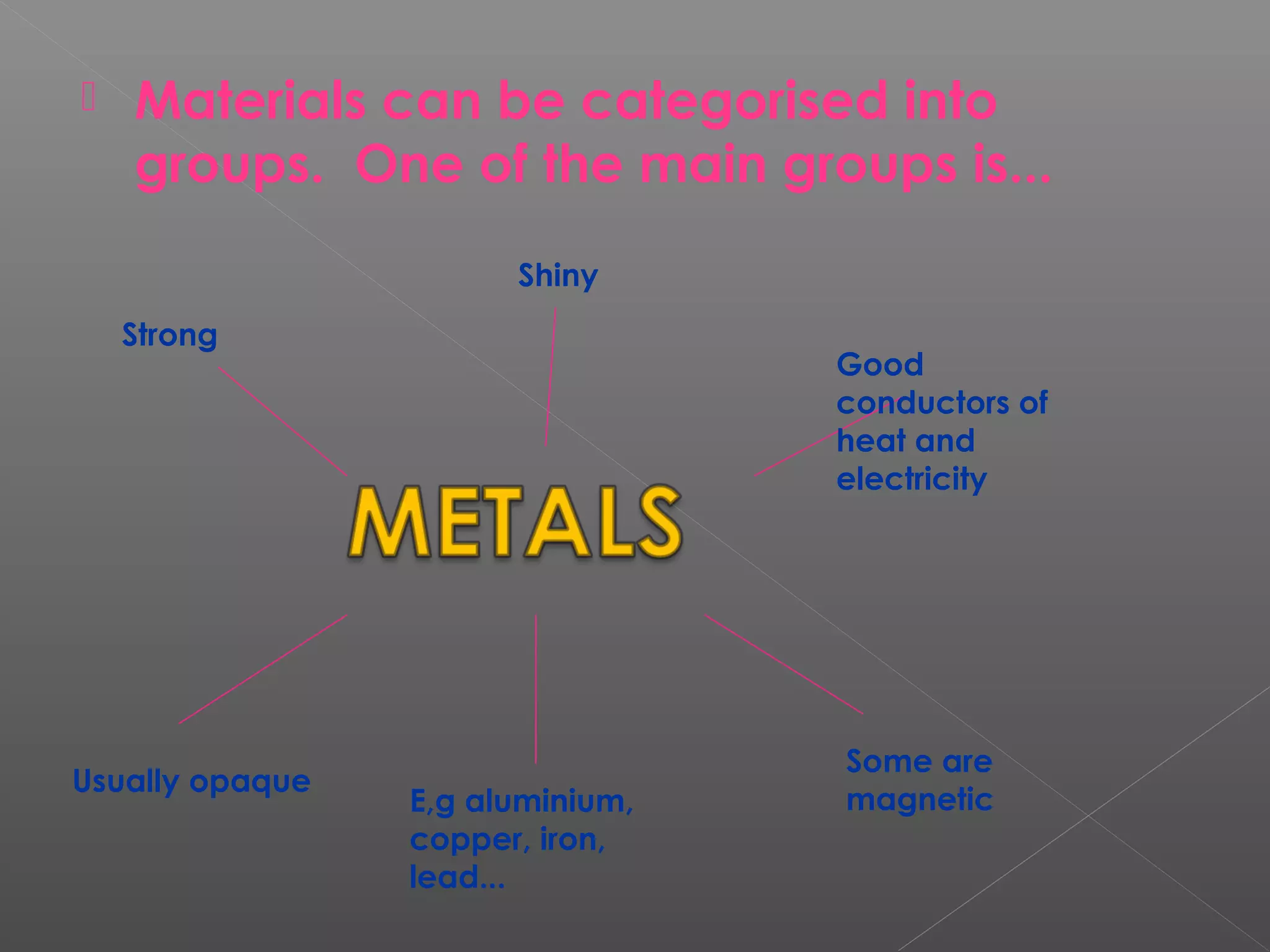
 Materials can be categorised into
groups. One of the main groups is...
Shiny
Strong
Good
conductors of
heat and
electricity
Some are
magnetic
Usually opaque
E,g aluminium,
copper, iron,
lead...
 Q) Why is copper suitable for electrical
wiring? What properties must it have?
 - Good conductor
of electricity
- It is strong.
 Why are saucepans made from metal?
Which properties make it suitable for the
use?
 - It is a good conductor or heat.
 - It is It does not melt with high
temperatures.
 - It is strong

Materials 2

  • 2.
    A material isa physical substance used to make things. Metals, plastics, ceramics, glass and fibres are some of the main categories for materials. If we look around, everything we see is made from a material, sometimes more than one ....
  • 3.
     For example: The clothes you are wearing are made from fibres.  The chair you are sitting on is made from plastic.  The windows in the school are made from glass.  Can you see any other examples around you?
  • 4.
     A propertyof a material is a description of the characteristics which it has. They are adjectives which tell us about the material.  Materials have different properties and characteristics depending on what they are used for.  Some materials are hard, others are soft. Some are strong, others are weak.
  • 5.
     Here isa list of the properties which describe different materials:  Shiny – It reflects light  Strong – It won’t break easily  Flexible – It can be bent easily without breaking  Light - It doesn’t weigh much  Heavy – It weighs a lot  Coloured – Has colour  Magnetic – It’s attracted to magnets  Bendy - Flexible
  • 6.
     Hard –Something which can’t be bent easily  Brittle – It’s hard but will break easily  Malleable – It can be shaped easily  Magnetic – It’s attracted to magnets  Bendy – Flexible  Transparent – Something you can see through  Translucent – Something you can partially see through  Opaque – Something you can not see through  Conductor – It allows heat or electricity to pass through  Insulator – It doesn’t allow heat or electricity to pass through.
  • 7.
     Which ofthe previous words could you use to describe:  A) a pencil...  Hard, light, opaque  B) A window  Transparent or translucent, hard, brittle  C) A piece of paper...  Light, opaque, malleable  D) A fork...  Shiny, hard, magnetic, opaque, conductor
  • 8.
     Materials canbe categorised into groups. One of the main groups is... Shiny Strong Good conductors of heat and electricity Some are magnetic Usually opaque E,g aluminium, copper, iron, lead...
  • 10.
     Q) Whyis copper suitable for electrical wiring? What properties must it have?  - Good conductor of electricity - It is strong.
  • 11.
     Why aresaucepans made from metal? Which properties make it suitable for the use?  - It is a good conductor or heat.  - It is It does not melt with high temperatures.  - It is strong