Western Blot
Sunil Bhandari
• Western blots are labor intensive and expensive but provide a
method of confirming the identity of a reactive antigen
• Western blots are done by electrophoresis of antigen (sample
protein) by sodium dodecyl sulfate ( polyacrylamide gel
electrophoresis (PAGE)
• The proteins in a mixture are separated by size in the gel and
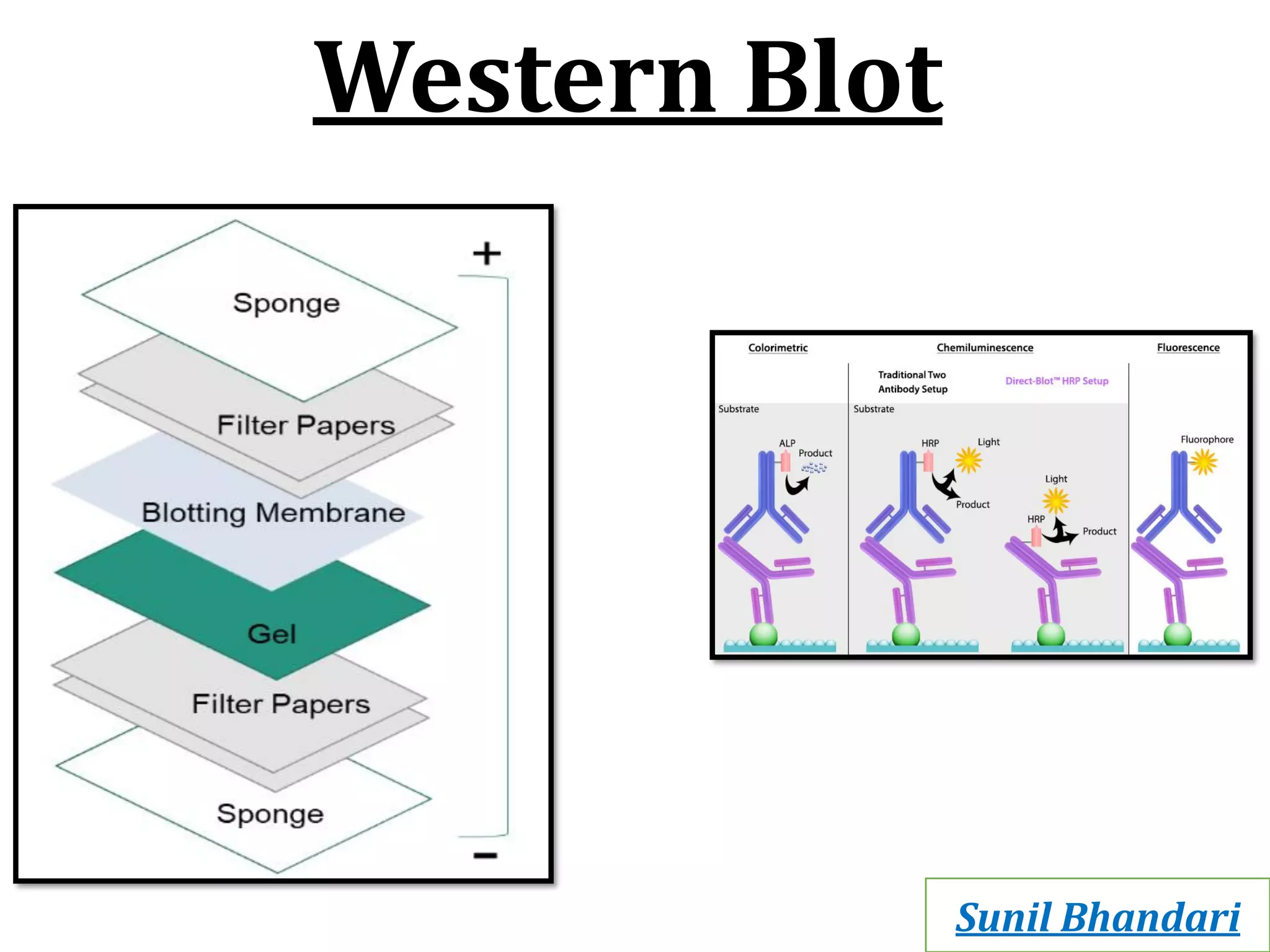
are transferred from the gel to a solid paper like substrate
often called a membrane.
• The membrane is incubated with patient sera and the presence
of patient antibodies is detected by subsequently incubating
the membrane with labeled secondary antibodies.
• The specificity of the western blot lies in its ability to demonstrate
the molecular weights ( of the proteins recognized by patient sera
Principle:
• Western blotting is a method where a labelled antibody against
particular protein is used to identify the desired protein, so it is a
specific test. Western blotting is also known as immunoblotting because
it use antibodies to detect the protein.
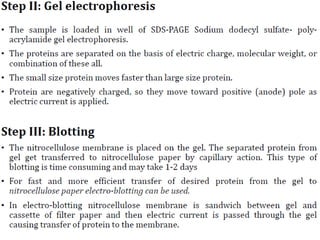
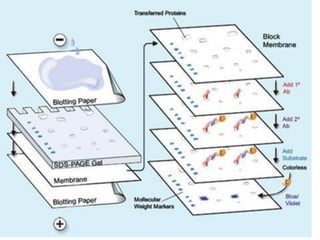
• Western blot is performed by using polyacrylamide gel
electrophoresis (SDS-PAGE) which allows protein samples to be
separated and transferred to a solid support such as nitrocellulose
membrane.
• This solid support can absorb the protein and keep its biological
activity unchanged.
• The protein transferred solid support membrane is called a blot and
is treated with a protein solution to block the hydrophobic binding
site on the membrane.
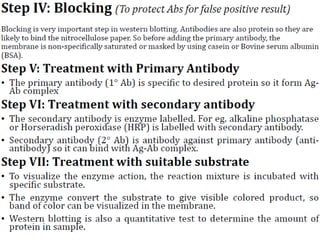
• The membrane is treated with the antibody (primary antibody)
of the target proteins. Only the proteins to be studied can
specifically bind to the primary antibody to form an antigen
antibody complex.
• The primary antibody treated membranes are treated with a
labeled secondary antibody after washing. After treatment, the
labeled secondary antibody that binds to the primary antibody
forms an antibody complex that can indicate the location of the
primary antibody, i e the location of the protein being studied.
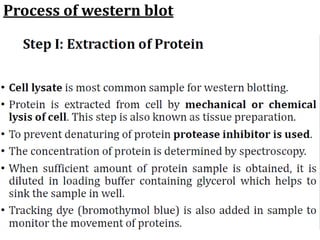
Process of western blot
Western Blot
Western Blot
Western Blot
Western Blot

Western Blot

  • 1.
  • 3.
    • Western blotsare labor intensive and expensive but provide a method of confirming the identity of a reactive antigen • Western blots are done by electrophoresis of antigen (sample protein) by sodium dodecyl sulfate ( polyacrylamide gel electrophoresis (PAGE) • The proteins in a mixture are separated by size in the gel and are transferred from the gel to a solid paper like substrate often called a membrane. • The membrane is incubated with patient sera and the presence of patient antibodies is detected by subsequently incubating the membrane with labeled secondary antibodies. • The specificity of the western blot lies in its ability to demonstrate the molecular weights ( of the proteins recognized by patient sera
  • 4.
    Principle: • Western blottingis a method where a labelled antibody against particular protein is used to identify the desired protein, so it is a specific test. Western blotting is also known as immunoblotting because it use antibodies to detect the protein. • Western blot is performed by using polyacrylamide gel electrophoresis (SDS-PAGE) which allows protein samples to be separated and transferred to a solid support such as nitrocellulose membrane. • This solid support can absorb the protein and keep its biological activity unchanged. • The protein transferred solid support membrane is called a blot and is treated with a protein solution to block the hydrophobic binding site on the membrane.
  • 5.
    • The membraneis treated with the antibody (primary antibody) of the target proteins. Only the proteins to be studied can specifically bind to the primary antibody to form an antigen antibody complex. • The primary antibody treated membranes are treated with a labeled secondary antibody after washing. After treatment, the labeled secondary antibody that binds to the primary antibody forms an antibody complex that can indicate the location of the primary antibody, i e the location of the protein being studied.
  • 6.