Western Blotting Technique: A
Comprehensive Guide
Western blotting, a powerful analytical technique that combines gel electrophoresis
and antibody-based detection, provides qualitative and quantitative insights into
protein expression. It is widely used in molecular biology, immunology, and medical
research to study protein structure and function.
Why is western blotting so important? Consider trying to discover a certain person
among a throng of thousands. Western blotting is similar to using a spotlight to
locate and identify a specific protein in a complicated mixture.
History and Development of Western Blotting
The origins of Western blotting date back to 1979 when W. Neal Burnette first
introduced the technique. Named as a pun on Southern blotting (a DNA detection
method), this method evolved quickly to become a cornerstone in protein analysis.
Over the years, advancements like enhanced chemiluminescence and
fluorescence-based detection have made the process more sensitive and efficient.
Principle of Western Blotting
At its core, Western blotting separates proteins by size using gel electrophoresis,
transfers them on a membrane, and detects specific proteins with antibodies. The
specificity of antibodies guarantees that just the target protein is highlighted, similar
to how a key fits into a certain lock.
Key Components of Western Blotting
Sample Preparation
Proteins must first be isolated from cells or tissues and measured. Ensuring
comparable protein concentrations across samples is critical for obtaining reliable
results.
Gel Electrophoresis
Proteins are separated on a polyacrylamide gel by molecular weight. SDS (sodium
dodecyl sulfate) helps in protein denaturement, maintaining a consistent charge and
allowing for size-based separation.
Transfer of Proteins
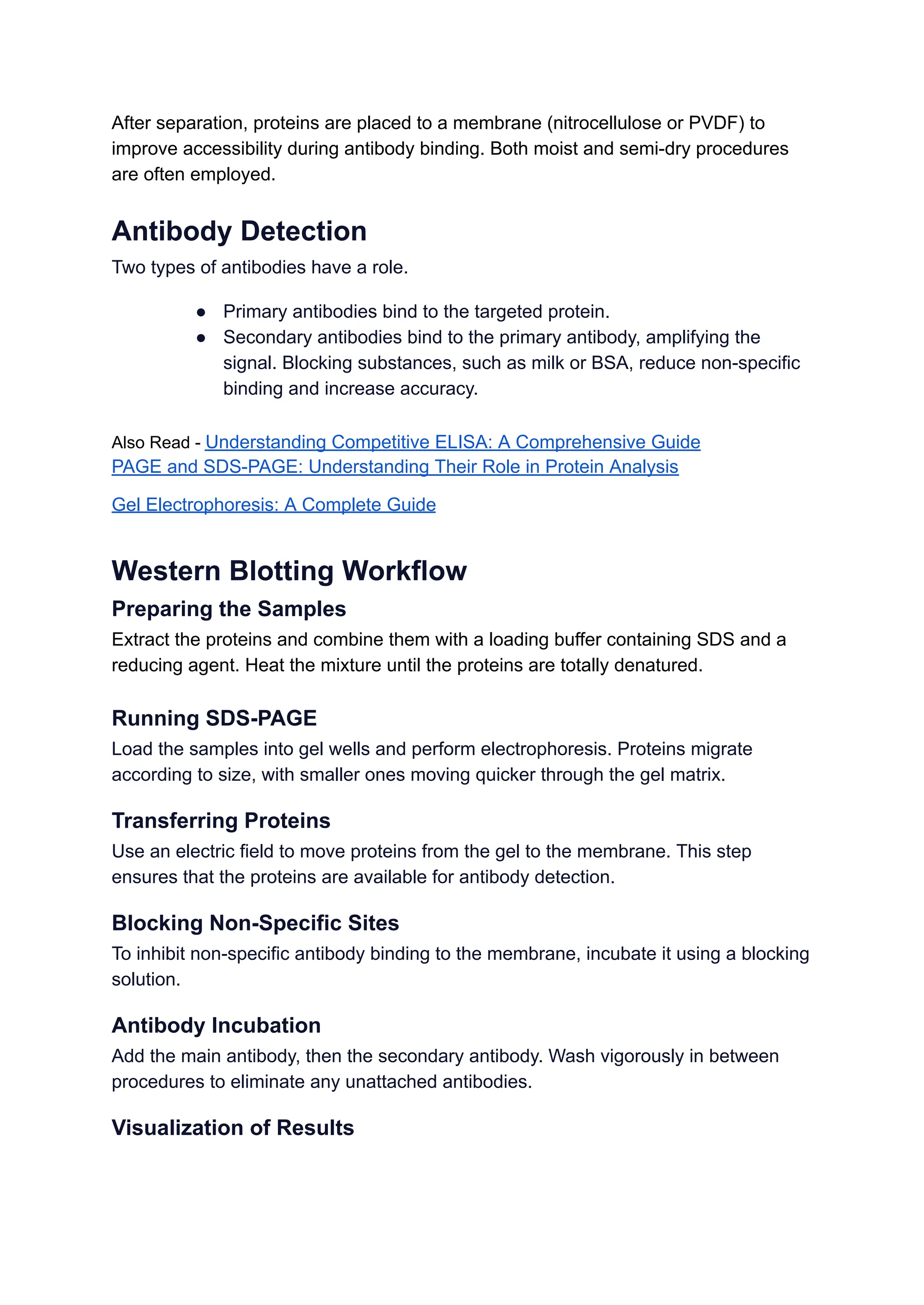
After separation, proteins are placed to a membrane (nitrocellulose or PVDF) to
improve accessibility during antibody binding. Both moist and semi-dry procedures
are often employed.
Antibody Detection
Two types of antibodies have a role.
● Primary antibodies bind to the targeted protein.
● Secondary antibodies bind to the primary antibody, amplifying the
signal. Blocking substances, such as milk or BSA, reduce non-specific
binding and increase accuracy.
Also Read - Understanding Competitive ELISA: A Comprehensive Guide
PAGE and SDS-PAGE: Understanding Their Role in Protein Analysis
Gel Electrophoresis: A Complete Guide
Western Blotting Workflow
Preparing the Samples
Extract the proteins and combine them with a loading buffer containing SDS and a
reducing agent. Heat the mixture until the proteins are totally denatured.
Running SDS-PAGE
Load the samples into gel wells and perform electrophoresis. Proteins migrate
according to size, with smaller ones moving quicker through the gel matrix.
Transferring Proteins
Use an electric field to move proteins from the gel to the membrane. This step
ensures that the proteins are available for antibody detection.
Blocking Non-Specific Sites
To inhibit non-specific antibody binding to the membrane, incubate it using a blocking
solution.
Antibody Incubation
Add the main antibody, then the secondary antibody. Wash vigorously in between
procedures to eliminate any unattached antibodies.
Visualization of Results
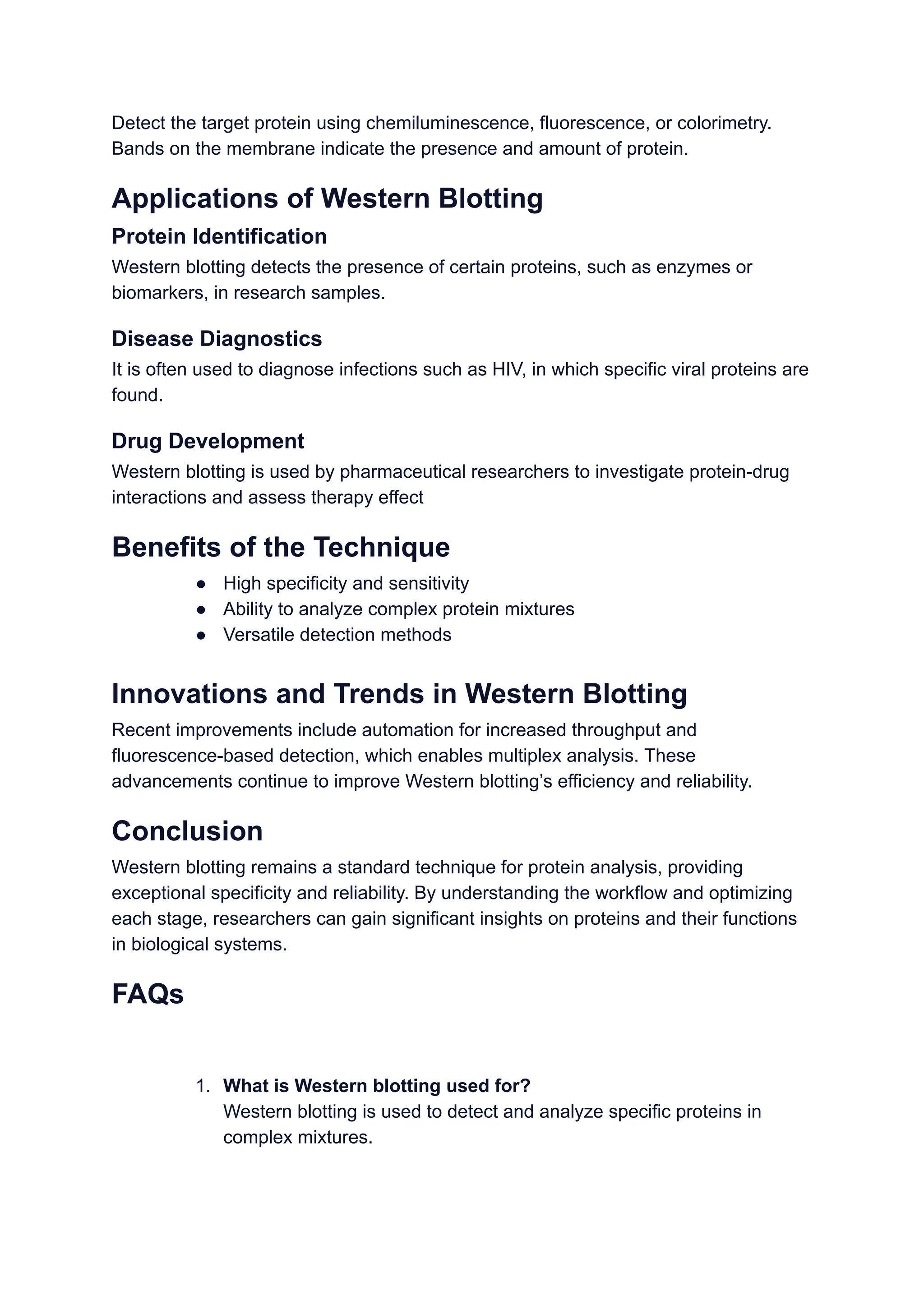
Detect the target protein using chemiluminescence, fluorescence, or colorimetry.
Bands on the membrane indicate the presence and amount of protein.
Applications of Western Blotting
Protein Identification
Western blotting detects the presence of certain proteins, such as enzymes or
biomarkers, in research samples.
Disease Diagnostics
It is often used to diagnose infections such as HIV, in which specific viral proteins are
found.
Drug Development
Western blotting is used by pharmaceutical researchers to investigate protein-drug
interactions and assess therapy effect
Benefits of the Technique
● High specificity and sensitivity
● Ability to analyze complex protein mixtures
● Versatile detection methods
Innovations and Trends in Western Blotting
Recent improvements include automation for increased throughput and
fluorescence-based detection, which enables multiplex analysis. These
advancements continue to improve Western blotting’s efficiency and reliability.
Conclusion
Western blotting remains a standard technique for protein analysis, providing
exceptional specificity and reliability. By understanding the workflow and optimizing
each stage, researchers can gain significant insights on proteins and their functions
in biological systems.
FAQs
1. What is Western blotting used for?
Western blotting is used to detect and analyze specific proteins in
complex mixtures.
2. How does SDS-PAGE work in Western blotting?
SDS-PAGE separates proteins by size using an electric field and a gel
matrix.
3. What is the difference between primary and secondary
antibodies?
Primary antibodies bind to the target protein, while secondary
antibodies amplify the signal for detection.
4. Can Western blotting detect all types of proteins?
Yes, but proteins must be extractable, denatured, and compatible with
available antibodies.
5. What are common mistakes to avoid in Western blotting?
Avoid improper blocking, using low-quality antibodies, and overloading
the gel with protein.

Western Blotting Technique_ A Comprehensive Guide.pdf

  • 1.
    Western Blotting Technique:A Comprehensive Guide Western blotting, a powerful analytical technique that combines gel electrophoresis and antibody-based detection, provides qualitative and quantitative insights into protein expression. It is widely used in molecular biology, immunology, and medical research to study protein structure and function. Why is western blotting so important? Consider trying to discover a certain person among a throng of thousands. Western blotting is similar to using a spotlight to locate and identify a specific protein in a complicated mixture. History and Development of Western Blotting The origins of Western blotting date back to 1979 when W. Neal Burnette first introduced the technique. Named as a pun on Southern blotting (a DNA detection method), this method evolved quickly to become a cornerstone in protein analysis. Over the years, advancements like enhanced chemiluminescence and fluorescence-based detection have made the process more sensitive and efficient. Principle of Western Blotting At its core, Western blotting separates proteins by size using gel electrophoresis, transfers them on a membrane, and detects specific proteins with antibodies. The specificity of antibodies guarantees that just the target protein is highlighted, similar to how a key fits into a certain lock. Key Components of Western Blotting Sample Preparation Proteins must first be isolated from cells or tissues and measured. Ensuring comparable protein concentrations across samples is critical for obtaining reliable results. Gel Electrophoresis Proteins are separated on a polyacrylamide gel by molecular weight. SDS (sodium dodecyl sulfate) helps in protein denaturement, maintaining a consistent charge and allowing for size-based separation. Transfer of Proteins
  • 2.
    After separation, proteinsare placed to a membrane (nitrocellulose or PVDF) to improve accessibility during antibody binding. Both moist and semi-dry procedures are often employed. Antibody Detection Two types of antibodies have a role. ● Primary antibodies bind to the targeted protein. ● Secondary antibodies bind to the primary antibody, amplifying the signal. Blocking substances, such as milk or BSA, reduce non-specific binding and increase accuracy. Also Read - Understanding Competitive ELISA: A Comprehensive Guide PAGE and SDS-PAGE: Understanding Their Role in Protein Analysis Gel Electrophoresis: A Complete Guide Western Blotting Workflow Preparing the Samples Extract the proteins and combine them with a loading buffer containing SDS and a reducing agent. Heat the mixture until the proteins are totally denatured. Running SDS-PAGE Load the samples into gel wells and perform electrophoresis. Proteins migrate according to size, with smaller ones moving quicker through the gel matrix. Transferring Proteins Use an electric field to move proteins from the gel to the membrane. This step ensures that the proteins are available for antibody detection. Blocking Non-Specific Sites To inhibit non-specific antibody binding to the membrane, incubate it using a blocking solution. Antibody Incubation Add the main antibody, then the secondary antibody. Wash vigorously in between procedures to eliminate any unattached antibodies. Visualization of Results
  • 3.
    Detect the targetprotein using chemiluminescence, fluorescence, or colorimetry. Bands on the membrane indicate the presence and amount of protein. Applications of Western Blotting Protein Identification Western blotting detects the presence of certain proteins, such as enzymes or biomarkers, in research samples. Disease Diagnostics It is often used to diagnose infections such as HIV, in which specific viral proteins are found. Drug Development Western blotting is used by pharmaceutical researchers to investigate protein-drug interactions and assess therapy effect Benefits of the Technique ● High specificity and sensitivity ● Ability to analyze complex protein mixtures ● Versatile detection methods Innovations and Trends in Western Blotting Recent improvements include automation for increased throughput and fluorescence-based detection, which enables multiplex analysis. These advancements continue to improve Western blotting’s efficiency and reliability. Conclusion Western blotting remains a standard technique for protein analysis, providing exceptional specificity and reliability. By understanding the workflow and optimizing each stage, researchers can gain significant insights on proteins and their functions in biological systems. FAQs 1. What is Western blotting used for? Western blotting is used to detect and analyze specific proteins in complex mixtures.
  • 4.
    2. How doesSDS-PAGE work in Western blotting? SDS-PAGE separates proteins by size using an electric field and a gel matrix. 3. What is the difference between primary and secondary antibodies? Primary antibodies bind to the target protein, while secondary antibodies amplify the signal for detection. 4. Can Western blotting detect all types of proteins? Yes, but proteins must be extractable, denatured, and compatible with available antibodies. 5. What are common mistakes to avoid in Western blotting? Avoid improper blocking, using low-quality antibodies, and overloading the gel with protein.