Social media, definitions, 
background & research 
(and affordances)
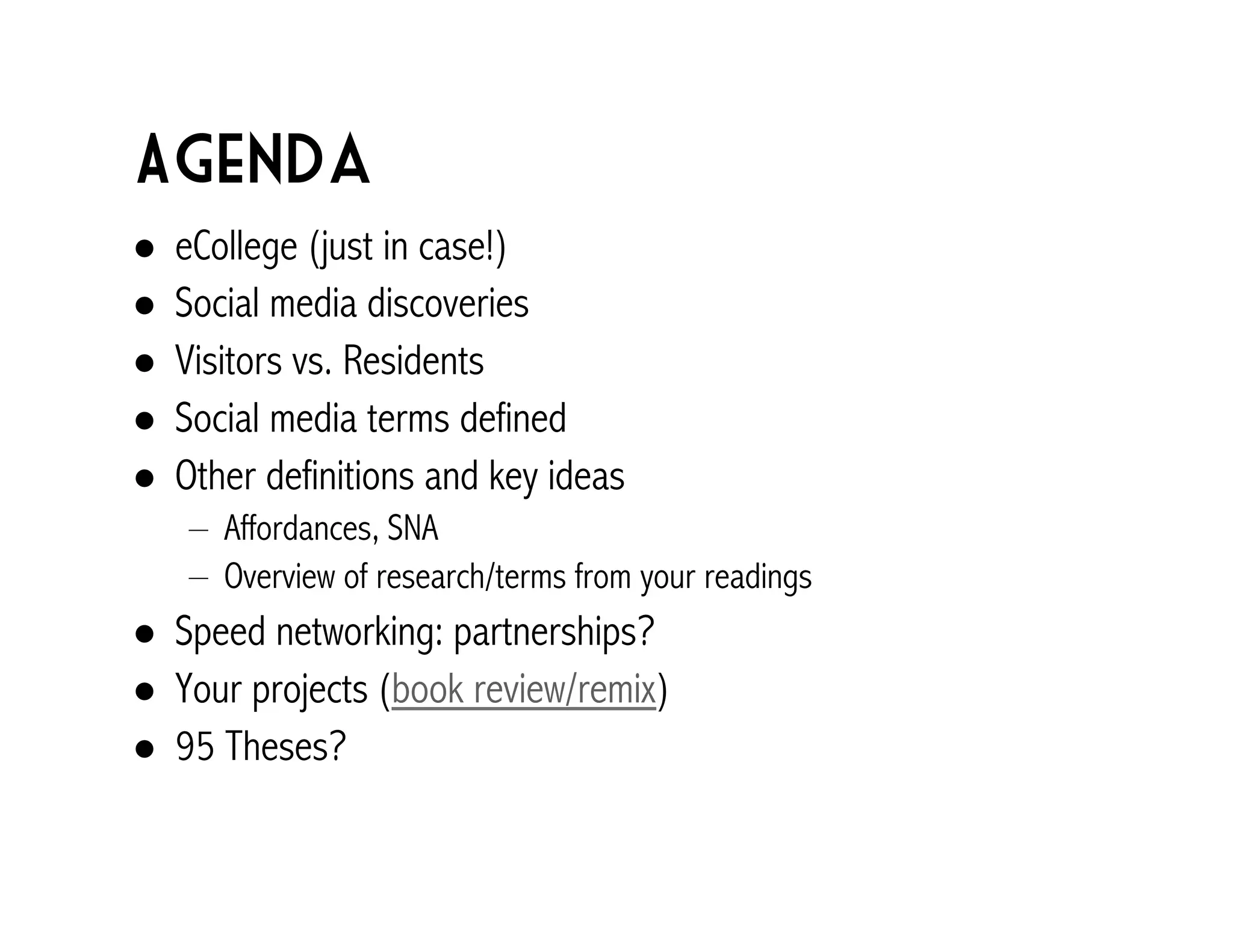
Agenda 
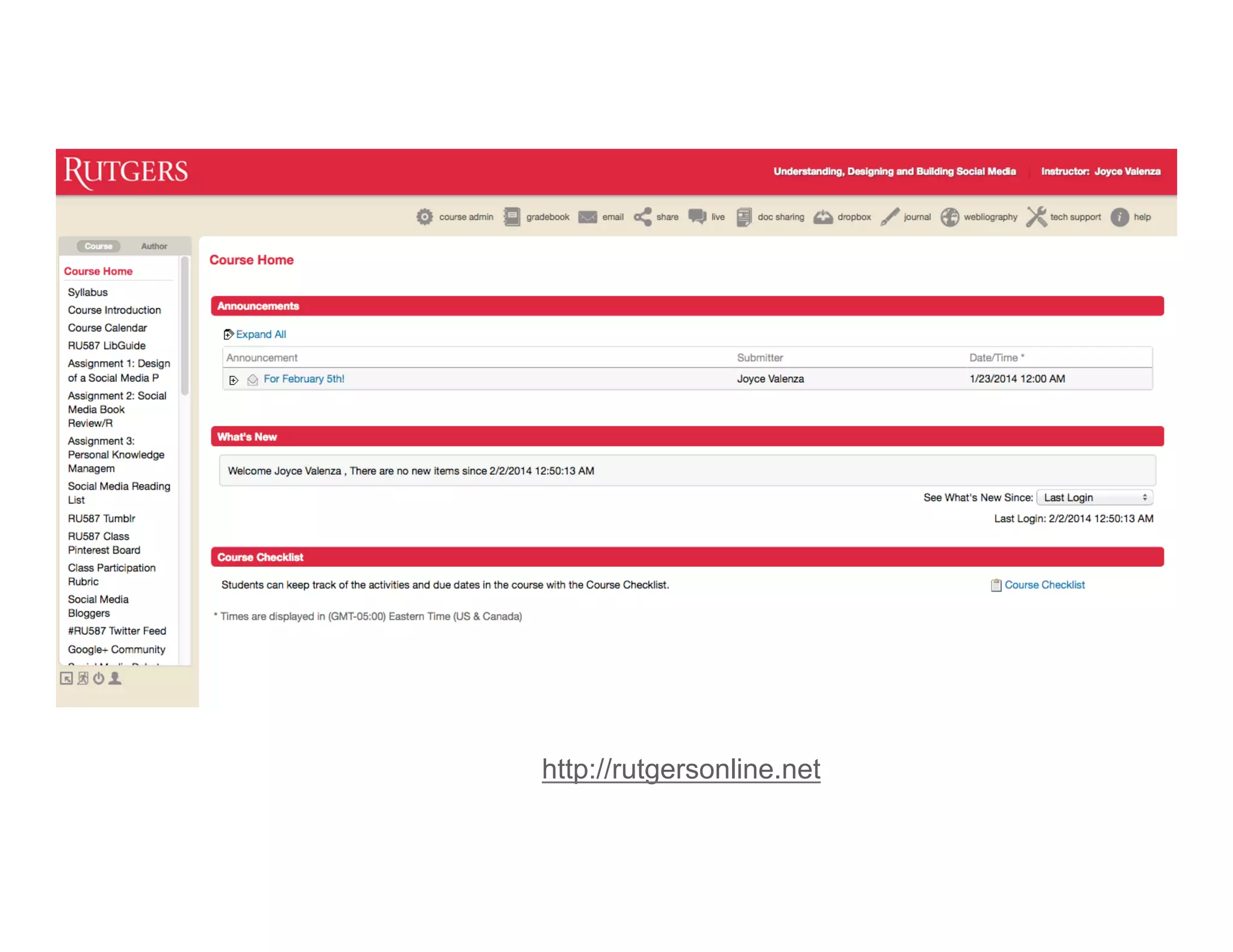
! eCollege (just in case!) 
! Social media discoveries 
! Visitors vs. Residents 
! Social media terms defined 
! Other definitions and key ideas 
– Affordances, SNA 
– Overview of research/terms from your readings 
! Speed networking: partnerships? 
! Your projects (book review/remix) 
! 95 Theses?
http://rutgersonline.net
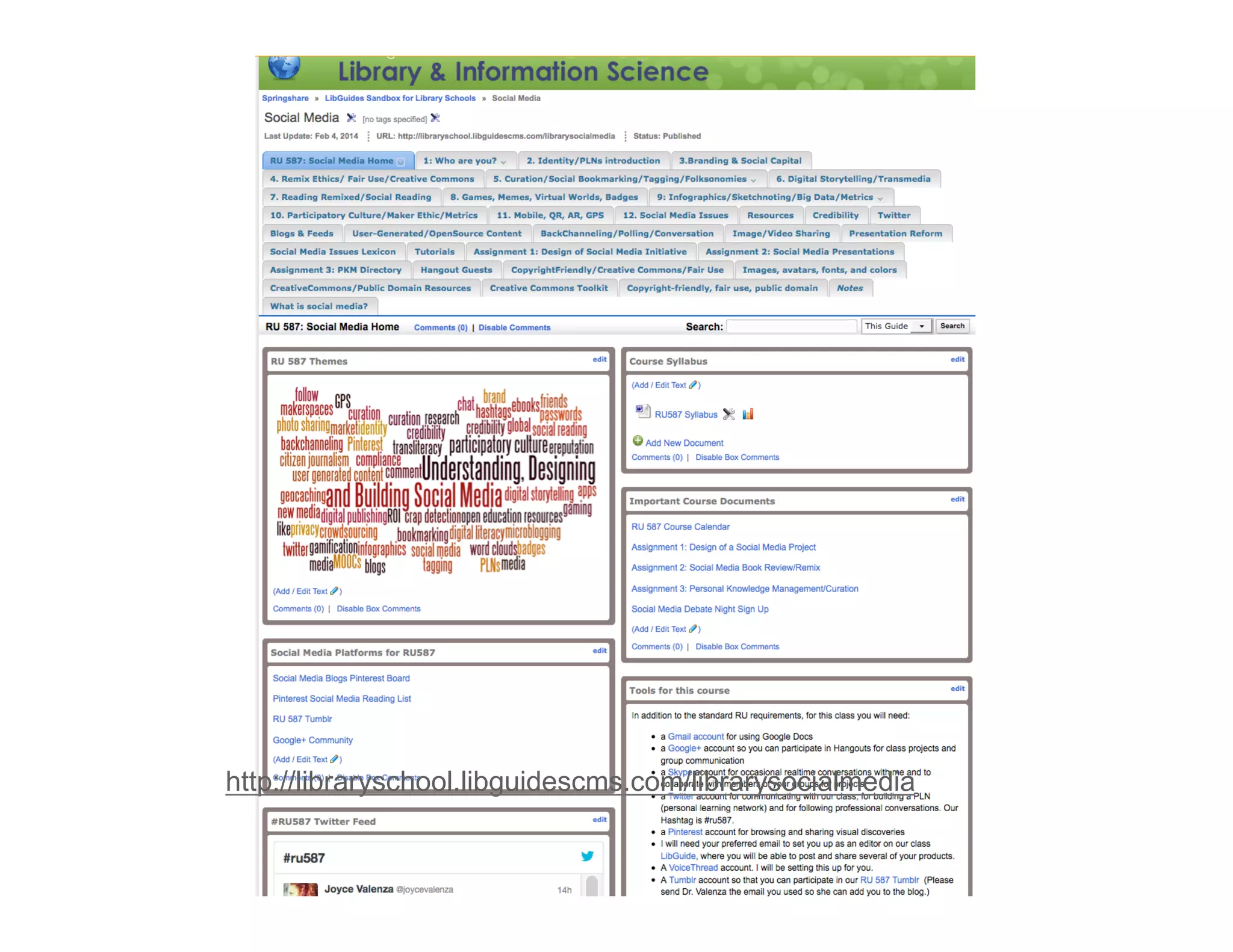
http://libraryschool.libguidescms.com/librarysocialmedia
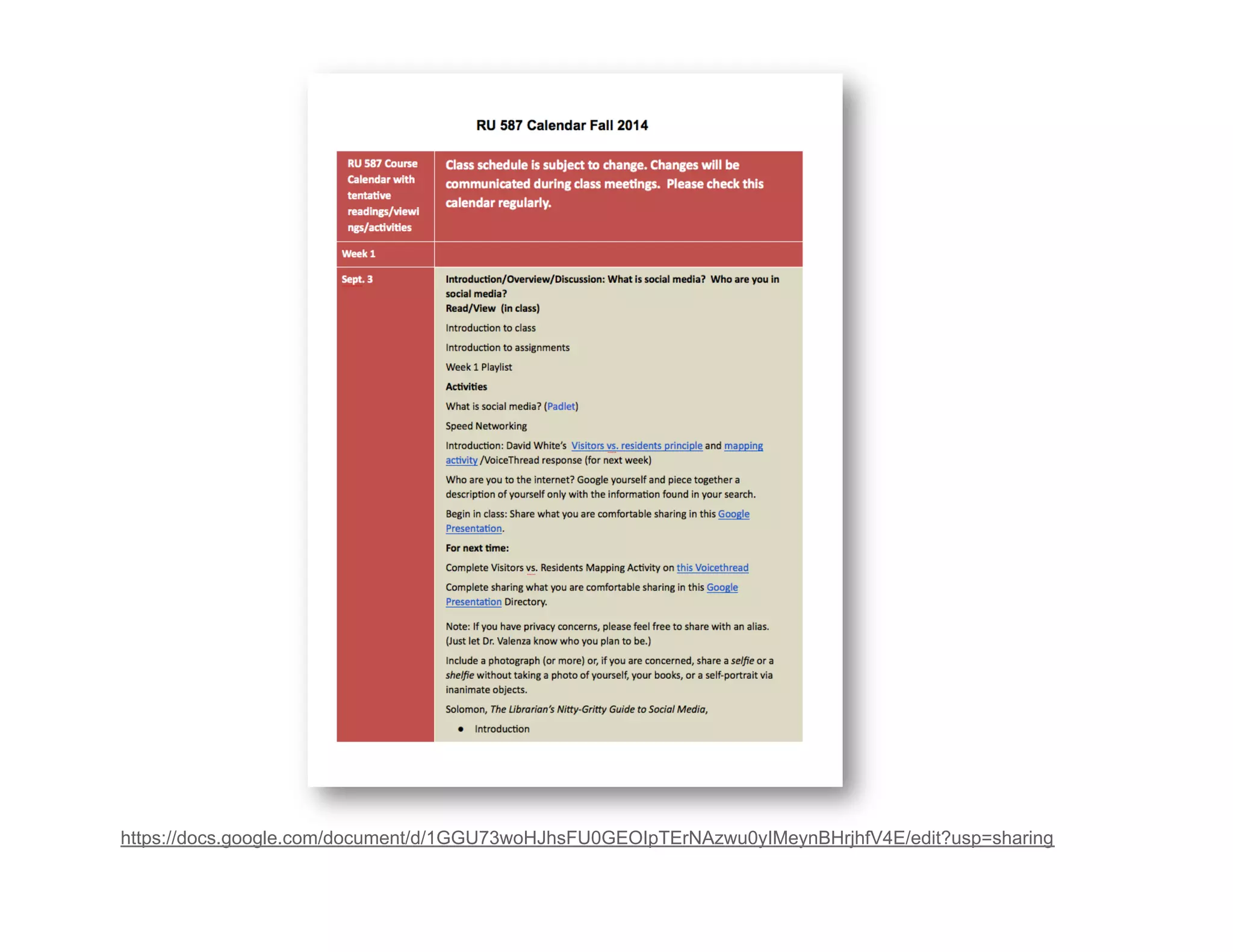
https://docs.google.com/document/d/1GGU73woHJhsFU0GEOIpTErNAzwu0yIMeynBHrjhfV4E/edit?usp=sharing
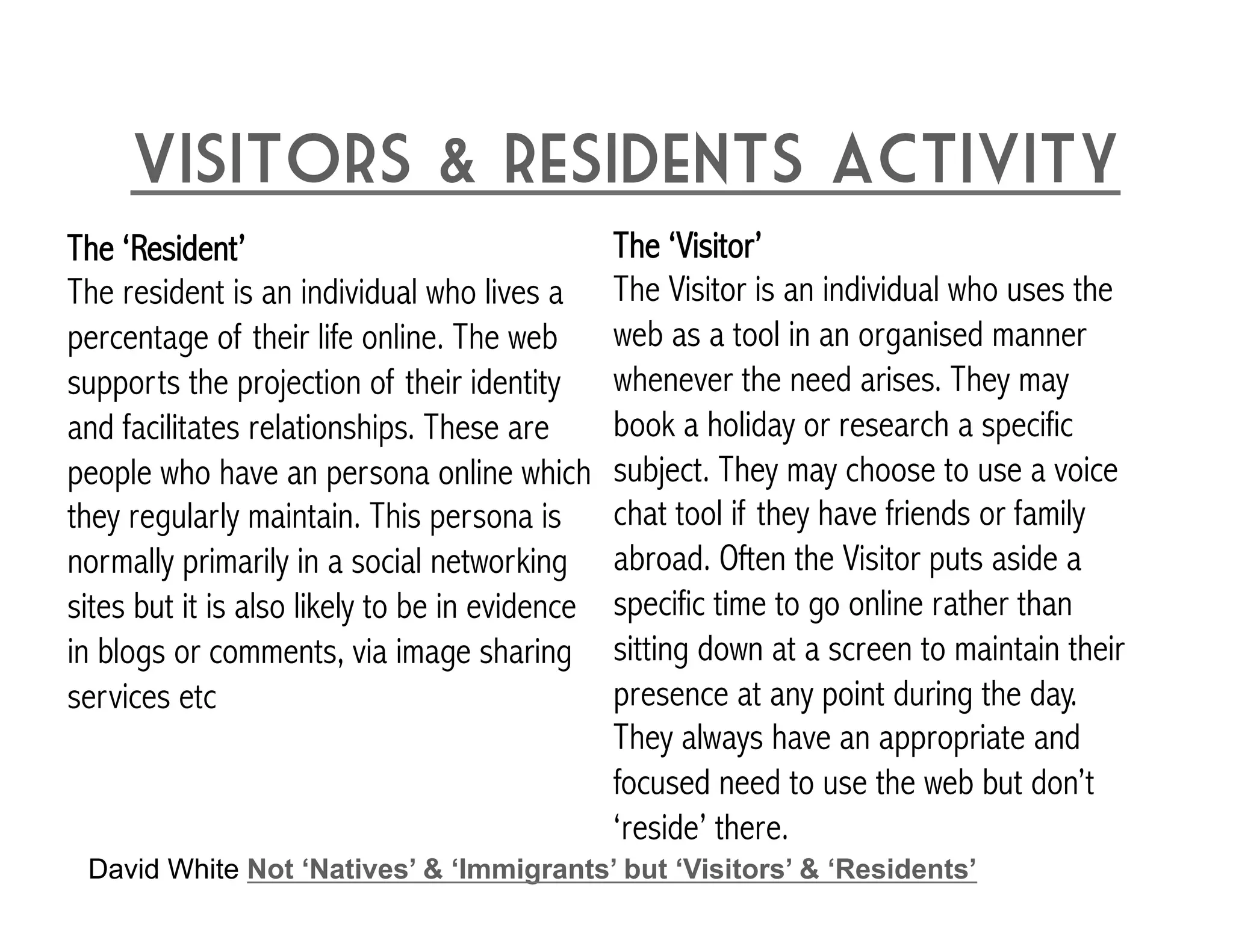
Visitors & residents activity 
The ‘Resident’ 
The resident is an individual who lives a 
percentage of their life online. The web 
supports the projection of their identity 
and facilitates relationships. These are 
people who have an persona online which 
they regularly maintain. This persona is 
normally primarily in a social networking 
sites but it is also likely to be in evidence 
in blogs or comments, via image sharing 
services etc 
The ‘Visitor’ 
The Visitor is an individual who uses the 
web as a tool in an organised manner 
whenever the need arises. They may 
book a holiday or research a specific 
subject. They may choose to use a voice 
chat tool if they have friends or family 
abroad. Often the Visitor puts aside a 
specific time to go online rather than 
sitting down at a screen to maintain their 
presence at any point during the day. 
They always have an appropriate and 
focused need to use the web but don’t 
‘reside’ there. 
David White Not ‘Natives’ & ‘Immigrants’ but ‘Visitors’ & ‘Residents’
Voicethread 
Visitors & residents activity 
Alix 
Beth
Stand up / sit down 
Visitors /Residents
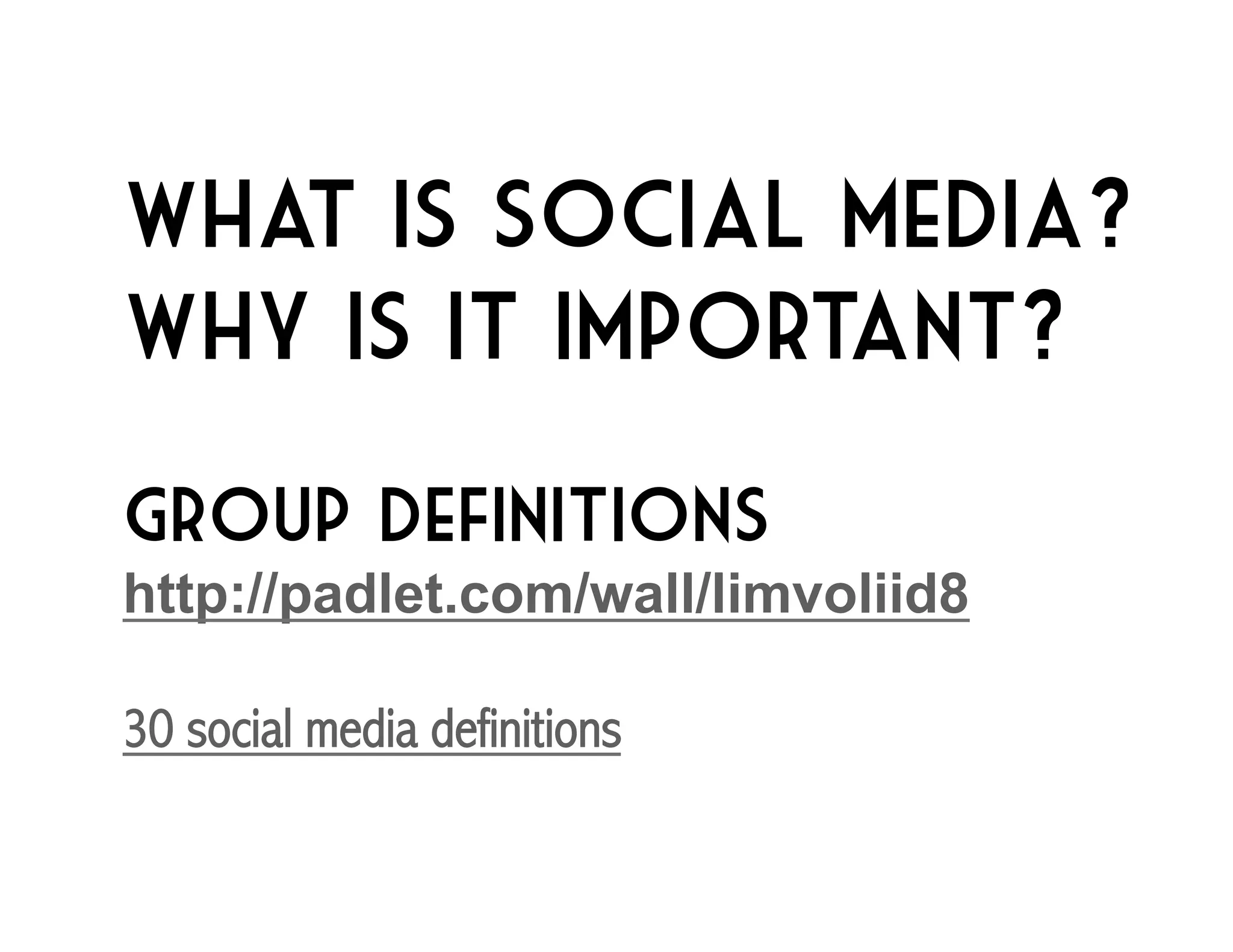
What Is social media? 
Why is it important? 
Group definitions 
http://padlet.com/wall/limvoliid8 
30 social media definitions
Possible ways a tools could be used by an individual 
in a particular context. 
Affordance change with the person using them. 
There are Real or perceived affordances. James Gibson 
”An affordance is a quality of an object, or an environment, that allows an individual 
to perform an action.” Wikipedia 
Discussion: 
Brainstorm a task, brainstorm a social media tool 
Decide on its positive and negative affordances in context of the task. 
Think about affordances in terms of Twitter or Facebook or YouTube. How have these platforms 
developed affordances beyond their original intentions? 
Consider possible affordances of tools for your PKM assignment. 
Gibson, J. J. (1977). The concept of affordances. Perceiving, acting, and knowing, 67-82.
What is social media? 
Allows users to link to each other, contribute and 
share content or commentary. 
Social media facilitates sharing collaboration, 
transparency, conversation. 
Our Week 1 Padlet 
Steiner, Sarah K. Strategic Planning for Social Media in Libraries, 1
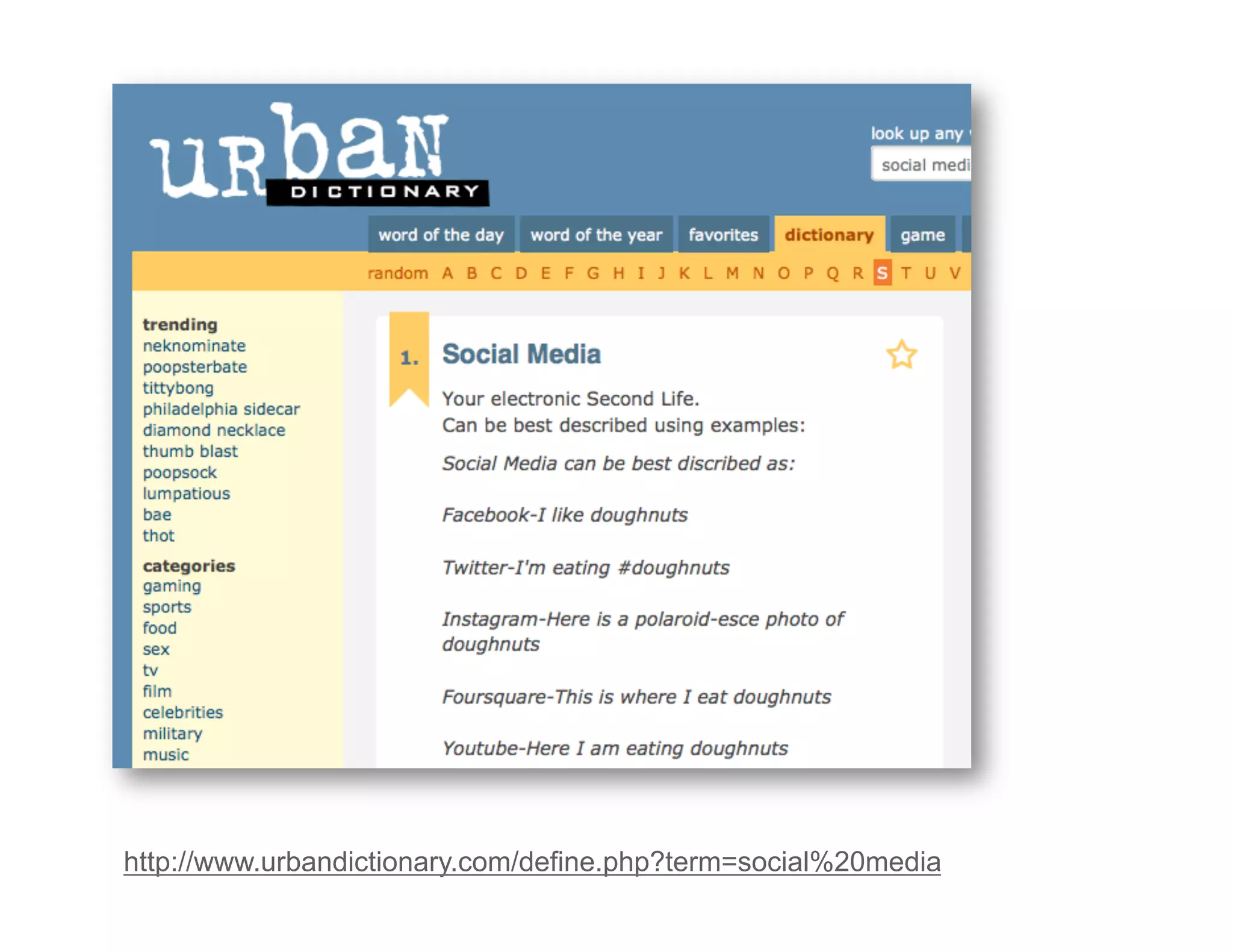
http://www.urbandictionary.com/define.php?term=social%20media
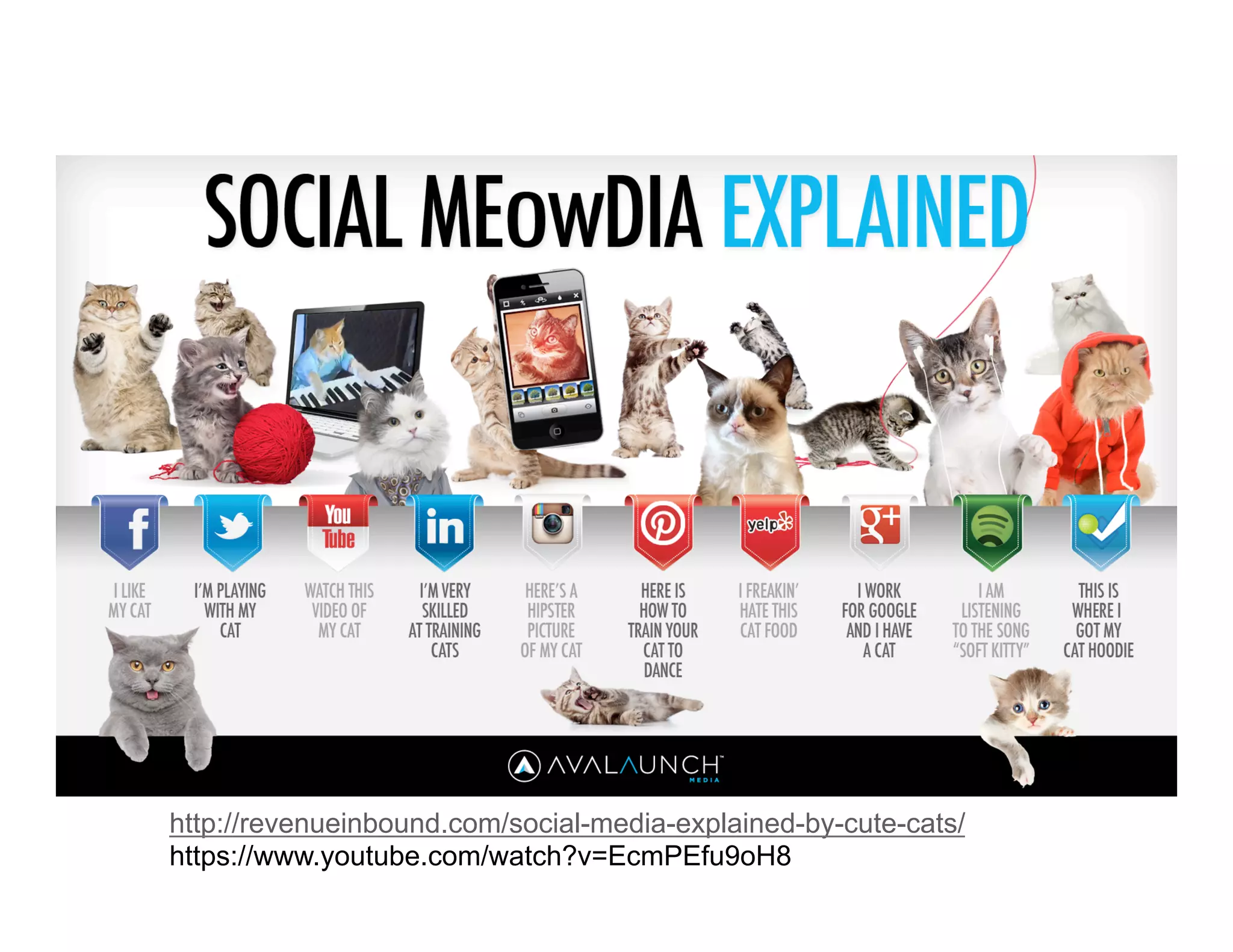
http://revenueinbound.com/social-media-explained-by-cute-cats/ 
https://www.youtube.com/watch?v=EcmPEfu9oH8
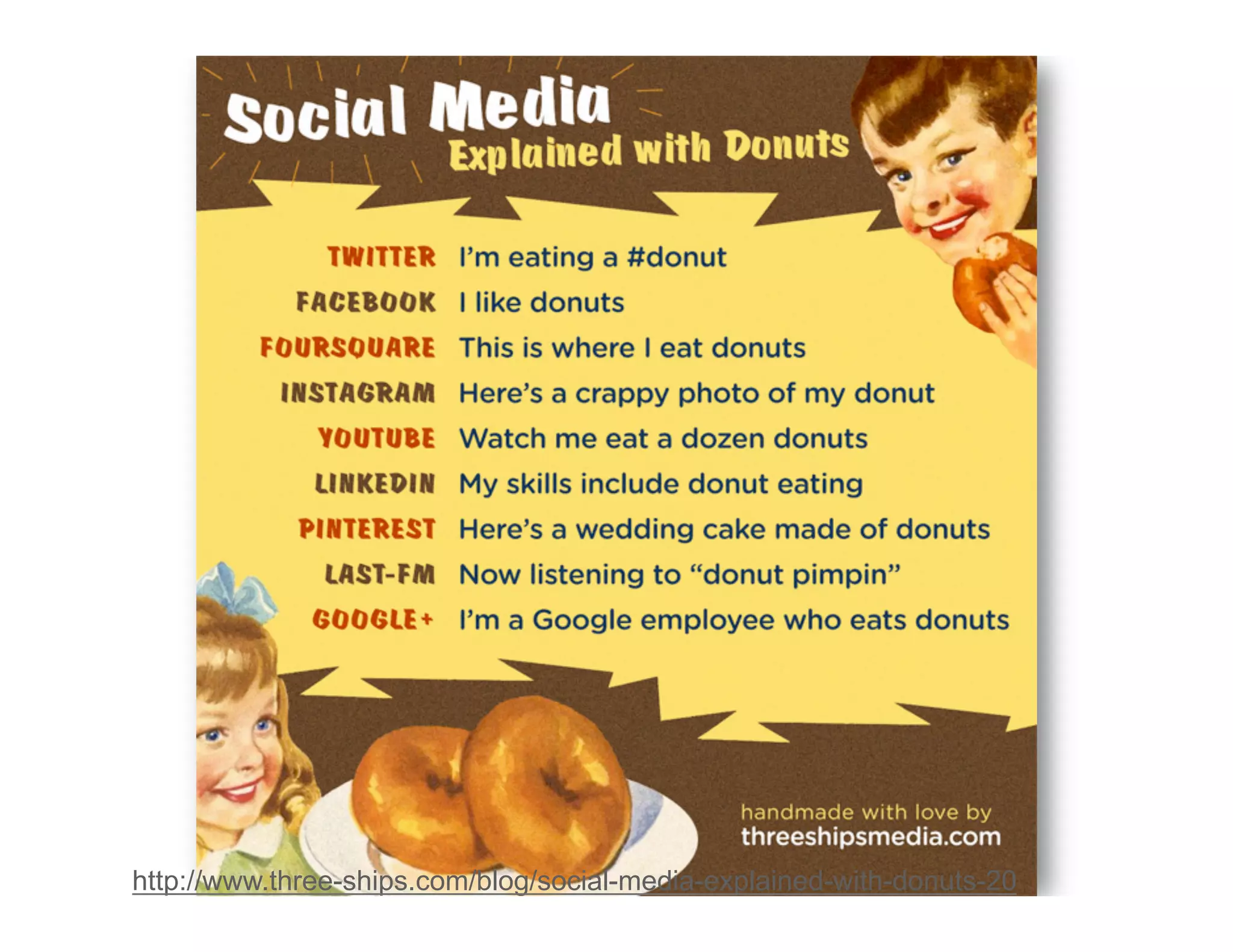
http://www.three-ships.com/blog/social-media-explained-with-donuts-20
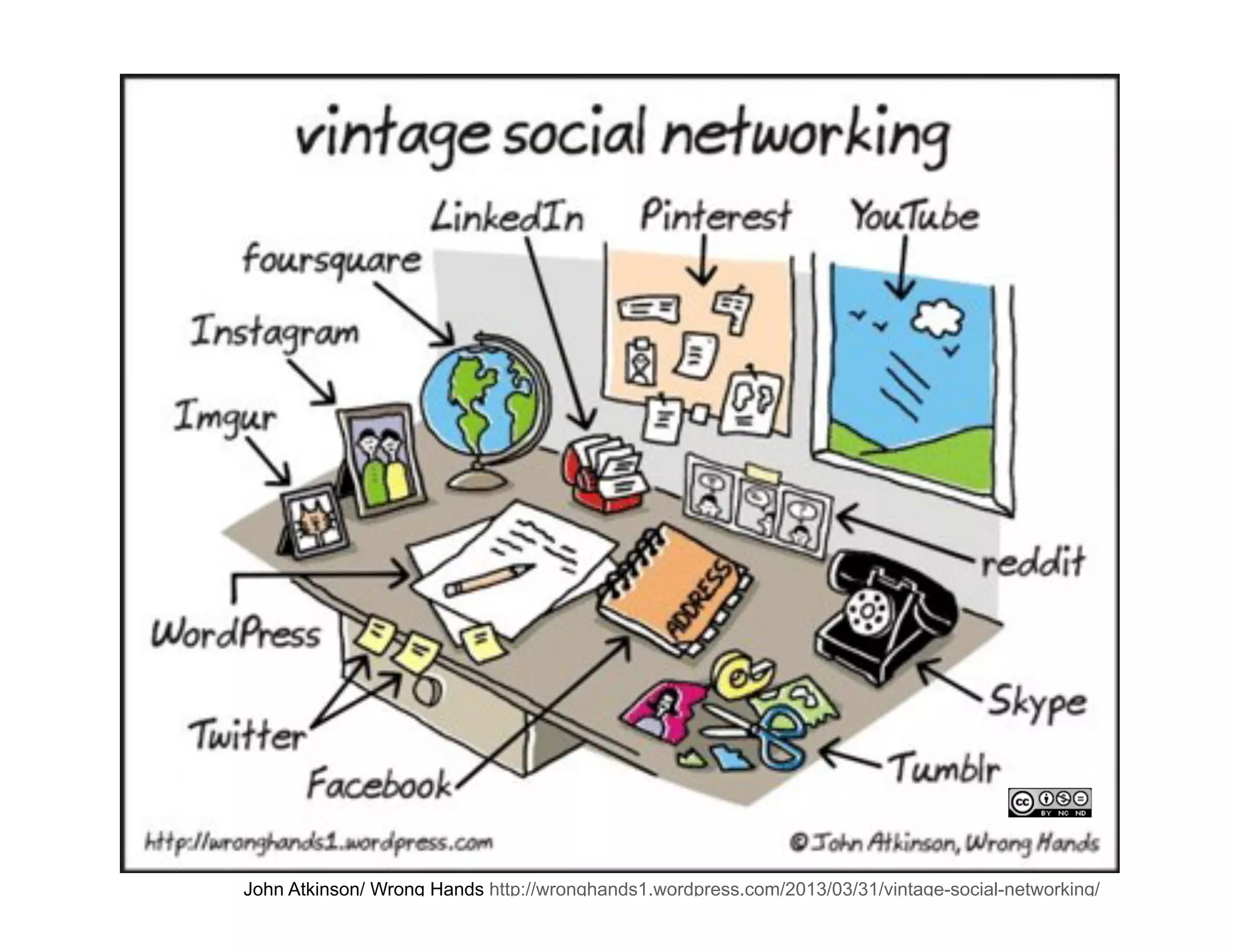
John Atkinson/ Wrong Hands http://wronghands1.wordpress.com/2013/03/31/vintage-social-networking/
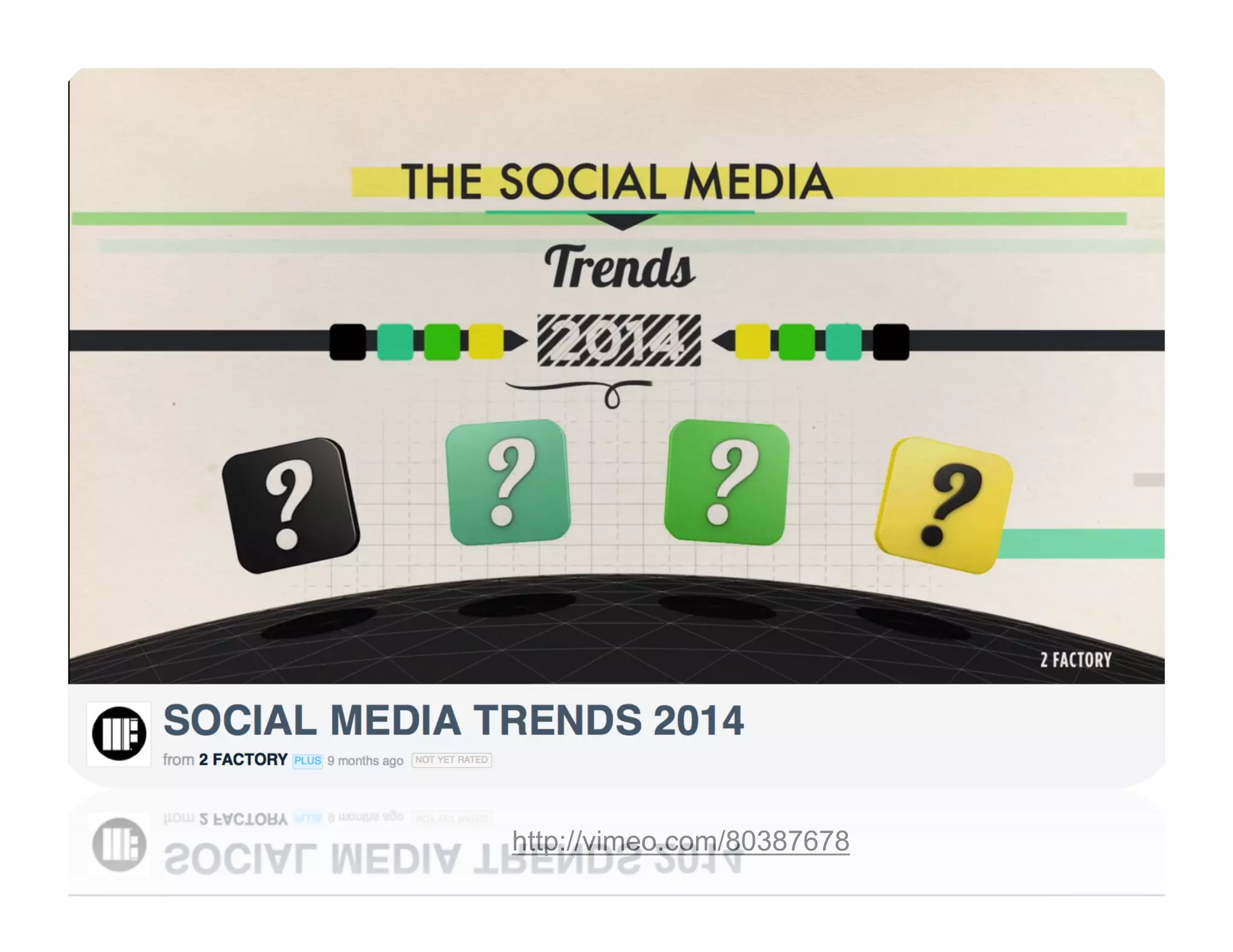
http://vimeo.com/80387678
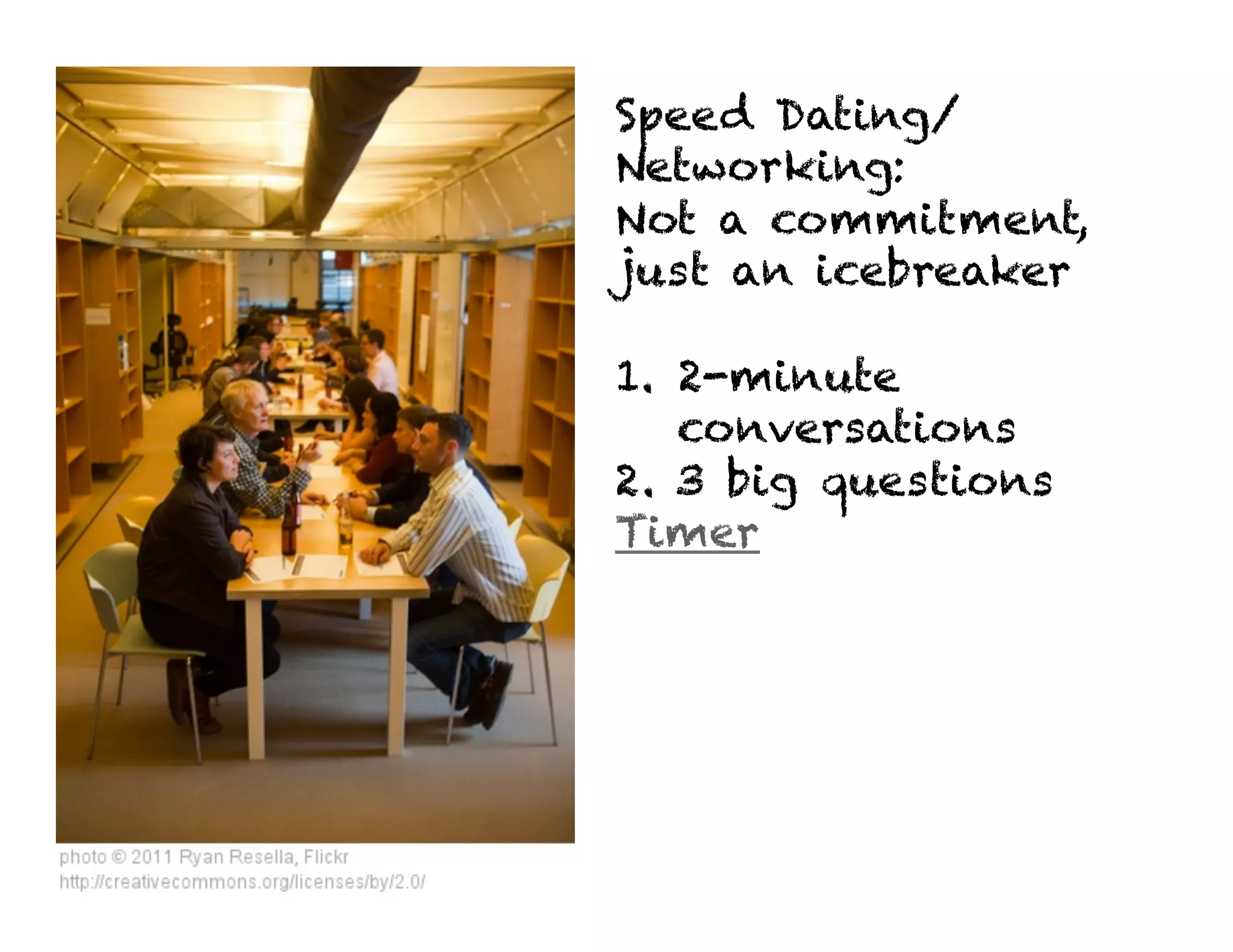
Speed Dating/ 
Networking: 
Not a commitment, 
just an icebreaker 
1. 2-minute 
conversations 
2. 3 big questions 
Timer
Question ideas for 
Speed networking?
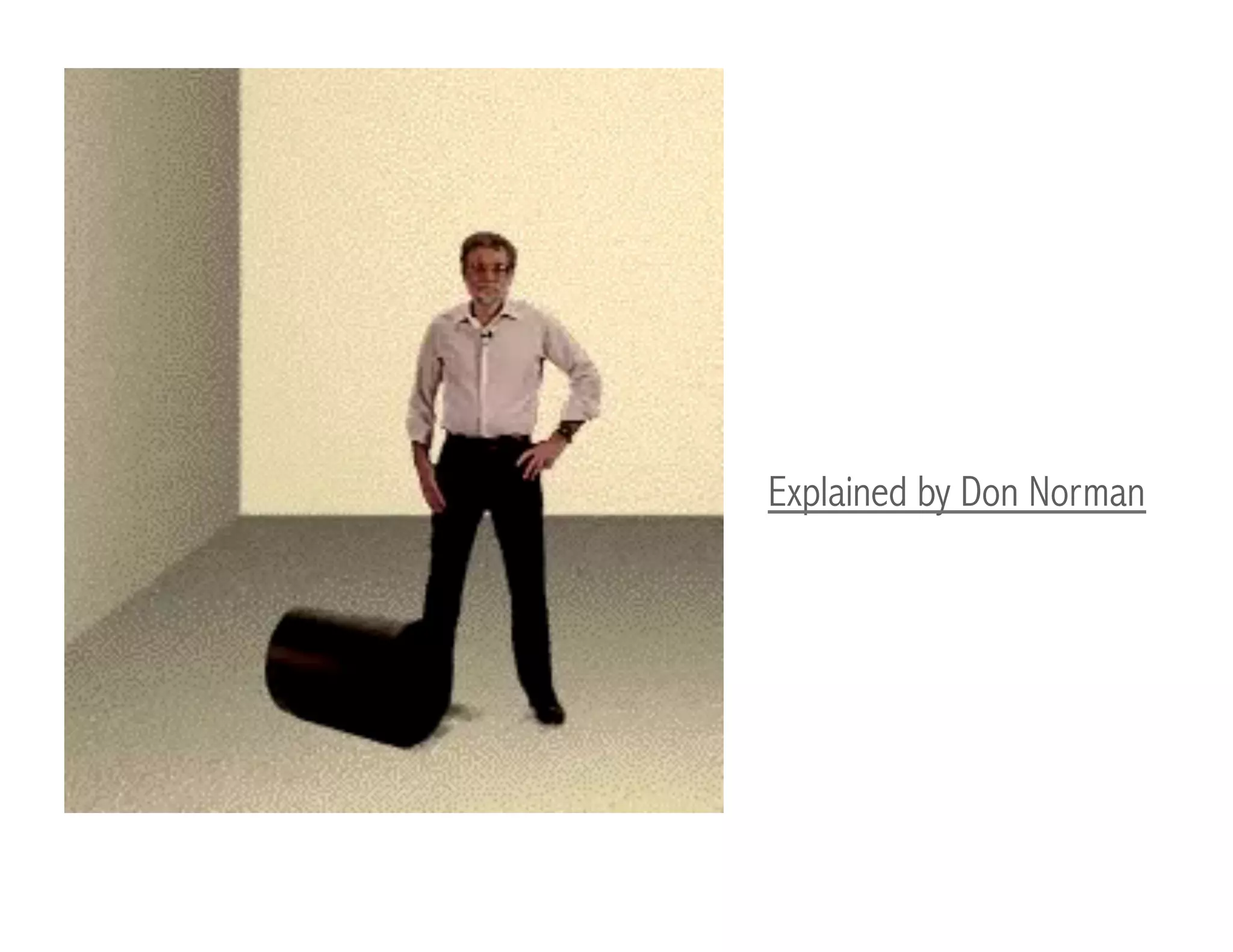
Explained by Don Norman
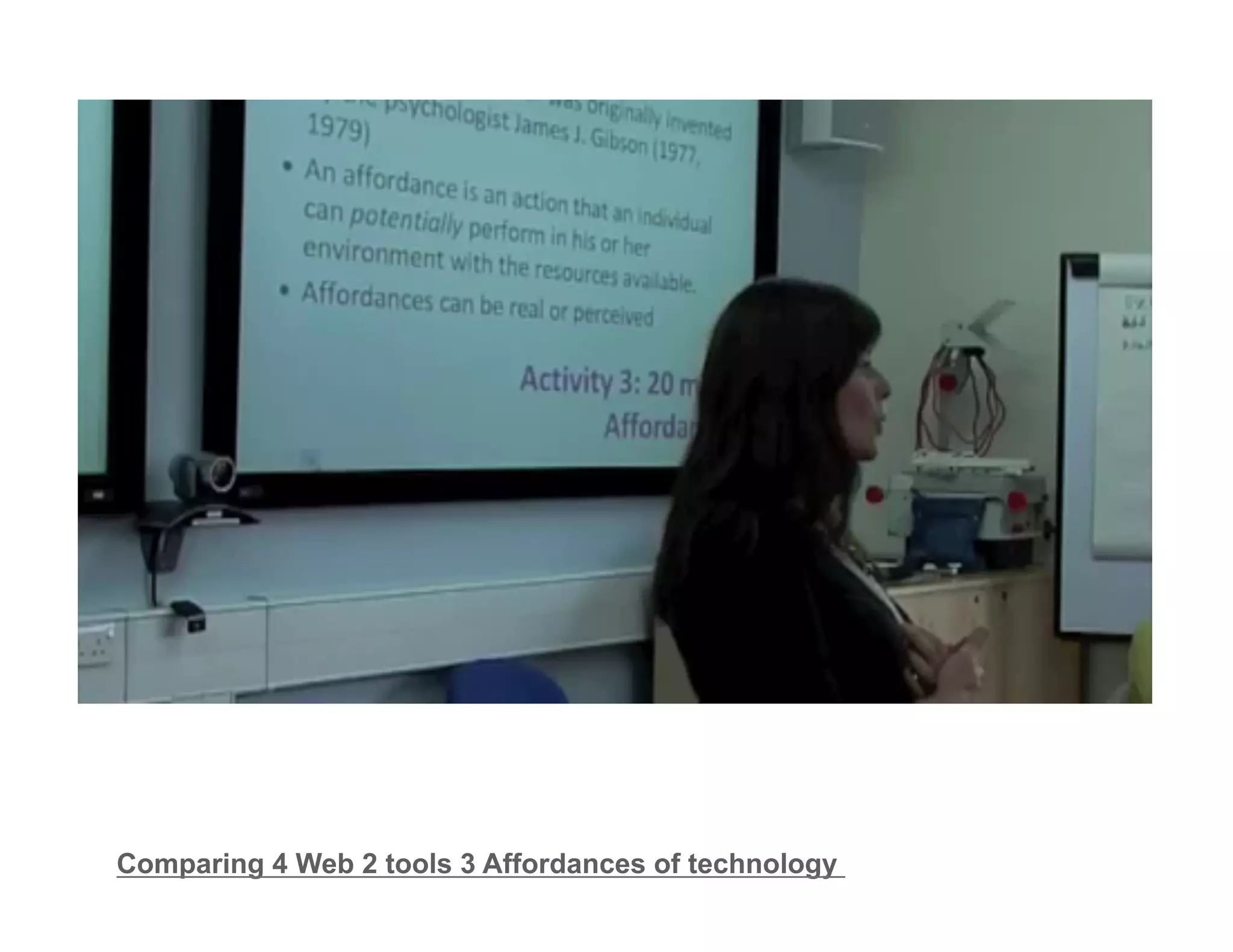
Comparing 4 Web 2 tools 3 Affordances of technology
Thinking about SNA
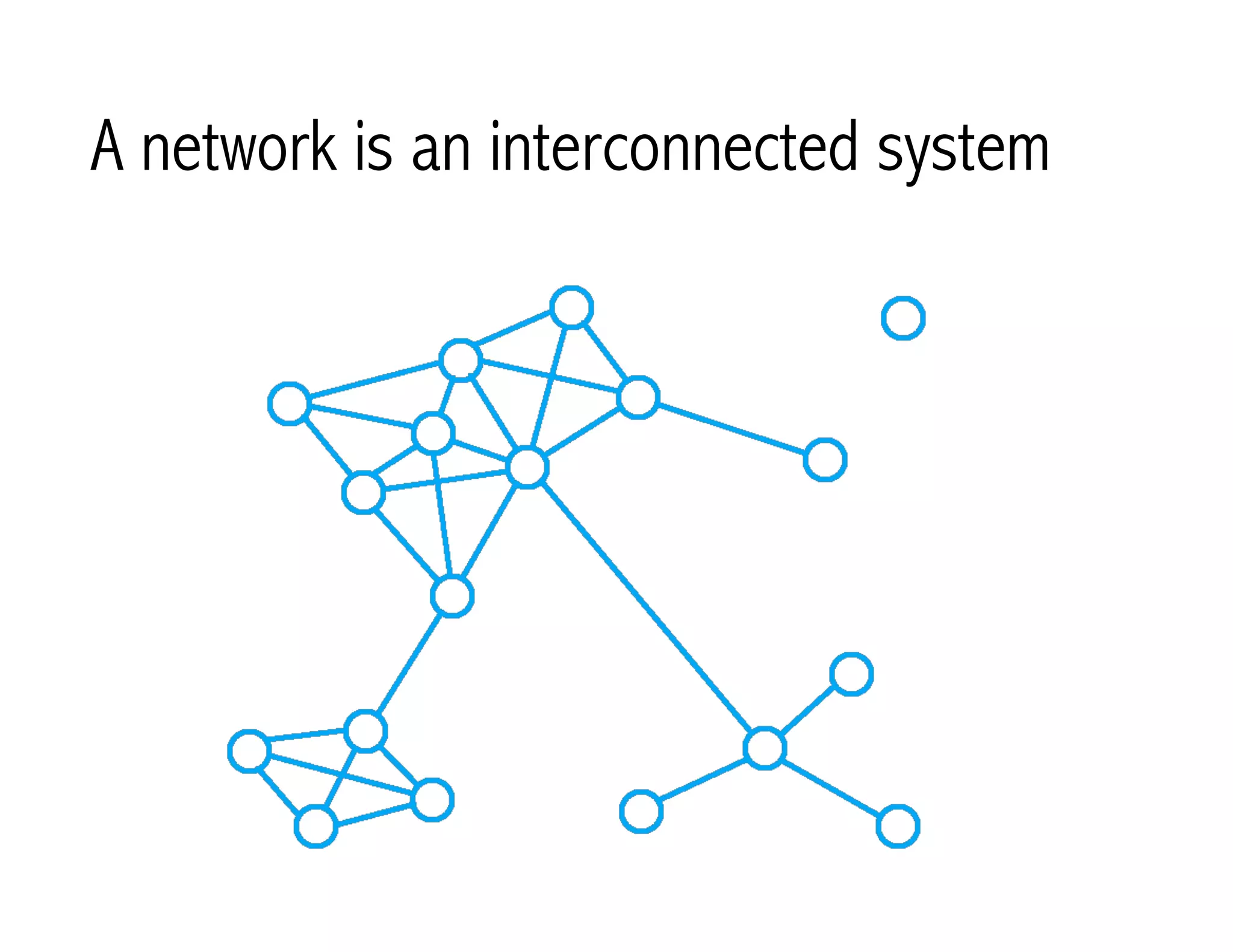
A network is an interconnected system
What is a social network? 
"A social network is a social structure made up of a 
set of social actors (such as individuals or 
organizations) and a set of the dyadic ties between 
these actors. The social network perspective 
provides a set of methods for analyzing the 
structure of whole social entities as well as a variety 
of theories explaining the patterns observed in 
these structures." 
Social Media Issues Lexicon
Or. . . 
Social structure made up of nodes 
tied by interdependency.
What’s a node? 
Individual actors in a network
What’s a tie? 
Connection points in a network
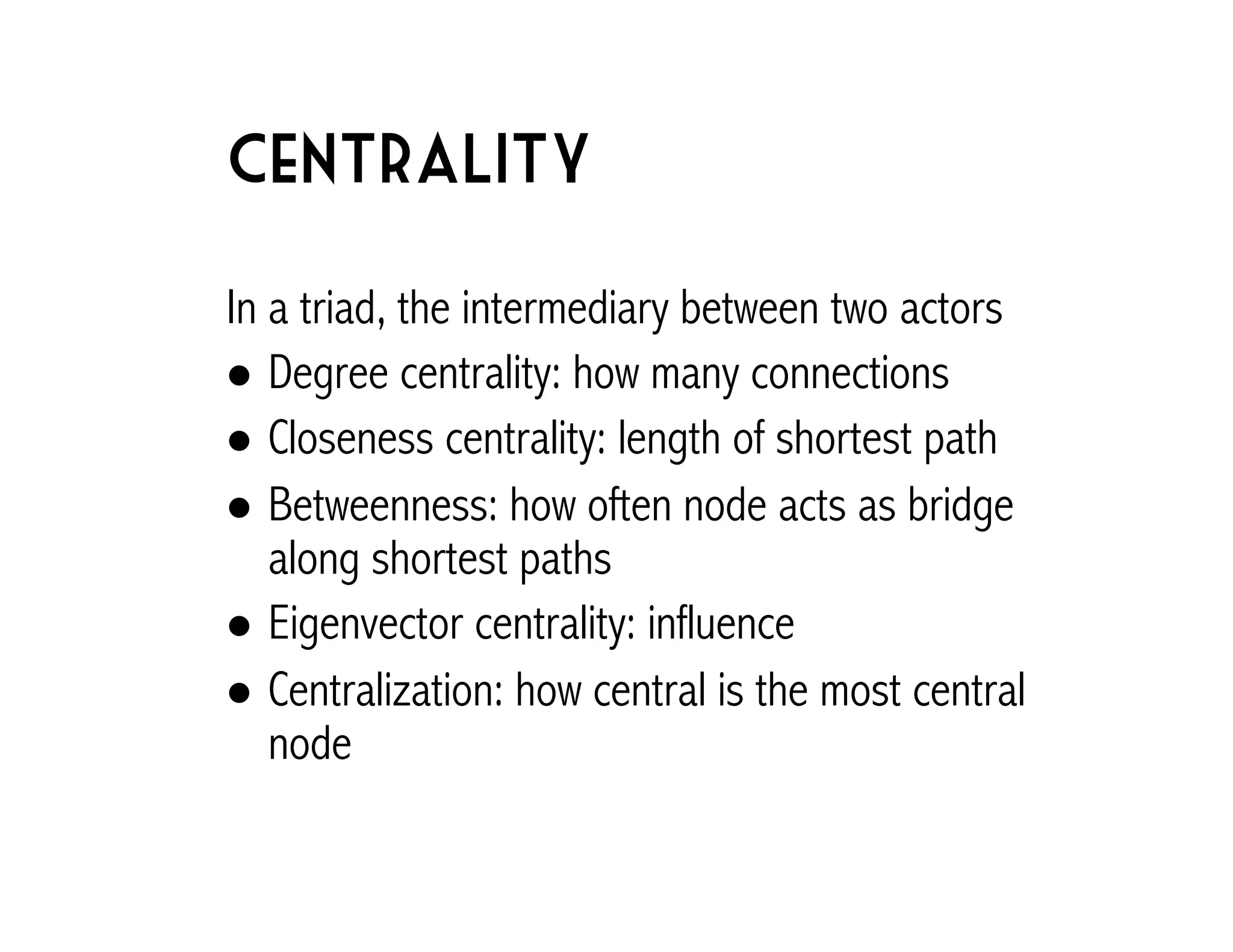
Centrality 
In a triad, the intermediary between two actors 
! Degree centrality: how many connections 
! Closeness centrality: length of shortest path 
! Betweenness: how often node acts as bridge 
along shortest paths 
! Eigenvector centrality: influence 
! Centralization: how central is the most central 
node
Structural holes 
Ronald Burt: 
Absence of ties between two parts of a network 
A broker or a bridge can bring them together
Social networks are studied 
1. Egocentrically: looking at one node and it’s 
purpose 
2. Whole network: studying all the nodes in the 
network environment 
Micro: small networks 
Macro: infomatics-type stuff
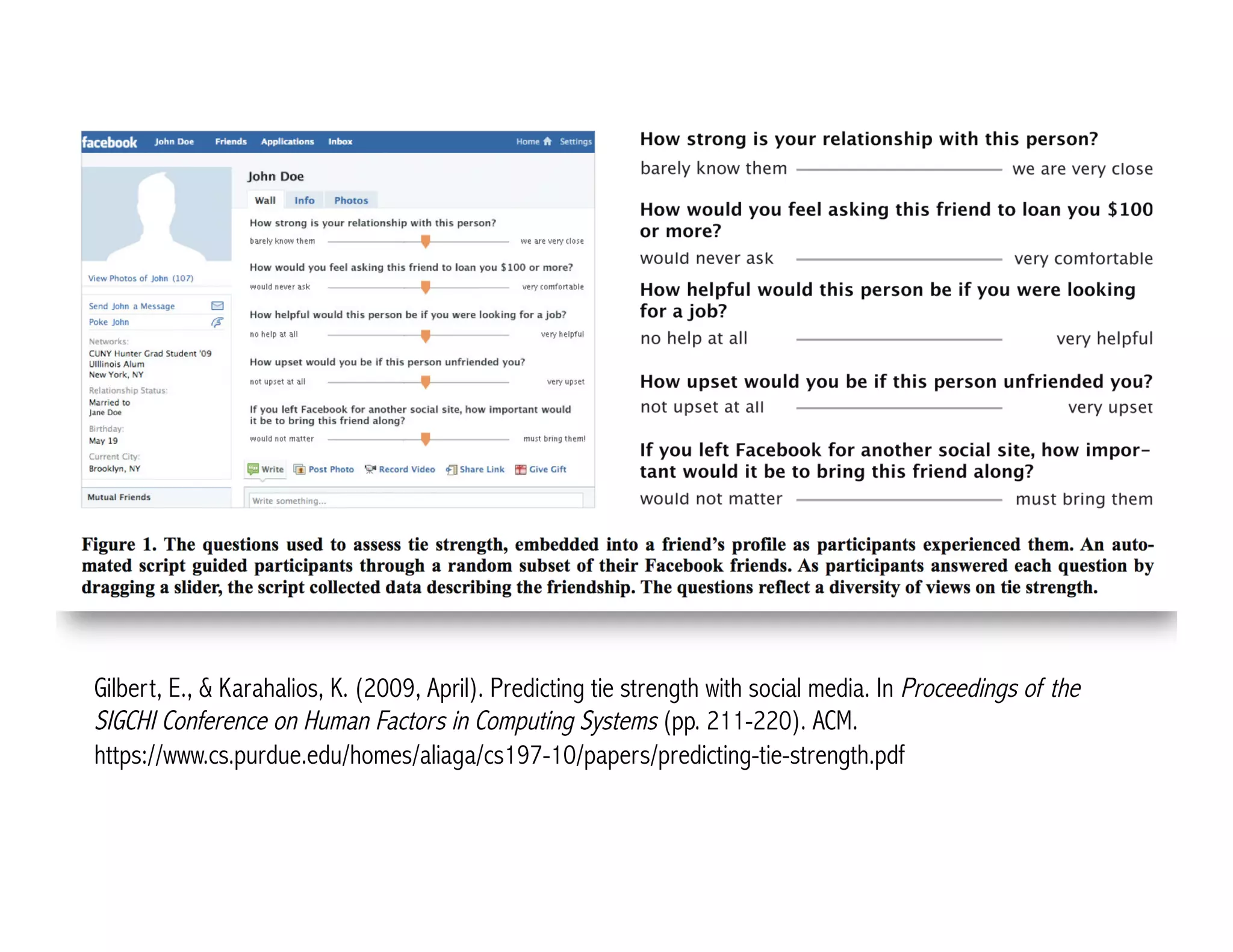
Gilbert, E., & Karahalios, K. (2009, April). Predicting tie strength with social media. In Proceedings of the 
SIGCHI Conference on Human Factors in Computing Systems (pp. 211-220). ACM. 
https://www.cs.purdue.edu/homes/aliaga/cs197-10/papers/predicting-tie-strength.pdf
Howard Rheingold on social 
Network smarts 
New knowledge about the nature of networks is essential for getting 
around in this century because digital data and human 
communication networks erase barriers and multiply possibilities for 
one of our most powerful capabilities: our sociality. 
Net Smart, p. 23 
Derives from a variety of disciplines that had previously not been 
connected (digital networks and human social behavior) . . . 25 
(Net Smart: How to Survive Online, MIT, 2013)
reciprocity 
social norm of in-kind responses to the 
behavior of others; in cultural anthropology, 
defined as people's informal exchange of 
goods and labour. 
Social Media Issues Lexicon
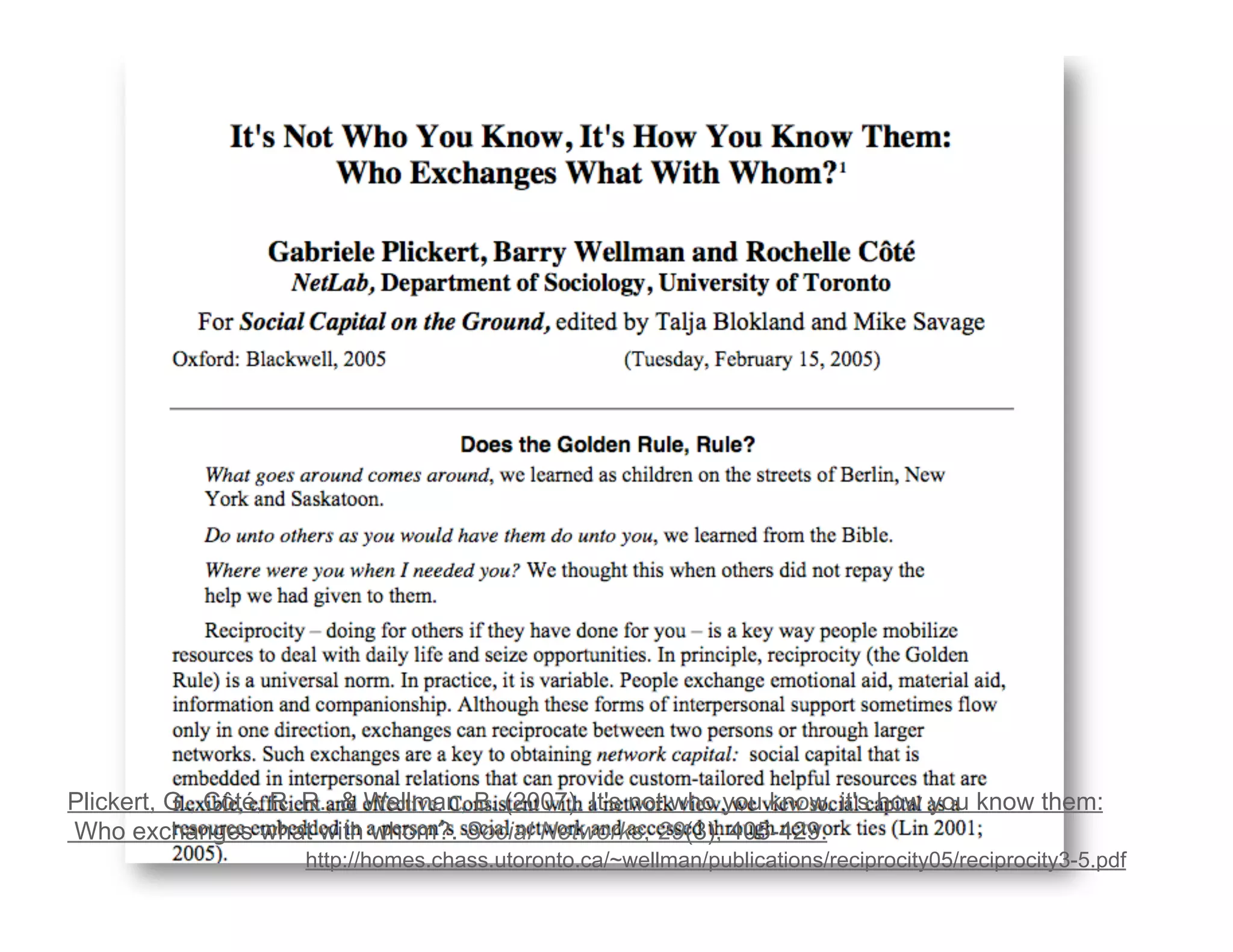
Plickert, G., Côté, R. R., & Wellman, B. (2007). It's not who you know, it's how you know them: 
Who exchanges what with whom?. Social Networks, 29(3), 405-429. 
http://homes.chass.utoronto.ca/~wellman/publications/reciprocity05/reciprocity3-5.pdf
More than who you know 
But who/what you have access to 
because of/via who you know 
Social capital increases when you use it.
Milgram's Six Degrees 
Anyone can be connected to any other person 
through chain of acquaintances with no more 
than five intermediaries.
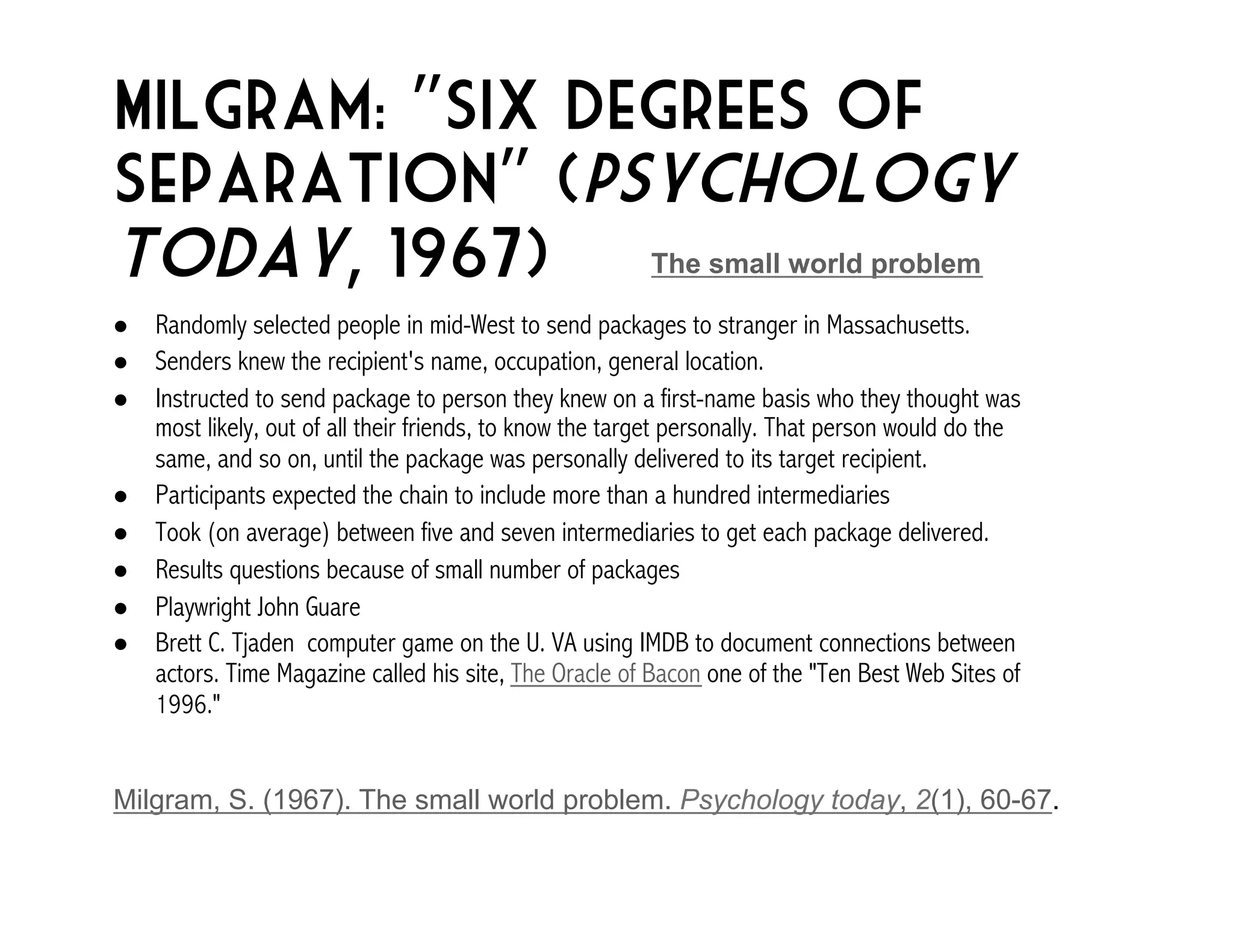
Milgram: “Six Degrees of 
Separation” (Psychology 
Today, 1967) 
The small world problem 
! Randomly selected people in mid-West to send packages to stranger in Massachusetts. 
! Senders knew the recipient's name, occupation, general location. 
! Instructed to send package to person they knew on a first-name basis who they thought was 
most likely, out of all their friends, to know the target personally. That person would do the 
same, and so on, until the package was personally delivered to its target recipient. 
! Participants expected the chain to include more than a hundred intermediaries 
! Took (on average) between five and seven intermediaries to get each package delivered. 
! Results questions because of small number of packages 
! Playwright John Guare 
! Brett C. Tjaden computer game on the U. VA using IMDB to document connections between 
actors. Time Magazine called his site, The Oracle of Bacon one of the "Ten Best Web Sites of 
1996." 
Milgram, S. (1967). The small world problem. Psychology today, 2(1), 60-67.
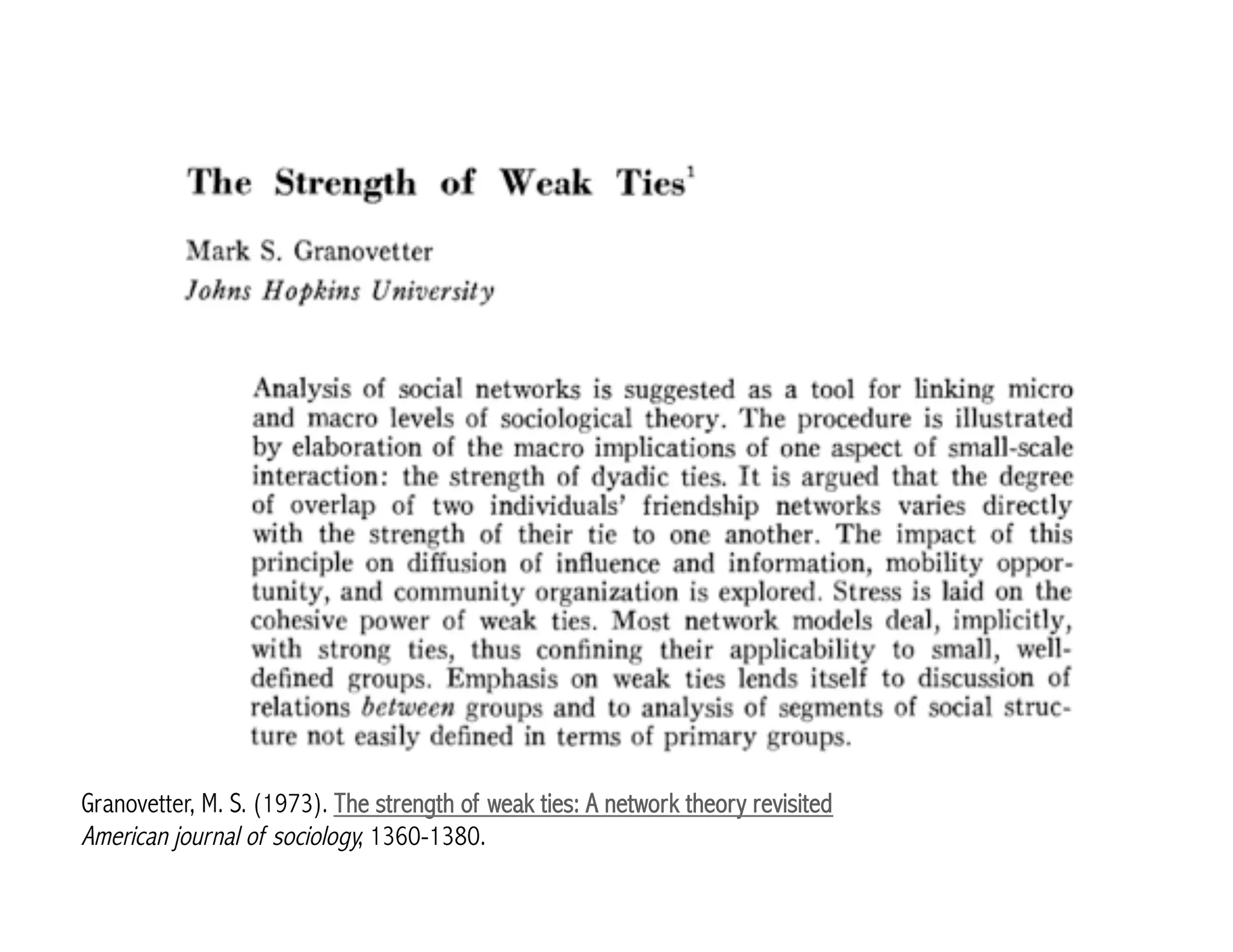
Granovetter, M. S. (1973). The strength of weak ties: A network theory revisited 
American journal of sociology, 1360-1380.
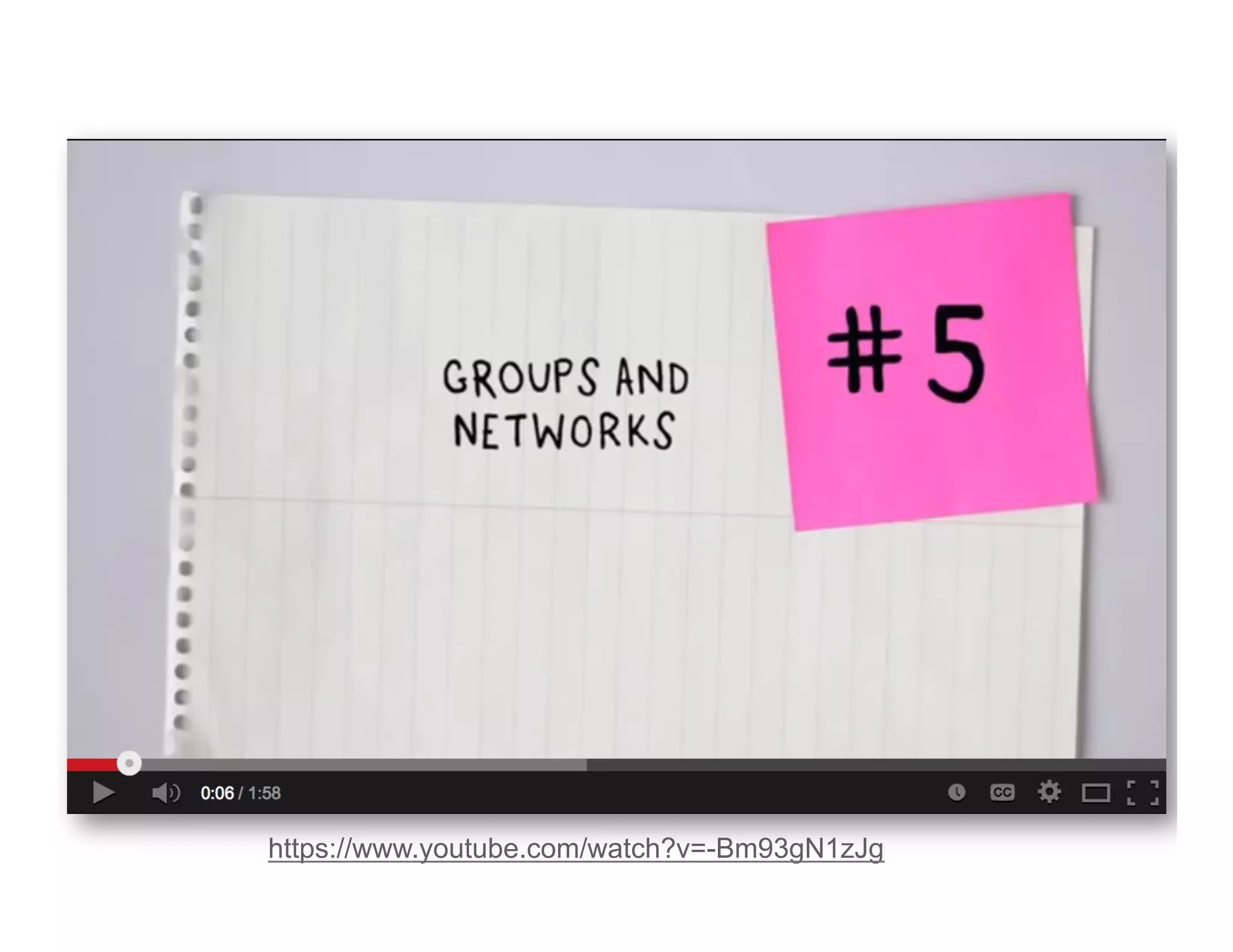
https://www.youtube.com/watch?v=-Bm93gN1zJg
Mark Granovetter 1973 study 
“The Strength of Weak Ties” 
! Before the study, strong ties considered most 
important 
! Study show weak ties mattered a lot! 
! People found jobs in their network from people they 
didn’t know all that well, more often than from those 
they knew well. 
! Also important—people who are nothing like you
How did Granovetter 
measure tie strength? 
! Time: how much you spend with a person, how 
often you see them, how long you’ve known them 
! Emotional intensity: how strong are the emotions 
you share, experiences with strong emotions 
! Intimacy: secrets, vulnerabilities, personal 
revelations 
! Reciprocal services: favors, if you want some one 
to trust you, ask them for a favor. We tend to do 
favors for people with whom we have stronger 
ties
You are more likely to get new information from 
people you don’t know very well 
You have a lot in common with your strong ties 
When you interact with weak ties, you talk about 
things you don’t talk about every day 
Job information comes more likely from weak ties
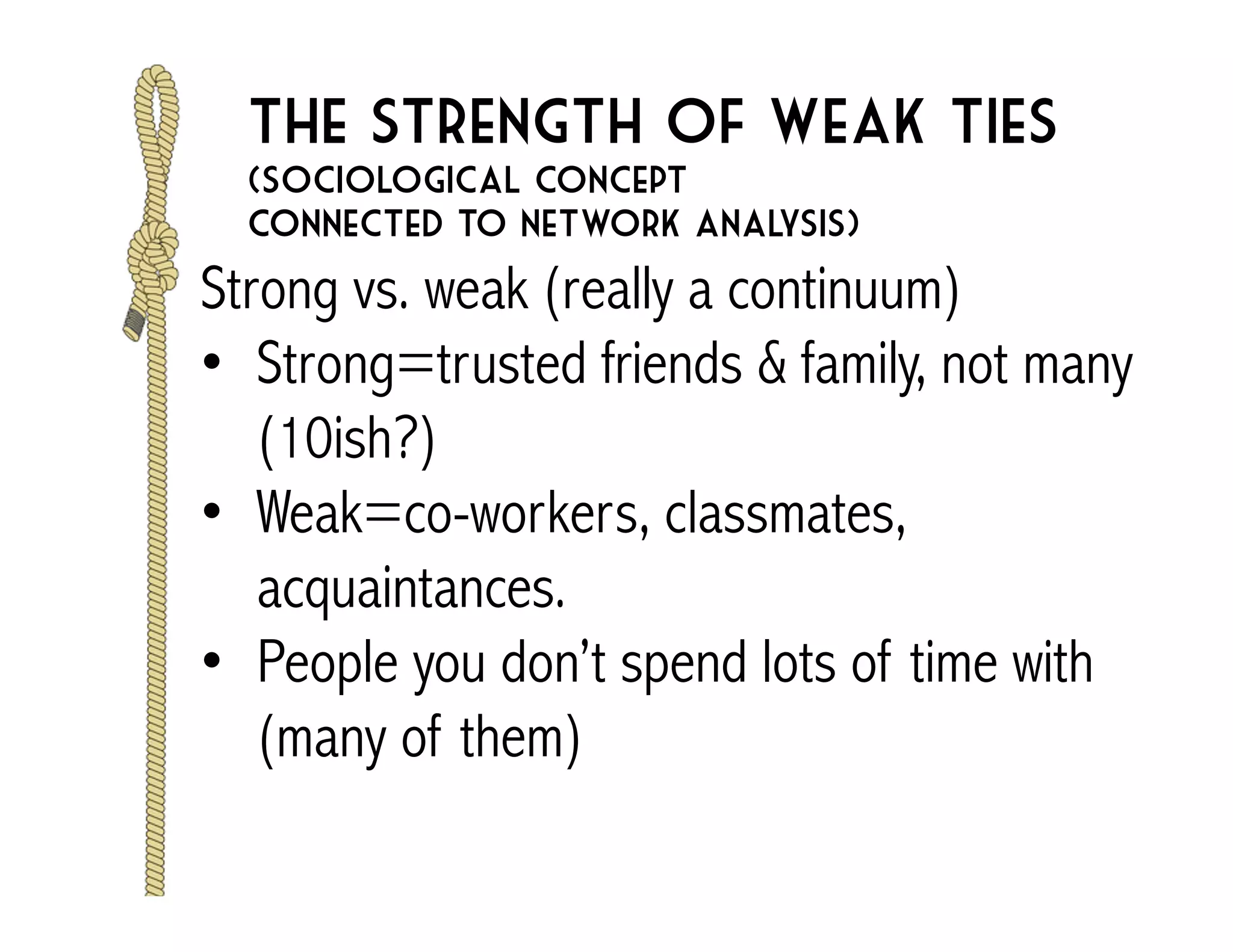
The strength of weak ties 
(sociological concept 
connected to network analysis) 
Strong vs. weak (really a continuum) 
• Strong=trusted friends & family, not many 
(10ish?) 
• Weak=co-workers, classmates, 
acquaintances. 
• People you don’t spend lots of time with 
(many of them)
Additional Influences on tie 
strength 
! Granovetter: four tie strength dimensions: amount of time, 
intimacy, intensity and reciprocal services. 
! Burt: structural factors like network topology and informal 
social circles 
! Wellman and Wortley: emotional support--advice on family 
problems=stronger ties 
! Nan Lin, et al.,: social distance—socioeconomic status, 
education level, political affiliation, race and gender
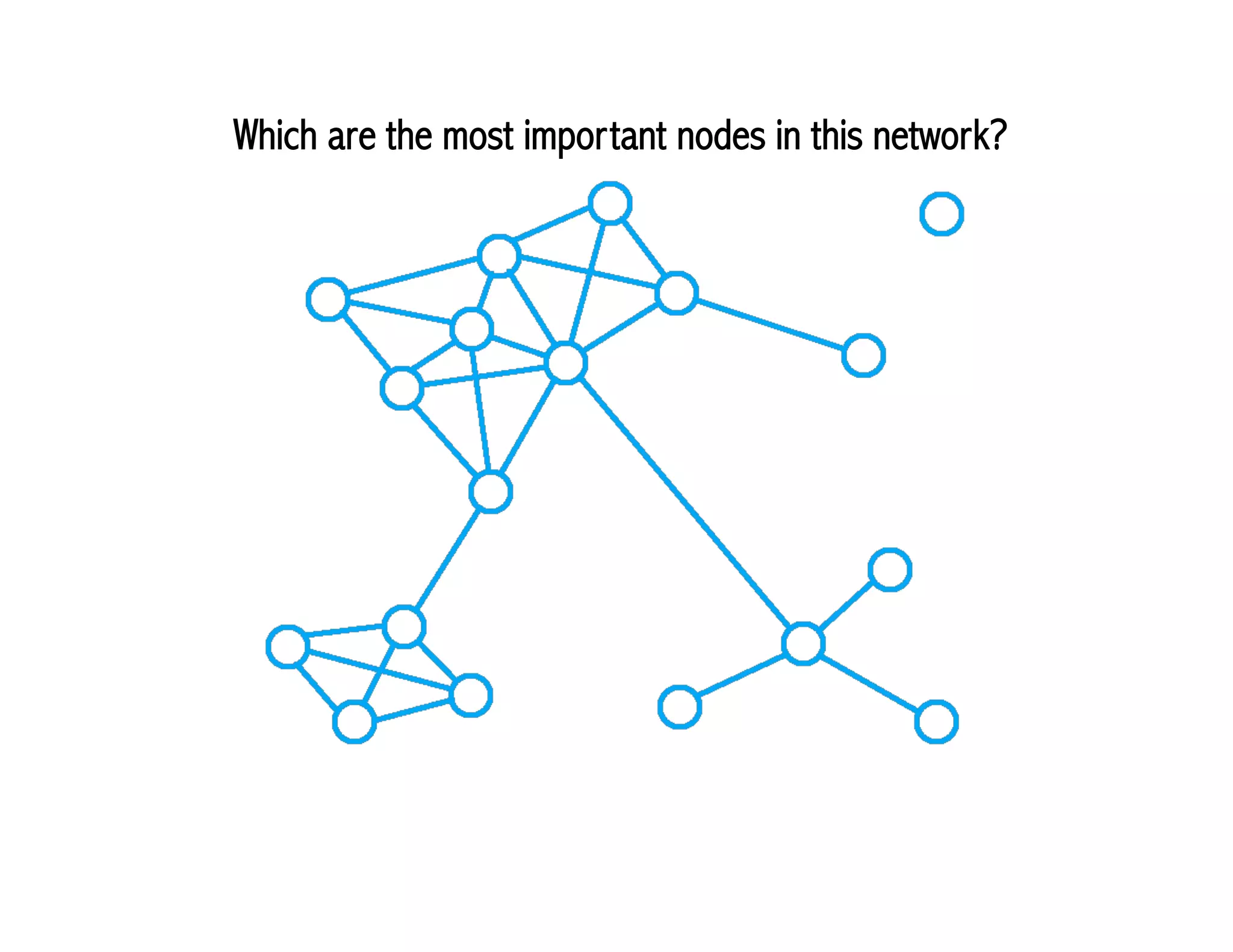
Which are the most important nodes in this network?
Think about jokes and ties
Two types of social capital (Robert 
Putnam) 
! Bonding: emotional & substantive support, 
usually through strong ties 
! Bridging: new information possible, often through 
weak ties to diverse groups 
Which does the internet support most?
Bridges 
! Tie strength is related to how information spreads 
through networks 
! Strong ties more trusted 
! Strong ties overlap 
! Strong ties are rarely bridges 
! Weak ties lead to ideas beyond and help us make 
discoveries 
! Weak ties most important in social networks 
! Information reaches larger number of people diffused 
through weak ties 
! Most times weak ties form bridges in networks, 
connecting groups
Advice suggested by the research 
Leave your walled garden 
Find communities 
Develop weak ties in those communities 
You can’t build a network around the people you 
already love 
Reach out 
Bridge!
Implications 
When you create and share content to move 
across weak ties, you reach new people, 
attract opportunities, access new content
! Write your strong ties in a circle 
! Connect them to each other 
! Darken 
! Weak ties connect us to other groups 
! Strong ties are often connected strongly to 
each other 
! Tie strength can be studied qualitatively 
and quantitatively 
! Think about bridges and to whom they lead 
you
Assignment 1 
Based on Chapter 5: Steiner
What is strategic planning? 
! Identify needs of your target audience 
! Identify ways in which you might serve those 
needs 
! Identify ways to respond confidentially and 
proactively to changes in those needs 
Steiner, Sarah K. Strategic Planning for Social Media in Libraries. 3
Major elements: 
! In-class sharing of initiatives of a social media presence or 
campaign. (This may be a Web page on a social media 
platform, a curation effort, or any other selected platform that 
meets the group/institution’s needs. This will be presented at 
the last or next to last class meeting, depending on class size. 
This should look like a presentation/pitch of prototype(s) a 
client at our Design Faire (final or next-to-last class meeting) 
! A five to seven-page written paper, based on Steiner’s Chapter 
5, to be submitted during one of the last two class meetings. 
Please also post your paper as a PDF with an attractive title 
image on the RU 587 Social Media Initiatives Pinterest Board.
What to include: 
Your five to seven-page written document should flesh out the considerations 
addressed in you proposal, including: 
! target groups/audience 
! audience environmental scan (what do they need or care about?) using a couple 
(NOT ALL) of the strategies Steiner suggests 
! a SWOT analysis (of your strengths, opportunities, weaknesses, opportunities, 
threats) 
! mission and vision statements (Ask about what already exists.) 
! an abbreviated, one-goal strategic plan, selecting social media initiatives, action 
items, and measures 
! select and develop social media platforms based on the action steps for one or 
more of the social media initiatives (this will be determined by the size of your 
team) and the affordances offered by the selected platform(s). You may choose 
to use some sort of mash-up.
! brief exploration of any relevant research relating to use of your 
selected platform for this type of initiative 
! description of your possible marketing strategies 
! assessment of the initiative’s feasibility/scalability/sustainability: Can 
the project be useful long-term? Is it likely to be sticky? Will others 
want to continue it? 
! predictions of measures of success: How might the impact of your 
social media initiative be measured? (as established in your goal) 
! summary of community feedback solicited via social media 
! critical reflection of process and team contributions 
! design document, diagrams or mockups to be used in the 
presentation (as appendices beyond the page count) 
! Please share your papers and files/links for any presentations in 
the eCollege Dropbox
Types of social media you might use for 
your initiative (There are many more 
options!) 
! Social networking: Facebook, LinkedIn 
! Social news: Digg, Reddit 
! GPS/Location based: Foursquare 
! Websites: Google Sites, Weeby, 
! Wikis 
! Blogs 
! Microblogs 
! Booksharing: GoodReads, LibrarThing, Shelfari, Biblionasium 
! Bookmarking 
! Virtual Worlds 
! Virtual Gaming Worlds 
! Q & A: Yahoo! Answers, Wiki Answers 
! Image/Video sharing: Flickr, Picassa, YouTube Channel 
! Slide sharing: SlideShare, Author Stream 
! Storage: Dropbox
Ask: 
Which Best meets determined 
organizational needs? 
Which will help develop 
brand loyalty?
Assignment 2: Social media 
book review/remix 
Did you pick a title from our 
Pinterest Reading List and sign up for a date?
Assignment 3: Personal Knowledge 
Management/Curation 
Did you consider a platform and topic for PKM and 
share it on our Google Doc?
The Transparent Library 
The Hyperlinked Library 
http://tametheweb.com/ 
TTW White Paper “The Hyperlinked Library” here 
(download the PDF here) 
About Michael 
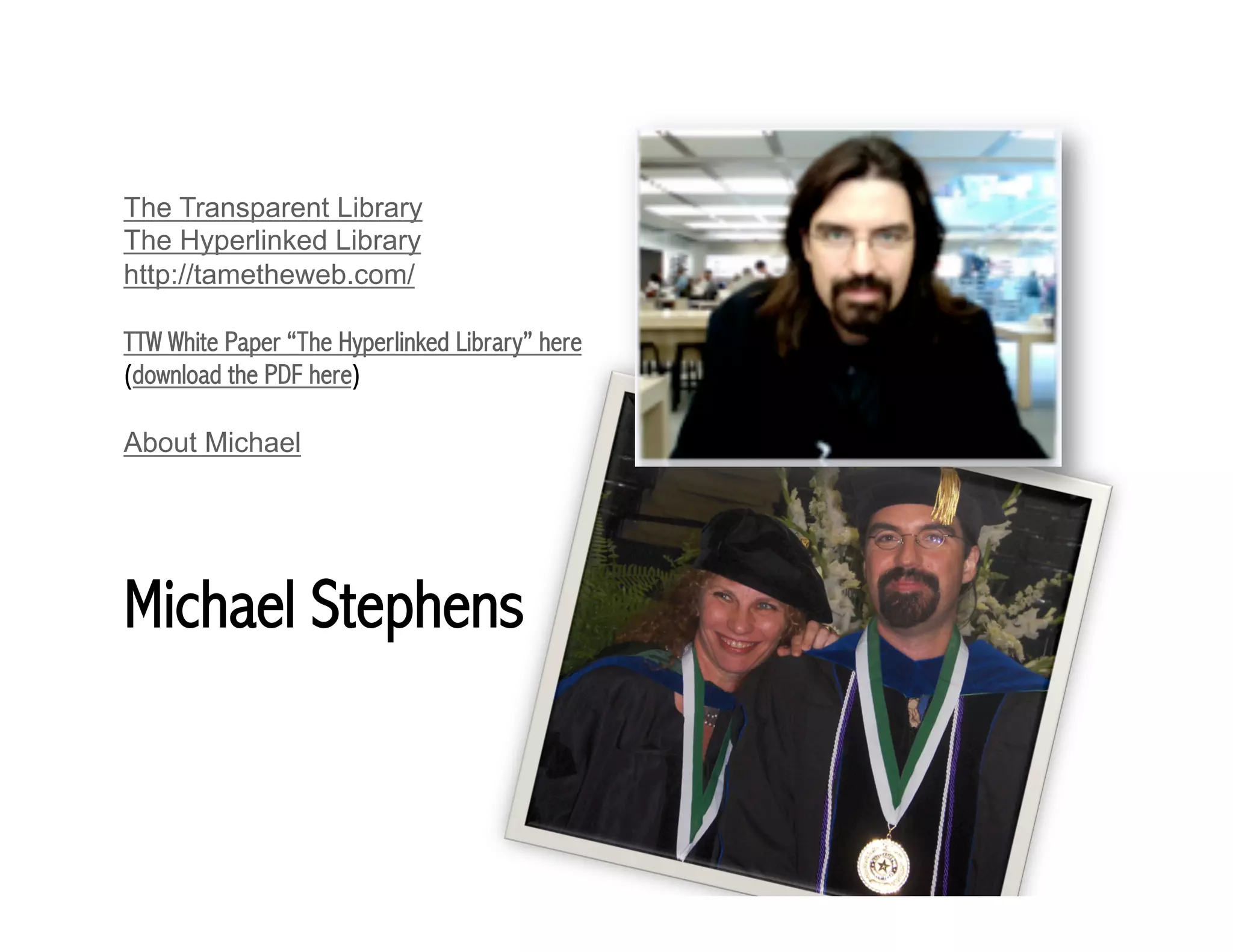
Michael Stephens
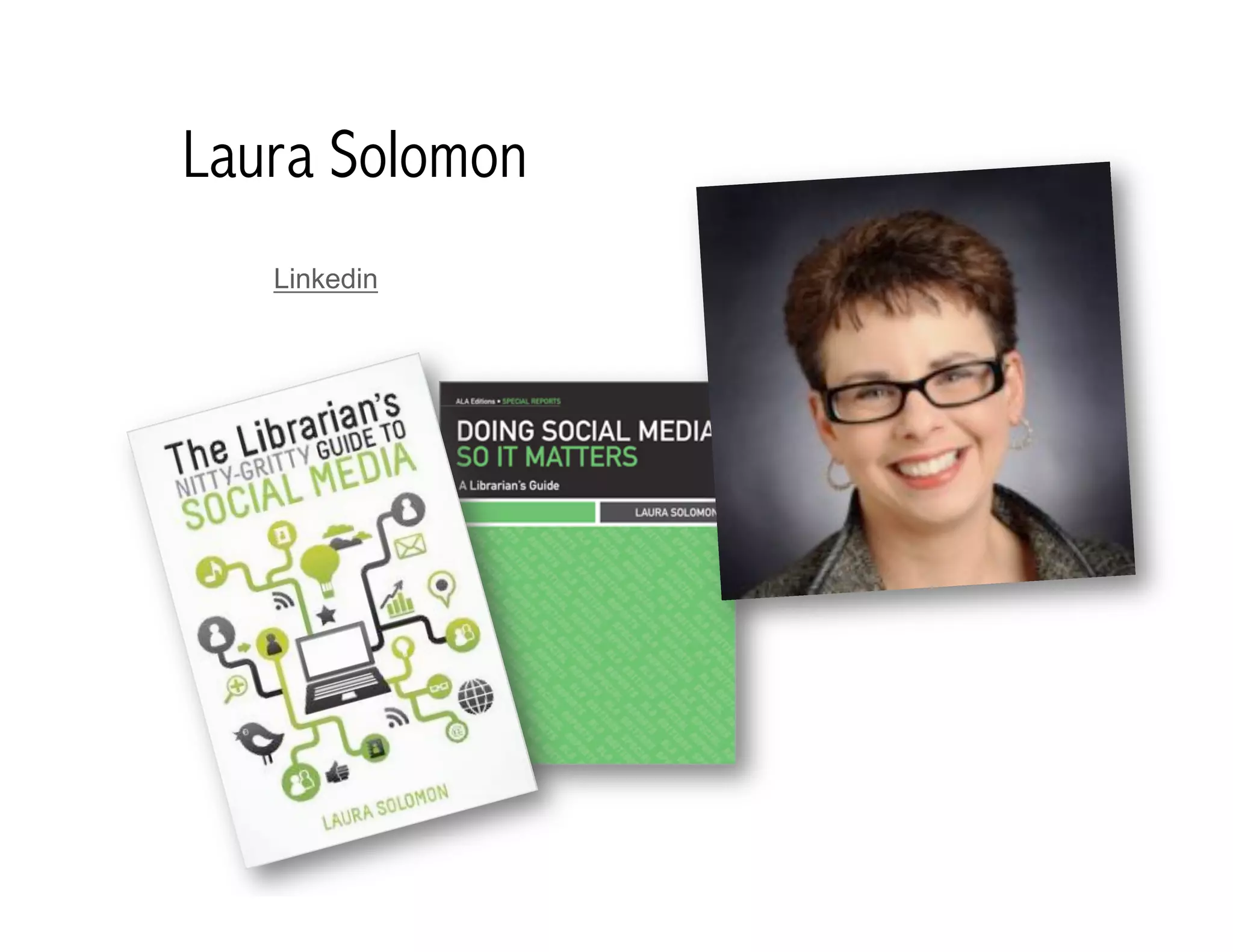
Laura Solomon 
Linkedin
For next week: 
Make decisions about Assignment 1. Do some outreach! 
Commit to a book and a week for Assignment 2 here. Start reading! 
Make sure you are in our Class Directory. 
Let us know where your PKM container is for Assignment 3 and start curating 
around your interest. 
Tweet to #RU587 
Read about and prepare questions for Laura Solomon and Michael Stephens to 
post on this Padlet: http://padlet.com/joycevalenza/socialcapital 
9/24 Colloquium
Also for next week: 
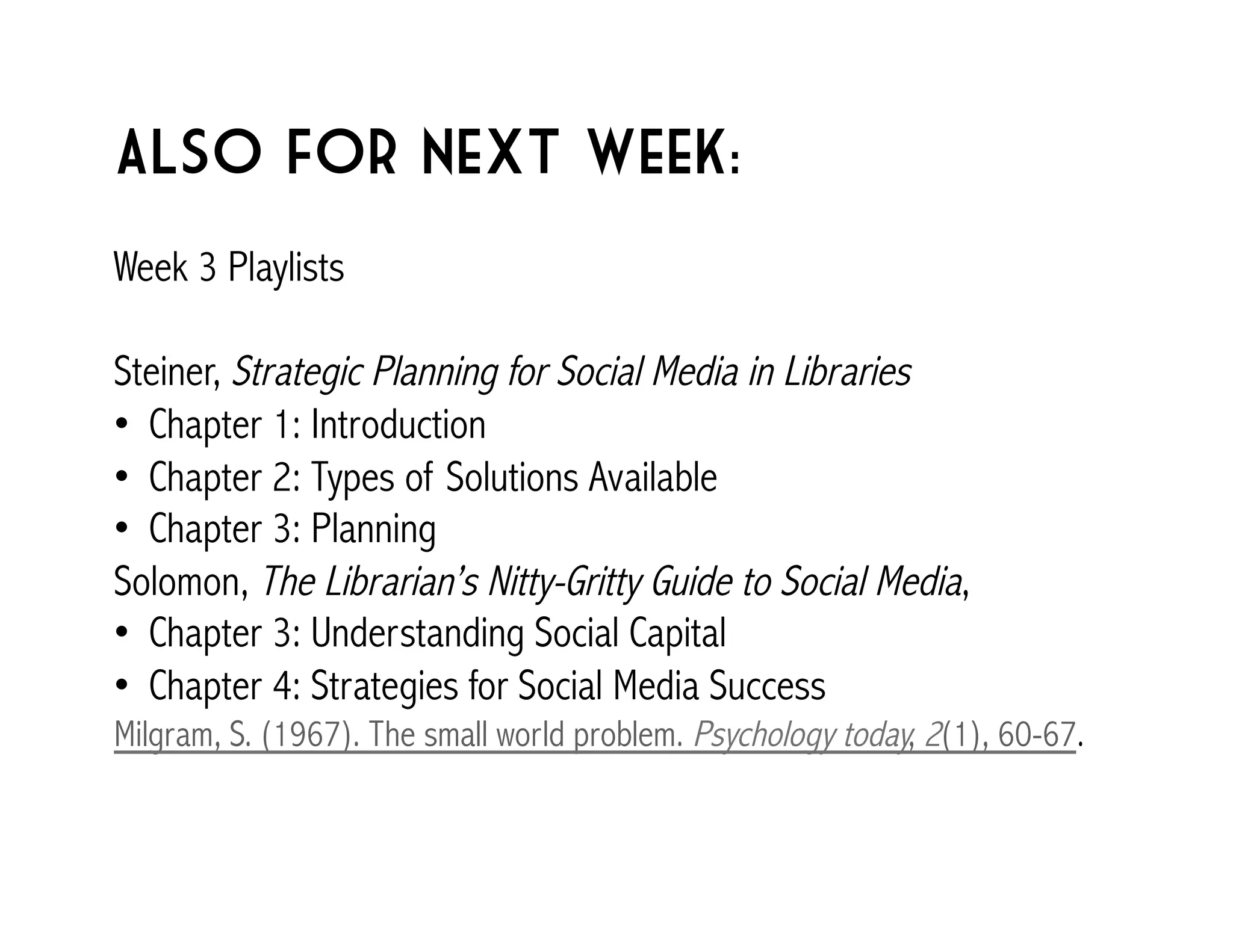
Week 3 Playlists 
Steiner, Strategic Planning for Social Media in Libraries 
• Chapter 1: Introduction 
• Chapter 2: Types of Solutions Available 
• Chapter 3: Planning 
Solomon, The Librarian’s Nitty-Gritty Guide to Social Media, 
• Chapter 3: Understanding Social Capital 
• Chapter 4: Strategies for Social Media Success 
Milgram, S. (1967). The small world problem. Psychology today, 2(1), 60-67.
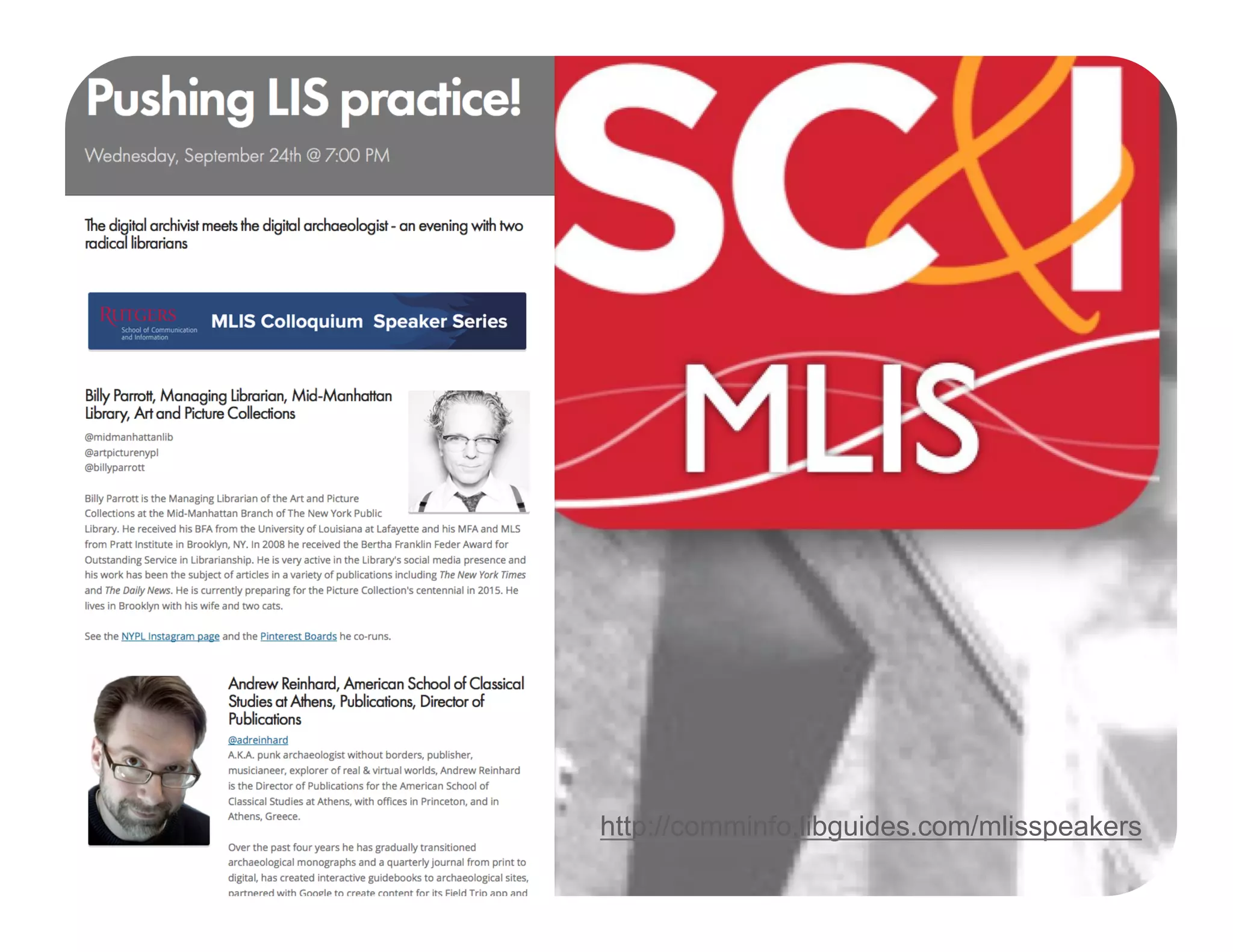
http://comminfo.libguides.com/mlisspeakers
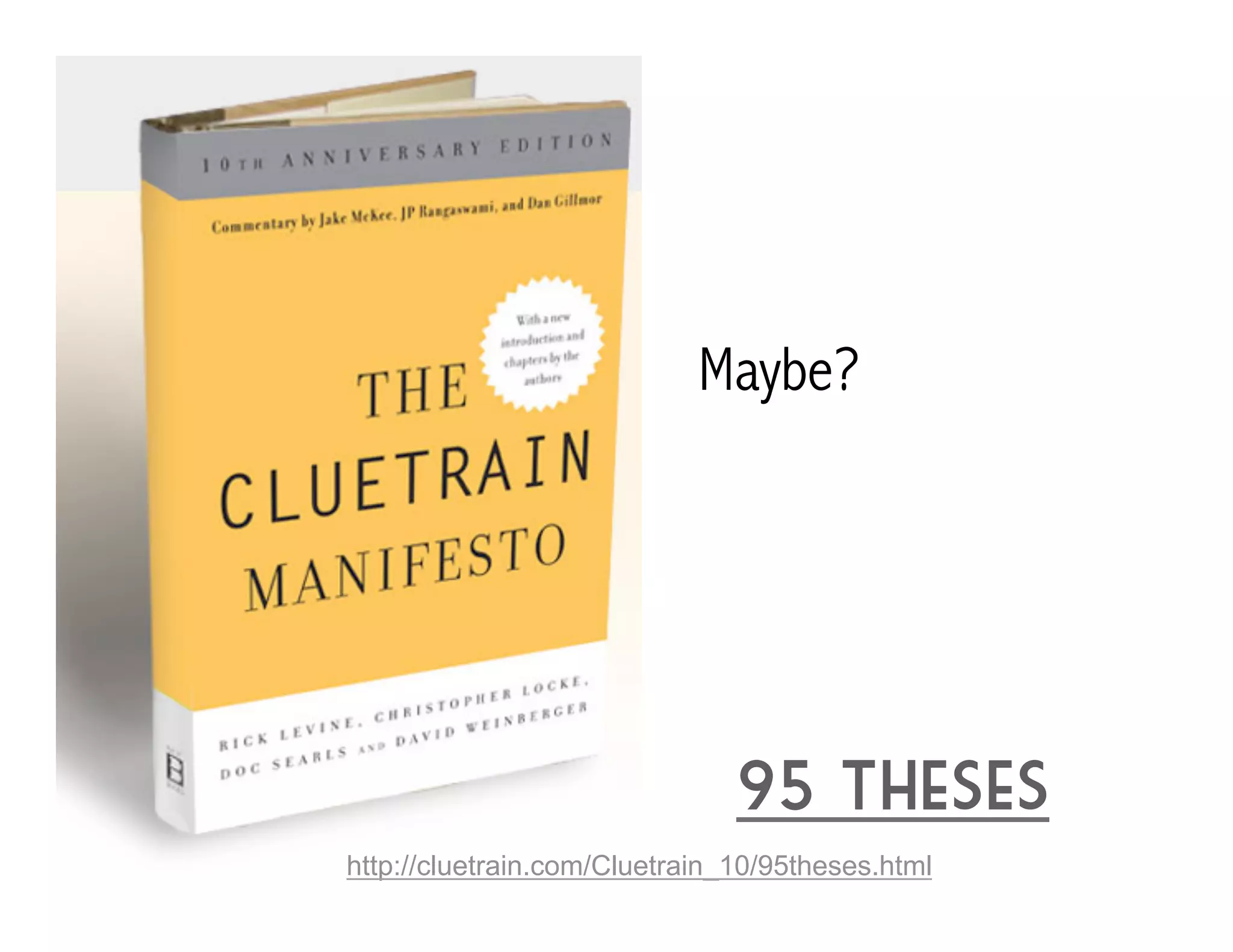
Maybe? 
95 Theses 
http://cluetrain.com/Cluetrain_10/95theses.html

Week2

  • 1.
    Social media, definitions, background & research (and affordances)
  • 2.
    Agenda ! eCollege(just in case!) ! Social media discoveries ! Visitors vs. Residents ! Social media terms defined ! Other definitions and key ideas – Affordances, SNA – Overview of research/terms from your readings ! Speed networking: partnerships? ! Your projects (book review/remix) ! 95 Theses?
  • 3.
  • 4.
  • 5.
  • 6.
    Visitors & residentsactivity The ‘Resident’ The resident is an individual who lives a percentage of their life online. The web supports the projection of their identity and facilitates relationships. These are people who have an persona online which they regularly maintain. This persona is normally primarily in a social networking sites but it is also likely to be in evidence in blogs or comments, via image sharing services etc The ‘Visitor’ The Visitor is an individual who uses the web as a tool in an organised manner whenever the need arises. They may book a holiday or research a specific subject. They may choose to use a voice chat tool if they have friends or family abroad. Often the Visitor puts aside a specific time to go online rather than sitting down at a screen to maintain their presence at any point during the day. They always have an appropriate and focused need to use the web but don’t ‘reside’ there. David White Not ‘Natives’ & ‘Immigrants’ but ‘Visitors’ & ‘Residents’
  • 7.
    Voicethread Visitors &residents activity Alix Beth
  • 8.
    Stand up /sit down Visitors /Residents
  • 9.
    What Is socialmedia? Why is it important? Group definitions http://padlet.com/wall/limvoliid8 30 social media definitions
  • 10.
    Possible ways atools could be used by an individual in a particular context. Affordance change with the person using them. There are Real or perceived affordances. James Gibson ”An affordance is a quality of an object, or an environment, that allows an individual to perform an action.” Wikipedia Discussion: Brainstorm a task, brainstorm a social media tool Decide on its positive and negative affordances in context of the task. Think about affordances in terms of Twitter or Facebook or YouTube. How have these platforms developed affordances beyond their original intentions? Consider possible affordances of tools for your PKM assignment. Gibson, J. J. (1977). The concept of affordances. Perceiving, acting, and knowing, 67-82.
  • 11.
    What is socialmedia? Allows users to link to each other, contribute and share content or commentary. Social media facilitates sharing collaboration, transparency, conversation. Our Week 1 Padlet Steiner, Sarah K. Strategic Planning for Social Media in Libraries, 1
  • 12.
  • 13.
  • 14.
  • 15.
    John Atkinson/ WrongHands http://wronghands1.wordpress.com/2013/03/31/vintage-social-networking/
  • 16.
  • 17.
    Speed Dating/ Networking: Not a commitment, just an icebreaker 1. 2-minute conversations 2. 3 big questions Timer
  • 18.
    Question ideas for Speed networking?
  • 19.
  • 20.
    Comparing 4 Web2 tools 3 Affordances of technology
  • 21.
  • 22.
    A network isan interconnected system
  • 23.
    What is asocial network? "A social network is a social structure made up of a set of social actors (such as individuals or organizations) and a set of the dyadic ties between these actors. The social network perspective provides a set of methods for analyzing the structure of whole social entities as well as a variety of theories explaining the patterns observed in these structures." Social Media Issues Lexicon
  • 24.
    Or. . . Social structure made up of nodes tied by interdependency.
  • 25.
    What’s a node? Individual actors in a network
  • 26.
    What’s a tie? Connection points in a network
  • 27.
    Centrality In atriad, the intermediary between two actors ! Degree centrality: how many connections ! Closeness centrality: length of shortest path ! Betweenness: how often node acts as bridge along shortest paths ! Eigenvector centrality: influence ! Centralization: how central is the most central node
  • 28.
    Structural holes RonaldBurt: Absence of ties between two parts of a network A broker or a bridge can bring them together
  • 29.
    Social networks arestudied 1. Egocentrically: looking at one node and it’s purpose 2. Whole network: studying all the nodes in the network environment Micro: small networks Macro: infomatics-type stuff
  • 30.
    Gilbert, E., &Karahalios, K. (2009, April). Predicting tie strength with social media. In Proceedings of the SIGCHI Conference on Human Factors in Computing Systems (pp. 211-220). ACM. https://www.cs.purdue.edu/homes/aliaga/cs197-10/papers/predicting-tie-strength.pdf
  • 31.
    Howard Rheingold onsocial Network smarts New knowledge about the nature of networks is essential for getting around in this century because digital data and human communication networks erase barriers and multiply possibilities for one of our most powerful capabilities: our sociality. Net Smart, p. 23 Derives from a variety of disciplines that had previously not been connected (digital networks and human social behavior) . . . 25 (Net Smart: How to Survive Online, MIT, 2013)
  • 32.
    reciprocity social normof in-kind responses to the behavior of others; in cultural anthropology, defined as people's informal exchange of goods and labour. Social Media Issues Lexicon
  • 33.
    Plickert, G., Côté,R. R., & Wellman, B. (2007). It's not who you know, it's how you know them: Who exchanges what with whom?. Social Networks, 29(3), 405-429. http://homes.chass.utoronto.ca/~wellman/publications/reciprocity05/reciprocity3-5.pdf
  • 34.
    More than whoyou know But who/what you have access to because of/via who you know Social capital increases when you use it.
  • 35.
    Milgram's Six Degrees Anyone can be connected to any other person through chain of acquaintances with no more than five intermediaries.
  • 36.
    Milgram: “Six Degreesof Separation” (Psychology Today, 1967) The small world problem ! Randomly selected people in mid-West to send packages to stranger in Massachusetts. ! Senders knew the recipient's name, occupation, general location. ! Instructed to send package to person they knew on a first-name basis who they thought was most likely, out of all their friends, to know the target personally. That person would do the same, and so on, until the package was personally delivered to its target recipient. ! Participants expected the chain to include more than a hundred intermediaries ! Took (on average) between five and seven intermediaries to get each package delivered. ! Results questions because of small number of packages ! Playwright John Guare ! Brett C. Tjaden computer game on the U. VA using IMDB to document connections between actors. Time Magazine called his site, The Oracle of Bacon one of the "Ten Best Web Sites of 1996." Milgram, S. (1967). The small world problem. Psychology today, 2(1), 60-67.
  • 37.
    Granovetter, M. S.(1973). The strength of weak ties: A network theory revisited American journal of sociology, 1360-1380.
  • 38.
  • 39.
    Mark Granovetter 1973study “The Strength of Weak Ties” ! Before the study, strong ties considered most important ! Study show weak ties mattered a lot! ! People found jobs in their network from people they didn’t know all that well, more often than from those they knew well. ! Also important—people who are nothing like you
  • 40.
    How did Granovetter measure tie strength? ! Time: how much you spend with a person, how often you see them, how long you’ve known them ! Emotional intensity: how strong are the emotions you share, experiences with strong emotions ! Intimacy: secrets, vulnerabilities, personal revelations ! Reciprocal services: favors, if you want some one to trust you, ask them for a favor. We tend to do favors for people with whom we have stronger ties
  • 41.
    You are morelikely to get new information from people you don’t know very well You have a lot in common with your strong ties When you interact with weak ties, you talk about things you don’t talk about every day Job information comes more likely from weak ties
  • 42.
    The strength ofweak ties (sociological concept connected to network analysis) Strong vs. weak (really a continuum) • Strong=trusted friends & family, not many (10ish?) • Weak=co-workers, classmates, acquaintances. • People you don’t spend lots of time with (many of them)
  • 43.
    Additional Influences ontie strength ! Granovetter: four tie strength dimensions: amount of time, intimacy, intensity and reciprocal services. ! Burt: structural factors like network topology and informal social circles ! Wellman and Wortley: emotional support--advice on family problems=stronger ties ! Nan Lin, et al.,: social distance—socioeconomic status, education level, political affiliation, race and gender
  • 44.
    Which are themost important nodes in this network?
  • 45.
  • 46.
    Two types ofsocial capital (Robert Putnam) ! Bonding: emotional & substantive support, usually through strong ties ! Bridging: new information possible, often through weak ties to diverse groups Which does the internet support most?
  • 47.
    Bridges ! Tiestrength is related to how information spreads through networks ! Strong ties more trusted ! Strong ties overlap ! Strong ties are rarely bridges ! Weak ties lead to ideas beyond and help us make discoveries ! Weak ties most important in social networks ! Information reaches larger number of people diffused through weak ties ! Most times weak ties form bridges in networks, connecting groups
  • 48.
    Advice suggested bythe research Leave your walled garden Find communities Develop weak ties in those communities You can’t build a network around the people you already love Reach out Bridge!
  • 49.
    Implications When youcreate and share content to move across weak ties, you reach new people, attract opportunities, access new content
  • 50.
    ! Write yourstrong ties in a circle ! Connect them to each other ! Darken ! Weak ties connect us to other groups ! Strong ties are often connected strongly to each other ! Tie strength can be studied qualitatively and quantitatively ! Think about bridges and to whom they lead you
  • 51.
    Assignment 1 Basedon Chapter 5: Steiner
  • 52.
    What is strategicplanning? ! Identify needs of your target audience ! Identify ways in which you might serve those needs ! Identify ways to respond confidentially and proactively to changes in those needs Steiner, Sarah K. Strategic Planning for Social Media in Libraries. 3
  • 53.
    Major elements: !In-class sharing of initiatives of a social media presence or campaign. (This may be a Web page on a social media platform, a curation effort, or any other selected platform that meets the group/institution’s needs. This will be presented at the last or next to last class meeting, depending on class size. This should look like a presentation/pitch of prototype(s) a client at our Design Faire (final or next-to-last class meeting) ! A five to seven-page written paper, based on Steiner’s Chapter 5, to be submitted during one of the last two class meetings. Please also post your paper as a PDF with an attractive title image on the RU 587 Social Media Initiatives Pinterest Board.
  • 54.
    What to include: Your five to seven-page written document should flesh out the considerations addressed in you proposal, including: ! target groups/audience ! audience environmental scan (what do they need or care about?) using a couple (NOT ALL) of the strategies Steiner suggests ! a SWOT analysis (of your strengths, opportunities, weaknesses, opportunities, threats) ! mission and vision statements (Ask about what already exists.) ! an abbreviated, one-goal strategic plan, selecting social media initiatives, action items, and measures ! select and develop social media platforms based on the action steps for one or more of the social media initiatives (this will be determined by the size of your team) and the affordances offered by the selected platform(s). You may choose to use some sort of mash-up.
  • 55.
    ! brief explorationof any relevant research relating to use of your selected platform for this type of initiative ! description of your possible marketing strategies ! assessment of the initiative’s feasibility/scalability/sustainability: Can the project be useful long-term? Is it likely to be sticky? Will others want to continue it? ! predictions of measures of success: How might the impact of your social media initiative be measured? (as established in your goal) ! summary of community feedback solicited via social media ! critical reflection of process and team contributions ! design document, diagrams or mockups to be used in the presentation (as appendices beyond the page count) ! Please share your papers and files/links for any presentations in the eCollege Dropbox
  • 56.
    Types of socialmedia you might use for your initiative (There are many more options!) ! Social networking: Facebook, LinkedIn ! Social news: Digg, Reddit ! GPS/Location based: Foursquare ! Websites: Google Sites, Weeby, ! Wikis ! Blogs ! Microblogs ! Booksharing: GoodReads, LibrarThing, Shelfari, Biblionasium ! Bookmarking ! Virtual Worlds ! Virtual Gaming Worlds ! Q & A: Yahoo! Answers, Wiki Answers ! Image/Video sharing: Flickr, Picassa, YouTube Channel ! Slide sharing: SlideShare, Author Stream ! Storage: Dropbox
  • 57.
    Ask: Which Bestmeets determined organizational needs? Which will help develop brand loyalty?
  • 58.
    Assignment 2: Socialmedia book review/remix Did you pick a title from our Pinterest Reading List and sign up for a date?
  • 59.
    Assignment 3: PersonalKnowledge Management/Curation Did you consider a platform and topic for PKM and share it on our Google Doc?
  • 60.
    The Transparent Library The Hyperlinked Library http://tametheweb.com/ TTW White Paper “The Hyperlinked Library” here (download the PDF here) About Michael Michael Stephens
  • 61.
  • 62.
    For next week: Make decisions about Assignment 1. Do some outreach! Commit to a book and a week for Assignment 2 here. Start reading! Make sure you are in our Class Directory. Let us know where your PKM container is for Assignment 3 and start curating around your interest. Tweet to #RU587 Read about and prepare questions for Laura Solomon and Michael Stephens to post on this Padlet: http://padlet.com/joycevalenza/socialcapital 9/24 Colloquium
  • 63.
    Also for nextweek: Week 3 Playlists Steiner, Strategic Planning for Social Media in Libraries • Chapter 1: Introduction • Chapter 2: Types of Solutions Available • Chapter 3: Planning Solomon, The Librarian’s Nitty-Gritty Guide to Social Media, • Chapter 3: Understanding Social Capital • Chapter 4: Strategies for Social Media Success Milgram, S. (1967). The small world problem. Psychology today, 2(1), 60-67.
  • 64.
  • 65.
    Maybe? 95 Theses http://cluetrain.com/Cluetrain_10/95theses.html