Presentation by-
Animesh Rawat (11SETECE093)
Bharat Badgujar (11SETECE448)
Social networking is the practice of expanding
the number of one's business and/or social
contacts by making connections through
individuals.
We define social network sites as web-based
   services that allow individuals to
(1) construct a public or semi-public profile
   within a bounded system,
(2) articulate a list of other users with whom they
   share a connection, and
(3) view and traverse their list of connections and
   those made by others within the system.
   Idea of social networking can be traced back to
    Ancient Greeks.
   Émile Durkheim and Ferdinand
    Tönnies foreshadow the idea of social networks in
    their theories and research of social groups.
   Tönnies argued that social groups can exist as
    personal and direct social ties that either link
    individuals who share values and belief or
    impersonal, formal, and instrumental social links.
   Durkheim gave a non-individualistic explanation
    of social facts arguing that social phenomena arise
    when interacting individuals constitute a reality
    that can no longer be accounted for in terms of the
    properties of individual actors
   Major developments in the field can be seen in
    the 1930s by several groups in
    psychology, anthropology, and mathematics
    working independently.
    In psychology, in the 1930s, Jacob L.
    Moreno began systematic recording and
    analysis of social interaction in small
    groups, especially classrooms and work
    groups.
   A group of social anthropologists often are
    credited with performing some of the first
    fieldwork from which network analyses were
    performed, investigating community networks
    in southern Africa, India and the United
    Kingdom.
    One group consisted of sociologist Harrison
    White and his students at the Harvard
    University Department of Social Relations.
   The Harvard Social Relations department
    comprised of Charles Tilly, Stanley
    Milgram, Mark Granovetter and Barry
    Wellman who elaborated and championed the
    analysis of social networks.

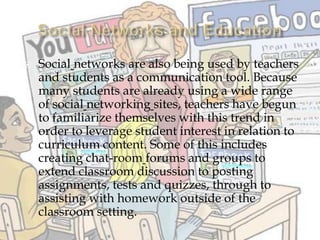
   Social networks are also being used by teachers
    and students as a communication tool. Because
    many students are already using a wide range
    of social networking sites, teachers have begun
    to familiarize themselves with this trend in
    order to leverage student interest in relation to
    curriculum content. Some of this includes
    creating chat-room forums and groups to
    extend classroom discussion to posting
    assignments, tests and quizzes, through to
    assisting with homework outside of the
    classroom setting.
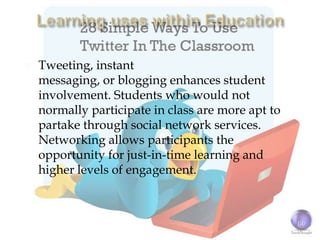
   Tweeting, instant
    messaging, or blogging enhances student
    involvement. Students who would not
    normally participate in class are more apt to
    partake through social network services.
    Networking allows participants the
    opportunity for just-in-time learning and
    higher levels of engagement.
   Social Networking sites are seen by many
    instructors and educators as a frivolous, time-
    wasting distraction from schoolwork, Cyber
    bullying, cyber stalking are common cases now
    a days
   Social networks are being used by activists as a
    means of low-cost grassroots organizing.
    Extensive use of an array of social networking
    sites enabled organizers of the 2009 National
    Equality March to mobilize an estimated
    200,000 participants to march on Washington
    with a cost savings of up to 85% per participant
    over previous methods. The August 2011
    England riots were similarly considered to
    have escalated and been fuelled by this type of
    grassroots organization.
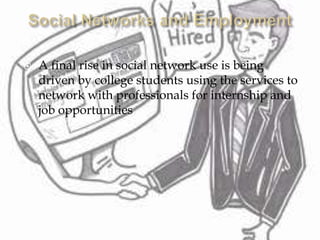
   A final rise in social network use is being
    driven by college students using the services to
    network with professionals for internship and
    job opportunities
   Few social networks currently charge money
    for membership. SNSs are used by many
    companies for advertisements also.
   Put simply, social networking is a way for one
    person to meet up with other people on the net.
    People use social networking sites for meeting
    new friends, finding old friends, or locating
    people who have the same problems or
    interests they have, called niche networking.
   More and more relationships and friendships
    are being formed online and then carried to an
    offline setting. One online dating site claims
    that 2% of all marriages begin at its site, the
    equivalent of 236 marriages a day. Other sites
    claim 1 in 5 relationships begin online.
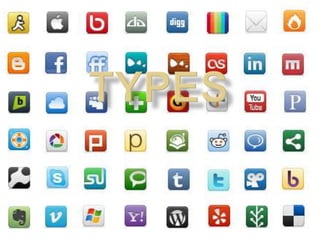
   Probably one of the first sites to allow for social
    interaction, forums have been around for a
    while. Forums are typically comprised of
    people with a similar interest. Users have
    conversations around a particular given topic
    and build up relationships with each other.
    They provide a great deal of information about
    a topic and is a great way to share your
    knowledge.
   People like to journal, and with the internet
    they wanted to share their lives more openly.
    Originally called web-logs, these personal
    journals have advanced. Some personal
    journals still exist, while other blogs discuss a
    particular niche or interest.
   Similar to blogs, this is a micro journal of what
    is happening right now. These sites can share
    what is going on in an individual life or can be
    information the individual wants to share.
    Major news events are now breaking online via
    microblogs. The best known microblog is
    Twitter.
   Social Networking Sites are known for sharing
    of information, in this case photos. Users
    upload their pictures to Photo Sharing Sites.
    Rather than having to send individual pictures
    to family, you send a single link. You can tag
    your photos with keywords related to the
    image and allow people to comment. Some
    popular photo sharing sites are Flickr and
    Picasa.
   YouTube is the video sharing site that almost
    everyone has seen. Videos are shared
    online, keywords are added so people can
    search for those terms or for the video title.
    People can comment if the video owner allows.
    Like other forms of social media it allows for a
    more personal look of the actual user.
   Networking has long been touted as an asset in
    professional circles. Networking allows the
    person to connect with people and by those
    connections meet other professionals that
    person knows. Professional social media allows
    for that type of opportunity online. Thus if you
    move away from your home town you can still
    remain connected to your ex-coworkers and
    others in your profession. Linked In is one of
    the top professional social networking sites.
FACTOIDS
Advantages…
--above all caste-creed and ethnicity
--easily accessible everywhere
--instant sharing and interaction
--make new friends and increase your friend
circle
--keep in touch with old and friends and
those who live far away
--make both social as well as professional
profiles
--easily reach to masses
--magnifies advertising possibilities many
times
--helps to socialize with those we hardly
talk
--helps to increase influence and inside
connections
--can follow your idols and interact with
them(twitter)
Disadvantages……
--has become a chit-chat forum
--highly addictive in many cases
--virtual world
--health issues , stress
--intellectual theft
--can lead to mass conflicts and
misunderstandings
--harassment , profile stalking
--loss of personal information
Future of Social Networking….
--mass movements and information can
been spread efficiently
--instant polling to get statistical results
quickly
--best option for advertising and
marketing , cheapest
--companies have started demanding
familiarity with SNS
--idea of universal identity and sign-up is
coming up.
Social networking 2

Social networking 2

  • 1.
    Presentation by- Animesh Rawat(11SETECE093) Bharat Badgujar (11SETECE448)
  • 2.
    Social networking isthe practice of expanding the number of one's business and/or social contacts by making connections through individuals.
  • 3.
    We define socialnetwork sites as web-based services that allow individuals to (1) construct a public or semi-public profile within a bounded system, (2) articulate a list of other users with whom they share a connection, and (3) view and traverse their list of connections and those made by others within the system.
  • 5.
    Idea of social networking can be traced back to Ancient Greeks.  Émile Durkheim and Ferdinand Tönnies foreshadow the idea of social networks in their theories and research of social groups.  Tönnies argued that social groups can exist as personal and direct social ties that either link individuals who share values and belief or impersonal, formal, and instrumental social links.  Durkheim gave a non-individualistic explanation of social facts arguing that social phenomena arise when interacting individuals constitute a reality that can no longer be accounted for in terms of the properties of individual actors
  • 6.
    Major developments in the field can be seen in the 1930s by several groups in psychology, anthropology, and mathematics working independently.  In psychology, in the 1930s, Jacob L. Moreno began systematic recording and analysis of social interaction in small groups, especially classrooms and work groups.  A group of social anthropologists often are credited with performing some of the first fieldwork from which network analyses were performed, investigating community networks in southern Africa, India and the United Kingdom.
  • 7.
    One group consisted of sociologist Harrison White and his students at the Harvard University Department of Social Relations.  The Harvard Social Relations department comprised of Charles Tilly, Stanley Milgram, Mark Granovetter and Barry Wellman who elaborated and championed the analysis of social networks. 
  • 9.
    Social networks are also being used by teachers and students as a communication tool. Because many students are already using a wide range of social networking sites, teachers have begun to familiarize themselves with this trend in order to leverage student interest in relation to curriculum content. Some of this includes creating chat-room forums and groups to extend classroom discussion to posting assignments, tests and quizzes, through to assisting with homework outside of the classroom setting.
  • 10.
    Tweeting, instant messaging, or blogging enhances student involvement. Students who would not normally participate in class are more apt to partake through social network services. Networking allows participants the opportunity for just-in-time learning and higher levels of engagement.
  • 11.
    Social Networking sites are seen by many instructors and educators as a frivolous, time- wasting distraction from schoolwork, Cyber bullying, cyber stalking are common cases now a days
  • 12.
    Social networks are being used by activists as a means of low-cost grassroots organizing. Extensive use of an array of social networking sites enabled organizers of the 2009 National Equality March to mobilize an estimated 200,000 participants to march on Washington with a cost savings of up to 85% per participant over previous methods. The August 2011 England riots were similarly considered to have escalated and been fuelled by this type of grassroots organization.
  • 13.
    A final rise in social network use is being driven by college students using the services to network with professionals for internship and job opportunities
  • 14.
    Few social networks currently charge money for membership. SNSs are used by many companies for advertisements also.
  • 15.
    Put simply, social networking is a way for one person to meet up with other people on the net. People use social networking sites for meeting new friends, finding old friends, or locating people who have the same problems or interests they have, called niche networking.  More and more relationships and friendships are being formed online and then carried to an offline setting. One online dating site claims that 2% of all marriages begin at its site, the equivalent of 236 marriages a day. Other sites claim 1 in 5 relationships begin online.

  • 17.
    Probably one of the first sites to allow for social interaction, forums have been around for a while. Forums are typically comprised of people with a similar interest. Users have conversations around a particular given topic and build up relationships with each other. They provide a great deal of information about a topic and is a great way to share your knowledge.
  • 18.
    People like to journal, and with the internet they wanted to share their lives more openly. Originally called web-logs, these personal journals have advanced. Some personal journals still exist, while other blogs discuss a particular niche or interest.
  • 19.
    Similar to blogs, this is a micro journal of what is happening right now. These sites can share what is going on in an individual life or can be information the individual wants to share. Major news events are now breaking online via microblogs. The best known microblog is Twitter.
  • 20.
    Social Networking Sites are known for sharing of information, in this case photos. Users upload their pictures to Photo Sharing Sites. Rather than having to send individual pictures to family, you send a single link. You can tag your photos with keywords related to the image and allow people to comment. Some popular photo sharing sites are Flickr and Picasa.
  • 21.
    YouTube is the video sharing site that almost everyone has seen. Videos are shared online, keywords are added so people can search for those terms or for the video title. People can comment if the video owner allows. Like other forms of social media it allows for a more personal look of the actual user.

  • 22.
    Networking has long been touted as an asset in professional circles. Networking allows the person to connect with people and by those connections meet other professionals that person knows. Professional social media allows for that type of opportunity online. Thus if you move away from your home town you can still remain connected to your ex-coworkers and others in your profession. Linked In is one of the top professional social networking sites.
  • 23.
  • 33.
    Advantages… --above all caste-creedand ethnicity --easily accessible everywhere --instant sharing and interaction --make new friends and increase your friend circle --keep in touch with old and friends and those who live far away --make both social as well as professional profiles
  • 34.
    --easily reach tomasses --magnifies advertising possibilities many times --helps to socialize with those we hardly talk --helps to increase influence and inside connections --can follow your idols and interact with them(twitter)
  • 35.
    Disadvantages…… --has become achit-chat forum --highly addictive in many cases --virtual world --health issues , stress --intellectual theft --can lead to mass conflicts and misunderstandings --harassment , profile stalking --loss of personal information
  • 37.
    Future of SocialNetworking…. --mass movements and information can been spread efficiently --instant polling to get statistical results quickly --best option for advertising and marketing , cheapest --companies have started demanding familiarity with SNS --idea of universal identity and sign-up is coming up.