BUILDING SERVICES-II
(PLUMBING)
AR. HENA TIWARI
ASSISTANT
PROFESSOR
GCAD (JAN-JULY
2018)
LECTURE-VI
WATER
CONNECTION
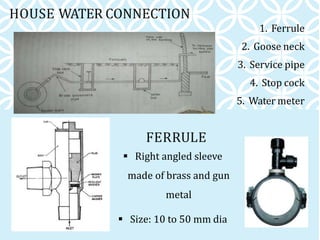
HOUSE WATER CONNECTION
1. Ferrule
2. Goose neck
3. Service pipe
4. Stop cock
5. Water meter
FERRULE
 Right angled sleeve
made of brass and gun
metal
 Size: 10 to 50 mm dia
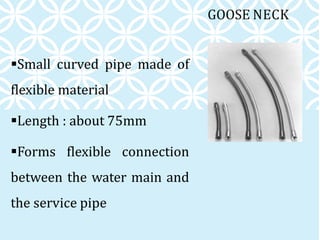
GOOSE NECK
Small curved pipe made of
flexible material
Length : about 75mm
Forms flexible connection
between the water main and
the service pipe
SERVICE PIPE OR COMMUNICATION PIPE
 Galvanized iron pipe of size less than 50mm
dia
 Laid underground
 Connected from meter to main via ferrule and
goose neck.
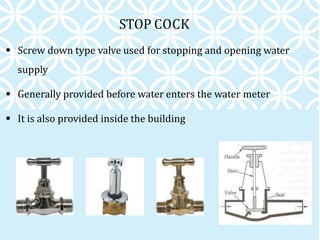
STOP COCK
 Screw down type valve used for stopping and opening water
supply
 Generally provided before water enters the water meter
 It is also provided inside the building
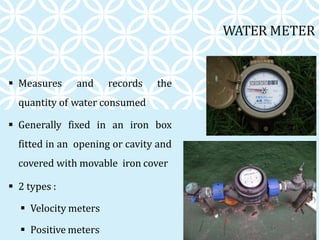
WATER METER
 Measures and records the
quantity of water consumed
 Generally fixed in an iron box
fitted in an opening or cavity and
covered with movable iron cover
 2 types :
 Velocity meters
 Positive meters
SOME COMMON TERMS:
 SOIL PIPE: A soil pipe is a pipe through which human excreta
flows.
 WASTE PIPE: It is a pipe which carries only the waste water,
such as that from a sink, bath, or shower. It does not carry
human excreta.
DRAINAGE
 VENT PIPE: It is a pipe which is provided for the purpose of
the ventilation of the system. A vent is open at top and
bottom, to facilitate exit of foul gases. It is carried at least one
meter higher than the roof level.
 RAIN WATER PIPE: It is a pipe which carries only the rain
water.
 ANTI-SIPHONAGE PIPE: It is pipe which is installed in the
house drainage to preserve the water seal of traps.
SIZES OF PIPES
 SOIL PIPE:100-150MM
 WASTE PIPE: HORIZONTAL: 30-50MM
 WASTE PIPE: VERTICAL: 75MM
 RAINWATER PIPE: 75-100MM
 VENT PIPE: 50MM
 ANTI SIPHONAGE PIPE:
 CONNECTING SOIL PIPE: 50MM
 CONNECTING WASTE PIPE: 40MM
OBJECTIVES OF DRAINAGE SYSTEM
 To maintain healthy conditions in the building.
 To dispose off waste water as early and quickly as possible.
 To avoid the entry of foul gases from the sewer or the septic
tank.
 To facilitate quick removal of foul matter.
 To collect and remove waste matter systematically .
SANITARY FITTINGS-TRAPS
Traps are defined as fittings at the end of soil
pipes or waste pipes to prevent foul gases
coming out of the soil pipe/ waste pipe.
INTRODUCTION
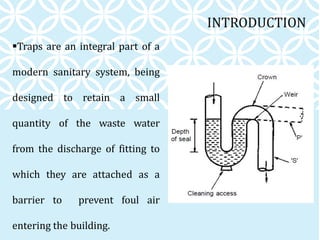
Traps are an integral part of a
modern sanitary system, being
designed to retain a small
quantity of the waste water
from the discharge of fitting to
which they are attached as a
barrier to prevent foul air
entering the building.
Traps should be self-cleaning, that is to say , they should be
designed so that their walls are scoured by the discharging water.
 One of the advantages of modern traps constructed of plastic
materials is the ease with which they may be dismantled for
cleaning.
CLASSIFICATION OF TRAPS
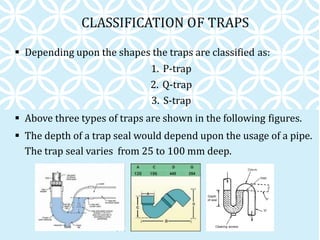
 Depending upon the shapes the traps are classified as:
1. P-trap
2. Q-trap
3. S-trap
 Above three types of traps are shown in the following figures.
 The depth of a trap seal would depend upon the usage of a pipe.
The trap seal varies from 25 to 100 mm deep.
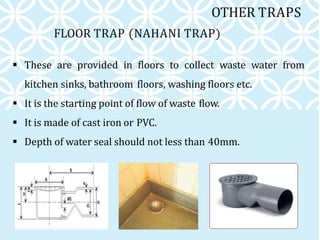
FLOOR TRAP (NAHANI TRAP)
 These are provided in floors to collect waste water from
kitchen sinks, bathroom floors, washing floors etc.
 It is the starting point of flow of waste flow.
 It is made of cast iron or PVC.
 Depth of water seal should not less than 40mm.
OTHER TRAPS
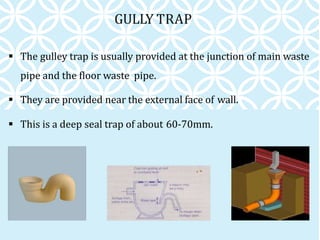
GULLY TRAP
 The gulley trap is usually provided at the junction of main waste
pipe and the floor waste pipe.
 They are provided near the external face of wall.
 This is a deep seal trap of about 60-70mm.
INTERCEPTING TRAPS
 It is provided at the last manhole i.e. at the junction of House
drain and the Public Sewer.
 It is made of an inspection arm for the purpose of cleaning or
inspection.
 It is also known as inspection chamber.
 The water seal is not less than 100mm.
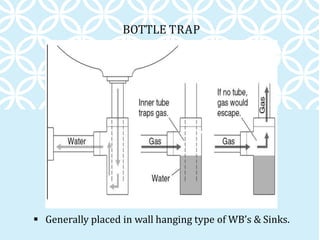
BOTTLE TRAP
 Generally placed in wall hanging type of WB’s & Sinks.

Week 06 lecture 06 water connection

  • 1.
    BUILDING SERVICES-II (PLUMBING) AR. HENATIWARI ASSISTANT PROFESSOR GCAD (JAN-JULY 2018) LECTURE-VI WATER CONNECTION
  • 2.
    HOUSE WATER CONNECTION 1.Ferrule 2. Goose neck 3. Service pipe 4. Stop cock 5. Water meter FERRULE  Right angled sleeve made of brass and gun metal  Size: 10 to 50 mm dia
  • 3.
    GOOSE NECK Small curvedpipe made of flexible material Length : about 75mm Forms flexible connection between the water main and the service pipe
  • 4.
    SERVICE PIPE ORCOMMUNICATION PIPE  Galvanized iron pipe of size less than 50mm dia  Laid underground  Connected from meter to main via ferrule and goose neck.
  • 5.
    STOP COCK  Screwdown type valve used for stopping and opening water supply  Generally provided before water enters the water meter  It is also provided inside the building
  • 6.
    WATER METER  Measuresand records the quantity of water consumed  Generally fixed in an iron box fitted in an opening or cavity and covered with movable iron cover  2 types :  Velocity meters  Positive meters
  • 7.
    SOME COMMON TERMS: SOIL PIPE: A soil pipe is a pipe through which human excreta flows.  WASTE PIPE: It is a pipe which carries only the waste water, such as that from a sink, bath, or shower. It does not carry human excreta. DRAINAGE
  • 8.
     VENT PIPE:It is a pipe which is provided for the purpose of the ventilation of the system. A vent is open at top and bottom, to facilitate exit of foul gases. It is carried at least one meter higher than the roof level.  RAIN WATER PIPE: It is a pipe which carries only the rain water.  ANTI-SIPHONAGE PIPE: It is pipe which is installed in the house drainage to preserve the water seal of traps.
  • 9.
    SIZES OF PIPES SOIL PIPE:100-150MM  WASTE PIPE: HORIZONTAL: 30-50MM  WASTE PIPE: VERTICAL: 75MM  RAINWATER PIPE: 75-100MM  VENT PIPE: 50MM  ANTI SIPHONAGE PIPE:  CONNECTING SOIL PIPE: 50MM  CONNECTING WASTE PIPE: 40MM
  • 10.
    OBJECTIVES OF DRAINAGESYSTEM  To maintain healthy conditions in the building.  To dispose off waste water as early and quickly as possible.  To avoid the entry of foul gases from the sewer or the septic tank.  To facilitate quick removal of foul matter.  To collect and remove waste matter systematically .
  • 11.
    SANITARY FITTINGS-TRAPS Traps aredefined as fittings at the end of soil pipes or waste pipes to prevent foul gases coming out of the soil pipe/ waste pipe.
  • 12.
    INTRODUCTION Traps are anintegral part of a modern sanitary system, being designed to retain a small quantity of the waste water from the discharge of fitting to which they are attached as a barrier to prevent foul air entering the building.
  • 13.
    Traps should beself-cleaning, that is to say , they should be designed so that their walls are scoured by the discharging water.  One of the advantages of modern traps constructed of plastic materials is the ease with which they may be dismantled for cleaning.
  • 14.
    CLASSIFICATION OF TRAPS Depending upon the shapes the traps are classified as: 1. P-trap 2. Q-trap 3. S-trap  Above three types of traps are shown in the following figures.  The depth of a trap seal would depend upon the usage of a pipe. The trap seal varies from 25 to 100 mm deep.
  • 15.
    FLOOR TRAP (NAHANITRAP)  These are provided in floors to collect waste water from kitchen sinks, bathroom floors, washing floors etc.  It is the starting point of flow of waste flow.  It is made of cast iron or PVC.  Depth of water seal should not less than 40mm. OTHER TRAPS
  • 16.
    GULLY TRAP  Thegulley trap is usually provided at the junction of main waste pipe and the floor waste pipe.  They are provided near the external face of wall.  This is a deep seal trap of about 60-70mm.
  • 17.
    INTERCEPTING TRAPS  Itis provided at the last manhole i.e. at the junction of House drain and the Public Sewer.  It is made of an inspection arm for the purpose of cleaning or inspection.  It is also known as inspection chamber.  The water seal is not less than 100mm.
  • 18.
    BOTTLE TRAP  Generallyplaced in wall hanging type of WB’s & Sinks.