ACTIVE LEARNING ASSIGNMENT
SUBJECT :- ENVIRONMENTAL ENGINEERING
DRAINAGE SYSTEM FOR BUILDING AND TRAPS
HOUSE DRAINAGE
 A building is provided with a drainage system to discharge effectively the sewage
of the building into the public sewer. Domestic sewage from a building includes
human excreta as well as discharge from bathroom, kitchen, etc. and collected by
building sewers and finally discharged into the public sewer.
 Aims of house drainage :
 To maintain healthy conditions in the building.
 To dispose off waste water as early and quickly as possible.
 To avoid the entry of foul gases from the sewer or the septic tank
 To facilitate quick removal of foul matter, e.g. human excreta.
 To collect and remove waste matters systematically.
 Sewage :- The liquid waste from the community. It includes discharge from
bathrooms, kitchens, wash areas, urinals, industrial waste and storm water.
 Sullage :- The waste waters from bathrooms, kitchen, washing areas, etc.
 Sewerage :- The entire science of collecting and carrying sewage by water carriage
system through sewers, is known as sewerage.
 Waste water :- The term waste water is now increasingly used in place of sewage.
Waste water includes both organic and mineral matter carried through liquid media.
 Sewer :- An underground pipe or conduit which carries sewage is called sewer.
Sanitary Drainage System
 Waste Pipe :- It is the pipe carrying discharges from bathroom, kitchen, sinks,
etc.
 Soil pipe :- It is the pipe carrying sewage from urinal, water closets, etc.
 Vent Pipe :- The pipe installed for the purpose of ventilation is known as vent
pipe.
 Trap :- a fitting or device designed and constructed to provide, when properly
vented, a liquid seal which prevents the backflow of foul air or methane gas
without materially affecting the flow of sewage or wastewater through it.
 House/Building Drain :- Part of the lowest horizontal piping of a plumbing
system which receives the discharges from the soil, waste and other drainage
pipes inside of a building and conveys it to the house sewer outside of the
building.
 House/Building Sewer :- extends from the house drain at a point 0.60 meters
from the outside face of the foundation wall of a building to the junction with the
street sewer or to any point of discharge, and conveying the drainage of one
building site.
TRAPS
 The device which is connected at the end of soil pipe or waste pipe to stop the
entry of foul gases inside the building is known as trap. It is a bent pipe in the
shape of ‘u’ which always remain full of water.
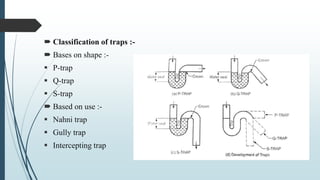
 The vertical distance between the crown and the dip of the trap is known as water
seal. This portion always remains full of water. Generally, the water seal varies
from 75mm to 100mm. Water seal is required to prevent the entry of foul gases in
the building from the drains.
 REQUIREMENTS OF A GOOD TRAPS :-
 Non-absorbent material
 Adequate water seal at all times
 Surface of all the sides are should have smooth finish so that dirt, etc. does not
stick to it.
 It should be free from any inside projections, angles, contraction, so that flow is
not obstructed.
 It should be self cleaning.
 Simple in construction, cheap and readily.
 Classification of traps :-
 Bases on shape :-
 P-trap
 Q-trap
 S-trap
 Based on use :-
 Nahni trap
 Gully trap
 Intercepting trap
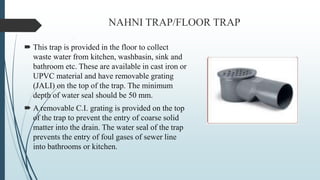
NAHNI TRAP/FLOOR TRAP
 This trap is provided in the floor to collect
waste water from kitchen, washbasin, sink and
bathroom etc. These are available in cast iron or
UPVC material and have removable grating
(JALI) on the top of the trap. The minimum
depth of water seal should be 50 mm.
 A removable C.I. grating is provided on the top
of the trap to prevent the entry of coarse solid
matter into the drain. The water seal of the trap
prevents the entry of foul gases of sewer line
into bathrooms or kitchen.
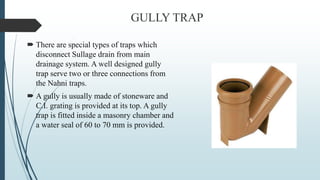
GULLY TRAP
 There are special types of traps which
disconnect Sullage drain from main
drainage system. A well designed gully
trap serve two or three connections from
the Nahni traps.
 A gully is usually made of stoneware and
C.I. grating is provided at its top. A gully
trap is fitted inside a masonry chamber and
a water seal of 60 to 70 mm is provided.
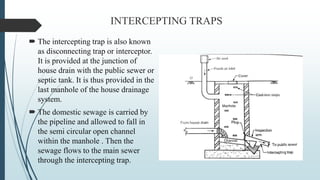
INTERCEPTING TRAPS
 The intercepting trap is also known
as disconnecting trap or interceptor.
It is provided at the junction of
house drain with the public sewer or
septic tank. It is thus provided in the
last manhole of the house drainage
system.
 The domestic sewage is carried by
the pipeline and allowed to fall in
the semi circular open channel
within the manhole . Then the
sewage flows to the main sewer
through the intercepting trap.
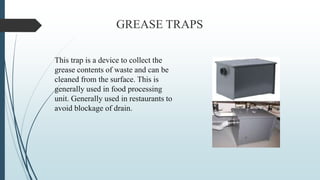
GREASE TRAPS
This trap is a device to collect the
grease contents of waste and can be
cleaned from the surface. This is
generally used in food processing
unit. Generally used in restaurants to
avoid blockage of drain.

DRAINAGE SYSTEM FOR BUILDING AND TRAPS

  • 1.
    ACTIVE LEARNING ASSIGNMENT SUBJECT:- ENVIRONMENTAL ENGINEERING DRAINAGE SYSTEM FOR BUILDING AND TRAPS
  • 2.
    HOUSE DRAINAGE  Abuilding is provided with a drainage system to discharge effectively the sewage of the building into the public sewer. Domestic sewage from a building includes human excreta as well as discharge from bathroom, kitchen, etc. and collected by building sewers and finally discharged into the public sewer.  Aims of house drainage :  To maintain healthy conditions in the building.  To dispose off waste water as early and quickly as possible.  To avoid the entry of foul gases from the sewer or the septic tank  To facilitate quick removal of foul matter, e.g. human excreta.  To collect and remove waste matters systematically.
  • 3.
     Sewage :-The liquid waste from the community. It includes discharge from bathrooms, kitchens, wash areas, urinals, industrial waste and storm water.  Sullage :- The waste waters from bathrooms, kitchen, washing areas, etc.  Sewerage :- The entire science of collecting and carrying sewage by water carriage system through sewers, is known as sewerage.  Waste water :- The term waste water is now increasingly used in place of sewage. Waste water includes both organic and mineral matter carried through liquid media.  Sewer :- An underground pipe or conduit which carries sewage is called sewer. Sanitary Drainage System
  • 4.
     Waste Pipe:- It is the pipe carrying discharges from bathroom, kitchen, sinks, etc.  Soil pipe :- It is the pipe carrying sewage from urinal, water closets, etc.  Vent Pipe :- The pipe installed for the purpose of ventilation is known as vent pipe.  Trap :- a fitting or device designed and constructed to provide, when properly vented, a liquid seal which prevents the backflow of foul air or methane gas without materially affecting the flow of sewage or wastewater through it.
  • 5.
     House/Building Drain:- Part of the lowest horizontal piping of a plumbing system which receives the discharges from the soil, waste and other drainage pipes inside of a building and conveys it to the house sewer outside of the building.  House/Building Sewer :- extends from the house drain at a point 0.60 meters from the outside face of the foundation wall of a building to the junction with the street sewer or to any point of discharge, and conveying the drainage of one building site.
  • 6.
    TRAPS  The devicewhich is connected at the end of soil pipe or waste pipe to stop the entry of foul gases inside the building is known as trap. It is a bent pipe in the shape of ‘u’ which always remain full of water.  The vertical distance between the crown and the dip of the trap is known as water seal. This portion always remains full of water. Generally, the water seal varies from 75mm to 100mm. Water seal is required to prevent the entry of foul gases in the building from the drains.
  • 7.
     REQUIREMENTS OFA GOOD TRAPS :-  Non-absorbent material  Adequate water seal at all times  Surface of all the sides are should have smooth finish so that dirt, etc. does not stick to it.  It should be free from any inside projections, angles, contraction, so that flow is not obstructed.  It should be self cleaning.  Simple in construction, cheap and readily.
  • 8.
     Classification oftraps :-  Bases on shape :-  P-trap  Q-trap  S-trap  Based on use :-  Nahni trap  Gully trap  Intercepting trap
  • 9.
    NAHNI TRAP/FLOOR TRAP This trap is provided in the floor to collect waste water from kitchen, washbasin, sink and bathroom etc. These are available in cast iron or UPVC material and have removable grating (JALI) on the top of the trap. The minimum depth of water seal should be 50 mm.  A removable C.I. grating is provided on the top of the trap to prevent the entry of coarse solid matter into the drain. The water seal of the trap prevents the entry of foul gases of sewer line into bathrooms or kitchen.
  • 10.
    GULLY TRAP  Thereare special types of traps which disconnect Sullage drain from main drainage system. A well designed gully trap serve two or three connections from the Nahni traps.  A gully is usually made of stoneware and C.I. grating is provided at its top. A gully trap is fitted inside a masonry chamber and a water seal of 60 to 70 mm is provided.
  • 11.
    INTERCEPTING TRAPS  Theintercepting trap is also known as disconnecting trap or interceptor. It is provided at the junction of house drain with the public sewer or septic tank. It is thus provided in the last manhole of the house drainage system.  The domestic sewage is carried by the pipeline and allowed to fall in the semi circular open channel within the manhole . Then the sewage flows to the main sewer through the intercepting trap.
  • 12.
    GREASE TRAPS This trapis a device to collect the grease contents of waste and can be cleaned from the surface. This is generally used in food processing unit. Generally used in restaurants to avoid blockage of drain.