PATTEN OF COLLECTION SYSTEMS
OF SANITATION..
SUBMITTED BY:
LOBSANG JAMPA
AR/15/1112
General…
For the disposal of water product of a town two works are required.
1.Collection work.
2. disposal work.
METHODS OF COLLECTION:
1. conservancy system:
* sometime this system is also called dry-system.
2. water-carriage system.
• its prevailing in small towns.
• various types of refuse and storm water are collected,
conveyed and disposed of separately by different
methods in this system, therefore, its called
conservancy system.
• as in this system water is the main substance,
therefore its called water-carriage system.
Merits of Conservancy sys.
1. Its cheaper in initial cost.
2. The quantity of sewage reaching
at the treatment plant before
disposal is low.
3. There will be no silting and deposits
in sewer-line.
4. In floods if the water level of river
rise at the out-fall, it will not be
costly to pump the sewage for
disposal.
Demerits of conservancy sys.
1. It is possible that storm water may go in
sewers causing heavy load on treatment
plants, therefore it is to be watched.
2. In crowded lanes it is very difficult to lay
two sewers .
3. For burying human excreta more space
of land is required.
4. Building can not design as one compact
unit.
5. There is every possibility that liquid refuse
may get an access in the subsoil and
pollute the underground water.
Merits of water-carriage sys.
1. Its hygienic method.
2. There is no nuisance in the streets of
the towns due to offensive matters.
3. Its occupies less space in crowed lane.
4. Due to more quantity of swage, self-cleansing
velocity can be obtained even at less gradients.
5. Buildings can be designed compact as one unit.
6. The usual water supply is sufficient.
7. Sewage after proper treatment can be used for
various purposes.
Demerits of water-carriage sys.
1. This system is very costly in initial cost.
2. The maintenance of this system is also costly.
3. During monsoon large volume of sewage is
to be treated whereas very small volume
is to be treated in the remaining period
of the year.
PATTERNS OF COLLECTION SYSTERM:
1. THE Topographical and hydrological feature if the sea.
2. The location and methods of treatment and disposal works.
3. The type sewerage system employed .
4. Area to be served.
THERE ARE VARIOUS PFTTERNS OF COLLECTING SYSTEMS:
1. Perpendicular pattern.
2. Intercepter pattern.
3. Radial pattern.
4. Fan pattern.
5. Zone pattern.
PARPENDICULER PATTERN:
• In this pattern sewers carrying storm water are laid in such
a way as to seek the shortest possible path to
the nature water course.
• Its not suitable for combined system.
because firstly its very difficult
to treat the sewage due to large
number of outlets and secondly
it pollutes the water of natural
courses.
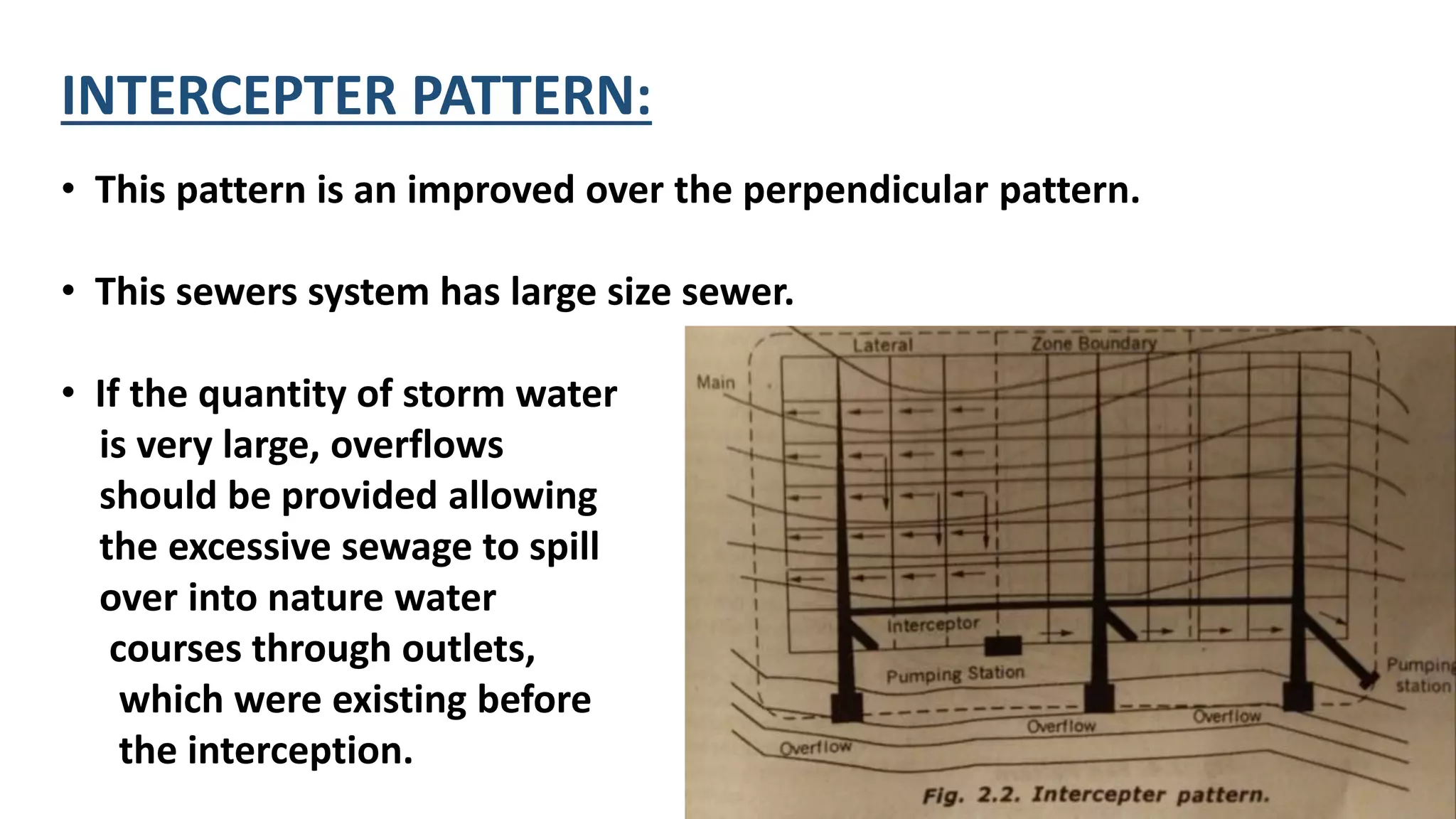
INTERCEPTER PATTERN:
• This pattern is an improved over the perpendicular pattern.
• This sewers system has large size sewer.
• If the quantity of storm water
is very large, overflows
should be provided allowing
the excessive sewage to spill
over into nature water
courses through outlets,
which were existing before
the interception.
RADIAL PATTERN:
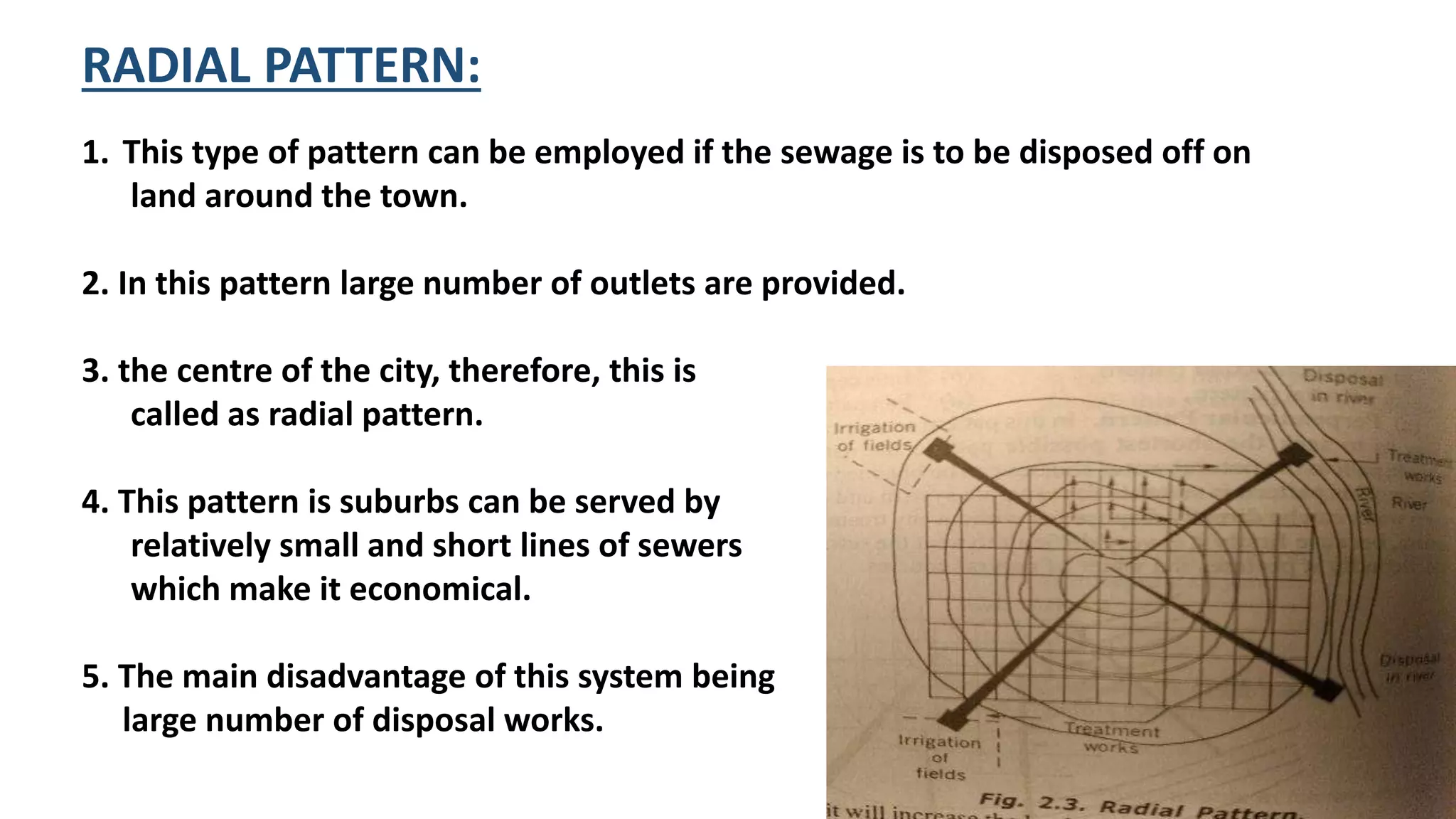
1. This type of pattern can be employed if the sewage is to be disposed off on
land around the town.
2. In this pattern large number of outlets are provided.
3. the centre of the city, therefore, this is
called as radial pattern.
4. This pattern is suburbs can be served by
relatively small and short lines of sewers
which make it economical.
5. The main disadvantage of this system being
large number of disposal works.
FAN PATTERN:
1. If the city is situated near the river, which is on one side of it only,
sewer can be laid in such a way that the whole sewer
flows to a common point where one treatment plant is located.
2. The only advantage of this system being single
unit of treatment work.
3. The drawback of this pattern is that if the
outlying suburbs develop , it will increase
the load on the treatment works,
restricting the development.
ZONE PATTERN:
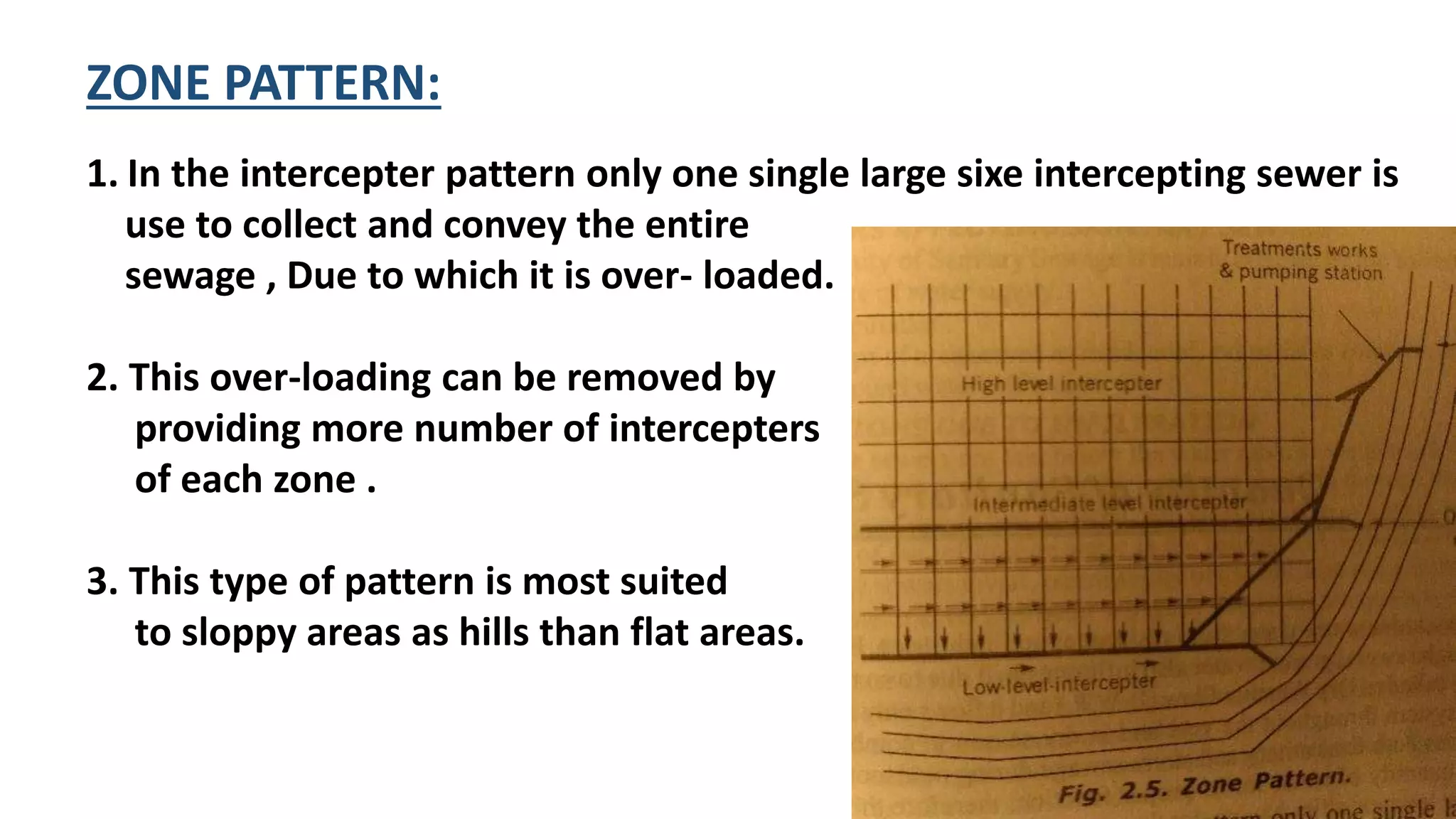
1. In the intercepter pattern only one single large sixe intercepting sewer is
use to collect and convey the entire
sewage , Due to which it is over- loaded.
2. This over-loading can be removed by
providing more number of intercepters
of each zone .
3. This type of pattern is most suited
to sloppy areas as hills than flat areas.
THUK CHA CHE….

Patten of collection systems of sanitation

  • 1.
    PATTEN OF COLLECTIONSYSTEMS OF SANITATION.. SUBMITTED BY: LOBSANG JAMPA AR/15/1112
  • 2.
    General… For the disposalof water product of a town two works are required. 1.Collection work. 2. disposal work.
  • 3.
    METHODS OF COLLECTION: 1.conservancy system: * sometime this system is also called dry-system. 2. water-carriage system. • its prevailing in small towns. • various types of refuse and storm water are collected, conveyed and disposed of separately by different methods in this system, therefore, its called conservancy system. • as in this system water is the main substance, therefore its called water-carriage system.
  • 4.
    Merits of Conservancysys. 1. Its cheaper in initial cost. 2. The quantity of sewage reaching at the treatment plant before disposal is low. 3. There will be no silting and deposits in sewer-line. 4. In floods if the water level of river rise at the out-fall, it will not be costly to pump the sewage for disposal. Demerits of conservancy sys. 1. It is possible that storm water may go in sewers causing heavy load on treatment plants, therefore it is to be watched. 2. In crowded lanes it is very difficult to lay two sewers . 3. For burying human excreta more space of land is required. 4. Building can not design as one compact unit. 5. There is every possibility that liquid refuse may get an access in the subsoil and pollute the underground water.
  • 5.
    Merits of water-carriagesys. 1. Its hygienic method. 2. There is no nuisance in the streets of the towns due to offensive matters. 3. Its occupies less space in crowed lane. 4. Due to more quantity of swage, self-cleansing velocity can be obtained even at less gradients. 5. Buildings can be designed compact as one unit. 6. The usual water supply is sufficient. 7. Sewage after proper treatment can be used for various purposes. Demerits of water-carriage sys. 1. This system is very costly in initial cost. 2. The maintenance of this system is also costly. 3. During monsoon large volume of sewage is to be treated whereas very small volume is to be treated in the remaining period of the year.
  • 7.
    PATTERNS OF COLLECTIONSYSTERM: 1. THE Topographical and hydrological feature if the sea. 2. The location and methods of treatment and disposal works. 3. The type sewerage system employed . 4. Area to be served. THERE ARE VARIOUS PFTTERNS OF COLLECTING SYSTEMS: 1. Perpendicular pattern. 2. Intercepter pattern. 3. Radial pattern. 4. Fan pattern. 5. Zone pattern.
  • 8.
    PARPENDICULER PATTERN: • Inthis pattern sewers carrying storm water are laid in such a way as to seek the shortest possible path to the nature water course. • Its not suitable for combined system. because firstly its very difficult to treat the sewage due to large number of outlets and secondly it pollutes the water of natural courses.
  • 9.
    INTERCEPTER PATTERN: • Thispattern is an improved over the perpendicular pattern. • This sewers system has large size sewer. • If the quantity of storm water is very large, overflows should be provided allowing the excessive sewage to spill over into nature water courses through outlets, which were existing before the interception.
  • 10.
    RADIAL PATTERN: 1. Thistype of pattern can be employed if the sewage is to be disposed off on land around the town. 2. In this pattern large number of outlets are provided. 3. the centre of the city, therefore, this is called as radial pattern. 4. This pattern is suburbs can be served by relatively small and short lines of sewers which make it economical. 5. The main disadvantage of this system being large number of disposal works.
  • 11.
    FAN PATTERN: 1. Ifthe city is situated near the river, which is on one side of it only, sewer can be laid in such a way that the whole sewer flows to a common point where one treatment plant is located. 2. The only advantage of this system being single unit of treatment work. 3. The drawback of this pattern is that if the outlying suburbs develop , it will increase the load on the treatment works, restricting the development.
  • 12.
    ZONE PATTERN: 1. Inthe intercepter pattern only one single large sixe intercepting sewer is use to collect and convey the entire sewage , Due to which it is over- loaded. 2. This over-loading can be removed by providing more number of intercepters of each zone . 3. This type of pattern is most suited to sloppy areas as hills than flat areas.
  • 13.