WEB TECHNOLOGY UNIT I
Part E
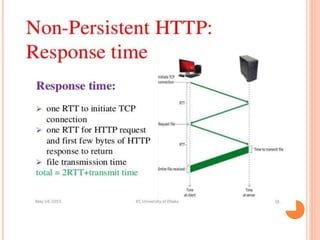
 Three-way handshaking:
 The actual message exchange, TCP establishes a logical
connection between the client and server.
Example:
 Once the connection is established, the client can send a
request to the server.
 The web server receives the request and responds with a
response message
 Four-way handshaking:
 HTTP/0.9 and HTTP/1.0 specifications, the server terminations
the connection immediately, after the response is sent.
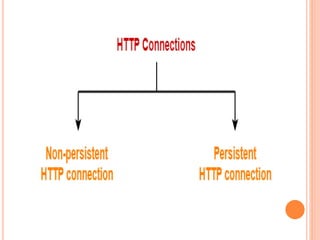
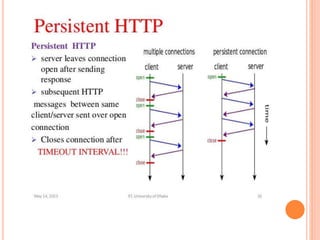
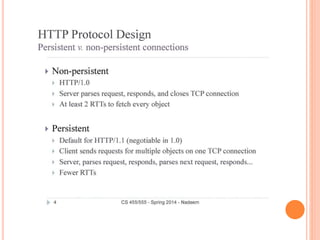
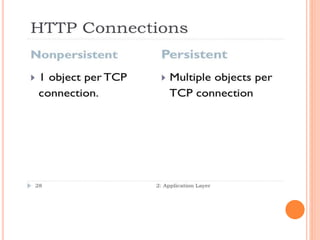
NON-PERSISTENT CONNECTIONS:
 If the client wants to send another request, it must
follow same set of steps.
 It means every request is considered as new
request.
 It means the connection doesn’t exist (persist) after
a response is sent.
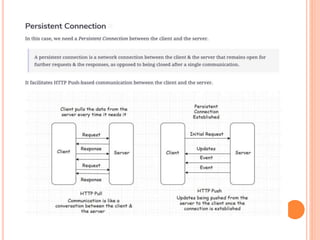
PERSISTENT CONNECTIONS:
 This mechanism is that it consumes significant
bandwidth due to connection establishment and
connect release procedure every time the client
wants to send a request to the server.
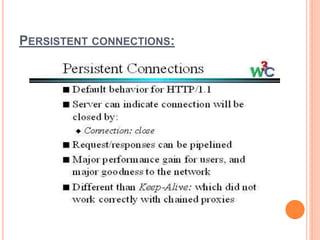
PERSISTENT CONNECTIONS:
IMPROVEMENT:
 HTTP/1.1 is byte serving, i.e., a server may send
just the requested portion of the documents instead
of sending the entire content.
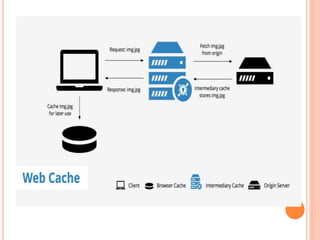
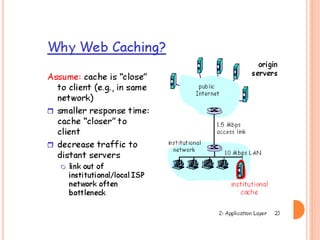
WEB CACHING:
 It is an important technique to improve Quality of Service
(QoS) of the web server.
 Caching can reduce network latency experienced by
clients.
 Example:
 Web pages can be loaded more quickly in the browser.
 Caching can also conserve bandwidth on network and
increasing scalability and availability of web pages with
the help of an HTTP proxy cache.
 Web resources that are cached remain accessible even
if source of the resources or an intermediate network link
goes down.
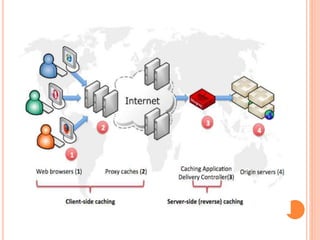
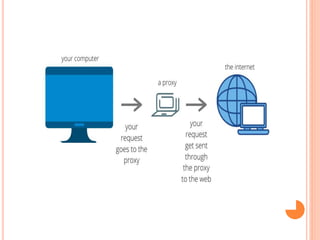
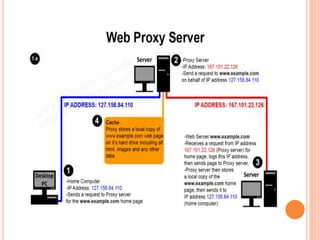
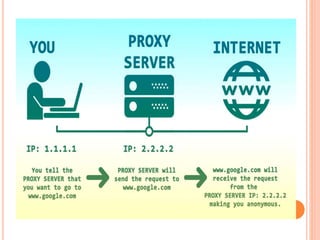
PROXY:
 It is an application program or a computer system
that behaves like an intermediary between servers
and clients looking for services from those servers.
 Many kinds of proxy.
 Each one is designed to perform some specific
tasks.
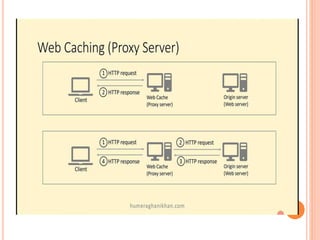
WEB PROXY:
 It is one between web clients and web servers and
provides web services on behalf of web servers.
PROXY SERVER:
 They are especially important on relatively large networks
such as institutional networks, corporate intranets, and ISP
networks.
 They are application layer and provide more granularity in
controlling traffic.
 Connection sharing
 Traffic filtering and fire walling
 Caching
Need:
 Data privacy is critical and as a consequence.
CONTENT FILTERING:
 It is used in crucial commercial and non-commercial
sectors such as corporate, education, or digital library
environment, etc.
 If requesting client is validated by the filter, it is allowed
to get the service.
 Filtering Technique:
 URL or DNS blacklist
 MIME filtering
 Content keyword filtering
 URL regexp filtering, etc.
 Example:
 It can divide available bandwidth equitably to all
computers.
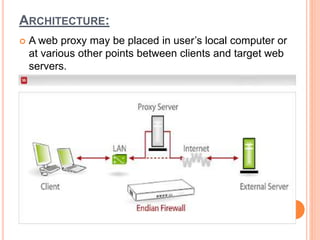
ARCHITECTURE:
 A web proxy may be placed in user’s local computer or
at various other points between clients and target web
servers.
CACHE CONSISTENCY:
 It mechanisms ensure that cached copies of web
pages are eventually updated to reflect changes in
the original web pages.
 Two cache consistency mechanisms in use for
HTTP proxies:
 Pull method
 Push method
PULL METHOD:
 Each web page is assigned a time-to-store field, which
indicates the time of storing web page in the cache.
 An expiry time of one or two days.
 Expiry time determines how long a web page should remain
valid in the cache.
 Example:
 The page is referred, and page is found in the cache, the web
server checks whether the web page has expired or not.
 If so, a fresh copy is obtained (pulled) from the original server
and forwarded to the client.
PUSH METHOD:
 Web server is assigned the responsibility of making all
cached copies consistent with the server copy.
 Whenever a web page is modified, the web server
sends an update request in every web proxy that
cached this web page.
 Advantage:
 The cached pages are modified only when the original
copies are modified.
 Disadvantage:
 Web server has to update all cached copies that are
stored different client’s caches.
 This increases the load on the web server.
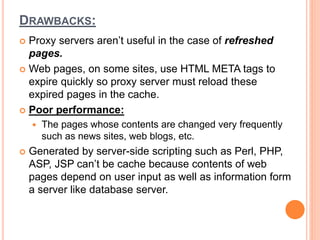
DRAWBACKS:
 Proxy servers aren’t useful in the case of refreshed
pages.
 Web pages, on some sites, use HTML META tags to
expire quickly so proxy server must reload these
expired pages in the cache.
 Poor performance:
 The pages whose contents are changed very frequently
such as news sites, web blogs, etc.
 Generated by server-side scripting such as Perl, PHP,
ASP, JSP can’t be cache because contents of web
pages depend on user input as well as information form
a server like database server.
 Proxy servers can only cache home pages from
websites that are generally static.
 Generate contents of subsequent pages
dynamically, proxy servers can’t help much in this
regard.

Web technology Unit-I Part E

  • 1.
  • 2.
     Three-way handshaking: The actual message exchange, TCP establishes a logical connection between the client and server. Example:  Once the connection is established, the client can send a request to the server.  The web server receives the request and responds with a response message  Four-way handshaking:  HTTP/0.9 and HTTP/1.0 specifications, the server terminations the connection immediately, after the response is sent.
  • 4.
    NON-PERSISTENT CONNECTIONS:  Ifthe client wants to send another request, it must follow same set of steps.  It means every request is considered as new request.  It means the connection doesn’t exist (persist) after a response is sent.
  • 6.
    PERSISTENT CONNECTIONS:  Thismechanism is that it consumes significant bandwidth due to connection establishment and connect release procedure every time the client wants to send a request to the server.
  • 8.
  • 9.
    IMPROVEMENT:  HTTP/1.1 isbyte serving, i.e., a server may send just the requested portion of the documents instead of sending the entire content.
  • 17.
    WEB CACHING:  Itis an important technique to improve Quality of Service (QoS) of the web server.  Caching can reduce network latency experienced by clients.  Example:  Web pages can be loaded more quickly in the browser.  Caching can also conserve bandwidth on network and increasing scalability and availability of web pages with the help of an HTTP proxy cache.  Web resources that are cached remain accessible even if source of the resources or an intermediate network link goes down.
  • 18.
    PROXY:  It isan application program or a computer system that behaves like an intermediary between servers and clients looking for services from those servers.  Many kinds of proxy.  Each one is designed to perform some specific tasks.
  • 20.
    WEB PROXY:  Itis one between web clients and web servers and provides web services on behalf of web servers.
  • 22.
    PROXY SERVER:  Theyare especially important on relatively large networks such as institutional networks, corporate intranets, and ISP networks.  They are application layer and provide more granularity in controlling traffic.  Connection sharing  Traffic filtering and fire walling  Caching Need:  Data privacy is critical and as a consequence.
  • 25.
    CONTENT FILTERING:  Itis used in crucial commercial and non-commercial sectors such as corporate, education, or digital library environment, etc.  If requesting client is validated by the filter, it is allowed to get the service.  Filtering Technique:  URL or DNS blacklist  MIME filtering  Content keyword filtering  URL regexp filtering, etc.  Example:  It can divide available bandwidth equitably to all computers.
  • 26.
    ARCHITECTURE:  A webproxy may be placed in user’s local computer or at various other points between clients and target web servers.
  • 27.
    CACHE CONSISTENCY:  Itmechanisms ensure that cached copies of web pages are eventually updated to reflect changes in the original web pages.  Two cache consistency mechanisms in use for HTTP proxies:  Pull method  Push method
  • 28.
    PULL METHOD:  Eachweb page is assigned a time-to-store field, which indicates the time of storing web page in the cache.  An expiry time of one or two days.  Expiry time determines how long a web page should remain valid in the cache.  Example:  The page is referred, and page is found in the cache, the web server checks whether the web page has expired or not.  If so, a fresh copy is obtained (pulled) from the original server and forwarded to the client.
  • 29.
    PUSH METHOD:  Webserver is assigned the responsibility of making all cached copies consistent with the server copy.  Whenever a web page is modified, the web server sends an update request in every web proxy that cached this web page.  Advantage:  The cached pages are modified only when the original copies are modified.  Disadvantage:  Web server has to update all cached copies that are stored different client’s caches.  This increases the load on the web server.
  • 30.
    DRAWBACKS:  Proxy serversaren’t useful in the case of refreshed pages.  Web pages, on some sites, use HTML META tags to expire quickly so proxy server must reload these expired pages in the cache.  Poor performance:  The pages whose contents are changed very frequently such as news sites, web blogs, etc.  Generated by server-side scripting such as Perl, PHP, ASP, JSP can’t be cache because contents of web pages depend on user input as well as information form a server like database server.
  • 31.
     Proxy serverscan only cache home pages from websites that are generally static.  Generate contents of subsequent pages dynamically, proxy servers can’t help much in this regard.