Weather Instruments

TOOLS USED TO MEASURE AND COLLECT
          WEATHER DATA.
Anemometer


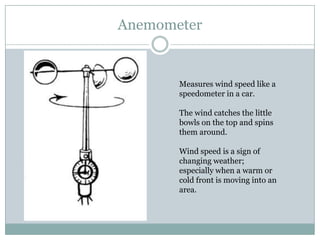
       Measures wind speed like a
       speedometer in a car.

       The wind catches the little
       bowls on the top and spins
       them around.

       Wind speed is a sign of
       changing weather;
       especially when a warm or
       cold front is moving into an
       area.
Barometer

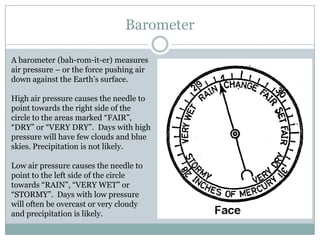
A barometer (bah-rom-it-er) measures
air pressure – or the force pushing air
down against the Earth’s surface.

High air pressure causes the needle to
point towards the right side of the
circle to the areas marked “FAIR”,
“DRY” or “VERY DRY”. Days with high
pressure will have few clouds and blue
skies. Precipitation is not likely.

Low air pressure causes the needle to
point to the left side of the circle
towards “RAIN”, “VERY WET” or
“STORMY”. Days with low pressure
will often be overcast or very cloudy
and precipitation is likely.
Hygrometer

        A hygrometer (high-grom-it-
        er) is used to measure the
        humidity in the air. Humidity
        is caused by water vapor
        trapped in the air; especially
        on high-pressure days in a
        warm air mass.

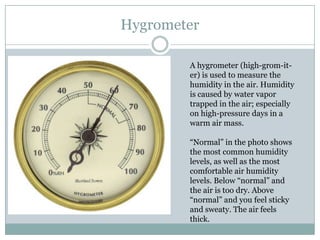
        “Normal” in the photo shows
        the most common humidity
        levels, as well as the most
        comfortable air humidity
        levels. Below “normal” and
        the air is too dry. Above
        “normal” and you feel sticky
        and sweaty. The air feels
        thick.
Rain Gauge

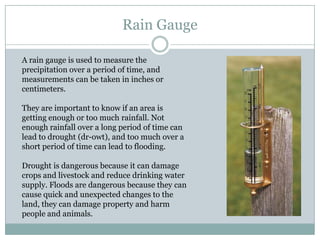
A rain gauge is used to measure the
precipitation over a period of time, and
measurements can be taken in inches or
centimeters.

They are important to know if an area is
getting enough or too much rainfall. Not
enough rainfall over a long period of time can
lead to drought (dr-owt), and too much over a
short period of time can lead to flooding.

Drought is dangerous because it can damage
crops and livestock and reduce drinking water
supply. Floods are dangerous because they can
cause quick and unexpected changes to the
land, they can damage property and harm
people and animals.
Thermometer

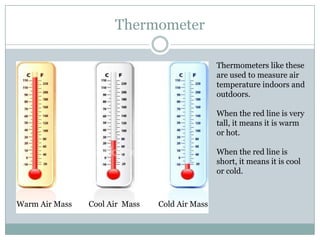
                                                Thermometers like these
                                                are used to measure air
                                                temperature indoors and
                                                outdoors.

                                                When the red line is very
                                                tall, it means it is warm
                                                or hot.

                                                When the red line is
                                                short, it means it is cool
                                                or cold.


Warm Air Mass   Cool Air Mass   Cold Air Mass
Wind Vane

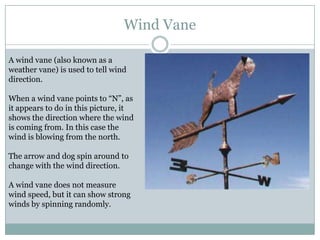
A wind vane (also known as a
weather vane) is used to tell wind
direction.

When a wind vane points to “N”, as
it appears to do in this picture, it
shows the direction where the wind
is coming from. In this case the
wind is blowing from the north.

The arrow and dog spin around to
change with the wind direction.

A wind vane does not measure
wind speed, but it can show strong
winds by spinning randomly.

Weather instruments

  • 1.
    Weather Instruments TOOLS USEDTO MEASURE AND COLLECT WEATHER DATA.
  • 2.
    Anemometer Measures wind speed like a speedometer in a car. The wind catches the little bowls on the top and spins them around. Wind speed is a sign of changing weather; especially when a warm or cold front is moving into an area.
  • 3.
    Barometer A barometer (bah-rom-it-er)measures air pressure – or the force pushing air down against the Earth’s surface. High air pressure causes the needle to point towards the right side of the circle to the areas marked “FAIR”, “DRY” or “VERY DRY”. Days with high pressure will have few clouds and blue skies. Precipitation is not likely. Low air pressure causes the needle to point to the left side of the circle towards “RAIN”, “VERY WET” or “STORMY”. Days with low pressure will often be overcast or very cloudy and precipitation is likely.
  • 4.
    Hygrometer A hygrometer (high-grom-it- er) is used to measure the humidity in the air. Humidity is caused by water vapor trapped in the air; especially on high-pressure days in a warm air mass. “Normal” in the photo shows the most common humidity levels, as well as the most comfortable air humidity levels. Below “normal” and the air is too dry. Above “normal” and you feel sticky and sweaty. The air feels thick.
  • 5.
    Rain Gauge A raingauge is used to measure the precipitation over a period of time, and measurements can be taken in inches or centimeters. They are important to know if an area is getting enough or too much rainfall. Not enough rainfall over a long period of time can lead to drought (dr-owt), and too much over a short period of time can lead to flooding. Drought is dangerous because it can damage crops and livestock and reduce drinking water supply. Floods are dangerous because they can cause quick and unexpected changes to the land, they can damage property and harm people and animals.
  • 6.
    Thermometer Thermometers like these are used to measure air temperature indoors and outdoors. When the red line is very tall, it means it is warm or hot. When the red line is short, it means it is cool or cold. Warm Air Mass Cool Air Mass Cold Air Mass
  • 7.
    Wind Vane A windvane (also known as a weather vane) is used to tell wind direction. When a wind vane points to “N”, as it appears to do in this picture, it shows the direction where the wind is coming from. In this case the wind is blowing from the north. The arrow and dog spin around to change with the wind direction. A wind vane does not measure wind speed, but it can show strong winds by spinning randomly.