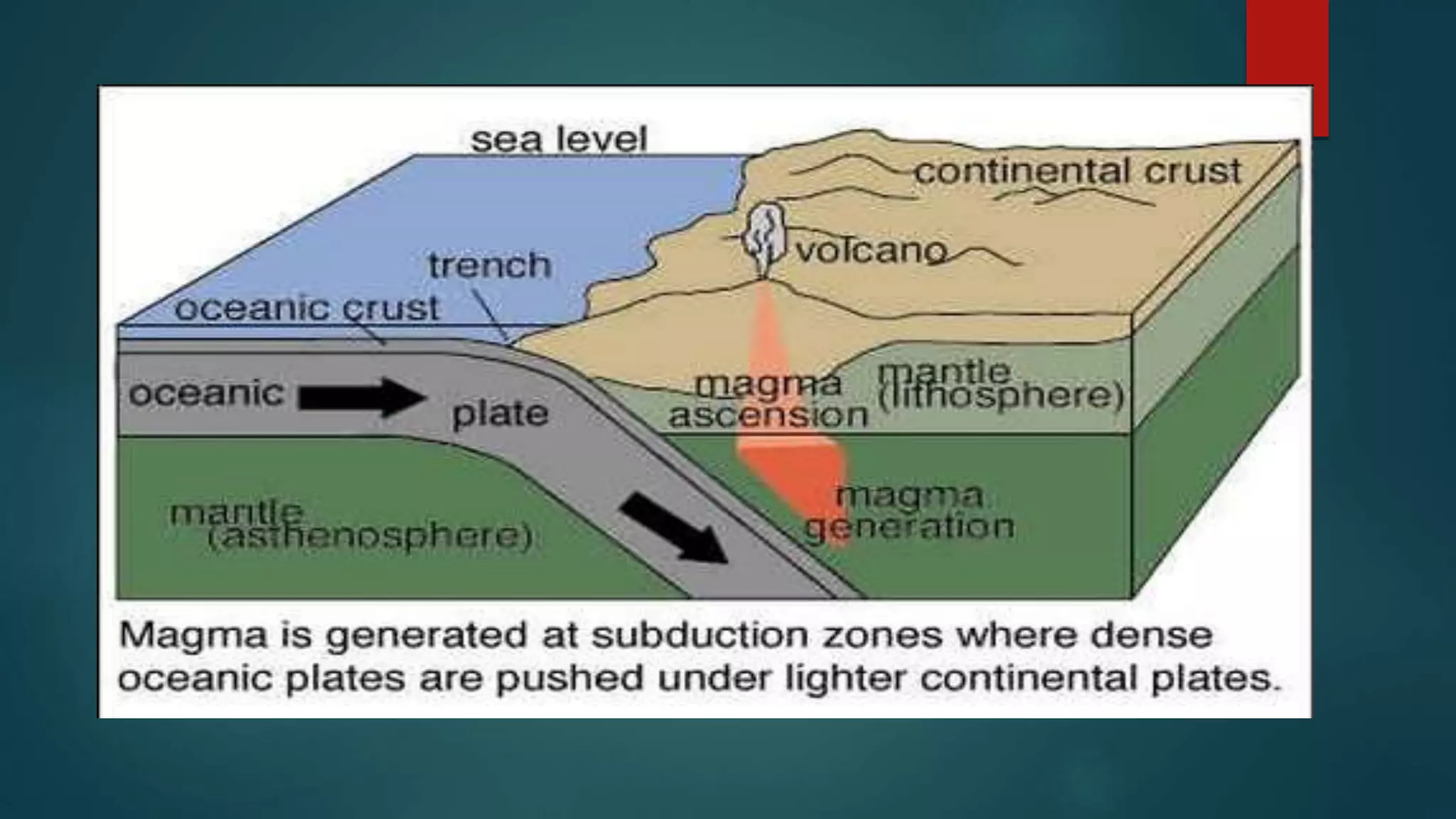
Volcano
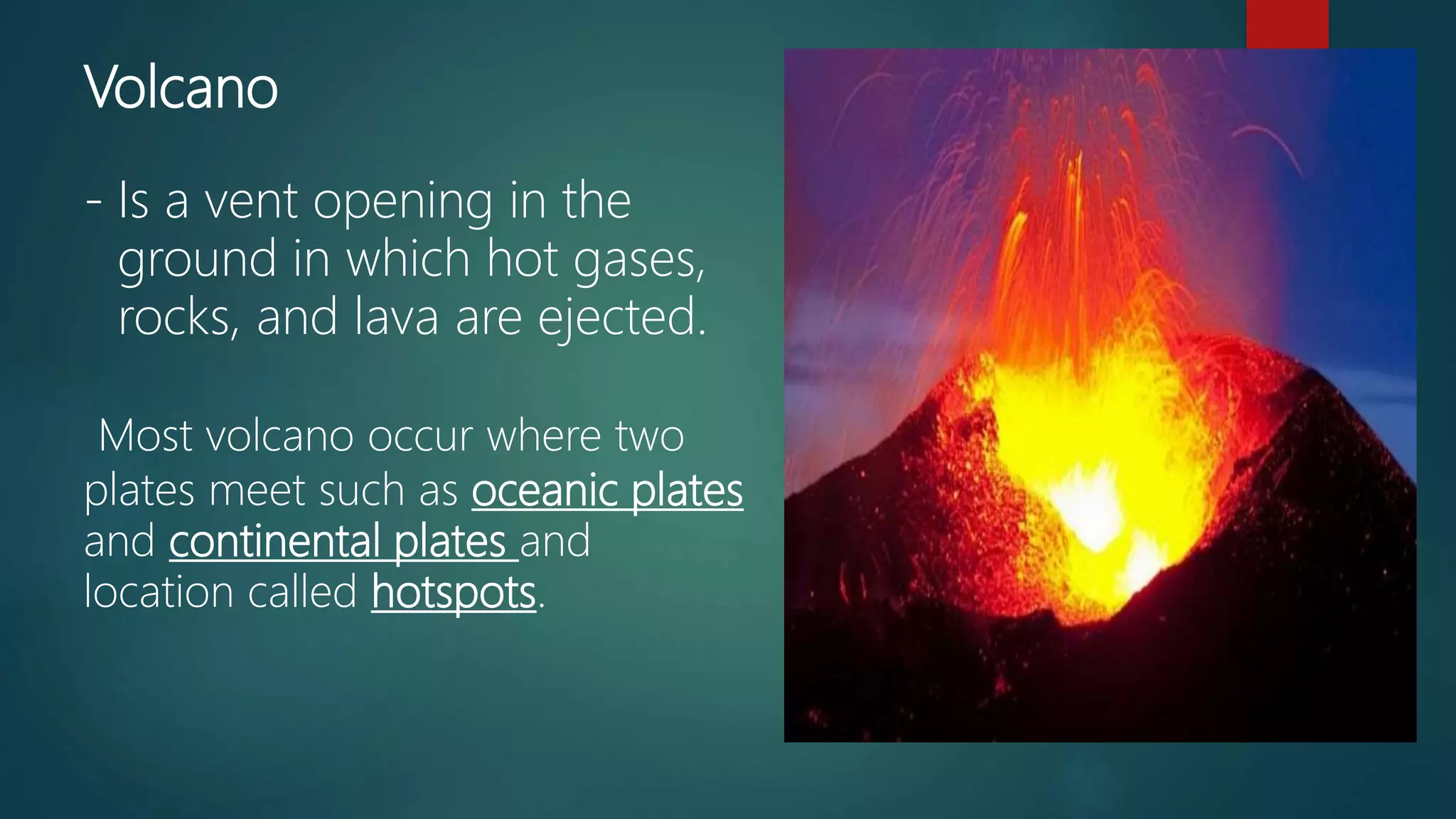
- Is a vent opening in the
ground in which hot gases,
rocks, and lava are ejected.
Most volcano occur where two
plates meet such as oceanic plates
and continental plates and
location called hotspots.
A. Oceanic plates are formed by divergent plate boundaries.
These zones, located along mid-ocean ridges, represent areas where
upwelling magma creates new oceanic crust. As lava flows from
these volcanic ridges, it quickly cools, forming extrusive igneous rock.
... As oceanic plates subduct, they melt to form magma.
Oceanic crust is the uppermost layer of the oceanic portion of a
tectonic plate. It is composed of the upper oceanic crust, with pillow
lavas and a dike complex, and the lower oceanic crust, composed of
troctolite, gabbro and ultramafic cumulates. The crust overlies the
solidified and uppermost layer of the mantle.
B. Continental plates - are much thicker that
Oceanic plates. At the convergent boundaries the
continental plates are pushed upward and gain thickness.
The rocks and geological layers are much older on
continental plates than in the oceanic plates.
The Continental plates are much less dense than the
Oceanic plates. The Granite and recycled material are
much lighter than the heavy basalt layers of the ocean
plates.
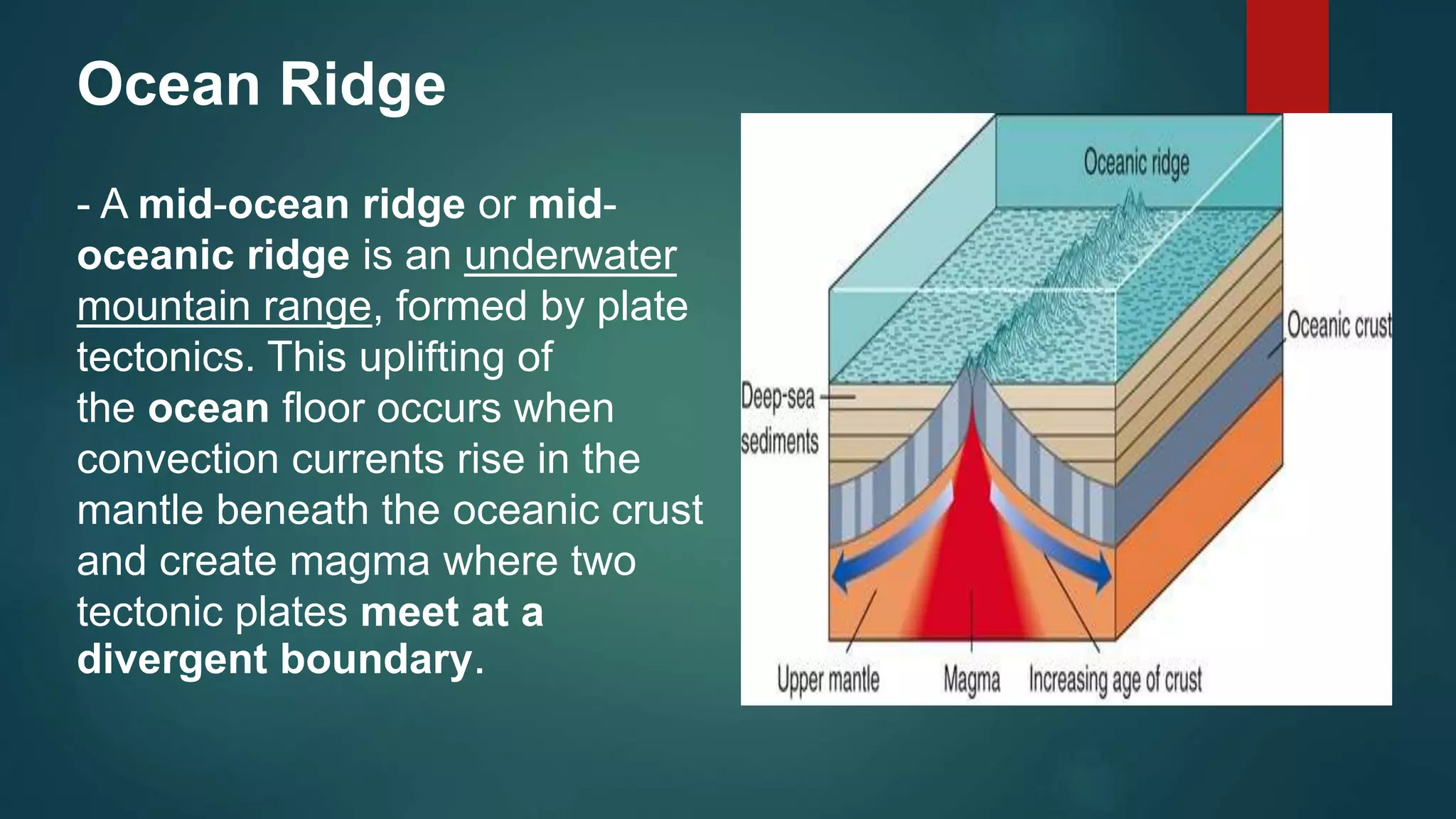
Ocean Ridge
- A mid-ocean ridge or mid-
oceanic ridge is an underwater
mountain range, formed by plate
tectonics. This uplifting of
the ocean floor occurs when
convection currents rise in the
mantle beneath the oceanic crust
and create magma where two
tectonic plates meet at a
divergent boundary.
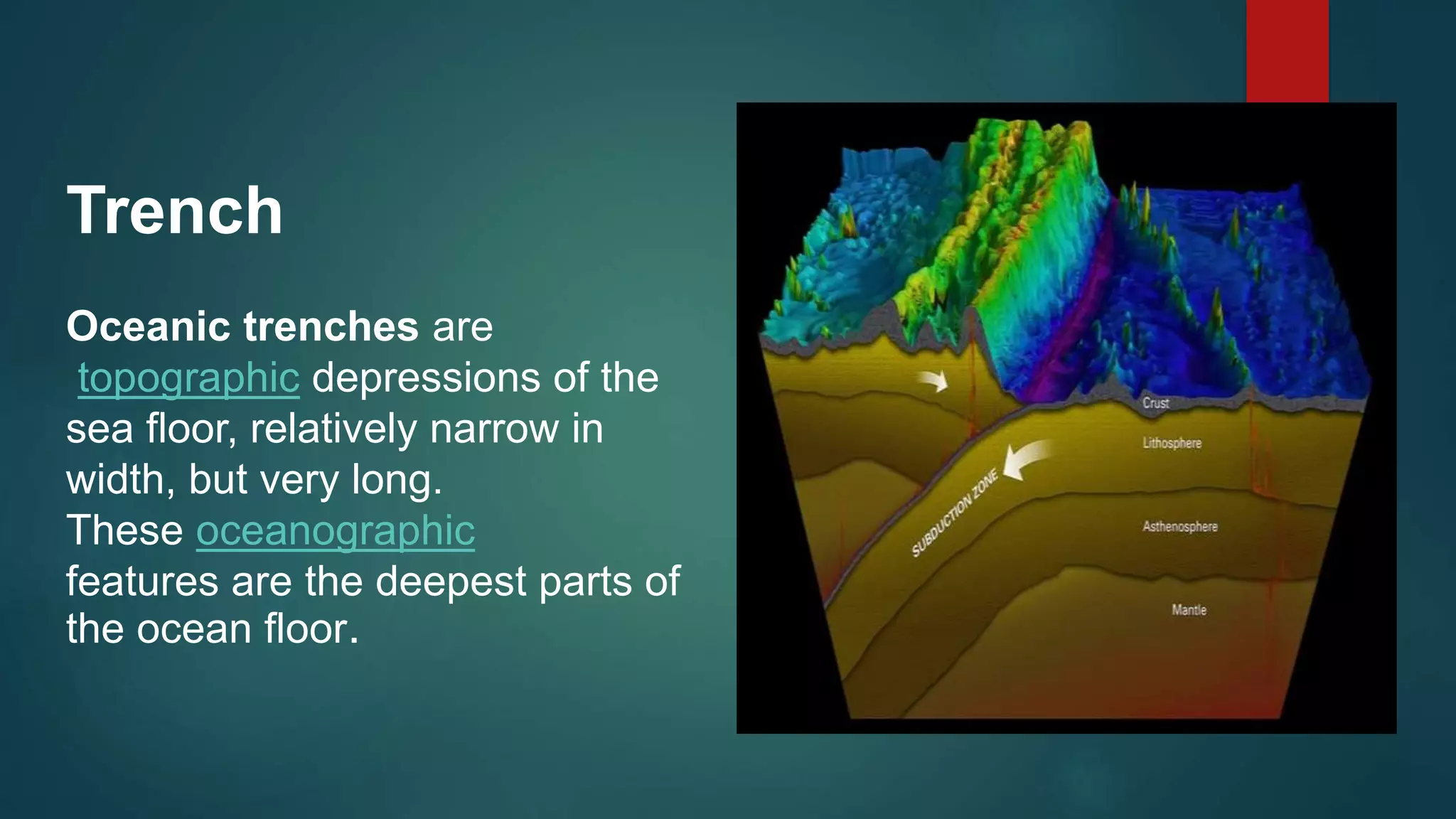
Trench
Oceanic trenches are
topographic depressions of the
sea floor, relatively narrow in
width, but very long.
These oceanographic
features are the deepest parts of
the ocean floor.
When two plates move towards each other, the denser or
heavier plate is forced to dip beneath the lighter one.
Oceanic plates are denser than continental plates. When an
oceanic plates subducts beneath a continental plate, an
oceanic trench may be formed.
One example is the Peru-Chilean trench. The convergence of
the Nazca oceanic plate and South American continental
plate created the Andes Fold Mountains.
Volcanic Islands
When two oceanic plates
collide, one of the plates sink
beneath the other, the rising
magma from the subduction
zone forms volcanic islands, like
like the Philippines.
A series of these islands form
island arc.
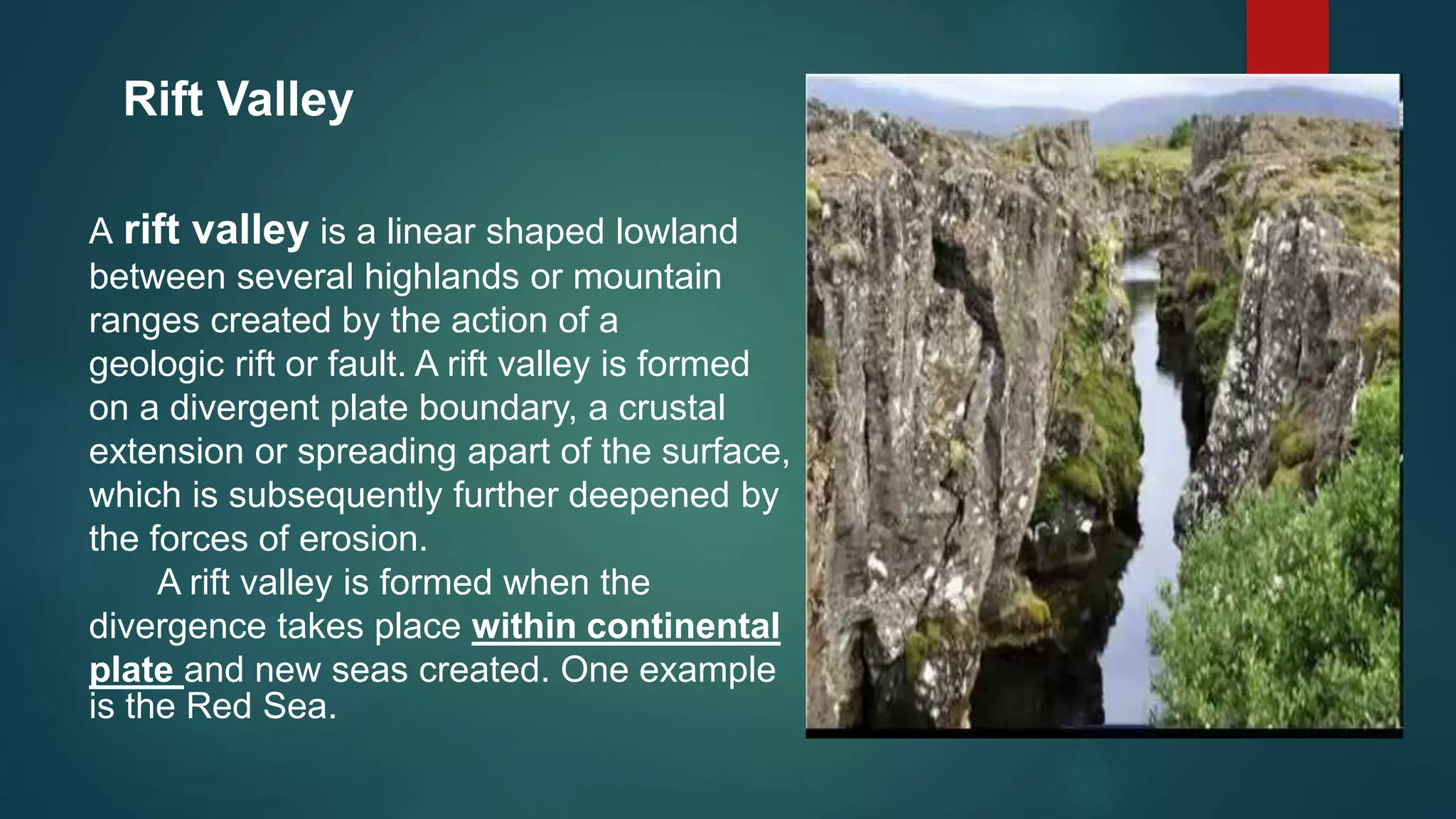
Rift Valley
A rift valley is a linear shaped lowland
between several highlands or mountain
ranges created by the action of a
geologic rift or fault. A rift valley is formed
on a divergent plate boundary, a crustal
extension or spreading apart of the surface,
which is subsequently further deepened by
the forces of erosion.
A rift valley is formed when the
divergence takes place within continental
plate and new seas created. One example
is the Red Sea.
C. Hotspots
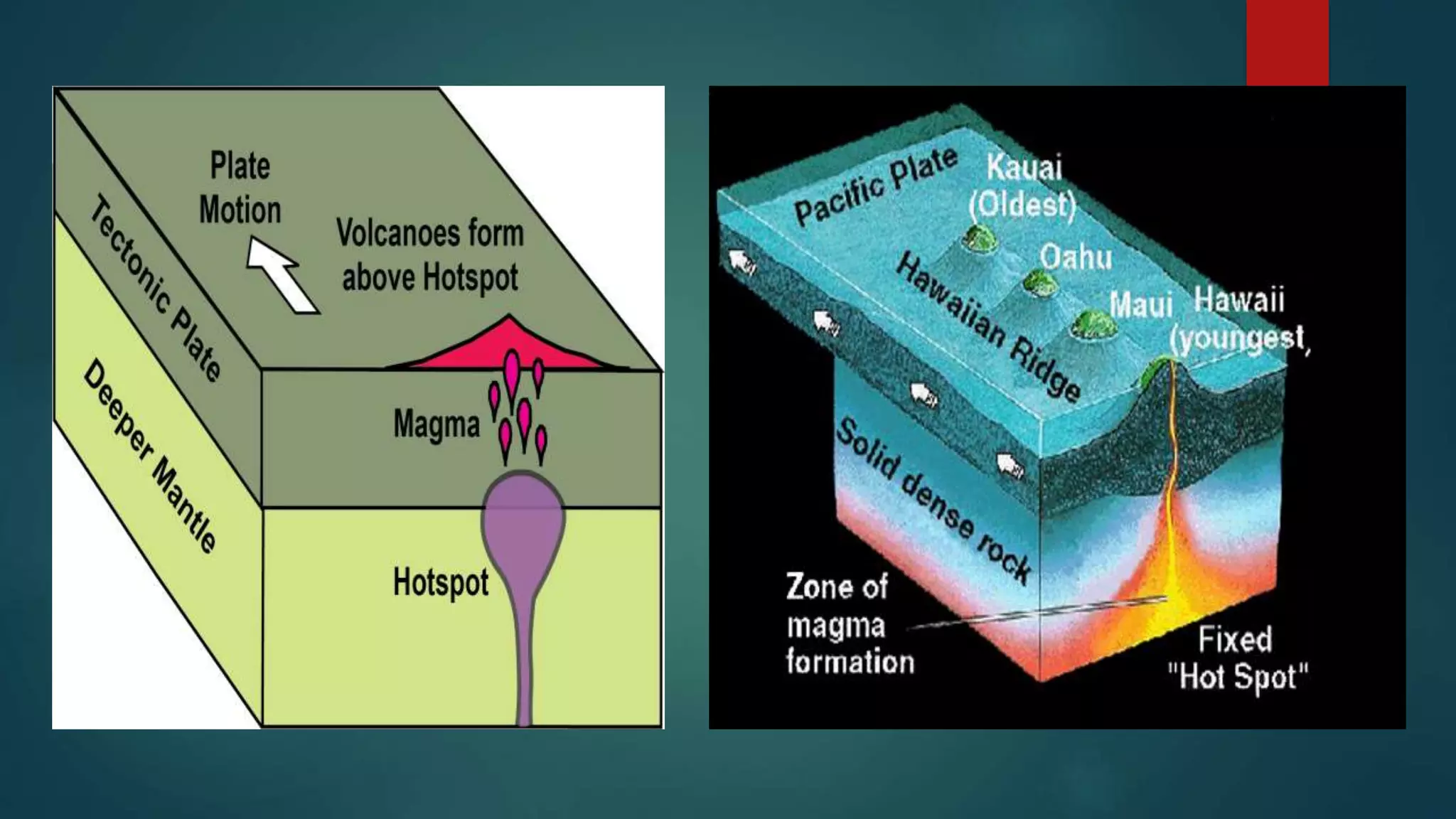
A volcanic "hotspot" is an area in the mantle from which heat rises
as a thermal plume from deep in the Earth. High heat and lower
pressure at the base of the lithosphere (tectonic plate) facilitates
melting of the rock. This melt, called magma, rises through cracks
and erupts to form volcanoes.
In geology, the places known as hotspots or hot spots are
volcanic regions thought to be fed by underlying mantle that is
anomalously hot compared with the surrounding mantle. Examples
include the Hawaii, Iceland and Yellowstone hotspots.
Pacific Ring of Fire
The area around the Pacific plate
where earthquakes and volcanoes are
abound is called Pacific Ring of Fire. All the
earthquakes and volcanoes in this ring can
be attributed to tectonic movement at the
boundary of the Pacific plate.
This rings stretches from the Andes in the
South America, northwards to California in
North America, and all the way to the
Philippines. In fact, many islands in the
Philippines archipelago are volcanic Islands.
Remember:
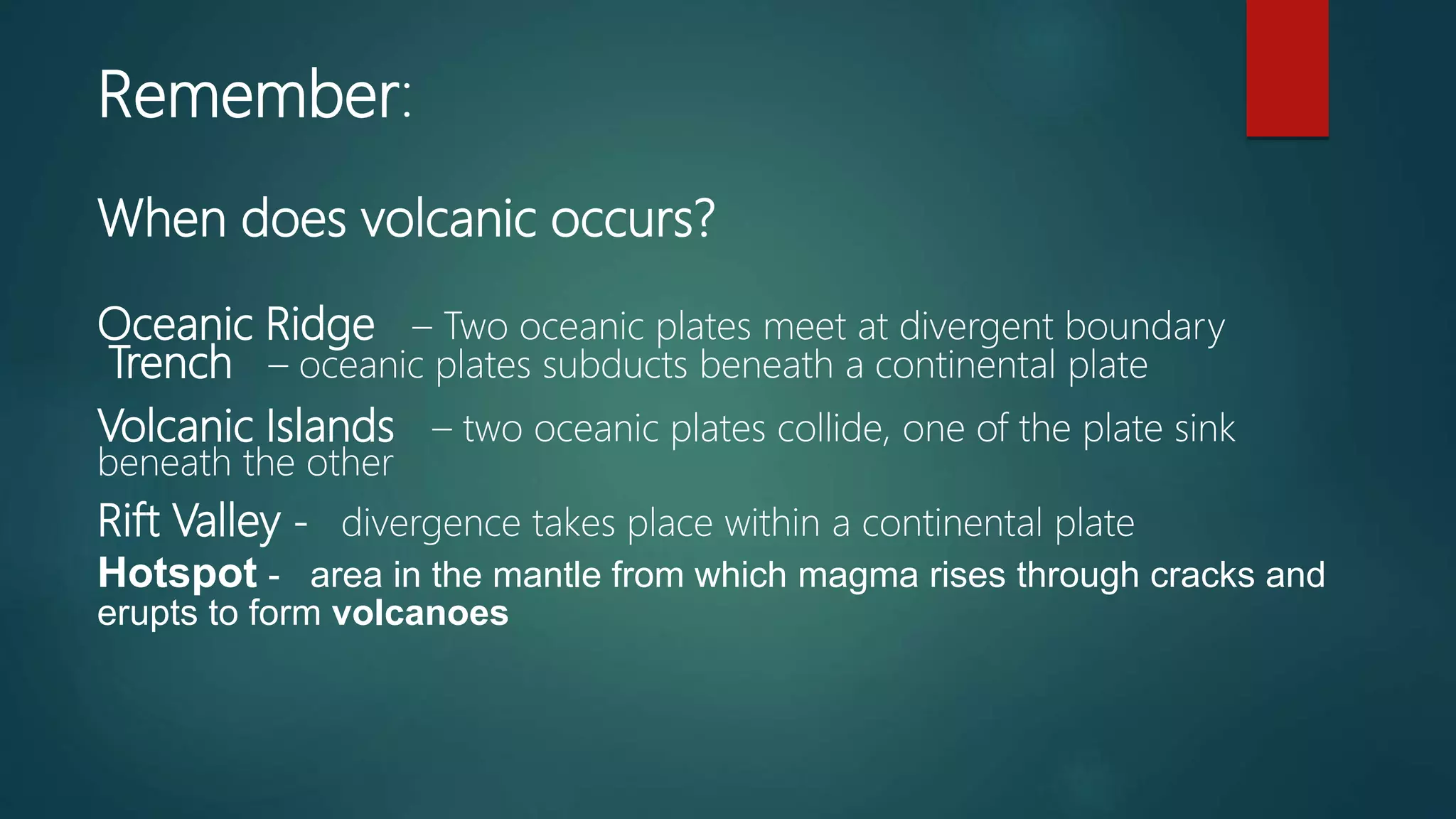
When does volcanic occurs?
Oceanic Ridge – Two oceanic plates meet at divergent boundary
Trench – oceanic plates subducts beneath a continental plate
Volcanic Islands – two oceanic plates collide, one of the plate sink
beneath the other
Rift Valley - divergence takes place within a continental plate
Hotspot - area in the mantle from which magma rises through cracks and
erupts to form volcanoes
*The oceanic crust is made up of basalt while the continental
crust is made up of granite.
*The oceanic crust is thinner while the continental crust is
much thicker.
*The oceanic crust is denser than the continental crust.
*The continental crust has greater buoyancy than the oceanic
crust.
Think of
this:

Volcanoes and plate tectonics

  • 2.
    Volcano - Is avent opening in the ground in which hot gases, rocks, and lava are ejected. Most volcano occur where two plates meet such as oceanic plates and continental plates and location called hotspots.
  • 3.
    A. Oceanic platesare formed by divergent plate boundaries. These zones, located along mid-ocean ridges, represent areas where upwelling magma creates new oceanic crust. As lava flows from these volcanic ridges, it quickly cools, forming extrusive igneous rock. ... As oceanic plates subduct, they melt to form magma. Oceanic crust is the uppermost layer of the oceanic portion of a tectonic plate. It is composed of the upper oceanic crust, with pillow lavas and a dike complex, and the lower oceanic crust, composed of troctolite, gabbro and ultramafic cumulates. The crust overlies the solidified and uppermost layer of the mantle.
  • 4.
    B. Continental plates- are much thicker that Oceanic plates. At the convergent boundaries the continental plates are pushed upward and gain thickness. The rocks and geological layers are much older on continental plates than in the oceanic plates. The Continental plates are much less dense than the Oceanic plates. The Granite and recycled material are much lighter than the heavy basalt layers of the ocean plates.
  • 6.
    Ocean Ridge - Amid-ocean ridge or mid- oceanic ridge is an underwater mountain range, formed by plate tectonics. This uplifting of the ocean floor occurs when convection currents rise in the mantle beneath the oceanic crust and create magma where two tectonic plates meet at a divergent boundary.
  • 7.
    Trench Oceanic trenches are topographicdepressions of the sea floor, relatively narrow in width, but very long. These oceanographic features are the deepest parts of the ocean floor.
  • 8.
    When two platesmove towards each other, the denser or heavier plate is forced to dip beneath the lighter one. Oceanic plates are denser than continental plates. When an oceanic plates subducts beneath a continental plate, an oceanic trench may be formed. One example is the Peru-Chilean trench. The convergence of the Nazca oceanic plate and South American continental plate created the Andes Fold Mountains.
  • 9.
    Volcanic Islands When twooceanic plates collide, one of the plates sink beneath the other, the rising magma from the subduction zone forms volcanic islands, like like the Philippines. A series of these islands form island arc.
  • 10.
    Rift Valley A riftvalley is a linear shaped lowland between several highlands or mountain ranges created by the action of a geologic rift or fault. A rift valley is formed on a divergent plate boundary, a crustal extension or spreading apart of the surface, which is subsequently further deepened by the forces of erosion. A rift valley is formed when the divergence takes place within continental plate and new seas created. One example is the Red Sea.
  • 11.
    C. Hotspots A volcanic"hotspot" is an area in the mantle from which heat rises as a thermal plume from deep in the Earth. High heat and lower pressure at the base of the lithosphere (tectonic plate) facilitates melting of the rock. This melt, called magma, rises through cracks and erupts to form volcanoes. In geology, the places known as hotspots or hot spots are volcanic regions thought to be fed by underlying mantle that is anomalously hot compared with the surrounding mantle. Examples include the Hawaii, Iceland and Yellowstone hotspots.
  • 13.
    Pacific Ring ofFire The area around the Pacific plate where earthquakes and volcanoes are abound is called Pacific Ring of Fire. All the earthquakes and volcanoes in this ring can be attributed to tectonic movement at the boundary of the Pacific plate. This rings stretches from the Andes in the South America, northwards to California in North America, and all the way to the Philippines. In fact, many islands in the Philippines archipelago are volcanic Islands.
  • 14.
    Remember: When does volcanicoccurs? Oceanic Ridge – Two oceanic plates meet at divergent boundary Trench – oceanic plates subducts beneath a continental plate Volcanic Islands – two oceanic plates collide, one of the plate sink beneath the other Rift Valley - divergence takes place within a continental plate Hotspot - area in the mantle from which magma rises through cracks and erupts to form volcanoes
  • 15.
    *The oceanic crustis made up of basalt while the continental crust is made up of granite. *The oceanic crust is thinner while the continental crust is much thicker. *The oceanic crust is denser than the continental crust. *The continental crust has greater buoyancy than the oceanic crust. Think of this: