Wearable Computing
Mark Billinghurst
HIT Lab NZ
University of Canterbury
October 2013
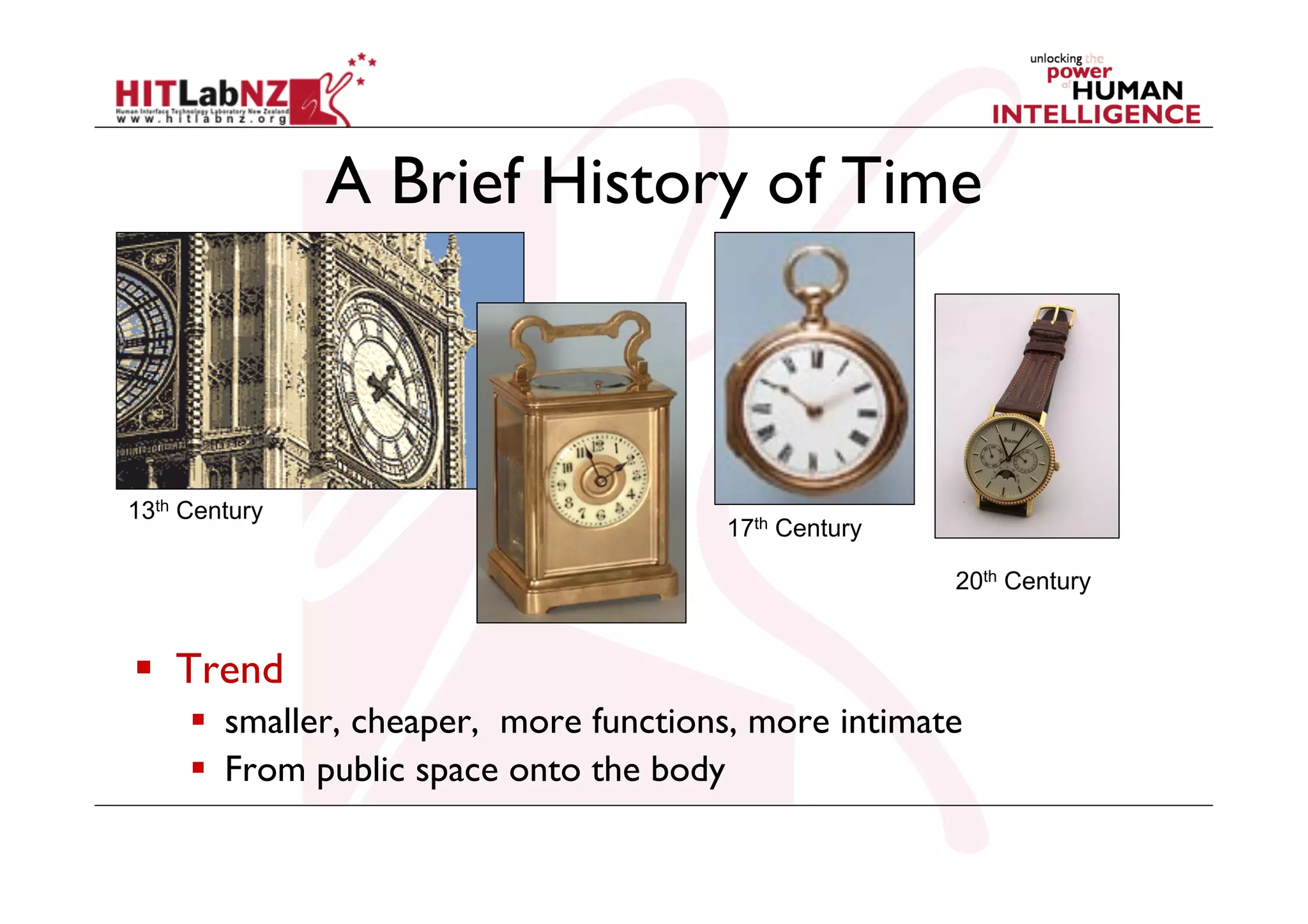
A Brief History of Time

13th Century

17th Century
20th Century

  Trend
  smaller, cheaper, more functions, more intimate
  From public space onto the body
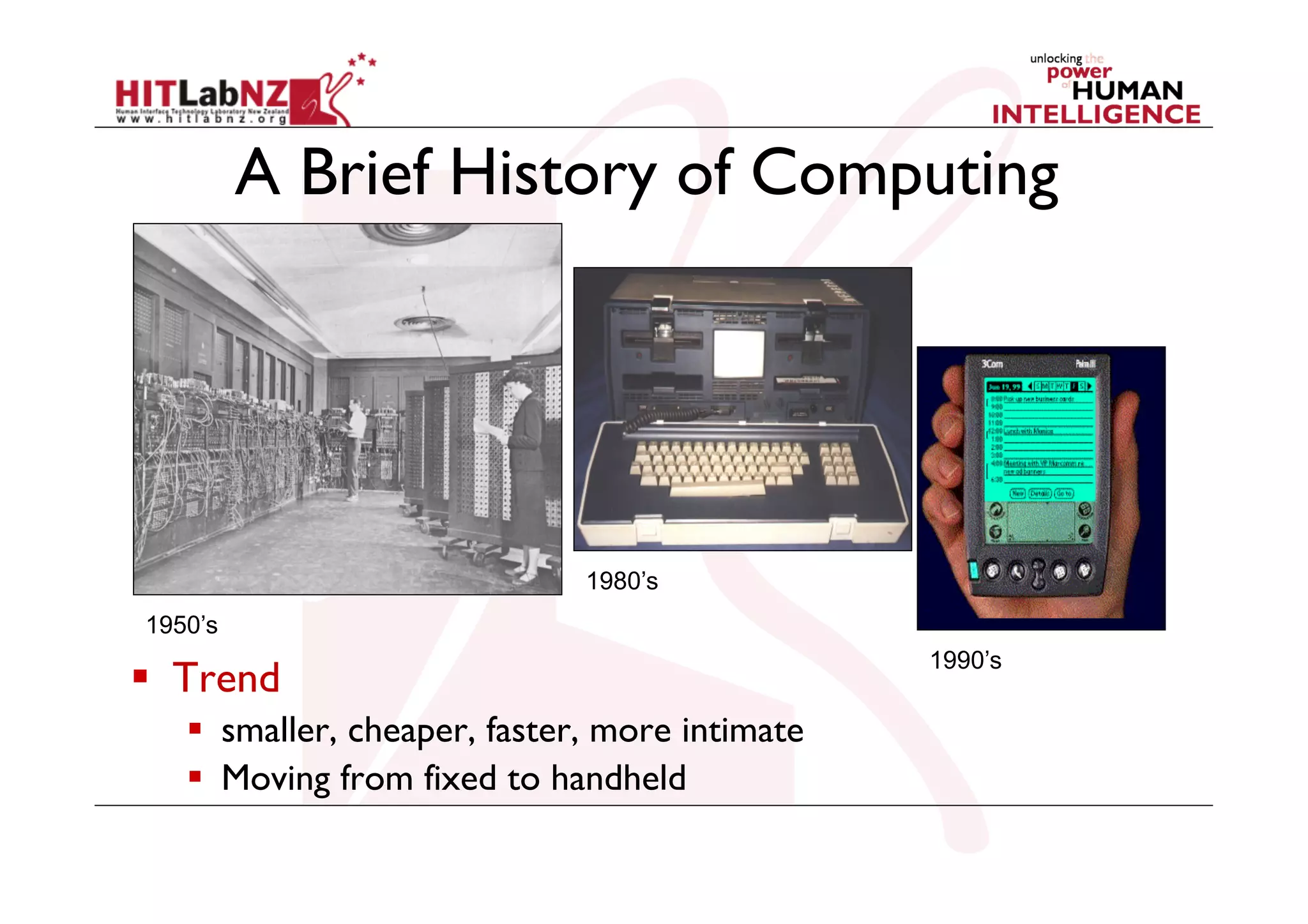
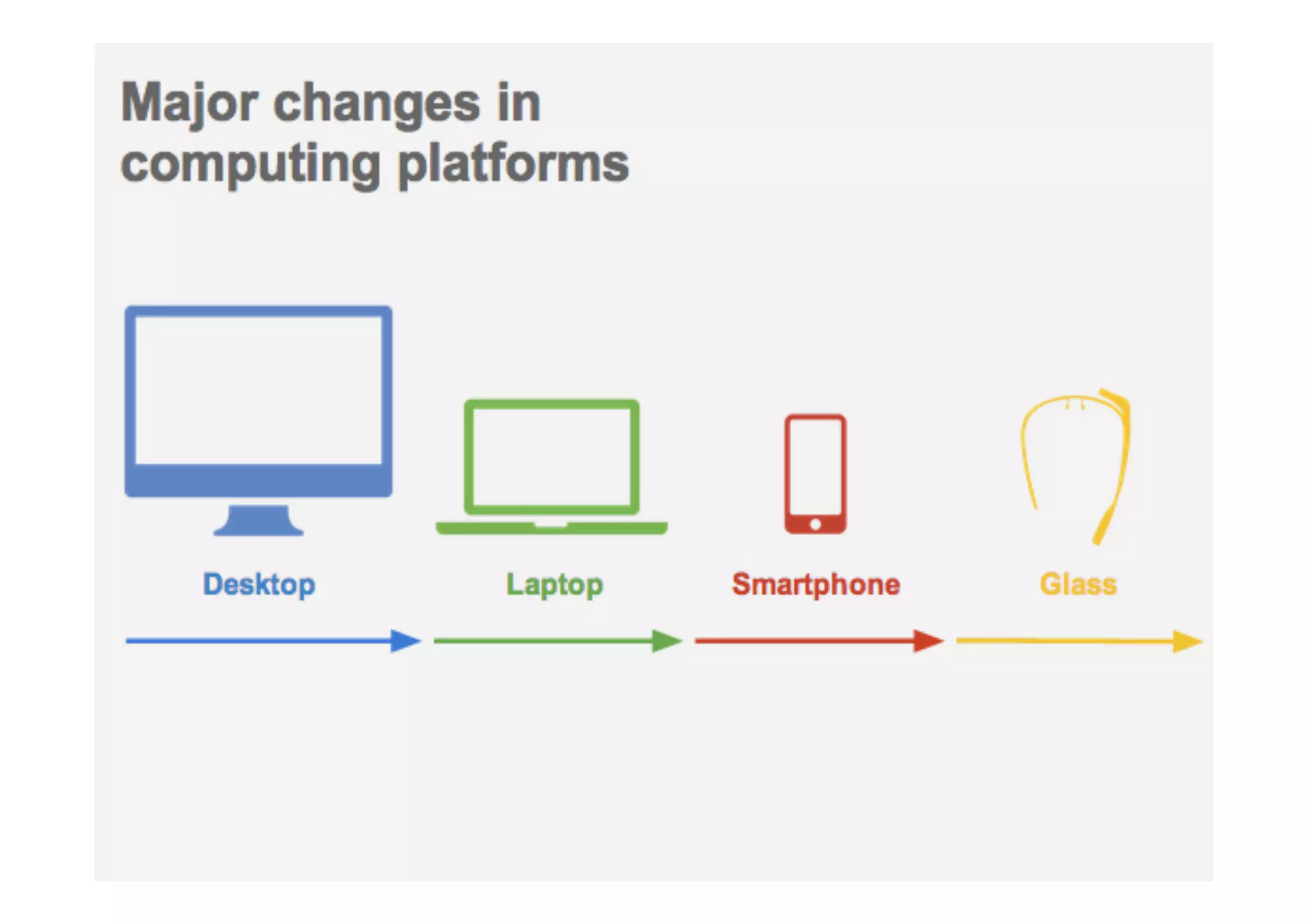
A Brief History of Computing

1980’s
1950’s

  Trend
  smaller, cheaper, faster, more intimate
  Moving from fixed to handheld

1990’s
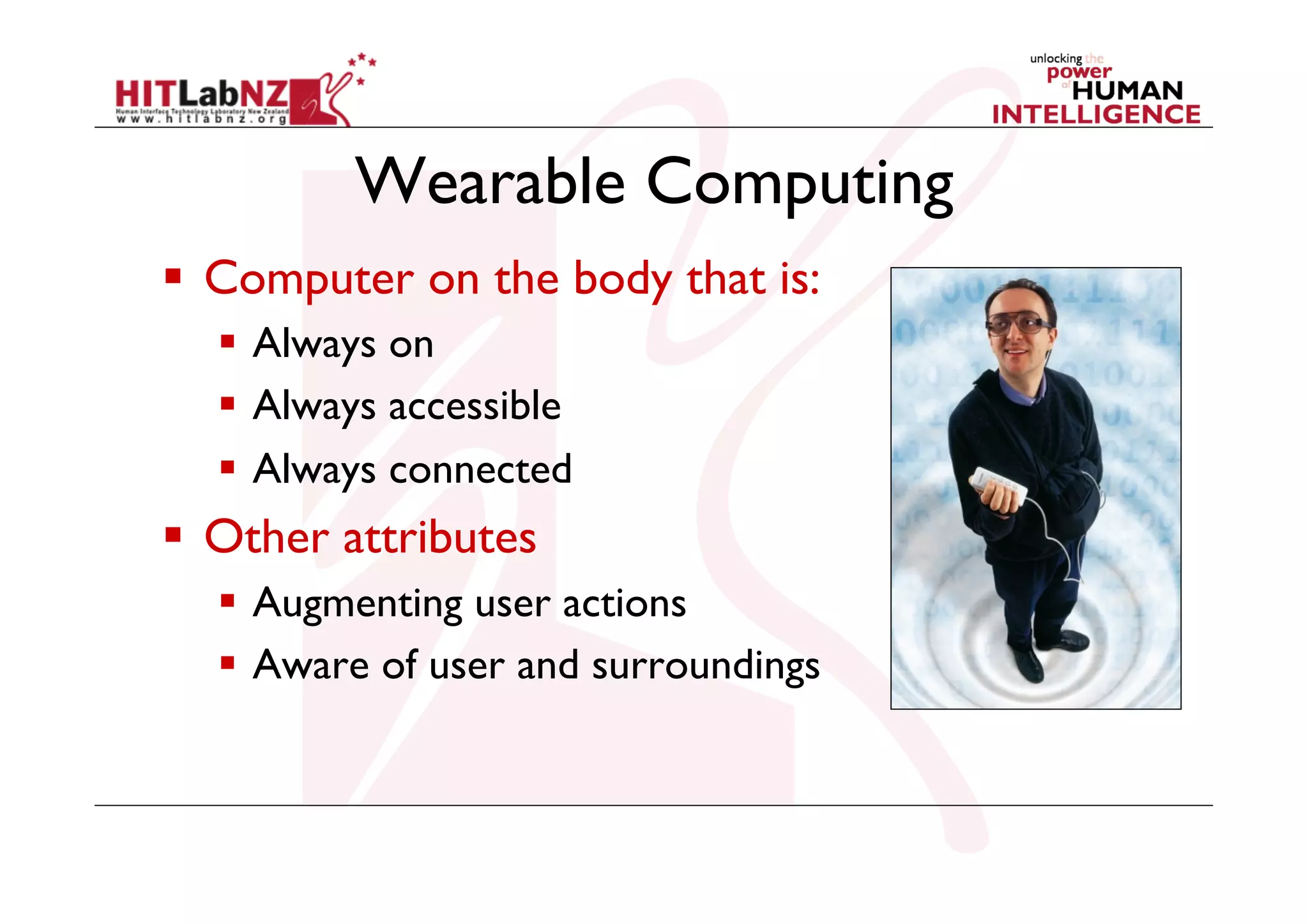
Wearable Computing
  Computer on the body that is:
  Always on
  Always accessible
  Always connected

  Other attributes
  Augmenting user actions
  Aware of user and surroundings
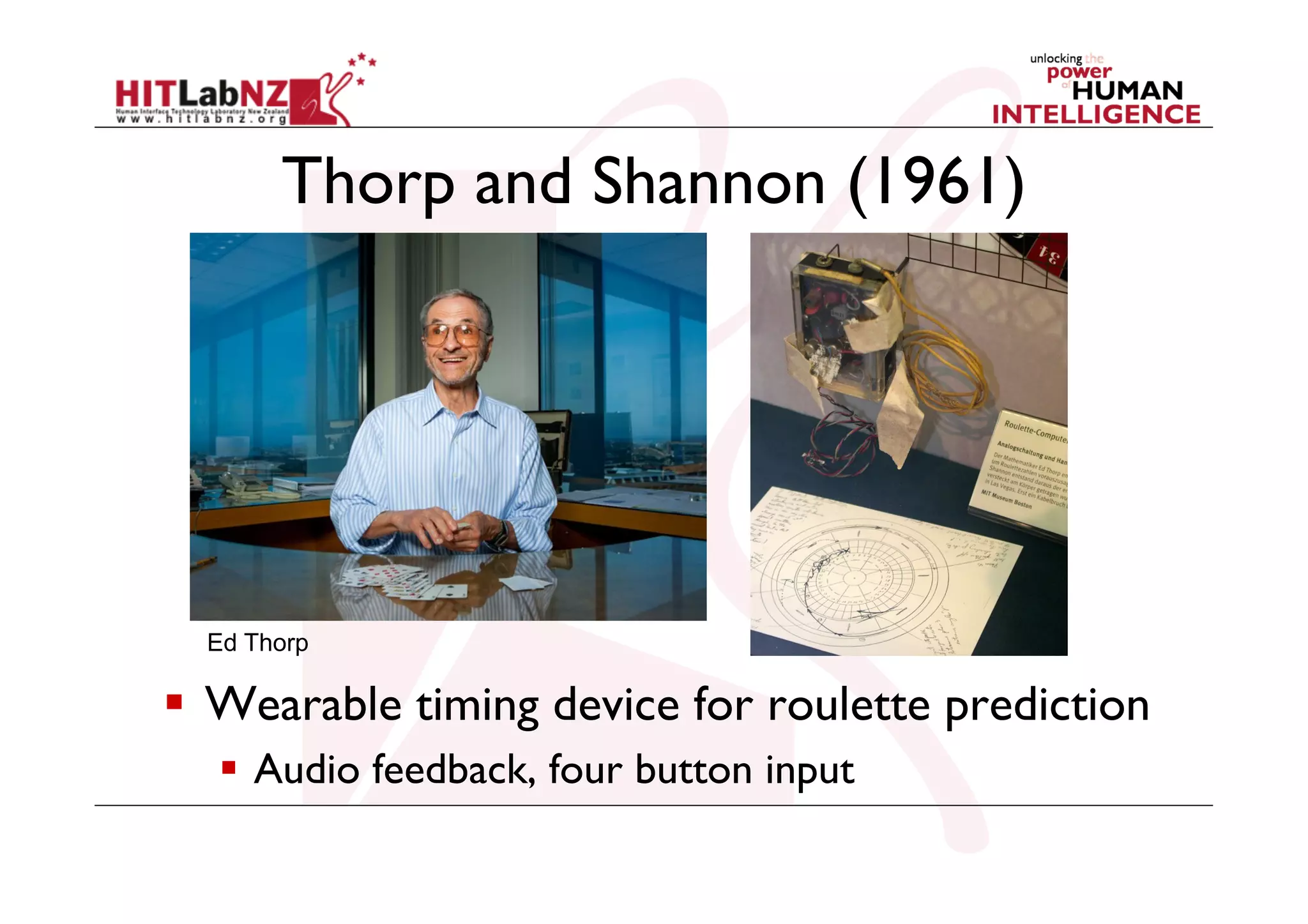
Thorp and Shannon (1961)

Ed Thorp

  Wearable timing device for roulette prediction
  Audio feedback, four button input
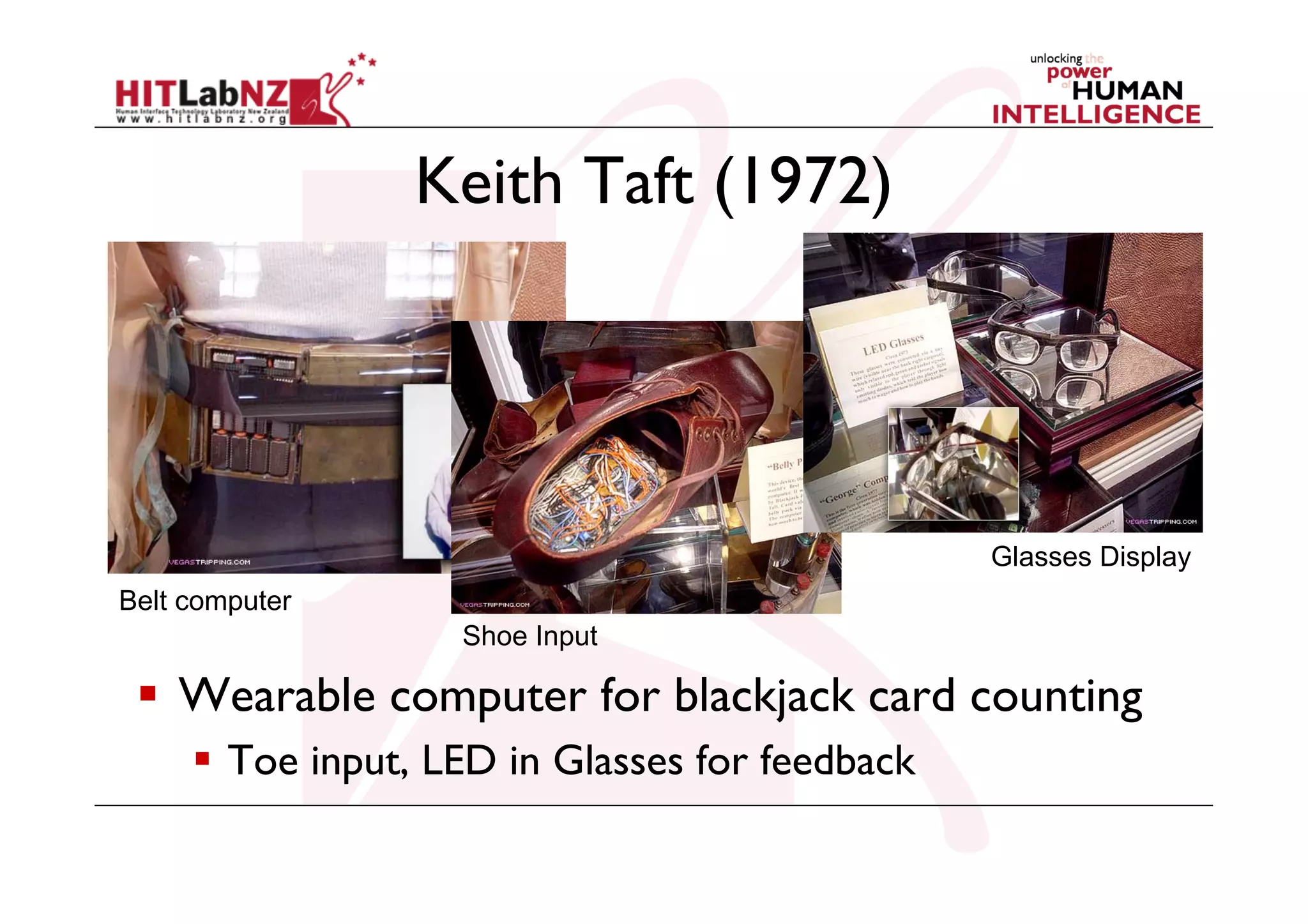
Keith Taft (1972)

Glasses Display
Belt computer
Shoe Input

  Wearable computer for blackjack card counting
  Toe input, LED in Glasses for feedback
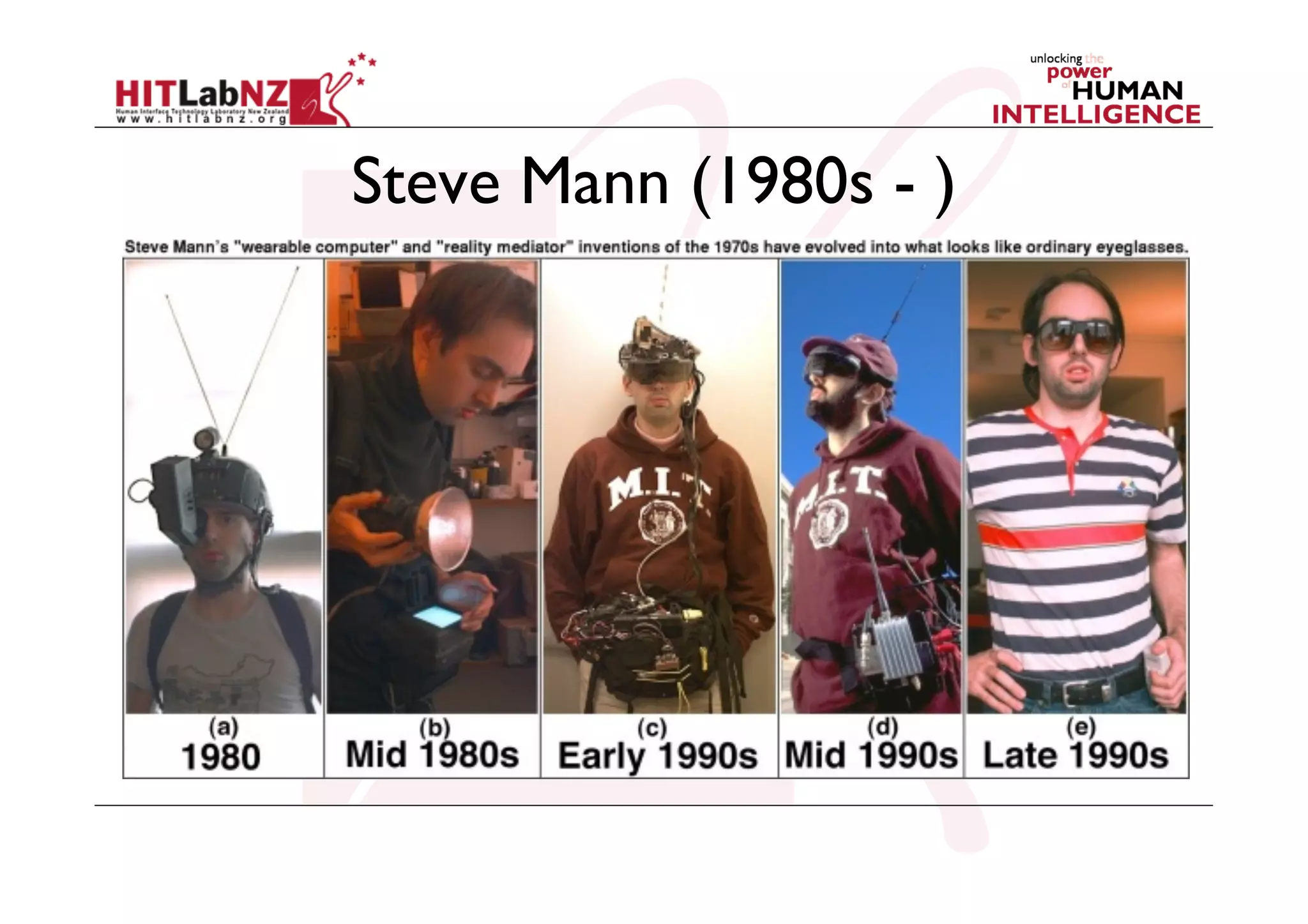
Steve Mann (1980s - )
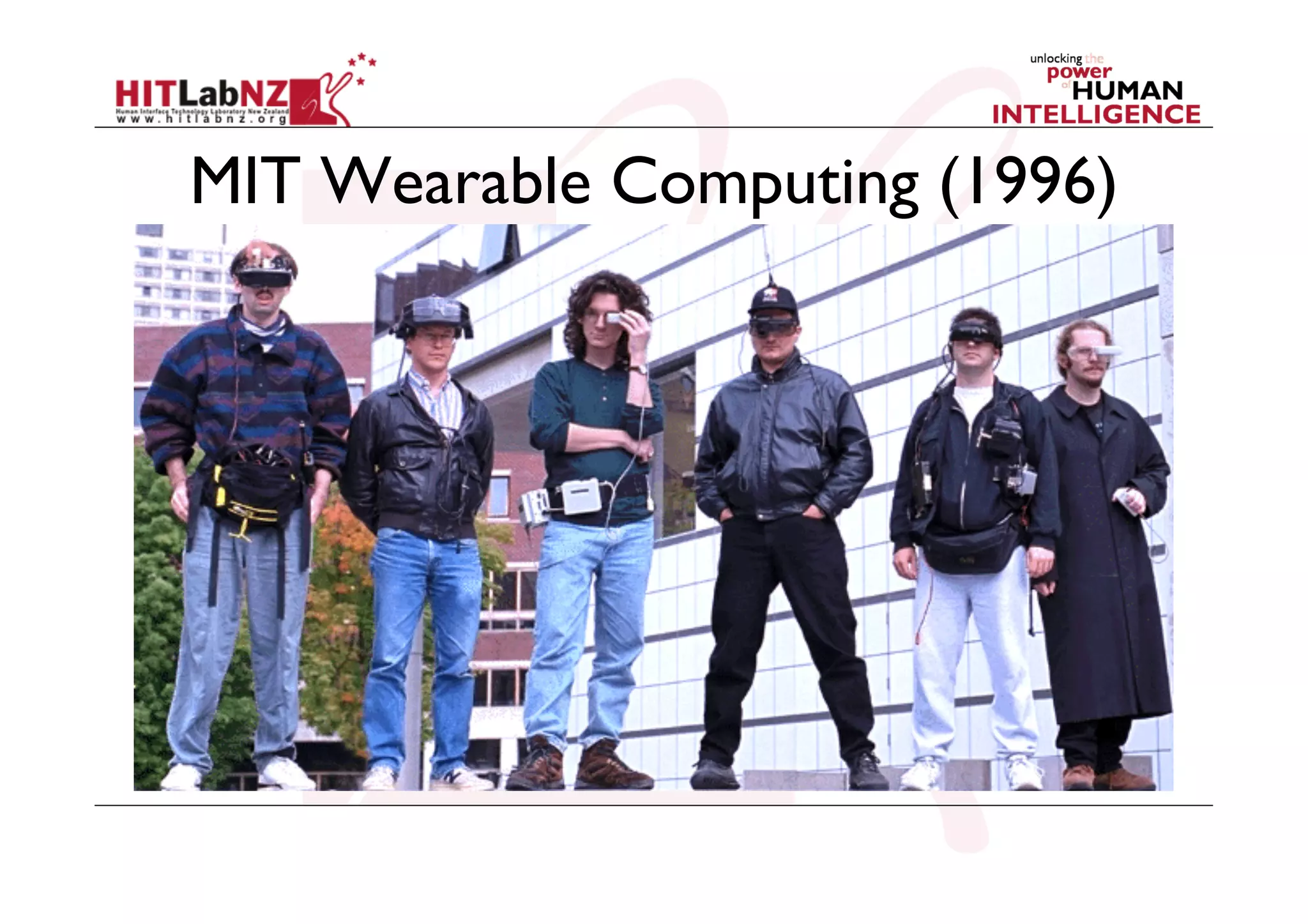
MIT Wearable Computing (1996)
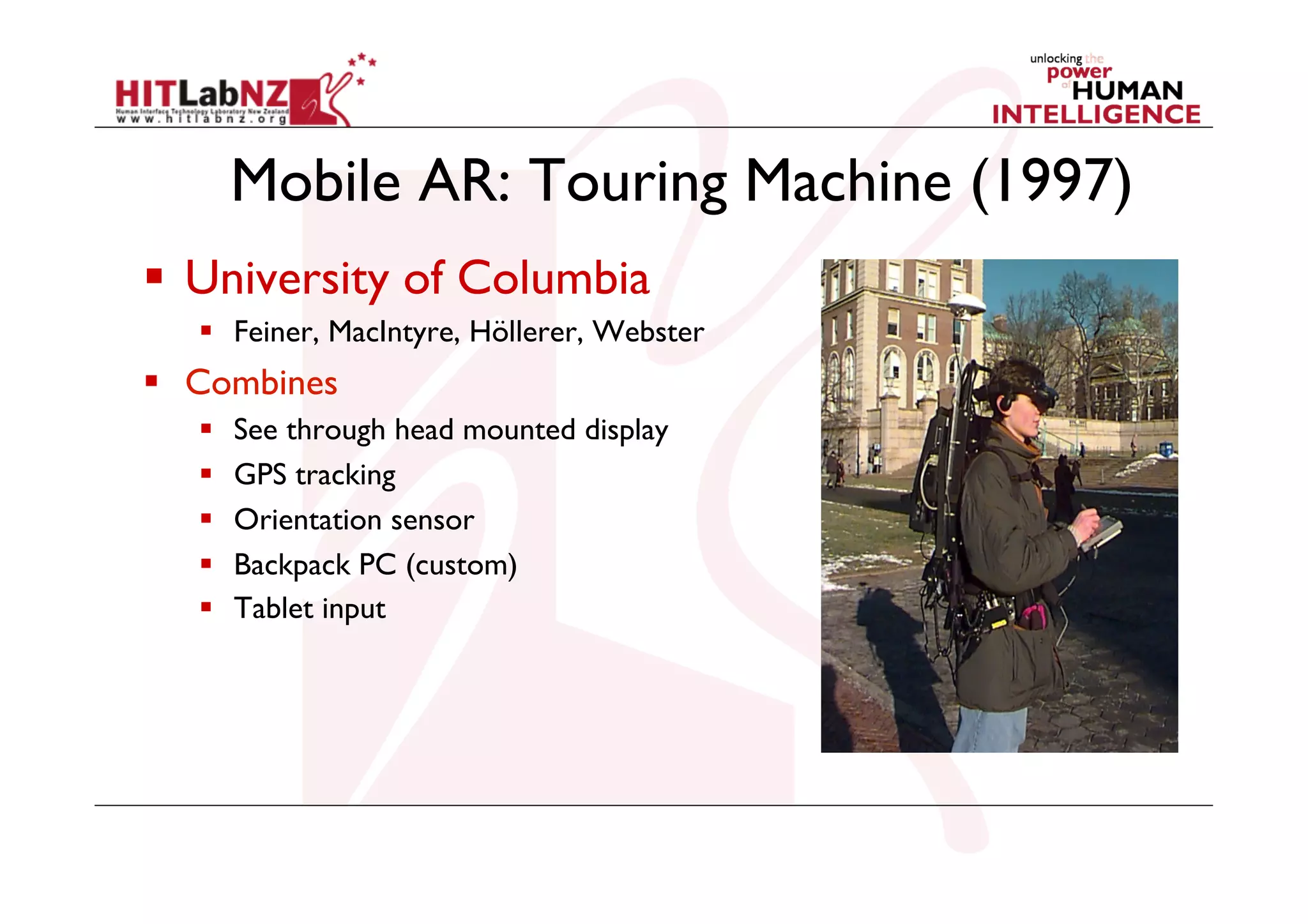
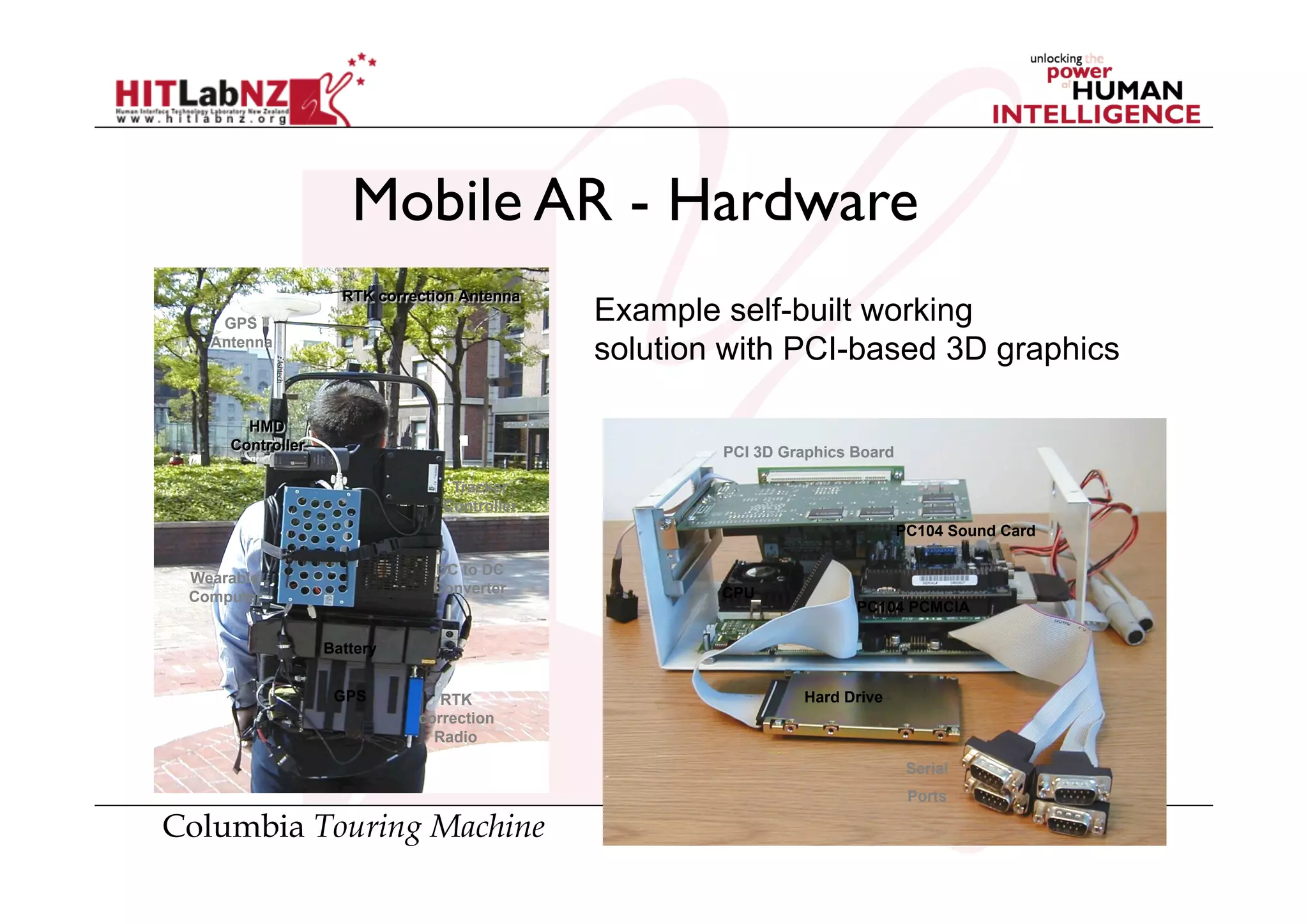
Mobile AR: Touring Machine (1997)
  University of Columbia
  Feiner, MacIntyre, Höllerer, Webster

  Combines
 
 
 
 
 

See through head mounted display
GPS tracking
Orientation sensor
Backpack PC (custom)
Tablet input
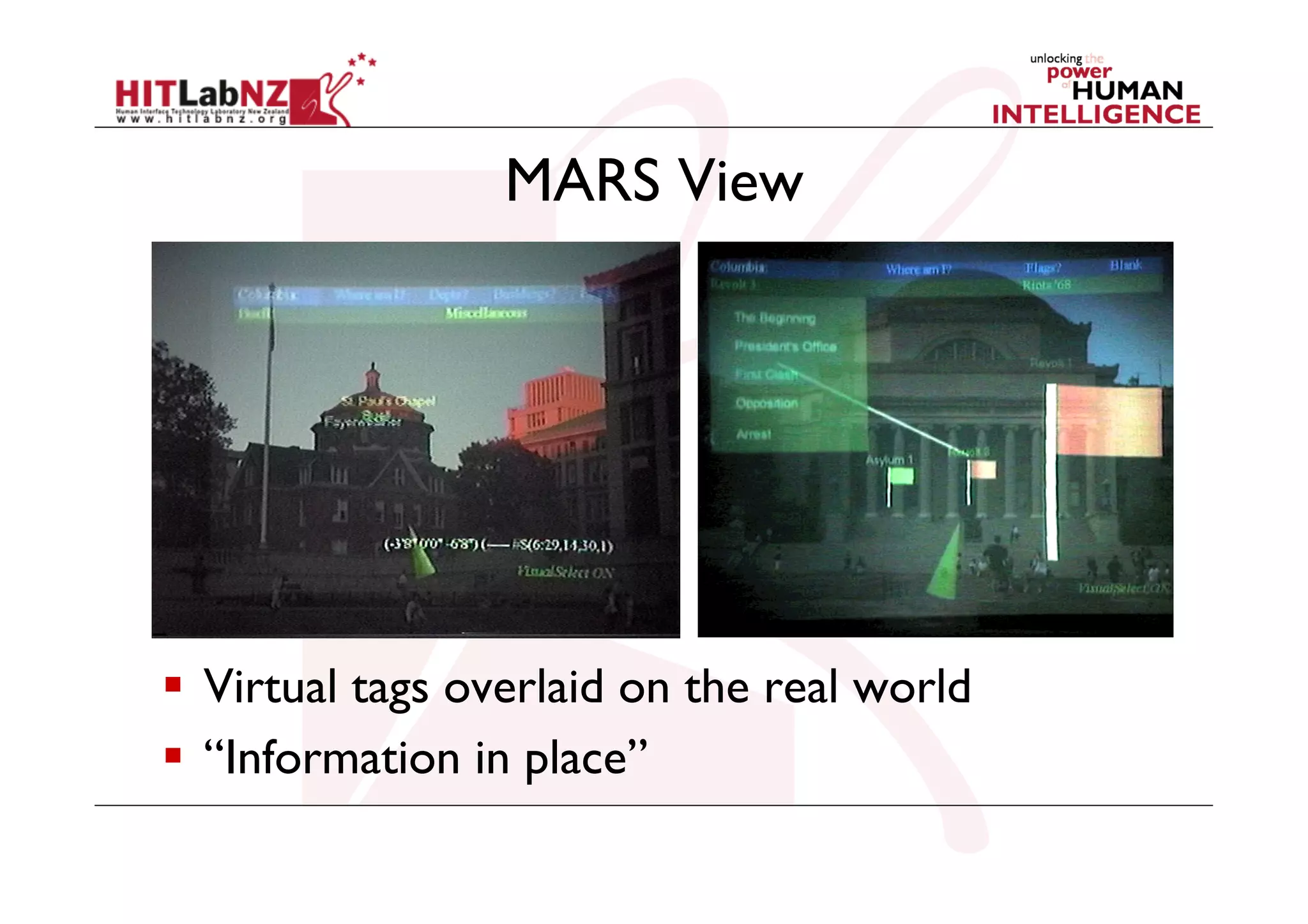
MARS View

  Virtual tags overlaid on the real world
  “Information in place”
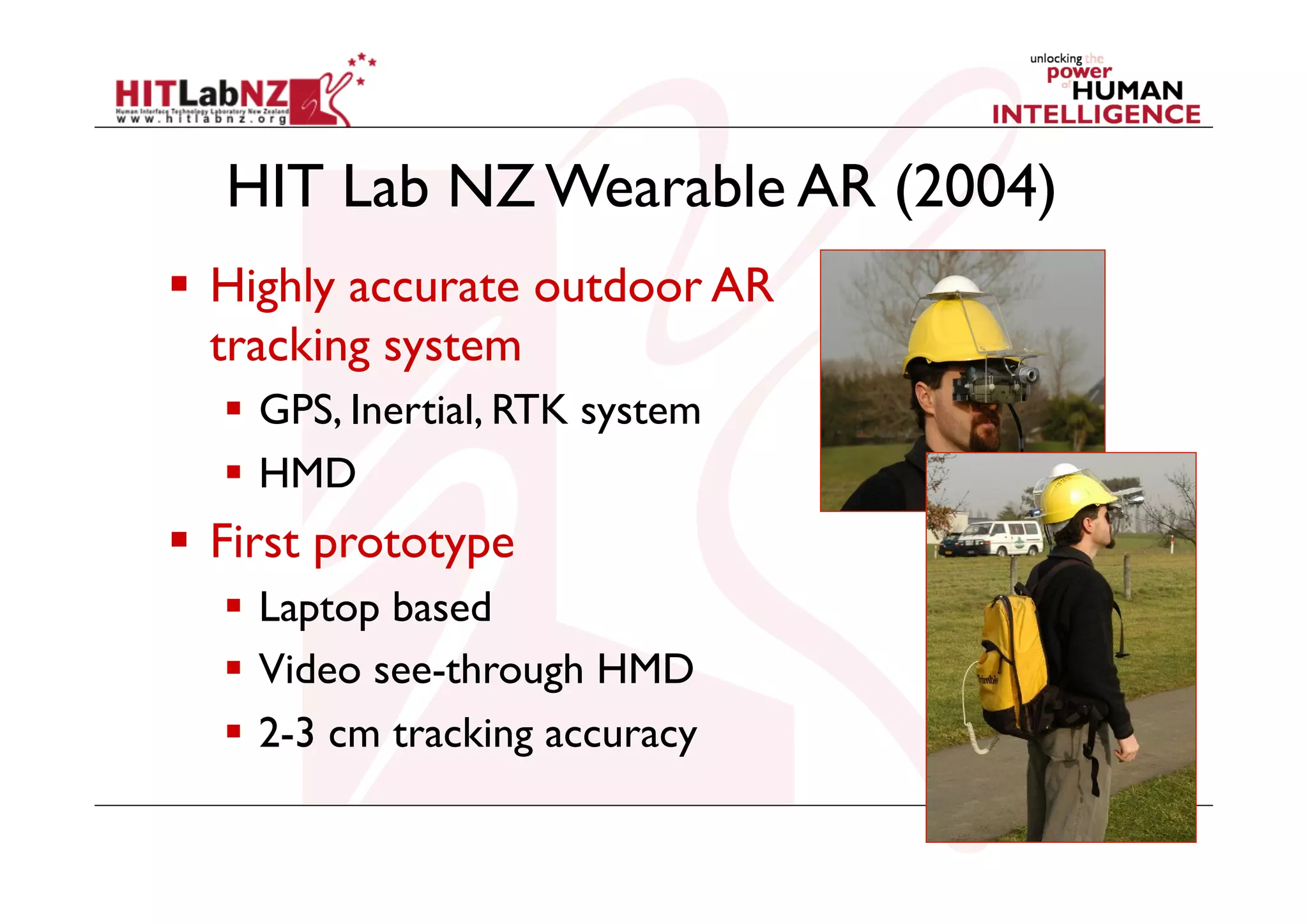
HIT Lab NZ Wearable AR (2004)
  Highly accurate outdoor AR
tracking system
  GPS, Inertial, RTK system
  HMD

  First prototype
  Laptop based
  Video see-through HMD
  2-3 cm tracking accuracy
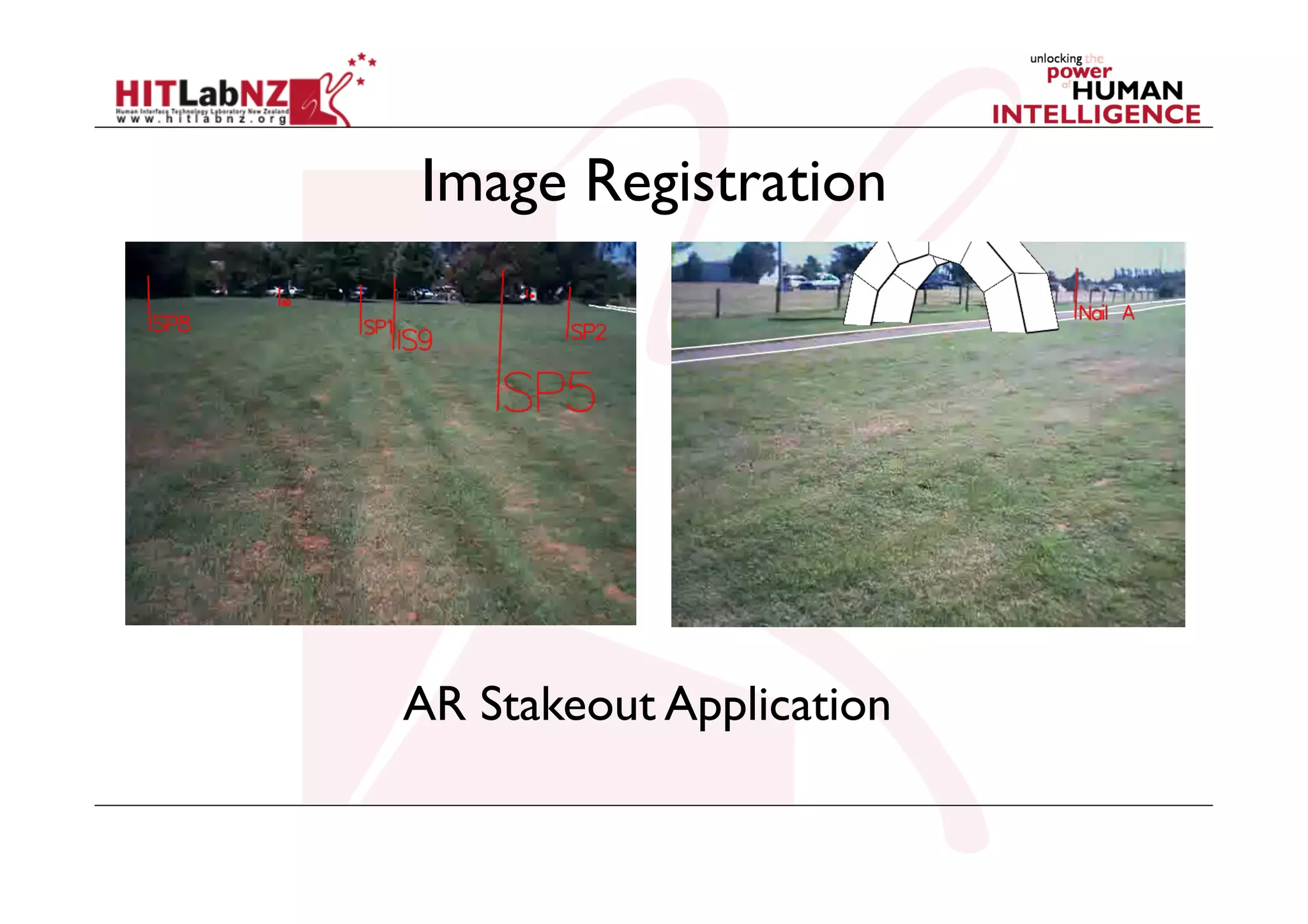
Image Registration

AR Stakeout Application
Wearable AR Video
Mobile AR - Hardware
RTK correction Antenna
GPS
Antenna

HMD
Controller

Example self-built working
solution with PCI-based 3D graphics
PCI 3D Graphics Board

Tracker
Controller
PC104 Sound Card
DC to DC
Converter

Wearable
Computer

CPU

PC104 PCMCIA

Battery
GPS

RTK
correction
Radio

Hard Drive

Serial
Ports

Columbia Touring Machine
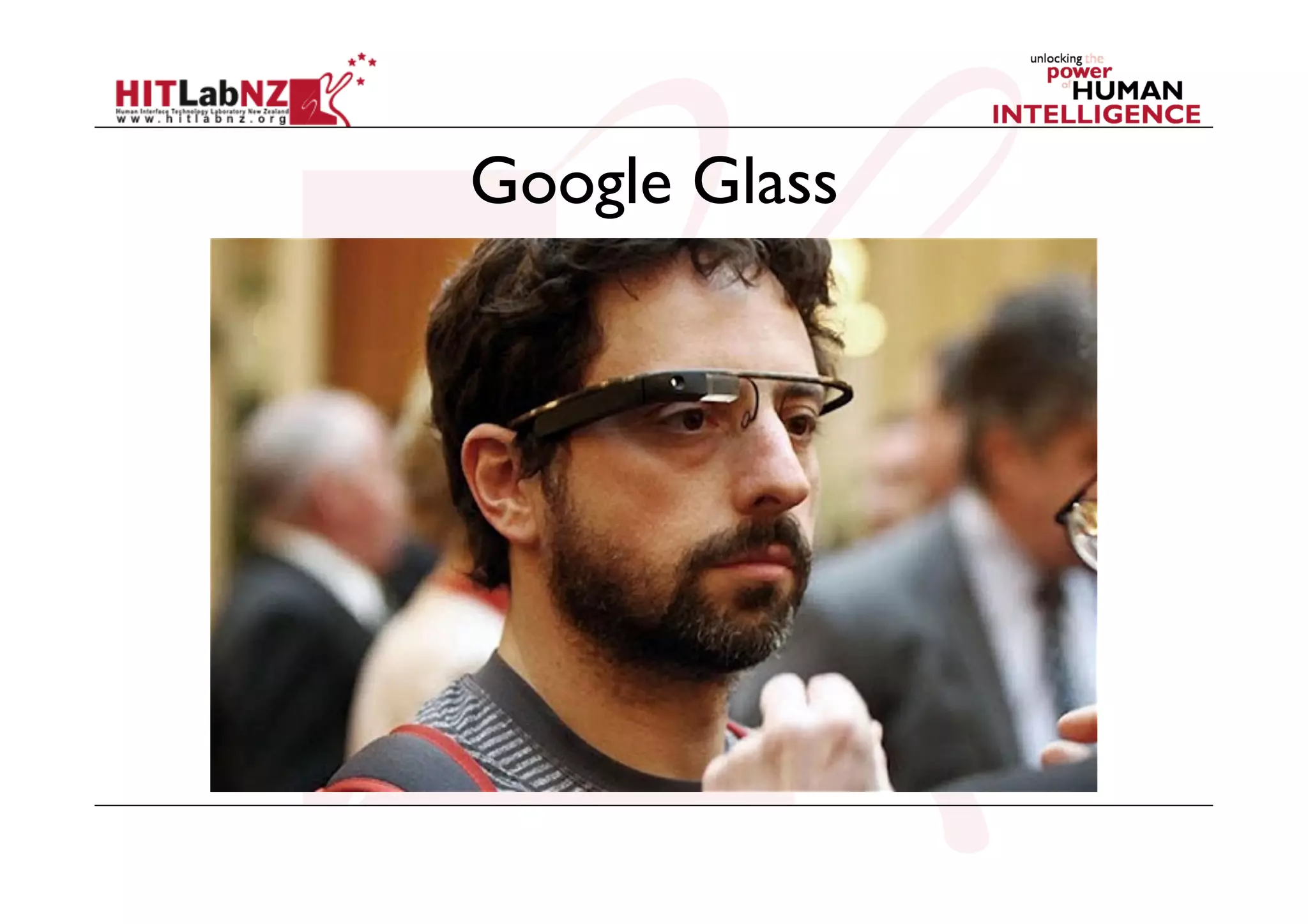
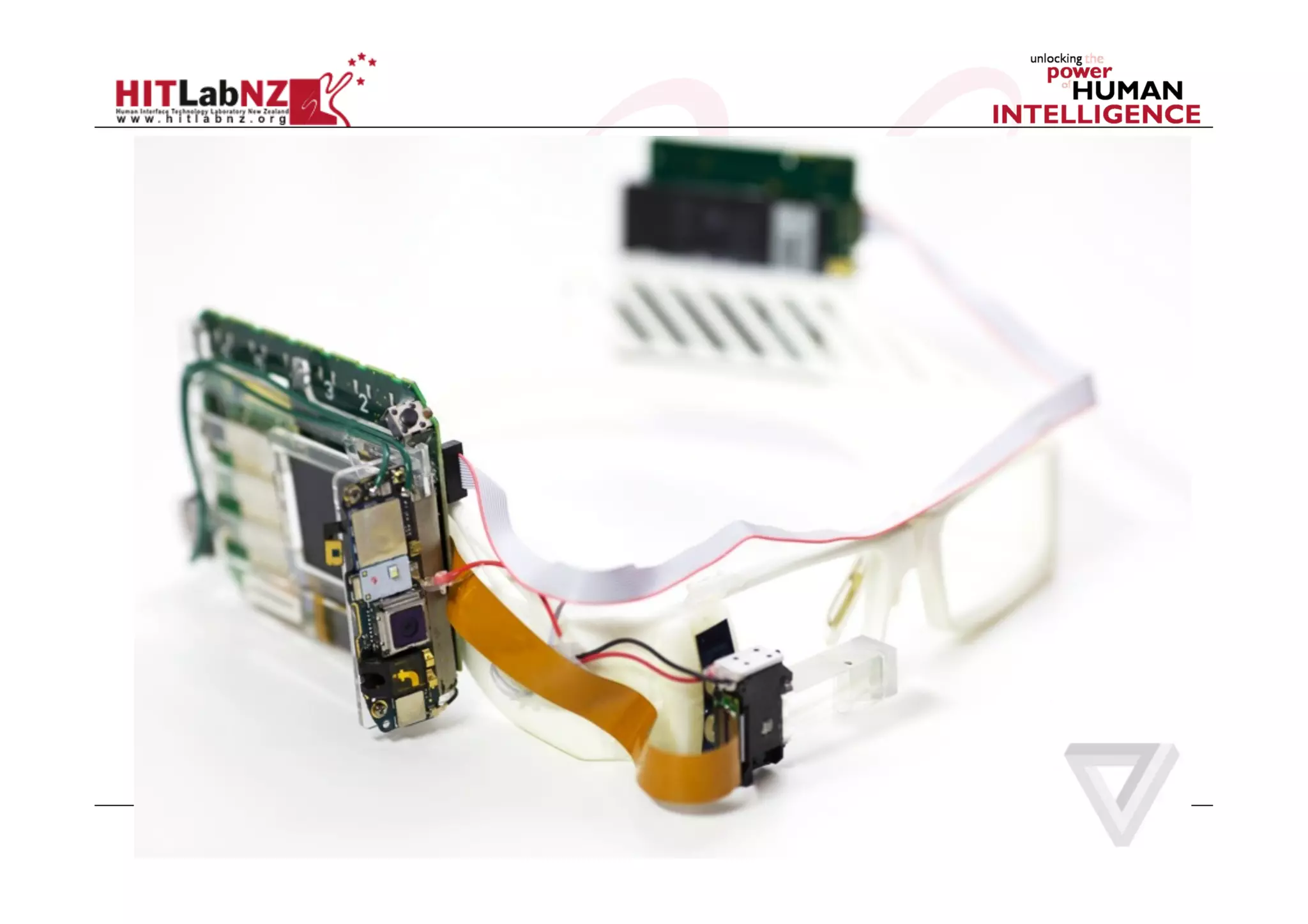
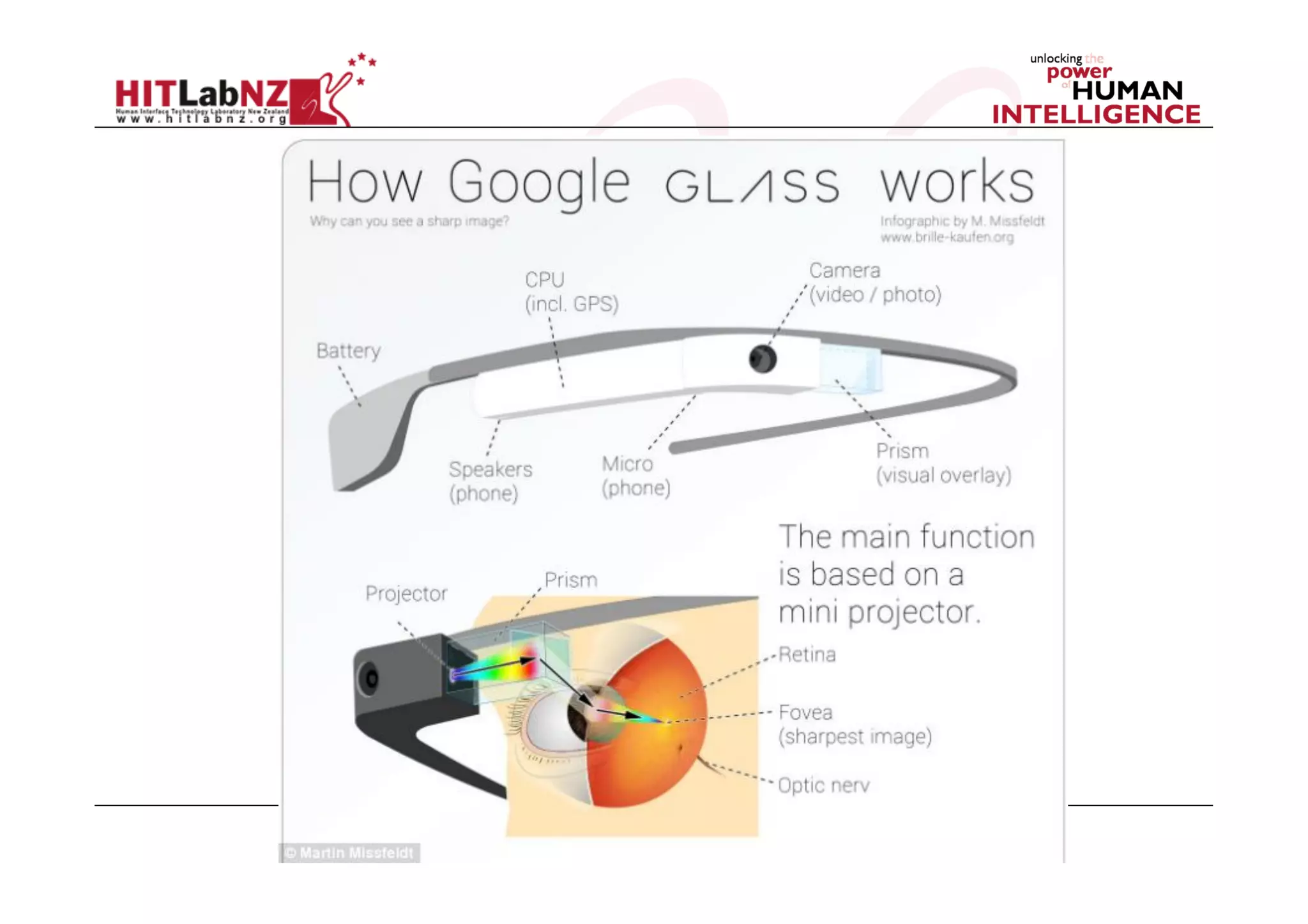
Google Glass
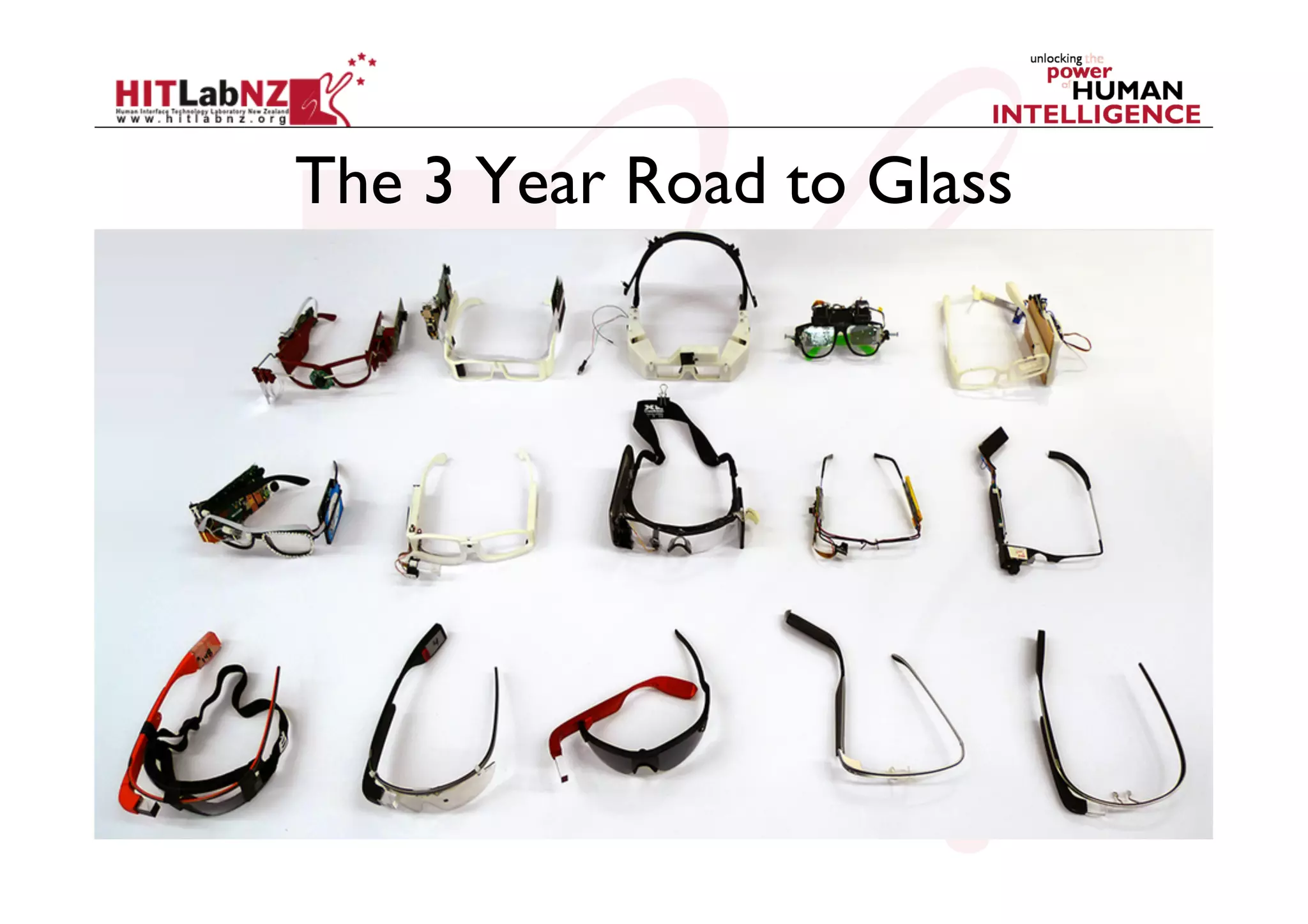
The 3 Year Road to Glass
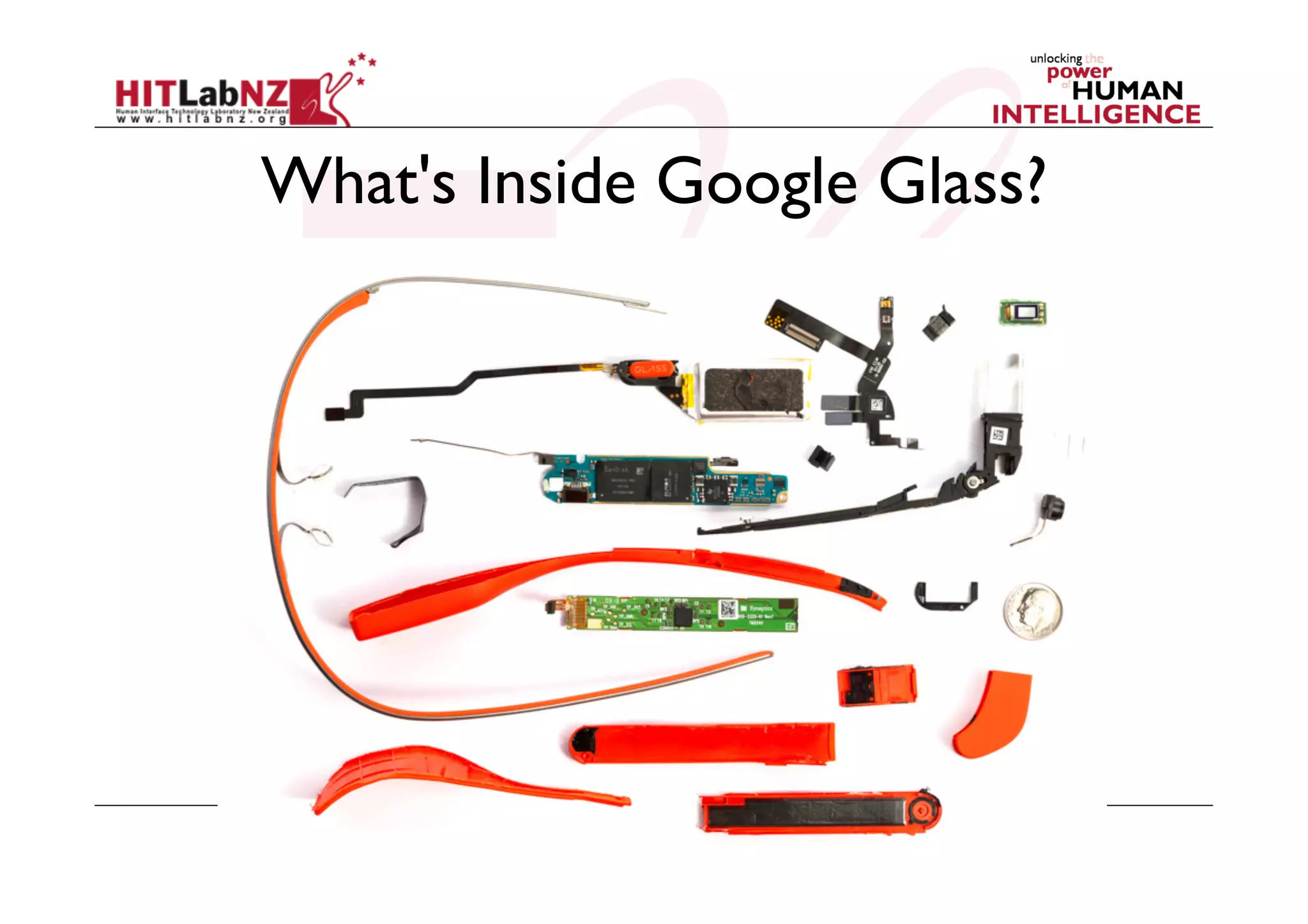
What's Inside Google Glass?
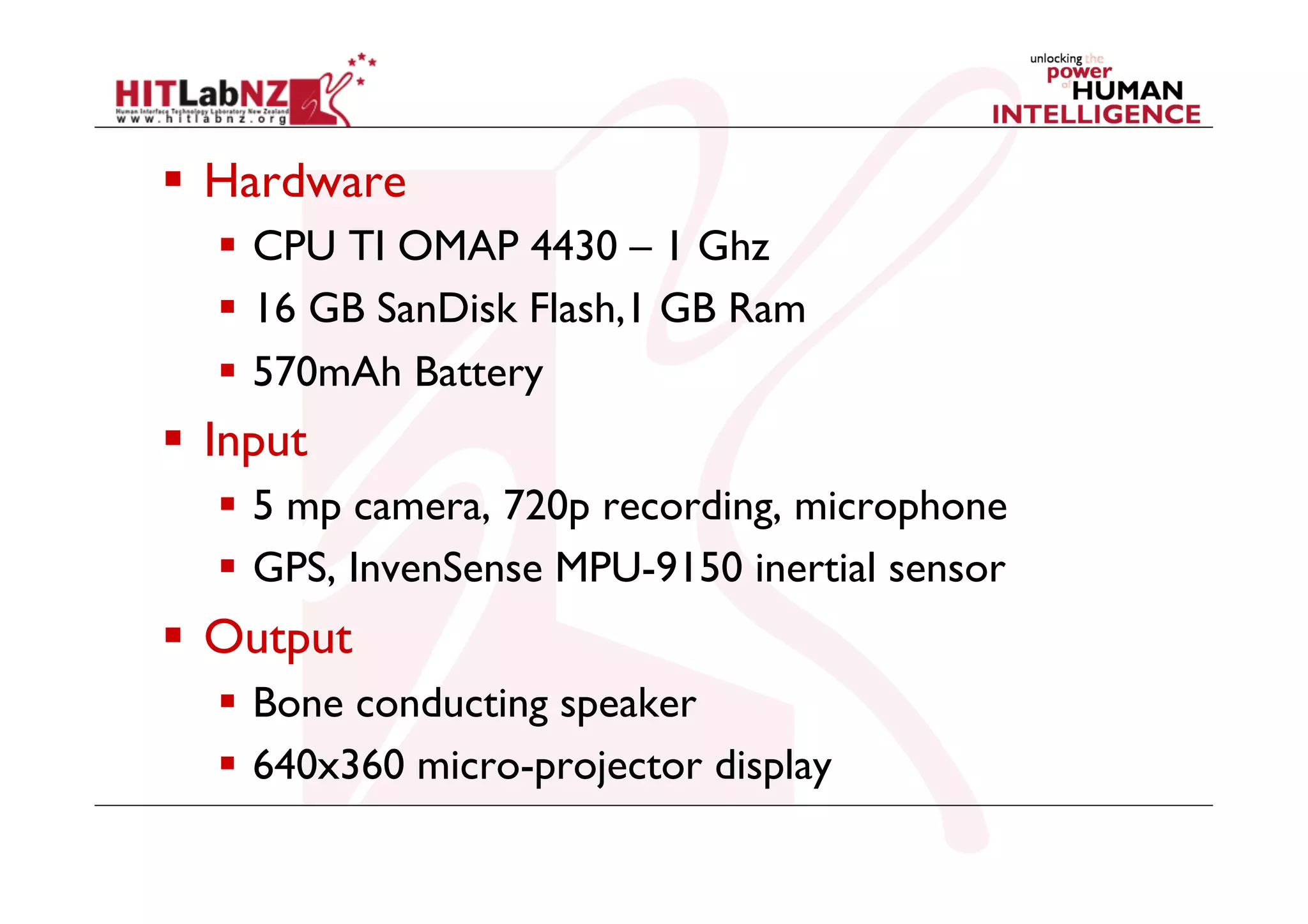
  Hardware
  CPU TI OMAP 4430 – 1 Ghz
  16 GB SanDisk Flash,1 GB Ram
  570mAh Battery

  Input
  5 mp camera, 720p recording, microphone
  GPS, InvenSense MPU-9150 inertial sensor

  Output
  Bone conducting speaker
  640x360 micro-projector display
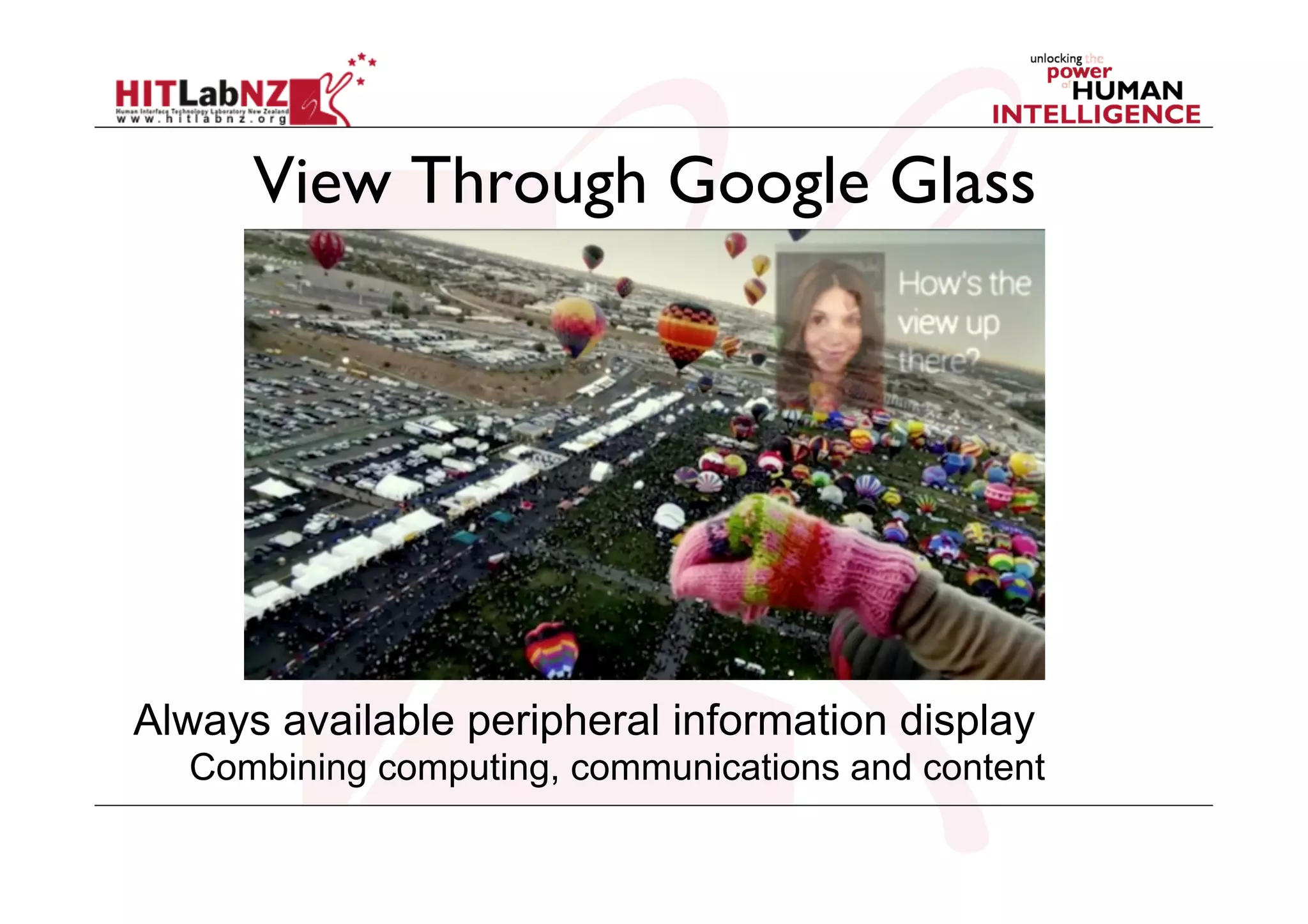
View Through Google Glass

Always available peripheral information display
Combining computing, communications and content capture
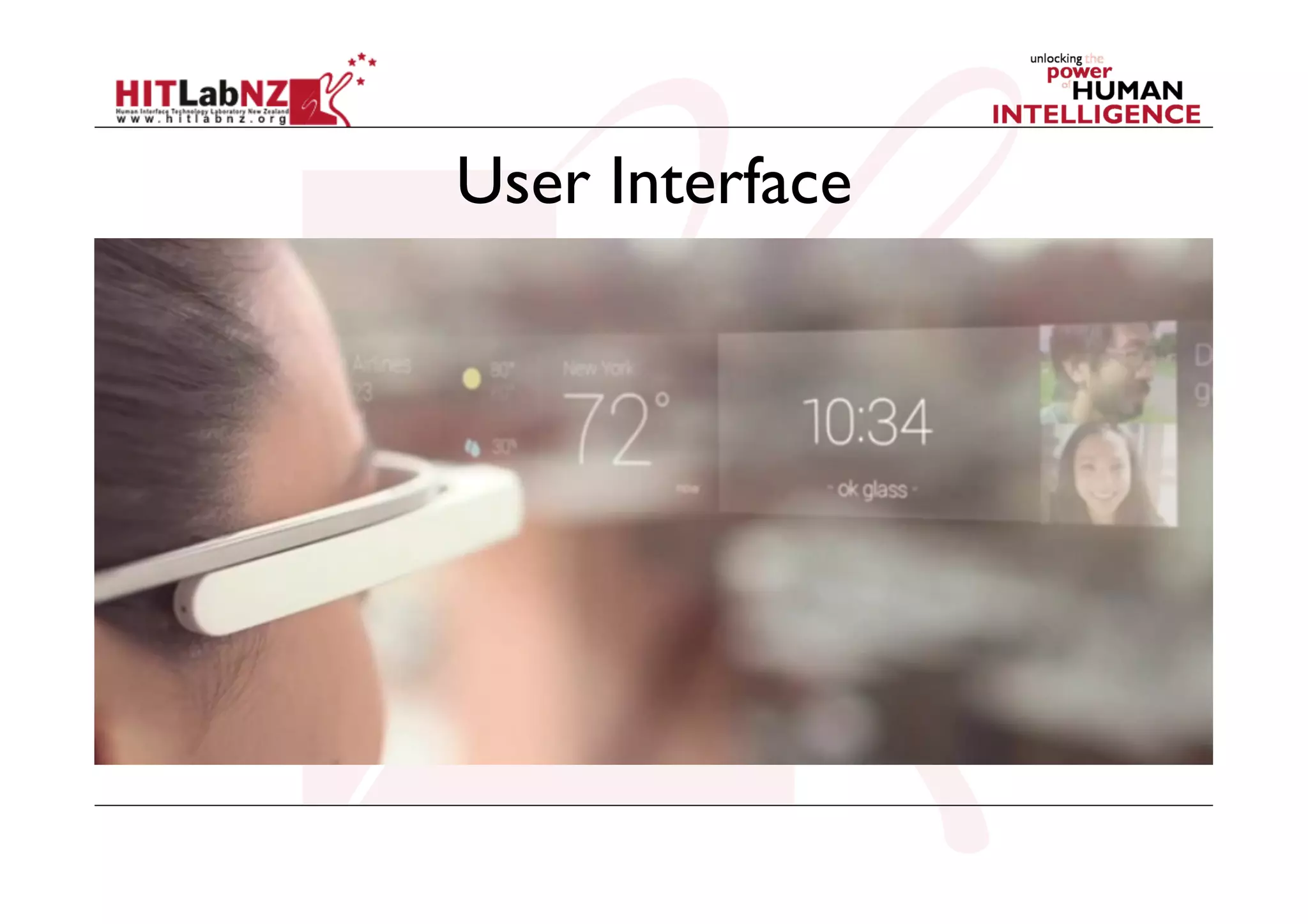
User Interface

  dfasdf
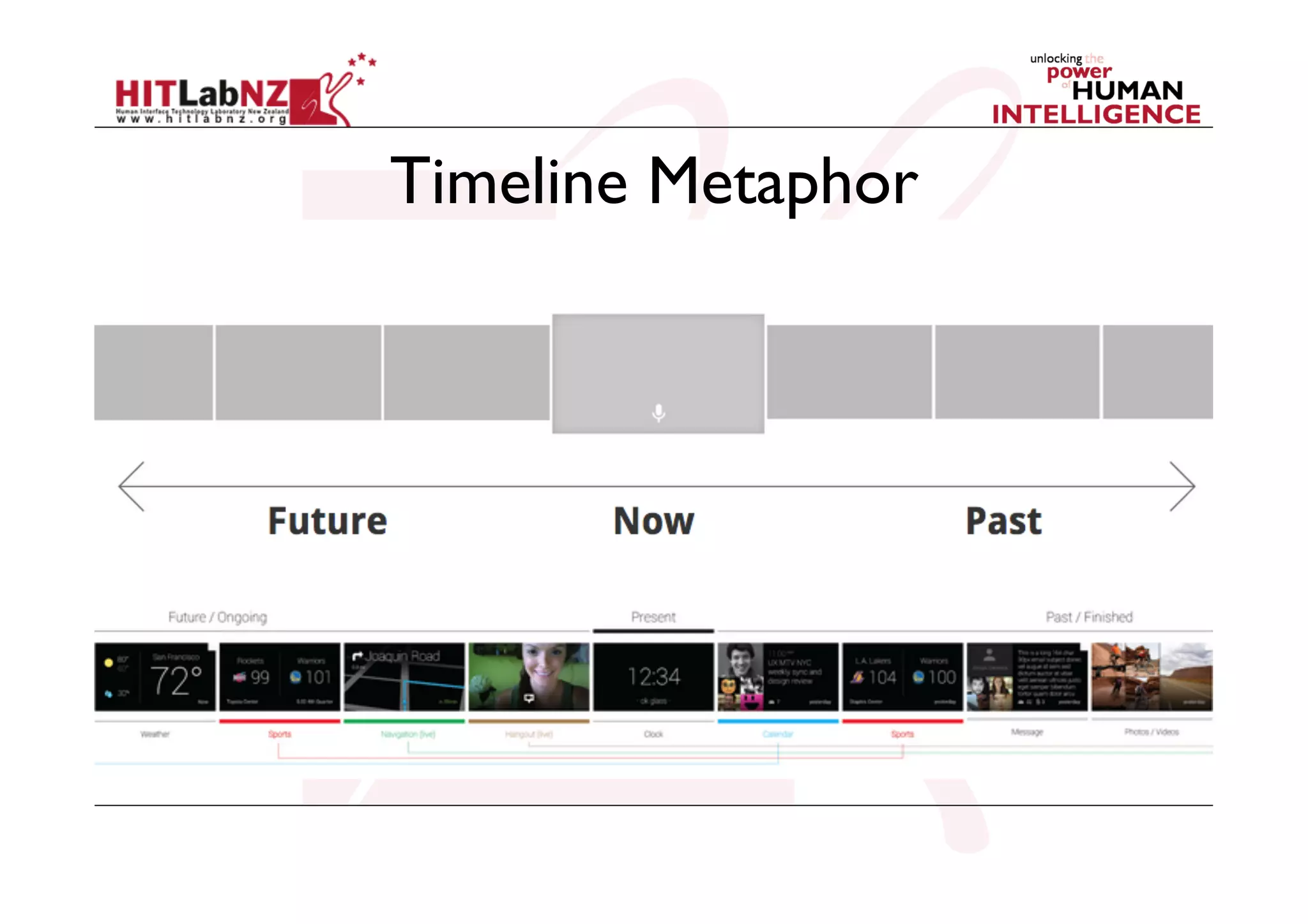
Timeline Metaphor
Live Glass Demo
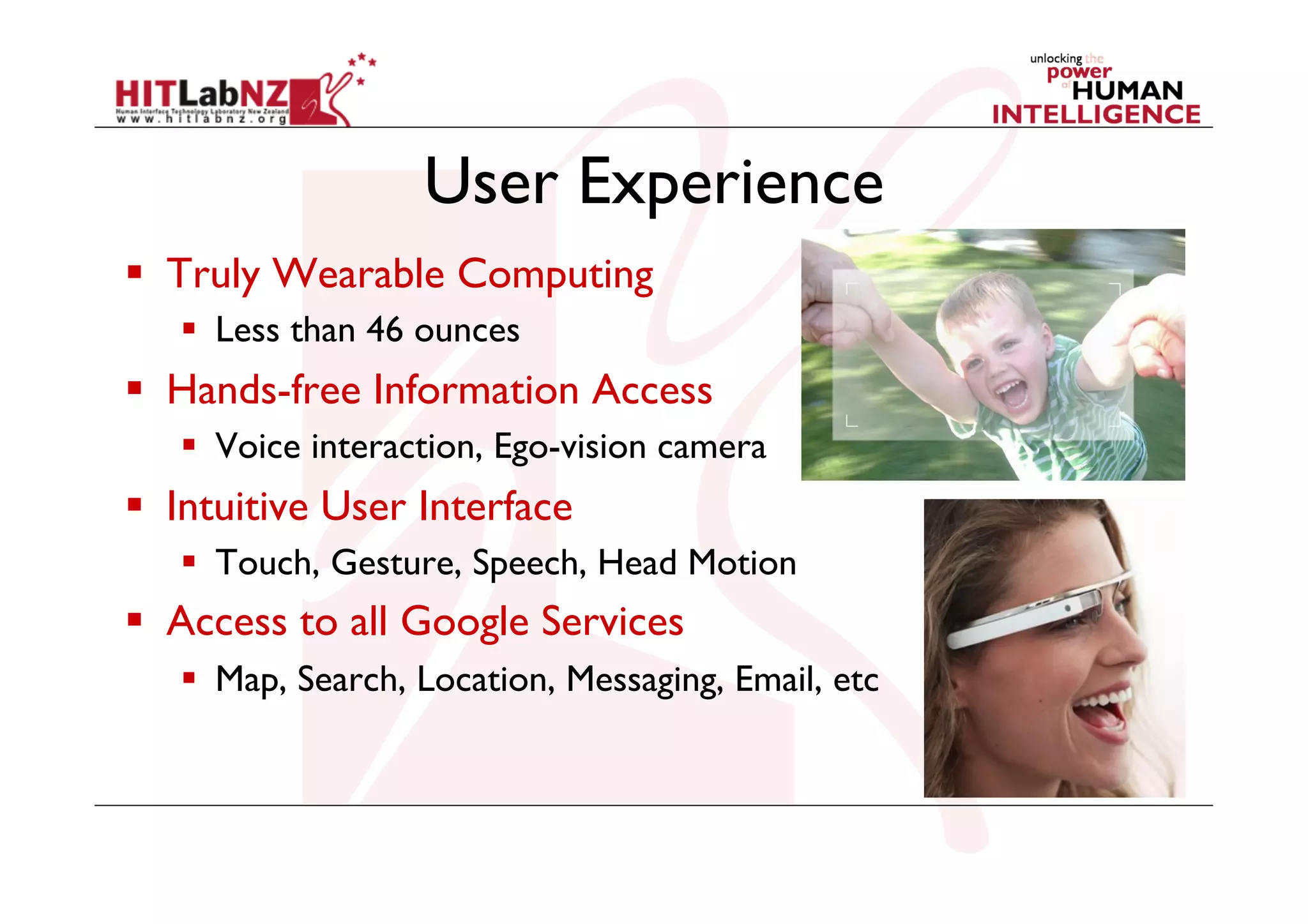
User Experience
  Truly Wearable Computing
  Less than 46 ounces

  Hands-free Information Access
  Voice interaction, Ego-vision camera

  Intuitive User Interface
  Touch, Gesture, Speech, Head Motion

  Access to all Google Services
  Map, Search, Location, Messaging, Email, etc
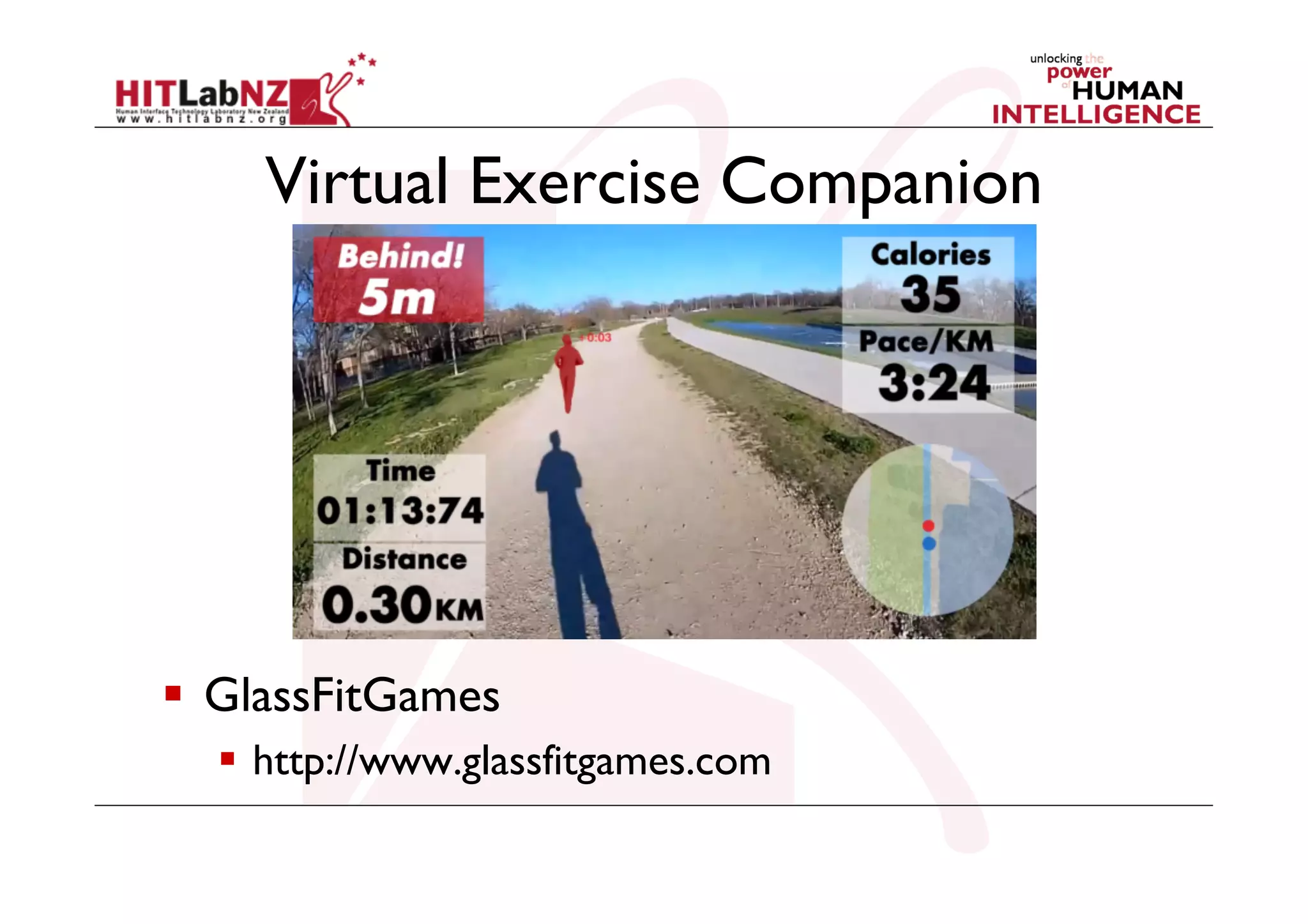
Virtual Exercise Companion

  GlassFitGames
  http://www.glassfitgames.com
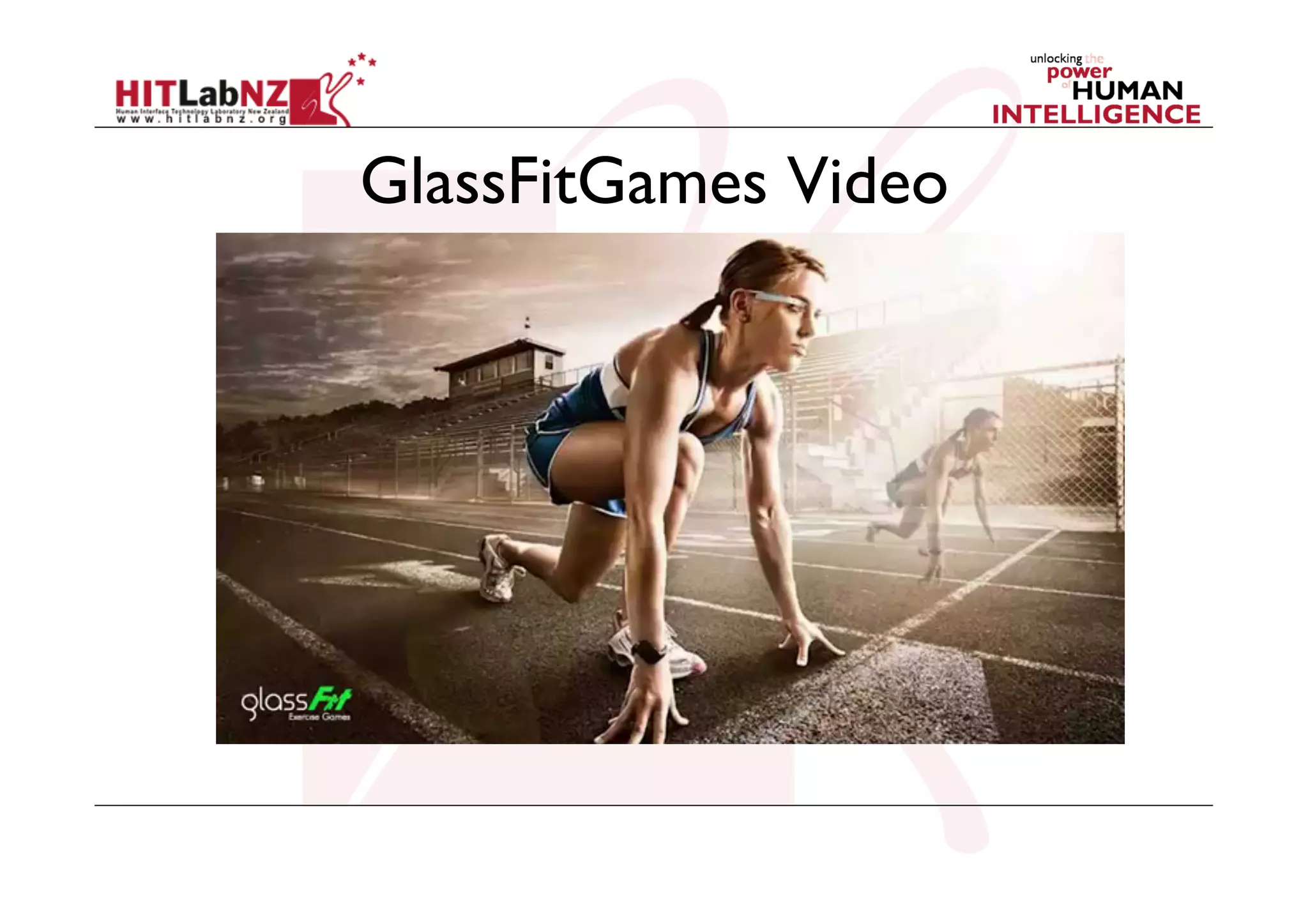
GlassFitGames Video
CityViewAR

  Using AR to visualize Christchurch city buildings
  3D models of buildings, 2D images, text, panoramas
  AR View, Map view, List view
  Available on Android market
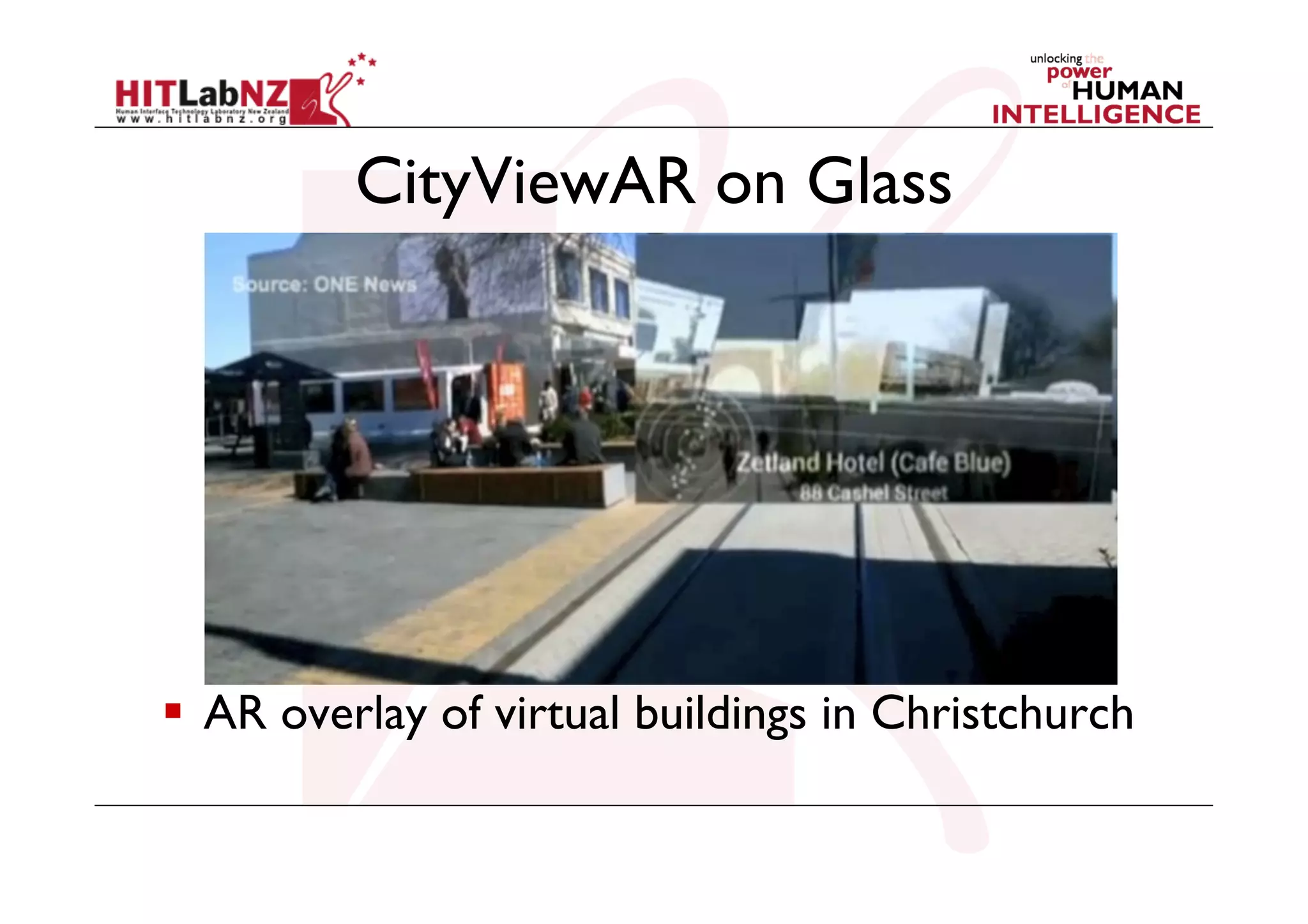
CityViewAR on Glass

  AR overlay of virtual buildings in Christchurch
CItyViewAR on Glass Demo
  asdfa
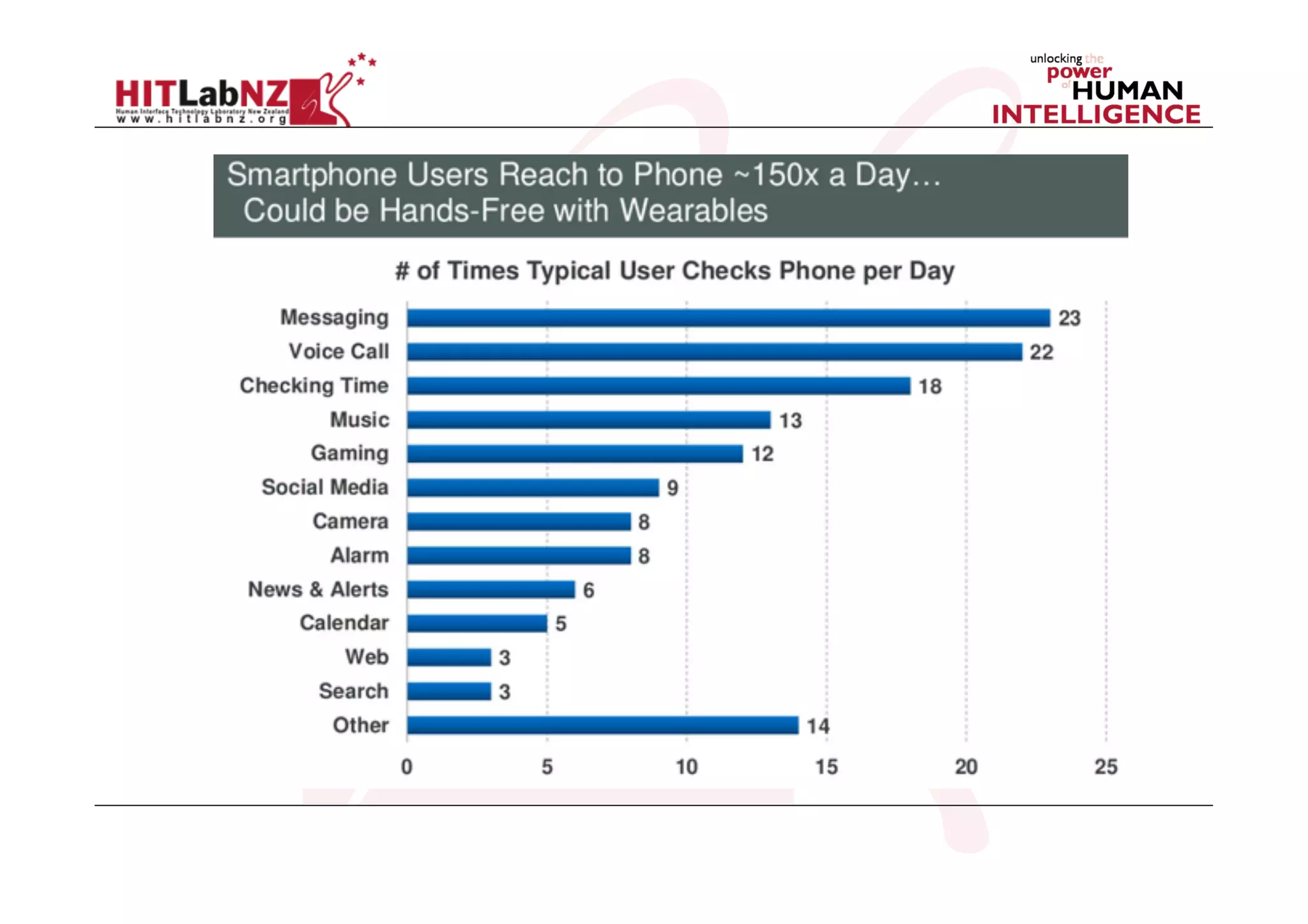
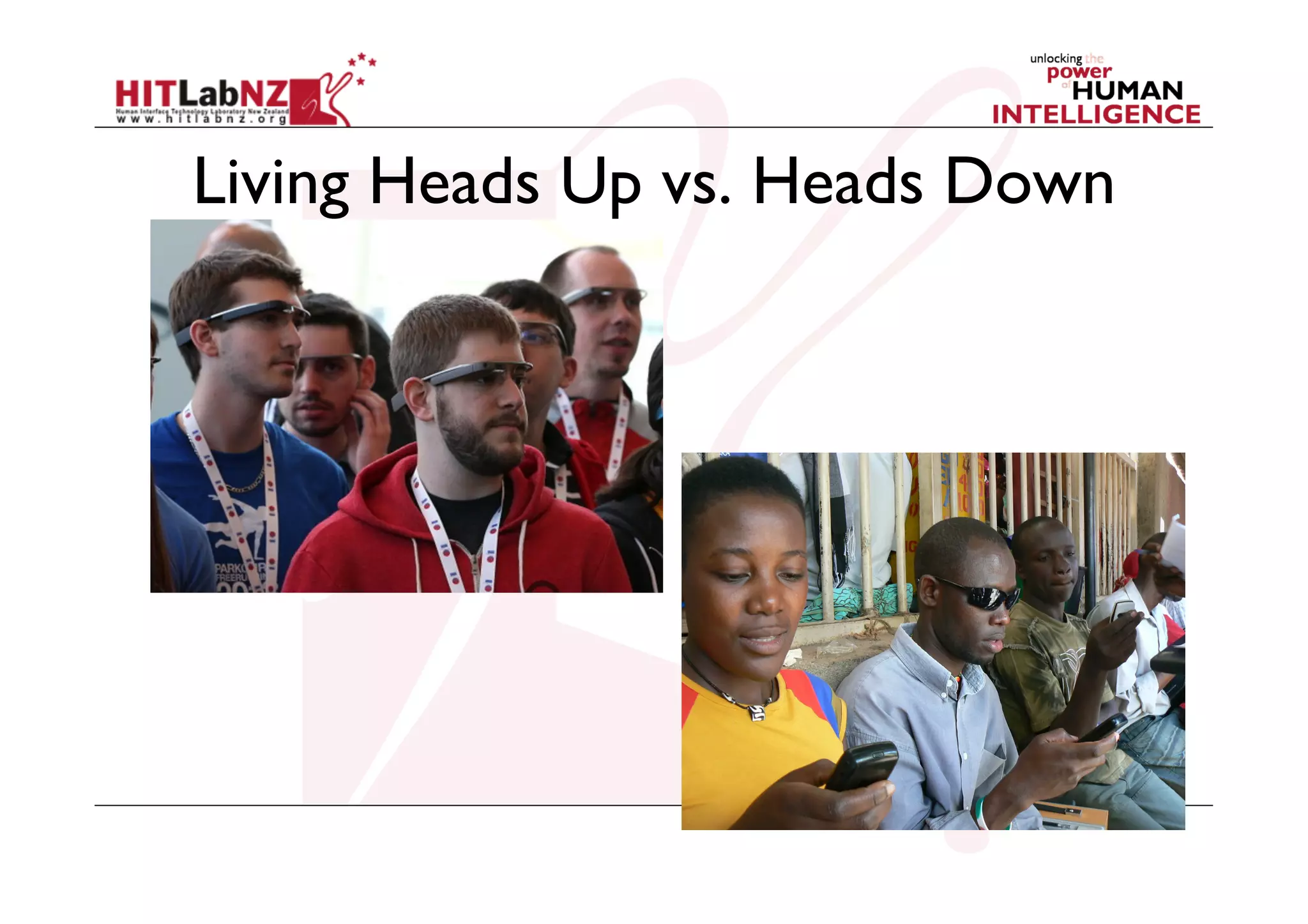
Living Heads Up vs. Heads Down
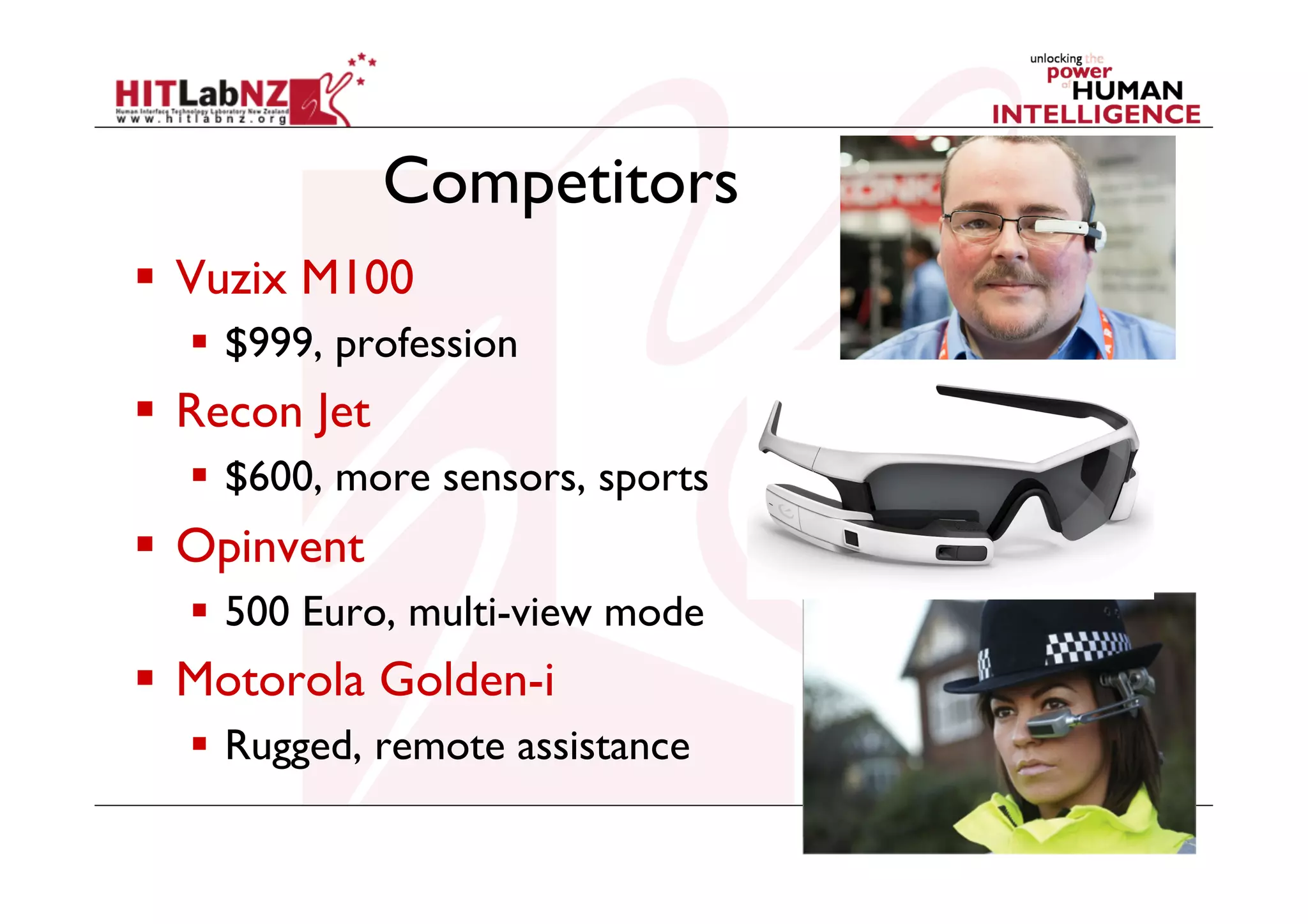
Competitors
  Vuzix M100
  $999, profession

  Recon Jet
  $600, more sensors, sports

  Opinvent
  500 Euro, multi-view mode

  Motorola Golden-i
  Rugged, remote assistance
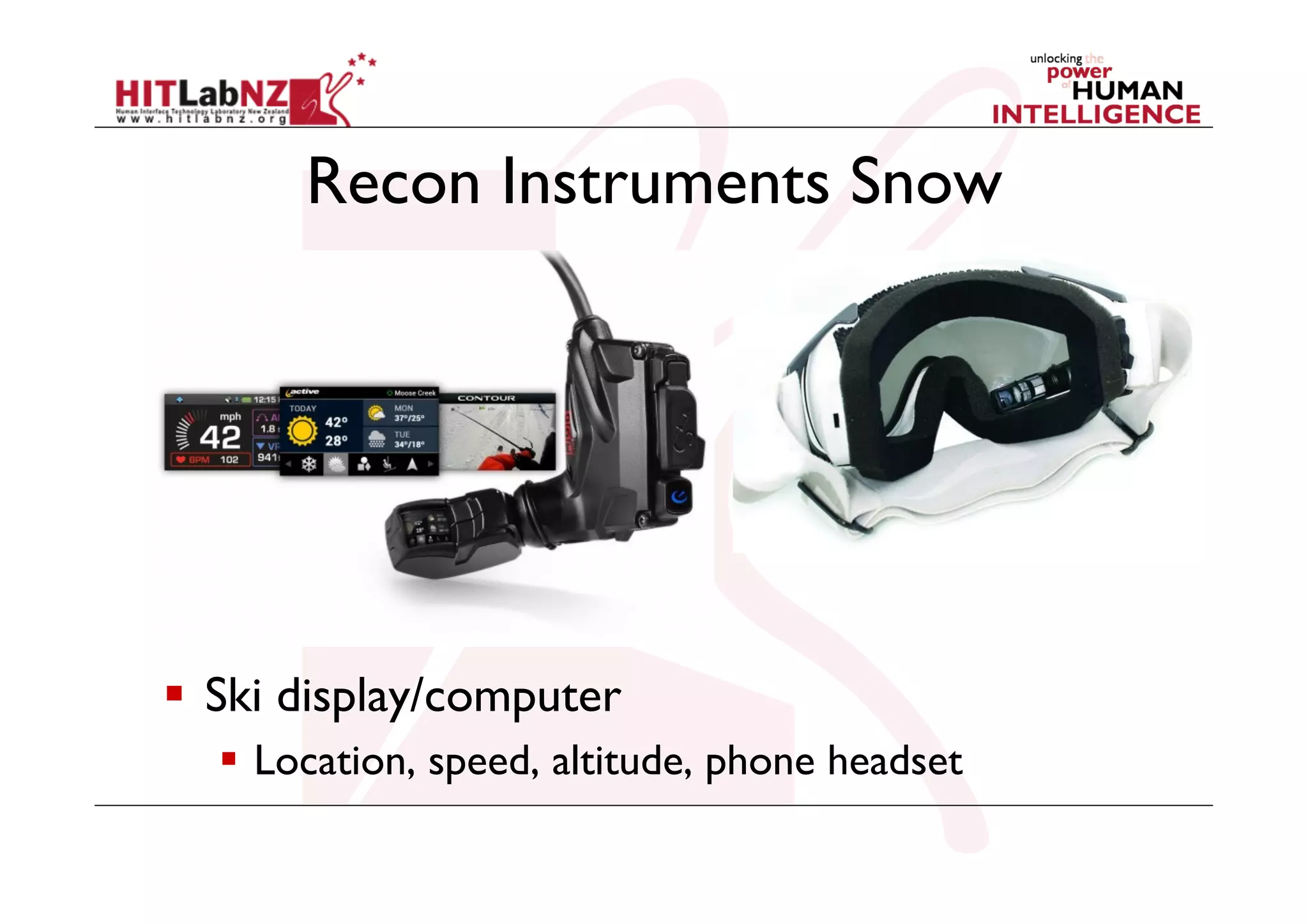
Recon Instruments Snow

  Ski display/computer
  Location, speed, altitude, phone headset
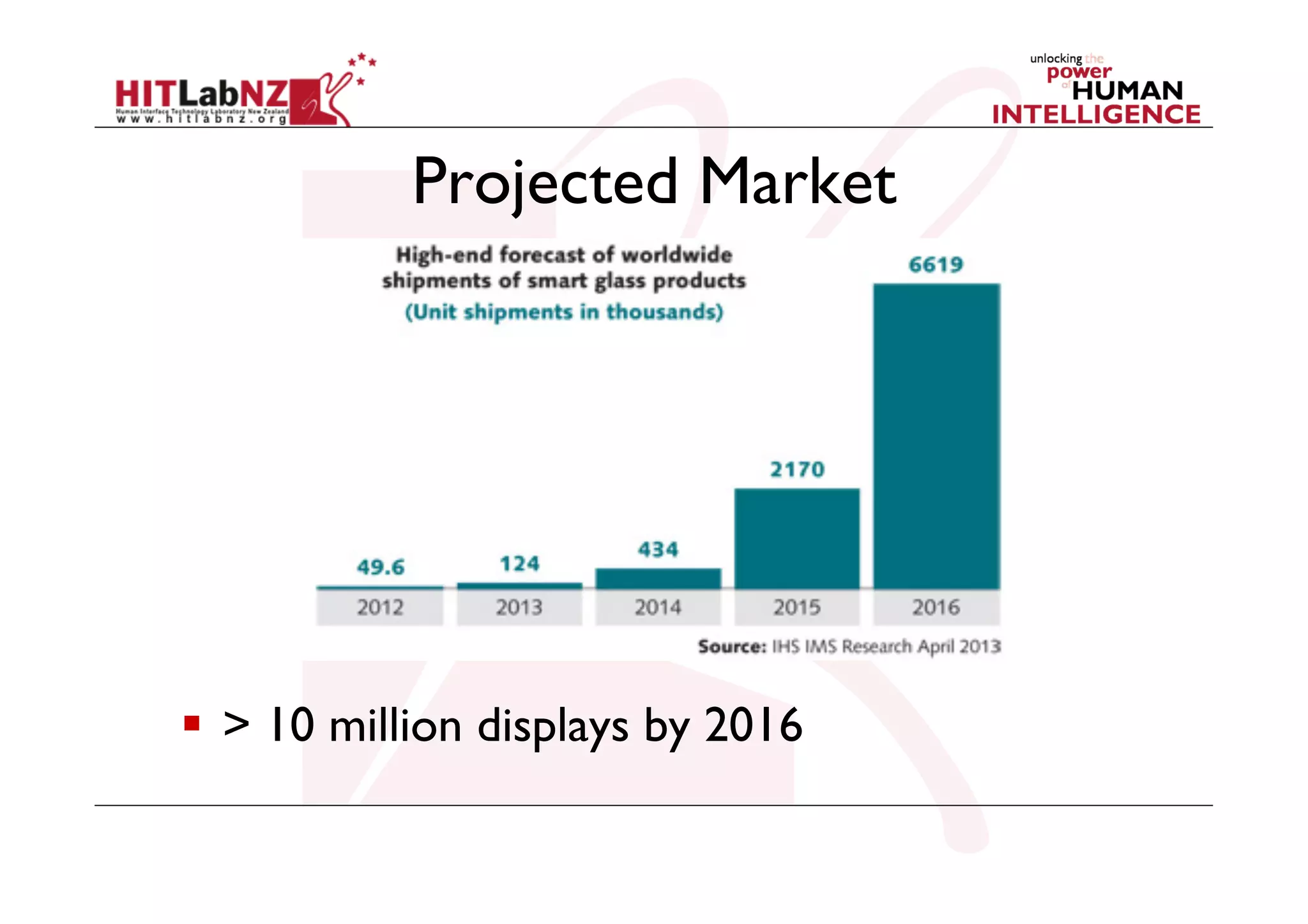
Projected Market

  > 10 million displays by 2016
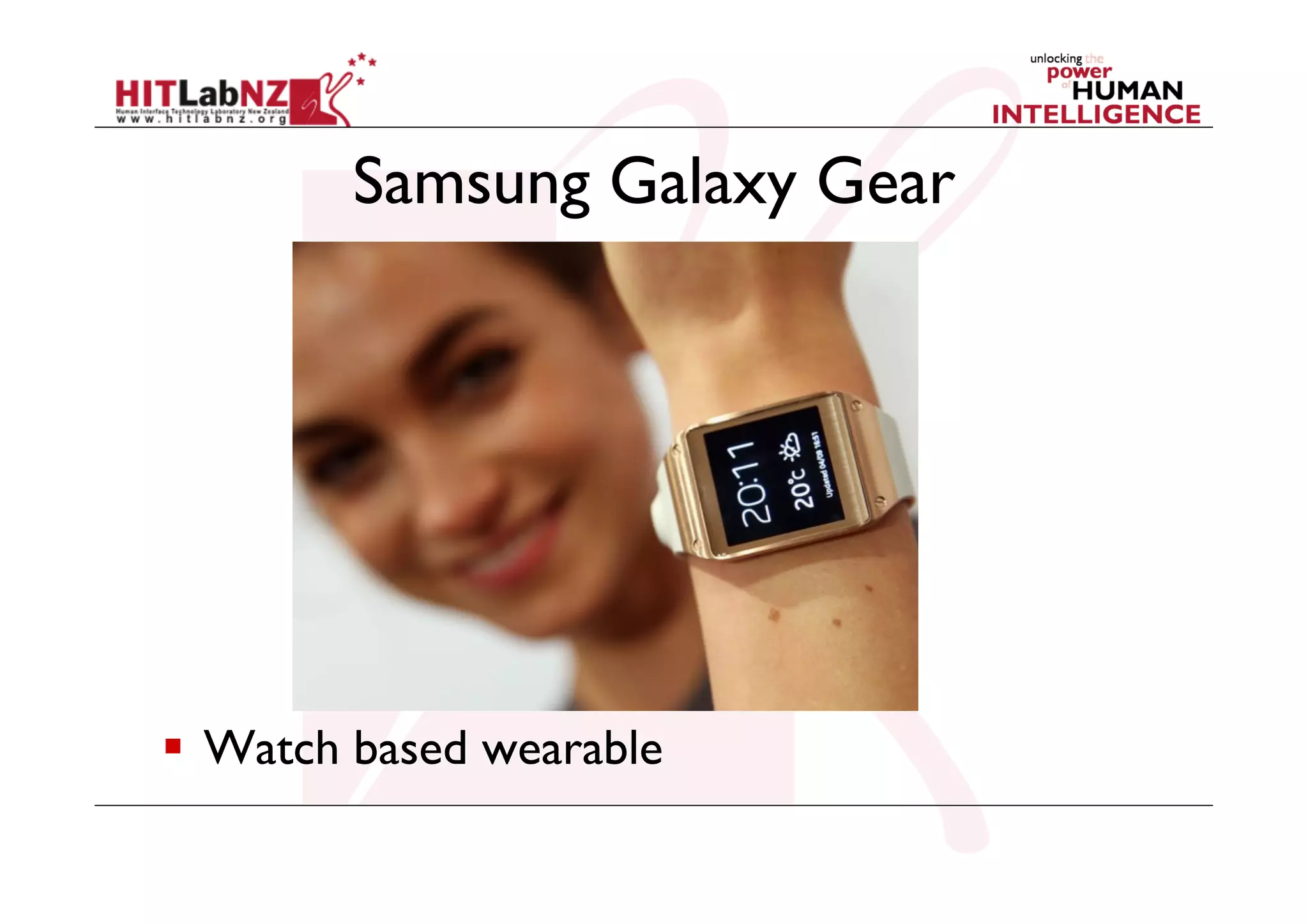
Samsung Galaxy Gear

  Watch based wearable
Samsung Galaxy Gear
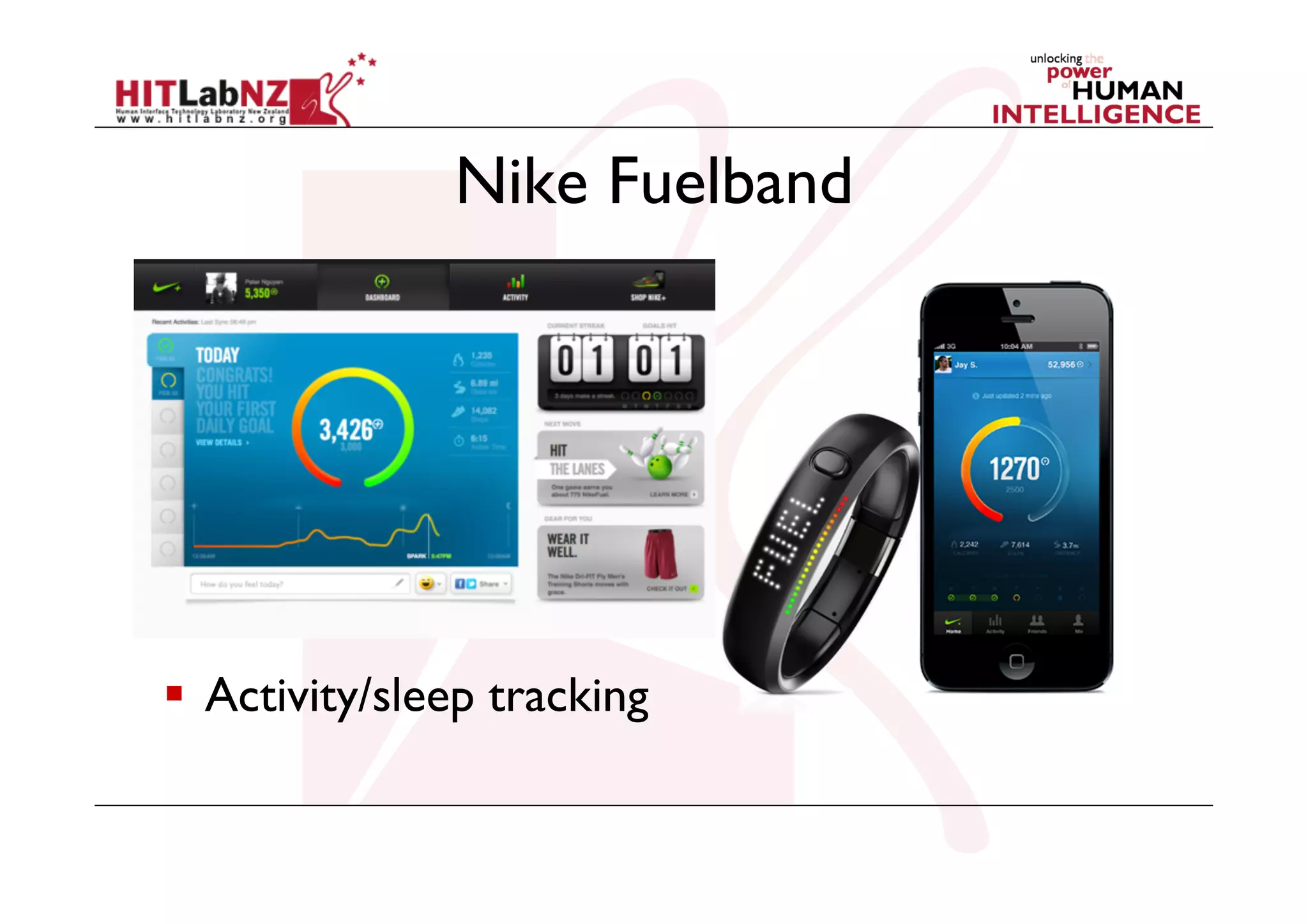
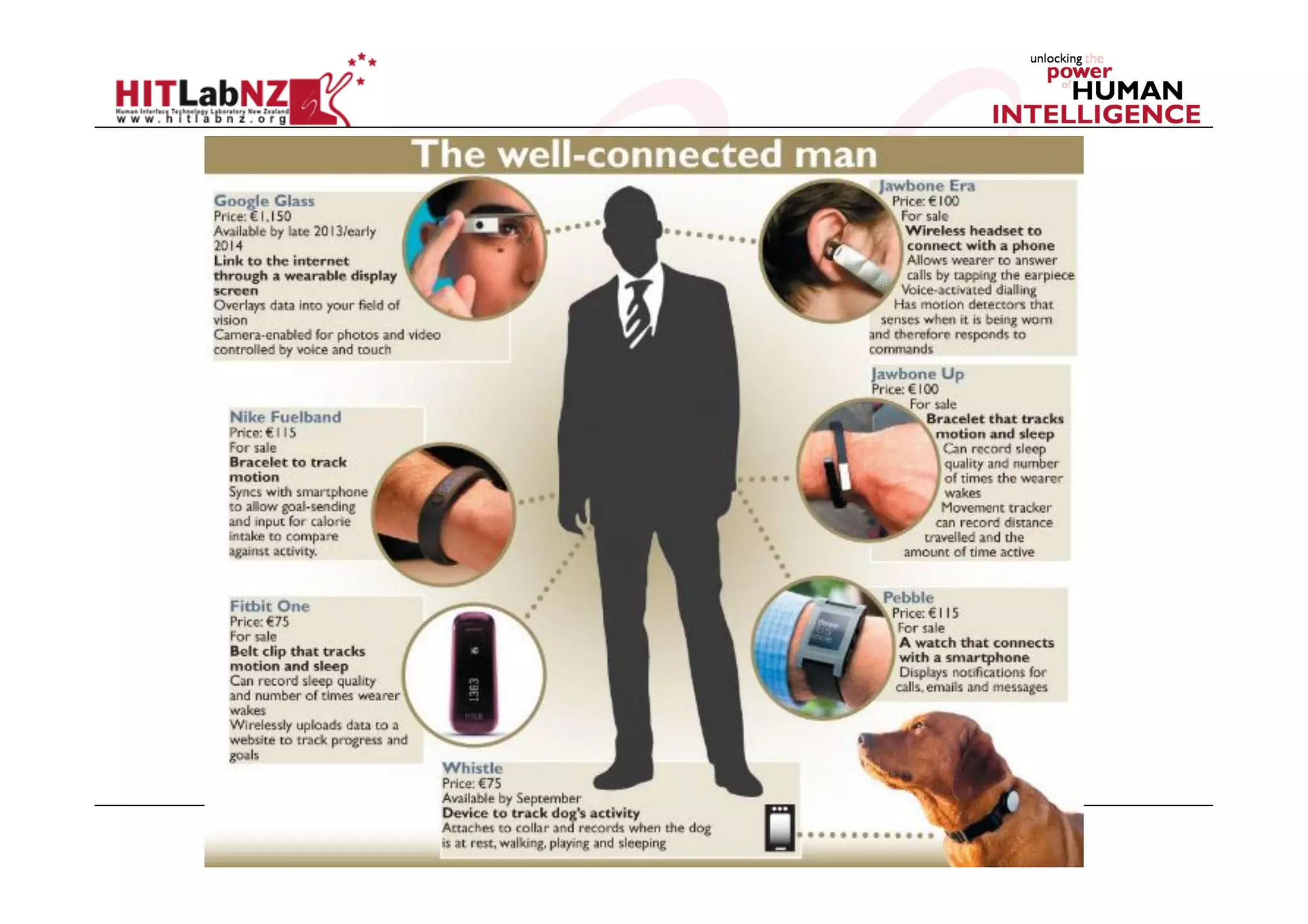
Nike Fuelband

  Activity/sleep tracking
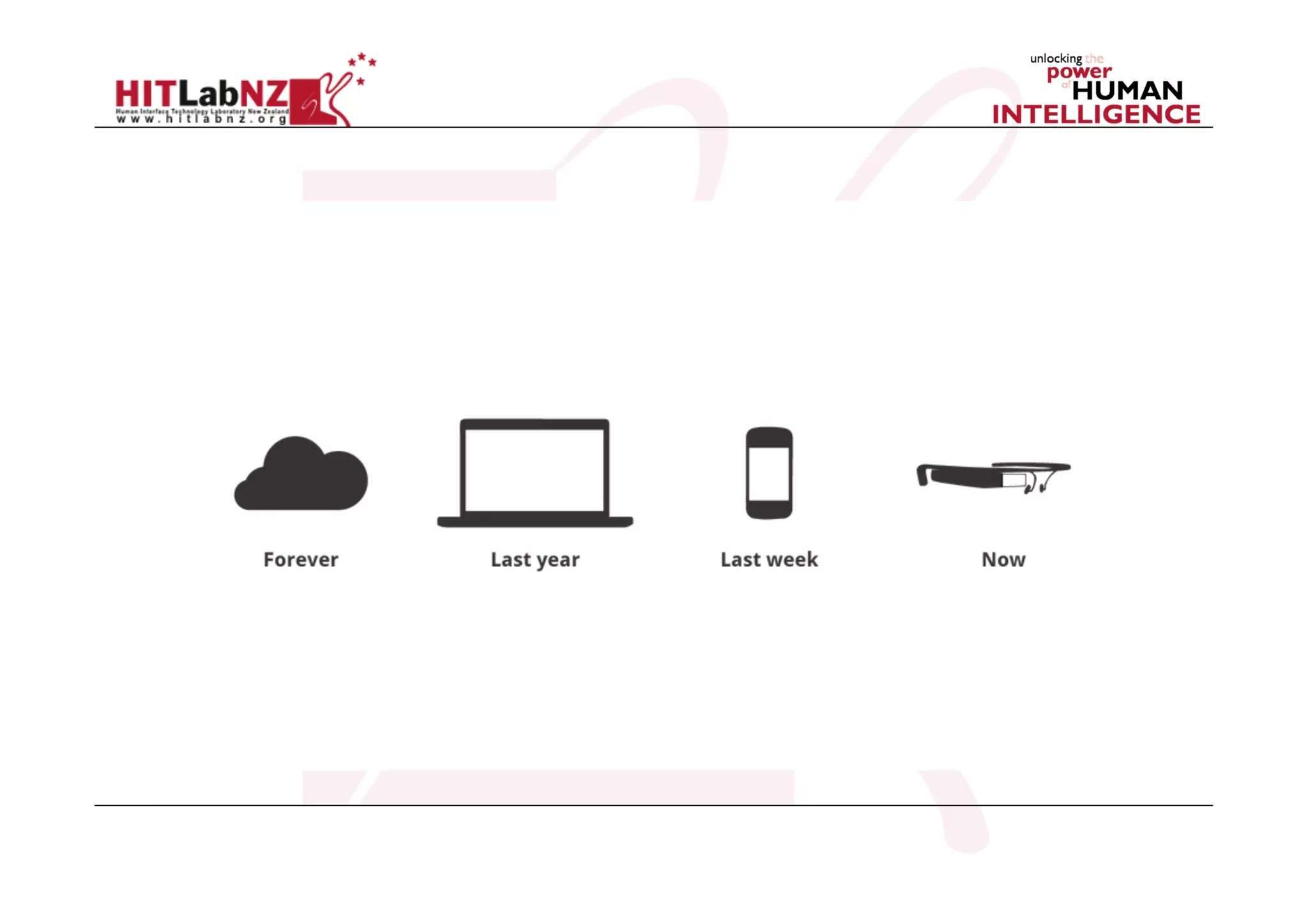
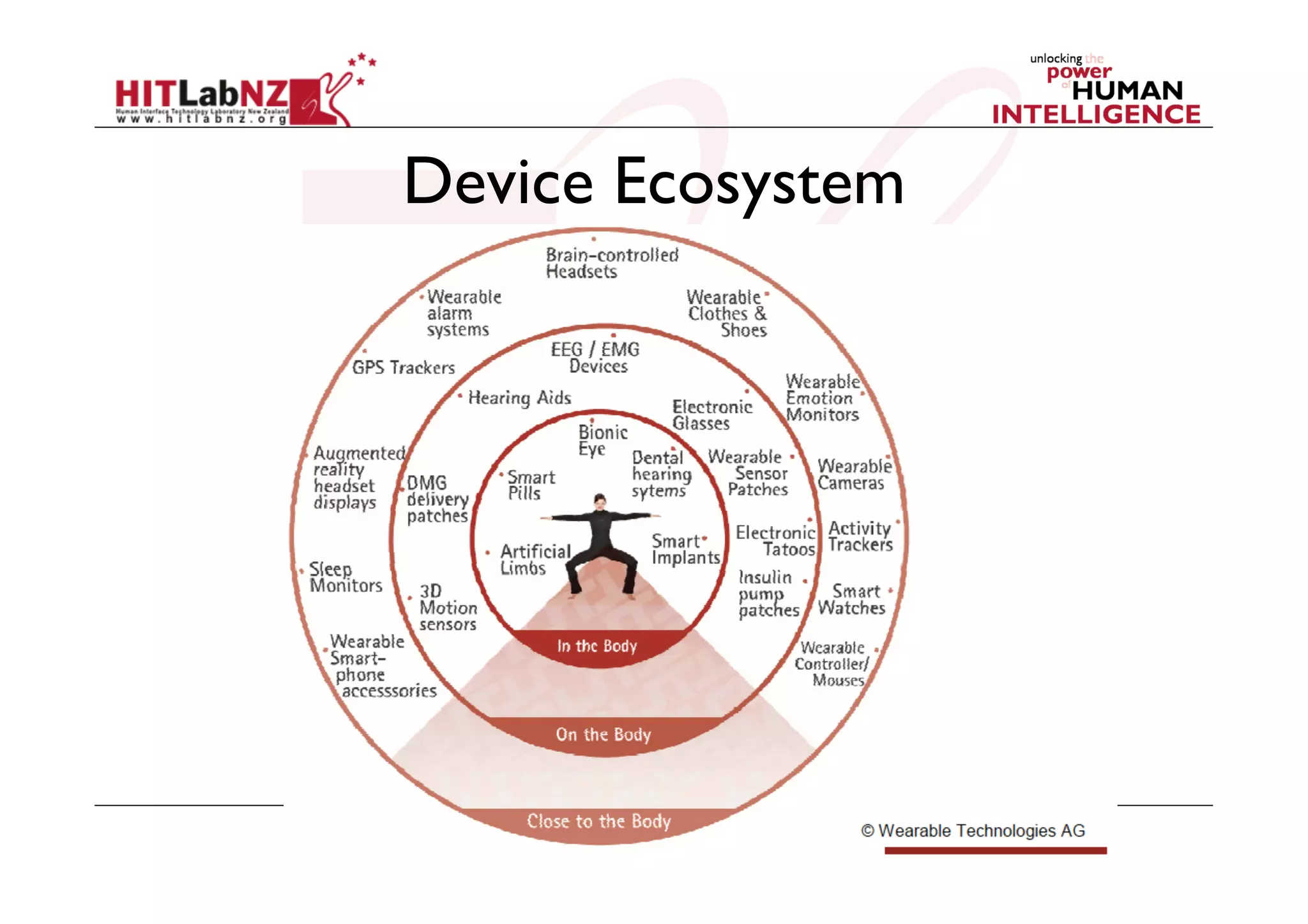
Device Ecosystem
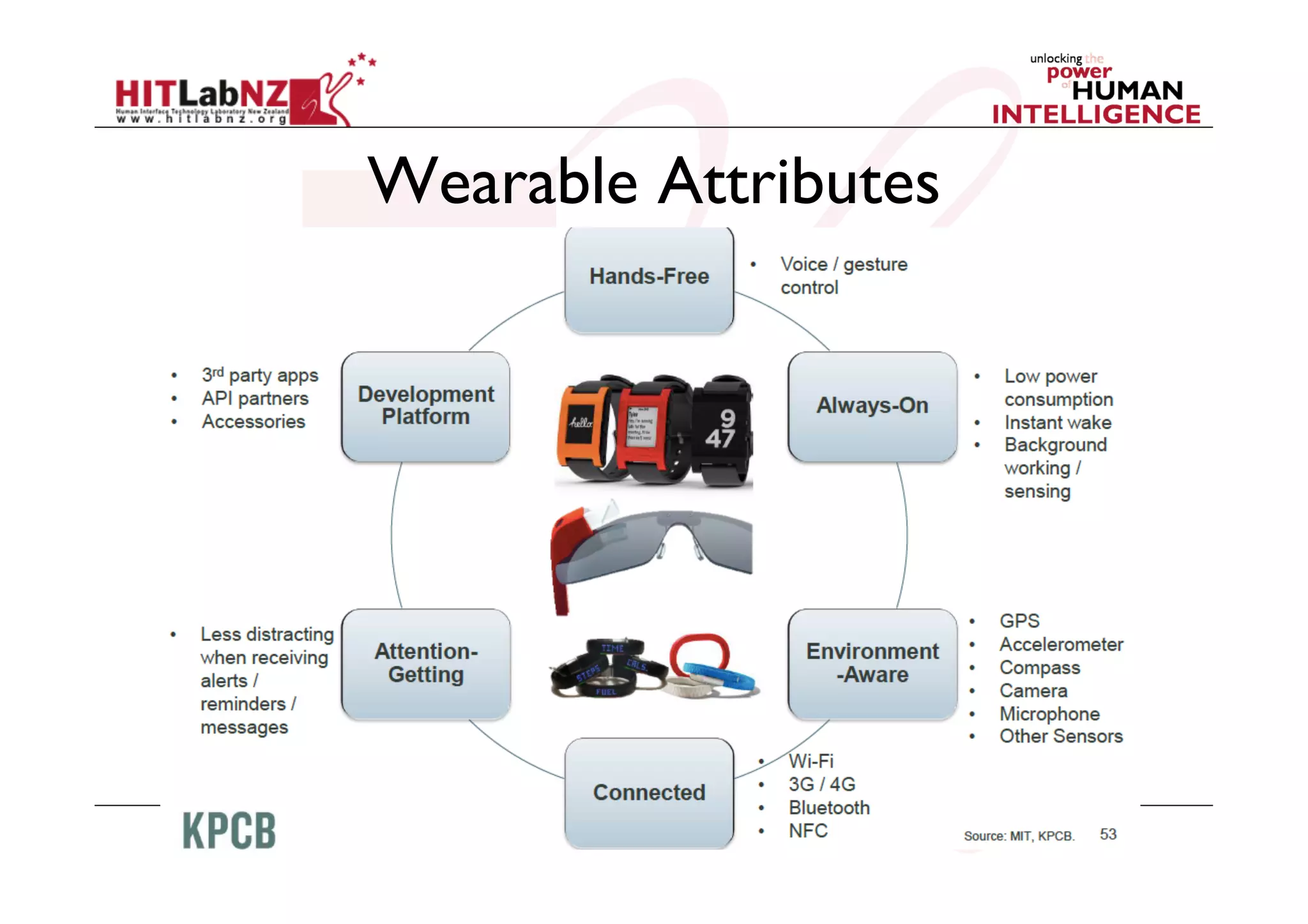
Wearable Attributes

  fafds
Looking to the Future

What’s Next?
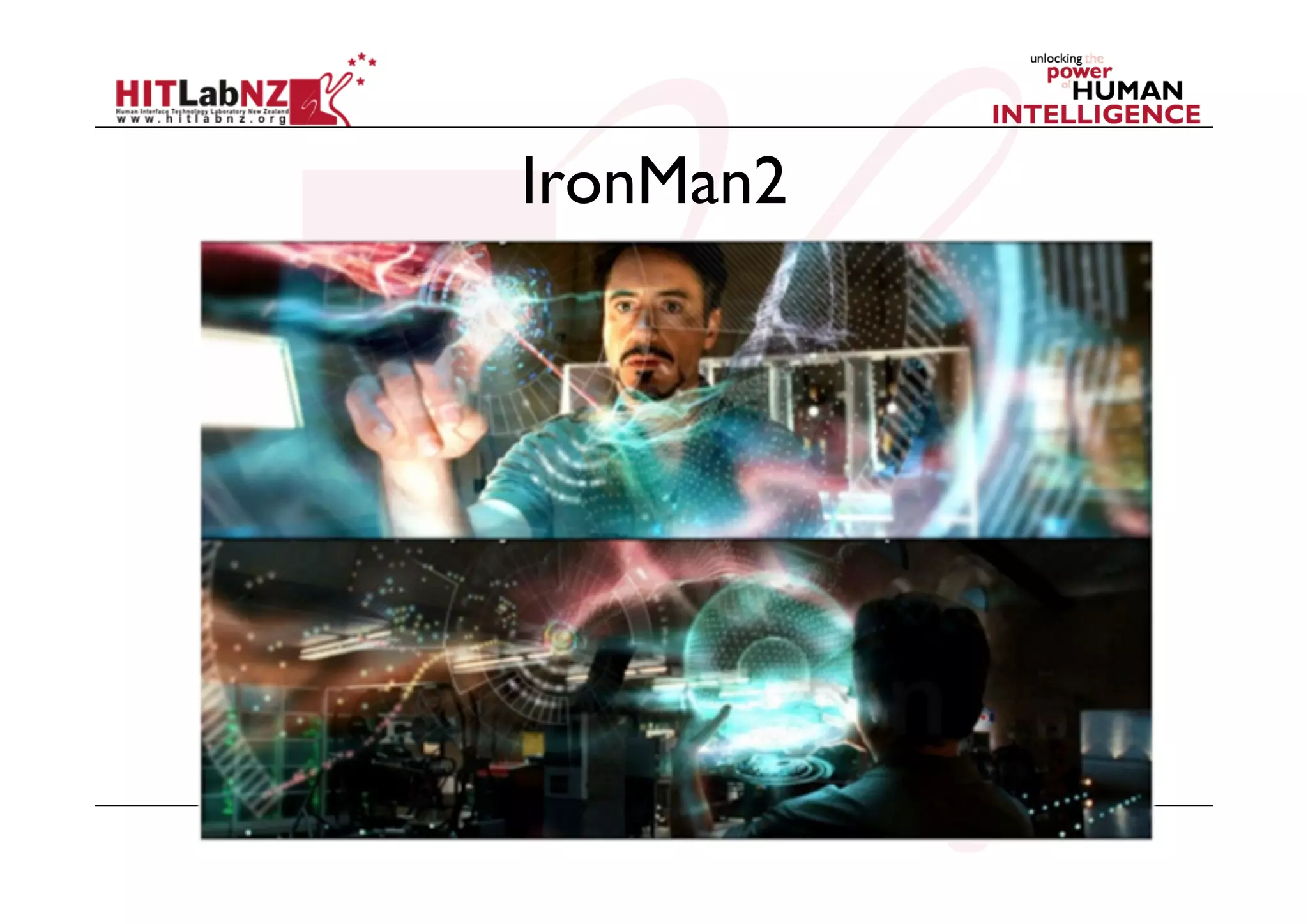
IronMan2
Meta Gesture Interaction

  Depth sensor + Stereo see-through
Meta Video
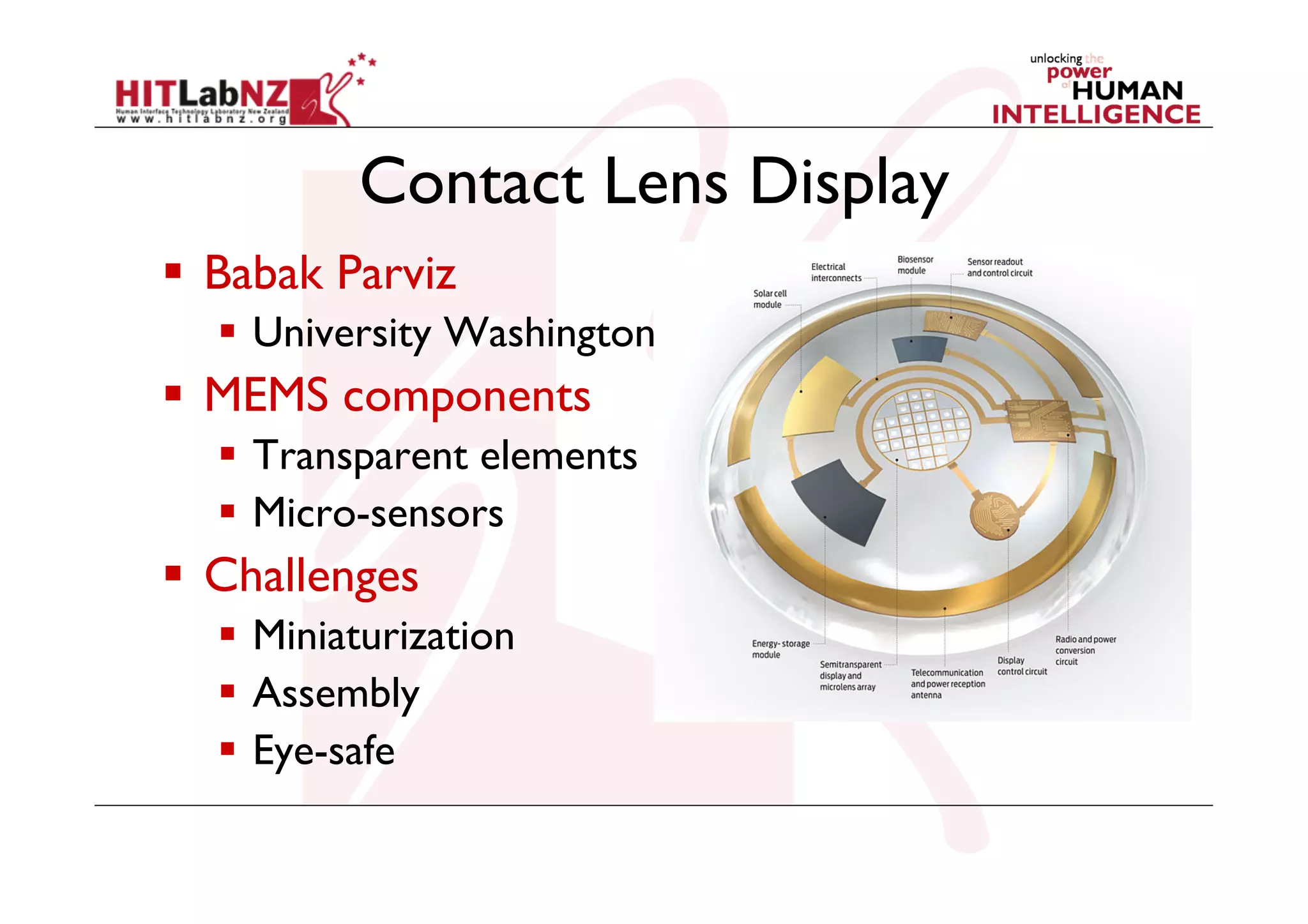
Contact Lens Display
  Babak Parviz
  University Washington

  MEMS components
  Transparent elements
  Micro-sensors

  Challenges
  Miniaturization
  Assembly
  Eye-safe
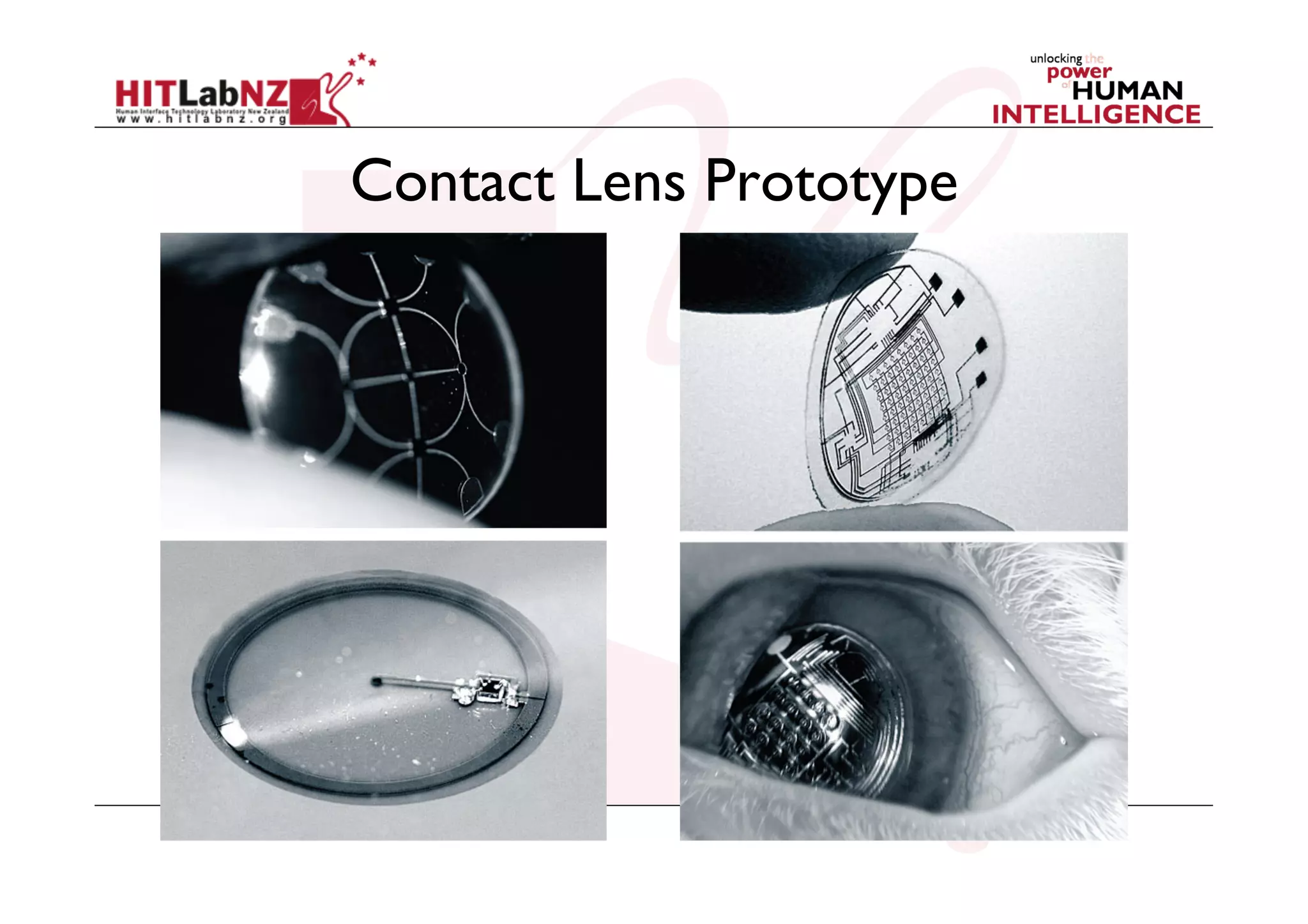
Contact Lens Prototype
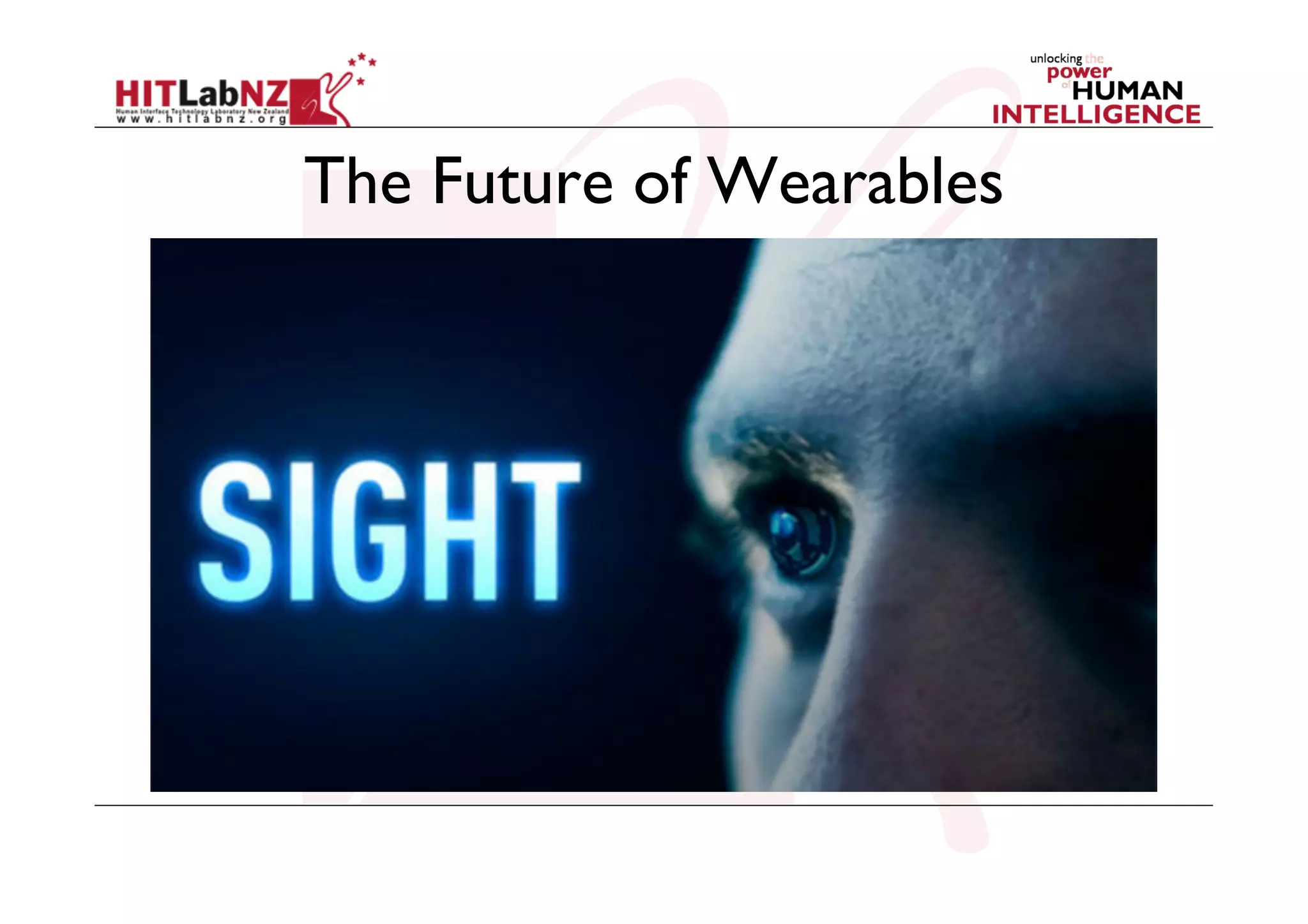
The Future of Wearables
Sight Video Demo
More Information
  Mark Billinghurst
  Email: mark.billinghurst@hitlabnz.org
  Twitter: @marknb00

  HIT Lab NZ
  http://www.hitlabnz.org/

Wearable Computers