WEARABLE COMPUTING
Presented By Rajat Kumar Gupta
Content
 Introduction
 What is wearable computing?
 History
 How does a Wearable Computer look?
 Inventions of Wearable Computing
 Applications of Wearable Computers
 Advantages
 Disadvantages
 Conclusion
Introduction
 Wearable computing is the study or practice of inventing, designing, building,
or using small body-borne computational and sensory devices. Wearable
computers may be worn under, over, or in clothing, or may also in the
footwear.
 Wearable Computing may be for general use, in which case they are just a
particularly small example of mobile computing. Alternatively they may be
for specialized purposes such as fitness trackers. They may incorporate
special sensors such as accelerometers, thermometer and heart rate
monitors, or novel user interfaces such as Google Glass, an optical head-
mounted display controlled by gestures. It may be that specialized wearables
will evolve into general all-in-one devices, as happened with the convergence
of PDAs and mobile phones into smartphones.
What is wearable computing?
 “ Wearable computing is a term that refers to computer-powered devices or
equipment that can be worn by a user, including clothing, watches, glasses,
shoes and similar items.”
 A wearable computer is any small technological device capable of storing and
processing data that can be worn on the body. Wearable computers are
designed for accessibility and convenience, as well as improvements to
workplaces by making information quickly and readily available to the wearer.
History
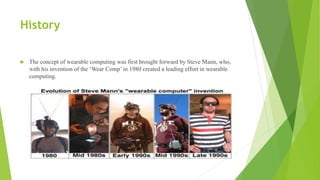
 The concept of wearable computing was first brought forward by Steve Mann, who,
with his invention of the ‘Wear Comp’ in 1980 created a leading effort in wearable
computing.
 The 1980s brought forward the development of the consumer camcorder, miniature
CRTs etc. brought forward the development of the eyeglass mounted multimedia
computer.
How does a Wearable Computer look?
 A typical wearable computer consists of a battery or human powered
computing unit and carried on a belt or in a jacket.
 A wearable computer will have a mother board worn inside a fashion
garment, connecting all the components of the system.
Inventions of Wearable Computing
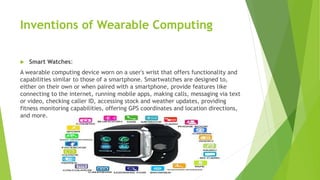
 Smart Watches:
A wearable computing device worn on a user's wrist that offers functionality and
capabilities similar to those of a smartphone. Smartwatches are designed to,
either on their own or when paired with a smartphone, provide features like
connecting to the internet, running mobile apps, making calls, messaging via text
or video, checking caller ID, accessing stock and weather updates, providing
fitness monitoring capabilities, offering GPS coordinates and location directions,
and more.
 Google Glass:
Google Glass is a wearable, voice- and motion-controlled Android device that resembles a
pair of eyeglasses and displays information directly in the user's field of vision.
Google Glass is a wearable computer featuring a head-mounted display in the form of
eyeglasses. The Google glasses function as a hands-free smartphone, letting users access
the mobile internet browser, camera, maps, calendar, and other apps by voice
commands.
Many Other wearable devices :
 MUSE: The Brain Sensing Headband.
 FitBit.
 Bellabeat Leaf Urban Smart Jewelry Health Tracker
 invisawear Smart Jewelry - Personal Safety Device - Silver Expandable
Bracelet
 Digitsole
Applications of Wearable Computers
 Augmented Reality
 Aiding the visually disabled
 Brain Gate Interface
 Data processing
 Patient Monitoring
 Remote guidance
Advantages
 Portability.
 Hands-free use.
 Comfortable.
 Always on for the task it is designed.
 Quick to access.
 Fashionable.
 Functions of clothing will be very personal.
 The reuse of clothes will be important (prolonged life cycle).
Disadvantages
 Equipment can be heavy.
 Expensive.
 Some Wearable Computers can consist of a lot of wiring.
 Can cause irritation in heat.
 Side-Effects such as Headaches.
 It may become easier to get data on an individual if the item is
lost / stolen.
Conclusion
 Wearable Computer has come a long way from the days of the Wear Comp.
 Extensive research and development work at various centers have ensured
that these wonderful devices will change our lives dramatically in the near
future.
 Several commercial vendors have started manufacturing and marketing these
devices.
Wearable Computing

Wearable Computing

  • 1.
  • 2.
    Content  Introduction  Whatis wearable computing?  History  How does a Wearable Computer look?  Inventions of Wearable Computing  Applications of Wearable Computers  Advantages  Disadvantages  Conclusion
  • 3.
    Introduction  Wearable computingis the study or practice of inventing, designing, building, or using small body-borne computational and sensory devices. Wearable computers may be worn under, over, or in clothing, or may also in the footwear.  Wearable Computing may be for general use, in which case they are just a particularly small example of mobile computing. Alternatively they may be for specialized purposes such as fitness trackers. They may incorporate special sensors such as accelerometers, thermometer and heart rate monitors, or novel user interfaces such as Google Glass, an optical head- mounted display controlled by gestures. It may be that specialized wearables will evolve into general all-in-one devices, as happened with the convergence of PDAs and mobile phones into smartphones.
  • 4.
    What is wearablecomputing?  “ Wearable computing is a term that refers to computer-powered devices or equipment that can be worn by a user, including clothing, watches, glasses, shoes and similar items.”  A wearable computer is any small technological device capable of storing and processing data that can be worn on the body. Wearable computers are designed for accessibility and convenience, as well as improvements to workplaces by making information quickly and readily available to the wearer.
  • 5.
    History  The conceptof wearable computing was first brought forward by Steve Mann, who, with his invention of the ‘Wear Comp’ in 1980 created a leading effort in wearable computing.
  • 6.
     The 1980sbrought forward the development of the consumer camcorder, miniature CRTs etc. brought forward the development of the eyeglass mounted multimedia computer.
  • 7.
    How does aWearable Computer look?  A typical wearable computer consists of a battery or human powered computing unit and carried on a belt or in a jacket.  A wearable computer will have a mother board worn inside a fashion garment, connecting all the components of the system.
  • 8.
    Inventions of WearableComputing  Smart Watches: A wearable computing device worn on a user's wrist that offers functionality and capabilities similar to those of a smartphone. Smartwatches are designed to, either on their own or when paired with a smartphone, provide features like connecting to the internet, running mobile apps, making calls, messaging via text or video, checking caller ID, accessing stock and weather updates, providing fitness monitoring capabilities, offering GPS coordinates and location directions, and more.
  • 9.
     Google Glass: GoogleGlass is a wearable, voice- and motion-controlled Android device that resembles a pair of eyeglasses and displays information directly in the user's field of vision. Google Glass is a wearable computer featuring a head-mounted display in the form of eyeglasses. The Google glasses function as a hands-free smartphone, letting users access the mobile internet browser, camera, maps, calendar, and other apps by voice commands.
  • 10.
    Many Other wearabledevices :  MUSE: The Brain Sensing Headband.  FitBit.  Bellabeat Leaf Urban Smart Jewelry Health Tracker  invisawear Smart Jewelry - Personal Safety Device - Silver Expandable Bracelet  Digitsole
  • 11.
    Applications of WearableComputers  Augmented Reality  Aiding the visually disabled  Brain Gate Interface  Data processing  Patient Monitoring  Remote guidance
  • 12.
    Advantages  Portability.  Hands-freeuse.  Comfortable.  Always on for the task it is designed.  Quick to access.  Fashionable.  Functions of clothing will be very personal.  The reuse of clothes will be important (prolonged life cycle).
  • 13.
    Disadvantages  Equipment canbe heavy.  Expensive.  Some Wearable Computers can consist of a lot of wiring.  Can cause irritation in heat.  Side-Effects such as Headaches.  It may become easier to get data on an individual if the item is lost / stolen.
  • 14.
    Conclusion  Wearable Computerhas come a long way from the days of the Wear Comp.  Extensive research and development work at various centers have ensured that these wonderful devices will change our lives dramatically in the near future.  Several commercial vendors have started manufacturing and marketing these devices.