Wearable BioSignal Interface
by Thanakrit Lersmethasakul
Content
1. Objective

2. Literature Survey
3. System Scenario

4. Experiment
1. Objective
- To study the behavior and properties of
bio-electric signals.
- Develop a system to identify and recognize
patterns of signals on a portable computer.

- Can be used to control the device.
2. Literature Survey
1.
2.
3.
4.
5.
6.
7.

Studying the Use of Fuzzy Inference Systems for Motor Imagery
Classification.
System of Communication and Control Based on the Thought.
BioSig: The Free and Open Source Software Library for Biomedical
Signal Processing.
Forearm EMG Pattern Recognition for Multifunction Myoelectric
Control System.
EEG Based Brain Computer Interface.
A Review of Classification Algorithms for EEG-based BrainComputer Interfaces.
Artificial Speech Synthesizer Control by Brain-Computer Interface
2.1 Studying the Use of Fuzzy Inference Systems for
Motor Imagery Classification [1]
- Brain-Computer Interfaces with CFIS.
(Chiu's Fuzzy Inference System)

- 3 steps processing
(1) Clustering of training data - Subtractive clustering
algorithm.
(2) Generation of the fuzzy rules - Gaussian
membership function.
(3) Fuzzy rule optimization - Gradient Descent
Formulas
- Detection - Bipolar Electrodes
- Feature Extraction - beta and alpha bands (C3β, C3α, C4β, C4α)
- Hand-Made Fuzzy Rules (HMFR)
- Classifier Comparison - Support Vector Machine (SVM),
Multi-Layer Perceptron (MLP),
Linear Classifier (LC)

Table 1 Accuracy(%) and Mutual Information (MI) of Classifiers [1]
Table 2 Fuzzy rules automatically extracted by CFIS for subject [1]

Table 3 Hand-made fuzzy rules used to classify motor imagery data [1]
2. System of Communication and Control Based on the Thought [2]

- Accuracy in classify 70%
- Autoregressive Adaptive Parameter Feature Extraction
- Neural Network Classifier
-

Movement patterns of left and right hand
Figure 1 System workflow [2]
3. BioSig: The Free and Open Source Software Library for
Biomedical Signal Processing [3]

- Open source application for Biomedical Signal

Processing.
- Used in research of Neuroinformatics,
Brain-Computer Interfaces, Neurophysiology,
Psychology, Cardiovascular Systems and
Sleep Research.
- Data Acquisition, Artifact Processing, Quality Control,
Feature Extraction, Classification, Modeling and
Data Visualization.
- Electroencephalogram (EEG), Electrocardiogram (ECG),
Electrooculogram (EOG), Electromyogram (EMG).
Figure 2 Architecture of the BioSig toolbox and its elements [3]
Figure 4 Elements of a brain computer interface [3]
4. Forearm EMG Pattern Recognition for Multifunction
Myoelectric Control System [4]

Figure 5 Multifunction myoelectric control system [4]
Figure 6 EMG signals from muscle movement, posture and hand gestures. [4]
Figure 7 Processing [4]
5. EEG Based Brain Computer Interface [5]

- Test with 1 hidden layer-50 neurons, 1 hidden
layer-100 neurons, 2 hidden layers-50 neurons
and 2 hidden layers-100 neurons Neural
Network.
- Left movement with eyes closed, Right
movement with eyes closed and Left movement
with eyes open are example patterns
Figure 8 Functional Model of a BCI System [5]
Figure 9 Nihon Kohden Neurofax-21 channel Electroencephalograph [5]
Figure 10 Planning for Left movement with eyes closed [5]
Conclusion
-

Movement can easily be identified and observed by EEG.

-

Analytical thought process is still almost impossible
to classify, since emotions can’t be predicted via
scalp EEG.

- The more the number of neurons or layers the better the
classification is but at cost of memory and processing power.
6. A Review of Classification Algorithms for EEG-based Brain-Computer Interfaces [6]

Table 4 Some of classifier properties [6]
7. Artificial Speech Synthesizer Control by Brain-Computer
Interface[7]

- Invasive EEG with Neurotrophic Electrode.
- Gyrus Precentral (a prominent structure in the parietal
lobe of the human brain).
-

Kalman filter-based decoder in Speech Synthesizer
Figure 11 Schematic of the brain-machine interface for real-time
synthetic speech production [7]
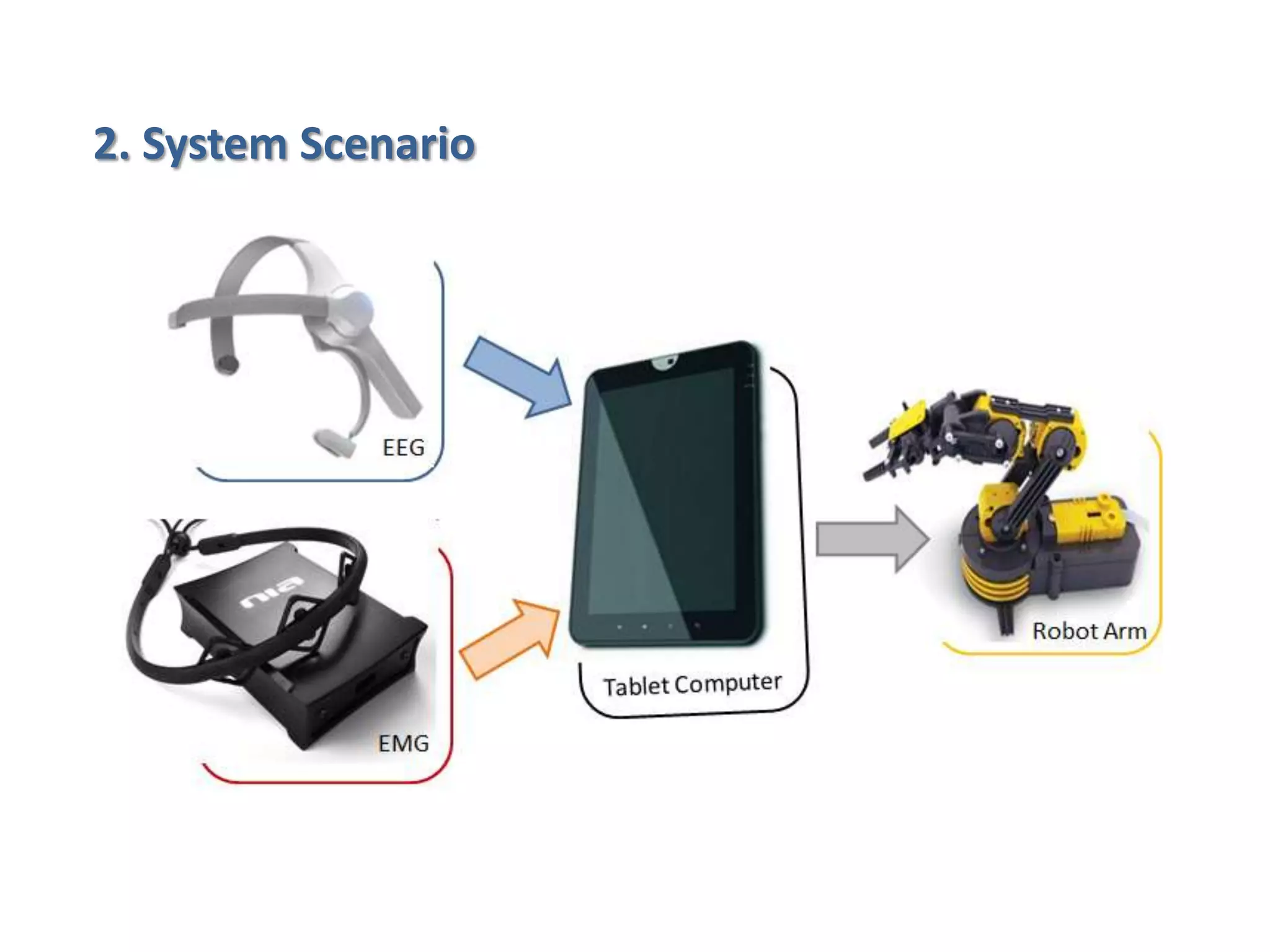
2. System Scenario
4. Experiment
4.1 EMG Signal Classification with Autoregresive Model and
Backpropagation Neural Network.
(1) Detection

Figure 12 Cyberlink Brainfinger [8]
Figure 13 Middle of bicep muscle [9]
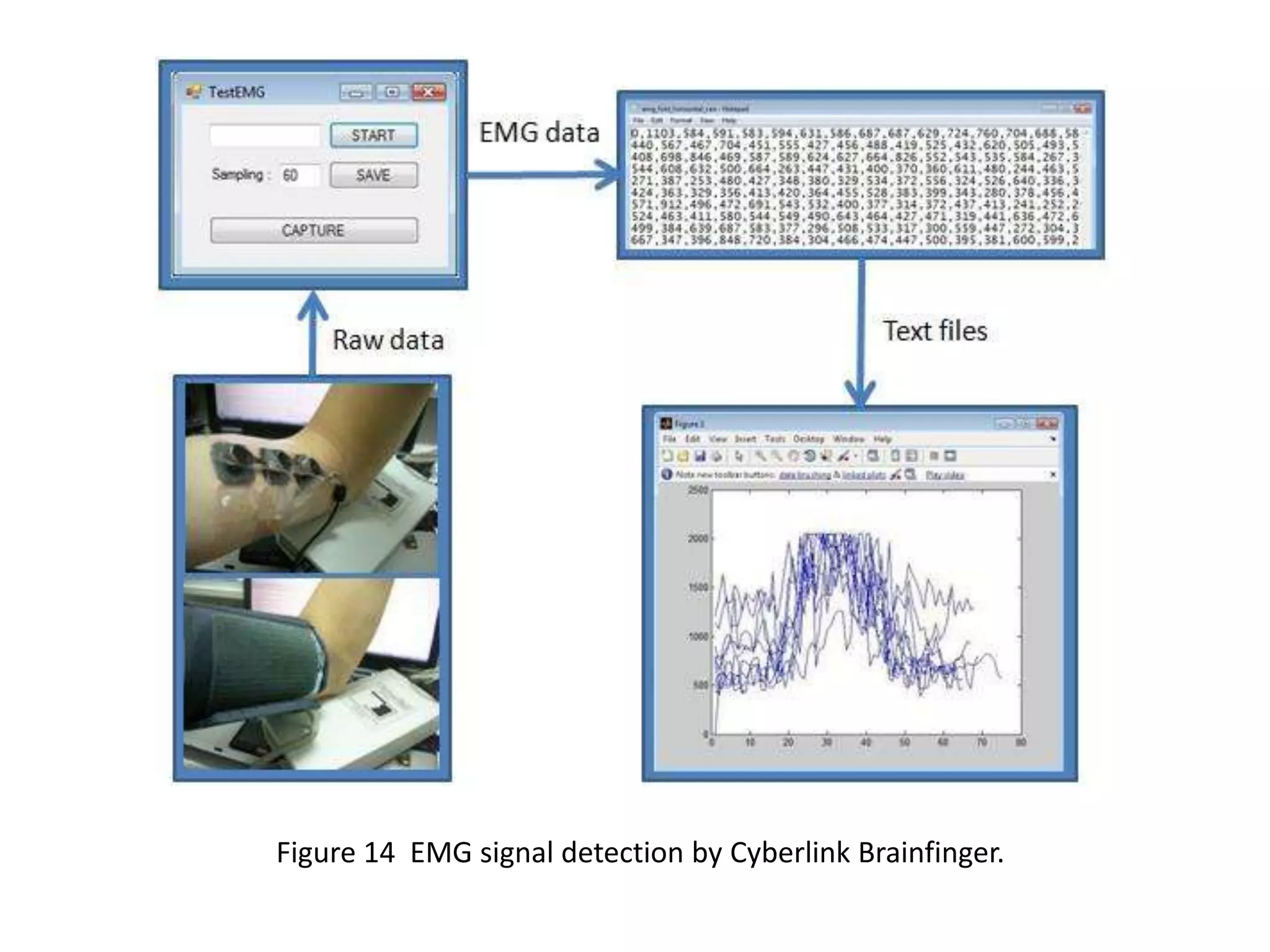
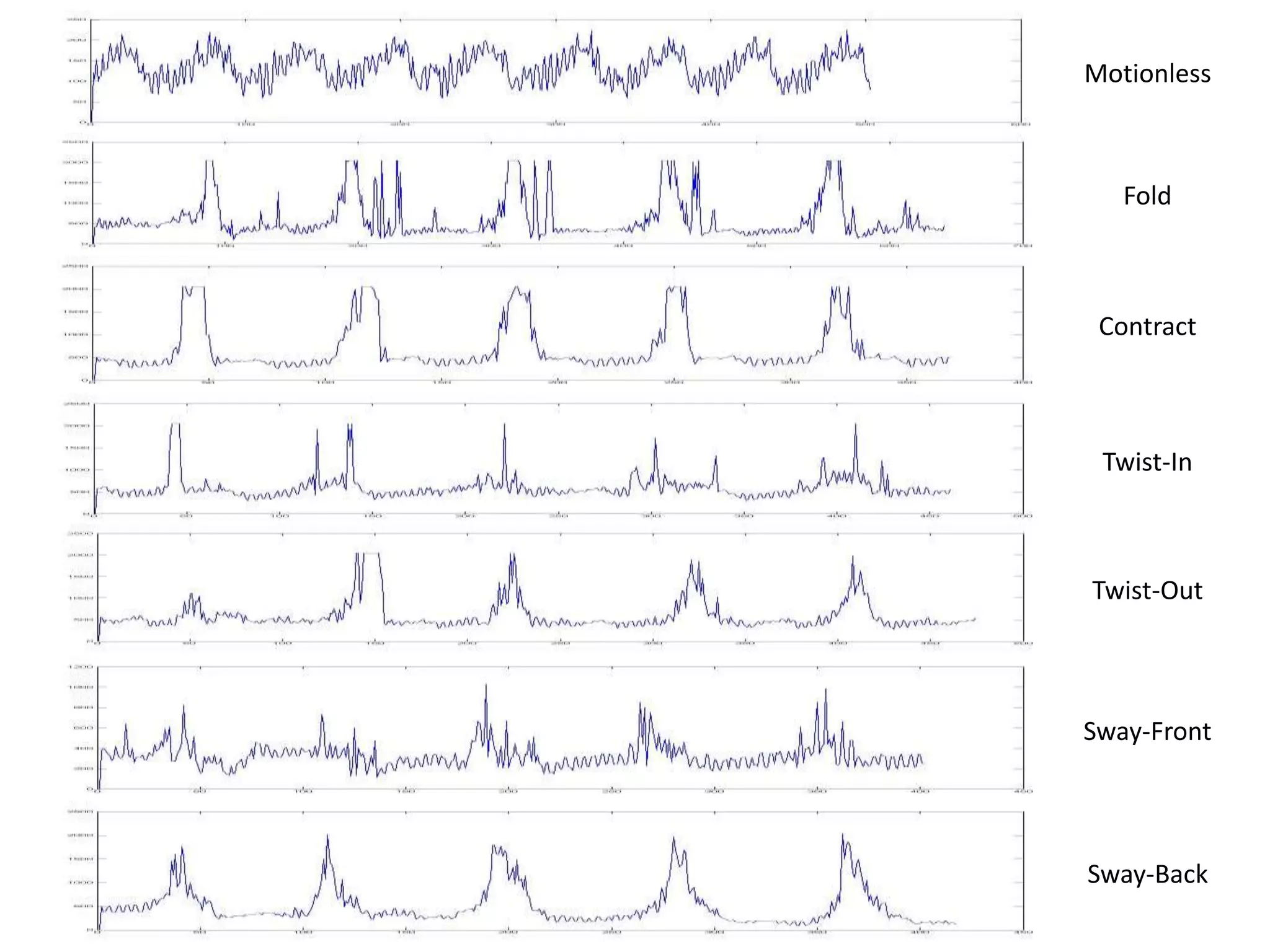
Figure 14 EMG signal detection by Cyberlink Brainfinger.
Motionless

Fold

Contract

Twist-In

Twist-Out

Sway-Front

Sway-Back
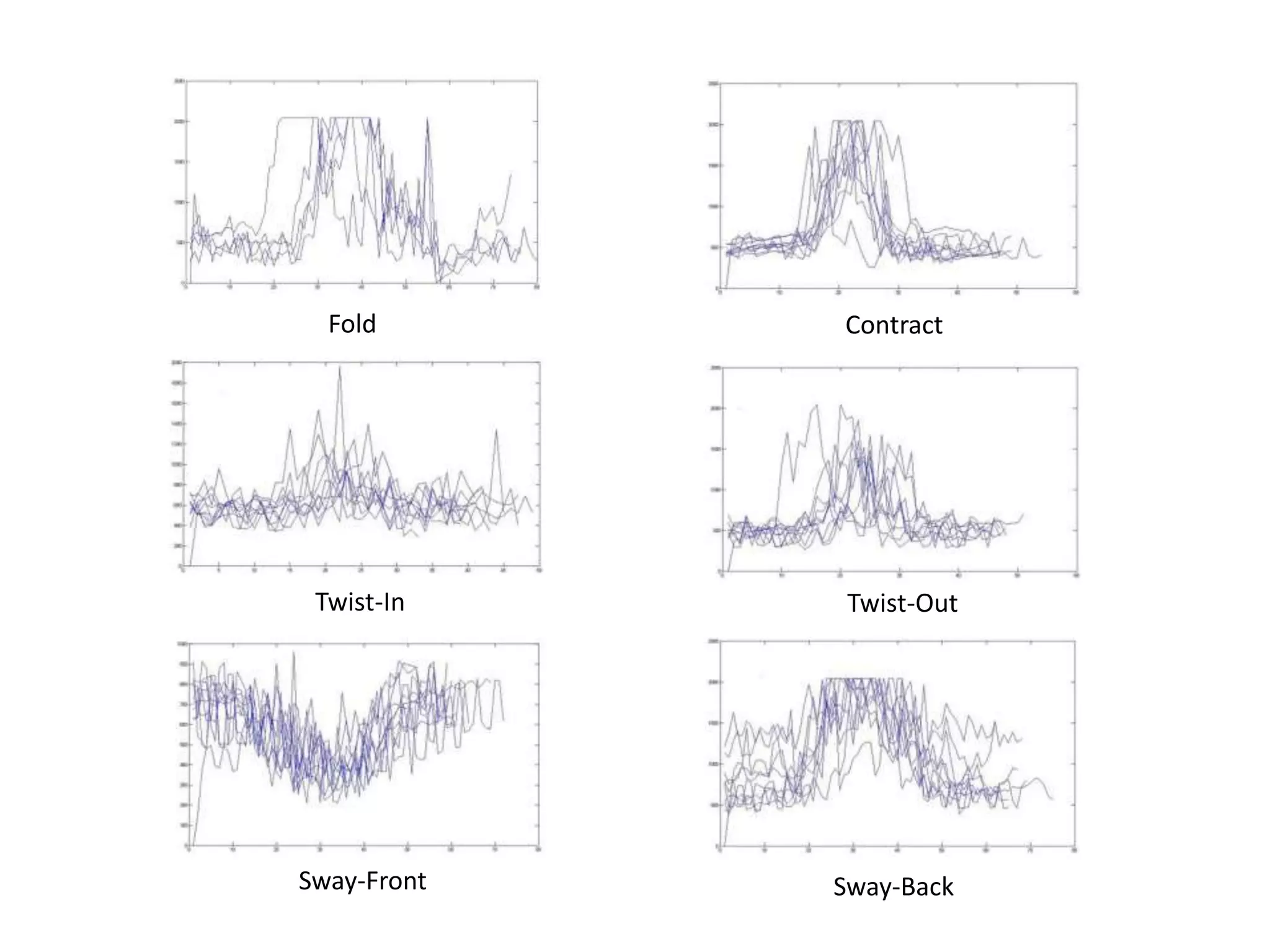
Fold

Contract

Twist-In

Twist-Out

Sway-Front

Sway-Back
(2) Feature Extraction
- AR – Coefficients with Least Mean Square
- Convergence constant (µ) = 0.001 [10]
- Autoregressive order = 4

Figure 15 Autoregressive process
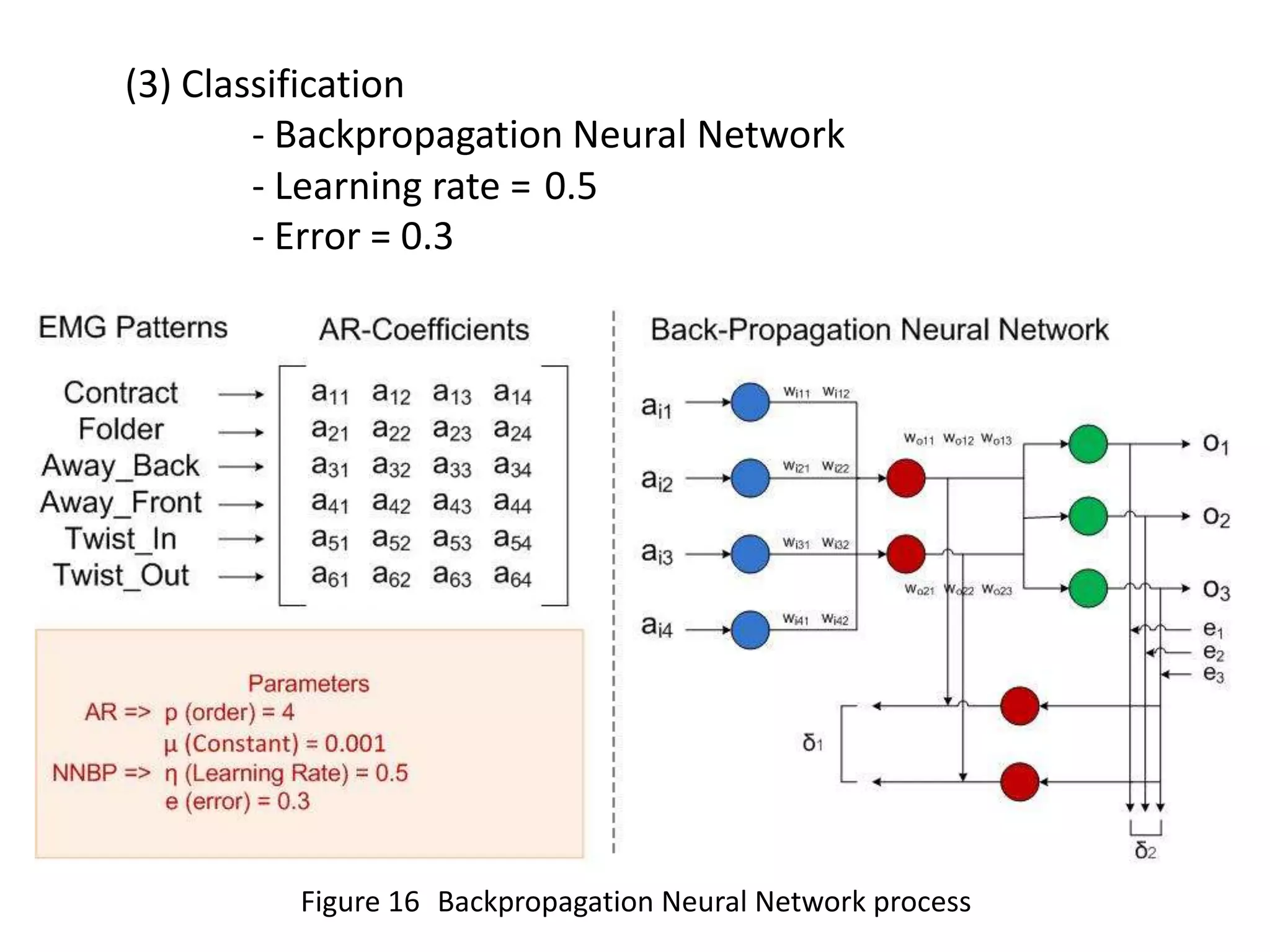
(3) Classification
- Backpropagation Neural Network
- Learning rate = 0.5
- Error = 0.3

Figure 16 Backpropagation Neural Network process
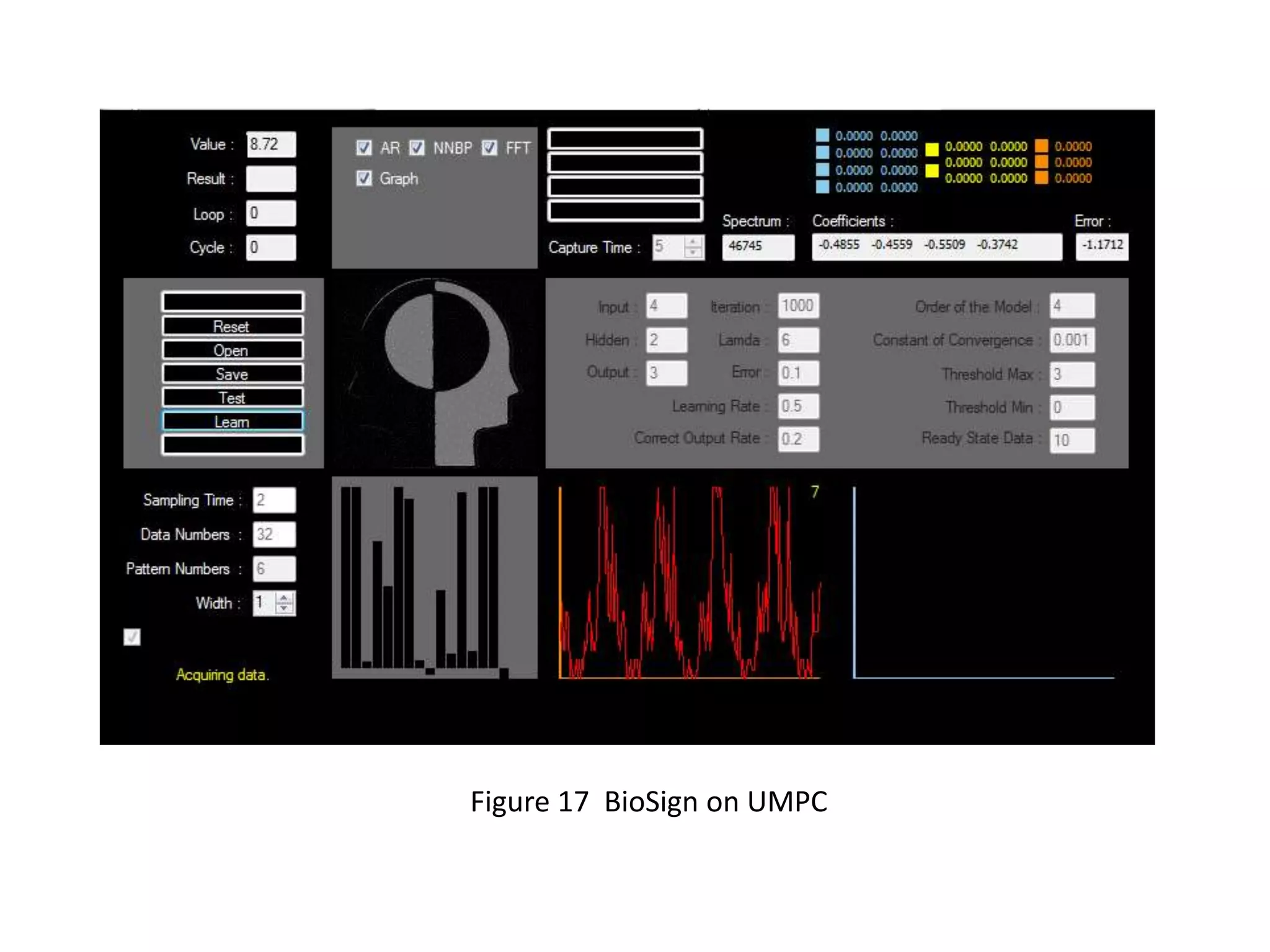
Figure 17 BioSign on UMPC
Conclusion
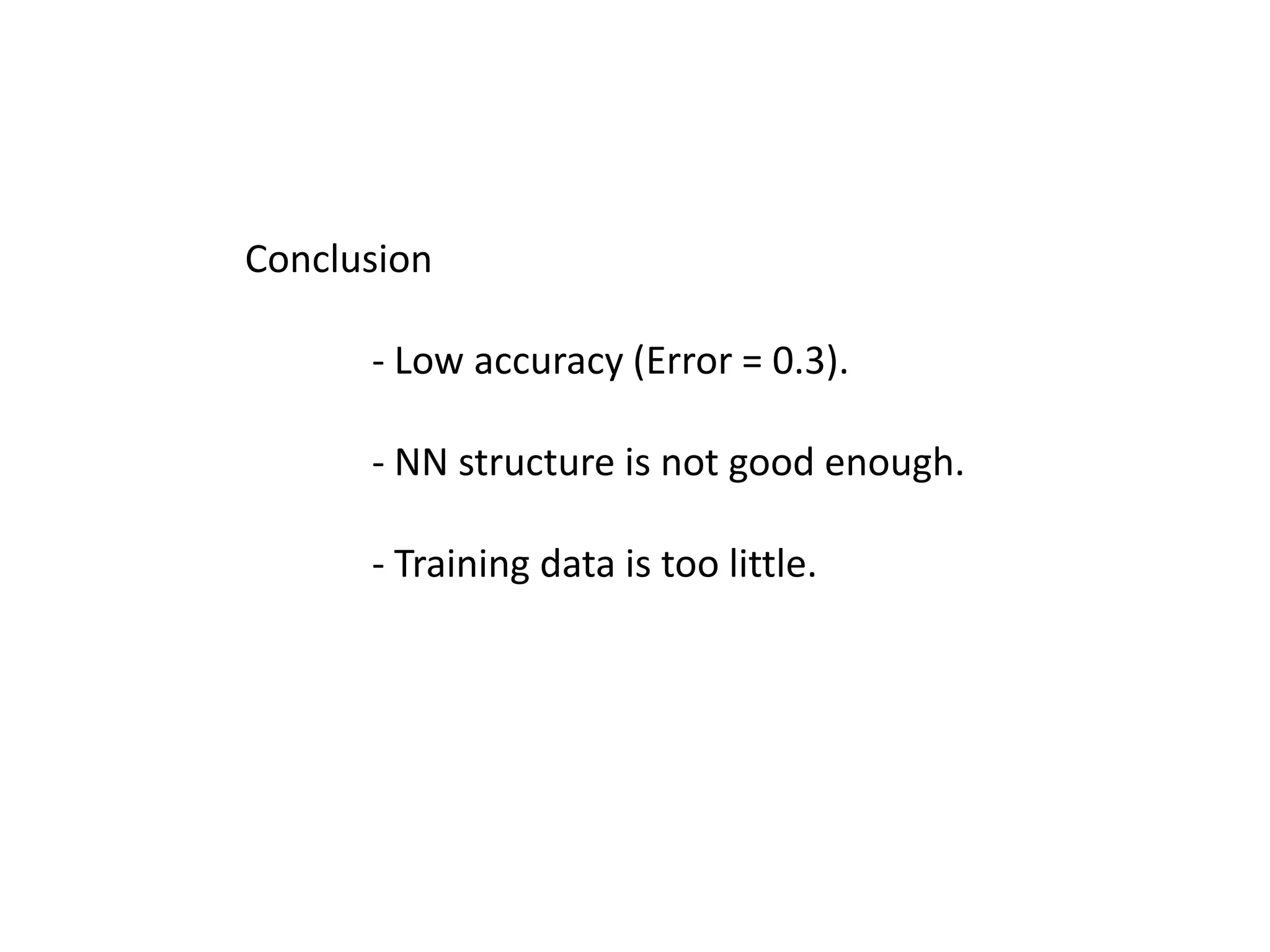
- Low accuracy (Error = 0.3).
- NN structure is not good enough.
- Training data is too little.
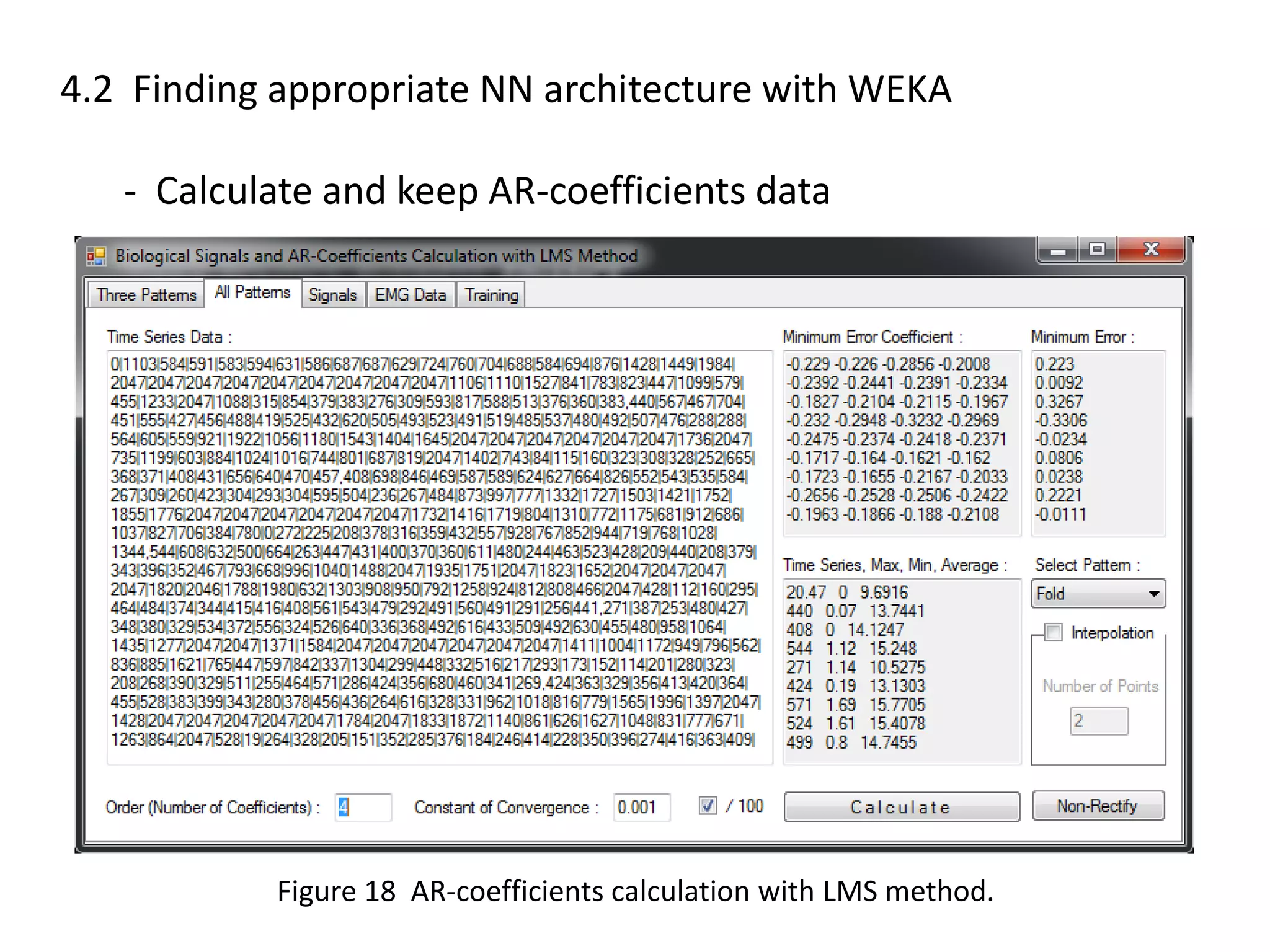
4.2 Finding appropriate NN architecture with WEKA

- Calculate and keep AR-coefficients data

Figure 18 AR-coefficients calculation with LMS method.
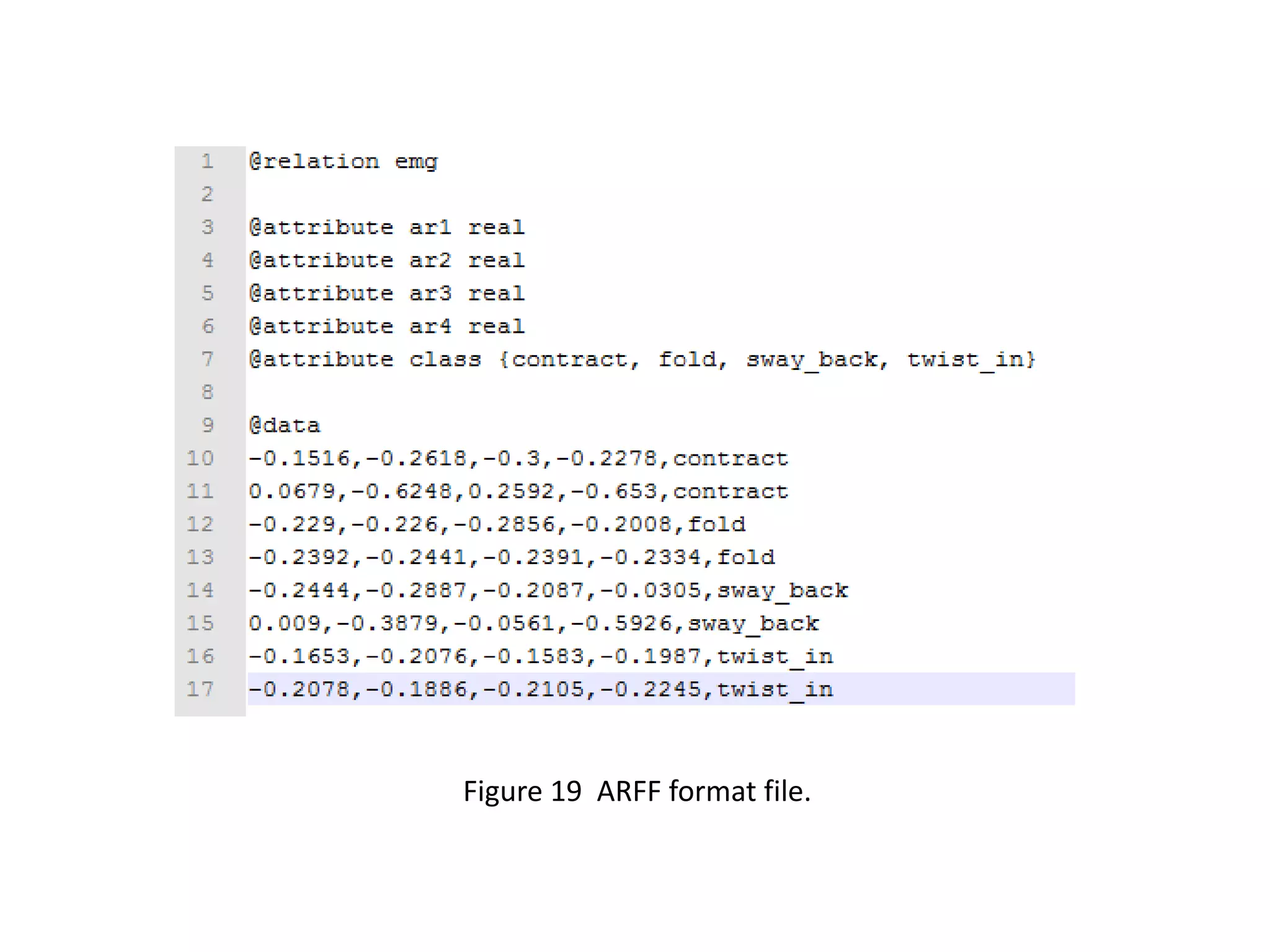
Figure 19 ARFF format file.
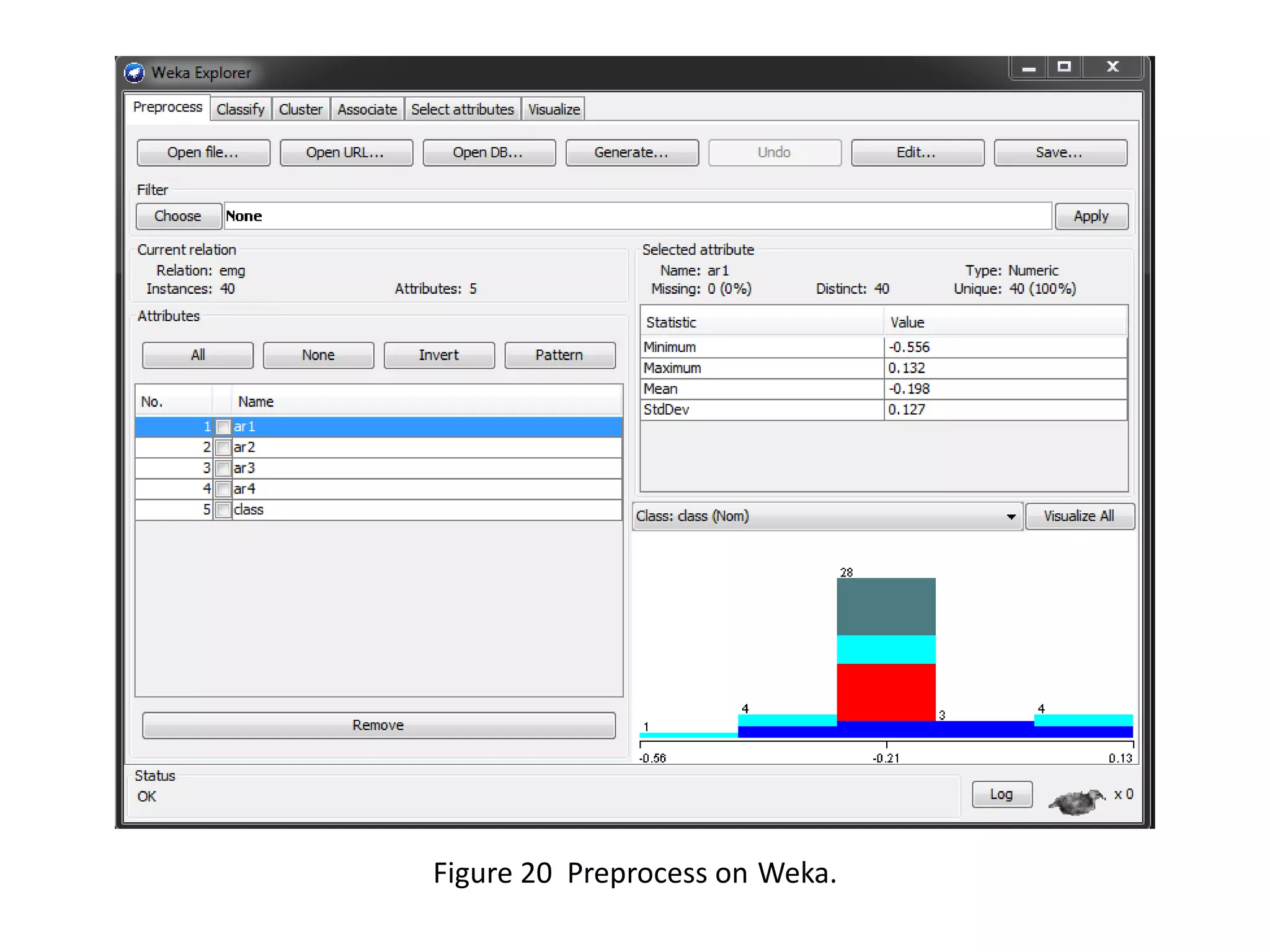
Figure 20 Preprocess on Weka.
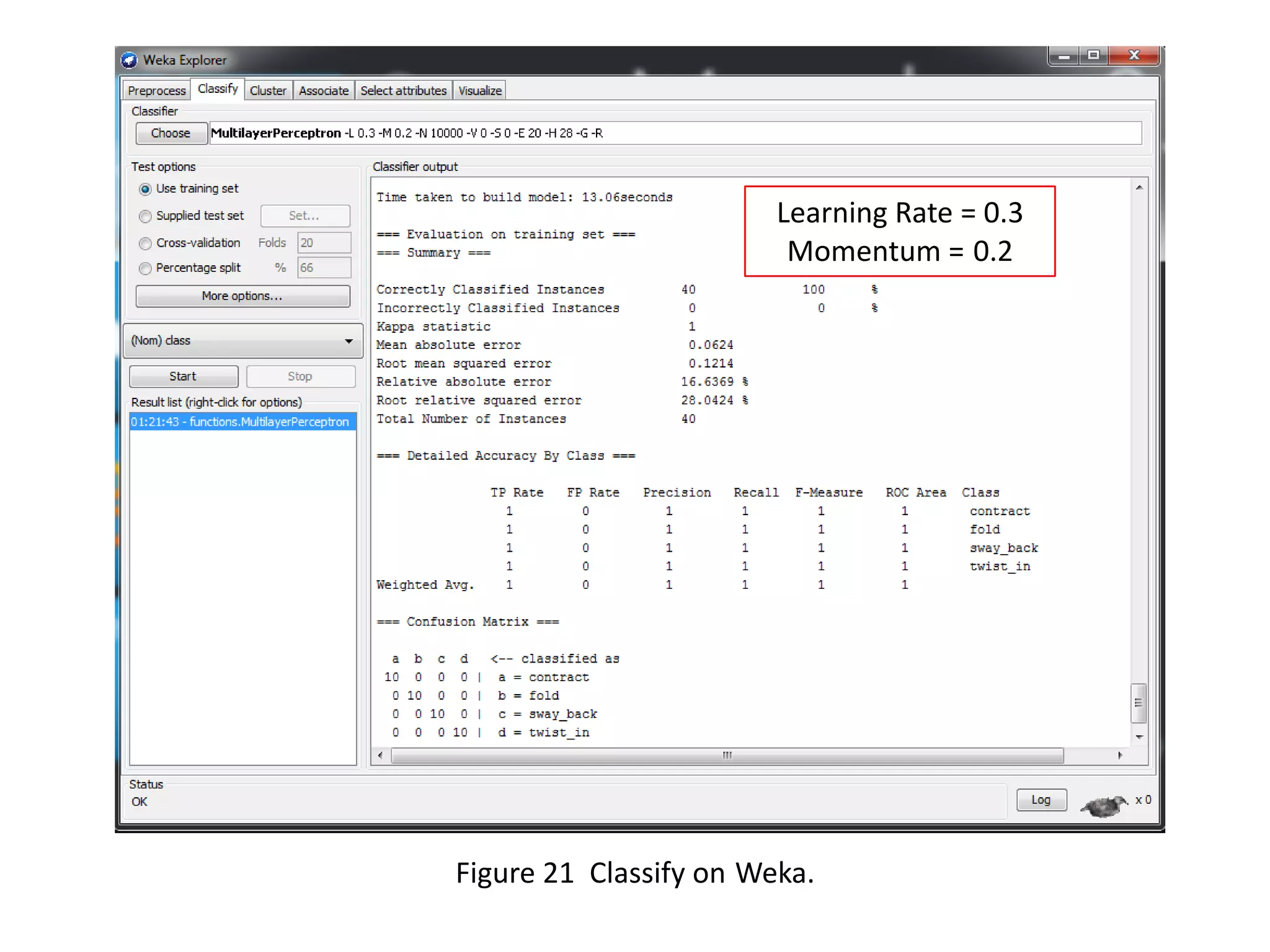
Learning Rate = 0.3
Momentum = 0.2

Figure 21 Classify on Weka.
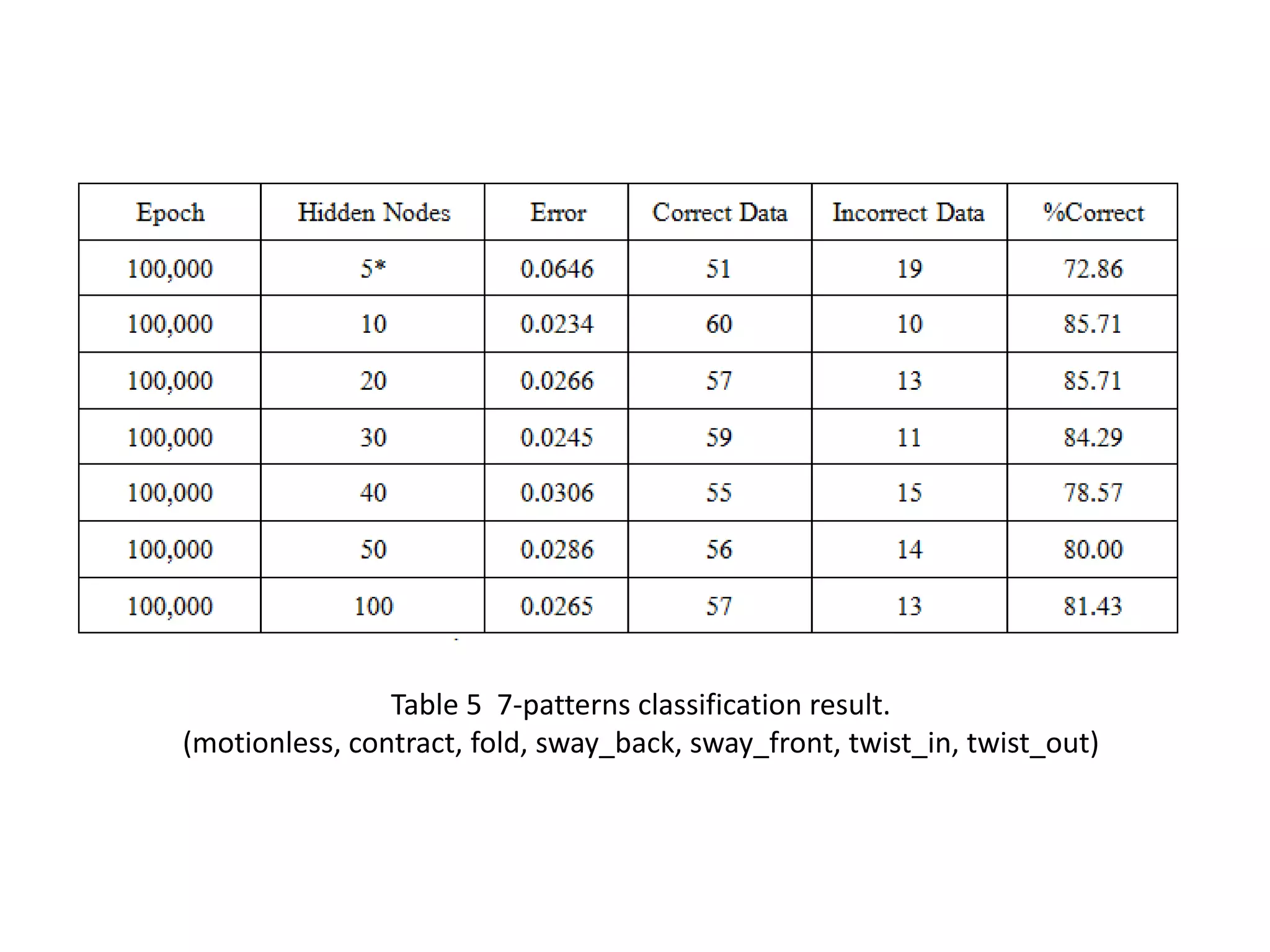
Table 5 7-patterns classification result.
(motionless, contract, fold, sway_back, sway_front, twist_in, twist_out)
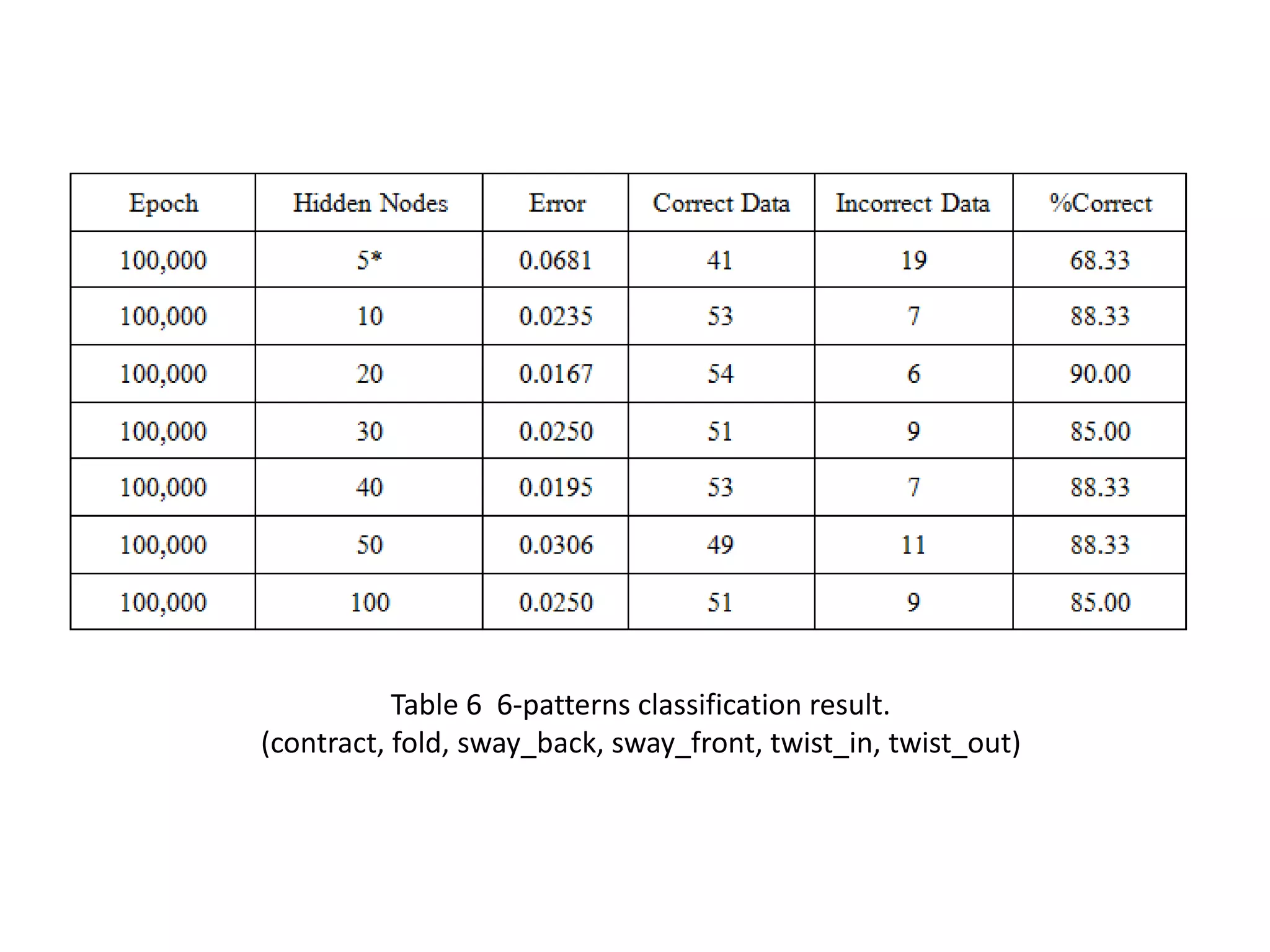
Table 6 6-patterns classification result.
(contract, fold, sway_back, sway_front, twist_in, twist_out)
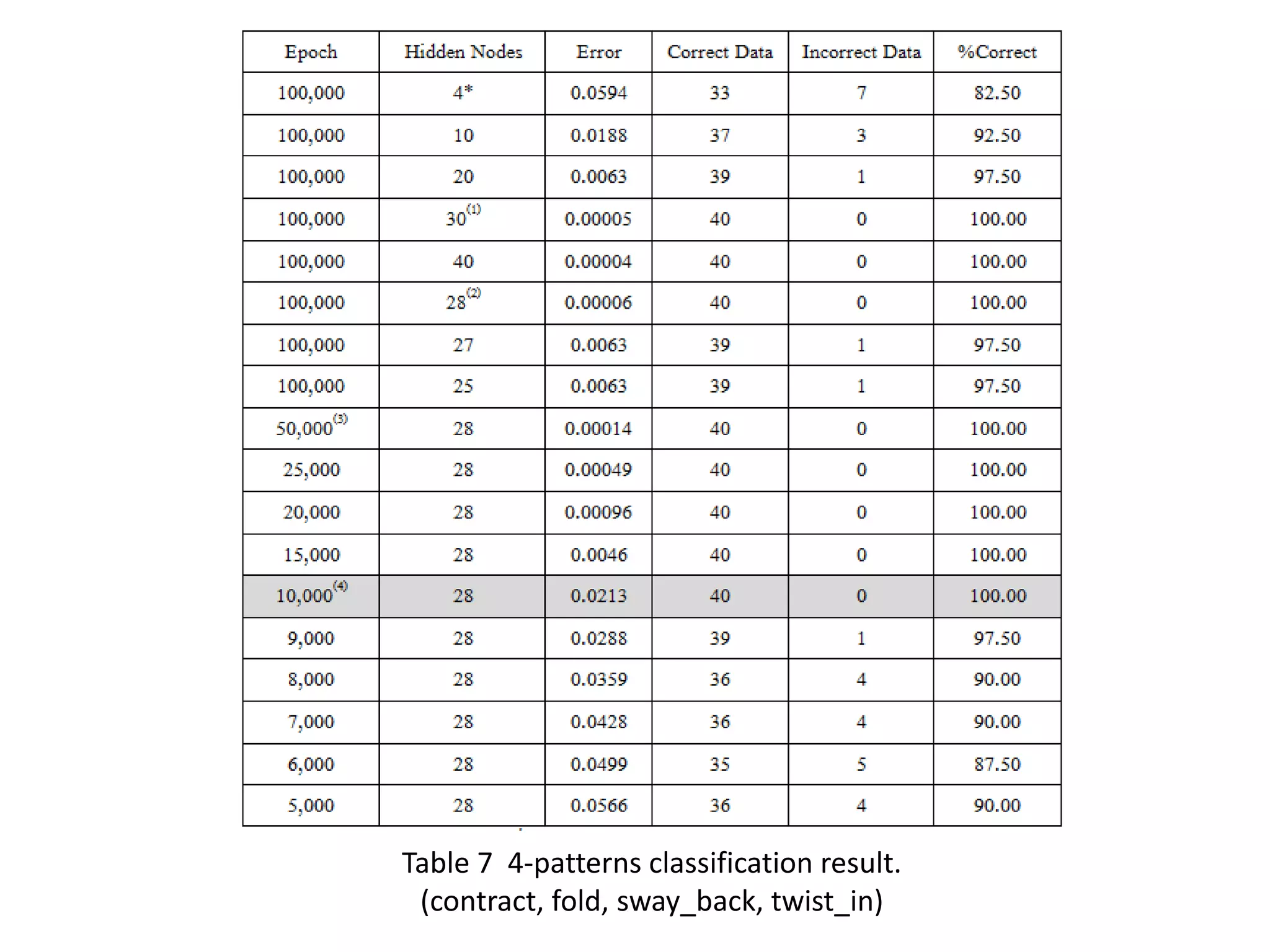
Table 7 4-patterns classification result.
(contract, fold, sway_back, twist_in)
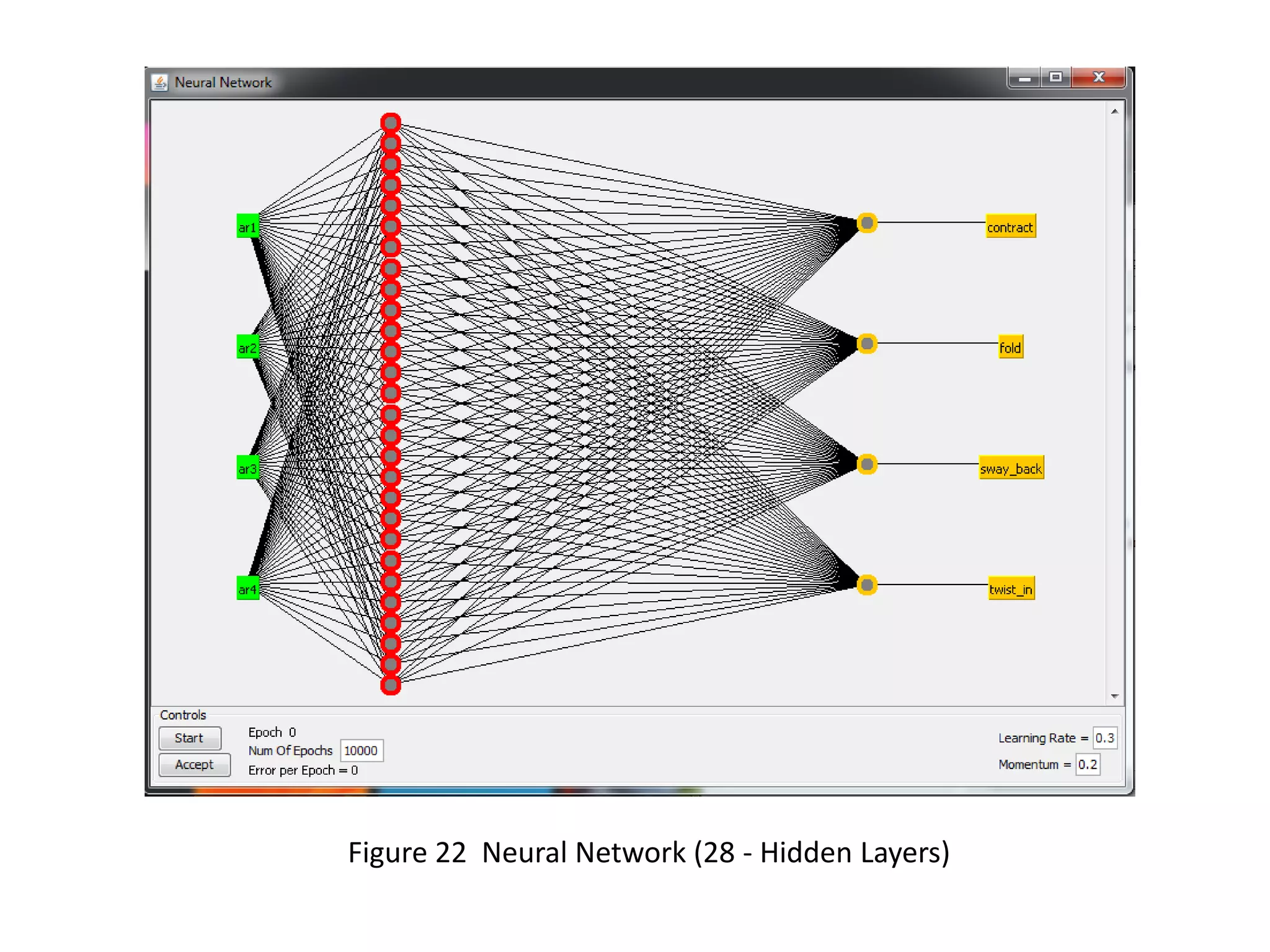
Figure 22 Neural Network (28 - Hidden Layers)
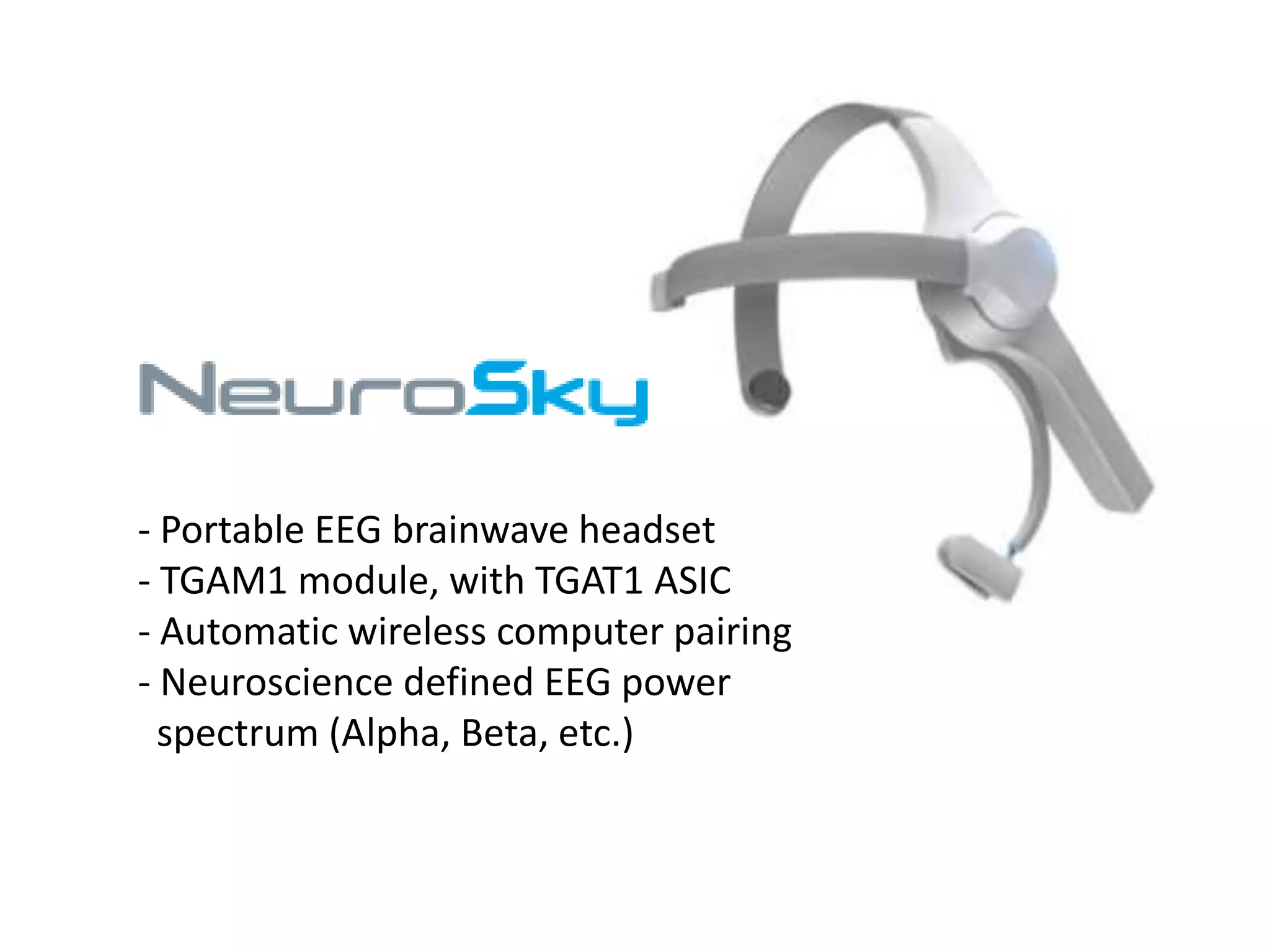
- Portable EEG brainwave headset
- TGAM1 module, with TGAT1 ASIC
- Automatic wireless computer pairing
- Neuroscience defined EEG power
spectrum (Alpha, Beta, etc.)
Reference
1. Lotte Fabien, L´ecuyer Anatole, Lamarche Fabrice and Arnaldi Bruno,
“Studying the Use of Fuzzy Inference Systems for Motor Imagery Classification.”,
IEEE Transactions on Neural Systems and Rehabilitation Engineering,
Vol.15, No.2, June 2007.
2. R.Gonzalez, "System of Communication and Control Based on the Thought", 2010.
3. Carmen Vidaurre, Tilmann H. Sander and Alois Schl, “BioSig: The Free and Open Source
Software Library for Biomedical Signal Processing”, Computational Intelligence and
Neuroscience, Volume 2011.
4. Angkoon Phinyomark, "Forearm EMG Pattern Recognition for Multifunction
Myoelectric Control System", 12th RGA-Ph.D. Congress.
5. Syed M. Saddique and Laraib Hassan Siddiqui. “EEG Based Brain Computer Interface”.
Journal of Software, vol.4, no.6, August 2009.
6. F.Lotte, M.Congedo, A.Lecuyer, F.Lamarche and B.Arnaldi. “A Review of Classification
Algorithms for EEG-based Brain-Computer Interfaces”. Journal of Neural Engineering
4, 2007.
7. Syed M. Saddique and Laraib Hassan Siddiqui. “EEG Based Brain Computer Interface”.
Journal of Software, vol.4, no.6, August 2009.
5. Cyberlink Brainfinger, http://www.brainfingers.com
6. Carlo J. De Luca,2002. ”Surface Electromyography: Detection and Recording”. by DelSys
Incorporated.
7. Hefftner G., Zucchini W., and Jaros G.,1988. "The Eletromyogram (EMG) as a Control
Signal for Functional Neuromuscular Stimulation. Part I: Autoregressive Modeling as a
Means of EMG Signature Discrimination". IEEE Transactions on Biomedical
Engeneering, 35(34), pp.230–237.

Wearable BioSignal Interface

  • 1.
    Wearable BioSignal Interface byThanakrit Lersmethasakul
  • 2.
    Content 1. Objective 2. LiteratureSurvey 3. System Scenario 4. Experiment
  • 3.
    1. Objective - Tostudy the behavior and properties of bio-electric signals. - Develop a system to identify and recognize patterns of signals on a portable computer. - Can be used to control the device.
  • 4.
    2. Literature Survey 1. 2. 3. 4. 5. 6. 7. Studyingthe Use of Fuzzy Inference Systems for Motor Imagery Classification. System of Communication and Control Based on the Thought. BioSig: The Free and Open Source Software Library for Biomedical Signal Processing. Forearm EMG Pattern Recognition for Multifunction Myoelectric Control System. EEG Based Brain Computer Interface. A Review of Classification Algorithms for EEG-based BrainComputer Interfaces. Artificial Speech Synthesizer Control by Brain-Computer Interface
  • 5.
    2.1 Studying theUse of Fuzzy Inference Systems for Motor Imagery Classification [1] - Brain-Computer Interfaces with CFIS. (Chiu's Fuzzy Inference System) - 3 steps processing (1) Clustering of training data - Subtractive clustering algorithm. (2) Generation of the fuzzy rules - Gaussian membership function. (3) Fuzzy rule optimization - Gradient Descent Formulas
  • 6.
    - Detection -Bipolar Electrodes - Feature Extraction - beta and alpha bands (C3β, C3α, C4β, C4α) - Hand-Made Fuzzy Rules (HMFR) - Classifier Comparison - Support Vector Machine (SVM), Multi-Layer Perceptron (MLP), Linear Classifier (LC) Table 1 Accuracy(%) and Mutual Information (MI) of Classifiers [1]
  • 7.
    Table 2 Fuzzyrules automatically extracted by CFIS for subject [1] Table 3 Hand-made fuzzy rules used to classify motor imagery data [1]
  • 8.
    2. System ofCommunication and Control Based on the Thought [2] - Accuracy in classify 70% - Autoregressive Adaptive Parameter Feature Extraction - Neural Network Classifier - Movement patterns of left and right hand
  • 9.
    Figure 1 Systemworkflow [2]
  • 10.
    3. BioSig: TheFree and Open Source Software Library for Biomedical Signal Processing [3] - Open source application for Biomedical Signal Processing. - Used in research of Neuroinformatics, Brain-Computer Interfaces, Neurophysiology, Psychology, Cardiovascular Systems and Sleep Research.
  • 11.
    - Data Acquisition,Artifact Processing, Quality Control, Feature Extraction, Classification, Modeling and Data Visualization. - Electroencephalogram (EEG), Electrocardiogram (ECG), Electrooculogram (EOG), Electromyogram (EMG).
  • 12.
    Figure 2 Architectureof the BioSig toolbox and its elements [3]
  • 13.
    Figure 4 Elementsof a brain computer interface [3]
  • 14.
    4. Forearm EMGPattern Recognition for Multifunction Myoelectric Control System [4] Figure 5 Multifunction myoelectric control system [4]
  • 15.
    Figure 6 EMGsignals from muscle movement, posture and hand gestures. [4]
  • 16.
  • 17.
    5. EEG BasedBrain Computer Interface [5] - Test with 1 hidden layer-50 neurons, 1 hidden layer-100 neurons, 2 hidden layers-50 neurons and 2 hidden layers-100 neurons Neural Network. - Left movement with eyes closed, Right movement with eyes closed and Left movement with eyes open are example patterns
  • 18.
    Figure 8 FunctionalModel of a BCI System [5]
  • 19.
    Figure 9 NihonKohden Neurofax-21 channel Electroencephalograph [5]
  • 20.
    Figure 10 Planningfor Left movement with eyes closed [5]
  • 21.
    Conclusion - Movement can easilybe identified and observed by EEG. - Analytical thought process is still almost impossible to classify, since emotions can’t be predicted via scalp EEG. - The more the number of neurons or layers the better the classification is but at cost of memory and processing power.
  • 22.
    6. A Reviewof Classification Algorithms for EEG-based Brain-Computer Interfaces [6] Table 4 Some of classifier properties [6]
  • 23.
    7. Artificial SpeechSynthesizer Control by Brain-Computer Interface[7] - Invasive EEG with Neurotrophic Electrode. - Gyrus Precentral (a prominent structure in the parietal lobe of the human brain). - Kalman filter-based decoder in Speech Synthesizer
  • 24.
    Figure 11 Schematicof the brain-machine interface for real-time synthetic speech production [7]
  • 25.
  • 26.
    4. Experiment 4.1 EMGSignal Classification with Autoregresive Model and Backpropagation Neural Network. (1) Detection Figure 12 Cyberlink Brainfinger [8]
  • 27.
    Figure 13 Middleof bicep muscle [9]
  • 28.
    Figure 14 EMGsignal detection by Cyberlink Brainfinger.
  • 29.
  • 30.
  • 31.
    (2) Feature Extraction -AR – Coefficients with Least Mean Square - Convergence constant (µ) = 0.001 [10] - Autoregressive order = 4 Figure 15 Autoregressive process
  • 32.
    (3) Classification - BackpropagationNeural Network - Learning rate = 0.5 - Error = 0.3 Figure 16 Backpropagation Neural Network process
  • 33.
  • 34.
    Conclusion - Low accuracy(Error = 0.3). - NN structure is not good enough. - Training data is too little.
  • 35.
    4.2 Finding appropriateNN architecture with WEKA - Calculate and keep AR-coefficients data Figure 18 AR-coefficients calculation with LMS method.
  • 36.
    Figure 19 ARFFformat file.
  • 37.
  • 38.
    Learning Rate =0.3 Momentum = 0.2 Figure 21 Classify on Weka.
  • 39.
    Table 5 7-patternsclassification result. (motionless, contract, fold, sway_back, sway_front, twist_in, twist_out)
  • 40.
    Table 6 6-patternsclassification result. (contract, fold, sway_back, sway_front, twist_in, twist_out)
  • 41.
    Table 7 4-patternsclassification result. (contract, fold, sway_back, twist_in)
  • 42.
    Figure 22 NeuralNetwork (28 - Hidden Layers)
  • 43.
    - Portable EEGbrainwave headset - TGAM1 module, with TGAT1 ASIC - Automatic wireless computer pairing - Neuroscience defined EEG power spectrum (Alpha, Beta, etc.)
  • 44.
    Reference 1. Lotte Fabien,L´ecuyer Anatole, Lamarche Fabrice and Arnaldi Bruno, “Studying the Use of Fuzzy Inference Systems for Motor Imagery Classification.”, IEEE Transactions on Neural Systems and Rehabilitation Engineering, Vol.15, No.2, June 2007. 2. R.Gonzalez, "System of Communication and Control Based on the Thought", 2010. 3. Carmen Vidaurre, Tilmann H. Sander and Alois Schl, “BioSig: The Free and Open Source Software Library for Biomedical Signal Processing”, Computational Intelligence and Neuroscience, Volume 2011. 4. Angkoon Phinyomark, "Forearm EMG Pattern Recognition for Multifunction Myoelectric Control System", 12th RGA-Ph.D. Congress. 5. Syed M. Saddique and Laraib Hassan Siddiqui. “EEG Based Brain Computer Interface”. Journal of Software, vol.4, no.6, August 2009. 6. F.Lotte, M.Congedo, A.Lecuyer, F.Lamarche and B.Arnaldi. “A Review of Classification Algorithms for EEG-based Brain-Computer Interfaces”. Journal of Neural Engineering 4, 2007. 7. Syed M. Saddique and Laraib Hassan Siddiqui. “EEG Based Brain Computer Interface”. Journal of Software, vol.4, no.6, August 2009.
  • 45.
    5. Cyberlink Brainfinger,http://www.brainfingers.com 6. Carlo J. De Luca,2002. ”Surface Electromyography: Detection and Recording”. by DelSys Incorporated. 7. Hefftner G., Zucchini W., and Jaros G.,1988. "The Eletromyogram (EMG) as a Control Signal for Functional Neuromuscular Stimulation. Part I: Autoregressive Modeling as a Means of EMG Signature Discrimination". IEEE Transactions on Biomedical Engeneering, 35(34), pp.230–237.