Downloaded 1,272 times


This document discusses wavelength division multiplexing (WDM) and dense wavelength division multiplexing (DWDM). It describes how WDM uses different wavelengths to transmit multiple signals over the same fiber, with wider channel spacing. DWDM is then introduced as a way to increase capacity by reducing channel spacing. The key advantages and disadvantages of both WDM and DWDM are outlined. Standards for DWDM channel plans are also mentioned.
Introduction of Aakash Singh, M.Sc IT-9013.
Details Wavelength Division Multiplexing (WDM) and Dense Wavelength Division Multiplexing (DWDM), including their advantages and disadvantages.
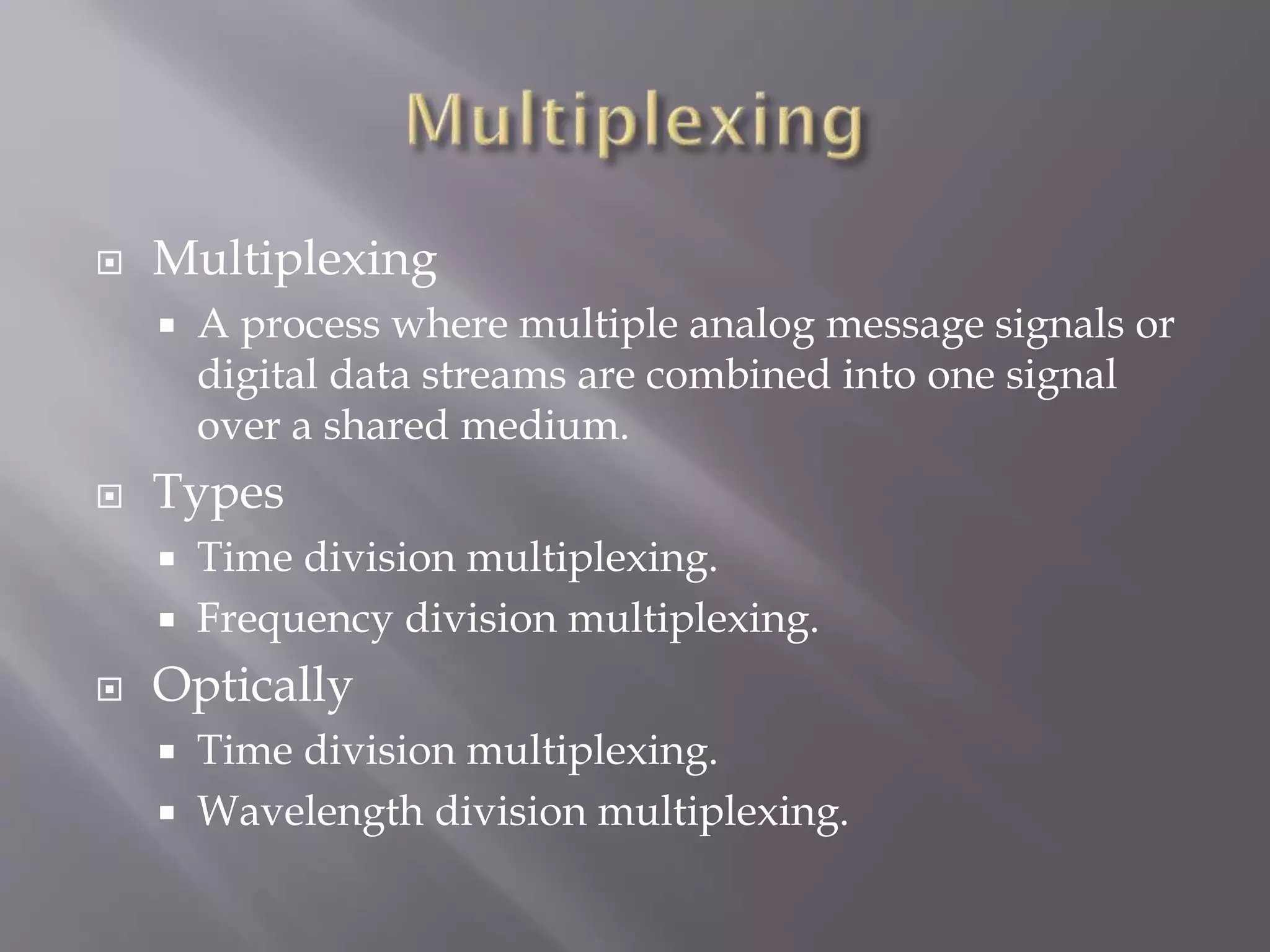
Explains multiplexing as a process to combine signals, differentiating between Time Division, Frequency Division, and Wavelength Division multiplexing.
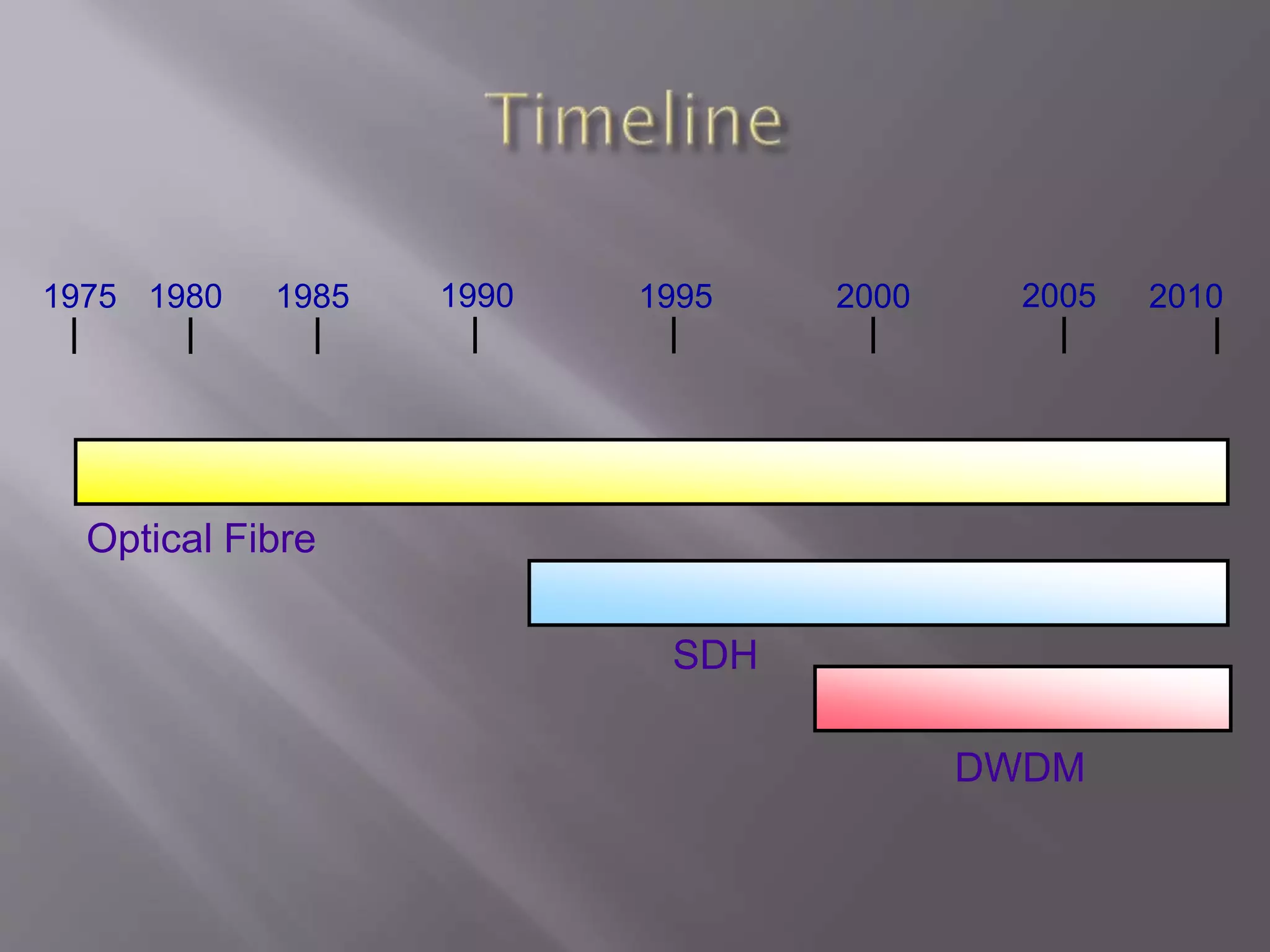
Chronological timeline highlighting the evolution of optical fiber and relevant technologies from 1975 to 2010.
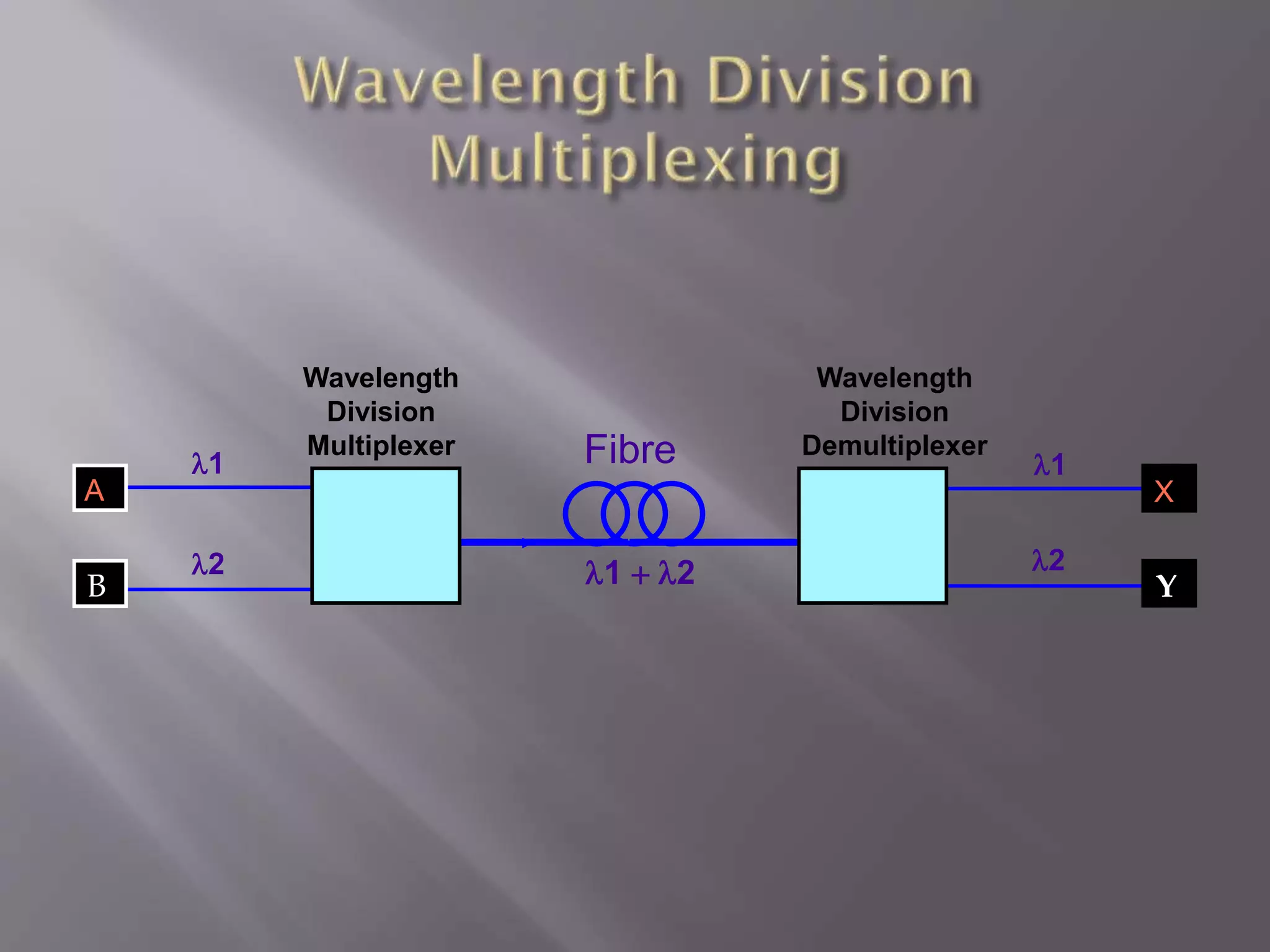
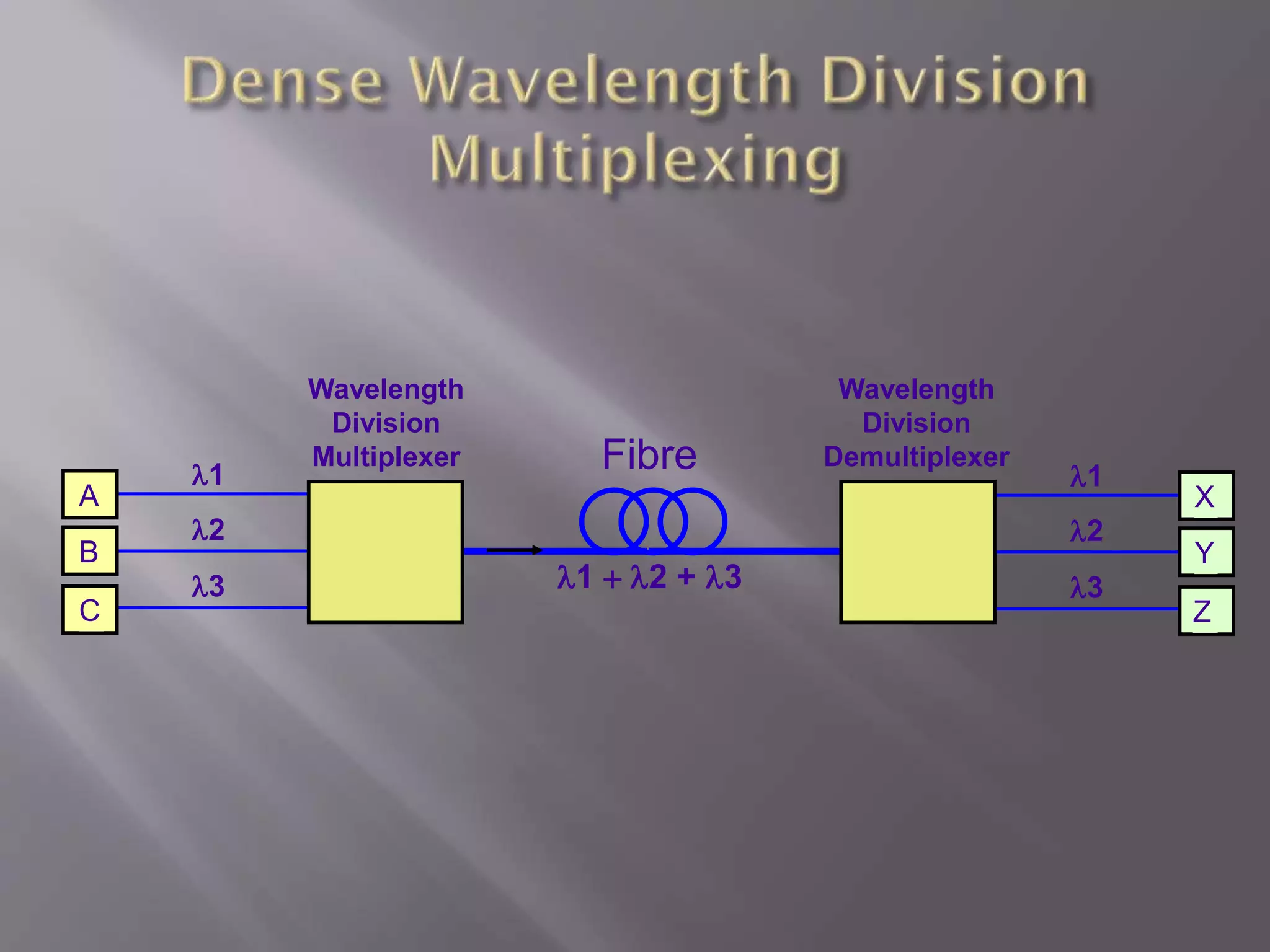
Illustration of Wavelength Division Multiplexer and Demultiplexer functioning.
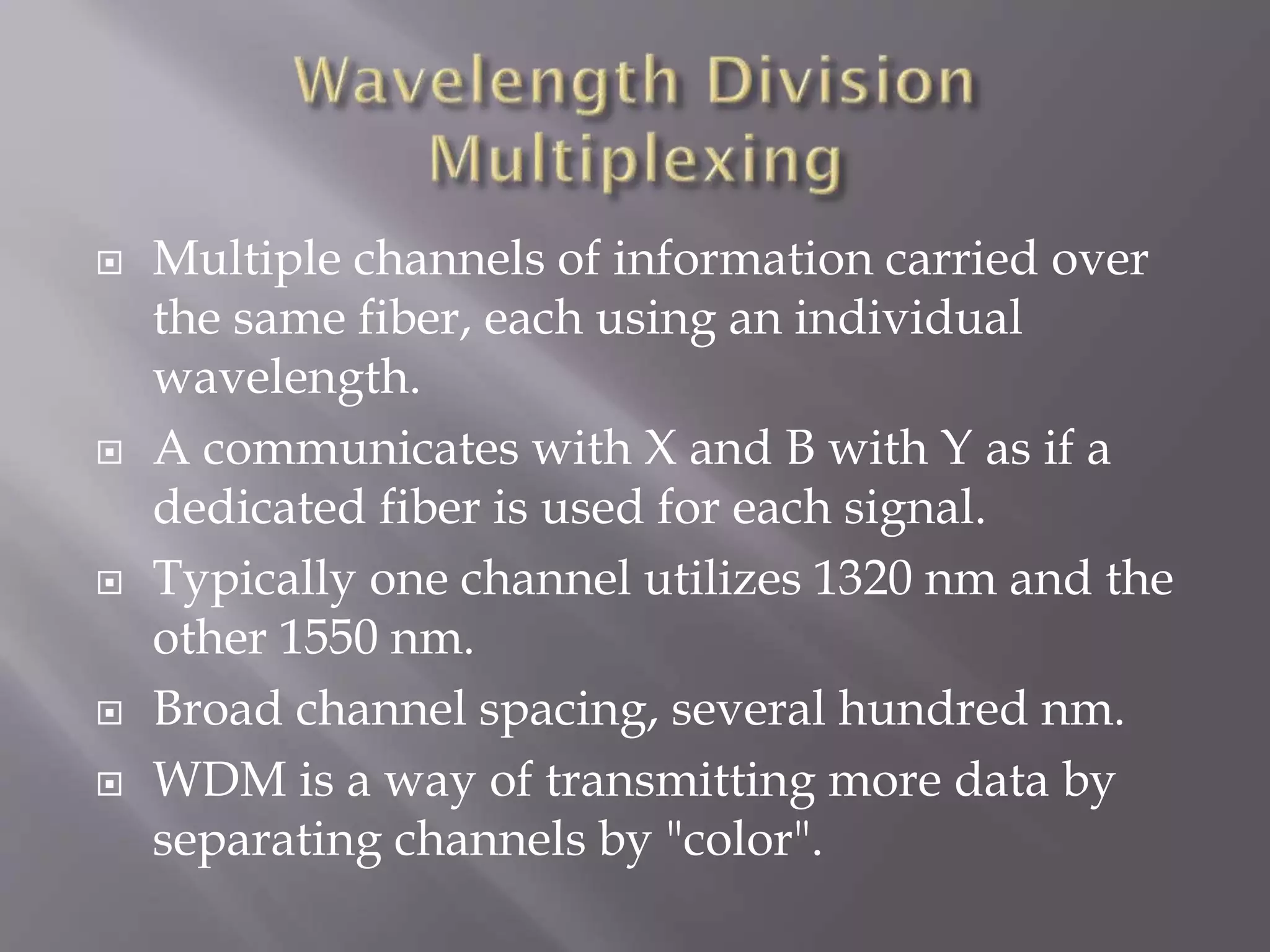
Explanation of how multiple information channels use individual wavelengths over a single fiber, detailing specifications like channel spacing.
Advantages: Reduced number of physical cables needed for data transmission, allowing many channels over one fiber.
Disadvantages: Complexity and increased costs of wide-band transmitters and receivers.
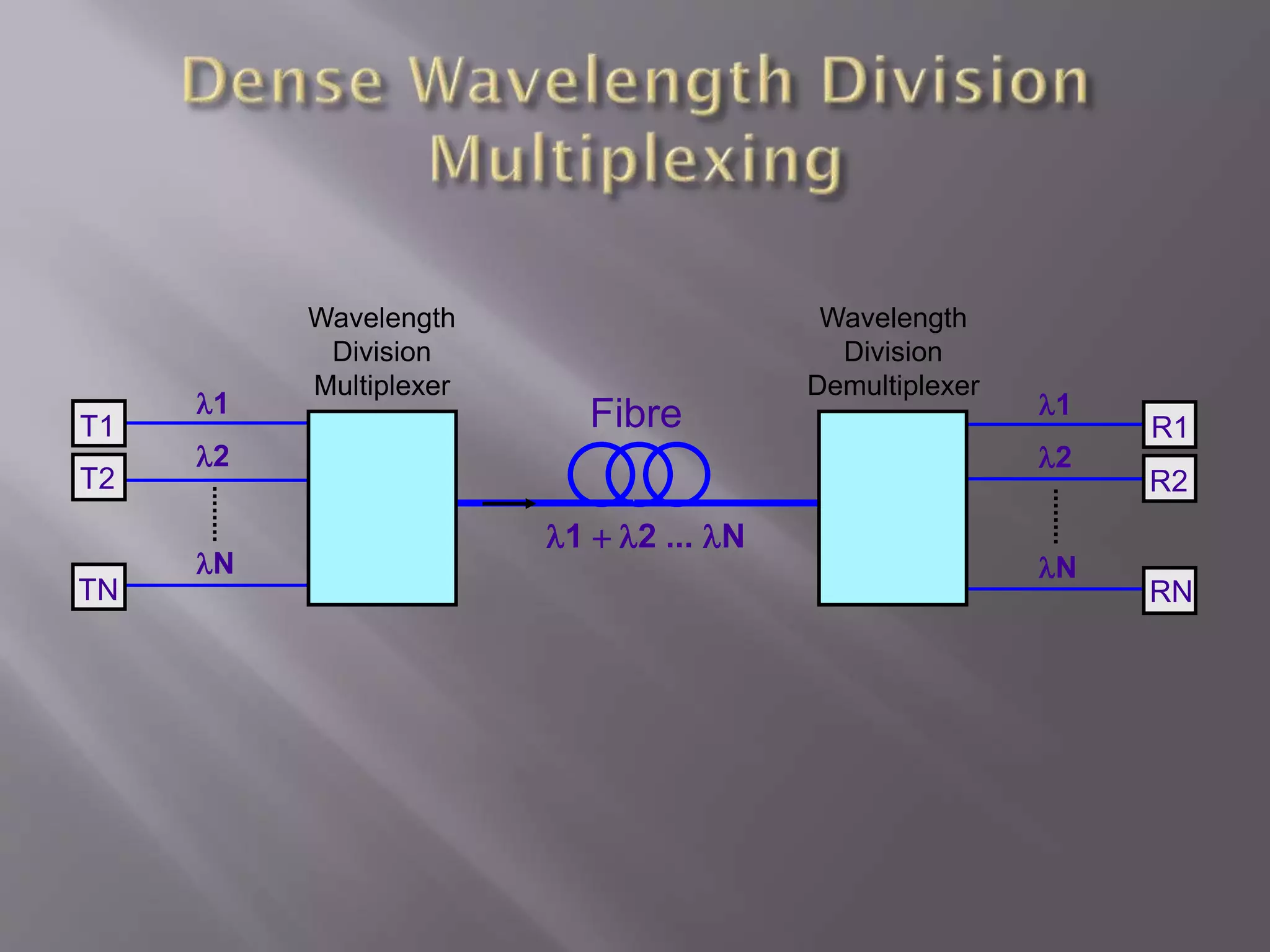
Further explanation of Wavelength Division Mux/Demux with multiple channels, reinforcing the concept of shared fiber.
Definition of Dense WDM, advantages such as reduced channel spacing and high capacity capabilities.
Explanation and illustration of multi-channel communication over fiber, highlighting differences with regular WDM.
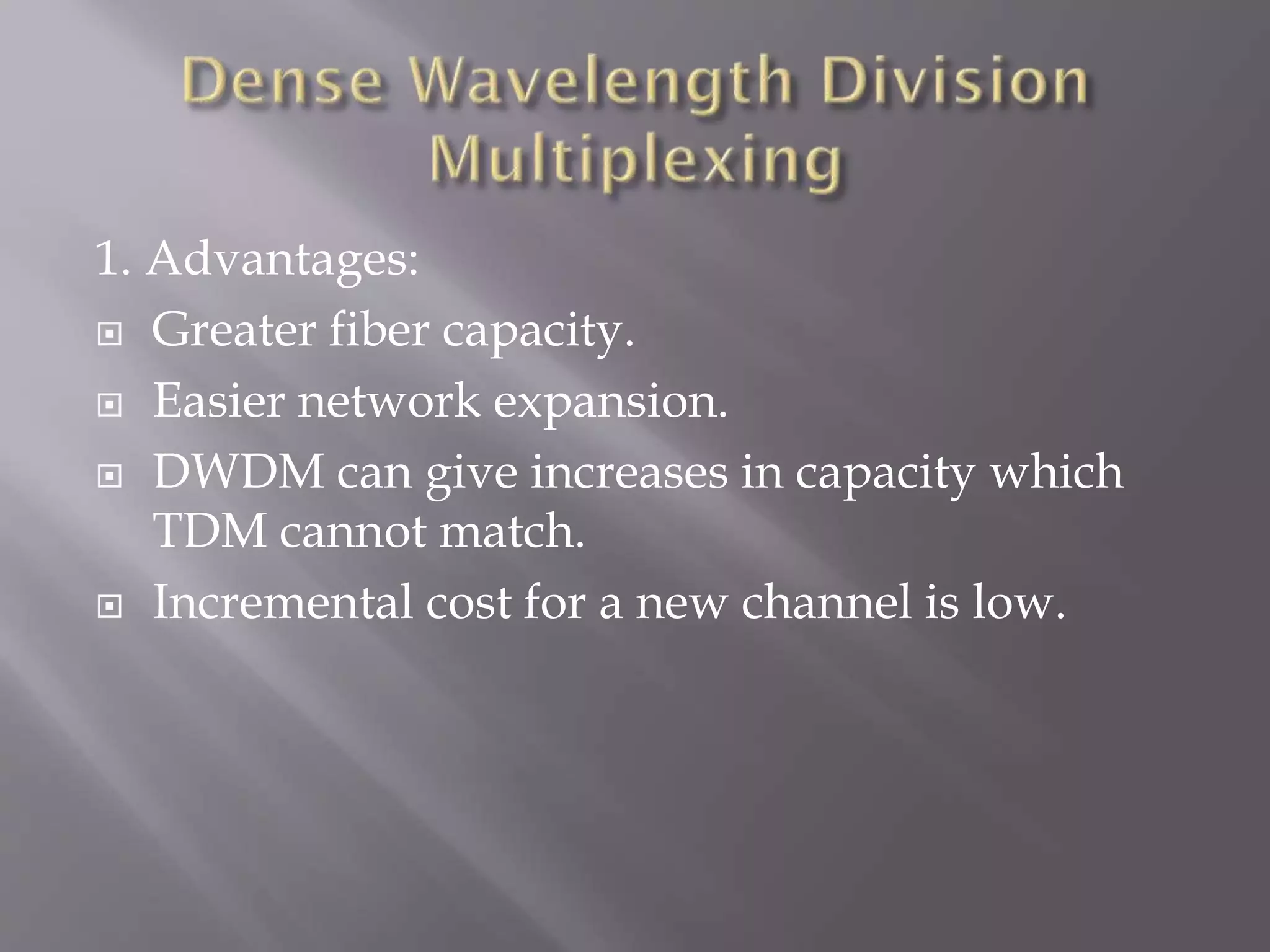
Advantages: Greater capacities, ease of network expansion, and low costs per additional channel.
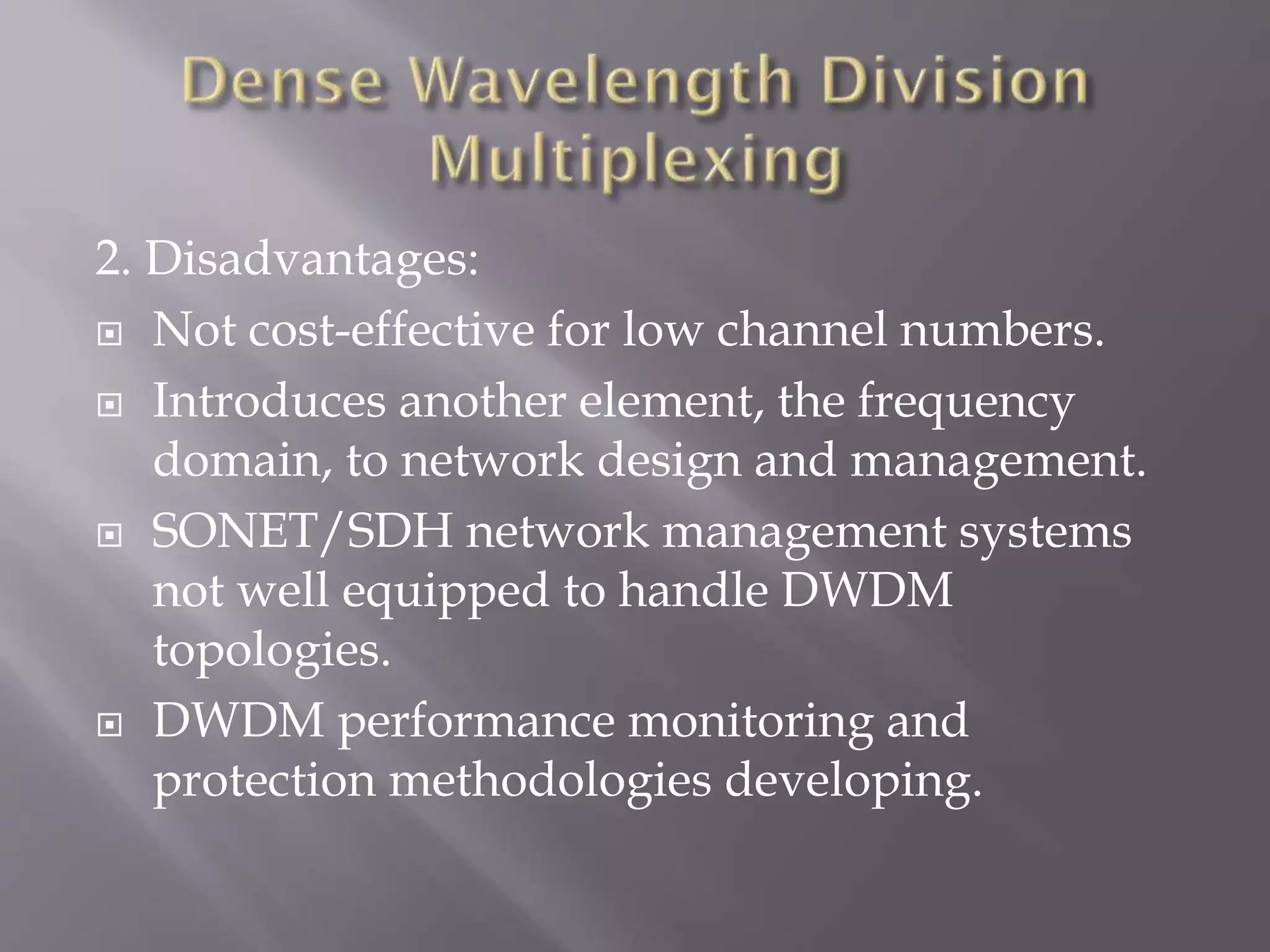
Disadvantages: Cost inefficiency for fewer channels and complexities introduced to network management.
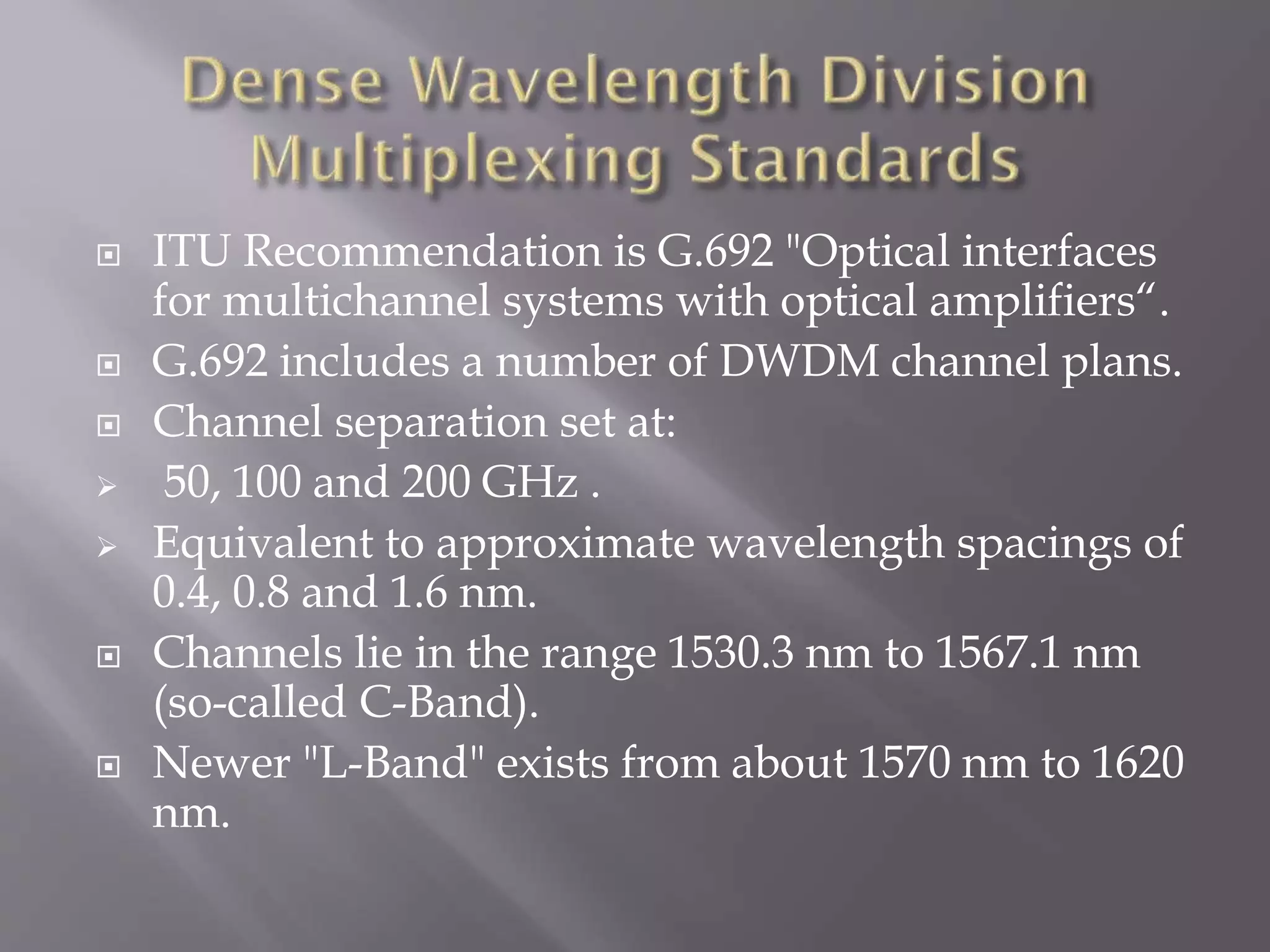
ITU Recommendation G.692 details DWDM channel standards, with specified channel separations and wavelength ranges.
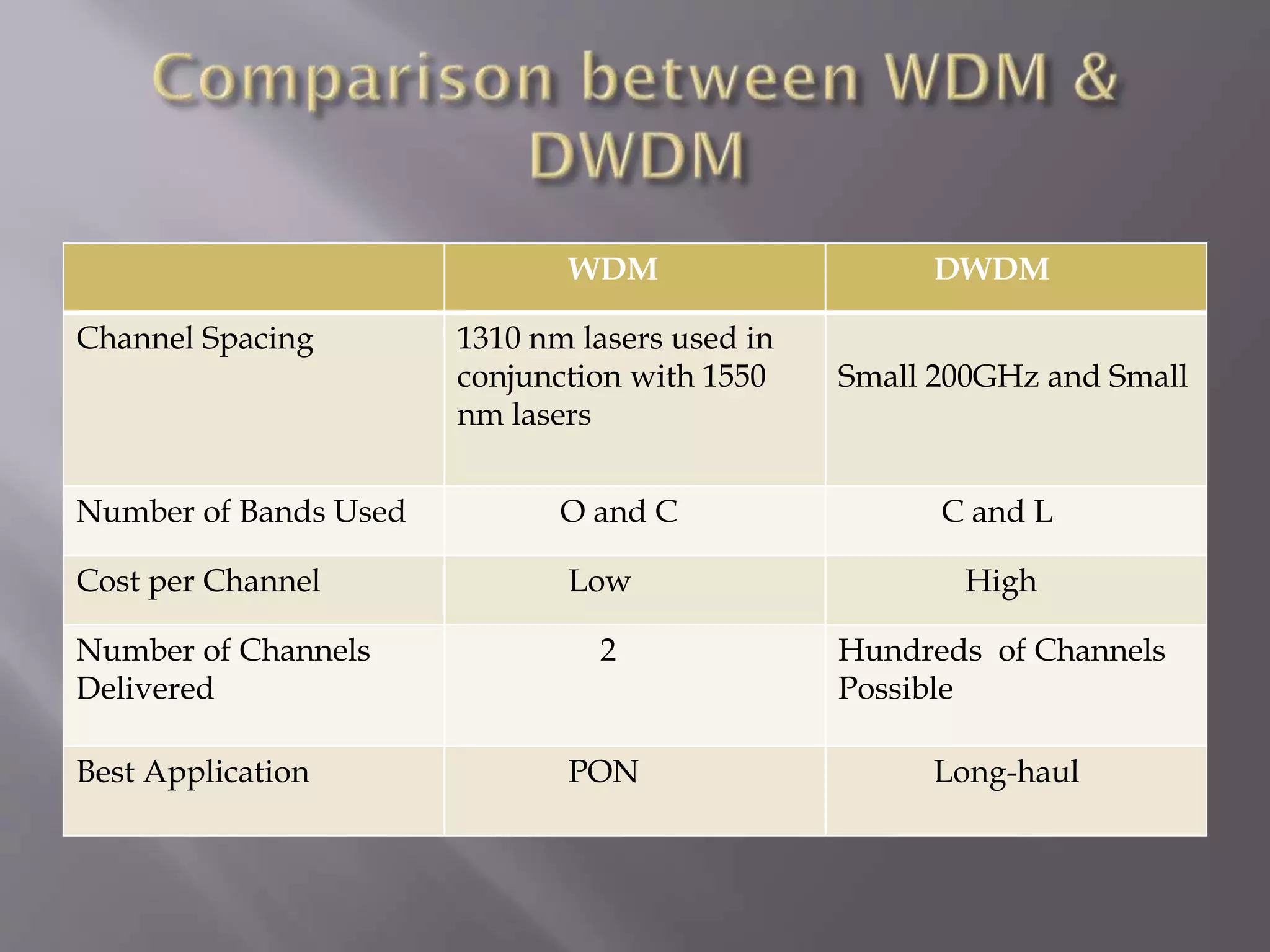
Comparison between WDM and DWDM in terms of channel spacing, costs, and practical applications.
Thank you slide, wrapping up the presentation.


