Waves, Sound, and Light
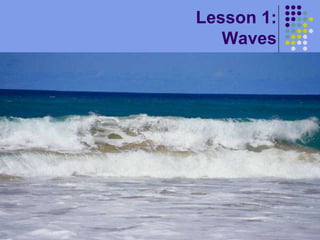
Lesson 1:Waves
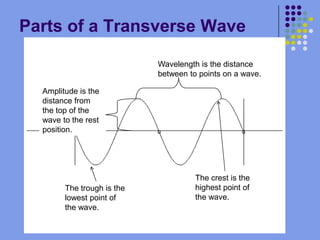
Parts of a Transverse WaveWavelength is the distance between to points on a wave.Amplitude is the distance from the top of the wave to the rest position.The crest is the highest point of the wave.The trough is the lowest point of the wave.
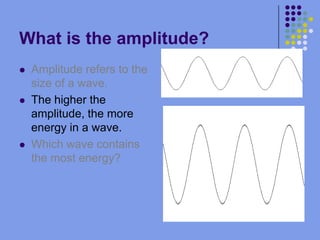
What is the amplitude?Amplitude refers to the size of a wave.The higher the amplitude, the more energy in a wave.Which wave contains the most energy?
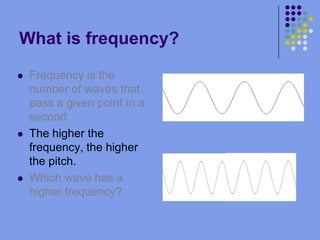
What is frequency?Frequency is the number of waves that pass a given point in a second.The higher the frequency, the higher the pitch.Which wave has a higher frequency?
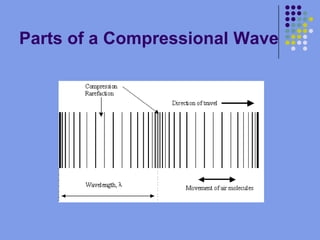
Parts of a Compressional Wave
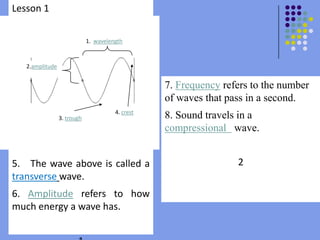
Lesson 15.   The wave above is called a transversewave.6. Amplituderefers to how much energy a wave has.11.  wavelength2.amplitude7. Frequency refers to the number of waves that pass in a second.8. Sound travels in a  compressional wave.24. crest3. trough
Lesson 2Sound
Sources of SoundWhen a person plucks a guitar string or bangs a drum, it will vibrate.A quick back-and-forth movement is a vibration.The vibrations that cause sounds are called sound waves.What types of mediums (solids, liquids, or gases) can sound waves travel through?Can sound travel in outer space?
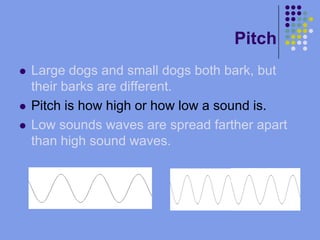
PitchLarge dogs and small dogs both bark, but their barks are different.Pitch is how high or how low a sound is.Low sounds waves are spread farther apart than high sound waves.
IntensityIf you drop a small paperback book versus a large dictionary, how would the sounds be different?They would differ in intensity, or the measure of how loud or soft something is.Why do you think the sound waves produced by slamming a door have more energy than the ones produced by shutting it gently?
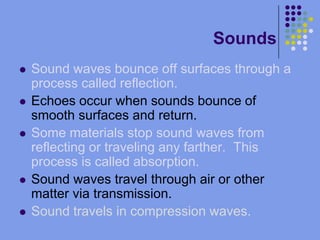
SoundsSound waves bounce off surfaces through a process called reflection.Echoes occur when sounds bounce of smooth surfaces and return.Some materials stop sound waves from reflecting or traveling any farther.  This process is called absorption.Sound waves travel through air or other matter via transmission.Sound travels in compression waves.
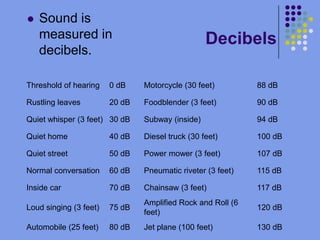
DecibelsSound is measured in decibels.
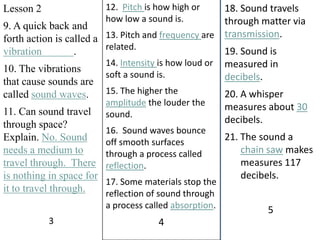
12.  Pitch is how high or how low a sound is.13. Pitch and frequency are related.14. Intensity is how loud or soft a sound is. 15. The higher the amplitude the louder the sound.16.  Sound waves bounce off smooth surfaces through a process called reflection.17. Some materials stop the reflection of sound through a process called absorption.4Lesson 29. A quick back and forth action is called a vibration            .10. The vibrations that cause sounds are called sound waves.11. Can sound travel through space?  Explain. No. Sound needs a medium to travel through.  There is nothing in space for it to travel through.318. Sound travels through matter via transmission.19. Sound is measured in decibels.20. A whisper measures about 30 decibels.21. The sound a chain saw makes measures 117 decibels.5
Lesson 3Light
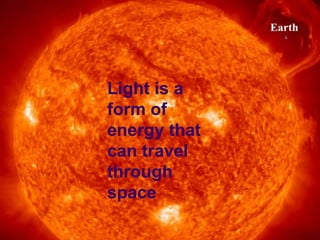
Light is a form of energy that can travel through space
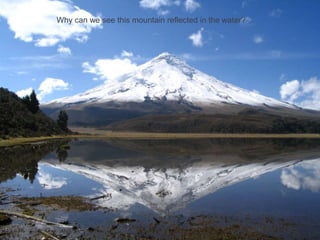
Why can we see this mountain reflected in the water?
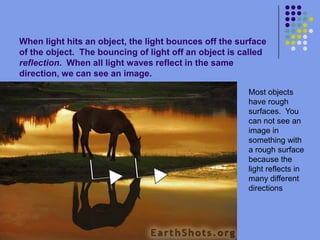
When light hits an object, the light bounces off the surface of the object.  The bouncing of light off an object is called reflection.  When all light waves reflect in the same direction, we can see an image.Most objects have rough surfaces.  You can not see an image in something with a rough surface because the light reflects in many different directions
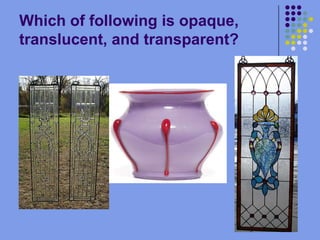
AbsorptionNot all light passes through glass.  Transparent materials let most of the light pass through themTranslucent materials let some of the light pass through them.Opaque materials do not allow light to pass through.
Which of following is opaque, translucent, and transparent?
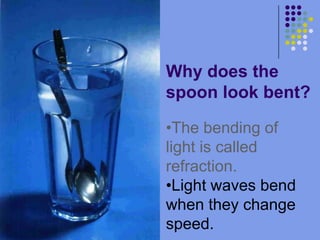
Why does the spoon look bent?The bending of light is called refraction.
Light waves bend when they change speed.Lesson 322. Light is a form of energy that travels through space.23. The bouncing of light off an object is called reflection.24. Transparent materials let most of the light pass through.25. Translucent materials let some light pass through.26. Opaque materials do not allow light to pass through.27. The bending of light as it changes speed is called refraction.6.
Lesson 4Transferring Heat
Temperature
TemperatureTemperature is the measure of how hot or cold something is.The hotter something is, the more quickly the particles move.The colder something is, the slower particles move.
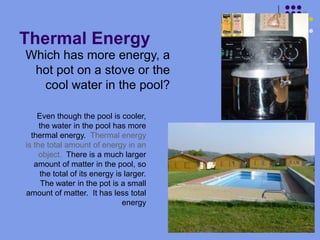
Thermal EnergyWhich has more energy, a hot pot on a stove or the cool water in the pool?Even though the pool is cooler, the water in the pool has more thermal energy.  Thermal energy is the total amount of energy in an object.  There is a much larger amount of matter in the pool, so the total of its energy is larger.  The water in the pot is a small amount of matter.  It has less total energy
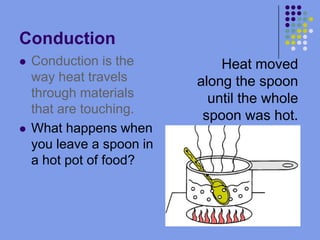
ConductionConduction is the way heat travels through materials that are touching.What happens when you leave a spoon in a hot pot of food?Heat moved along the spoon until the whole spoon was hot.
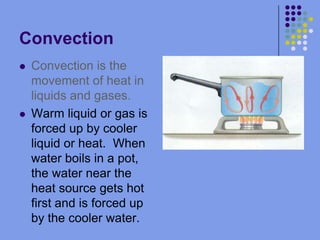
ConvectionConvection is the movement of heat in liquids and gases.Warm liquid or gas is forced up by cooler liquid or heat.  When water boils in a pot, the water near the heat source gets hot first and is forced up by the cooler water.
RadiationRadiation is the movement of heat without matter.Heat travels from the sun to Earth’s surface.  Almost all of that distance is through space.Radiation can take place when matter is present, too.  You don’t have to touch a hot stove to know its hot.
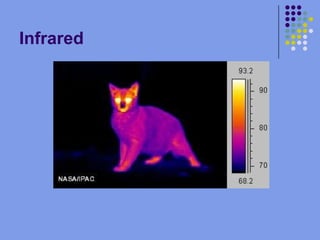
Infrared
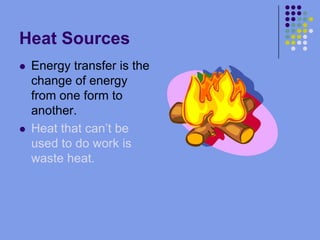
Heat SourcesEnergy transfer is the change of energy from one form to another.Heat that can’t be used to do work is waste heat.
Lesson 4Temperature is the measure of how hot or cold something is. Conductionis  the way heat travels through materials that are touching.Radiation is the movement of heat without matter.Energy transfer is the change of energy from one from to another.Heat that can’t be used to do work is waste heat.

Waves, Light, Sound, Heat

  • 1.
  • 2.
  • 3.
    Parts of aTransverse WaveWavelength is the distance between to points on a wave.Amplitude is the distance from the top of the wave to the rest position.The crest is the highest point of the wave.The trough is the lowest point of the wave.
  • 4.
    What is theamplitude?Amplitude refers to the size of a wave.The higher the amplitude, the more energy in a wave.Which wave contains the most energy?
  • 5.
    What is frequency?Frequencyis the number of waves that pass a given point in a second.The higher the frequency, the higher the pitch.Which wave has a higher frequency?
  • 6.
    Parts of aCompressional Wave
  • 7.
    Lesson 15. The wave above is called a transversewave.6. Amplituderefers to how much energy a wave has.11. wavelength2.amplitude7. Frequency refers to the number of waves that pass in a second.8. Sound travels in a compressional wave.24. crest3. trough
  • 8.
  • 9.
    Sources of SoundWhena person plucks a guitar string or bangs a drum, it will vibrate.A quick back-and-forth movement is a vibration.The vibrations that cause sounds are called sound waves.What types of mediums (solids, liquids, or gases) can sound waves travel through?Can sound travel in outer space?
  • 10.
    PitchLarge dogs andsmall dogs both bark, but their barks are different.Pitch is how high or how low a sound is.Low sounds waves are spread farther apart than high sound waves.
  • 11.
    IntensityIf you dropa small paperback book versus a large dictionary, how would the sounds be different?They would differ in intensity, or the measure of how loud or soft something is.Why do you think the sound waves produced by slamming a door have more energy than the ones produced by shutting it gently?
  • 12.
    SoundsSound waves bounceoff surfaces through a process called reflection.Echoes occur when sounds bounce of smooth surfaces and return.Some materials stop sound waves from reflecting or traveling any farther. This process is called absorption.Sound waves travel through air or other matter via transmission.Sound travels in compression waves.
  • 13.
  • 14.
    12. Pitchis how high or how low a sound is.13. Pitch and frequency are related.14. Intensity is how loud or soft a sound is. 15. The higher the amplitude the louder the sound.16. Sound waves bounce off smooth surfaces through a process called reflection.17. Some materials stop the reflection of sound through a process called absorption.4Lesson 29. A quick back and forth action is called a vibration .10. The vibrations that cause sounds are called sound waves.11. Can sound travel through space? Explain. No. Sound needs a medium to travel through. There is nothing in space for it to travel through.318. Sound travels through matter via transmission.19. Sound is measured in decibels.20. A whisper measures about 30 decibels.21. The sound a chain saw makes measures 117 decibels.5
  • 15.
  • 16.
    Light is aform of energy that can travel through space
  • 17.
    Why can wesee this mountain reflected in the water?
  • 18.
    When light hitsan object, the light bounces off the surface of the object. The bouncing of light off an object is called reflection. When all light waves reflect in the same direction, we can see an image.Most objects have rough surfaces. You can not see an image in something with a rough surface because the light reflects in many different directions
  • 19.
    AbsorptionNot all lightpasses through glass. Transparent materials let most of the light pass through themTranslucent materials let some of the light pass through them.Opaque materials do not allow light to pass through.
  • 20.
    Which of followingis opaque, translucent, and transparent?
  • 21.
    Why does thespoon look bent?The bending of light is called refraction.
  • 22.
    Light waves bendwhen they change speed.Lesson 322. Light is a form of energy that travels through space.23. The bouncing of light off an object is called reflection.24. Transparent materials let most of the light pass through.25. Translucent materials let some light pass through.26. Opaque materials do not allow light to pass through.27. The bending of light as it changes speed is called refraction.6.
  • 23.
  • 24.
  • 25.
    TemperatureTemperature is themeasure of how hot or cold something is.The hotter something is, the more quickly the particles move.The colder something is, the slower particles move.
  • 26.
    Thermal EnergyWhich hasmore energy, a hot pot on a stove or the cool water in the pool?Even though the pool is cooler, the water in the pool has more thermal energy. Thermal energy is the total amount of energy in an object. There is a much larger amount of matter in the pool, so the total of its energy is larger. The water in the pot is a small amount of matter. It has less total energy
  • 27.
    ConductionConduction is theway heat travels through materials that are touching.What happens when you leave a spoon in a hot pot of food?Heat moved along the spoon until the whole spoon was hot.
  • 28.
    ConvectionConvection is themovement of heat in liquids and gases.Warm liquid or gas is forced up by cooler liquid or heat. When water boils in a pot, the water near the heat source gets hot first and is forced up by the cooler water.
  • 29.
    RadiationRadiation is themovement of heat without matter.Heat travels from the sun to Earth’s surface. Almost all of that distance is through space.Radiation can take place when matter is present, too. You don’t have to touch a hot stove to know its hot.
  • 30.
  • 31.
    Heat SourcesEnergy transferis the change of energy from one form to another.Heat that can’t be used to do work is waste heat.
  • 32.
    Lesson 4Temperature isthe measure of how hot or cold something is. Conductionis the way heat travels through materials that are touching.Radiation is the movement of heat without matter.Energy transfer is the change of energy from one from to another.Heat that can’t be used to do work is waste heat.