SAMPLING DESIGN
Objective Definition
• For example, if the objective is to assess the impact of industrial
discharge on water quality in a river, the sampling design would focus
on locations downstream of the discharge point to capture potential
pollution effects.
Target Population
• The target population includes the water bodies or locations of
interest for the investigation
Sampling Strategy
• The sampling strategy determines how sampling locations are
selected and the method of sampling
Sampling Locations-Identify the specific locations within the target
population where water samples will be collected. These locations
should be representative of the water body
• Sampling Frequency: Determine the frequency of sampling, including
the number of sampling events and the timing of sampling
throughout the year.
• Sample Collection Methods
• Quality Assurance and Quality Control (QA/QC):
• Implement QA/QC measures to ensure the reliability and accuracy of
the collected data. This may include calibration of equipment,
duplicate samples, and adherence to standard operating procedures
• Data Management: How efficiently carry out analysis-interpret and
document it.
Samplers-Types
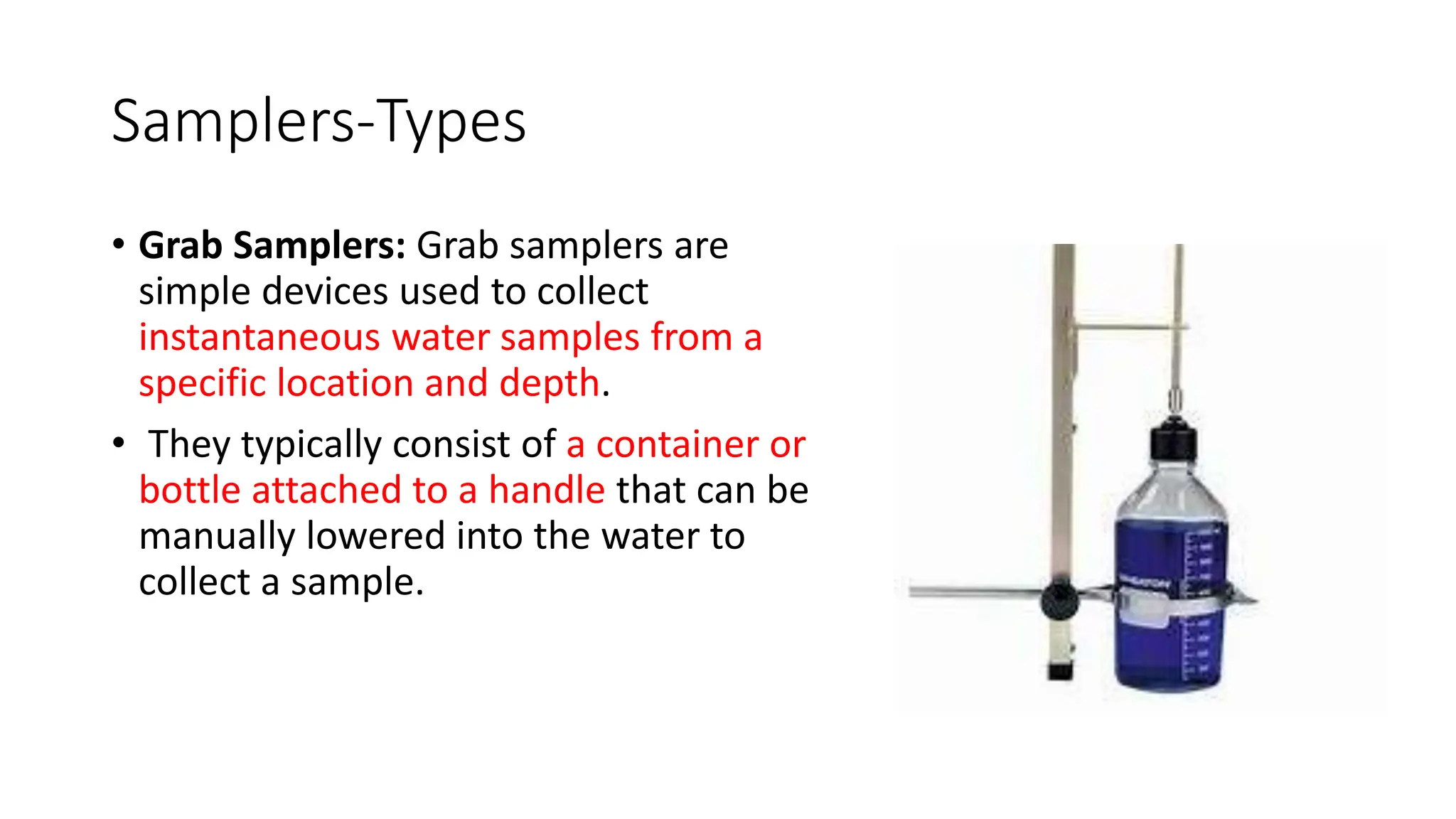
• Grab Samplers: Grab samplers are
simple devices used to collect
instantaneous water samples from a
specific location and depth.
• They typically consist of a container or
bottle attached to a handle that can be
manually lowered into the water to
collect a sample.
Pole Samplers:
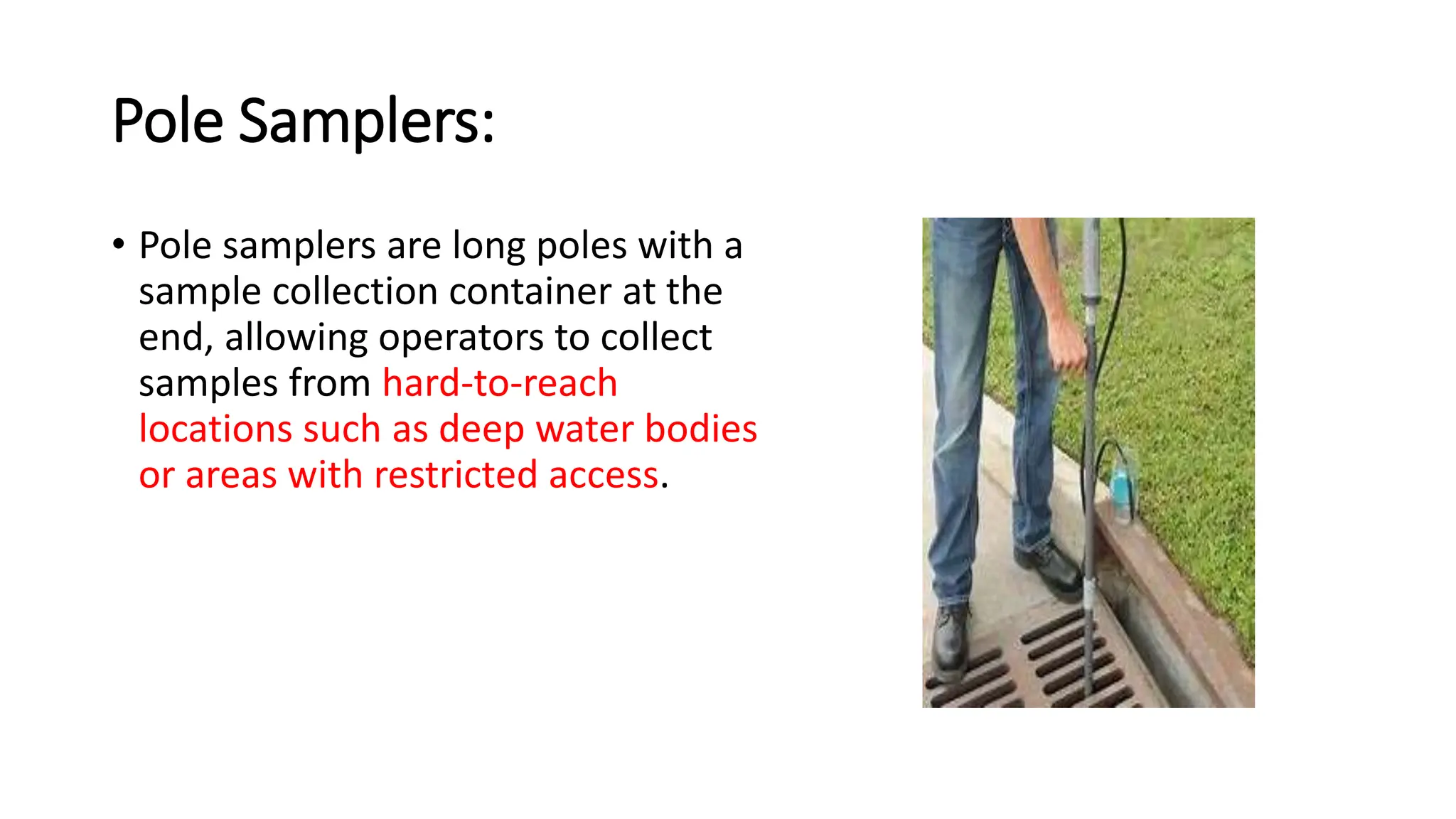
• Pole samplers are long poles with a
sample collection container at the
end, allowing operators to collect
samples from hard-to-reach
locations such as deep water bodies
or areas with restricted access.
• Integrated Samplers: Integrated samplers are designed to
continuously collect water samples over a specified time period or
depth range.
• They may include automated pumps or suction devices to draw water
into a sample collection container
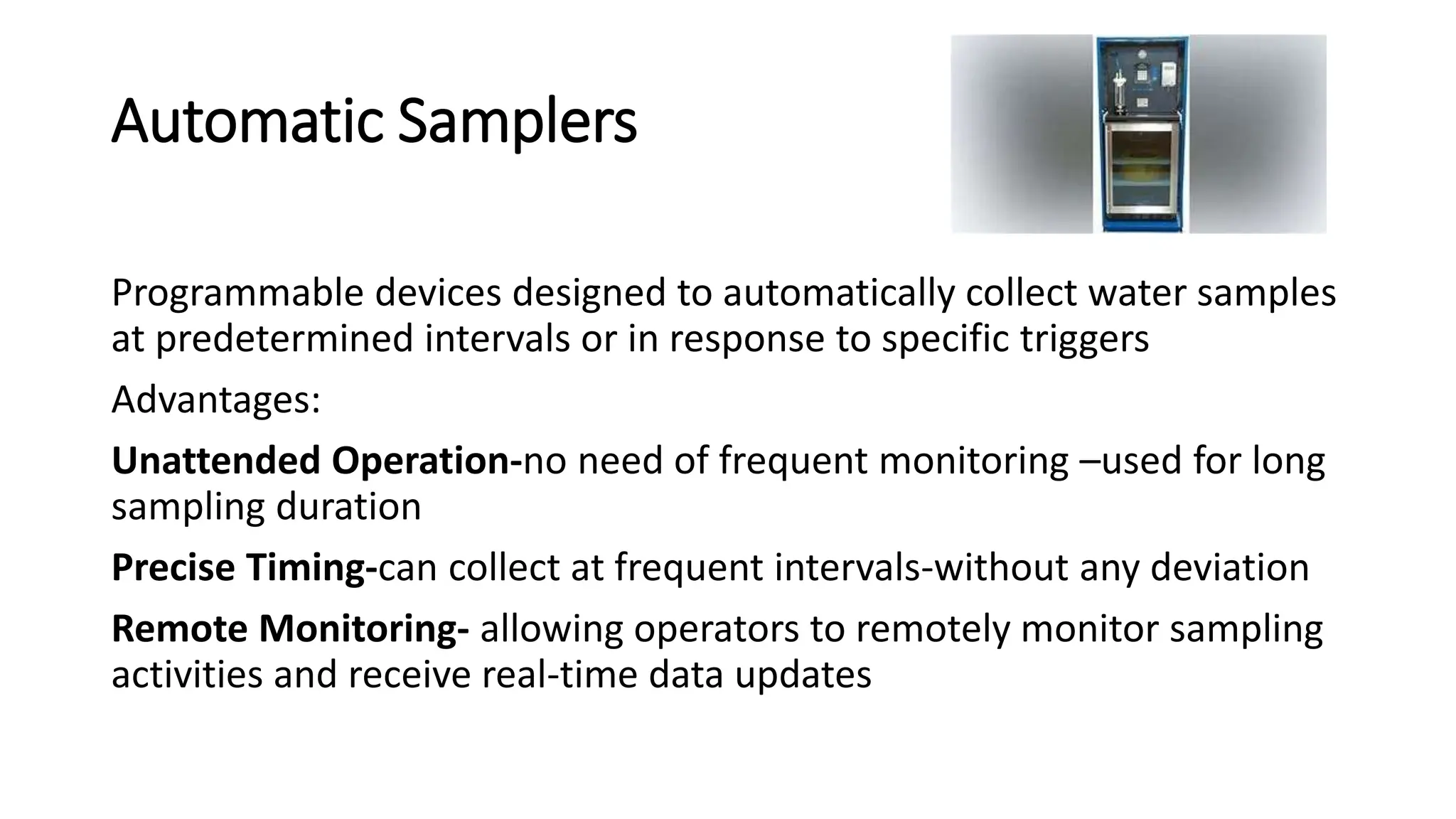
Automatic Samplers
Programmable devices designed to automatically collect water samples
at predetermined intervals or in response to specific triggers
Advantages:
Unattended Operation-no need of frequent monitoring –used for long
sampling duration
Precise Timing-can collect at frequent intervals-without any deviation
Remote Monitoring- allowing operators to remotely monitor sampling
activities and receive real-time data updates
USAGE
• long-term water quality monitoring programs & research studies -
where continuous, unattended sampling is required

Sampling design-STEPS INVOLVED IN WATER QUALITY SAMPLING

  • 1.
  • 2.
    Objective Definition • Forexample, if the objective is to assess the impact of industrial discharge on water quality in a river, the sampling design would focus on locations downstream of the discharge point to capture potential pollution effects.
  • 3.
    Target Population • Thetarget population includes the water bodies or locations of interest for the investigation
  • 4.
    Sampling Strategy • Thesampling strategy determines how sampling locations are selected and the method of sampling Sampling Locations-Identify the specific locations within the target population where water samples will be collected. These locations should be representative of the water body
  • 5.
    • Sampling Frequency:Determine the frequency of sampling, including the number of sampling events and the timing of sampling throughout the year. • Sample Collection Methods • Quality Assurance and Quality Control (QA/QC): • Implement QA/QC measures to ensure the reliability and accuracy of the collected data. This may include calibration of equipment, duplicate samples, and adherence to standard operating procedures • Data Management: How efficiently carry out analysis-interpret and document it.
  • 6.
    Samplers-Types • Grab Samplers:Grab samplers are simple devices used to collect instantaneous water samples from a specific location and depth. • They typically consist of a container or bottle attached to a handle that can be manually lowered into the water to collect a sample.
  • 7.
    Pole Samplers: • Polesamplers are long poles with a sample collection container at the end, allowing operators to collect samples from hard-to-reach locations such as deep water bodies or areas with restricted access.
  • 8.
    • Integrated Samplers:Integrated samplers are designed to continuously collect water samples over a specified time period or depth range. • They may include automated pumps or suction devices to draw water into a sample collection container
  • 9.
    Automatic Samplers Programmable devicesdesigned to automatically collect water samples at predetermined intervals or in response to specific triggers Advantages: Unattended Operation-no need of frequent monitoring –used for long sampling duration Precise Timing-can collect at frequent intervals-without any deviation Remote Monitoring- allowing operators to remotely monitor sampling activities and receive real-time data updates
  • 10.
    USAGE • long-term waterquality monitoring programs & research studies - where continuous, unattended sampling is required