WATER SAMPLING
& MONITORING
-ASHISH UPADHYAYA
M Tech (Env. Sc. & Engg) 1st
Sem.
Env. Chem. & Microbiology
DEFINATION
MONITORING:
continuous surveillance undertaken to fulfil set
of objectives
SURVEY:
short term observation(s) on water quality (in
present context) to fulfil definite objective(s);
Surveillance:
a continued programme of surveys
systematically undertaken to provide a series
of observations in definite time period
WHY MONITORING?
• To check quality
• To watch, observe or check,
especially for a special purpose,
• To keep track of, regulate or
control
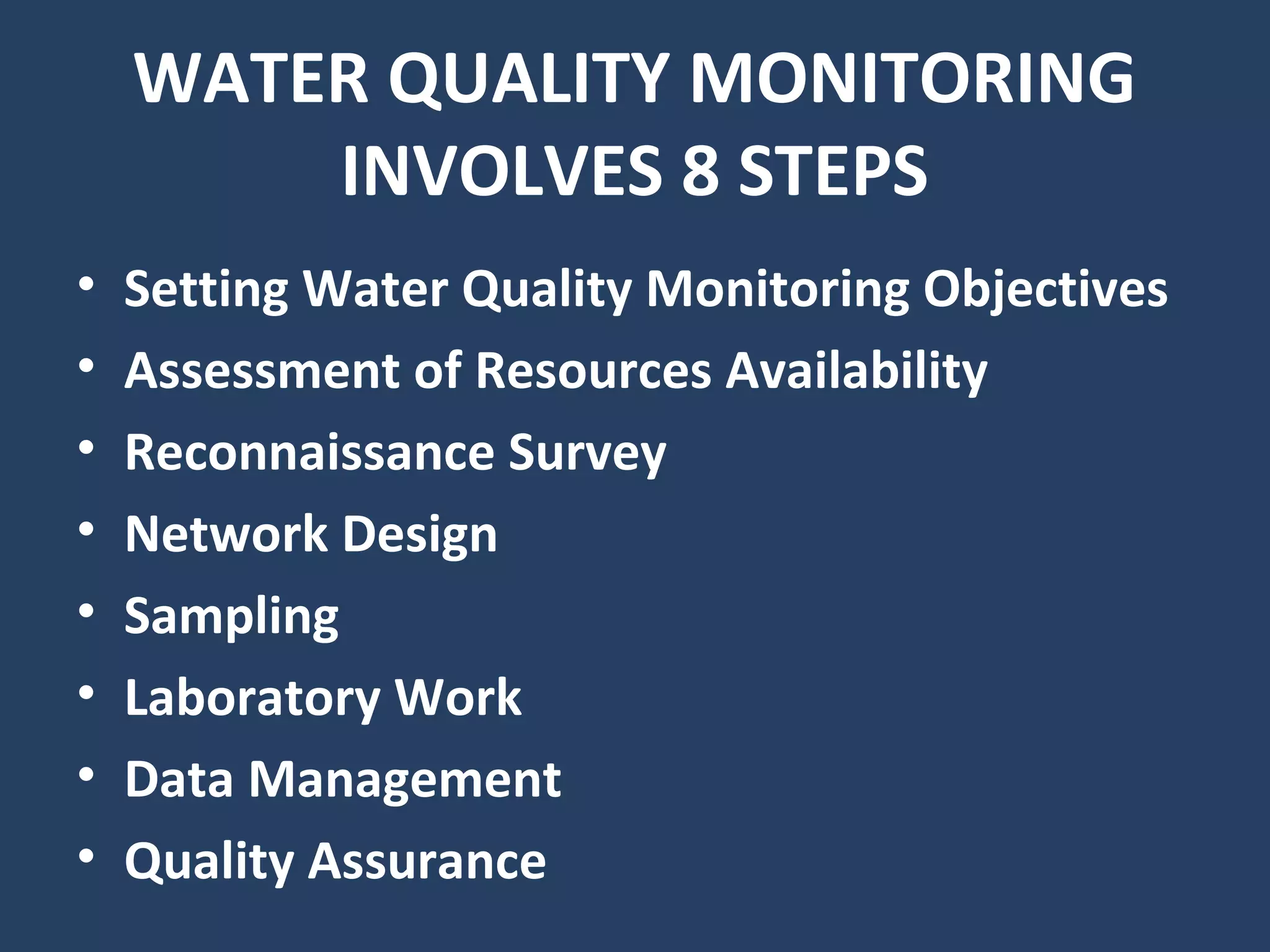
WATER QUALITY MONITORING
INVOLVES 8 STEPS
• Setting Water Quality Monitoring Objectives
• Assessment of Resources Availability
• Reconnaissance Survey
• Network Design
• Sampling
• Laboratory Work
• Data Management
• Quality Assurance
STEP-1 SETTING WATER QUALITY
MONITORING OBJECTIVES
Everybody of the programme
team should be fully aware of
the objectives, methodology,
quality assurance, data
validation and other aspects.
STEP-2 ASSESSMENT OF
RESOURCES AVAILABILITY
• Laboratory facilities and equipment
• Transport for sampling
• Trained Manpower – adequate
number and competence
• Funds for operation and
maintenance of laboratory
STEP-3 RECONNAISSANCE SURVEY
• Location Map of the area
• Background information on water body
• Human activities around the water body like
mass bathing, melon farming,
• Identification of Potential polluting sources
• Water quantity and uses
• Hydrological information
• Water flow regulation
STEP-4 NETWORK DESIGN
• Selection of sampling locations
• Optimum number of locations
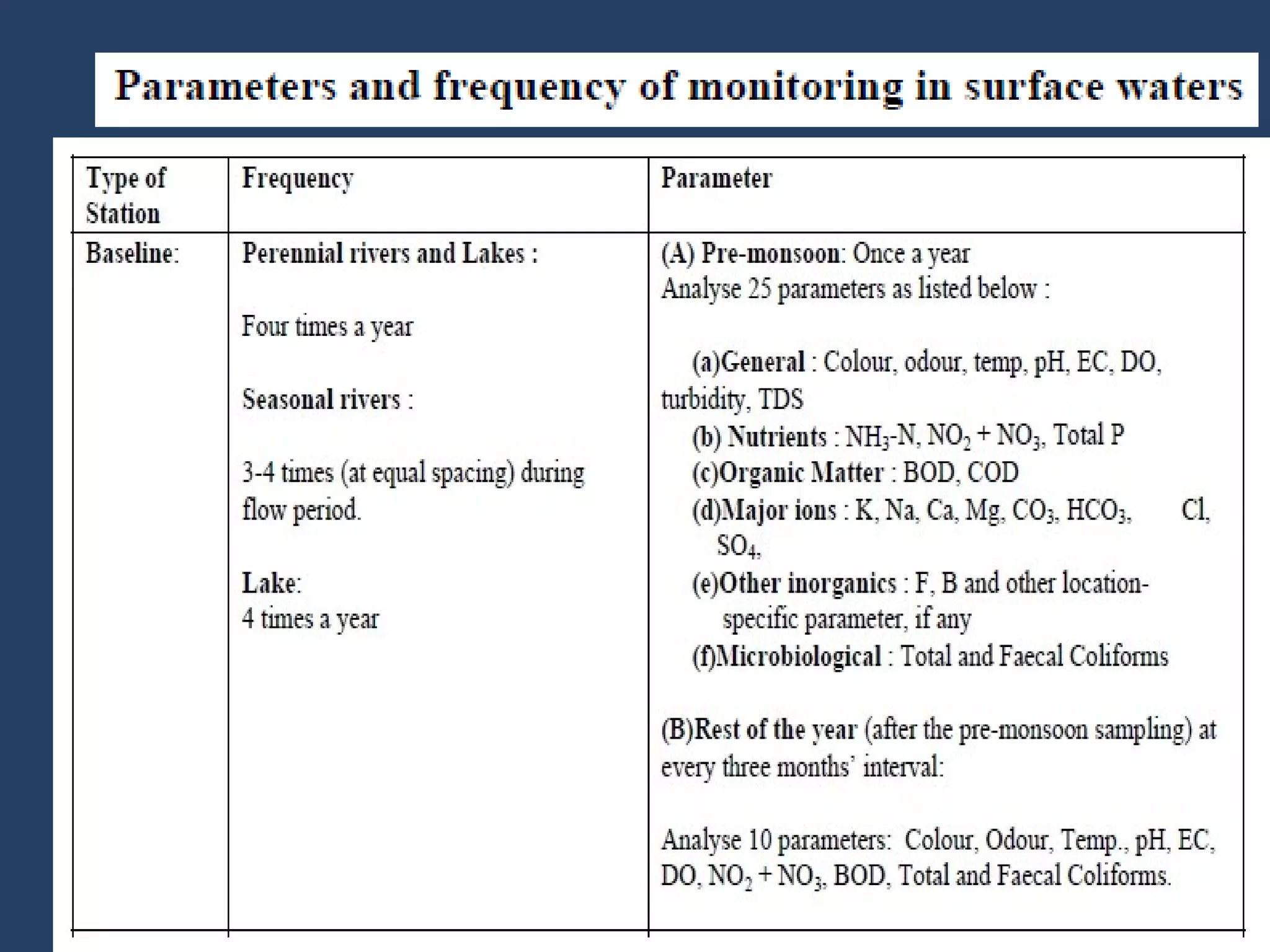
• Parameters to be measured
• Frequency of sampling
• Component to be samples – water,
sediment or biota
STEP-5 SAMPLING
• Representative sampling
• Field testing
• Sample preservation and
transport
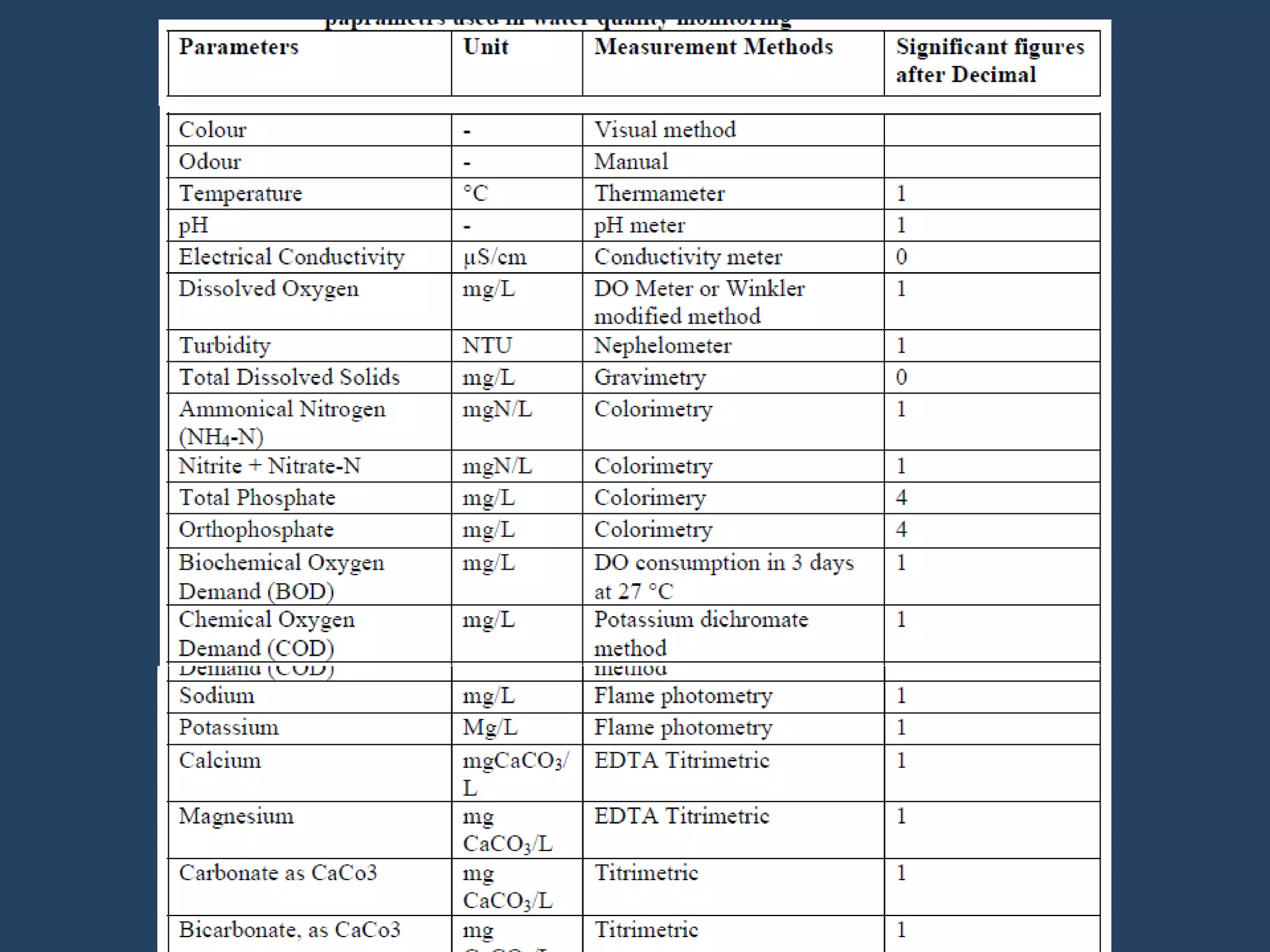
FIELD ANALYSIS
Measurements of colour, odour,
temperature, electrical conductivity,
pH and dissolved oxygen are
considered to be 'Field
Determinations' and should be made
as soon as possible after collecting a
sample
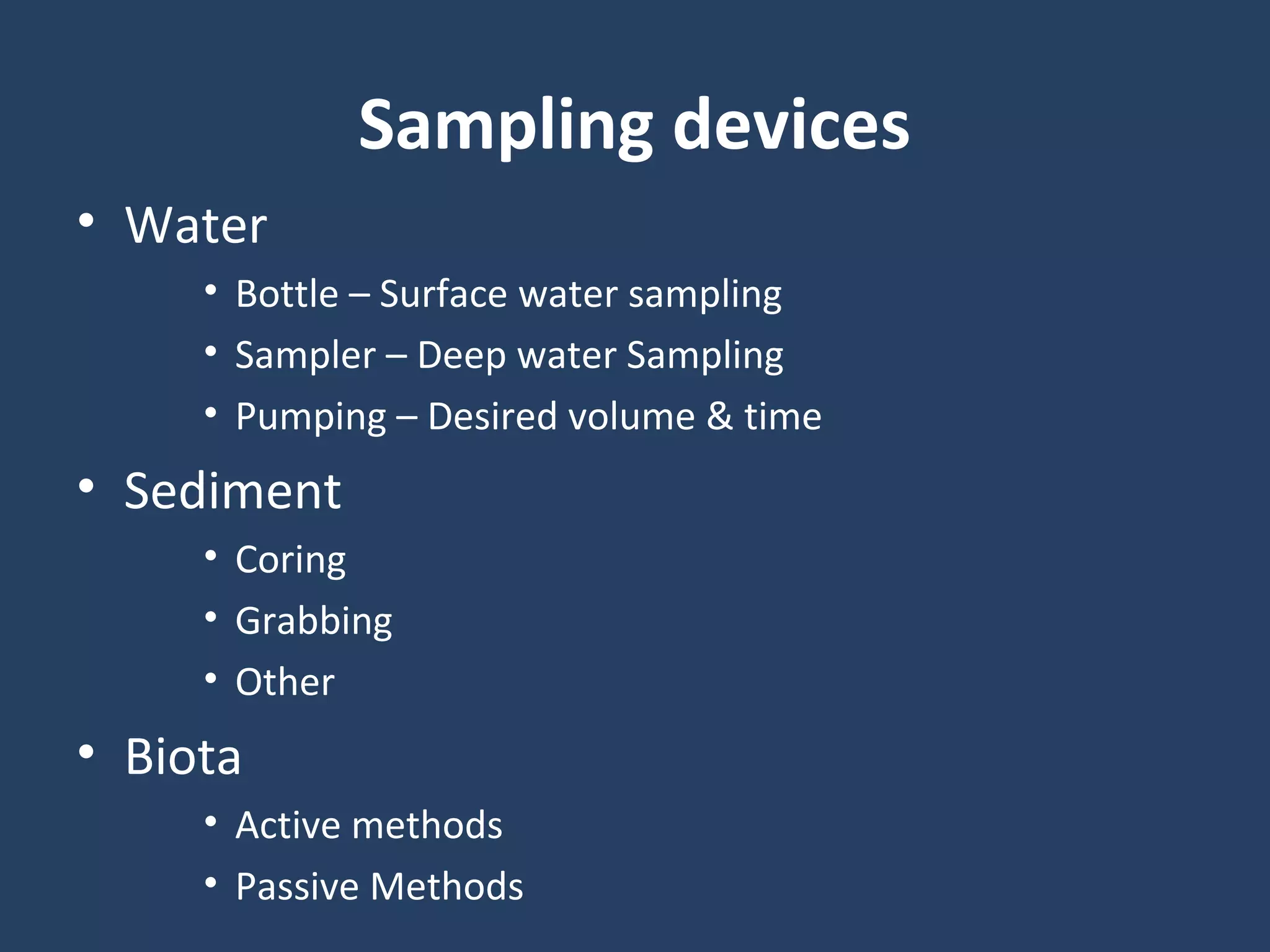
Sampling devices
• Water
• Bottle – Surface water sampling
• Sampler – Deep water Sampling
• Pumping – Desired volume & time
• Sediment
• Coring
• Grabbing
• Other
• Biota
• Active methods
• Passive Methods
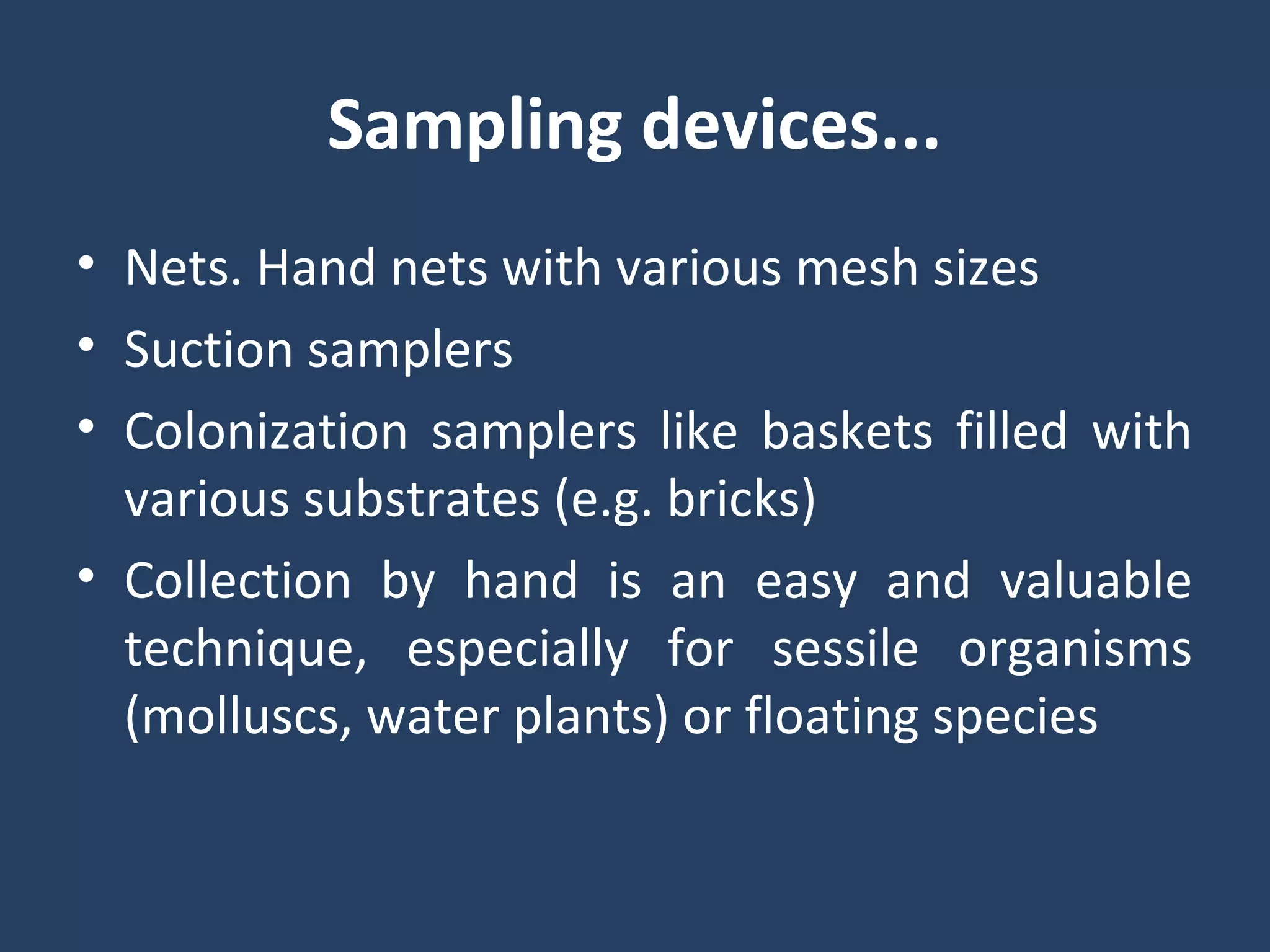
Sampling devices...
• Nets. Hand nets with various mesh sizes
• Suction samplers
• Colonization samplers like baskets filled with
various substrates (e.g. bricks)
• Collection by hand is an easy and valuable
technique, especially for sessile organisms
(molluscs, water plants) or floating species
STEP-6 LABORATORY WORK
• Laboratory procedures
• Physical, chemical analysis
• Microbiological and biological
analysis
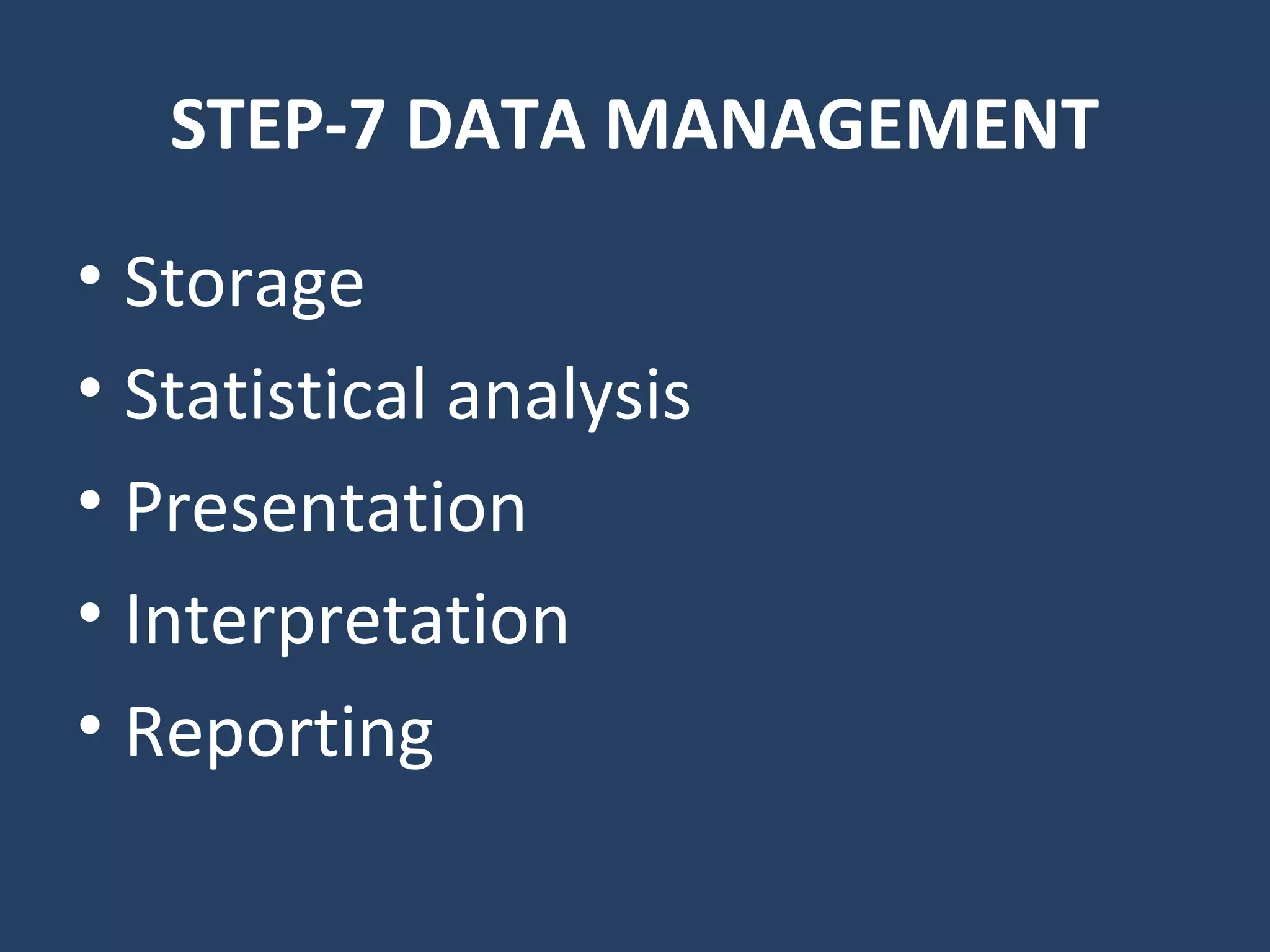
STEP-7 DATA MANAGEMENT
• Storage
• Statistical analysis
• Presentation
• Interpretation
• Reporting
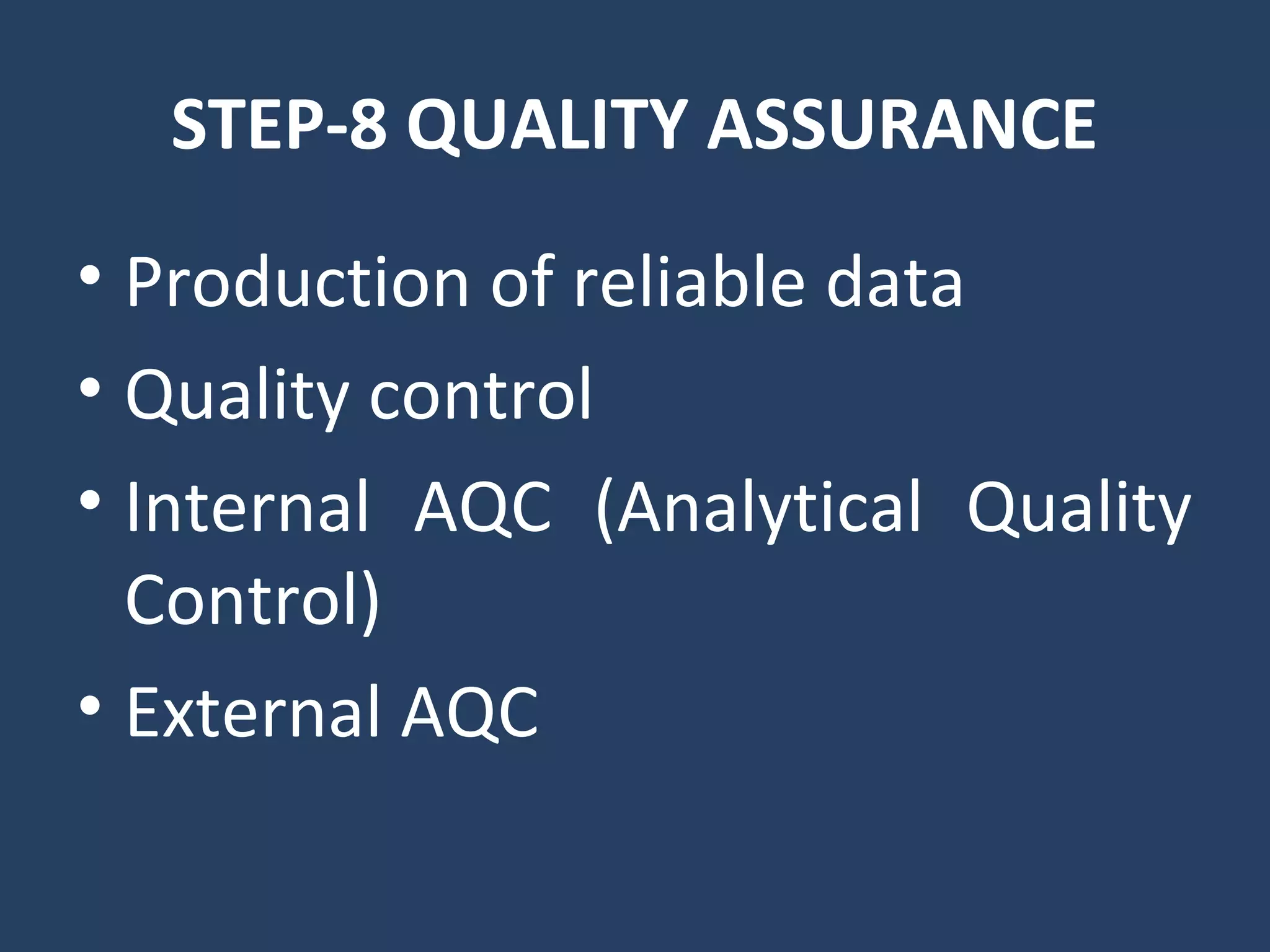
STEP-8 QUALITY ASSURANCE
• Production of reliable data
• Quality control
• Internal AQC (Analytical Quality
Control)
• External AQC
Microorganism Monitoring    ashish upadhyaya

Microorganism Monitoring ashish upadhyaya

  • 1.
    WATER SAMPLING & MONITORING -ASHISHUPADHYAYA M Tech (Env. Sc. & Engg) 1st Sem. Env. Chem. & Microbiology
  • 2.
    DEFINATION MONITORING: continuous surveillance undertakento fulfil set of objectives SURVEY: short term observation(s) on water quality (in present context) to fulfil definite objective(s); Surveillance: a continued programme of surveys systematically undertaken to provide a series of observations in definite time period
  • 3.
    WHY MONITORING? • Tocheck quality • To watch, observe or check, especially for a special purpose, • To keep track of, regulate or control
  • 4.
    WATER QUALITY MONITORING INVOLVES8 STEPS • Setting Water Quality Monitoring Objectives • Assessment of Resources Availability • Reconnaissance Survey • Network Design • Sampling • Laboratory Work • Data Management • Quality Assurance
  • 5.
    STEP-1 SETTING WATERQUALITY MONITORING OBJECTIVES Everybody of the programme team should be fully aware of the objectives, methodology, quality assurance, data validation and other aspects.
  • 6.
    STEP-2 ASSESSMENT OF RESOURCESAVAILABILITY • Laboratory facilities and equipment • Transport for sampling • Trained Manpower – adequate number and competence • Funds for operation and maintenance of laboratory
  • 7.
    STEP-3 RECONNAISSANCE SURVEY •Location Map of the area • Background information on water body • Human activities around the water body like mass bathing, melon farming, • Identification of Potential polluting sources • Water quantity and uses • Hydrological information • Water flow regulation
  • 8.
    STEP-4 NETWORK DESIGN •Selection of sampling locations • Optimum number of locations • Parameters to be measured • Frequency of sampling • Component to be samples – water, sediment or biota
  • 11.
    STEP-5 SAMPLING • Representativesampling • Field testing • Sample preservation and transport
  • 12.
    FIELD ANALYSIS Measurements ofcolour, odour, temperature, electrical conductivity, pH and dissolved oxygen are considered to be 'Field Determinations' and should be made as soon as possible after collecting a sample
  • 13.
    Sampling devices • Water •Bottle – Surface water sampling • Sampler – Deep water Sampling • Pumping – Desired volume & time • Sediment • Coring • Grabbing • Other • Biota • Active methods • Passive Methods
  • 14.
    Sampling devices... • Nets.Hand nets with various mesh sizes • Suction samplers • Colonization samplers like baskets filled with various substrates (e.g. bricks) • Collection by hand is an easy and valuable technique, especially for sessile organisms (molluscs, water plants) or floating species
  • 15.
    STEP-6 LABORATORY WORK •Laboratory procedures • Physical, chemical analysis • Microbiological and biological analysis
  • 17.
    STEP-7 DATA MANAGEMENT •Storage • Statistical analysis • Presentation • Interpretation • Reporting
  • 18.
    STEP-8 QUALITY ASSURANCE •Production of reliable data • Quality control • Internal AQC (Analytical Quality Control) • External AQC