MEMBERS:
 Charki Nissrine
 El Mourabit Oumayma
 Mouaddah Chaimae
 Serhrouchni Nour El Houda
THE PLAN :
 INTRODUCTION
 GENERALITIES
 CAUSES OF WATER SCARCITY
 EARTH WITHOUT WATER
 HOW TO CONSERVE WATER ?
 CONCLUSION
INTRODUCTION
 Chemistry of water :
 Water consists of very small molecules. Each of them has
two hydrogen atoms and one oxygen atom. The chemical
formula of water is H20.
 Water molecules always move. In ice they are very
far apart from each other. They move very slowly or often not at
all. Molecules in water vapor move very quickly.
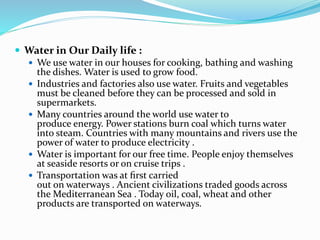
 Water in Our Daily life :
 We use water in our houses for cooking, bathing and washing
the dishes. Water is used to grow food.
 Industries and factories also use water. Fruits and vegetables
must be cleaned before they can be processed and sold in
supermarkets.
 Many countries around the world use water to
produce energy. Power stations burn coal which turns water
into steam. Countries with many mountains and rivers use the
power of water to produce electricity .
 Water is important for our free time. People enjoy themselves
at seaside resorts or on cruise trips .
 Transportation was at first carried
out on waterways . Ancient civilizations traded goods across
the Mediterranean Sea . Today oil, coal, wheat and other
products are transported on waterways.
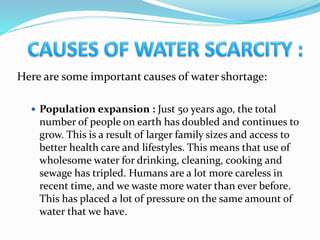
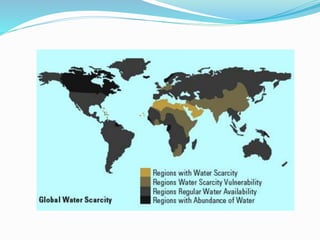
Here are some important causes of water shortage:
 Population expansion : Just 50 years ago, the total
number of people on earth has doubled and continues to
grow. This is a result of larger family sizes and access to
better health care and lifestyles. This means that use of
wholesome water for drinking, cleaning, cooking and
sewage has tripled. Humans are a lot more careless in
recent time, and we waste more water than ever before.
This has placed a lot of pressure on the same amount of
water that we have.
 Urbanization : Cities are growing and expanding
more than ever before. Cities also tend to hold
more people than towns and villages. This means
there is an increased need to take care of sewage,
cleaning, construction and manufacturing.
 Pollution : Water, air and land pollution together
contribute to the reduction of water quality
 Vegetation destruction and Deforestation : Trees help
prevent excessive evaporation or water bodies. They also enrich
and condition the climate. This means the destruction of forests
by fire, logging and farming have exposed soil moisture and
water bodies to the sun’s intense heat, leaving them dried out.
 Climate change All over the world, places that used to have
lots of rainfall do not have enough again and dry places suddenly
are getting colder and wetter. Both cases result in clean water
shortage because less rainfall means less water, and excessive
rains cause flooding and which brings all sorts of debris and
destroy water treatment installations.
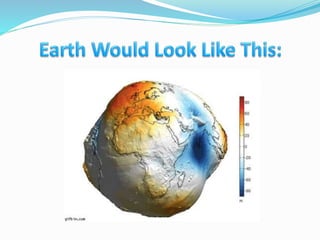
 Imagine earth without water. The soil, with no water in
it and nothing growing on it, would be lifeless, dead,
collapsed into dust, sand, clay or rock. The earth used
to be like a sponge, but where the groundwater has
been sucked almost dry, the earth has collapsed and
hardened. This is the process we call "subsidence."
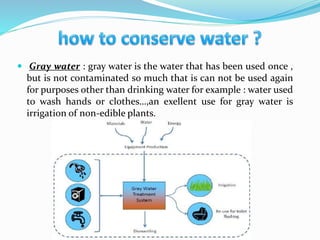
 Gray water : gray water is the water that has been used once ,
but is not contaminated so much that is can not be used again
for purposes other than drinking water for example : water used
to wash hands or clothes…,an exellent use for gray water is
irrigation of non-edible plants.
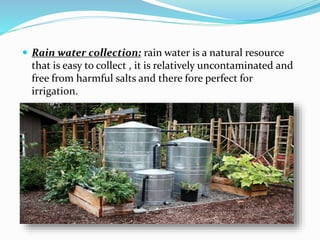
 Rain water collection: rain water is a natural resource
that is easy to collect , it is relatively uncontaminated and
free from harmful salts and there fore perfect for
irrigation.
 www.eschooltoday.com
 www.Youtube.com (emission if)
 www.Wikipedia .org
 www.circleofblue.com

Water_in_our_life.pptx

  • 2.
    MEMBERS:  Charki Nissrine El Mourabit Oumayma  Mouaddah Chaimae  Serhrouchni Nour El Houda
  • 3.
    THE PLAN : INTRODUCTION  GENERALITIES  CAUSES OF WATER SCARCITY  EARTH WITHOUT WATER  HOW TO CONSERVE WATER ?  CONCLUSION
  • 4.
  • 5.
     Chemistry ofwater :  Water consists of very small molecules. Each of them has two hydrogen atoms and one oxygen atom. The chemical formula of water is H20.  Water molecules always move. In ice they are very far apart from each other. They move very slowly or often not at all. Molecules in water vapor move very quickly.
  • 6.
     Water inOur Daily life :  We use water in our houses for cooking, bathing and washing the dishes. Water is used to grow food.  Industries and factories also use water. Fruits and vegetables must be cleaned before they can be processed and sold in supermarkets.  Many countries around the world use water to produce energy. Power stations burn coal which turns water into steam. Countries with many mountains and rivers use the power of water to produce electricity .  Water is important for our free time. People enjoy themselves at seaside resorts or on cruise trips .  Transportation was at first carried out on waterways . Ancient civilizations traded goods across the Mediterranean Sea . Today oil, coal, wheat and other products are transported on waterways.
  • 9.
    Here are someimportant causes of water shortage:  Population expansion : Just 50 years ago, the total number of people on earth has doubled and continues to grow. This is a result of larger family sizes and access to better health care and lifestyles. This means that use of wholesome water for drinking, cleaning, cooking and sewage has tripled. Humans are a lot more careless in recent time, and we waste more water than ever before. This has placed a lot of pressure on the same amount of water that we have.
  • 10.
     Urbanization :Cities are growing and expanding more than ever before. Cities also tend to hold more people than towns and villages. This means there is an increased need to take care of sewage, cleaning, construction and manufacturing.  Pollution : Water, air and land pollution together contribute to the reduction of water quality
  • 11.
     Vegetation destructionand Deforestation : Trees help prevent excessive evaporation or water bodies. They also enrich and condition the climate. This means the destruction of forests by fire, logging and farming have exposed soil moisture and water bodies to the sun’s intense heat, leaving them dried out.  Climate change All over the world, places that used to have lots of rainfall do not have enough again and dry places suddenly are getting colder and wetter. Both cases result in clean water shortage because less rainfall means less water, and excessive rains cause flooding and which brings all sorts of debris and destroy water treatment installations.
  • 13.
     Imagine earthwithout water. The soil, with no water in it and nothing growing on it, would be lifeless, dead, collapsed into dust, sand, clay or rock. The earth used to be like a sponge, but where the groundwater has been sucked almost dry, the earth has collapsed and hardened. This is the process we call "subsidence."
  • 15.
     Gray water: gray water is the water that has been used once , but is not contaminated so much that is can not be used again for purposes other than drinking water for example : water used to wash hands or clothes…,an exellent use for gray water is irrigation of non-edible plants.
  • 16.
     Rain watercollection: rain water is a natural resource that is easy to collect , it is relatively uncontaminated and free from harmful salts and there fore perfect for irrigation.
  • 18.
     www.eschooltoday.com  www.Youtube.com(emission if)  www.Wikipedia .org  www.circleofblue.com