
Bell Ringer
• REVIEW- Use the term, “nullification,” in a
sentence that shows that you understand the
meaning of the term.
Tennessee During the Civil
War/Leaders of the CivilWar
EQ’s:
What role didTN play during the CivilWar?
How did certain individuals affect the course of the CivilWar?
Geographical Differences
North
• Climate – frozen winters;
hot/humid summers
• Natural features:
– Coastline: bays and harbors –
fishermen, shipbuilding (i.e.
Boston)
– Inland: rocky soil – farming
hard; turned to trade and crafts
(timber for shipbuilding)
South
• Climate – mild winters; long,
hot, humid summers
• Natural features:
– coastline: swamps and
marshes (rice & sugarcane,
fishing)
– inland: indigo, tobacco, & corn
Constitutional Issue: Nullification
• Review:What is nullification?
• The idea that a state can refuse to accept a federal law.
• What is the Constitutional issue with nullification?
• Article III- “Supremacy Clause”
– The power to make the final decision about the
constitutionality of federal laws lies with the federal courts, not
the states.
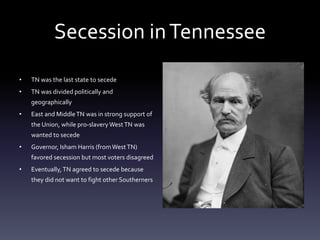
Secession inTennessee
• TN was the last state to secede
• TN was divided politically and
geographically
• East and MiddleTN was in strong support of
the Union, while pro-slavery WestTN was
wanted to secede
• Governor, Isham Harris (fromWest TN)
favored secession but most voters disagreed
• Eventually,TN agreed to secede because
they did not want to fight other Southerners
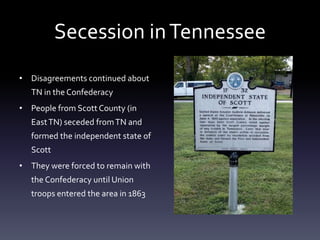
Secession inTennessee
• Disagreements continued about
TN in the Confederacy
• People from Scott County (in
EastTN) seceded fromTN and
formed the independent state of
Scott
• They were forced to remain with
the Confederacy until Union
troops entered the area in 1863
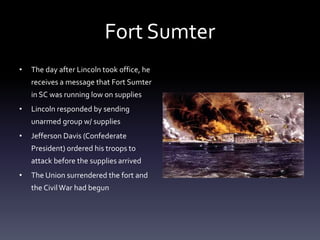
Fort Sumter
• The day after Lincoln took office, he
receives a message that Fort Sumter
in SC was running low on supplies
• Lincoln responded by sending
unarmed group w/ supplies
• Jefferson Davis (Confederate
President) ordered his troops to
attack before the supplies arrived
• The Union surrendered the fort and
the CivilWar had begun
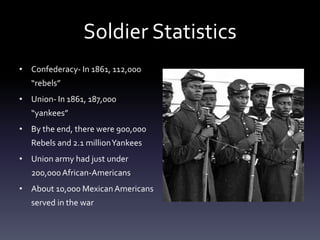
Soldier Statistics
• Confederacy- In 1861, 112,000
“rebels”
• Union- In 1861, 187,000
“yankees”
• By the end, there were 900,000
Rebels and 2.1 millionYankees
• Union army had just under
200,000African-Americans
• About 10,000 MexicanAmericans
served in the war
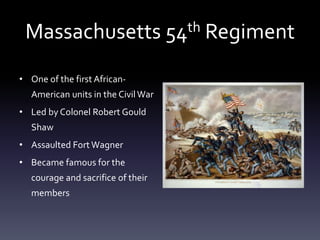
Massachusetts 54th Regiment
• One of the first African-
American units in the CivilWar
• Led by Colonel Robert Gould
Shaw
• Assaulted Fort Wagner
• Became famous for the
courage and sacrifice of their
members
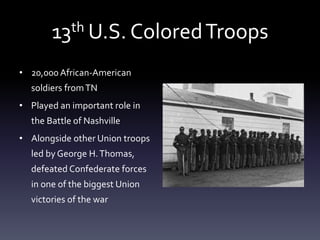
13th U.S. ColoredTroops
• 20,000 African-American
soldiers fromTN
• Played an important role in
the Battle of Nashville
• Alongside other Union troops
led by George H.Thomas,
defeated Confederate forces
in one of the biggest Union
victories of the war
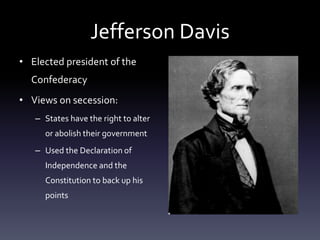
Jefferson Davis
• Elected president of the
Confederacy
• Views on secession:
– States have the right to alter
or abolish their government
– Used the Declaration of
Independence and the
Constitution to back up his
points
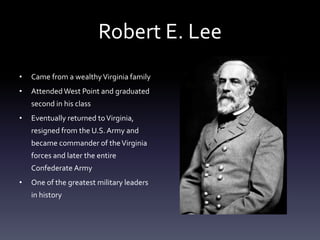
Robert E. Lee
• Came from a wealthyVirginia family
• Attended West Point and graduated
second in his class
• Eventually returned toVirginia,
resigned from the U.S.Army and
became commander of theVirginia
forces and later the entire
Confederate Army
• One of the greatest military leaders
in history
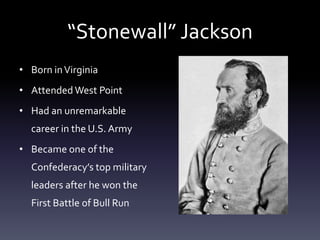
“Stonewall” Jackson
• Born inVirginia
• Attended West Point
• Had an unremarkable
career in the U.S. Army
• Became one of the
Confederacy’s top military
leaders after he won the
First Battle of Bull Run
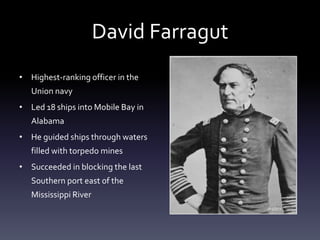
David Farragut
• Highest-ranking officer in the
Union navy
• Led 18 ships into Mobile Bay in
Alabama
• He guided ships through waters
filled with torpedo mines
• Succeeded in blocking the last
Southern port east of the
Mississippi River
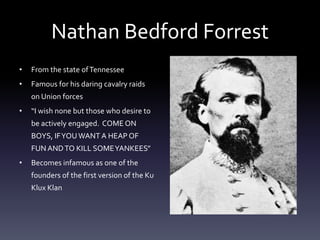
Nathan Bedford Forrest
• From the state ofTennessee
• Famous for his daring cavalry raids
on Union forces
• “I wish none but those who desire to
be actively engaged. COME ON
BOYS, IFYOUWANT A HEAP OF
FUN ANDTO KILL SOMEYANKEES”
• Becomes infamous as one of the
founders of the first version of the Ku
Klux Klan
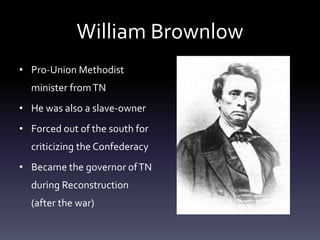
William Brownlow
• Pro-Union Methodist
minister fromTN
• He was also a slave-owner
• Forced out of the south for
criticizing the Confederacy
• Became the governor ofTN
during Reconstruction
(after the war)
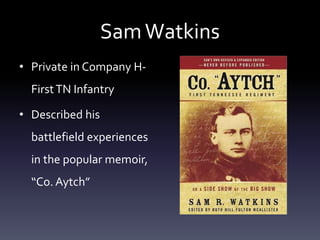
SamWatkins
• Private in Company H-
FirstTN Infantry
• Described his
battlefield experiences
in the popular memoir,
“Co. Aytch”
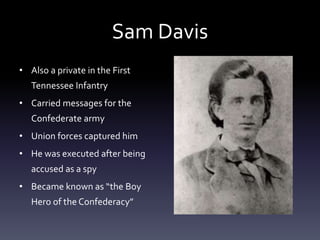
Sam Davis
• Also a private in the First
Tennessee Infantry
• Carried messages for the
Confederate army
• Union forces captured him
• He was executed after being
accused as a spy
• Became known as “the Boy
Hero of the Confederacy”
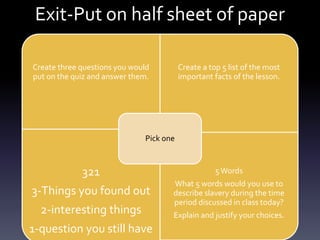
Exit-Put on half sheet of paper
Create three questions you would
put on the quiz and answer them.
Create a top 5 list of the most
important facts of the lesson.
321
3-Things you found out
2-interesting things
1-question you still have
5Words
What 5 words would you use to
describe slavery during the time
period discussed in class today?
Explain and justify your choices.
Pick one
Civil war Leaders presentation

Civil war Leaders presentation

  • 1.
    Bell Ringer • REVIEW-Use the term, “nullification,” in a sentence that shows that you understand the meaning of the term.
  • 2.
    Tennessee During theCivil War/Leaders of the CivilWar EQ’s: What role didTN play during the CivilWar? How did certain individuals affect the course of the CivilWar?
  • 3.
    Geographical Differences North • Climate– frozen winters; hot/humid summers • Natural features: – Coastline: bays and harbors – fishermen, shipbuilding (i.e. Boston) – Inland: rocky soil – farming hard; turned to trade and crafts (timber for shipbuilding) South • Climate – mild winters; long, hot, humid summers • Natural features: – coastline: swamps and marshes (rice & sugarcane, fishing) – inland: indigo, tobacco, & corn
  • 5.
    Constitutional Issue: Nullification •Review:What is nullification? • The idea that a state can refuse to accept a federal law. • What is the Constitutional issue with nullification? • Article III- “Supremacy Clause” – The power to make the final decision about the constitutionality of federal laws lies with the federal courts, not the states.
  • 6.
    Secession inTennessee • TNwas the last state to secede • TN was divided politically and geographically • East and MiddleTN was in strong support of the Union, while pro-slavery WestTN was wanted to secede • Governor, Isham Harris (fromWest TN) favored secession but most voters disagreed • Eventually,TN agreed to secede because they did not want to fight other Southerners
  • 7.
    Secession inTennessee • Disagreementscontinued about TN in the Confederacy • People from Scott County (in EastTN) seceded fromTN and formed the independent state of Scott • They were forced to remain with the Confederacy until Union troops entered the area in 1863
  • 8.
    Fort Sumter • Theday after Lincoln took office, he receives a message that Fort Sumter in SC was running low on supplies • Lincoln responded by sending unarmed group w/ supplies • Jefferson Davis (Confederate President) ordered his troops to attack before the supplies arrived • The Union surrendered the fort and the CivilWar had begun
  • 9.
    Soldier Statistics • Confederacy-In 1861, 112,000 “rebels” • Union- In 1861, 187,000 “yankees” • By the end, there were 900,000 Rebels and 2.1 millionYankees • Union army had just under 200,000African-Americans • About 10,000 MexicanAmericans served in the war
  • 10.
    Massachusetts 54th Regiment •One of the first African- American units in the CivilWar • Led by Colonel Robert Gould Shaw • Assaulted Fort Wagner • Became famous for the courage and sacrifice of their members
  • 11.
    13th U.S. ColoredTroops •20,000 African-American soldiers fromTN • Played an important role in the Battle of Nashville • Alongside other Union troops led by George H.Thomas, defeated Confederate forces in one of the biggest Union victories of the war
  • 12.
    Jefferson Davis • Electedpresident of the Confederacy • Views on secession: – States have the right to alter or abolish their government – Used the Declaration of Independence and the Constitution to back up his points
  • 13.
    Robert E. Lee •Came from a wealthyVirginia family • Attended West Point and graduated second in his class • Eventually returned toVirginia, resigned from the U.S.Army and became commander of theVirginia forces and later the entire Confederate Army • One of the greatest military leaders in history
  • 14.
    “Stonewall” Jackson • BorninVirginia • Attended West Point • Had an unremarkable career in the U.S. Army • Became one of the Confederacy’s top military leaders after he won the First Battle of Bull Run
  • 15.
    David Farragut • Highest-rankingofficer in the Union navy • Led 18 ships into Mobile Bay in Alabama • He guided ships through waters filled with torpedo mines • Succeeded in blocking the last Southern port east of the Mississippi River
  • 16.
    Nathan Bedford Forrest •From the state ofTennessee • Famous for his daring cavalry raids on Union forces • “I wish none but those who desire to be actively engaged. COME ON BOYS, IFYOUWANT A HEAP OF FUN ANDTO KILL SOMEYANKEES” • Becomes infamous as one of the founders of the first version of the Ku Klux Klan
  • 17.
    William Brownlow • Pro-UnionMethodist minister fromTN • He was also a slave-owner • Forced out of the south for criticizing the Confederacy • Became the governor ofTN during Reconstruction (after the war)
  • 18.
    SamWatkins • Private inCompany H- FirstTN Infantry • Described his battlefield experiences in the popular memoir, “Co. Aytch”
  • 19.
    Sam Davis • Alsoa private in the First Tennessee Infantry • Carried messages for the Confederate army • Union forces captured him • He was executed after being accused as a spy • Became known as “the Boy Hero of the Confederacy”
  • 20.
    Exit-Put on halfsheet of paper Create three questions you would put on the quiz and answer them. Create a top 5 list of the most important facts of the lesson. 321 3-Things you found out 2-interesting things 1-question you still have 5Words What 5 words would you use to describe slavery during the time period discussed in class today? Explain and justify your choices. Pick one