Walmart Case JOG MBAM 619 January 9 th  2009
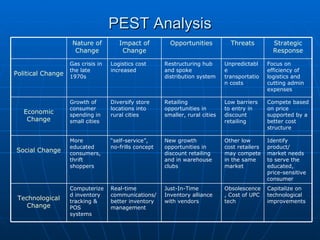
PEST Analysis Capitalize on technological improvements Obsolescence, Cost of UPC tech Just-In-Time Inventory alliance with vendors Real-time communications/ better inventory management Computerized inventory tracking & POS systems Technological Change Identify product/ market needs to serve the educated, price-sensitive consumer Other low cost retailers may compete in the same market New growth opportunities in discount retailing and in warehouse clubs “ self-service”, no-frills concept More educated consumers, thrift shoppers Social Change Compete based on price supported by a better cost structure Low barriers to entry in discount retailing Retailing opportunities in smaller, rural cities Diversify store locations into rural cities Growth of consumer spending in small cities Economic Change Focus on efficiency of logistics and cutting admin expenses Unpredictable transportation costs Restructuring hub and spoke distribution system Logistics cost increased Gas crisis in the late 1970s Political Change Strategic Response Threats Opportunities Impact of Change Nature of Change
Industry & Competitive Analysis
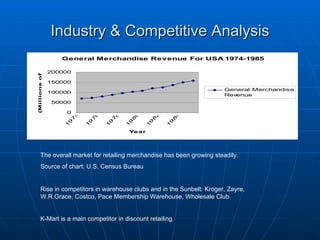
Industry & Competitive Analysis The overall market for retailing merchandise has been growing steadily. Source of chart: U.S. Census Bureau Rise in competitors in warehouse clubs and in the Sunbelt: Kroger, Zayre, W.R.Grace, Costco, Pace Membership Warehouse, Wholesale Club. K-Mart is a main competitor in discount retailing .
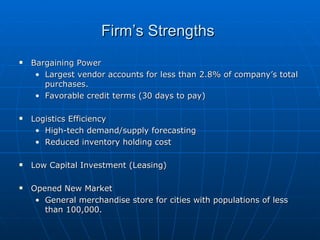
Firm’s Strengths  Bargaining Power Largest vendor accounts for less than 2.8% of company’s total purchases. Favorable credit terms (30 days to pay)‏ Logistics Efficiency High-tech demand/supply forecasting Reduced inventory holding cost Low Capital Investment (Leasing)‏ Opened New Market General merchandise store for cities with populations of less than 100,000.
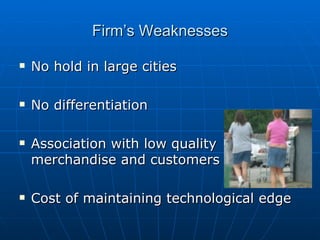
Firm’s Weaknesses No hold in large cities No differentiation Association with low quality merchandise and customers Cost of maintaining technological edge
Firm’s Architecture Routines & Culture Communication Strategic Sales & inventory data Autonomy Delegated decision-making power Frugal Culture
Conclusion In order to better align itself with market opportunities and threats, Walmart should leverage logistics technology and economies of scale to deliver everyday low pricing to the widest possible discount market. Walmart sustainable competitive advantage will be superior supply chain management which it will use to deliver the lowest possible cost. Walmart maximized shareholder value by producing a Return on Equity of 33% during 1974-1985 compared with an average of 15.7% for its chief competitors.  The keys to maintaining such a high ROE in the future will be: No frills, self-service concept Leasing facilities to reduce the need for capital investment Utilizing innovative logistics techniques such as two-tiered distribution systems, computer-enhanced demand planning, and operating of a private truck fleet.

Walmart T2

  • 1.
    Walmart Case JOGMBAM 619 January 9 th 2009
  • 2.
    PEST Analysis Capitalizeon technological improvements Obsolescence, Cost of UPC tech Just-In-Time Inventory alliance with vendors Real-time communications/ better inventory management Computerized inventory tracking & POS systems Technological Change Identify product/ market needs to serve the educated, price-sensitive consumer Other low cost retailers may compete in the same market New growth opportunities in discount retailing and in warehouse clubs “ self-service”, no-frills concept More educated consumers, thrift shoppers Social Change Compete based on price supported by a better cost structure Low barriers to entry in discount retailing Retailing opportunities in smaller, rural cities Diversify store locations into rural cities Growth of consumer spending in small cities Economic Change Focus on efficiency of logistics and cutting admin expenses Unpredictable transportation costs Restructuring hub and spoke distribution system Logistics cost increased Gas crisis in the late 1970s Political Change Strategic Response Threats Opportunities Impact of Change Nature of Change
  • 3.
  • 4.
    Industry & CompetitiveAnalysis The overall market for retailing merchandise has been growing steadily. Source of chart: U.S. Census Bureau Rise in competitors in warehouse clubs and in the Sunbelt: Kroger, Zayre, W.R.Grace, Costco, Pace Membership Warehouse, Wholesale Club. K-Mart is a main competitor in discount retailing .
  • 5.
    Firm’s Strengths Bargaining Power Largest vendor accounts for less than 2.8% of company’s total purchases. Favorable credit terms (30 days to pay)‏ Logistics Efficiency High-tech demand/supply forecasting Reduced inventory holding cost Low Capital Investment (Leasing)‏ Opened New Market General merchandise store for cities with populations of less than 100,000.
  • 6.
    Firm’s Weaknesses Nohold in large cities No differentiation Association with low quality merchandise and customers Cost of maintaining technological edge
  • 7.
    Firm’s Architecture Routines& Culture Communication Strategic Sales & inventory data Autonomy Delegated decision-making power Frugal Culture
  • 8.
    Conclusion In orderto better align itself with market opportunities and threats, Walmart should leverage logistics technology and economies of scale to deliver everyday low pricing to the widest possible discount market. Walmart sustainable competitive advantage will be superior supply chain management which it will use to deliver the lowest possible cost. Walmart maximized shareholder value by producing a Return on Equity of 33% during 1974-1985 compared with an average of 15.7% for its chief competitors. The keys to maintaining such a high ROE in the future will be: No frills, self-service concept Leasing facilities to reduce the need for capital investment Utilizing innovative logistics techniques such as two-tiered distribution systems, computer-enhanced demand planning, and operating of a private truck fleet.