Competitive Advantage
 First Movers advantage- One third stores were
located in areas not served by others.
 Employee centric Values- employee Benefits
 Walmart advertisement expense was 1.5% of
discount store sales.
 Differential pricing based on local demands and
competition. 2-4% below competitors
 Rental expenses only 3% while 3.3% for
competitors.
Competitor Advantage(Cont)
 Installation of Satellite System Electronic Scanning
of Uniform product code at point of sale for
improved efficiency and accurate pricing.
 Distribution via Cross Docking and direct supply
from 27 distribution centres.
 Electronic Date interchange- Suppliers received
daily sales records. They could accordingly
forecast, plan and supply. Reducing Inventory cost
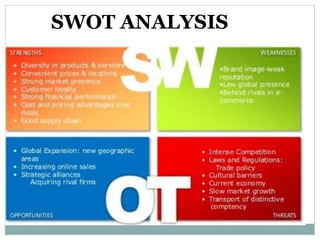
SWOT ANALYSIS
Sustainability in the Market
 Announcement of growth in comparable store sales
to 7-8% led to share price drop.
 Enormous size and stagnant economy
 Growing Competition
 Multiple Law suits for low prices leading to fall of
brand image.
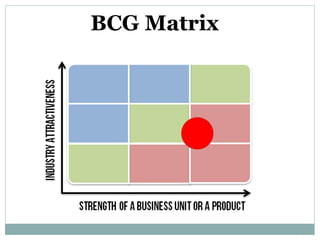
BCG Matrix
Food Retailing
 Attractive Industry ($ 380 billion) – Food retail
accounted for 40% sales of supercenters.
 Primarily made up of regional and local operators.
Low margins at present. Wal*Mart can leverage its
economies of scale.
 High competition present and more new entrants
expected.
Food Retailing
 Independent players need to move to a supercenter
model to increase margins (Barriers to entry)
 Acquisition of experienced distributors will add to
Wal*Mart’s competitive advantage.

walmart case study

  • 1.
    Competitive Advantage  FirstMovers advantage- One third stores were located in areas not served by others.  Employee centric Values- employee Benefits  Walmart advertisement expense was 1.5% of discount store sales.  Differential pricing based on local demands and competition. 2-4% below competitors  Rental expenses only 3% while 3.3% for competitors.
  • 2.
    Competitor Advantage(Cont)  Installationof Satellite System Electronic Scanning of Uniform product code at point of sale for improved efficiency and accurate pricing.  Distribution via Cross Docking and direct supply from 27 distribution centres.  Electronic Date interchange- Suppliers received daily sales records. They could accordingly forecast, plan and supply. Reducing Inventory cost
  • 3.
  • 4.
    Sustainability in theMarket  Announcement of growth in comparable store sales to 7-8% led to share price drop.  Enormous size and stagnant economy  Growing Competition  Multiple Law suits for low prices leading to fall of brand image.
  • 5.
  • 6.
    Food Retailing  AttractiveIndustry ($ 380 billion) – Food retail accounted for 40% sales of supercenters.  Primarily made up of regional and local operators. Low margins at present. Wal*Mart can leverage its economies of scale.  High competition present and more new entrants expected.
  • 7.
    Food Retailing  Independentplayers need to move to a supercenter model to increase margins (Barriers to entry)  Acquisition of experienced distributors will add to Wal*Mart’s competitive advantage.