Wal-Mart’s 
Cost Leadership 
Strategy 
By : Group 2
 Wal-Mart – July 2, 1962 by Sam Walton at Rogers, 
Arkansas US 
 First discount store 
 Core philosophy - cost leadership – offer better value for money 
 Strategy : focus on stores at small towns 
: ELDP - the pricing strategy 
: Cost leadership Strategy 
: Massive expansion strategy 
: Global sourcing strategy
Growth through : 
 Heavy IT investments 
 Surplus reinvestments 
 Increasing no. of stores 
 Consistent Cost cutting measures 
 Public issue 
 Economies of scale 
 Sam’s Clubs 
 Scanners 
 Satellite communication system 
 Hyper mart – food retailing (Super centers) 
 Neighborhood markets n Super centers combo 
 ‘Store of the community’ program
Over the years 
• Discount stores :1573 to 1568 
• Sam’s Clubs : 148 to 1258 
• Super Centers : 3 to 525 
• Neighborhood markets: 0 to 49 
• Revenue - $244.5 billion 
• Awards 
2002 : ‘Ron Brown’ award for corporate leadership by President 
2002 & 2003 : #1 in Fortune 500 list of world’s largest 
companies
Vision: 
“If we work together, we’ll lower the cost of living for 
everyone…we’ll give the world an opportunity to see what it’s like 
to save and have a better life. 
Mission 
To help people save money so they can live better 
Tagline 
Save Money. Live better
SWOT 
OF 
WAL-MART
Strengths 
1.Scale of operations 
2.Funding ability 
3.Competence in information systems 
4.Wide range of products 
5.International operations 
Weaknesses 
1. Labour related lawsuits 
2. High employee turnover 
3. Little differentiation 
4. Negative publicity
1. Retail market growth in developing countries 
2. Rising acceptance of own label products 
3. Trend toward healthy eating 
4. Online shopping growth 
1. Increasing competition from brick and mortar 
and online competitors 
2. Increasing resistance from local communities 
3. Political issues in developing countries 
Opportunities 
Threats
Porter's Generic Strategy
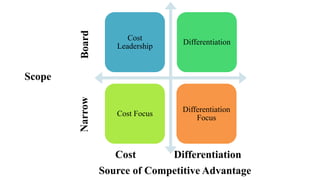
Cost 
Leadership 
Differentiation 
Cost Focus 
Differentiation 
Focus 
Source of Competitive Advantage 
Scope 
Narrow Board 
Cost Differentiation
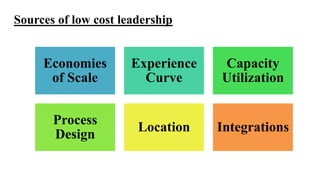
Sources of low cost leadership 
Economies 
of Scale 
Experience 
Curve 
Capacity 
Utilization 
Process 
Design 
Location Integrations
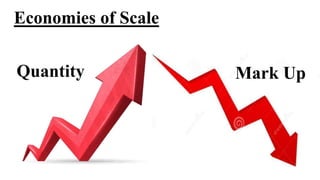
Economies of Scale 
Quantity Mark Up
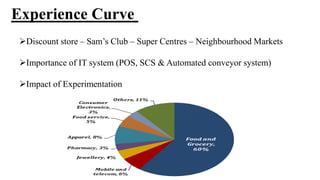
Experience Curve 
Discount store – Sam’s Club – Super Centres – Neighbourhood Markets 
Importance of IT system (POS, SCS & Automated conveyor system) 
Impact of Experimentation
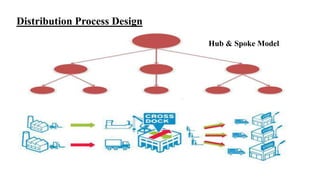
Distribution Process Design 
Hub & Spoke Model
Location 
3 things are important in retailing “Location, Location & Location” 
Rural 
From rural to cities 
Connectivity from distribution centres to retail store 
Stores are 300 Miles (482 KM) away from distribution centres 
158 Distribution centres for 11000 retail stores, in 27 countries
Integration 
They focused on backward integration rather than forward integration 
They learned how manufactures are performing 
Focused more on “EDLP” 
Obtained bargaining power through backward 
integration 
 Gained ability to replacement with in 2 Days (Forward integration)
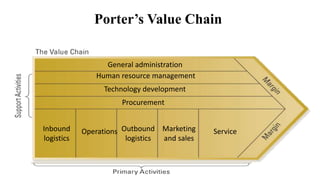
Porter’s Value Chain 
General administration 
Human resource management 
Technology development 
Procurement 
Inbound 
logistics 
Operations Outbound 
logistics 
Marketing 
and sales 
Service
Primary Activities 
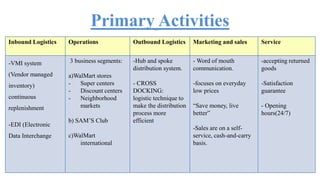
Inbound Logistics Operations Outbound Logistics Marketing and sales Service 
-VMI system 
(Vendor managed 
inventory) 
continuous 
replenishment 
-EDI (Electronic 
Data Interchange 
3 business segments: 
a)WalMart stores 
- Super centers 
- Discount centers 
- Neighborhood 
markets 
b) SAM’S Club 
c)WalMart 
international 
-Hub and spoke 
distribution system. 
- CROSS 
DOCKING: 
logistic technique to 
make the distribution 
process more 
efficient 
-Word of mouth 
communication. 
-focuses on everyday 
low prices 
“Save money, live 
better” 
-Sales are on a self-service, 
cash-and-carry 
basis. 
-accepting returned 
goods 
-Satisfaction 
guarantee 
- Opening 
hours(24/7)
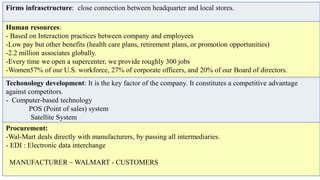
Firms infrasctructure: close connection between headquarter and local stores. 
Human resources: 
- Based on Interaction practices between company and employees 
-Low pay but other benefits (health care plans, retirement plans, or promotion opportunities) 
-2.2 million associates globally. 
-Every time we open a supercenter, we provide roughly 300 jobs 
-Women57% of our U.S. workforce, 27% of corporate officers, and 20% of our Board of directors. 
Techonology development: It is the key factor of the company. It constitutes a competitive advantage 
against competitors. 
- Computer-based technology 
POS (Point of sales) system 
Satellite System 
Procurement: 
-Wal-Mart deals directly with manufacturers, by passing all intermediaries. 
- EDI : Electronic data interchange 
MANUFACTURER – WALMART - CUSTOMERS
Thank You.

Wal-Mart’s Cost Leadership Strategy

  • 1.
    Wal-Mart’s Cost Leadership Strategy By : Group 2
  • 2.
     Wal-Mart –July 2, 1962 by Sam Walton at Rogers, Arkansas US  First discount store  Core philosophy - cost leadership – offer better value for money  Strategy : focus on stores at small towns : ELDP - the pricing strategy : Cost leadership Strategy : Massive expansion strategy : Global sourcing strategy
  • 3.
    Growth through :  Heavy IT investments  Surplus reinvestments  Increasing no. of stores  Consistent Cost cutting measures  Public issue  Economies of scale  Sam’s Clubs  Scanners  Satellite communication system  Hyper mart – food retailing (Super centers)  Neighborhood markets n Super centers combo  ‘Store of the community’ program
  • 4.
    Over the years • Discount stores :1573 to 1568 • Sam’s Clubs : 148 to 1258 • Super Centers : 3 to 525 • Neighborhood markets: 0 to 49 • Revenue - $244.5 billion • Awards 2002 : ‘Ron Brown’ award for corporate leadership by President 2002 & 2003 : #1 in Fortune 500 list of world’s largest companies
  • 5.
    Vision: “If wework together, we’ll lower the cost of living for everyone…we’ll give the world an opportunity to see what it’s like to save and have a better life. Mission To help people save money so they can live better Tagline Save Money. Live better
  • 6.
  • 7.
    Strengths 1.Scale ofoperations 2.Funding ability 3.Competence in information systems 4.Wide range of products 5.International operations Weaknesses 1. Labour related lawsuits 2. High employee turnover 3. Little differentiation 4. Negative publicity
  • 8.
    1. Retail marketgrowth in developing countries 2. Rising acceptance of own label products 3. Trend toward healthy eating 4. Online shopping growth 1. Increasing competition from brick and mortar and online competitors 2. Increasing resistance from local communities 3. Political issues in developing countries Opportunities Threats
  • 9.
  • 10.
    Cost Leadership Differentiation Cost Focus Differentiation Focus Source of Competitive Advantage Scope Narrow Board Cost Differentiation
  • 11.
    Sources of lowcost leadership Economies of Scale Experience Curve Capacity Utilization Process Design Location Integrations
  • 12.
    Economies of Scale Quantity Mark Up
  • 13.
    Experience Curve Discountstore – Sam’s Club – Super Centres – Neighbourhood Markets Importance of IT system (POS, SCS & Automated conveyor system) Impact of Experimentation
  • 14.
    Distribution Process Design Hub & Spoke Model
  • 15.
    Location 3 thingsare important in retailing “Location, Location & Location” Rural From rural to cities Connectivity from distribution centres to retail store Stores are 300 Miles (482 KM) away from distribution centres 158 Distribution centres for 11000 retail stores, in 27 countries
  • 16.
    Integration They focusedon backward integration rather than forward integration They learned how manufactures are performing Focused more on “EDLP” Obtained bargaining power through backward integration  Gained ability to replacement with in 2 Days (Forward integration)
  • 17.
    Porter’s Value Chain General administration Human resource management Technology development Procurement Inbound logistics Operations Outbound logistics Marketing and sales Service
  • 18.
    Primary Activities InboundLogistics Operations Outbound Logistics Marketing and sales Service -VMI system (Vendor managed inventory) continuous replenishment -EDI (Electronic Data Interchange 3 business segments: a)WalMart stores - Super centers - Discount centers - Neighborhood markets b) SAM’S Club c)WalMart international -Hub and spoke distribution system. - CROSS DOCKING: logistic technique to make the distribution process more efficient -Word of mouth communication. -focuses on everyday low prices “Save money, live better” -Sales are on a self-service, cash-and-carry basis. -accepting returned goods -Satisfaction guarantee - Opening hours(24/7)
  • 19.
    Firms infrasctructure: closeconnection between headquarter and local stores. Human resources: - Based on Interaction practices between company and employees -Low pay but other benefits (health care plans, retirement plans, or promotion opportunities) -2.2 million associates globally. -Every time we open a supercenter, we provide roughly 300 jobs -Women57% of our U.S. workforce, 27% of corporate officers, and 20% of our Board of directors. Techonology development: It is the key factor of the company. It constitutes a competitive advantage against competitors. - Computer-based technology POS (Point of sales) system Satellite System Procurement: -Wal-Mart deals directly with manufacturers, by passing all intermediaries. - EDI : Electronic data interchange MANUFACTURER – WALMART - CUSTOMERS
  • 20.